
Sell The Trend Review 2026 for Dropshipping: Worth Paying for Nexus AI?
Product Research Tools
Author: Elysa
Contents
If you are running a Shopify store and you are tired of testing products that are already dead, Sell The Trend is built for that problem. The verdict? it is a solid research shortcut for new sellers who need a guided workflow, but it is not a magic “winning product” button and it can feel overpriced if you already have a tight product research process.
Quick verdict: Buy it if you need an all in one product research workflow and you will use it weekly. Skip it if your store is early and you cannot afford subscriptions that do not directly raise your testing volume.
What Sell The Trend actually does and what it does not

Sell The Trend is a dropshipping product research platform that scans multiple data sources to surface products that are gaining momentum. In 2026, its Nexus AI system pulls signals from marketplaces like AliExpress and Amazon, plus Shopify store activity and social trend signals, then lets you filter by orders, competition, and margin potential. It helps you shortlist products faster. It does not guarantee product market fit, creative performance, or supplier reliability.
Sell The Trend is primarily a trend discovery tool. You use it to generate a shortlist, then you do the hard work that actually makes money in dropshipping.
That hard work is three things.
First, you validate demand in a channel that matches your store. If you sell on Shopify and you run Meta ads, the only demand that matters is demand that is already converting through ads.
Second, you validate unit economics. Trend products attract competition fast. If your average order value is low, your margins will not survive a bidding war.
Third, you match the product to a creative angle that stops scroll. Research tools can tell you what is trending. They cannot write your accroches or pick your UGC format.
Sell The Trend is useful when it saves you time on step one. It becomes a waste when you stop there and treat the shortlist as a strategy.
Minea
Top 100 best-performing products this month
Detected in real time by our AI from market signals: real sales, advertising statistics, and performance

Pricing breakdown: what you actually pay

Sell The Trend is typically priced in a roughly $25 to $100 per month range depending on the tier. The real cost is the opportunity cost of an extra subscription in your research stack. If you treat it as a weekly workflow tool, the math can work. If you use it twice a month, you are paying about $12 to $50 per research session before you spend a dollar on ads.
Here is the practical way to look at pricing when you are a dropshipper.
Tier range | Monthly price | What you are paying for | Simple cost per day |
|---|---|---|---|
Entry tier | $25 per month | Access to research dashboard and product discovery tools | About $0.83 per day |
Mid tier | $50 per month | More filters, more tracking features, more workflow tooling | About $1.67 per day |
Upper tier | $100 per month | Heavier usage, more automation, more power user access | About $3.33 per day |
If you are spending under $500 per month on ads, a $50 to $100 tool can become a crutch. You need more tests, not more dashboards.
If you are spending $1,000 to $5,000 per month on Meta or TikTok, paying $50 to $100 per month for better product selection can make sense, as long as it increases your testing velocity or your margin safety.
Stack overlap is the hidden cost. If you already pay for an ad spy tool, Sell The Trend needs a clear job.
Nexus AI and trend discovery: how it works in practice

Nexus AI is Sell The Trend’s product discovery layer that aggregates signals from marketplaces, Shopify store activity, and social trend indicators to identify products that are gaining traction. You typically start with a niche or a broad category, then filter by order momentum, competition indicators, and potential margin. The output is a shortlist of products with supporting metrics like traffic signals and competitive context.
A workflow that matches how dropshippers actually work.
Pick one tight niche for the week. One niche keeps your creative angles consistent.
Run discovery in Sell The Trend and build a shortlist of 10 to 20 candidates.
Filter down to 3 to 5 products using margin reality. Skip anything that forces your selling price under $30 if your ad costs are not extremely efficient.
Validate supplier risk. Check shipping times, variant complexity, and whether returns will destroy your margin.
Build a creative plan. You want 3 accroches per product and 2 formats per accroches.
This is where most sellers fail. They stop at step two because it feels productive. A shortlist does not pay for itself. A practical way to add Minea into this workflow without turning it into a “tool soup.” Use Sell The Trend to surface candidates.
Use Minea to validate whether the product is actually being pushed with paid ads and which angles are winning. You are not looking for a single store to copy. You are looking for pattern repetition.
In the data available for this brief, Minea’s trending set includes products like a posture corrector belt with a trend score of 92, an LED face mask at 88, and a portable blender at 85. That kind of clustering tells you what is working in the market right now. It also tells you where saturation risk is likely to be highest.
Store automation and Shopify push: where it saves time and where it can hurt you

Sell The Trend includes store automation features designed to push products into Shopify without manual copy paste work. In practice, this can save setup time by importing images, descriptions, and pricing fields into your store. The risk is that automated imports produce generic product pages and weak positioning. Dropshipping stores do not lose on setup speed. They lose on weak offers and weak creative.
Automation is only a win when you treat it as a draft. Import the product, then rewrite the accroches, the offer, and the shipping expectation copy before you run ads. If you do not, your store will look identical to every other dropshipper importing the same listing.
Analytics dashboard: what the metrics help you decide
Sell The Trend’s analytics views are designed to show product level context such as traffic signals, estimated competition, and pricing cues. In 2026, its dashboards commonly include indicators like monthly traffic, average product price, order statistics, competition levels, and profit margin estimates. The value is not the exact number. The value is direction and ranking across options so you can prioritize what to test.
Use the dashboard as a ranking tool.
Focus on three decisions: price positioning, creative difficulty, and saturation speed. If the market is centered around a $29.99 price point and your margin is thin, skip it. If every seller is running the same angle, you only win by testing a different promise and a different format.
Top 10 Best Stores of the Day
Every day, new e-commerce sellers launch highly profitable products thanks to effective ads. Get inspired and be the next one 👇
The catches: what Sell The Trend gets wrong

Sell The Trend is strongest as a guided research dashboard. It is weaker when you need high confidence signals about real world profitability. The core limitations are that trend signals do not equal conversion, marketplace momentum can be late, and automation can push you into sameness. Most sellers also underestimate subscription creep. A tool that is “only $49” becomes expensive when it sits on top of ad spy, tracking, and fulfillment tools.
Here are the real limitations to plan around.
Trend discovery is not a creative strategy. You still need to build accroches, formats, and landing page offers that match the product.
Profit margin estimates are directional. Your actual margin depends on shipping, refunds, chargebacks, and ad CPM.
Marketplace signals can be noisy. A product can spike on one platform and die everywhere else.
Shopify import automation often creates generic pages. If you do not rewrite, you will blend into the crowd.
Subscription creep is real. If you already pay for an ad spy tool and an order automation tool, Sell The Trend needs a clear job in your stack.
A strong negative opinion that will save you money. Skip Sell The Trend if your average order value is under $30 and you are not running bundles. Your margin will not survive trend competition. You will end up blaming the tool for a unit economics problem.
If you are running a Shopify store and you are tired of testing products that are already dead, Sell The Trend is built for that problem. The verdict? it is a solid research shortcut for new sellers who need a guided workflow, but it is not a magic “winning product” button and it can feel overpriced if you already have a tight product research process.
Quick verdict: Buy it if you need an all in one product research workflow and you will use it weekly. Skip it if your store is early and you cannot afford subscriptions that do not directly raise your testing volume.
What Sell The Trend actually does and what it does not
Sell The Trend is a dropshipping product research platform that scans multiple data sources to surface products that are gaining momentum. In 2026, its Nexus AI system pulls signals from marketplaces like AliExpress and Amazon, plus Shopify store activity and social trend signals, then lets you filter by orders, competition, and margin potential. It helps you shortlist products faster. It does not guarantee product market fit, creative performance, or supplier reliability.
Sell The Trend is primarily a trend discovery tool. You use it to generate a shortlist, then you do the hard work that actually makes money in dropshipping.
That hard work is three things.
First, you validate demand in a channel that matches your store. If you sell on Shopify and you run Meta ads, the only demand that matters is demand that is already converting through ads.
Second, you validate unit economics. Trend products attract competition fast. If your average order value is low, your margins will not survive a bidding war.
Third, you match the product to a creative angle that stops scroll. Research tools can tell you what is trending. They cannot write your accroches or pick your UGC format.
Sell The Trend is useful when it saves you time on step one. It becomes a waste when you stop there and treat the shortlist as a strategy.
Minea
Top 100 best-performing products this month
Detected in real time by our AI from market signals: real sales, advertising statistics, and performance
Pricing breakdown: what you actually pay
Sell The Trend is typically priced in a roughly $25 to $100 per month range depending on the tier. The real cost is the opportunity cost of an extra subscription in your research stack. If you treat it as a weekly workflow tool, the math can work. If you use it twice a month, you are paying about $12 to $50 per research session before you spend a dollar on ads.
Here is the practical way to look at pricing when you are a dropshipper.
Tier range | Monthly price | What you are paying for | Simple cost per day |
|---|---|---|---|
Entry tier | $25 per month | Access to research dashboard and product discovery tools | About $0.83 per day |
Mid tier | $50 per month | More filters, more tracking features, more workflow tooling | About $1.67 per day |
Upper tier | $100 per month | Heavier usage, more automation, more power user access | About $3.33 per day |
If you are spending under $500 per month on ads, a $50 to $100 tool can become a crutch. You need more tests, not more dashboards.
If you are spending $1,000 to $5,000 per month on Meta or TikTok, paying $50 to $100 per month for better product selection can make sense, as long as it increases your testing velocity or your margin safety.
Stack overlap is the hidden cost. If you already pay for an ad spy tool, Sell The Trend needs a clear job.
Nexus AI and trend discovery: how it works in practice
Nexus AI is Sell The Trend’s product discovery layer that aggregates signals from marketplaces, Shopify store activity, and social trend indicators to identify products that are gaining traction. You typically start with a niche or a broad category, then filter by order momentum, competition indicators, and potential margin. The output is a shortlist of products with supporting metrics like traffic signals and competitive context.
A workflow that matches how dropshippers actually work.
Pick one tight niche for the week. One niche keeps your creative angles consistent.
Run discovery in Sell The Trend and build a shortlist of 10 to 20 candidates.
Filter down to 3 to 5 products using margin reality. Skip anything that forces your selling price under $30 if your ad costs are not extremely efficient.
Validate supplier risk. Check shipping times, variant complexity, and whether returns will destroy your margin.
Build a creative plan. You want 3 accroches per product and 2 formats per accroches.
This is where most sellers fail. They stop at step two because it feels productive. A shortlist does not pay for itself. A practical way to add Minea into this workflow without turning it into a “tool soup.” Use Sell The Trend to surface candidates.
Use Minea to validate whether the product is actually being pushed with paid ads and which angles are winning. You are not looking for a single store to copy. You are looking for pattern repetition.
In the data available for this brief, Minea’s trending set includes products like a posture corrector belt with a trend score of 92, an LED face mask at 88, and a portable blender at 85. That kind of clustering tells you what is working in the market right now. It also tells you where saturation risk is likely to be highest.
Store automation and Shopify push: where it saves time and where it can hurt you
Sell The Trend includes store automation features designed to push products into Shopify without manual copy paste work. In practice, this can save setup time by importing images, descriptions, and pricing fields into your store. The risk is that automated imports produce generic product pages and weak positioning. Dropshipping stores do not lose on setup speed. They lose on weak offers and weak creative.
Automation is only a win when you treat it as a draft. Import the product, then rewrite the accroches, the offer, and the shipping expectation copy before you run ads. If you do not, your store will look identical to every other dropshipper importing the same listing.
Analytics dashboard: what the metrics help you decide
Sell The Trend’s analytics views are designed to show product level context such as traffic signals, estimated competition, and pricing cues. In 2026, its dashboards commonly include indicators like monthly traffic, average product price, order statistics, competition levels, and profit margin estimates. The value is not the exact number. The value is direction and ranking across options so you can prioritize what to test.
Use the dashboard as a ranking tool.
Focus on three decisions: price positioning, creative difficulty, and saturation speed. If the market is centered around a $29.99 price point and your margin is thin, skip it. If every seller is running the same angle, you only win by testing a different promise and a different format.
Minea
Top 10 Best Stores of the Day
Every day, new e-commerce sellers launch highly profitable products thanks to effective ads. Get inspired and be the next one 👇
The catches: what Sell The Trend gets wrong
Sell The Trend is strongest as a guided research dashboard. It is weaker when you need high confidence signals about real world profitability. The core limitations are that trend signals do not equal conversion, marketplace momentum can be late, and automation can push you into sameness. Most sellers also underestimate subscription creep. A tool that is “only $49” becomes expensive when it sits on top of ad spy, tracking, and fulfillment tools.
Here are the real limitations to plan around.
Trend discovery is not a creative strategy. You still need to build accroches, formats, and landing page offers that match the product.
Profit margin estimates are directional. Your actual margin depends on shipping, refunds, chargebacks, and ad CPM.
Marketplace signals can be noisy. A product can spike on one platform and die everywhere else.
Shopify import automation often creates generic pages. If you do not rewrite, you will blend into the crowd.
Subscription creep is real. If you already pay for an ad spy tool and an order automation tool, Sell The Trend needs a clear job in your stack.
A strong negative opinion that will save you money. Skip Sell The Trend if your average order value is under $30 and you are not running bundles. Your margin will not survive trend competition. You will end up blaming the tool for a unit economics problem.
If you are running a Shopify store and you are tired of testing products that are already dead, Sell The Trend is built for that problem. The verdict? it is a solid research shortcut for new sellers who need a guided workflow, but it is not a magic “winning product” button and it can feel overpriced if you already have a tight product research process.
Quick verdict: Buy it if you need an all in one product research workflow and you will use it weekly. Skip it if your store is early and you cannot afford subscriptions that do not directly raise your testing volume.
What Sell The Trend actually does and what it does not
Sell The Trend is a dropshipping product research platform that scans multiple data sources to surface products that are gaining momentum. In 2026, its Nexus AI system pulls signals from marketplaces like AliExpress and Amazon, plus Shopify store activity and social trend signals, then lets you filter by orders, competition, and margin potential. It helps you shortlist products faster. It does not guarantee product market fit, creative performance, or supplier reliability.
Sell The Trend is primarily a trend discovery tool. You use it to generate a shortlist, then you do the hard work that actually makes money in dropshipping.
That hard work is three things.
First, you validate demand in a channel that matches your store. If you sell on Shopify and you run Meta ads, the only demand that matters is demand that is already converting through ads.
Second, you validate unit economics. Trend products attract competition fast. If your average order value is low, your margins will not survive a bidding war.
Third, you match the product to a creative angle that stops scroll. Research tools can tell you what is trending. They cannot write your accroches or pick your UGC format.
Sell The Trend is useful when it saves you time on step one. It becomes a waste when you stop there and treat the shortlist as a strategy.
Minea
Top 100 best-performing products this month
Detected in real time by our AI from market signals: real sales, advertising statistics, and performance
Pricing breakdown: what you actually pay
Sell The Trend is typically priced in a roughly $25 to $100 per month range depending on the tier. The real cost is the opportunity cost of an extra subscription in your research stack. If you treat it as a weekly workflow tool, the math can work. If you use it twice a month, you are paying about $12 to $50 per research session before you spend a dollar on ads.
Here is the practical way to look at pricing when you are a dropshipper.
Tier range | Monthly price | What you are paying for | Simple cost per day |
|---|---|---|---|
Entry tier | $25 per month | Access to research dashboard and product discovery tools | About $0.83 per day |
Mid tier | $50 per month | More filters, more tracking features, more workflow tooling | About $1.67 per day |
Upper tier | $100 per month | Heavier usage, more automation, more power user access | About $3.33 per day |
If you are spending under $500 per month on ads, a $50 to $100 tool can become a crutch. You need more tests, not more dashboards.
If you are spending $1,000 to $5,000 per month on Meta or TikTok, paying $50 to $100 per month for better product selection can make sense, as long as it increases your testing velocity or your margin safety.
Stack overlap is the hidden cost. If you already pay for an ad spy tool, Sell The Trend needs a clear job.
Nexus AI and trend discovery: how it works in practice
Nexus AI is Sell The Trend’s product discovery layer that aggregates signals from marketplaces, Shopify store activity, and social trend indicators to identify products that are gaining traction. You typically start with a niche or a broad category, then filter by order momentum, competition indicators, and potential margin. The output is a shortlist of products with supporting metrics like traffic signals and competitive context.
A workflow that matches how dropshippers actually work.
Pick one tight niche for the week. One niche keeps your creative angles consistent.
Run discovery in Sell The Trend and build a shortlist of 10 to 20 candidates.
Filter down to 3 to 5 products using margin reality. Skip anything that forces your selling price under $30 if your ad costs are not extremely efficient.
Validate supplier risk. Check shipping times, variant complexity, and whether returns will destroy your margin.
Build a creative plan. You want 3 accroches per product and 2 formats per accroches.
This is where most sellers fail. They stop at step two because it feels productive. A shortlist does not pay for itself. A practical way to add Minea into this workflow without turning it into a “tool soup.” Use Sell The Trend to surface candidates.
Use Minea to validate whether the product is actually being pushed with paid ads and which angles are winning. You are not looking for a single store to copy. You are looking for pattern repetition.
In the data available for this brief, Minea’s trending set includes products like a posture corrector belt with a trend score of 92, an LED face mask at 88, and a portable blender at 85. That kind of clustering tells you what is working in the market right now. It also tells you where saturation risk is likely to be highest.
Store automation and Shopify push: where it saves time and where it can hurt you
Sell The Trend includes store automation features designed to push products into Shopify without manual copy paste work. In practice, this can save setup time by importing images, descriptions, and pricing fields into your store. The risk is that automated imports produce generic product pages and weak positioning. Dropshipping stores do not lose on setup speed. They lose on weak offers and weak creative.
Automation is only a win when you treat it as a draft. Import the product, then rewrite the accroches, the offer, and the shipping expectation copy before you run ads. If you do not, your store will look identical to every other dropshipper importing the same listing.
Analytics dashboard: what the metrics help you decide
Sell The Trend’s analytics views are designed to show product level context such as traffic signals, estimated competition, and pricing cues. In 2026, its dashboards commonly include indicators like monthly traffic, average product price, order statistics, competition levels, and profit margin estimates. The value is not the exact number. The value is direction and ranking across options so you can prioritize what to test.
Use the dashboard as a ranking tool.
Focus on three decisions: price positioning, creative difficulty, and saturation speed. If the market is centered around a $29.99 price point and your margin is thin, skip it. If every seller is running the same angle, you only win by testing a different promise and a different format.
Top 10 Best Stores of the Day
Every day, new e-commerce sellers launch highly profitable products thanks to effective ads. Get inspired and be the next one 👇
The catches: what Sell The Trend gets wrong
Sell The Trend is strongest as a guided research dashboard. It is weaker when you need high confidence signals about real world profitability. The core limitations are that trend signals do not equal conversion, marketplace momentum can be late, and automation can push you into sameness. Most sellers also underestimate subscription creep. A tool that is “only $49” becomes expensive when it sits on top of ad spy, tracking, and fulfillment tools.
Here are the real limitations to plan around.
Trend discovery is not a creative strategy. You still need to build accroches, formats, and landing page offers that match the product.
Profit margin estimates are directional. Your actual margin depends on shipping, refunds, chargebacks, and ad CPM.
Marketplace signals can be noisy. A product can spike on one platform and die everywhere else.
Shopify import automation often creates generic pages. If you do not rewrite, you will blend into the crowd.
Subscription creep is real. If you already pay for an ad spy tool and an order automation tool, Sell The Trend needs a clear job in your stack.
A strong negative opinion that will save you money. Skip Sell The Trend if your average order value is under $30 and you are not running bundles. Your margin will not survive trend competition. You will end up blaming the tool for a unit economics problem.
Sell The Trend vs alternatives for dropshipping research

Sell The Trend is built for broad product discovery and guided research. Alternatives usually win on one specialized job such as ad creative spying, store level revenue signals, or faster niche specific trend tracking. If you already know your niche and you need proof that products are converting through paid traffic, an ad spy tool like Minea often fits better. If you want a curated “what is trending” feed, some simpler tools can be cheaper.
Two comparisons that matter to Shopify sellers.
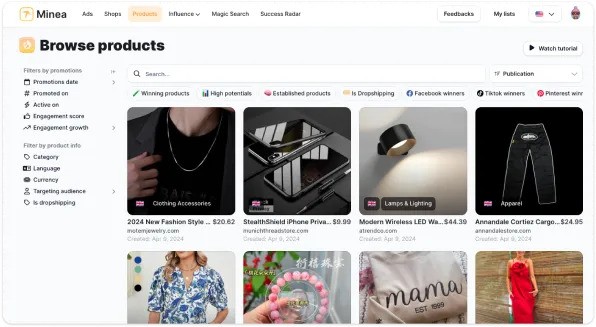
Sell The Trend versus Minea.

Sell The Trend helps you discover product candidates by scanning marketplaces and stores. Minea is often used to validate what is already selling through ads and to reverse engineer the angle and creative format that is winning. The difference is not features. The difference is where you want your confidence.
If you are picking products, trend discovery can be enough. If you are spending real budget, ad level proof reduces wasted tests.


Sell The Trend versus Dropship.io.
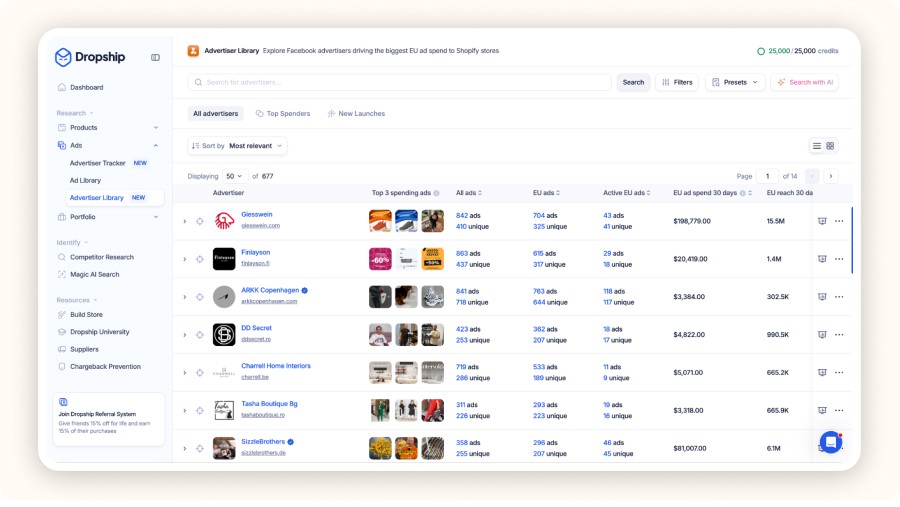
Dropship.io tends to be used for store and product research with a focus on store level signals. If your workflow is concurrent first, this category can feel tighter. If your workflow is trend first, Sell The Trend can feel easier.
No matter which tool you use, the outcome you want is the same. You want a shortlist of products where your margin can survive and your creativity can differentiate.
Who should buy Sell The Trend and who should skip it

Sell The Trend is a good fit for dropshippers who need structure, who are willing to run a weekly research routine, and who want a single dashboard to go from niche to shortlist to Shopify import. It is a poor fit for sellers with very low budgets, sellers who already have a strong research stack, and sellers who expect a tool to replace creative testing.
Buy it if this sounds like you.
You run a Shopify store and you test new products weekly.
You want a guided process that reduces time spent browsing suppliers.
You are willing to do the second half of the work, which is creative testing and offer building.
Skip it if this is your reality.
You are under $500 per month in ad spend and you need to spend that money on tests.
You already have a repeatable process that uses ad validation and angle research, and you only need a small amount of product discovery.
Your store wins on brand and differentiation, and generic imports will hurt you.
A practical middle path for most sellers. Using Sell The Trend for a month can also clarify whether your adspy dropshipping workflow truly supports consistent niche research. Then decide if you are actually using it weekly. If you are not, cancel it and keep your stack lean.
Dropshipping legitimacy and the 2026 reality
Dropshipping is a legitimate ecommerce fulfillment model when you are transparent about shipping and you run a real business. It becomes sketchy when sellers hide shipping times, steal creatives, and rely on impulse buyers who later dispute charges. In 2026, it is still worth starting if you can find a clear angle, protect your margin, and treat product research as a repeatable process.
Dropshipping is legit when you set honest shipping expectations, you handle support, and you do not copy creatives. Profit comes from clean unit economics and repeatable testing.
Sell The Trend helps you pick better candidates faster. You still need to validate margin, supplier reliability, and ad angles before you scale spend.
Minea
Reach $1,000 per day or get your money back

Verdict: should you pay for Sell The Trend in 2026
Sell The Trend review verdict for dropshipping is simple. It is worth paying for when you will use it as a weekly system, not as a one time discovery hack. The Nexus AI and dashboard approach can shorten your research loop, but the tool cannot protect you from thin margins, bad creatives, or supplier problems.
If you start, start with the cheapest tier you can live with. Prove the workflow for 30 days. Upgrade only if more filters or automation directly increase your testing volume.
If you want one safety move to add this week, pair trend discovery with ad level validation in Minea before you order inventory or shoot creatives. Your goal is not to find a trending product. Your goal is to find a product you can sell profitably for six weeks.
To tighten validation, use Minea to spot winning angles, then test your variation on your Shopify store.
FAQ
Is Sell The Trend a legitimate dropshipping platform
Sell The Trend is a legitimate software platform focused on product research and trend tracking. It does not run your store for you. Your results depend on how you validate margins, supplier reliability, and creative performance.
How much does Sell The Trend cost
Sell The Trend is commonly priced between about $25 and $100 per month depending on the plan. The right way to evaluate cost is whether it increases your weekly testing output enough to pay for itself.
What is the use of Sell The Trend for a dropshipper
The main use is faster product shortlisting. It helps you find product ideas that appear to be gaining momentum, then move those ideas into a Shopify store through import and automation features.
Is it still worth it to start dropshipping in 2026
It can be worth starting if you treat dropshipping like a real ecommerce business with honest shipping expectations and a testing system. The model is competitive, so your edge comes from better product selection, stronger angles, and disciplined margins.
What are the best Sell The Trend alternatives for dropshipping research
If you need ad creative validation and competitor angle research, Minea is often a better complement or alternative. If you prefer to store first research workflows, tools like Dropship.io may fit better. The best choice depends on whether you want trend discovery or ad proven demand.
Sell The Trend vs alternatives for dropshipping research
Sell The Trend is built for broad product discovery and guided research. Alternatives usually win on one specialized job such as ad creative spying, store level revenue signals, or faster niche specific trend tracking. If you already know your niche and you need proof that products are converting through paid traffic, an ad spy tool like Minea often fits better. If you want a curated “what is trending” feed, some simpler tools can be cheaper.
Two comparisons that matter to Shopify sellers.
Sell The Trend versus Minea.
Sell The Trend helps you discover product candidates by scanning marketplaces and stores. Minea is often used to validate what is already selling through ads and to reverse engineer the angle and creative format that is winning. The difference is not features. The difference is where you want your confidence.
If you are picking products, trend discovery can be enough. If you are spending real budget, ad level proof reduces wasted tests.
Sell The Trend versus Dropship.io.
Dropship.io tends to be used for store and product research with a focus on store level signals. If your workflow is concurrent first, this category can feel tighter. If your workflow is trend first, Sell The Trend can feel easier.
No matter which tool you use, the outcome you want is the same. You want a shortlist of products where your margin can survive and your creativity can differentiate.
Who should buy Sell The Trend and who should skip it
Sell The Trend is a good fit for dropshippers who need structure, who are willing to run a weekly research routine, and who want a single dashboard to go from niche to shortlist to Shopify import. It is a poor fit for sellers with very low budgets, sellers who already have a strong research stack, and sellers who expect a tool to replace creative testing.
Buy it if this sounds like you.
You run a Shopify store and you test new products weekly.
You want a guided process that reduces time spent browsing suppliers.
You are willing to do the second half of the work, which is creative testing and offer building.
Skip it if this is your reality.
You are under $500 per month in ad spend and you need to spend that money on tests.
You already have a repeatable process that uses ad validation and angle research, and you only need a small amount of product discovery.
Your store wins on brand and differentiation, and generic imports will hurt you.
A practical middle path for most sellers. Using Sell The Trend for a month can also clarify whether your adspy dropshipping workflow truly supports consistent niche research. Then decide if you are actually using it weekly. If you are not, cancel it and keep your stack lean.
Dropshipping legitimacy and the 2026 reality
Dropshipping is a legitimate ecommerce fulfillment model when you are transparent about shipping and you run a real business. It becomes sketchy when sellers hide shipping times, steal creatives, and rely on impulse buyers who later dispute charges. In 2026, it is still worth starting if you can find a clear angle, protect your margin, and treat product research as a repeatable process.
Dropshipping is legit when you set honest shipping expectations, you handle support, and you do not copy creatives. Profit comes from clean unit economics and repeatable testing.
Sell The Trend helps you pick better candidates faster. You still need to validate margin, supplier reliability, and ad angles before you scale spend.
Minea
Reach $1,000 per day or get your money back
Verdict: should you pay for Sell The Trend in 2026
Sell The Trend review verdict for dropshipping is simple. It is worth paying for when you will use it as a weekly system, not as a one time discovery hack. The Nexus AI and dashboard approach can shorten your research loop, but the tool cannot protect you from thin margins, bad creatives, or supplier problems.
If you start, start with the cheapest tier you can live with. Prove the workflow for 30 days. Upgrade only if more filters or automation directly increase your testing volume.
If you want one safety move to add this week, pair trend discovery with ad level validation in Minea before you order inventory or shoot creatives. Your goal is not to find a trending product. Your goal is to find a product you can sell profitably for six weeks.
To tighten validation, use Minea to spot winning angles, then test your variation on your Shopify store.
FAQ
Is Sell The Trend a legitimate dropshipping platform
Sell The Trend is a legitimate software platform focused on product research and trend tracking. It does not run your store for you. Your results depend on how you validate margins, supplier reliability, and creative performance.
How much does Sell The Trend cost
Sell The Trend is commonly priced between about $25 and $100 per month depending on the plan. The right way to evaluate cost is whether it increases your weekly testing output enough to pay for itself.
What is the use of Sell The Trend for a dropshipper
The main use is faster product shortlisting. It helps you find product ideas that appear to be gaining momentum, then move those ideas into a Shopify store through import and automation features.
Is it still worth it to start dropshipping in 2026
It can be worth starting if you treat dropshipping like a real ecommerce business with honest shipping expectations and a testing system. The model is competitive, so your edge comes from better product selection, stronger angles, and disciplined margins.
What are the best Sell The Trend alternatives for dropshipping research
If you need ad creative validation and competitor angle research, Minea is often a better complement or alternative. If you prefer to store first research workflows, tools like Dropship.io may fit better. The best choice depends on whether you want trend discovery or ad proven demand.
Sell The Trend vs alternatives for dropshipping research
Sell The Trend is built for broad product discovery and guided research. Alternatives usually win on one specialized job such as ad creative spying, store level revenue signals, or faster niche specific trend tracking. If you already know your niche and you need proof that products are converting through paid traffic, an ad spy tool like Minea often fits better. If you want a curated “what is trending” feed, some simpler tools can be cheaper.
Two comparisons that matter to Shopify sellers.
Sell The Trend versus Minea.
Sell The Trend helps you discover product candidates by scanning marketplaces and stores. Minea is often used to validate what is already selling through ads and to reverse engineer the angle and creative format that is winning. The difference is not features. The difference is where you want your confidence.
If you are picking products, trend discovery can be enough. If you are spending real budget, ad level proof reduces wasted tests.
Sell The Trend versus Dropship.io.
Dropship.io tends to be used for store and product research with a focus on store level signals. If your workflow is concurrent first, this category can feel tighter. If your workflow is trend first, Sell The Trend can feel easier.
No matter which tool you use, the outcome you want is the same. You want a shortlist of products where your margin can survive and your creativity can differentiate.
Who should buy Sell The Trend and who should skip it
Sell The Trend is a good fit for dropshippers who need structure, who are willing to run a weekly research routine, and who want a single dashboard to go from niche to shortlist to Shopify import. It is a poor fit for sellers with very low budgets, sellers who already have a strong research stack, and sellers who expect a tool to replace creative testing.
Buy it if this sounds like you.
You run a Shopify store and you test new products weekly.
You want a guided process that reduces time spent browsing suppliers.
You are willing to do the second half of the work, which is creative testing and offer building.
Skip it if this is your reality.
You are under $500 per month in ad spend and you need to spend that money on tests.
You already have a repeatable process that uses ad validation and angle research, and you only need a small amount of product discovery.
Your store wins on brand and differentiation, and generic imports will hurt you.
A practical middle path for most sellers. Using Sell The Trend for a month can also clarify whether your adspy dropshipping workflow truly supports consistent niche research. Then decide if you are actually using it weekly. If you are not, cancel it and keep your stack lean.
Dropshipping legitimacy and the 2026 reality
Dropshipping is a legitimate ecommerce fulfillment model when you are transparent about shipping and you run a real business. It becomes sketchy when sellers hide shipping times, steal creatives, and rely on impulse buyers who later dispute charges. In 2026, it is still worth starting if you can find a clear angle, protect your margin, and treat product research as a repeatable process.
Dropshipping is legit when you set honest shipping expectations, you handle support, and you do not copy creatives. Profit comes from clean unit economics and repeatable testing.
Sell The Trend helps you pick better candidates faster. You still need to validate margin, supplier reliability, and ad angles before you scale spend.
Minea
Reach $1,000 per day or get your money back
Verdict: should you pay for Sell The Trend in 2026
Sell The Trend review verdict for dropshipping is simple. It is worth paying for when you will use it as a weekly system, not as a one time discovery hack. The Nexus AI and dashboard approach can shorten your research loop, but the tool cannot protect you from thin margins, bad creatives, or supplier problems.
If you start, start with the cheapest tier you can live with. Prove the workflow for 30 days. Upgrade only if more filters or automation directly increase your testing volume.
If you want one safety move to add this week, pair trend discovery with ad level validation in Minea before you order inventory or shoot creatives. Your goal is not to find a trending product. Your goal is to find a product you can sell profitably for six weeks.
To tighten validation, use Minea to spot winning angles, then test your variation on your Shopify store.
FAQ
Is Sell The Trend a legitimate dropshipping platform
Sell The Trend is a legitimate software platform focused on product research and trend tracking. It does not run your store for you. Your results depend on how you validate margins, supplier reliability, and creative performance.
How much does Sell The Trend cost
Sell The Trend is commonly priced between about $25 and $100 per month depending on the plan. The right way to evaluate cost is whether it increases your weekly testing output enough to pay for itself.
What is the use of Sell The Trend for a dropshipper
The main use is faster product shortlisting. It helps you find product ideas that appear to be gaining momentum, then move those ideas into a Shopify store through import and automation features.
Is it still worth it to start dropshipping in 2026
It can be worth starting if you treat dropshipping like a real ecommerce business with honest shipping expectations and a testing system. The model is competitive, so your edge comes from better product selection, stronger angles, and disciplined margins.
What are the best Sell The Trend alternatives for dropshipping research
If you need ad creative validation and competitor angle research, Minea is often a better complement or alternative. If you prefer to store first research workflows, tools like Dropship.io may fit better. The best choice depends on whether you want trend discovery or ad proven demand.
Similar articles





Our Free Adspys

Find winning products on our Tiktok adspy today!
Find winning products on our Facebook adspy today!
Find winning products on our Tiktok adspy today!
Find winning products on our Facebook adspy today!
Find winning products on our Tiktok adspy today!
Find winning products on our Facebook adspy today!
Find winning products on our Tiktok adspy today!
Find winning products on our Facebook adspy today!
1 winning product everyday.
Follow us!






Find out more
Read more
Minea © 2026
Find out more
Read more
Minea © 2026
Find out more
Read more
Minea © 2026
Find out more
Read more
Minea © 2026
Find out more
Read more
Minea © 2026
Find out more
Read more
Minea © 2026