Explore our other topics
🏆 Dropshipping Softwares
📊 Dropshipping Analytics Tools
📈 Comparative Market Analysis Tools
🔍 Customer Service for Dropshipping
📉 Dropshipping Automation Software
®️ Creative tools
📊 Print on demand websites
✅ Inventory management sofware
©️ Best Email Marketing Tools
™️ Best Dropshipping plugins
⭐ Best Shopify apps
🚨 Best dropshipping payment gateway
💯 Dropshipping product importer
🤝🏻 Customer relationship management tools
💻 Best Network Management Software
🔙 Returns Management Software
🚚 Best Ecommerce Fulfillment Center
Contents
Best Product Research Tools for Dropshipping Ecommerce in 2026: 7 Picks
If you are a dropshipper trying to pick your next winning product, your real problem is not ideas. It is validation. You need proof that demand exists and that the niche is not already saturated before you spend your first $100 in ads.
Start with one tool that shows what is already selling, then add one specialist tool for your sales channel. Here are 7 product research tools that help you find opportunities faster in 2026.
Key Takeaways:
Best overall for dropshipping: Minea because it ties ads, products, and Shopify store analysis into one validation loop.
Best all in one ops plus research: Tradelle if you want research plus fulfillment in the same stack.
Best for Amazon research: Helium 10 if Amazon is your main channel.
Best free signals: Amazon Best Sellers plus Google Trends when you need momentum checks with zero spend.
What if we went even further?
Discover all our related articles and resources


Quick comparison: product research tools at a glance
Product research tools fall into two buckets in 2026. Some show market demand by tracking ads, stores, and product catalogs. Others help you forecast demand inside one marketplace like Amazon. The fastest workflow for most dropshipping ecommerce sellers is to validate demand first, then choose a channel specific tool only after you see proof of traction. Here are the best website for dropshipping
Tool | Price | Best for | Key differentiator | Rating/5 |
|---|---|---|---|---|
Minea | $49 per month | Dropshippers validating demand fast | Ads plus Shopify store analysis | 4.7 |
Tradelle | $29.99 per month | Research plus fulfillment in one place | Competitor research tied to shipping ops | 4.2 |
Helium 10 | $99 per month | Amazon sellers who need depth | Deep keyword plus ASIN level data | 4.6 |
TikTok Creative Center | Free | TikTok led product research | Creative level trend and ad signals | 4.1 |
Amazon Best Sellers | Free | Baseline category demand checks | Clear rank snapshots by category | 3.9 |
Google Trends | Free | Macro trend direction checks | Fast demand direction by query | 3.8 |
AliExpress Dropshipping Center | Free | Sourcing led product ideas | Supplier side trend lists | 3.7 |
How we tested these tools for dropshipping product research
The only score that matters is how quickly a tool gets you to a clean test. I evaluated each tool on data freshness, whether it shows competition signals, how easy it is to turn a finding into a product page and an ad test, and whether the workflow supports both discovery and disqualification. Tools that only generate ideas without proof ranked lower.
Criteria I used:
Demand proof signal quality
Competition and saturation signals
Workflow speed from idea to test
Fit for Shopify sellers buying traffic on Meta Ads or TikTok Ads
1. Minea: Best overall for dropshipping validation
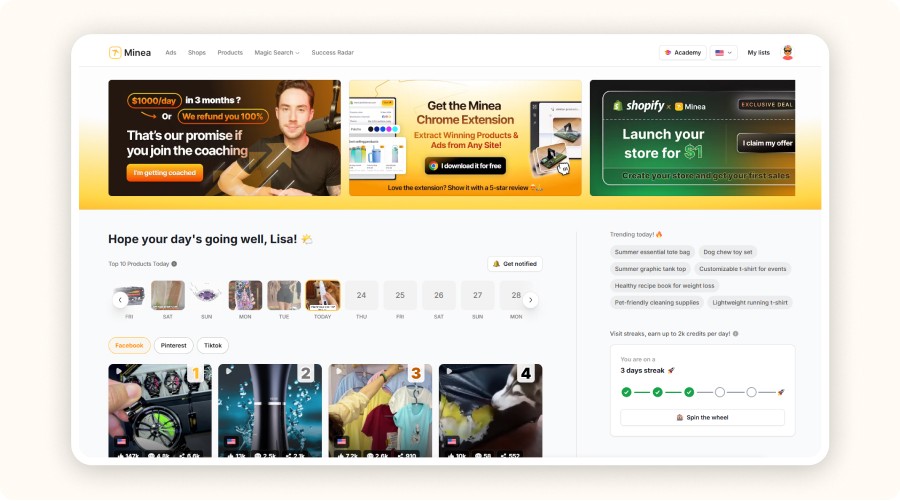
Minea is the best overall product research tool for dropshipping ecommerce sellers because it focuses on what is already working in paid acquisition. It tracks over 100 million ads and over 10 million products, then connects that data to Shopify store analysis. That lets you validate demand, spot saturation, and steal angles before you order samples or build creatives.
Price: $49 per month on Starter, $99 per month on Premium, $399 per month on Business.
What makes Minea different is the validation loop. You start with ads, not guesses. You filter by country and recency, then check duplications to see how crowded the creative is. When you find a candidate, you open the store view to see signals like estimated daily revenue, installed Shopify apps, and pixels detected.
A practical workflow for your store this week:
Filter Meta Ads to your target country and set a minimum days active threshold.
Open 10 to 20 ads in one niche and write down the recurring hooks.
Use duplications as a saturation check. If the same creative shows up everywhere, you are late.
Use store analysis to confirm the store looks profitable and stable, then test on a $50 to $150 budget.
Choose Minea if you want one dashboard that covers product discovery, competitive analysis, and a clean path to ad testing.
2. Tradelle: Best all in one research plus fulfillment stack
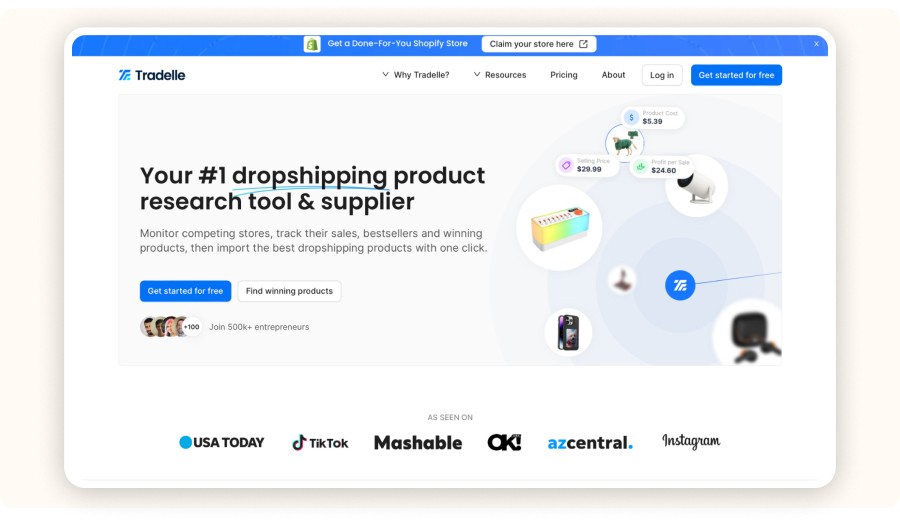
Tradelle is a strong pick when you want product research and fulfillment in the same platform. Its differentiator is competitor research that is paired with shipping and order handling, so you can move from a product idea to operations faster than with a pure research tool.
Price: $29.99 per month billed monthly on Lite, $49.99 per month on Starter, $79.99 per month on Pro.
Tradelle is built for sellers who prefer a single system over a modular stack. The tool list is less important than the mechanism. You can explore products and trends, then tie that into store level signals like competitor research, traffic source analysis, and store revenue data in higher tiers. The operational layer matters because many dropshipping tests fail on delivery experience, not on click through rate.
The catch is that an all in one platform can lock you into its fulfillment workflows. If you already have a supplier stack you trust, you might not use half the features you pay for.
Choose Tradelle if you are earlier in your journey and want research plus shipping workflows without building your own tooling stack.
3. Helium 10: Best for Amazon product research depth
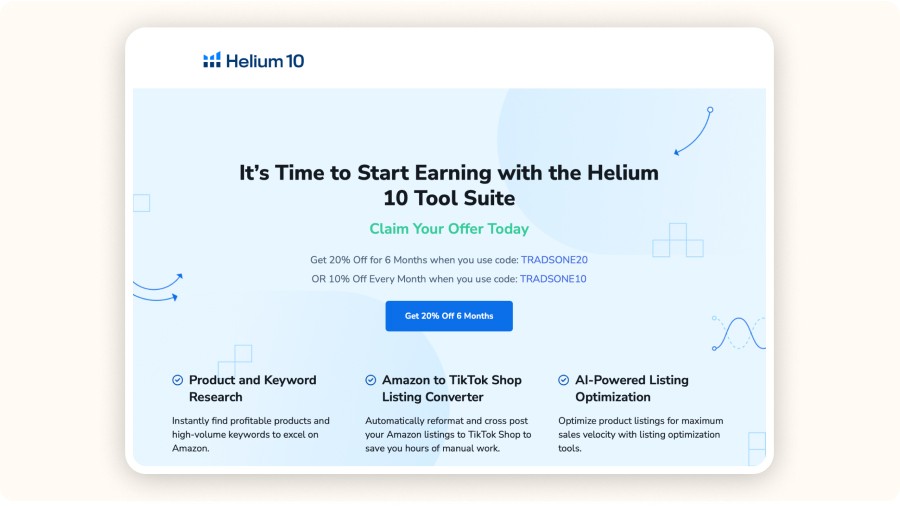
Helium 10 is the best fit when Amazon is your primary channel and you need detailed keyword, ASIN, and operational data. It is less useful as a pure dropshipping tool when you are selling on Shopify, but it is a heavyweight for Amazon FBA and Amazon led market analysis.
Price: $99 per month on Platinum when billed yearly, $129 per month billed monthly. Diamond is $279 per month billed yearly and $359 per month billed monthly.
Helium 10 shines when you want research that turns into execution. Keyword research and listing tools show what buyers type and what competitors rank for. Product research features help you evaluate demand inside Amazon with operational context like review analysis and profit reporting.
The catch is cost and complexity. If you are not launching on Amazon, it is often too much tool.
Choose Helium 10 if you are building an Amazon channel or using Amazon as your demand proxy before you commit to a Shopify test.
4. TikTok Creative Center: Best for TikTok led product discovery
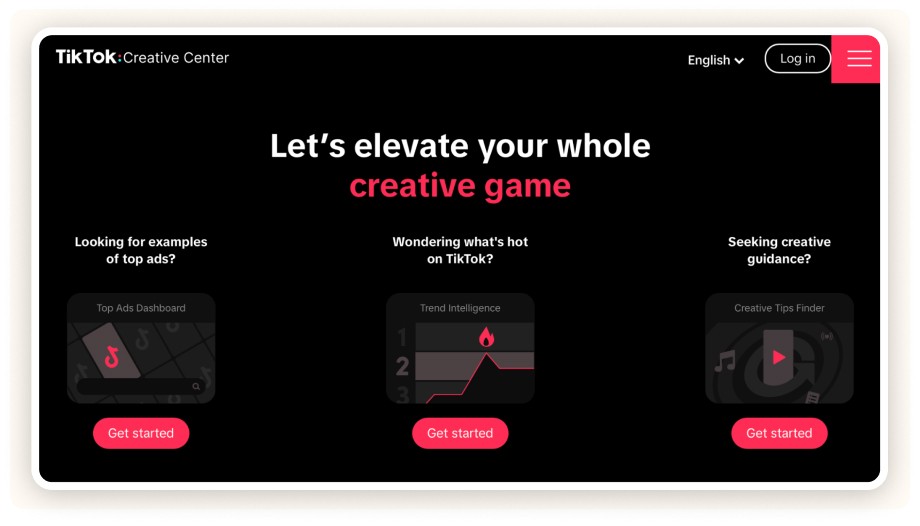
TikTok Creative Center is a free way to spot what formats and products are getting attention on TikTok. It does not replace a validation tool, but it helps you align your product research with creative reality. In practice, creative patterns move faster than product catalogs, and TikTok makes that visible.
Price: Free.
The mechanism is simple. You look for top ads, trending creatives, and category signals, then you reverse engineer what the hook is doing. You can translate that into your own UGC style scripts and test variations fast.
The catch is that viral attention is not a margin. TikTok signals can be noisy, and you still need to check competition and supply.
Choose TikTok Creative Center if TikTok Ads is a core acquisition channel for your dropshipping ecommerce store.
What if we went even further?
Discover all our related articles and resources
5. Amazon Best Sellers: Best free baseline demand signal
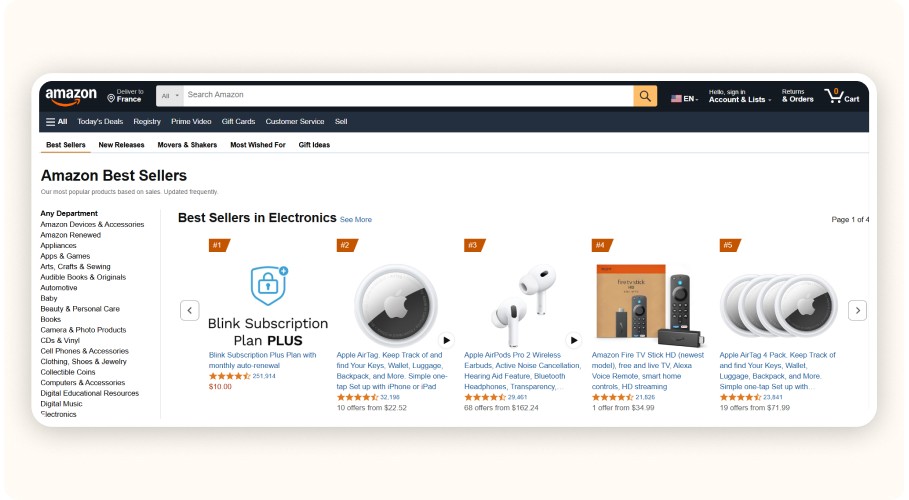
Amazon Best Sellers is a clean free demand snapshot. It helps you understand what people are buying right now by category. For product research, it is a baseline signal, not a complete decision system.
Price: Free.
The mechanism is ranking. If a product type is consistently high in its category, demand is real. You can then use that insight to generate Shopify focused product angles and bundles. For example, if a portable blender category keeps momentum, you can test a dropshipping version with a different creative promise, such as travel convenience or gym meal prep.
Friction you should take seriously: do not build your store around a best seller list. Those products are often the most copied. If you cannot differentiate your offer and creative angle, you will pay high CPMs and bleed margin.
Choose Amazon Best Sellers if you want a fast reality check before you spend time digging into deeper tools.
6. Google Trends: Best free macro trend direction check
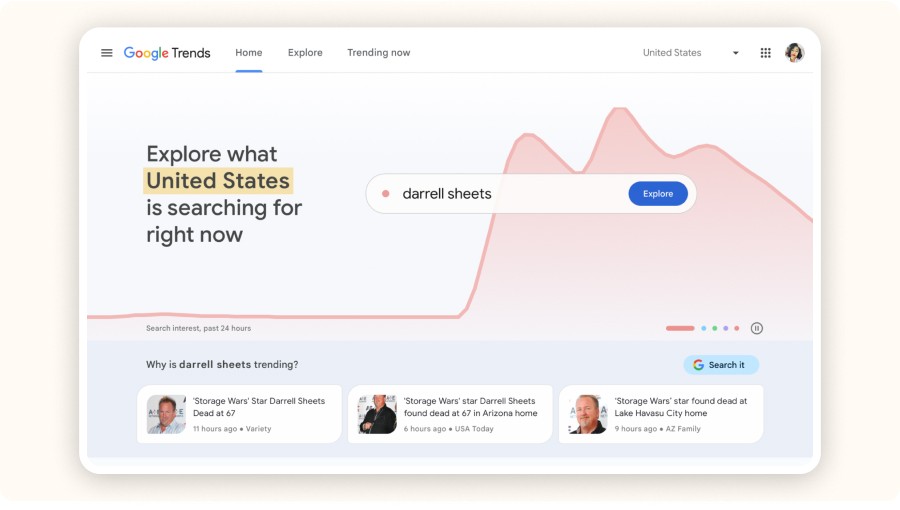
Google Trends helps you verify whether interest is rising, stable, or falling for a product concept. It is not a product research tool on its own, but it is a high leverage filter that prevents you from chasing declining demand.
Price: Free.
Use it for direction, not for absolute volume. You can compare two product angles and see which one is gaining momentum. You can also check whether a niche is seasonal so you do not overbuild creative for a two week spike.
The catch is that trends reflect search behavior. Many dropshipping winners start in social first channels, so trends may lag.
Choose Google Trends if you need a quick sanity check on seasonality and market trends before you commit to creatives.
7. AliExpress Dropshipping Center: Best for sourcing led idea generation
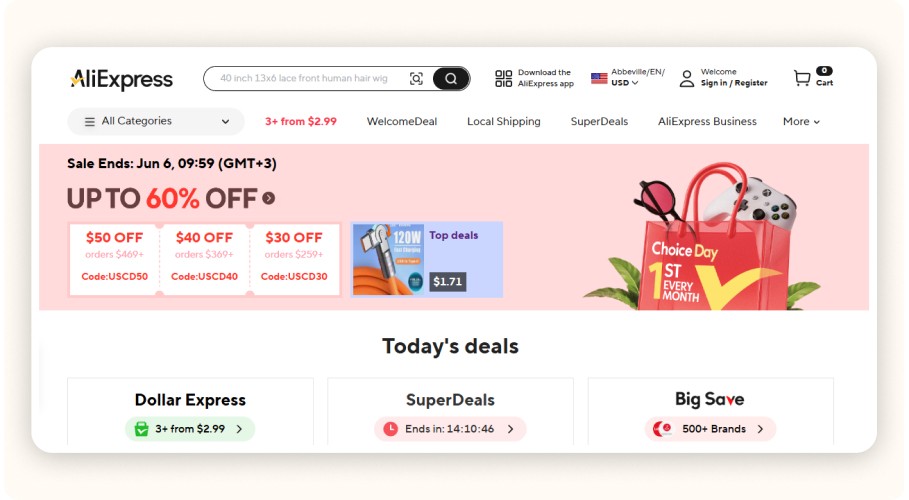
AliExpress Dropshipping Center is useful when your product research starts from sourcing. It can surface products that suppliers are pushing and give you a list of items that many sellers are looking at. Treated correctly, it is an idea generator that you validate elsewhere.
Price: Free.
The mechanism is supplier side trend aggregation. You use it to find product candidates and to map landed cost expectations quickly. Then you validate demand and saturation with a tool that shows real market behavior, such as ads and store performance.
The catch is obvious. Supplier trend lists optimize for supplier inventory movement, not for your store economics.
Choose AliExpress Dropshipping Center if you already know your niche and you want to find viable SKUs fast.
What we did not include and why
A lot of tools call themselves product research software, but they either hide pricing, focus on generic market research, or do not map to a dropshipping workflow. The best tools help you disqualify ideas quickly, not just collect them.
Similarweb style traffic suites: useful for market analysis, but overkill for most sellers at the product test stage
General customer research platforms: great after product market fit, too slow for weekly product testing
Tool lists that only scrape marketplaces: they create copycat behavior without showing creative angles
What if we went even further?
Discover all our related articles and resources
How to choose the right product research tool for your store

The right choice depends on where you sell and how you validate. For most dropshipping ecommerce sellers, the decision is about proof type. Ad and store data helps you validate demand and competition. Marketplace data helps you forecast inside one platform. Free tools help you spot direction, but they do not protect you from saturation.
Use this decision framework:
Budget under $50 per month: start with free signals and add Minea Starter when you can. You need competition signals early.
Shopify store focused with paid acquisition on Meta Ads: pick Minea as your core validator and build your weekly test loop around it.
TikTok first store with heavy creative testing: pair TikTok Creative Center for creative direction with a validation tool for saturation checks.
Amazon channel priority: choose Helium 10 as the core system and use the data to decide whether Shopify expansion is worth it.
All in one preference, including fulfillment: Tradelle can simplify operations, but verify you will actually use the shipping layer.
A workflow that prevents expensive mistakes:
Start from demand proof.
Check saturation.
Build creative ads and test them.
Final verdict
The best product research tools are the ones that shorten your time to a test without tricking you into chasing saturated products. Minea is the best overall choice for most Shopify sellers because it connects ad signals, products, and store analysis into one workflow. If you want an all in one stack that includes operations, Tradelle is the best fit. If Amazon is your main channel, Helium 10 is the specialist.
If you want one playbook for this week, do this. Pick one niche, pull 20 ads in Minea, identify the three dominant hooks, and test one product with three angles on a $50 to $150 budget.
If you want to validate your next winning product faster, try Minea and use the Ad Spy filters plus store analysis to confirm demand before you spend on creatives.
FAQ
What are the key features of a good product research tool?
A good product research tool shows demand proof, competition signals, and a path to action. Demand proof can be active ads, store performance, marketplace ranking, or keyword trajectory. Competition signals tell you whether you are early or late. The best tools also support a workflow from discovery to test, not just a database of ideas.
How much do product research tools typically cost?
Most sellers pay between free and about $300 per month depending on depth and channel. Free tools give direction signals but not competitive context. Paid tools usually charge for access to larger datasets, deeper filters, and operational workflows that shorten time to test.
What are the best product research tools for e commerce sellers?
For Shopify led dropshipping, tools that combine ads and store signals are usually the fastest route to validation. For Amazon, marketplace focused suites tend to win because they tie research to keywords, listings, and unit economics. Many sellers use one core validator plus one channel specialist rather than paying for five overlapping subscriptions.
Can product research tools help with identifying market trends?
Yes, but the trend signal depends on the data source. Search trend tools show direction in buyer interest. Ad and store tools show what sellers are actively spending money to sell. Marketplace rankings show what is moving inside one platform. The most reliable trend read comes from combining at least two different signal types.
Are there any free product research tools available?
Yes. Amazon Best Sellers, Google Trends, TikTok Creative Center, and AliExpress Dropshipping Center can all support early stage research without a budget. The trade off is that free tools rarely show saturation or store level performance, so you still need a validation step before scaling spend.
Published by Minea
What if we went even further?
Discover all our related articles and resources