Explore our other topics
🏆 Dropshipping Softwares
📊 Dropshipping Analytics Tools
📈 Comparative Market Analysis Tools
🔍 Customer Service for Dropshipping
📉 Dropshipping Automation Software
🧾 Product Research Tools
®️ Creative tools
✅ Inventory management sofware
©️ Best Email Marketing Tools
™️ Best Dropshipping plugins
⭐ Best Shopify apps
🚨 Best dropshipping payment gateway
💯 Dropshipping product importer
🤝🏻 Customer relationship management tools
💻 Best Network Management Software
🔙 Returns Management Software
🚚 Best Ecommerce Fulfillment Center
Contents
Best Print on Demand Websites for Dropshipping in 2026
Need a solid print on demand site to start your dropshipping business? The best platforms give you three key things:
fast production;
good print quality;
and strong profit margins for custom merch dropshipping.
If you want to sell without holding stock, this guide is for you. We’ve picked the 10 best print on demand websites for 2026. You’ll see which sites score on quality, delivery time, product options, margins, and how well they work with Shopify or WooCommerce.
What Is Print on Demand and Why It Matters for Dropshipping Entrepreneurs
Print on demand (POD) is one of the easiest ways to start an ecommerce business without inventory. You sell custom products, like t-shirts, mugs, or hoodies, and they’re only printed after a customer places an order. No stock. No upfront investment. No risk of unsold products.
Instead of dealing with production or shipping, you focus on what actually drives sales: your niche, your designs, and your marketing. The supplier handles everything else in the background.
That’s why POD fits perfectly with dropshipping. It lets you launch fast, test ideas quickly, and build a real brand using custom products, all without the complexity of traditional ecommerce.
How the Print on Demand Model Works
The process is simple. You connect a print on demand platform to your store (usually Shopify or WooCommerce). Then you upload your designs and create product listings.
When a customer buys:
The order is sent automatically to your POD supplier
The product is printed with your design
It’s packaged and shipped directly to the customer
You never touch the product. Most platforms also offer branding features like custom labels or packing slips. That means you can sell under your own brand, not just as a middleman.
Advantages of POD for Dropshippers
The biggest advantage is obvious: no inventory risk. You don’t need to buy products upfront. You only pay when you make a sale. That makes it one of the safest ways to start online.
But that’s not all.
Low startup cost – You can launch with almost zero budget
Fast product testing – Try multiple designs without commitment
Custom branding – Build a real identity with your own visuals
Scalability – Add new products anytime without logistics issues
According to industry data, over 80% of consumers are more likely to buy from brands offering personalized products. That’s exactly what POD delivers.
Common Challenges and How to Overcome Them
POD is simple, but not perfect. The first challenge is lower margins compared to bulk buying. Since each item is produced individually, costs are higher. The solution? focus on perceived value. Strong branding, niche targeting, and bundles can easily increase your average order value.
The second issue is shipping time. Some suppliers take longer, especially for international orders. The Solution? choose platforms with local fulfillment centers (like Gelato or Printful) to reduce delivery time.
Another common problem is inconsistent quality. The solution? always order samples before selling. Test different suppliers and keep only the best-performing ones.
What if we went even further?
Discover all our related articles and resources
Best Print on Demand Sites for Beginners in 2026
Starting with the right platform makes a huge difference. As a beginner, you don’t need the most advanced tools, you need something simple, reliable, and easy to launch with. The best print on demand websites for beginners focus on:
ease of use
clear pricing
solid integrations (especially with Shopify)
good product quality
Criteria for Beginner-Friendly Platforms
Not all POD platforms are built for beginners. Here’s what actually matters when you’re starting out:
Simple setup: You should be able to launch in a few hours
User-friendly interface: No technical skills required
Transparent pricing: No hidden fees
Reliable shipping: Consistent delivery times
Good mockup tools: Easy product creation
If a platform feels complex from day one, it’s probably not the right choice to start with.
Top Recommendations and Why
If you’re just getting started, these platforms stand out:
Printful: Best overall. Easy to use, high quality, strong branding options
Printify: Best for low costs. Great for testing products with higher margins
Gelato: Best for fast shipping. Ideal if you sell internationally
Spring (Teespring): Best for creators. No store needed, perfect for social media
Each one solves a different problem. The right choice depends on your goal, branding, margins, or simplicity.
Common Beginner Mistakes to Avoid
Most beginners fail for the same reasons.
First, they try to sell everything. No niche, no clear audience. Then, focus on one niche and build around it.
Second, they ignore branding. Generic designs lead to low conversions. Then, invest time in clean visuals and a consistent identity.
Third, they don’t test products. You need to launch small, test fast and scale what works.
Finally, many rely on just one supplier. Always have a backup. It protects your business from delays or quality issues
Top 10 Best Print on Demand Websites in 2026 (Reviewed and Compared)
Before jumping into just any platform, take a minute to understand what sets the top print on demand websites apart. We talk about print quality, profit margins, delivery times, and branding options. All of this matters when you choose the right tool for your niche and dropshipping strategy.
1. Printful – Professional POD with Strong Shopify Integration
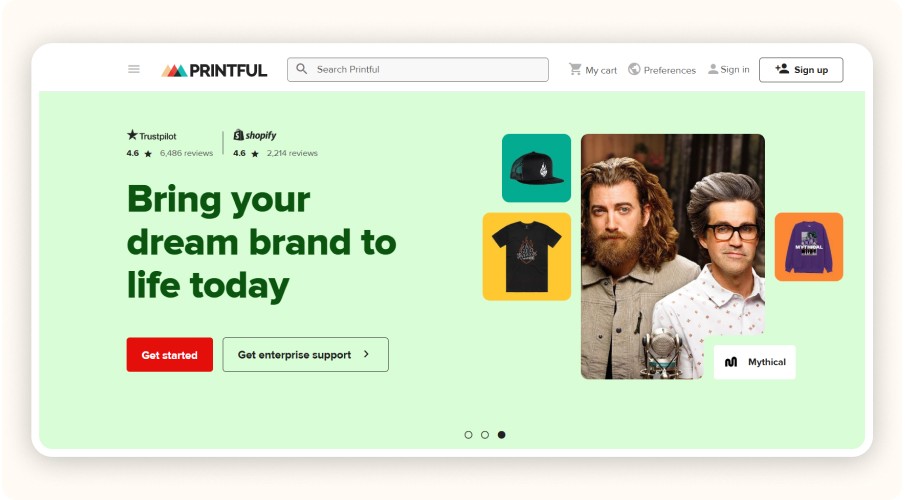
If you’re doing custom merch dropshipping and want a clean, professional result without the hassle, Printful is a solid choice. It’s stable, smooth and easy to use. No bugs. No weird delays. Just connect your Shopify or WooCommerce store, upload your designs, and you’re ready to sell.
What makes the difference? The print quality. Whether it’s t-shirts, mugs, or hoodies, the finish is clean and durable. Plus, you can add your brand through:
custom labels,
custom packaging,
and branded packing slips.
This gives your store a real brand feel, not just another generic site. Yes, Printful costs a bit more than other print on demand platforms, but if you aim for satisfied customers and better margins, it’s totally worth it.
2. Printify – Wide Provider Network & Low Production Costs
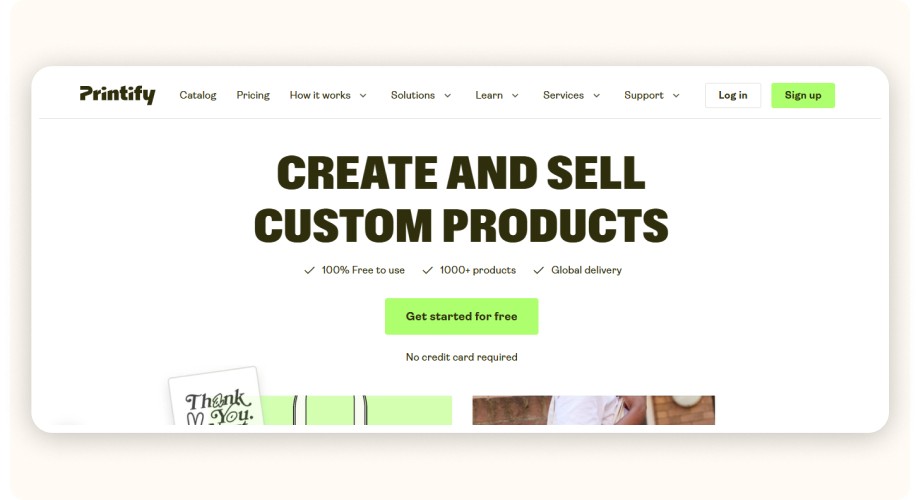
Printify is a great choice if you're starting with a small budget. It’s one of the best print on demand websites for testing products at low cost. The platform gives you access to many print providers worldwide. You choose the one with the best price, fastest shipping, or closest location. This makes Printify super flexible. It works with Shopify and has one of the easiest WooCommerce print on demand plugins for WordPress.
Prices are low. T-shirts cost less than $8. Mugs start at $4. Margins can go up to 3x.
For example, a hoodie that costs $10 can sell for $34.90. Add some branding or a limited offer to boost sales. You can customize your products fully, change the color, size, and where the design appears. But quality may vary depending on the supplier. Always order samples first.
If you want cheap print on demand services, Printify is one of the best POD platforms to try in 2026.
3. Gelato – Eco-Friendly, Local Fulfillment Focused
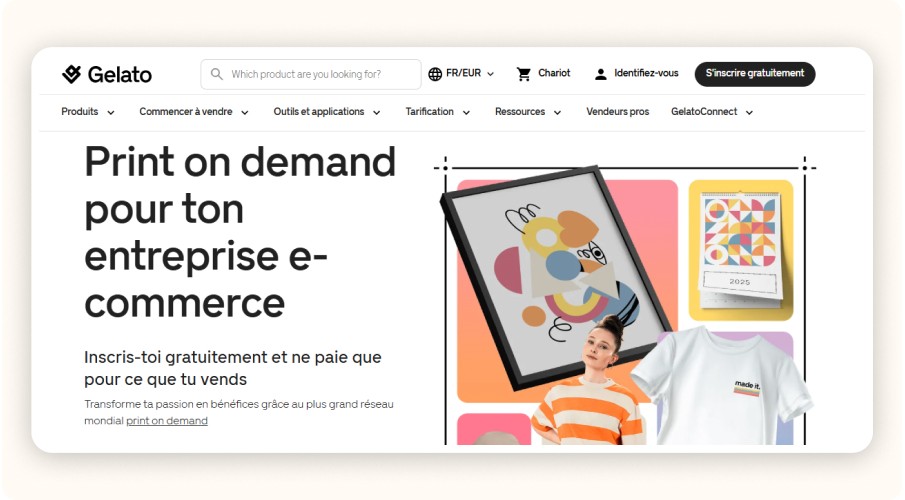
Want to cut delivery times and keep things eco-friendly? Gelato is one of the best print on demand websites if you care about speed and sustainability. Instead of printing orders on the other side of the world, Gelato uses local production in over 30 countries. The result:
faster shipping,
lower carbon footprint,
and fewer shipping costs.
It’s a smart pick if you sell to an audience that values green products. Gelato offers sustainable materials like organic cotton and recycled paper. And print quality stays high, so your brand still looks sharp. The product range covers the essentials, t-shirts, posters, mugs, and more. Simple stuff, but well executed.
However, branding options are limited. Unlike other white label print on demand platforms, Gelato doesn’t offer custom labels or branded packaging. That might be a dealbreaker if you want full control over your brand image.
Still, for anyone looking to offer fast, reliable, and eco-conscious fulfillment, Gelato stands out. It’s one of the best print on demand platforms for building a clean and responsible custom merch dropshipping business.
4. SPOD – Fast Production with EU Focus
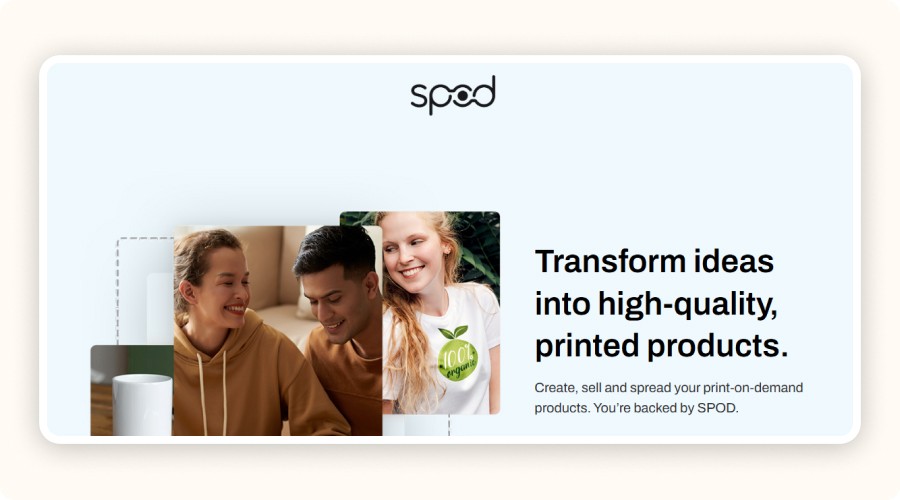
Selling in Europe and need fast delivery? SPOD is one of the best print on demand websites for speed. Their promise: orders printed within 48 hours, even during busy seasons. SPOD runs production from local centers in Germany, the Czech Republic, and Spain. That means faster shipping across France and neighboring countries.
The product range covers the basics, t-shirts, hoodies, mugs, tote bags, and the customization tool is quick and easy to use. It’s clean, simple, and efficient.
However, branding options are limited. Unlike other white label print on demand services, SPOD doesn’t offer much in terms of custom labels or packaging. If you want to build a strong brand image, that could be a drawback. Still, for speed, simplicity, and solid pricing, SPOD is a strong choice, especially for custom merch dropshipping in Europe.
5. Redbubble – Artistic Marketplace for Creators
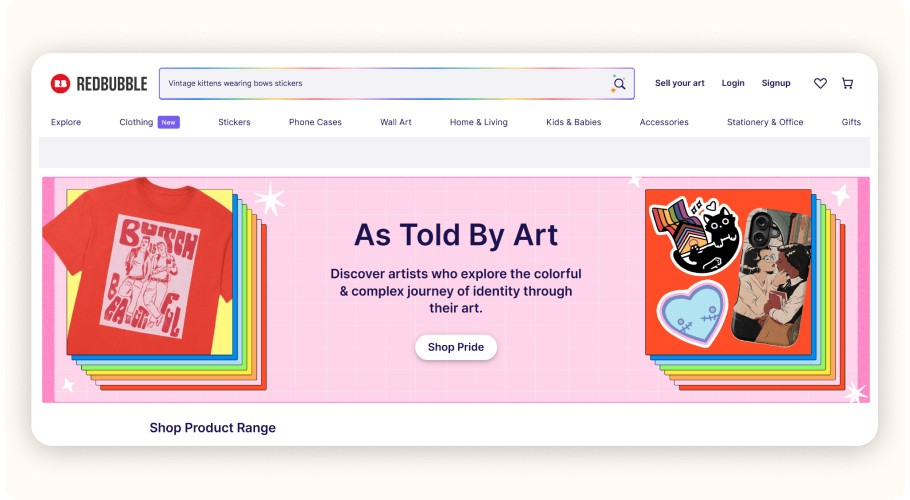
Redbubble is perfect for creatives who want to sell their art without managing a store. You upload your designs, pick the products (t-shirts, phone cases, posters) and Redbubble handles the rest:
production
shipping
No stock, no tech setup, no hassle. It’s perfect for passive income through custom merch dropshipping. The best part? Redbubble is a marketplace with built-in traffic. Your designs can be discovered by customers, no ads needed. That makes it a great option for artists, illustrators, and designers.
But keep in mind: control is limited. You can’t build a full brand here. There’s no custom packaging, no customer list. You’re selling on their platform, not yours, so it’s not a full white label print on demand solution. Still, for creative sellers looking for easy exposure, Redbubble remains one of the most popular print on demand websites and one of the best POD platforms for passive selling.
6. Teespring (Spring) – Creator Monetization Platform
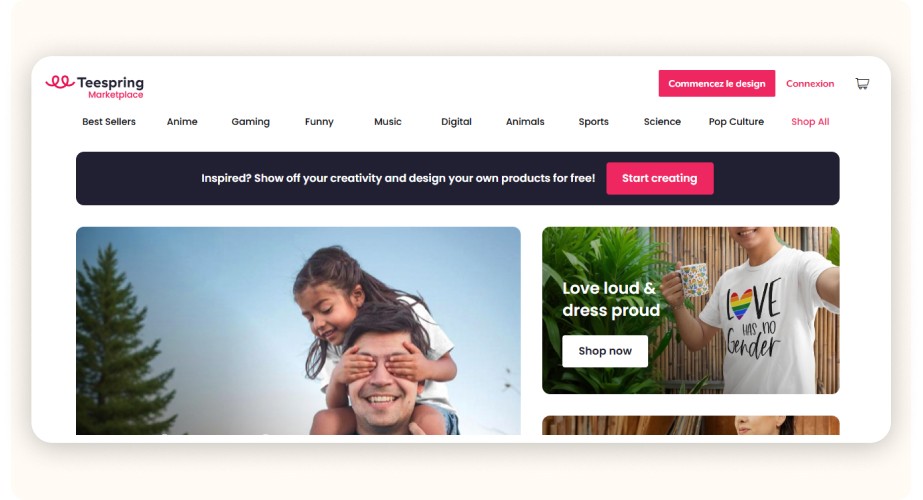
Spring, formerly Teespring, is built for content creators, influencers, and streamers. If you’ve got an active following on YouTube, Instagram, or TikTok, it’s one of the easiest ways to launch your own merch, no store, no budget needed.
Just upload your design, pick your products, t-shirts, mugs, stickers, and you’re good to go. Spring handles the rest:
they print,
ship,
and manage customer support.
No complicated setup. No tech. You can even link your products directly under your YouTube videos or social bios. Great for testing ideas or launching a limited drop.
Sure, branding options are limited. You won’t get full control like with some other white label print on demand platforms. But if you want to monetize your audience with zero hassle, Spring is a solid choice. Among print on demand websites, it stands out for simplicity and ease of use—especially for creators.
7. Zazzle – High Customization & Niche Product Catalog
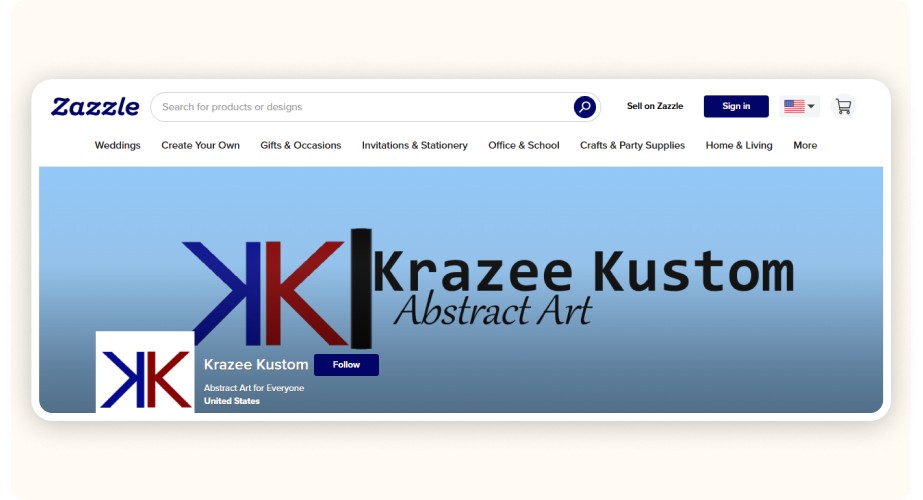
Want to sell more than just standard merch? Zazzle is the go-to for ultra-customized products. Their catalog goes way beyond t-shirts and mugs. You’ll find:
stationery,
wedding accessories,
home decor,
business gifts,
and tons of niche items.
What’s special here? The customization. Customers can tweak colors, text, images, even choose where the design goes. That makes Zazzle perfect for sellers targeting specific events or micro-niches.
Their design tool is strong but still beginner-friendly. It lets your customers create exactly what they want, without stress.
Just keep in mind: Zazzle is a marketplace. You won’t control branding like on white label print on demand platforms. But if your goal is to sell one-of-a-kind, deeply personal items, Zazzle delivers. It’s one of the most flexible print on demand websites for creators who want to go beyond basic merch.
8. Gooten – API-First POD for Scaling
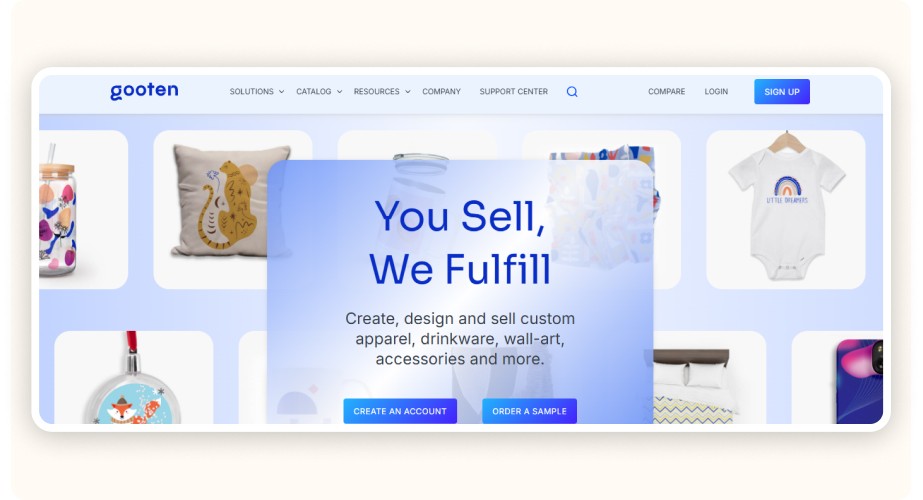
Gooten is great for brands that want to grow fast without losing control.
Unlike other platforms that focus on ease, Gooten stands out with powerful API tools. If you already have a working store and want to automate everything, this is a solid option.
Gooten connects to print partners worldwide. It picks the best supplier based on where your customer lives. That helps reduce delivery times. The product catalog is wide, clothing, home decor, accessories, good for stores with high volume.
It’s not the easiest platform to use. But if you have a team or some tech skills, it’s one of the best POD platforms for automation. It works with Shopify and connects to WooCommerce using an API or print on demand plugin. For brands that want full control, it’s a great choice for custom merch dropshipping.
9. Lulu Xpress – Print on Demand Books
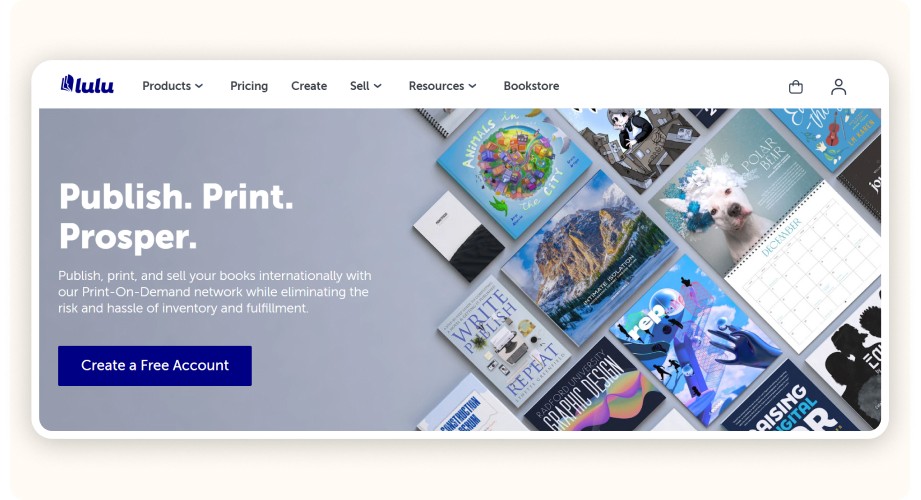
Lulu Xpress is one of the best print on demand websites for selling books with no stock. It’s made for authors, coaches, and info creators. You upload your file, pick the format, paper and cover. Lulu prints and ships your book for you. There’s no minimum order and no storage needed.
It’s a great way to sell guides, workbooks, or training content. The print quality is professional. But branding options are limited. You won’t get custom labels or packaging like on other white label print on demand platforms. Still, if you want a cheap print on demand service for books, Lulu Xpress is a smart pick.
10. Apliiq – Fashion-Focused POD with Custom Embroidery
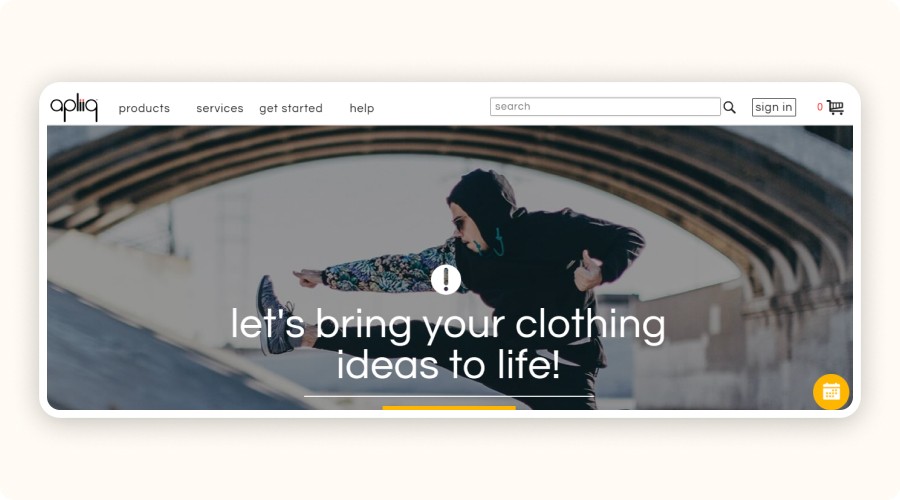
Apliiq is the top pick for brands that want real fashion, not just a printed t-shirt. It’s built for clothing labels that need more than basic prints. You can add embroidery, woven tags, custom fabric panels, everything you need to create a real brand. It’s a true white label print on demand platform for creators who care about quality.
Apliiq is made for people who want to stand out. You can personalize every detail:
the cut,
the label,
the embroidery,
even the fabric itself.
It costs more than other platforms, but the price makes sense. If you're selling high-end streetwear or want to build a strong identity, Apliiq delivers real value. It’s one of the best POD platforms out there for fashion brands that want more control over their custom merch dropshipping business.
Here’s a quick recap of the top 10 print on demand websites to consider this year. We’ve listed them by their strengths, Shopify or WooCommerce compatibility, customization features, and overall positioning.
Platform | Key Strengths | Customization | Positioning |
|---|---|---|---|
Printful | Pro quality, Shopify integration, full branding | Labels, packaging, visual branding | Quality & reliability |
Printify | Low prices, large printer network, high margins | Wide product range, multi-side design | Best value |
Gelato | Fast delivery, local production, eco-friendly | Various designs, sustainable options | Ethics & speed |
SPOD | 48h printing, EU focus, good value | Simple and fast customization | Speed & efficiency |
Redbubble | Artist marketplace, passive income | Limited design, artist-focused | Art & creativity |
Teespring (Spring) | Great for influencers, community merch | Easy setup, low branding control | Influence & UGC |
Zazzle | Advanced customization, niche catalog | Complex tools for experts | Niche & bespoke products |
Gooten | API-driven, tech-ready, scalable | Integrated tech, API-based branding | Tech & growth |
Lulu Xpress | POD book specialist, ideal for info products | Books only, limited options | Content creators & niche |
Apliiq | Embroidery, premium fabrics, fashion branding | Embroidery, woven labels, custom fabrics | Fashion & brand image |
What if we went even further?
Discover all our related articles and resources
Print on Demand Platforms Popular with Influencers and Creators

If you already have an audience, even a small one, print on demand becomes a powerful monetization tool. You don’t need a full ecommerce setup. You just need products your audience connects with.
That’s why many creators turn to POD. It’s fast, low-risk, and perfect for launching merch without upfront costs.
What Makes a Platform Influencer-Friendly?
Not all platforms are built for creators. The best ones make it easy to launch, promote, and sell, without technical friction. Here’s what matters most:
No store required: You can sell directly from a platform or link
Fast setup: Upload a design and go live in minutes
Built-in traffic or integrations: Connect with YouTube, Instagram, or TikTok
Simple checkout experience: No drop-offs, no complexity
Hands-off fulfillment: The platform handles everything
If a tool feels too technical, it slows you down. For creators, speed and simplicity win.
Top Platforms for Personal Brand Merch
Some platforms clearly stand out when it comes to creator-focused merch.
Spring (Teespring): Built for influencers. You can link products directly under YouTube videos or in your bio. No store needed.
Redbubble: Great for artists. Built-in marketplace traffic means your designs can sell without ads.
Printful, Best for creators who want a real brand. More control, better customization, and seamless Shopify integration.
Gelato, Ideal for global audiences. Fast local delivery improves customer experience.
Each platform fits a different level of ambition. If you just want to test merch, go simple. If you want to build a brand, go deeper.
Success Stories from Influencers Using POD
Many creators start with a simple idea, a slogan, a meme, or a niche design, and turn it into a real income stream.
Some use POD to launch limited drops tied to content. Others build full merch brands over time.
What works best?
designs that match the audience
simple offers (not too many products)
strong emotional connection
Creators who succeed don’t overcomplicate it. They stay close to their audience and test fast.
Design Tools and User Experience Across Leading POD Platforms
Design and usability can make or break your workflow. If creating products feels slow or complicated, you’ll lose momentum. The best POD platforms focus on speed, simplicity, and flexibility.
Built-in Design Features and Mockups
Most top platforms come with built-in design tools.
You can:
upload your artwork
place it on products
adjust size, position, and colors
generate mockups instantly
Some platforms go further with advanced previews and lifestyle mockups. This helps you create product pages that actually convert. The easier it is to visualize your product, the faster you can launch.
Third-Party Design Integrations
If you want more control, external tools are key.
Popular options include:
Canva
Kittl
Photoshop
Smartmockups
These tools let you create high-quality visuals in minutes, even without design skills.
Most POD platforms integrate smoothly with them, making your workflow faster and more flexible.
User Interface and Usability Comparisons
Ease of use varies a lot between platforms.
Printful: Clean, intuitive, very beginner-friendly
Printify: Simple but slightly more technical due to supplier choices
Gooten: Powerful but less intuitive (better for advanced users)
Gelato: Minimalist and efficient
If you’re just starting, go with a platform that feels natural from day one. Complexity slows execution, and execution is everything.
Redbubble Marketplace Interface Overview
Redbubble works differently from most POD platforms. Instead of building your own store, you upload designs directly to their marketplace. The interface is simple:
upload your artwork
choose products
publish
That’s it! Your products are then listed on Redbubble’s platform, where customers can discover them organically.
The advantage? Built-in traffic.
The downside? Limited control.
You don’t own the customer relationship, and branding options are minimal. But if your goal is exposure and passive sales, it’s one of the easiest platforms to start with
Key Criteria to Choose the Best Print on Demand Website
Choosing the right print on demand platform isn’t just about features, it directly impacts your margins, delivery times, and customer experience. If you pick the wrong one, you’ll deal with slow shipping, low quality, and unhappy customers. If you pick the right one, everything runs smoothly from day one.
Here’s what actually matters.
Product Catalog and Customization Options
A strong product catalog gives you more opportunities to test and scale. The basics are essential, t-shirts, hoodies, mugs, but the real advantage comes from variety. The more options you have, the easier it is to explore different niches and offers.
But product range alone isn’t enough. Customization is what sets you apart. You need to be able to:
place designs freely
adjust colors and sizes
create unique variations
The goal is simple: avoid generic products. The best print on demand websites give you full creative control so your designs actually stand out.
Print Quality and Sustainable Materials
You can have the best design in the world, but if the quality is poor, customers won’t come back. Print durability matters, fabrics matter and finishing matters. A good platform ensures:
prints that don’t fade after washing
comfortable, wearable materials
consistent results across orders
Sustainability is also becoming a major factor. More customers are actively looking for eco-friendly products, organic cotton, recycled materials, and low-impact production.
It’s not just a trend. It’s a real buying decision driver.
Shipping Speed and Global Coverage
Shipping can make or break your store. Long delivery times kill conversions. Unexpected fees kill trust. Top platforms solve this with local production centers. Instead of shipping worldwide from one location, they produce closer to the customer.
This means:
faster delivery
lower shipping costs
fewer issues with customs
Always check:
delivery times by region
international fees (VAT, customs)
consistency across suppliers
Branding Features: Labels, Packaging, Slips
If you want to build a real brand, branding matters. Small details make a big difference:
custom labels
branded packaging
personalized packing slips
These elements increase perceived value and build trust. Without them, your store feels generic. The best print on demand platforms offer white label features that let you control the customer experience from start to finish.
How Do Print on Demand Platforms Compare in Terms of Pricing and Profit Margins?

Pricing is where most beginners make mistakes. It’s not just about the product cost, it’s about your final margin after everything: production, shipping, fees, and marketing. Understanding this early helps you avoid losing money as you scale.
Base Pricing per Product (T-Shirts, Mugs, Hoodies)
Each platform has different base prices. For example:
basic t-shirts can range from $6 to $9
mugs start around $4
hoodies can cost $10 or more
These differences matter more than you think. A small gap in production cost can significantly impact your margin, especially at scale.
A good rule: aim for at least 30% to 50% profit margin
If your numbers don’t work at a small scale, they won’t work at a large scale either.
Shipping Costs, Hidden Fees, and Volume Discounts
Shipping is often underestimated. Some platforms offer flat rates. Others vary pricing based on weight, destination, or product type.
Then there are hidden costs:
extra print areas (front + back)
additional colors
setup or handling fees
These can eat into your profits quickly.
On the upside, many platforms offer:
bulk discounts
premium plans with lower pricing
reseller programs
If you plan to scale, these can make a big difference.
Margin Optimization Strategies for POD Dropshippers
If you want to increase profits, you need to go beyond basic pricing. Here are simple but effective strategies:
Bundle products: sell 2 items instead of 1
Add upsells: increase cart value at checkout
Use limited offers: create urgency
Optimize pricing: test different price points
Also, track your key metrics:
cost per product
cost per acquisition
average order value
The most profitable stores aren’t just selling, they’re constantly optimizing. That’s what separates beginners from real operators
Regional Considerations: Best Print on Demand Platforms in the US vs UK
Not all print on demand platforms perform the same depending on where your customers are located. Shipping times, costs, and even product availability can vary a lot between regions. If you’re selling internationally, choosing the right platform for your target market is critical.
Shipping and Production Differences
The biggest difference between regions is fulfillment location. In the US, most platforms have strong infrastructure. That means:
faster production
lower domestic shipping costs
more product options
In the UK and Europe, things are improving, but not all platforms are equal. Some rely on US-based production, which leads to:
longer delivery times
higher shipping fees
potential customs issues
That’s why platforms with local production centers (like Gelato or SPOD) perform better in Europe.
Pricing Comparisons
Pricing also changes depending on location.
In the US:
production costs are often lower
shipping is more predictable
In the UK/EU:
VAT can increase final prices
cross-border shipping adds extra costs
Even a small difference per product can impact your margins over time. Always calculate your full cost based on your target market, not just the base price.
Recommended Platforms by Region
Here’s a simple breakdown:
Best for US market:
Printful → reliable, high quality, strong branding
Printify → low costs, flexible supplier network
Gooten → great for scaling and automation
Best for UK / Europe:
Gelato → local production, fast delivery
SPOD → strong EU presence, quick turnaround
Printful → still solid with EU fulfillment centers
If you’re targeting multiple regions, choose a platform with global coverage.
What if we went even further?
Discover all our related articles and resources
Free and Low-Cost Print on Demand Platforms Compared
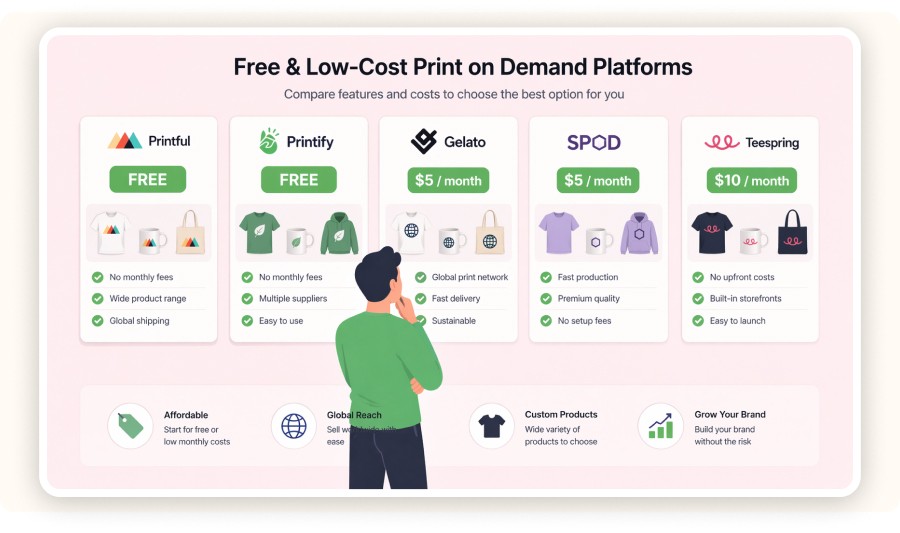
Starting on a budget? Good news, most print on demand platforms don’t require upfront payment. But “free” doesn’t always mean what you think.
Pros and Cons of Free POD Platforms
✔️ Advantages:
no upfront investment
easy to start
perfect for testing products
❌ Limitations:
higher production costs
limited branding options
fewer advanced features
Free plans are great for beginners, but not always ideal for scaling.
Budget-Friendly Options and Limitations
Some platforms are known for low costs:
Printify → one of the cheapest options for production
SPOD → competitive pricing in Europe
Gelato → balanced pricing with fast delivery
These are ideal if you want to keep margins high while testing.
But lower prices can come with trade-offs:
variable quality
limited customization
less control over suppliers
Are They Really Free? Understanding Hidden Costs
Most POD platforms are technically free to join, but you pay per order.
Here’s what to watch out for:
shipping fees
extra print areas
premium features (mockups, branding, automation)
subscription plans for better pricing
Example:
Printify offers a free plan, but its Premium plan (~$24.99/month) reduces product costs significantly.
If you’re selling regularly, upgrading often makes sense.
Niche Product Specializations: Home Decor, Embroidery, Books & More
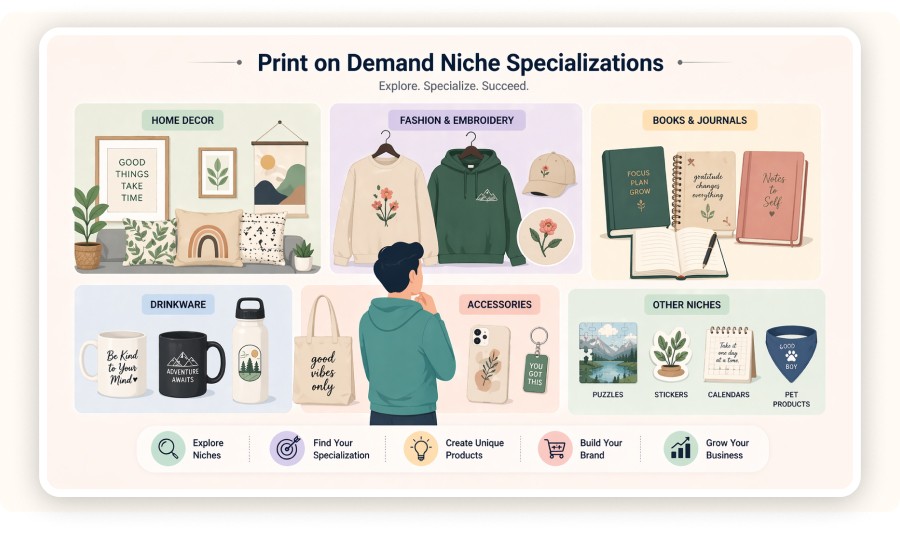
Not all platforms are built for the same type of products. Some specialize in fashion. Others focus on decor or publishing. Choosing the right niche platform can give you a serious edge.
POD for Custom Home Decor
Home decor is a strong niche with high perceived value.
Products include:
posters
canvas prints
wall art
pillows
Platforms like Gelato and Gooten perform well here thanks to:
large format printing
global production networks
This niche works especially well for aesthetic or lifestyle brands.
Fashion and Embroidery Specializations
If you want to build a real clothing brand, basic printing isn’t always enough.
Platforms like Apliiq focus on:
embroidery
woven labels
custom fabrics
This allows you to create premium products that stand out from generic merchandise. Higher cost, but much higher perceived value.
Print on Demand Books and Publishing
Selling books is another powerful niche. With platforms like Lulu Xpress, you can:
publish guides, journals, or workbooks
print on demand with no inventory
target specific audiences (coaches, educators, creators)
This is perfect for digital creators who want to turn content into physical products.
Other Unique Niche Products
Some platforms go beyond traditional merch. Examples include:
wedding products
business gifts
stationery
personalized items
Zazzle is a good example of this approach. It allows deep customization, making it ideal for micro-niches. The more specific your niche, the easier it is to stand out, and sell.
Top Passive Income Print on Demand Websites

Print on demand is often marketed as “passive income.” But in reality, it’s only passive if your system is set up the right way.
Once your products are live and your workflow is automated, you can generate sales without managing inventory, shipping, or production. That’s what makes POD so attractive.
What Makes a POD Business Passive?
A POD business becomes passive when most of the work is done upfront. You create designs, set up products, and launch your store. After that, the system runs on its own.
Here’s what defines a “passive” setup:
automated order fulfillment
no manual inventory management
pre-built product pages
traffic coming from content, SEO, or marketplaces
But keep in mind, marketing is never 100% passive. You still need to drive traffic or build an audience.
Platforms Best Suited for Passive Income
Some platforms are better than others for hands-off income.
Redbubble: Fully passive. Upload designs and benefit from marketplace traffic
Spring (Teespring): Ideal for creators. Link products to content and let it run
Merch by Amazon: Massive traffic, but limited access and product range
Printify + Etsy: Semi-passive. Etsy brings traffic, Printify handles fulfillment
If your goal is minimal effort, marketplaces are the easiest entry point. If you want long-term control, a Shopify store is better, but less passive.
Automation Tools and Tips
Automation is what turns POD into a scalable system. Here’s what you should automate first:
order fulfillment: handled by your POD supplier
email flows: abandoned cart, confirmations, upsells
product publishing: use bulk upload tools
design creation: AI tools and templates
Tools like Shopify apps, Zapier, or built-in platform features can connect everything together. The goal: reduce manual work as much as possible.
How to Start a Profitable POD Store in 2026
Starting a POD store is simple, but making it profitable requires a clear plan. You don’t need hundreds of products. You need the right niche, the right offer, and a system that converts.
Steps to Launch Your POD Store
The process is straightforward:
Choose a niche: something specific (fitness, pets, humor, etc.)
Pick a platform: Shopify, Etsy, or a POD marketplace
Create your designs: simple, clear, niche-focused
Set up your store: clean layout, fast checkout
Connect your POD supplier: Printify, Printful, or others
Launch fast. Don’t overthink it.
Test Products and Validate Demand
This is where most beginners fail, they don’t test. Instead of guessing what will sell:
launch 2–3 designs
run small ad campaigns
track engagement (clicks, likes, conversions)
Tools like Minea help you spot trending products and winning ideas faster. Test small. Scale what works.
Use Design Tools and AI Mockups
You don’t need to be a designer to succeed in POD. Tools like Canva, Kittl, Smartmockups allow you to create professional visuals in minutes. AI tools can also speed up the process, generate ideas, mockups, or variations quickly.
Better visuals = higher conversion rates.
Scaling Your POD Business: APIs, Volume Discounts & Automation

Once you start getting sales, the goal shifts from launching → scaling. At this stage, efficiency matters more than experimentation.
Leveraging API Integrations
Advanced platforms like Gooten or Printify offer API integrations. This allows you to:
automate product syncing
manage large catalogs
connect multiple stores
If you’re handling volume, APIs save time and reduce errors.
Maximizing Volume Discounts
As your order volume increases, your costs should go down. Many platforms offer:
premium plans with lower production costs
bulk discounts
reseller pricing
Even a small cost reduction per product can significantly increase your profit at scale.
Automating Order Fulfillment and Customer Service
To scale efficiently, you need to remove bottlenecks. Automate:
order processing (handled by POD suppliers)
shipping updates (automated emails)
customer support (FAQ, chatbots, templates)
The goal is simple: build a system that runs with minimal manual input. That’s how you turn a simple POD store into a scalable business
FAQ
What is the Best Company for Print on Demand?
There’s no single “best” print on demand company, it depends on your goals.
Printful is ideal if you want premium quality and strong branding
Printify is better for low costs and higher margins
Gelato works well for fast international shipping
Redbubble is great if you want passive sales without running a store
The best choice depends on whether you prioritize branding, profit, or simplicity.
Is Print on Demand Actually Profitable?
Yes! print on demand can be very profitable if you manage your numbers properly. Most stores aim for 30% to 50% margins, but some niches go much higher. Your profit depends on product cost, ad spend, pricing strategy, niche selection
The key is not just selling, but optimizing:
increase your average order value
test different price points
focus on products with high perceived value
With the right strategy, POD can outperform traditional ecommerce models.
Is Printify 100% Free?
Printify offers a free plan, so you can start without paying upfront. You only pay when you receive an order. However, they also offer a Premium plan (~$24.99/month) that reduces product costs and increases your margins. If you’re selling regularly, upgrading can significantly boost your profit.
What is a Print on Demand Website?
A print on demand website lets you sell custom products without handling inventory or production. Here’s how it works:
you create a design
a customer places an order
the platform prints and ships the product
You focus on marketing and sales. The platform handles everything else. It’s one of the fastest ways to launch an online store, especially when combined with tools like Shopify or WooCommerce.
What if we went even further?
Discover all our related articles and resources