

Big Cartel vs Shopify: Which Platform is Right for Your Dropshipping Business?
Shopify Reviews
Author: Baptiste
November 12, 2025
Contents
To choose between Big Cartel vs Shopify for your dropshipping business, it all comes down to your budget, goals, and how you plan to manage your store. These two e-commerce platforms cater to very different needs.
Big Cartel is ideal for sellers with a small product catalog. Thanks to its free plan, you can start without spending a cent. It also offers a simple, intuitive interface that’s easy to navigate, even for complete beginners.
Shopify, on the other hand, is designed for more ambitious projects. It’s a comprehensive and scalable platform, built for entrepreneurs who:
Manage larger product catalogs,
Sell across multiple channels,
Or automate operations using professional tools.
To help you find the platform that fits your business goals best, let’s dive into a detailed comparison!
1. Big Cartel Overview
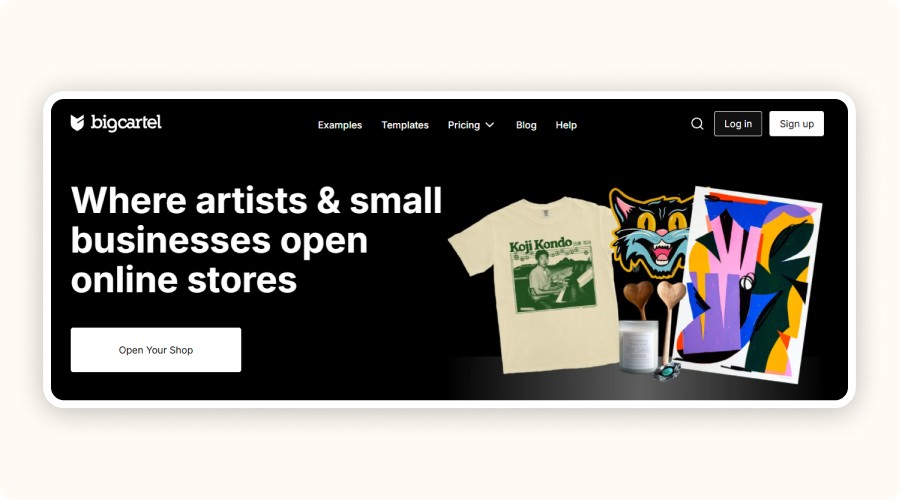
Launched in 2005, Big Cartel is designed for independent artists, creators, and small shops. This e-commerce platform is perfect for anyone who wants to sell online without dealing with technical complexity. It allows small brands to build a simple, stylish, and functional storefront, all without needing any coding skills.
One of Big Cartel’s strongest points is its free plan, which lets you sell up to five products with no monthly fees. This option is ideal for entrepreneurs on a budget who want to test their online business without financial risk.
Even with the free version, Big Cartel includes all the essential tools you need to launch a dropshipping store, such as:
Product page creation,
Order management,
Basic customization options,
Secure payment integrations like Stripe and PayPal.
When it comes to usability, Big Cartel stands out for its simplicity. The admin dashboard is easy to understand and quick to set up, offering a clean navigation experience focused only on what’s essential. Within just a few hours, you can launch your store, even if you have zero e-commerce experience.
Although the platform is simple, Big Cartel supports integrations with external tools for dropshipping. You can connect your store to Printful or Printify, enabling automated sales of custom products or print-on-demand items. This is a major advantage for artists and creators who want to monetize their designs without handling inventory or logistics.
2. Shopify Overview

Shopify is one of the most popular e-commerce platforms in the world. Launched in 2006, it helps businesses of all sizes create, manage, and scale their online stores. With over 4.4 million active stores worldwide, Shopify has become a major player in global e-commerce.
Shopify offers a robust and flexible infrastructure, suitable for both small projects and large brands. It’s designed for sellers who want to scale their operations, manage extensive product catalogs, or sell across multiple countries. Its back-end is built to handle high traffic volumes, offering fast load times, advanced logistics integrations, and stable architecture that ensures long-term performance.
What truly sets Shopify apart is its rich ecosystem and advanced feature set. It includes everything a dropshipper needs to run their business efficiently, such as:
Inventory management,
Order processing,
Multi-channel selling (website, social media, and marketplaces),
Customer support tools,
Marketing automation.
Shopify also integrates seamlessly with specialized apps like Spocket, Oberlo, and Printful, essential for big cartel dropshipping-style businesses. These tools allow you to:
Import products,
Sync inventory in real time,
Manage deliveries,
Automate the entire order fulfillment process.
By choosing Shopify, you can sell on TikTok, Facebook, Instagram, and marketplaces like Amazon, making it ideal for entrepreneurs who want to build an omnichannel strategy while keeping all sales operations centralized.
Before making a final decision, however, it’s important to understand both the advantages and limitations of this platform. Shopify often stands out in comparisons such as Shopify vs BigCommerce and Shopify vs Squarespace due to its flexibility, scalability, and vibrant ecosystem.
3. Big Cartel vs Shopify: Dropshipping Features Comparison

When comparing Big Cartel vs Shopify, the features they offer can make a big difference in your dropshipping success. These tools directly impact your efficiency, profit margins, and your ability to scale your store as your business grows.
Product and Inventory Management

When it comes to product and inventory management, Shopify clearly takes the lead, though Big Cartel still remains relevant for small stores.
Big Cartel offers a basic inventory system that lets you track product quantities and receive alerts when stock reaches zero. If your store has fewer than 50 items, this setup is more than enough. However, for sellers who need advanced stock management, it quickly becomes limited.
Shopify, on the other hand, provides robust inventory control tools so you can:
Manage multiple product variants (size, color, material, etc.),
Receive automatic low-stock alerts,
Update your inventory in bulk using CSV files or APIs,
Connect easily with fulfillment centers like Amazon FBA or ShipStation.
These Shopify features make it easy to manage large catalogs and collaborate with multiple suppliers. In dropshipping, this kind of automation helps you avoid stockouts and missed sales, ensuring smoother operations and better margins.

To choose between Big Cartel vs Shopify for your dropshipping business, it all comes down to your budget, goals, and how you plan to manage your store. These two e-commerce platforms cater to very different needs.
Big Cartel is ideal for sellers with a small product catalog. Thanks to its free plan, you can start without spending a cent. It also offers a simple, intuitive interface that’s easy to navigate, even for complete beginners.
Shopify, on the other hand, is designed for more ambitious projects. It’s a comprehensive and scalable platform, built for entrepreneurs who:
Manage larger product catalogs,
Sell across multiple channels,
Or automate operations using professional tools.
To help you find the platform that fits your business goals best, let’s dive into a detailed comparison!
1. Big Cartel Overview

Launched in 2005, Big Cartel is designed for independent artists, creators, and small shops. This e-commerce platform is perfect for anyone who wants to sell online without dealing with technical complexity. It allows small brands to build a simple, stylish, and functional storefront, all without needing any coding skills.
One of Big Cartel’s strongest points is its free plan, which lets you sell up to five products with no monthly fees. This option is ideal for entrepreneurs on a budget who want to test their online business without financial risk.
Even with the free version, Big Cartel includes all the essential tools you need to launch a dropshipping store, such as:
Product page creation,
Order management,
Basic customization options,
Secure payment integrations like Stripe and PayPal.
When it comes to usability, Big Cartel stands out for its simplicity. The admin dashboard is easy to understand and quick to set up, offering a clean navigation experience focused only on what’s essential. Within just a few hours, you can launch your store, even if you have zero e-commerce experience.
Although the platform is simple, Big Cartel supports integrations with external tools for dropshipping. You can connect your store to Printful or Printify, enabling automated sales of custom products or print-on-demand items. This is a major advantage for artists and creators who want to monetize their designs without handling inventory or logistics.
2. Shopify Overview

Shopify is one of the most popular e-commerce platforms in the world. Launched in 2006, it helps businesses of all sizes create, manage, and scale their online stores. With over 4.4 million active stores worldwide, Shopify has become a major player in global e-commerce.
Shopify offers a robust and flexible infrastructure, suitable for both small projects and large brands. It’s designed for sellers who want to scale their operations, manage extensive product catalogs, or sell across multiple countries. Its back-end is built to handle high traffic volumes, offering fast load times, advanced logistics integrations, and stable architecture that ensures long-term performance.
What truly sets Shopify apart is its rich ecosystem and advanced feature set. It includes everything a dropshipper needs to run their business efficiently, such as:
Inventory management,
Order processing,
Multi-channel selling (website, social media, and marketplaces),
Customer support tools,
Marketing automation.
Shopify also integrates seamlessly with specialized apps like Spocket, Oberlo, and Printful, essential for big cartel dropshipping-style businesses. These tools allow you to:
Import products,
Sync inventory in real time,
Manage deliveries,
Automate the entire order fulfillment process.
By choosing Shopify, you can sell on TikTok, Facebook, Instagram, and marketplaces like Amazon, making it ideal for entrepreneurs who want to build an omnichannel strategy while keeping all sales operations centralized.
Before making a final decision, however, it’s important to understand both the advantages and limitations of this platform. Shopify often stands out in comparisons such as Shopify vs BigCommerce and Shopify vs Squarespace due to its flexibility, scalability, and vibrant ecosystem.
3. Big Cartel vs Shopify: Dropshipping Features Comparison

When comparing Big Cartel vs Shopify, the features they offer can make a big difference in your dropshipping success. These tools directly impact your efficiency, profit margins, and your ability to scale your store as your business grows.
Product and Inventory Management

When it comes to product and inventory management, Shopify clearly takes the lead, though Big Cartel still remains relevant for small stores.
Big Cartel offers a basic inventory system that lets you track product quantities and receive alerts when stock reaches zero. If your store has fewer than 50 items, this setup is more than enough. However, for sellers who need advanced stock management, it quickly becomes limited.
Shopify, on the other hand, provides robust inventory control tools so you can:
Manage multiple product variants (size, color, material, etc.),
Receive automatic low-stock alerts,
Update your inventory in bulk using CSV files or APIs,
Connect easily with fulfillment centers like Amazon FBA or ShipStation.
These Shopify features make it easy to manage large catalogs and collaborate with multiple suppliers. In dropshipping, this kind of automation helps you avoid stockouts and missed sales, ensuring smoother operations and better margins.
To choose between Big Cartel vs Shopify for your dropshipping business, it all comes down to your budget, goals, and how you plan to manage your store. These two e-commerce platforms cater to very different needs.
Big Cartel is ideal for sellers with a small product catalog. Thanks to its free plan, you can start without spending a cent. It also offers a simple, intuitive interface that’s easy to navigate, even for complete beginners.
Shopify, on the other hand, is designed for more ambitious projects. It’s a comprehensive and scalable platform, built for entrepreneurs who:
Manage larger product catalogs,
Sell across multiple channels,
Or automate operations using professional tools.
To help you find the platform that fits your business goals best, let’s dive into a detailed comparison!
1. Big Cartel Overview

Launched in 2005, Big Cartel is designed for independent artists, creators, and small shops. This e-commerce platform is perfect for anyone who wants to sell online without dealing with technical complexity. It allows small brands to build a simple, stylish, and functional storefront, all without needing any coding skills.
One of Big Cartel’s strongest points is its free plan, which lets you sell up to five products with no monthly fees. This option is ideal for entrepreneurs on a budget who want to test their online business without financial risk.
Even with the free version, Big Cartel includes all the essential tools you need to launch a dropshipping store, such as:
Product page creation,
Order management,
Basic customization options,
Secure payment integrations like Stripe and PayPal.
When it comes to usability, Big Cartel stands out for its simplicity. The admin dashboard is easy to understand and quick to set up, offering a clean navigation experience focused only on what’s essential. Within just a few hours, you can launch your store, even if you have zero e-commerce experience.
Although the platform is simple, Big Cartel supports integrations with external tools for dropshipping. You can connect your store to Printful or Printify, enabling automated sales of custom products or print-on-demand items. This is a major advantage for artists and creators who want to monetize their designs without handling inventory or logistics.
2. Shopify Overview

Shopify is one of the most popular e-commerce platforms in the world. Launched in 2006, it helps businesses of all sizes create, manage, and scale their online stores. With over 4.4 million active stores worldwide, Shopify has become a major player in global e-commerce.
Shopify offers a robust and flexible infrastructure, suitable for both small projects and large brands. It’s designed for sellers who want to scale their operations, manage extensive product catalogs, or sell across multiple countries. Its back-end is built to handle high traffic volumes, offering fast load times, advanced logistics integrations, and stable architecture that ensures long-term performance.
What truly sets Shopify apart is its rich ecosystem and advanced feature set. It includes everything a dropshipper needs to run their business efficiently, such as:
Inventory management,
Order processing,
Multi-channel selling (website, social media, and marketplaces),
Customer support tools,
Marketing automation.
Shopify also integrates seamlessly with specialized apps like Spocket, Oberlo, and Printful, essential for big cartel dropshipping-style businesses. These tools allow you to:
Import products,
Sync inventory in real time,
Manage deliveries,
Automate the entire order fulfillment process.
By choosing Shopify, you can sell on TikTok, Facebook, Instagram, and marketplaces like Amazon, making it ideal for entrepreneurs who want to build an omnichannel strategy while keeping all sales operations centralized.
Before making a final decision, however, it’s important to understand both the advantages and limitations of this platform. Shopify often stands out in comparisons such as Shopify vs BigCommerce and Shopify vs Squarespace due to its flexibility, scalability, and vibrant ecosystem.
3. Big Cartel vs Shopify: Dropshipping Features Comparison

When comparing Big Cartel vs Shopify, the features they offer can make a big difference in your dropshipping success. These tools directly impact your efficiency, profit margins, and your ability to scale your store as your business grows.
Product and Inventory Management

When it comes to product and inventory management, Shopify clearly takes the lead, though Big Cartel still remains relevant for small stores.
Big Cartel offers a basic inventory system that lets you track product quantities and receive alerts when stock reaches zero. If your store has fewer than 50 items, this setup is more than enough. However, for sellers who need advanced stock management, it quickly becomes limited.
Shopify, on the other hand, provides robust inventory control tools so you can:
Manage multiple product variants (size, color, material, etc.),
Receive automatic low-stock alerts,
Update your inventory in bulk using CSV files or APIs,
Connect easily with fulfillment centers like Amazon FBA or ShipStation.
These Shopify features make it easy to manage large catalogs and collaborate with multiple suppliers. In dropshipping, this kind of automation helps you avoid stockouts and missed sales, ensuring smoother operations and better margins.
To choose between Big Cartel vs Shopify for your dropshipping business, it all comes down to your budget, goals, and how you plan to manage your store. These two e-commerce platforms cater to very different needs.
Big Cartel is ideal for sellers with a small product catalog. Thanks to its free plan, you can start without spending a cent. It also offers a simple, intuitive interface that’s easy to navigate, even for complete beginners.
Shopify, on the other hand, is designed for more ambitious projects. It’s a comprehensive and scalable platform, built for entrepreneurs who:
Manage larger product catalogs,
Sell across multiple channels,
Or automate operations using professional tools.
To help you find the platform that fits your business goals best, let’s dive into a detailed comparison!
1. Big Cartel Overview

Launched in 2005, Big Cartel is designed for independent artists, creators, and small shops. This e-commerce platform is perfect for anyone who wants to sell online without dealing with technical complexity. It allows small brands to build a simple, stylish, and functional storefront, all without needing any coding skills.
One of Big Cartel’s strongest points is its free plan, which lets you sell up to five products with no monthly fees. This option is ideal for entrepreneurs on a budget who want to test their online business without financial risk.
Even with the free version, Big Cartel includes all the essential tools you need to launch a dropshipping store, such as:
Product page creation,
Order management,
Basic customization options,
Secure payment integrations like Stripe and PayPal.
When it comes to usability, Big Cartel stands out for its simplicity. The admin dashboard is easy to understand and quick to set up, offering a clean navigation experience focused only on what’s essential. Within just a few hours, you can launch your store, even if you have zero e-commerce experience.
Although the platform is simple, Big Cartel supports integrations with external tools for dropshipping. You can connect your store to Printful or Printify, enabling automated sales of custom products or print-on-demand items. This is a major advantage for artists and creators who want to monetize their designs without handling inventory or logistics.
2. Shopify Overview

Shopify is one of the most popular e-commerce platforms in the world. Launched in 2006, it helps businesses of all sizes create, manage, and scale their online stores. With over 4.4 million active stores worldwide, Shopify has become a major player in global e-commerce.
Shopify offers a robust and flexible infrastructure, suitable for both small projects and large brands. It’s designed for sellers who want to scale their operations, manage extensive product catalogs, or sell across multiple countries. Its back-end is built to handle high traffic volumes, offering fast load times, advanced logistics integrations, and stable architecture that ensures long-term performance.
What truly sets Shopify apart is its rich ecosystem and advanced feature set. It includes everything a dropshipper needs to run their business efficiently, such as:
Inventory management,
Order processing,
Multi-channel selling (website, social media, and marketplaces),
Customer support tools,
Marketing automation.
Shopify also integrates seamlessly with specialized apps like Spocket, Oberlo, and Printful, essential for big cartel dropshipping-style businesses. These tools allow you to:
Import products,
Sync inventory in real time,
Manage deliveries,
Automate the entire order fulfillment process.
By choosing Shopify, you can sell on TikTok, Facebook, Instagram, and marketplaces like Amazon, making it ideal for entrepreneurs who want to build an omnichannel strategy while keeping all sales operations centralized.
Before making a final decision, however, it’s important to understand both the advantages and limitations of this platform. Shopify often stands out in comparisons such as Shopify vs BigCommerce and Shopify vs Squarespace due to its flexibility, scalability, and vibrant ecosystem.
3. Big Cartel vs Shopify: Dropshipping Features Comparison

When comparing Big Cartel vs Shopify, the features they offer can make a big difference in your dropshipping success. These tools directly impact your efficiency, profit margins, and your ability to scale your store as your business grows.
Product and Inventory Management

When it comes to product and inventory management, Shopify clearly takes the lead, though Big Cartel still remains relevant for small stores.
Big Cartel offers a basic inventory system that lets you track product quantities and receive alerts when stock reaches zero. If your store has fewer than 50 items, this setup is more than enough. However, for sellers who need advanced stock management, it quickly becomes limited.
Shopify, on the other hand, provides robust inventory control tools so you can:
Manage multiple product variants (size, color, material, etc.),
Receive automatic low-stock alerts,
Update your inventory in bulk using CSV files or APIs,
Connect easily with fulfillment centers like Amazon FBA or ShipStation.
These Shopify features make it easy to manage large catalogs and collaborate with multiple suppliers. In dropshipping, this kind of automation helps you avoid stockouts and missed sales, ensuring smoother operations and better margins.
To choose between Big Cartel vs Shopify for your dropshipping business, it all comes down to your budget, goals, and how you plan to manage your store. These two e-commerce platforms cater to very different needs.
Big Cartel is ideal for sellers with a small product catalog. Thanks to its free plan, you can start without spending a cent. It also offers a simple, intuitive interface that’s easy to navigate, even for complete beginners.
Shopify, on the other hand, is designed for more ambitious projects. It’s a comprehensive and scalable platform, built for entrepreneurs who:
Manage larger product catalogs,
Sell across multiple channels,
Or automate operations using professional tools.
To help you find the platform that fits your business goals best, let’s dive into a detailed comparison!
1. Big Cartel Overview

Launched in 2005, Big Cartel is designed for independent artists, creators, and small shops. This e-commerce platform is perfect for anyone who wants to sell online without dealing with technical complexity. It allows small brands to build a simple, stylish, and functional storefront, all without needing any coding skills.
One of Big Cartel’s strongest points is its free plan, which lets you sell up to five products with no monthly fees. This option is ideal for entrepreneurs on a budget who want to test their online business without financial risk.
Even with the free version, Big Cartel includes all the essential tools you need to launch a dropshipping store, such as:
Product page creation,
Order management,
Basic customization options,
Secure payment integrations like Stripe and PayPal.
When it comes to usability, Big Cartel stands out for its simplicity. The admin dashboard is easy to understand and quick to set up, offering a clean navigation experience focused only on what’s essential. Within just a few hours, you can launch your store, even if you have zero e-commerce experience.
Although the platform is simple, Big Cartel supports integrations with external tools for dropshipping. You can connect your store to Printful or Printify, enabling automated sales of custom products or print-on-demand items. This is a major advantage for artists and creators who want to monetize their designs without handling inventory or logistics.
2. Shopify Overview

Shopify is one of the most popular e-commerce platforms in the world. Launched in 2006, it helps businesses of all sizes create, manage, and scale their online stores. With over 4.4 million active stores worldwide, Shopify has become a major player in global e-commerce.
Shopify offers a robust and flexible infrastructure, suitable for both small projects and large brands. It’s designed for sellers who want to scale their operations, manage extensive product catalogs, or sell across multiple countries. Its back-end is built to handle high traffic volumes, offering fast load times, advanced logistics integrations, and stable architecture that ensures long-term performance.
What truly sets Shopify apart is its rich ecosystem and advanced feature set. It includes everything a dropshipper needs to run their business efficiently, such as:
Inventory management,
Order processing,
Multi-channel selling (website, social media, and marketplaces),
Customer support tools,
Marketing automation.
Shopify also integrates seamlessly with specialized apps like Spocket, Oberlo, and Printful, essential for big cartel dropshipping-style businesses. These tools allow you to:
Import products,
Sync inventory in real time,
Manage deliveries,
Automate the entire order fulfillment process.
By choosing Shopify, you can sell on TikTok, Facebook, Instagram, and marketplaces like Amazon, making it ideal for entrepreneurs who want to build an omnichannel strategy while keeping all sales operations centralized.
Before making a final decision, however, it’s important to understand both the advantages and limitations of this platform. Shopify often stands out in comparisons such as Shopify vs BigCommerce and Shopify vs Squarespace due to its flexibility, scalability, and vibrant ecosystem.
3. Big Cartel vs Shopify: Dropshipping Features Comparison

When comparing Big Cartel vs Shopify, the features they offer can make a big difference in your dropshipping success. These tools directly impact your efficiency, profit margins, and your ability to scale your store as your business grows.
Product and Inventory Management

When it comes to product and inventory management, Shopify clearly takes the lead, though Big Cartel still remains relevant for small stores.
Big Cartel offers a basic inventory system that lets you track product quantities and receive alerts when stock reaches zero. If your store has fewer than 50 items, this setup is more than enough. However, for sellers who need advanced stock management, it quickly becomes limited.
Shopify, on the other hand, provides robust inventory control tools so you can:
Manage multiple product variants (size, color, material, etc.),
Receive automatic low-stock alerts,
Update your inventory in bulk using CSV files or APIs,
Connect easily with fulfillment centers like Amazon FBA or ShipStation.
These Shopify features make it easy to manage large catalogs and collaborate with multiple suppliers. In dropshipping, this kind of automation helps you avoid stockouts and missed sales, ensuring smoother operations and better margins.
To choose between Big Cartel vs Shopify for your dropshipping business, it all comes down to your budget, goals, and how you plan to manage your store. These two e-commerce platforms cater to very different needs.
Big Cartel is ideal for sellers with a small product catalog. Thanks to its free plan, you can start without spending a cent. It also offers a simple, intuitive interface that’s easy to navigate, even for complete beginners.
Shopify, on the other hand, is designed for more ambitious projects. It’s a comprehensive and scalable platform, built for entrepreneurs who:
Manage larger product catalogs,
Sell across multiple channels,
Or automate operations using professional tools.
To help you find the platform that fits your business goals best, let’s dive into a detailed comparison!
1. Big Cartel Overview

Launched in 2005, Big Cartel is designed for independent artists, creators, and small shops. This e-commerce platform is perfect for anyone who wants to sell online without dealing with technical complexity. It allows small brands to build a simple, stylish, and functional storefront, all without needing any coding skills.
One of Big Cartel’s strongest points is its free plan, which lets you sell up to five products with no monthly fees. This option is ideal for entrepreneurs on a budget who want to test their online business without financial risk.
Even with the free version, Big Cartel includes all the essential tools you need to launch a dropshipping store, such as:
Product page creation,
Order management,
Basic customization options,
Secure payment integrations like Stripe and PayPal.
When it comes to usability, Big Cartel stands out for its simplicity. The admin dashboard is easy to understand and quick to set up, offering a clean navigation experience focused only on what’s essential. Within just a few hours, you can launch your store, even if you have zero e-commerce experience.
Although the platform is simple, Big Cartel supports integrations with external tools for dropshipping. You can connect your store to Printful or Printify, enabling automated sales of custom products or print-on-demand items. This is a major advantage for artists and creators who want to monetize their designs without handling inventory or logistics.
2. Shopify Overview

Shopify is one of the most popular e-commerce platforms in the world. Launched in 2006, it helps businesses of all sizes create, manage, and scale their online stores. With over 4.4 million active stores worldwide, Shopify has become a major player in global e-commerce.
Shopify offers a robust and flexible infrastructure, suitable for both small projects and large brands. It’s designed for sellers who want to scale their operations, manage extensive product catalogs, or sell across multiple countries. Its back-end is built to handle high traffic volumes, offering fast load times, advanced logistics integrations, and stable architecture that ensures long-term performance.
What truly sets Shopify apart is its rich ecosystem and advanced feature set. It includes everything a dropshipper needs to run their business efficiently, such as:
Inventory management,
Order processing,
Multi-channel selling (website, social media, and marketplaces),
Customer support tools,
Marketing automation.
Shopify also integrates seamlessly with specialized apps like Spocket, Oberlo, and Printful, essential for big cartel dropshipping-style businesses. These tools allow you to:
Import products,
Sync inventory in real time,
Manage deliveries,
Automate the entire order fulfillment process.
By choosing Shopify, you can sell on TikTok, Facebook, Instagram, and marketplaces like Amazon, making it ideal for entrepreneurs who want to build an omnichannel strategy while keeping all sales operations centralized.
Before making a final decision, however, it’s important to understand both the advantages and limitations of this platform. Shopify often stands out in comparisons such as Shopify vs BigCommerce and Shopify vs Squarespace due to its flexibility, scalability, and vibrant ecosystem.
3. Big Cartel vs Shopify: Dropshipping Features Comparison

When comparing Big Cartel vs Shopify, the features they offer can make a big difference in your dropshipping success. These tools directly impact your efficiency, profit margins, and your ability to scale your store as your business grows.
Product and Inventory Management

When it comes to product and inventory management, Shopify clearly takes the lead, though Big Cartel still remains relevant for small stores.
Big Cartel offers a basic inventory system that lets you track product quantities and receive alerts when stock reaches zero. If your store has fewer than 50 items, this setup is more than enough. However, for sellers who need advanced stock management, it quickly becomes limited.
Shopify, on the other hand, provides robust inventory control tools so you can:
Manage multiple product variants (size, color, material, etc.),
Receive automatic low-stock alerts,
Update your inventory in bulk using CSV files or APIs,
Connect easily with fulfillment centers like Amazon FBA or ShipStation.
These Shopify features make it easy to manage large catalogs and collaborate with multiple suppliers. In dropshipping, this kind of automation helps you avoid stockouts and missed sales, ensuring smoother operations and better margins.
Third-Party Supplier Integration

One of the most important things to consider when choosing an e-commerce platform is how easily it connects with multiple suppliers. This feature allows you to automate product imports, sync inventory, and process orders efficiently.
Big Cartel supports supplier integration through external tools like Printful or Spocket. However, these connections rely on third-party apps or custom scripts, which sometimes require manual configuration or minor technical adjustments. In some cases, automation is not fully seamless, making it less ideal for high-volume dropshipping operations.
Shopify, by contrast, is known for its powerful App Store and plug-and-play integrations. It connects easily with tools such as:
Spocket for local and international products,
Printify and Printful for print on demand,
DSers (the official Oberlo replacement),
And other specialized suppliers for niche markets.
These Shopify features offer real-time stock and price synchronization, unified dashboards, and fully automated order processing. Orders are triggered automatically as soon as a customer completes a purchase, saving time and making it easy to manage a large-scale dropshipping business without manual effort.
Order Processing and Delivery

Once an order is placed, logistics and delivery management become crucial, and here, the level of automation varies greatly between Big Cartel vs Shopify.
With Big Cartel, order processing and delivery are mostly manual. When you receive an order, you must manually forward it to your supplier. To make this easier, you can connect external apps, but this setup is best suited for stores with low sales volume. As your orders grow, this process can quickly become time-consuming and inefficient.
Shopify, on the other hand, offers far more advanced automation for order processing and shipping. You can:
Automatically generate shipping labels,
Send orders to suppliers instantly upon confirmation,
Update order status and tracking for customers,
Sync all delivery steps within the customer portal.
Additionally, Shopify lets you include custom packing slips or pack-ins: a small but powerful detail that strengthens your brand identity and enhances the unboxing experience.
4. Customization and Design Flexibility

The design of your online store plays a key role in how customers perceive your brand, trust your business, and decide to buy. That’s why design flexibility is an important factor when choosing between Big Cartel vs Shopify.
Big Cartel Focuses on Simplicity
Big Cartel offers clean, minimalist themes that are easy to customize at a basic level. You can modify colors, fonts, and images, but customization options remain limited. For instance, you can’t fully edit the code or add dynamic content sections.
If you’re launching a small online store with just a few products and want a simple, elegant design that’s quick to set up, Big Cartel is a perfect fit. It’s also easy to use, requiring no technical skills to adjust the basic design elements.
However, if your project requires strong branding or full control over your store’s visual identity, Big Cartel quickly reaches its limits.
Shopify Offers Total Branding Flexibility
Shopify stands out for its high level of customization and creative freedom. You get access to:
A wide gallery of professional themes, both free and paid,
Advanced customization options through its drag-and-drop visual editor,
The ability to edit HTML and CSS code for a fully custom design.
Thanks to Shopify’s flexibility, you can build a cohesive and distinctive brand identity tailored to your audience. Whether you want a minimalist, premium, or bold and visual store, Shopify provides the tools to make it happen.
Additionally, Shopify’s responsive design lets you optimize your store for all devices, mobile, tablet, or desktop, iimproving user experience and boosting customer retention.
5. Costs and Pricing Plans Comparison

When choosing an e-commerce platform for your business, cost should always be part of the equation, especially when you’re just starting out and every dollar matters. Here’s a clear comparison between Big Cartel vs Shopify, taking into account their features, pricing flexibility, and any hidden fees that could impact your budget.
Big Cartel: An Affordable Way to Start

Big Cartel offers a free plan, perfect for testing a concept or starting on a tight budget. With this plan, you can sell up to five products, though the available features are limited.
If you need more flexibility, Big Cartel provides affordable paid options:
Platinum Plan: $9.99/month for up to 50 products,
Diamond Plan: $19.99/month for up to 500 products.
All paid plans include:
Basic analytics and reporting,
Manual inventory management,
Multiple product images,
Integration with third-party suppliers like Printful or Spocket for big cartel dropshipping or print on demand.
Another key advantage: Big Cartel takes no commission on your sales, a major benefit for small merchants looking to keep more of their profits.
Shopify: Higher Cost, Greater Value

Unlike other free alternatives, Shopify operates entirely on paid plans, offering several subscription tiers depending on your business needs:
Basic: $32/month
Shopify: $92/month
Advanced: $399/month
Shopify Plus: custom pricing for enterprise-level businesses
Every plan includes:
Secure hosting,
Advanced dropshipping tools,
Access to over 8,000 apps in the Shopify App Store,
24/7 customer support.
Unlike Big Cartel, Shopify charges transaction fees if you don’t use Shopify Payments. These fees vary by plan:
2% for the Basic plan,
0.5% for the Advanced plan.
While Shopify’s transaction fees can add up as your sales volume grows, they’re usually offset by the platform’s comprehensive feature set, strong ecosystem, and scalability, making Shopify worth the investment for serious dropshippers and growing brands.
Third-Party Supplier Integration

One of the most important things to consider when choosing an e-commerce platform is how easily it connects with multiple suppliers. This feature allows you to automate product imports, sync inventory, and process orders efficiently.
Big Cartel supports supplier integration through external tools like Printful or Spocket. However, these connections rely on third-party apps or custom scripts, which sometimes require manual configuration or minor technical adjustments. In some cases, automation is not fully seamless, making it less ideal for high-volume dropshipping operations.
Shopify, by contrast, is known for its powerful App Store and plug-and-play integrations. It connects easily with tools such as:
Spocket for local and international products,
Printify and Printful for print on demand,
DSers (the official Oberlo replacement),
And other specialized suppliers for niche markets.
These Shopify features offer real-time stock and price synchronization, unified dashboards, and fully automated order processing. Orders are triggered automatically as soon as a customer completes a purchase, saving time and making it easy to manage a large-scale dropshipping business without manual effort.
Order Processing and Delivery

Once an order is placed, logistics and delivery management become crucial, and here, the level of automation varies greatly between Big Cartel vs Shopify.
With Big Cartel, order processing and delivery are mostly manual. When you receive an order, you must manually forward it to your supplier. To make this easier, you can connect external apps, but this setup is best suited for stores with low sales volume. As your orders grow, this process can quickly become time-consuming and inefficient.
Shopify, on the other hand, offers far more advanced automation for order processing and shipping. You can:
Automatically generate shipping labels,
Send orders to suppliers instantly upon confirmation,
Update order status and tracking for customers,
Sync all delivery steps within the customer portal.
Additionally, Shopify lets you include custom packing slips or pack-ins: a small but powerful detail that strengthens your brand identity and enhances the unboxing experience.
4. Customization and Design Flexibility

The design of your online store plays a key role in how customers perceive your brand, trust your business, and decide to buy. That’s why design flexibility is an important factor when choosing between Big Cartel vs Shopify.
Big Cartel Focuses on Simplicity
Big Cartel offers clean, minimalist themes that are easy to customize at a basic level. You can modify colors, fonts, and images, but customization options remain limited. For instance, you can’t fully edit the code or add dynamic content sections.
If you’re launching a small online store with just a few products and want a simple, elegant design that’s quick to set up, Big Cartel is a perfect fit. It’s also easy to use, requiring no technical skills to adjust the basic design elements.
However, if your project requires strong branding or full control over your store’s visual identity, Big Cartel quickly reaches its limits.
Shopify Offers Total Branding Flexibility
Shopify stands out for its high level of customization and creative freedom. You get access to:
A wide gallery of professional themes, both free and paid,
Advanced customization options through its drag-and-drop visual editor,
The ability to edit HTML and CSS code for a fully custom design.
Thanks to Shopify’s flexibility, you can build a cohesive and distinctive brand identity tailored to your audience. Whether you want a minimalist, premium, or bold and visual store, Shopify provides the tools to make it happen.
Additionally, Shopify’s responsive design lets you optimize your store for all devices, mobile, tablet, or desktop, iimproving user experience and boosting customer retention.
5. Costs and Pricing Plans Comparison

When choosing an e-commerce platform for your business, cost should always be part of the equation, especially when you’re just starting out and every dollar matters. Here’s a clear comparison between Big Cartel vs Shopify, taking into account their features, pricing flexibility, and any hidden fees that could impact your budget.
Big Cartel: An Affordable Way to Start

Big Cartel offers a free plan, perfect for testing a concept or starting on a tight budget. With this plan, you can sell up to five products, though the available features are limited.
If you need more flexibility, Big Cartel provides affordable paid options:
Platinum Plan: $9.99/month for up to 50 products,
Diamond Plan: $19.99/month for up to 500 products.
All paid plans include:
Basic analytics and reporting,
Manual inventory management,
Multiple product images,
Integration with third-party suppliers like Printful or Spocket for big cartel dropshipping or print on demand.
Another key advantage: Big Cartel takes no commission on your sales, a major benefit for small merchants looking to keep more of their profits.
Shopify: Higher Cost, Greater Value

Unlike other free alternatives, Shopify operates entirely on paid plans, offering several subscription tiers depending on your business needs:
Basic: $32/month
Shopify: $92/month
Advanced: $399/month
Shopify Plus: custom pricing for enterprise-level businesses
Every plan includes:
Secure hosting,
Advanced dropshipping tools,
Access to over 8,000 apps in the Shopify App Store,
24/7 customer support.
Unlike Big Cartel, Shopify charges transaction fees if you don’t use Shopify Payments. These fees vary by plan:
2% for the Basic plan,
0.5% for the Advanced plan.
While Shopify’s transaction fees can add up as your sales volume grows, they’re usually offset by the platform’s comprehensive feature set, strong ecosystem, and scalability, making Shopify worth the investment for serious dropshippers and growing brands.
Third-Party Supplier Integration

One of the most important things to consider when choosing an e-commerce platform is how easily it connects with multiple suppliers. This feature allows you to automate product imports, sync inventory, and process orders efficiently.
Big Cartel supports supplier integration through external tools like Printful or Spocket. However, these connections rely on third-party apps or custom scripts, which sometimes require manual configuration or minor technical adjustments. In some cases, automation is not fully seamless, making it less ideal for high-volume dropshipping operations.
Shopify, by contrast, is known for its powerful App Store and plug-and-play integrations. It connects easily with tools such as:
Spocket for local and international products,
Printify and Printful for print on demand,
DSers (the official Oberlo replacement),
And other specialized suppliers for niche markets.
These Shopify features offer real-time stock and price synchronization, unified dashboards, and fully automated order processing. Orders are triggered automatically as soon as a customer completes a purchase, saving time and making it easy to manage a large-scale dropshipping business without manual effort.
Order Processing and Delivery

Once an order is placed, logistics and delivery management become crucial, and here, the level of automation varies greatly between Big Cartel vs Shopify.
With Big Cartel, order processing and delivery are mostly manual. When you receive an order, you must manually forward it to your supplier. To make this easier, you can connect external apps, but this setup is best suited for stores with low sales volume. As your orders grow, this process can quickly become time-consuming and inefficient.
Shopify, on the other hand, offers far more advanced automation for order processing and shipping. You can:
Automatically generate shipping labels,
Send orders to suppliers instantly upon confirmation,
Update order status and tracking for customers,
Sync all delivery steps within the customer portal.
Additionally, Shopify lets you include custom packing slips or pack-ins: a small but powerful detail that strengthens your brand identity and enhances the unboxing experience.
4. Customization and Design Flexibility

The design of your online store plays a key role in how customers perceive your brand, trust your business, and decide to buy. That’s why design flexibility is an important factor when choosing between Big Cartel vs Shopify.
Big Cartel Focuses on Simplicity
Big Cartel offers clean, minimalist themes that are easy to customize at a basic level. You can modify colors, fonts, and images, but customization options remain limited. For instance, you can’t fully edit the code or add dynamic content sections.
If you’re launching a small online store with just a few products and want a simple, elegant design that’s quick to set up, Big Cartel is a perfect fit. It’s also easy to use, requiring no technical skills to adjust the basic design elements.
However, if your project requires strong branding or full control over your store’s visual identity, Big Cartel quickly reaches its limits.
Shopify Offers Total Branding Flexibility
Shopify stands out for its high level of customization and creative freedom. You get access to:
A wide gallery of professional themes, both free and paid,
Advanced customization options through its drag-and-drop visual editor,
The ability to edit HTML and CSS code for a fully custom design.
Thanks to Shopify’s flexibility, you can build a cohesive and distinctive brand identity tailored to your audience. Whether you want a minimalist, premium, or bold and visual store, Shopify provides the tools to make it happen.
Additionally, Shopify’s responsive design lets you optimize your store for all devices, mobile, tablet, or desktop, iimproving user experience and boosting customer retention.
5. Costs and Pricing Plans Comparison

When choosing an e-commerce platform for your business, cost should always be part of the equation, especially when you’re just starting out and every dollar matters. Here’s a clear comparison between Big Cartel vs Shopify, taking into account their features, pricing flexibility, and any hidden fees that could impact your budget.
Big Cartel: An Affordable Way to Start

Big Cartel offers a free plan, perfect for testing a concept or starting on a tight budget. With this plan, you can sell up to five products, though the available features are limited.
If you need more flexibility, Big Cartel provides affordable paid options:
Platinum Plan: $9.99/month for up to 50 products,
Diamond Plan: $19.99/month for up to 500 products.
All paid plans include:
Basic analytics and reporting,
Manual inventory management,
Multiple product images,
Integration with third-party suppliers like Printful or Spocket for big cartel dropshipping or print on demand.
Another key advantage: Big Cartel takes no commission on your sales, a major benefit for small merchants looking to keep more of their profits.
Shopify: Higher Cost, Greater Value

Unlike other free alternatives, Shopify operates entirely on paid plans, offering several subscription tiers depending on your business needs:
Basic: $32/month
Shopify: $92/month
Advanced: $399/month
Shopify Plus: custom pricing for enterprise-level businesses
Every plan includes:
Secure hosting,
Advanced dropshipping tools,
Access to over 8,000 apps in the Shopify App Store,
24/7 customer support.
Unlike Big Cartel, Shopify charges transaction fees if you don’t use Shopify Payments. These fees vary by plan:
2% for the Basic plan,
0.5% for the Advanced plan.
While Shopify’s transaction fees can add up as your sales volume grows, they’re usually offset by the platform’s comprehensive feature set, strong ecosystem, and scalability, making Shopify worth the investment for serious dropshippers and growing brands.
Third-Party Supplier Integration

One of the most important things to consider when choosing an e-commerce platform is how easily it connects with multiple suppliers. This feature allows you to automate product imports, sync inventory, and process orders efficiently.
Big Cartel supports supplier integration through external tools like Printful or Spocket. However, these connections rely on third-party apps or custom scripts, which sometimes require manual configuration or minor technical adjustments. In some cases, automation is not fully seamless, making it less ideal for high-volume dropshipping operations.
Shopify, by contrast, is known for its powerful App Store and plug-and-play integrations. It connects easily with tools such as:
Spocket for local and international products,
Printify and Printful for print on demand,
DSers (the official Oberlo replacement),
And other specialized suppliers for niche markets.
These Shopify features offer real-time stock and price synchronization, unified dashboards, and fully automated order processing. Orders are triggered automatically as soon as a customer completes a purchase, saving time and making it easy to manage a large-scale dropshipping business without manual effort.
Order Processing and Delivery

Once an order is placed, logistics and delivery management become crucial, and here, the level of automation varies greatly between Big Cartel vs Shopify.
With Big Cartel, order processing and delivery are mostly manual. When you receive an order, you must manually forward it to your supplier. To make this easier, you can connect external apps, but this setup is best suited for stores with low sales volume. As your orders grow, this process can quickly become time-consuming and inefficient.
Shopify, on the other hand, offers far more advanced automation for order processing and shipping. You can:
Automatically generate shipping labels,
Send orders to suppliers instantly upon confirmation,
Update order status and tracking for customers,
Sync all delivery steps within the customer portal.
Additionally, Shopify lets you include custom packing slips or pack-ins: a small but powerful detail that strengthens your brand identity and enhances the unboxing experience.
4. Customization and Design Flexibility

The design of your online store plays a key role in how customers perceive your brand, trust your business, and decide to buy. That’s why design flexibility is an important factor when choosing between Big Cartel vs Shopify.
Big Cartel Focuses on Simplicity
Big Cartel offers clean, minimalist themes that are easy to customize at a basic level. You can modify colors, fonts, and images, but customization options remain limited. For instance, you can’t fully edit the code or add dynamic content sections.
If you’re launching a small online store with just a few products and want a simple, elegant design that’s quick to set up, Big Cartel is a perfect fit. It’s also easy to use, requiring no technical skills to adjust the basic design elements.
However, if your project requires strong branding or full control over your store’s visual identity, Big Cartel quickly reaches its limits.
Shopify Offers Total Branding Flexibility
Shopify stands out for its high level of customization and creative freedom. You get access to:
A wide gallery of professional themes, both free and paid,
Advanced customization options through its drag-and-drop visual editor,
The ability to edit HTML and CSS code for a fully custom design.
Thanks to Shopify’s flexibility, you can build a cohesive and distinctive brand identity tailored to your audience. Whether you want a minimalist, premium, or bold and visual store, Shopify provides the tools to make it happen.
Additionally, Shopify’s responsive design lets you optimize your store for all devices, mobile, tablet, or desktop, iimproving user experience and boosting customer retention.
5. Costs and Pricing Plans Comparison

When choosing an e-commerce platform for your business, cost should always be part of the equation, especially when you’re just starting out and every dollar matters. Here’s a clear comparison between Big Cartel vs Shopify, taking into account their features, pricing flexibility, and any hidden fees that could impact your budget.
Big Cartel: An Affordable Way to Start

Big Cartel offers a free plan, perfect for testing a concept or starting on a tight budget. With this plan, you can sell up to five products, though the available features are limited.
If you need more flexibility, Big Cartel provides affordable paid options:
Platinum Plan: $9.99/month for up to 50 products,
Diamond Plan: $19.99/month for up to 500 products.
All paid plans include:
Basic analytics and reporting,
Manual inventory management,
Multiple product images,
Integration with third-party suppliers like Printful or Spocket for big cartel dropshipping or print on demand.
Another key advantage: Big Cartel takes no commission on your sales, a major benefit for small merchants looking to keep more of their profits.
Shopify: Higher Cost, Greater Value

Unlike other free alternatives, Shopify operates entirely on paid plans, offering several subscription tiers depending on your business needs:
Basic: $32/month
Shopify: $92/month
Advanced: $399/month
Shopify Plus: custom pricing for enterprise-level businesses
Every plan includes:
Secure hosting,
Advanced dropshipping tools,
Access to over 8,000 apps in the Shopify App Store,
24/7 customer support.
Unlike Big Cartel, Shopify charges transaction fees if you don’t use Shopify Payments. These fees vary by plan:
2% for the Basic plan,
0.5% for the Advanced plan.
While Shopify’s transaction fees can add up as your sales volume grows, they’re usually offset by the platform’s comprehensive feature set, strong ecosystem, and scalability, making Shopify worth the investment for serious dropshippers and growing brands.
Third-Party Supplier Integration

One of the most important things to consider when choosing an e-commerce platform is how easily it connects with multiple suppliers. This feature allows you to automate product imports, sync inventory, and process orders efficiently.
Big Cartel supports supplier integration through external tools like Printful or Spocket. However, these connections rely on third-party apps or custom scripts, which sometimes require manual configuration or minor technical adjustments. In some cases, automation is not fully seamless, making it less ideal for high-volume dropshipping operations.
Shopify, by contrast, is known for its powerful App Store and plug-and-play integrations. It connects easily with tools such as:
Spocket for local and international products,
Printify and Printful for print on demand,
DSers (the official Oberlo replacement),
And other specialized suppliers for niche markets.
These Shopify features offer real-time stock and price synchronization, unified dashboards, and fully automated order processing. Orders are triggered automatically as soon as a customer completes a purchase, saving time and making it easy to manage a large-scale dropshipping business without manual effort.
Order Processing and Delivery

Once an order is placed, logistics and delivery management become crucial, and here, the level of automation varies greatly between Big Cartel vs Shopify.
With Big Cartel, order processing and delivery are mostly manual. When you receive an order, you must manually forward it to your supplier. To make this easier, you can connect external apps, but this setup is best suited for stores with low sales volume. As your orders grow, this process can quickly become time-consuming and inefficient.
Shopify, on the other hand, offers far more advanced automation for order processing and shipping. You can:
Automatically generate shipping labels,
Send orders to suppliers instantly upon confirmation,
Update order status and tracking for customers,
Sync all delivery steps within the customer portal.
Additionally, Shopify lets you include custom packing slips or pack-ins: a small but powerful detail that strengthens your brand identity and enhances the unboxing experience.
4. Customization and Design Flexibility

The design of your online store plays a key role in how customers perceive your brand, trust your business, and decide to buy. That’s why design flexibility is an important factor when choosing between Big Cartel vs Shopify.
Big Cartel Focuses on Simplicity
Big Cartel offers clean, minimalist themes that are easy to customize at a basic level. You can modify colors, fonts, and images, but customization options remain limited. For instance, you can’t fully edit the code or add dynamic content sections.
If you’re launching a small online store with just a few products and want a simple, elegant design that’s quick to set up, Big Cartel is a perfect fit. It’s also easy to use, requiring no technical skills to adjust the basic design elements.
However, if your project requires strong branding or full control over your store’s visual identity, Big Cartel quickly reaches its limits.
Shopify Offers Total Branding Flexibility
Shopify stands out for its high level of customization and creative freedom. You get access to:
A wide gallery of professional themes, both free and paid,
Advanced customization options through its drag-and-drop visual editor,
The ability to edit HTML and CSS code for a fully custom design.
Thanks to Shopify’s flexibility, you can build a cohesive and distinctive brand identity tailored to your audience. Whether you want a minimalist, premium, or bold and visual store, Shopify provides the tools to make it happen.
Additionally, Shopify’s responsive design lets you optimize your store for all devices, mobile, tablet, or desktop, iimproving user experience and boosting customer retention.
5. Costs and Pricing Plans Comparison

When choosing an e-commerce platform for your business, cost should always be part of the equation, especially when you’re just starting out and every dollar matters. Here’s a clear comparison between Big Cartel vs Shopify, taking into account their features, pricing flexibility, and any hidden fees that could impact your budget.
Big Cartel: An Affordable Way to Start

Big Cartel offers a free plan, perfect for testing a concept or starting on a tight budget. With this plan, you can sell up to five products, though the available features are limited.
If you need more flexibility, Big Cartel provides affordable paid options:
Platinum Plan: $9.99/month for up to 50 products,
Diamond Plan: $19.99/month for up to 500 products.
All paid plans include:
Basic analytics and reporting,
Manual inventory management,
Multiple product images,
Integration with third-party suppliers like Printful or Spocket for big cartel dropshipping or print on demand.
Another key advantage: Big Cartel takes no commission on your sales, a major benefit for small merchants looking to keep more of their profits.
Shopify: Higher Cost, Greater Value

Unlike other free alternatives, Shopify operates entirely on paid plans, offering several subscription tiers depending on your business needs:
Basic: $32/month
Shopify: $92/month
Advanced: $399/month
Shopify Plus: custom pricing for enterprise-level businesses
Every plan includes:
Secure hosting,
Advanced dropshipping tools,
Access to over 8,000 apps in the Shopify App Store,
24/7 customer support.
Unlike Big Cartel, Shopify charges transaction fees if you don’t use Shopify Payments. These fees vary by plan:
2% for the Basic plan,
0.5% for the Advanced plan.
While Shopify’s transaction fees can add up as your sales volume grows, they’re usually offset by the platform’s comprehensive feature set, strong ecosystem, and scalability, making Shopify worth the investment for serious dropshippers and growing brands.
Third-Party Supplier Integration

One of the most important things to consider when choosing an e-commerce platform is how easily it connects with multiple suppliers. This feature allows you to automate product imports, sync inventory, and process orders efficiently.
Big Cartel supports supplier integration through external tools like Printful or Spocket. However, these connections rely on third-party apps or custom scripts, which sometimes require manual configuration or minor technical adjustments. In some cases, automation is not fully seamless, making it less ideal for high-volume dropshipping operations.
Shopify, by contrast, is known for its powerful App Store and plug-and-play integrations. It connects easily with tools such as:
Spocket for local and international products,
Printify and Printful for print on demand,
DSers (the official Oberlo replacement),
And other specialized suppliers for niche markets.
These Shopify features offer real-time stock and price synchronization, unified dashboards, and fully automated order processing. Orders are triggered automatically as soon as a customer completes a purchase, saving time and making it easy to manage a large-scale dropshipping business without manual effort.
Order Processing and Delivery

Once an order is placed, logistics and delivery management become crucial, and here, the level of automation varies greatly between Big Cartel vs Shopify.
With Big Cartel, order processing and delivery are mostly manual. When you receive an order, you must manually forward it to your supplier. To make this easier, you can connect external apps, but this setup is best suited for stores with low sales volume. As your orders grow, this process can quickly become time-consuming and inefficient.
Shopify, on the other hand, offers far more advanced automation for order processing and shipping. You can:
Automatically generate shipping labels,
Send orders to suppliers instantly upon confirmation,
Update order status and tracking for customers,
Sync all delivery steps within the customer portal.
Additionally, Shopify lets you include custom packing slips or pack-ins: a small but powerful detail that strengthens your brand identity and enhances the unboxing experience.
4. Customization and Design Flexibility

The design of your online store plays a key role in how customers perceive your brand, trust your business, and decide to buy. That’s why design flexibility is an important factor when choosing between Big Cartel vs Shopify.
Big Cartel Focuses on Simplicity
Big Cartel offers clean, minimalist themes that are easy to customize at a basic level. You can modify colors, fonts, and images, but customization options remain limited. For instance, you can’t fully edit the code or add dynamic content sections.
If you’re launching a small online store with just a few products and want a simple, elegant design that’s quick to set up, Big Cartel is a perfect fit. It’s also easy to use, requiring no technical skills to adjust the basic design elements.
However, if your project requires strong branding or full control over your store’s visual identity, Big Cartel quickly reaches its limits.
Shopify Offers Total Branding Flexibility
Shopify stands out for its high level of customization and creative freedom. You get access to:
A wide gallery of professional themes, both free and paid,
Advanced customization options through its drag-and-drop visual editor,
The ability to edit HTML and CSS code for a fully custom design.
Thanks to Shopify’s flexibility, you can build a cohesive and distinctive brand identity tailored to your audience. Whether you want a minimalist, premium, or bold and visual store, Shopify provides the tools to make it happen.
Additionally, Shopify’s responsive design lets you optimize your store for all devices, mobile, tablet, or desktop, iimproving user experience and boosting customer retention.
5. Costs and Pricing Plans Comparison

When choosing an e-commerce platform for your business, cost should always be part of the equation, especially when you’re just starting out and every dollar matters. Here’s a clear comparison between Big Cartel vs Shopify, taking into account their features, pricing flexibility, and any hidden fees that could impact your budget.
Big Cartel: An Affordable Way to Start

Big Cartel offers a free plan, perfect for testing a concept or starting on a tight budget. With this plan, you can sell up to five products, though the available features are limited.
If you need more flexibility, Big Cartel provides affordable paid options:
Platinum Plan: $9.99/month for up to 50 products,
Diamond Plan: $19.99/month for up to 500 products.
All paid plans include:
Basic analytics and reporting,
Manual inventory management,
Multiple product images,
Integration with third-party suppliers like Printful or Spocket for big cartel dropshipping or print on demand.
Another key advantage: Big Cartel takes no commission on your sales, a major benefit for small merchants looking to keep more of their profits.
Shopify: Higher Cost, Greater Value

Unlike other free alternatives, Shopify operates entirely on paid plans, offering several subscription tiers depending on your business needs:
Basic: $32/month
Shopify: $92/month
Advanced: $399/month
Shopify Plus: custom pricing for enterprise-level businesses
Every plan includes:
Secure hosting,
Advanced dropshipping tools,
Access to over 8,000 apps in the Shopify App Store,
24/7 customer support.
Unlike Big Cartel, Shopify charges transaction fees if you don’t use Shopify Payments. These fees vary by plan:
2% for the Basic plan,
0.5% for the Advanced plan.
While Shopify’s transaction fees can add up as your sales volume grows, they’re usually offset by the platform’s comprehensive feature set, strong ecosystem, and scalability, making Shopify worth the investment for serious dropshippers and growing brands.

Take a Shortcut
Intensive coaching, $1,000/day guaranteed or your money back


Take a Shortcut
Intensive coaching, $1,000/day guaranteed or your money back


Take a Shortcut
Intensive coaching, $1,000/day guaranteed or your money back


Take a Shortcut
Intensive coaching, $1,000/day guaranteed or your money back


Take a Shortcut
Intensive coaching, $1,000/day guaranteed or your money back


Take a Shortcut
Intensive coaching, $1,000/day guaranteed or your money back

Which Platform Offers the Best Value for Your Project?
If you want to test an e-commerce project without investing, go with Big Cartel. Its free plan is enough to get started, and its paid plans remain affordable, helping you keep full control over your budget.
If you’re looking for a robust, all-in-one, and scalable platform that can grow with your business, Shopify is the better choice, though it does require a higher monthly budget.
Ultimately, your decision depends on your business stage and goals. For a simple launch, Big Cartel is ideal. But for a structured or fast-growing business, Shopify offers the flexibility and power you’ll need to scale successfully.
6. Ease of Use and User-Friendliness
If you’re new to e-commerce, ease of use is a key factor when choosing your platform. A complex interface can be overwhelming for beginners, while an intuitive tool makes it easy to launch your store quickly and without technical roadblocks.
Big Cartel: Simplicity at Its Best
Big Cartel is built for non-technical users. Its clean and minimal interface includes only the essentials:
Adding new products,
Editing product pages,
Tracking orders,
Changing your store’s appearance.
No coding skills are required to use Big Cartel. The entire admin panel is straightforward, allowing you to manage your site in just a few clicks without complex setup. This simplicity helps you focus on creating and publishing products quickly instead of worrying about technical details.
Even integrating third-party tools like Printful or Spocket is easy, a few short tutorials are all you need. This user-friendly approach makes Big Cartel especially appealing for newcomers who want to test dropshipping without getting lost in complicated configurations.
Shopify: More Powerful, But More Complex

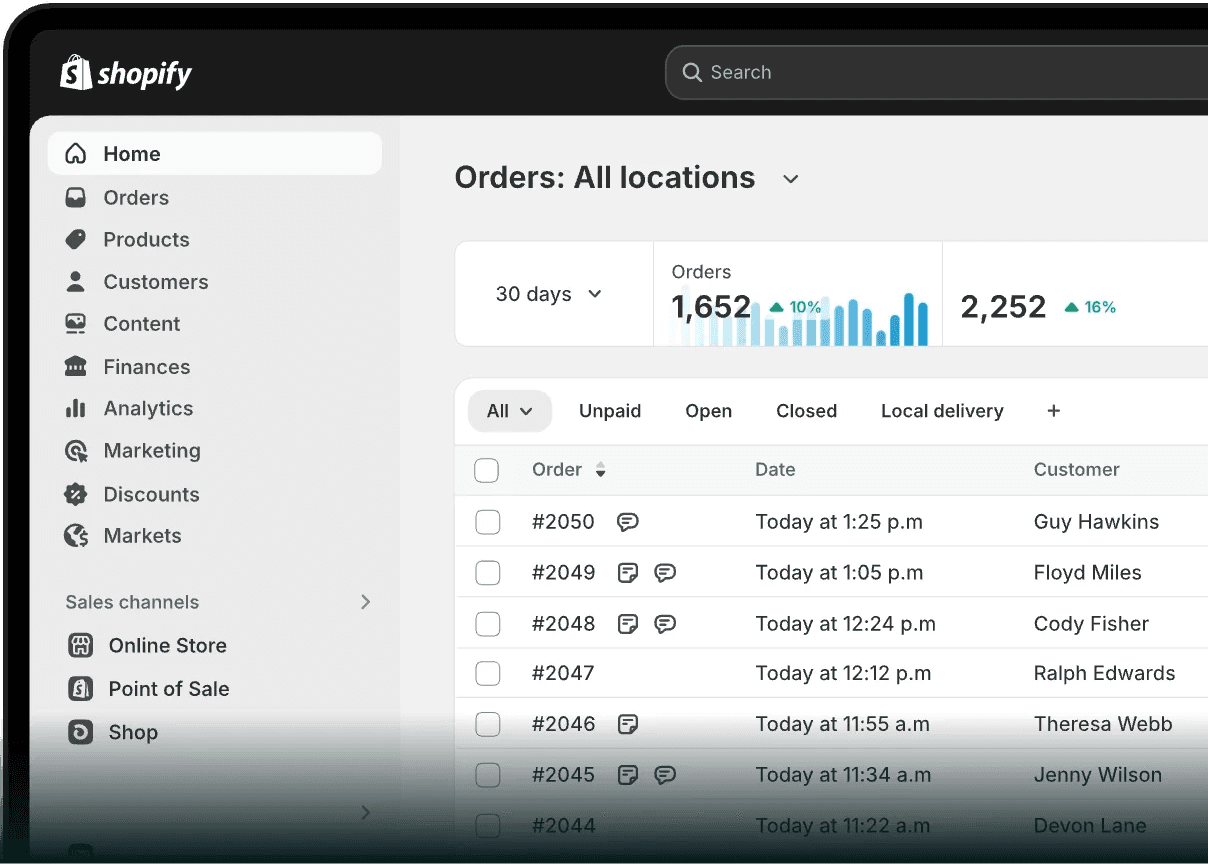
Shopify offers a visually clean and well-organized interface, but its wide range of features means there’s a longer learning curve. When you first log in, you’ll find a variety of menus, integrations to set up, marketing tools, SEO settings, and external apps to manage.
Don’t worry, Shopify provides plenty of resources to help you get started smoothly:
Comprehensive tutorials to guide you step by step,
A well-documented help center with detailed explanations,
24/7 customer support ready to assist whenever you need help.
Once you get used to the system, Shopify quickly becomes intuitive. The initial learning phase is a small trade-off for the long-term flexibility and growth potential the platform offers once you master its ecosystem.
Which Platform Is Best for Beginners?
If you want to launch a dropshipping store quickly within just a few hours, without training or reading technical guides, Big Cartel is the most straightforward choice. It provides a clean, simple, and clutter-free environment that helps you start selling fast.
If you’re willing to invest a bit of time to learn and take advantage of more advanced tools, Shopify is the better long-term option. It offers greater flexibility, scalability, and access to powerful integrations that can grow with your business.
7. Performance and Scalability

Is your dropshipping store attracting more visitors and starting to receive frequent orders? Then, the technical performance of your platform becomes crucial. This often-overlooked factor directly affects your:
Loading speed,
Traffic management,
Ability to scale as your business grows.
Big Cartel: Built for Small Businesses
Big Cartel is a lightweight and simple platform, ideal for managing a modest number of products and moderate traffic. With its top-tier plan, you can handle up to 500 products, which is perfectly suitable for independent creators and small brands.
Product hosting is managed directly by Big Cartel, so you don’t have to worry about the technical side of things. However, the platform lacks advanced tools for handling high-traffic spikes and doesn’t include built-in services for performance optimization or faster page loading times.
Shopify: Designed for Growth
Shopify is built for scaling businesses. Whether you manage 100 or 10,000 products, the platform maintains smooth performance without compromise.
Shopify provides:
Secure cloud hosting, optimized for large-scale operations,
Fast page loading, even with extensive product catalogs,
Integration with CDN tools to accelerate response times,
Advanced features to handle traffic peaks during sales, events, or product launches,
Seamless order management, even at high volumes.
For enterprises managing massive sales volume, Shopify Plus offers a dedicated environment able to handle thousands of orders per hour, which has become a must-have for large, fast-growing e-commerce brands.
Which Platform Should You Choose?
If you’re managing a small number of products, Big Cartel is the ideal platform. It’s simple, reliable, and easy to use, making it perfect for small-scale sellers. However, it quickly reaches its limits once your business starts to grow.
If you’re handling a large product catalog and your dropshipping store continues to expand, go with Shopify. It’s built to handle high traffic, international sales, and hundreds of products effortlessly. Shopify is the best choice if your goal is to scale your business and build a sustainable e-commerce brand.

Which Platform Offers the Best Value for Your Project?

If you want to test an e-commerce project without investing, go with Big Cartel. Its free plan is enough to get started, and its paid plans remain affordable, helping you keep full control over your budget.
If you’re looking for a robust, all-in-one, and scalable platform that can grow with your business, Shopify is the better choice, though it does require a higher monthly budget.
Ultimately, your decision depends on your business stage and goals. For a simple launch, Big Cartel is ideal. But for a structured or fast-growing business, Shopify offers the flexibility and power you’ll need to scale successfully.
6. Ease of Use and User-Friendliness

If you’re new to e-commerce, ease of use is a key factor when choosing your platform. A complex interface can be overwhelming for beginners, while an intuitive tool makes it easy to launch your store quickly and without technical roadblocks.
Big Cartel: Simplicity at Its Best
Big Cartel is built for non-technical users. Its clean and minimal interface includes only the essentials:
Adding new products,
Editing product pages,
Tracking orders,
Changing your store’s appearance.
No coding skills are required to use Big Cartel. The entire admin panel is straightforward, allowing you to manage your site in just a few clicks without complex setup. This simplicity helps you focus on creating and publishing products quickly instead of worrying about technical details.
Even integrating third-party tools like Printful or Spocket is easy, a few short tutorials are all you need. This user-friendly approach makes Big Cartel especially appealing for newcomers who want to test dropshipping without getting lost in complicated configurations.
Shopify: More Powerful, But More Complex

Shopify offers a visually clean and well-organized interface, but its wide range of features means there’s a longer learning curve. When you first log in, you’ll find a variety of menus, integrations to set up, marketing tools, SEO settings, and external apps to manage.
Don’t worry, Shopify provides plenty of resources to help you get started smoothly:
Comprehensive tutorials to guide you step by step,
A well-documented help center with detailed explanations,
24/7 customer support ready to assist whenever you need help.
Once you get used to the system, Shopify quickly becomes intuitive. The initial learning phase is a small trade-off for the long-term flexibility and growth potential the platform offers once you master its ecosystem.
Which Platform Is Best for Beginners?
If you want to launch a dropshipping store quickly within just a few hours, without training or reading technical guides, Big Cartel is the most straightforward choice. It provides a clean, simple, and clutter-free environment that helps you start selling fast.
If you’re willing to invest a bit of time to learn and take advantage of more advanced tools, Shopify is the better long-term option. It offers greater flexibility, scalability, and access to powerful integrations that can grow with your business.
7. Performance and Scalability

Is your dropshipping store attracting more visitors and starting to receive frequent orders? Then, the technical performance of your platform becomes crucial. This often-overlooked factor directly affects your:
Loading speed,
Traffic management,
Ability to scale as your business grows.
Big Cartel: Built for Small Businesses
Big Cartel is a lightweight and simple platform, ideal for managing a modest number of products and moderate traffic. With its top-tier plan, you can handle up to 500 products, which is perfectly suitable for independent creators and small brands.
Product hosting is managed directly by Big Cartel, so you don’t have to worry about the technical side of things. However, the platform lacks advanced tools for handling high-traffic spikes and doesn’t include built-in services for performance optimization or faster page loading times.
Shopify: Designed for Growth

Shopify is built for scaling businesses. Whether you manage 100 or 10,000 products, the platform maintains smooth performance without compromise.
Shopify provides:
Secure cloud hosting, optimized for large-scale operations,
Fast page loading, even with extensive product catalogs,
Integration with CDN tools to accelerate response times,
Advanced features to handle traffic peaks during sales, events, or product launches,
Seamless order management, even at high volumes.
For enterprises managing massive sales volume, Shopify Plus offers a dedicated environment able to handle thousands of orders per hour, which has become a must-have for large, fast-growing e-commerce brands.
Which Platform Should You Choose?
If you’re managing a small number of products, Big Cartel is the ideal platform. It’s simple, reliable, and easy to use, making it perfect for small-scale sellers. However, it quickly reaches its limits once your business starts to grow.
If you’re handling a large product catalog and your dropshipping store continues to expand, go with Shopify. It’s built to handle high traffic, international sales, and hundreds of products effortlessly. Shopify is the best choice if your goal is to scale your business and build a sustainable e-commerce brand.
Which Platform Offers the Best Value for Your Project?

If you want to test an e-commerce project without investing, go with Big Cartel. Its free plan is enough to get started, and its paid plans remain affordable, helping you keep full control over your budget.
If you’re looking for a robust, all-in-one, and scalable platform that can grow with your business, Shopify is the better choice, though it does require a higher monthly budget.
Ultimately, your decision depends on your business stage and goals. For a simple launch, Big Cartel is ideal. But for a structured or fast-growing business, Shopify offers the flexibility and power you’ll need to scale successfully.
6. Ease of Use and User-Friendliness

If you’re new to e-commerce, ease of use is a key factor when choosing your platform. A complex interface can be overwhelming for beginners, while an intuitive tool makes it easy to launch your store quickly and without technical roadblocks.
Big Cartel: Simplicity at Its Best
Big Cartel is built for non-technical users. Its clean and minimal interface includes only the essentials:
Adding new products,
Editing product pages,
Tracking orders,
Changing your store’s appearance.
No coding skills are required to use Big Cartel. The entire admin panel is straightforward, allowing you to manage your site in just a few clicks without complex setup. This simplicity helps you focus on creating and publishing products quickly instead of worrying about technical details.
Even integrating third-party tools like Printful or Spocket is easy, a few short tutorials are all you need. This user-friendly approach makes Big Cartel especially appealing for newcomers who want to test dropshipping without getting lost in complicated configurations.
Shopify: More Powerful, But More Complex

Shopify offers a visually clean and well-organized interface, but its wide range of features means there’s a longer learning curve. When you first log in, you’ll find a variety of menus, integrations to set up, marketing tools, SEO settings, and external apps to manage.
Don’t worry, Shopify provides plenty of resources to help you get started smoothly:
Comprehensive tutorials to guide you step by step,
A well-documented help center with detailed explanations,
24/7 customer support ready to assist whenever you need help.
Once you get used to the system, Shopify quickly becomes intuitive. The initial learning phase is a small trade-off for the long-term flexibility and growth potential the platform offers once you master its ecosystem.
Which Platform Is Best for Beginners?
If you want to launch a dropshipping store quickly within just a few hours, without training or reading technical guides, Big Cartel is the most straightforward choice. It provides a clean, simple, and clutter-free environment that helps you start selling fast.
If you’re willing to invest a bit of time to learn and take advantage of more advanced tools, Shopify is the better long-term option. It offers greater flexibility, scalability, and access to powerful integrations that can grow with your business.
7. Performance and Scalability

Is your dropshipping store attracting more visitors and starting to receive frequent orders? Then, the technical performance of your platform becomes crucial. This often-overlooked factor directly affects your:
Loading speed,
Traffic management,
Ability to scale as your business grows.
Big Cartel: Built for Small Businesses
Big Cartel is a lightweight and simple platform, ideal for managing a modest number of products and moderate traffic. With its top-tier plan, you can handle up to 500 products, which is perfectly suitable for independent creators and small brands.
Product hosting is managed directly by Big Cartel, so you don’t have to worry about the technical side of things. However, the platform lacks advanced tools for handling high-traffic spikes and doesn’t include built-in services for performance optimization or faster page loading times.
Shopify: Designed for Growth

Shopify is built for scaling businesses. Whether you manage 100 or 10,000 products, the platform maintains smooth performance without compromise.
Shopify provides:
Secure cloud hosting, optimized for large-scale operations,
Fast page loading, even with extensive product catalogs,
Integration with CDN tools to accelerate response times,
Advanced features to handle traffic peaks during sales, events, or product launches,
Seamless order management, even at high volumes.
For enterprises managing massive sales volume, Shopify Plus offers a dedicated environment able to handle thousands of orders per hour, which has become a must-have for large, fast-growing e-commerce brands.
Which Platform Should You Choose?
If you’re managing a small number of products, Big Cartel is the ideal platform. It’s simple, reliable, and easy to use, making it perfect for small-scale sellers. However, it quickly reaches its limits once your business starts to grow.
If you’re handling a large product catalog and your dropshipping store continues to expand, go with Shopify. It’s built to handle high traffic, international sales, and hundreds of products effortlessly. Shopify is the best choice if your goal is to scale your business and build a sustainable e-commerce brand.
Which Platform Offers the Best Value for Your Project?

If you want to test an e-commerce project without investing, go with Big Cartel. Its free plan is enough to get started, and its paid plans remain affordable, helping you keep full control over your budget.
If you’re looking for a robust, all-in-one, and scalable platform that can grow with your business, Shopify is the better choice, though it does require a higher monthly budget.
Ultimately, your decision depends on your business stage and goals. For a simple launch, Big Cartel is ideal. But for a structured or fast-growing business, Shopify offers the flexibility and power you’ll need to scale successfully.
6. Ease of Use and User-Friendliness

If you’re new to e-commerce, ease of use is a key factor when choosing your platform. A complex interface can be overwhelming for beginners, while an intuitive tool makes it easy to launch your store quickly and without technical roadblocks.
Big Cartel: Simplicity at Its Best
Big Cartel is built for non-technical users. Its clean and minimal interface includes only the essentials:
Adding new products,
Editing product pages,
Tracking orders,
Changing your store’s appearance.
No coding skills are required to use Big Cartel. The entire admin panel is straightforward, allowing you to manage your site in just a few clicks without complex setup. This simplicity helps you focus on creating and publishing products quickly instead of worrying about technical details.
Even integrating third-party tools like Printful or Spocket is easy, a few short tutorials are all you need. This user-friendly approach makes Big Cartel especially appealing for newcomers who want to test dropshipping without getting lost in complicated configurations.
Shopify: More Powerful, But More Complex

Shopify offers a visually clean and well-organized interface, but its wide range of features means there’s a longer learning curve. When you first log in, you’ll find a variety of menus, integrations to set up, marketing tools, SEO settings, and external apps to manage.
Don’t worry, Shopify provides plenty of resources to help you get started smoothly:
Comprehensive tutorials to guide you step by step,
A well-documented help center with detailed explanations,
24/7 customer support ready to assist whenever you need help.
Once you get used to the system, Shopify quickly becomes intuitive. The initial learning phase is a small trade-off for the long-term flexibility and growth potential the platform offers once you master its ecosystem.
Which Platform Is Best for Beginners?
If you want to launch a dropshipping store quickly within just a few hours, without training or reading technical guides, Big Cartel is the most straightforward choice. It provides a clean, simple, and clutter-free environment that helps you start selling fast.
If you’re willing to invest a bit of time to learn and take advantage of more advanced tools, Shopify is the better long-term option. It offers greater flexibility, scalability, and access to powerful integrations that can grow with your business.
7. Performance and Scalability

Is your dropshipping store attracting more visitors and starting to receive frequent orders? Then, the technical performance of your platform becomes crucial. This often-overlooked factor directly affects your:
Loading speed,
Traffic management,
Ability to scale as your business grows.
Big Cartel: Built for Small Businesses
Big Cartel is a lightweight and simple platform, ideal for managing a modest number of products and moderate traffic. With its top-tier plan, you can handle up to 500 products, which is perfectly suitable for independent creators and small brands.
Product hosting is managed directly by Big Cartel, so you don’t have to worry about the technical side of things. However, the platform lacks advanced tools for handling high-traffic spikes and doesn’t include built-in services for performance optimization or faster page loading times.
Shopify: Designed for Growth

Shopify is built for scaling businesses. Whether you manage 100 or 10,000 products, the platform maintains smooth performance without compromise.
Shopify provides:
Secure cloud hosting, optimized for large-scale operations,
Fast page loading, even with extensive product catalogs,
Integration with CDN tools to accelerate response times,
Advanced features to handle traffic peaks during sales, events, or product launches,
Seamless order management, even at high volumes.
For enterprises managing massive sales volume, Shopify Plus offers a dedicated environment able to handle thousands of orders per hour, which has become a must-have for large, fast-growing e-commerce brands.
Which Platform Should You Choose?
If you’re managing a small number of products, Big Cartel is the ideal platform. It’s simple, reliable, and easy to use, making it perfect for small-scale sellers. However, it quickly reaches its limits once your business starts to grow.
If you’re handling a large product catalog and your dropshipping store continues to expand, go with Shopify. It’s built to handle high traffic, international sales, and hundreds of products effortlessly. Shopify is the best choice if your goal is to scale your business and build a sustainable e-commerce brand.
Which Platform Offers the Best Value for Your Project?

If you want to test an e-commerce project without investing, go with Big Cartel. Its free plan is enough to get started, and its paid plans remain affordable, helping you keep full control over your budget.
If you’re looking for a robust, all-in-one, and scalable platform that can grow with your business, Shopify is the better choice, though it does require a higher monthly budget.
Ultimately, your decision depends on your business stage and goals. For a simple launch, Big Cartel is ideal. But for a structured or fast-growing business, Shopify offers the flexibility and power you’ll need to scale successfully.
6. Ease of Use and User-Friendliness

If you’re new to e-commerce, ease of use is a key factor when choosing your platform. A complex interface can be overwhelming for beginners, while an intuitive tool makes it easy to launch your store quickly and without technical roadblocks.
Big Cartel: Simplicity at Its Best
Big Cartel is built for non-technical users. Its clean and minimal interface includes only the essentials:
Adding new products,
Editing product pages,
Tracking orders,
Changing your store’s appearance.
No coding skills are required to use Big Cartel. The entire admin panel is straightforward, allowing you to manage your site in just a few clicks without complex setup. This simplicity helps you focus on creating and publishing products quickly instead of worrying about technical details.
Even integrating third-party tools like Printful or Spocket is easy, a few short tutorials are all you need. This user-friendly approach makes Big Cartel especially appealing for newcomers who want to test dropshipping without getting lost in complicated configurations.
Shopify: More Powerful, But More Complex

Shopify offers a visually clean and well-organized interface, but its wide range of features means there’s a longer learning curve. When you first log in, you’ll find a variety of menus, integrations to set up, marketing tools, SEO settings, and external apps to manage.
Don’t worry, Shopify provides plenty of resources to help you get started smoothly:
Comprehensive tutorials to guide you step by step,
A well-documented help center with detailed explanations,
24/7 customer support ready to assist whenever you need help.
Once you get used to the system, Shopify quickly becomes intuitive. The initial learning phase is a small trade-off for the long-term flexibility and growth potential the platform offers once you master its ecosystem.
Which Platform Is Best for Beginners?
If you want to launch a dropshipping store quickly within just a few hours, without training or reading technical guides, Big Cartel is the most straightforward choice. It provides a clean, simple, and clutter-free environment that helps you start selling fast.
If you’re willing to invest a bit of time to learn and take advantage of more advanced tools, Shopify is the better long-term option. It offers greater flexibility, scalability, and access to powerful integrations that can grow with your business.
7. Performance and Scalability

Is your dropshipping store attracting more visitors and starting to receive frequent orders? Then, the technical performance of your platform becomes crucial. This often-overlooked factor directly affects your:
Loading speed,
Traffic management,
Ability to scale as your business grows.
Big Cartel: Built for Small Businesses
Big Cartel is a lightweight and simple platform, ideal for managing a modest number of products and moderate traffic. With its top-tier plan, you can handle up to 500 products, which is perfectly suitable for independent creators and small brands.
Product hosting is managed directly by Big Cartel, so you don’t have to worry about the technical side of things. However, the platform lacks advanced tools for handling high-traffic spikes and doesn’t include built-in services for performance optimization or faster page loading times.
Shopify: Designed for Growth

Shopify is built for scaling businesses. Whether you manage 100 or 10,000 products, the platform maintains smooth performance without compromise.
Shopify provides:
Secure cloud hosting, optimized for large-scale operations,
Fast page loading, even with extensive product catalogs,
Integration with CDN tools to accelerate response times,
Advanced features to handle traffic peaks during sales, events, or product launches,
Seamless order management, even at high volumes.
For enterprises managing massive sales volume, Shopify Plus offers a dedicated environment able to handle thousands of orders per hour, which has become a must-have for large, fast-growing e-commerce brands.
Which Platform Should You Choose?
If you’re managing a small number of products, Big Cartel is the ideal platform. It’s simple, reliable, and easy to use, making it perfect for small-scale sellers. However, it quickly reaches its limits once your business starts to grow.
If you’re handling a large product catalog and your dropshipping store continues to expand, go with Shopify. It’s built to handle high traffic, international sales, and hundreds of products effortlessly. Shopify is the best choice if your goal is to scale your business and build a sustainable e-commerce brand.
Which Platform Offers the Best Value for Your Project?

If you want to test an e-commerce project without investing, go with Big Cartel. Its free plan is enough to get started, and its paid plans remain affordable, helping you keep full control over your budget.
If you’re looking for a robust, all-in-one, and scalable platform that can grow with your business, Shopify is the better choice, though it does require a higher monthly budget.
Ultimately, your decision depends on your business stage and goals. For a simple launch, Big Cartel is ideal. But for a structured or fast-growing business, Shopify offers the flexibility and power you’ll need to scale successfully.
6. Ease of Use and User-Friendliness

If you’re new to e-commerce, ease of use is a key factor when choosing your platform. A complex interface can be overwhelming for beginners, while an intuitive tool makes it easy to launch your store quickly and without technical roadblocks.
Big Cartel: Simplicity at Its Best
Big Cartel is built for non-technical users. Its clean and minimal interface includes only the essentials:
Adding new products,
Editing product pages,
Tracking orders,
Changing your store’s appearance.
No coding skills are required to use Big Cartel. The entire admin panel is straightforward, allowing you to manage your site in just a few clicks without complex setup. This simplicity helps you focus on creating and publishing products quickly instead of worrying about technical details.
Even integrating third-party tools like Printful or Spocket is easy, a few short tutorials are all you need. This user-friendly approach makes Big Cartel especially appealing for newcomers who want to test dropshipping without getting lost in complicated configurations.
Shopify: More Powerful, But More Complex

Shopify offers a visually clean and well-organized interface, but its wide range of features means there’s a longer learning curve. When you first log in, you’ll find a variety of menus, integrations to set up, marketing tools, SEO settings, and external apps to manage.
Don’t worry, Shopify provides plenty of resources to help you get started smoothly:
Comprehensive tutorials to guide you step by step,
A well-documented help center with detailed explanations,
24/7 customer support ready to assist whenever you need help.
Once you get used to the system, Shopify quickly becomes intuitive. The initial learning phase is a small trade-off for the long-term flexibility and growth potential the platform offers once you master its ecosystem.
Which Platform Is Best for Beginners?
If you want to launch a dropshipping store quickly within just a few hours, without training or reading technical guides, Big Cartel is the most straightforward choice. It provides a clean, simple, and clutter-free environment that helps you start selling fast.
If you’re willing to invest a bit of time to learn and take advantage of more advanced tools, Shopify is the better long-term option. It offers greater flexibility, scalability, and access to powerful integrations that can grow with your business.
7. Performance and Scalability

Is your dropshipping store attracting more visitors and starting to receive frequent orders? Then, the technical performance of your platform becomes crucial. This often-overlooked factor directly affects your:
Loading speed,
Traffic management,
Ability to scale as your business grows.
Big Cartel: Built for Small Businesses
Big Cartel is a lightweight and simple platform, ideal for managing a modest number of products and moderate traffic. With its top-tier plan, you can handle up to 500 products, which is perfectly suitable for independent creators and small brands.
Product hosting is managed directly by Big Cartel, so you don’t have to worry about the technical side of things. However, the platform lacks advanced tools for handling high-traffic spikes and doesn’t include built-in services for performance optimization or faster page loading times.
Shopify: Designed for Growth

Shopify is built for scaling businesses. Whether you manage 100 or 10,000 products, the platform maintains smooth performance without compromise.
Shopify provides:
Secure cloud hosting, optimized for large-scale operations,
Fast page loading, even with extensive product catalogs,
Integration with CDN tools to accelerate response times,
Advanced features to handle traffic peaks during sales, events, or product launches,
Seamless order management, even at high volumes.
For enterprises managing massive sales volume, Shopify Plus offers a dedicated environment able to handle thousands of orders per hour, which has become a must-have for large, fast-growing e-commerce brands.
Which Platform Should You Choose?
If you’re managing a small number of products, Big Cartel is the ideal platform. It’s simple, reliable, and easy to use, making it perfect for small-scale sellers. However, it quickly reaches its limits once your business starts to grow.
If you’re handling a large product catalog and your dropshipping store continues to expand, go with Shopify. It’s built to handle high traffic, international sales, and hundreds of products effortlessly. Shopify is the best choice if your goal is to scale your business and build a sustainable e-commerce brand.
8. Customer Support and Resources

If you’re new to e-commerce, having reliable customer support is essential. A platform that offers responsive, well-documented, and accessible assistance can help you:
Save time,
Avoid technical issues,
Grow your business with confidence.
Big Cartel: Basic but Reliable Support
Big Cartel provides email-based assistance, available on weekdays during standard U.S. business hours. The support team’s responses are clear, friendly, and helpful, though response times may vary depending on demand.
The platform also offers an online help center for dropshippers, covering essential features such as:
Adding products,
Customizing store themes,
Integrating external services like Printful or PayPal.
These resources are sufficient for basic store management, but they quickly become limited when more technical or advanced needs arise.
Big Cartel does not offer live chat or phone support, nor does it have a large user community or structured forum. As a result, it’s best suited for small projects or entrepreneurs who don’t require instant assistance and prefer a simple, low-maintenance platform without technical complexity.
Shopify: A Complete Multichannel Support Ecosystem

Shopify offers 24/7 customer support, available through multiple channels:
Live chat,
Email,
Phone (in select countries),
And an active community forum.
This multichannel support is a huge advantage for international users. No matter where you are, you can reach a Shopify advisor anytime for help with technical issues, payment questions, or store setup guidance.
In addition, Shopify provides one of the most comprehensive help centers in the e-commerce industry, featuring:
Step-by-step guides,
Video tutorials,
Resources on SEO, marketing, and automation.
Shopify also offers free training courses through Shopify Learn, making it easy for beginners to develop their skills and grow their online business efficiently.
Which Platform Offers the Best Support for Dropshippers?
If you’re looking for daily guidance, quick responses, and global support, Shopify is the best option. Its customer service team assists users at every stage of their journey, making it a reliable and reassuring platform for anyone aiming to grow their dropshipping business.
Big Cartel, on the other hand, is better suited for independent sellers with simple needs who don’t rely on real-time assistance. It’s a minimalist solution ideal for entrepreneurs who prefer a hands-off, easy-to-manage platform.
9. Conclusion and Recommendation
The choice between Big Cartel vs Shopify ultimately depends on your e-commerce goals.
Big Cartel is perfect for beginners who want to start simply and for free, managing a limited number of products without technical hurdles.
Shopify, on the other hand, is a more complete and scalable solution, ideal for entrepreneurs who want to professionalize and grow their dropshipping store over time.
If your priority is simplicity, go with Big Cartel. But if you’re ready to automate processes, scale your business, and sell across multiple channels, Shopify is the better long-term investment.
In any case, make your decision based on your goals, budget, and technical comfort level. The right e-commerce platform is the one that can truly grow alongside your business.
FAQ – Big Cartel vs Shopify
Which is better: Big Cartel or Shopify?
It depends on your needs. Big Cartel is ideal for beginners, artists, and small shops that want a simple start with minimal costs. Shopify, on the other hand, is better for growing businesses that need automation, scalability, and multi-channel selling.
Is Big Cartel free to use?
Yes, Big Cartel offers a free plan that lets you sell up to five products. Paid plans start at $9.99/month, providing more product slots and advanced features, all with no hidden fees.
How much of a cut does Big Cartel take?
Big Cartel doesn’t take a cut of your sales. You only pay the monthly subscription fee (if you’re on a paid plan) and standard payment processor fees from Stripe or PayPal.
Who is Shopify’s biggest competitor?
Shopify’s main competitors include WooCommerce, BigCommerce, Wix eCommerce, and Squarespace. Each platform offers different strengths depending on your business model, pricing needs, and level of customization.
How much does Shopify take from a $100 sale?
It depends on your plan and payment method. If you use Shopify Payments, there’s no extra transaction fee, only the card processing fee (around 2.9% + $0.30). On the Basic plan with third-party processors, Shopify takes an additional 2%, meaning you’d keep about $97–$98 from a $100 sale.
8. Customer Support and Resources

If you’re new to e-commerce, having reliable customer support is essential. A platform that offers responsive, well-documented, and accessible assistance can help you:
Save time,
Avoid technical issues,
Grow your business with confidence.
Big Cartel: Basic but Reliable Support
Big Cartel provides email-based assistance, available on weekdays during standard U.S. business hours. The support team’s responses are clear, friendly, and helpful, though response times may vary depending on demand.
The platform also offers an online help center for dropshippers, covering essential features such as:
Adding products,
Customizing store themes,
Integrating external services like Printful or PayPal.
These resources are sufficient for basic store management, but they quickly become limited when more technical or advanced needs arise.
Big Cartel does not offer live chat or phone support, nor does it have a large user community or structured forum. As a result, it’s best suited for small projects or entrepreneurs who don’t require instant assistance and prefer a simple, low-maintenance platform without technical complexity.
Shopify: A Complete Multichannel Support Ecosystem

Shopify offers 24/7 customer support, available through multiple channels:
Live chat,
Email,
Phone (in select countries),
And an active community forum.
This multichannel support is a huge advantage for international users. No matter where you are, you can reach a Shopify advisor anytime for help with technical issues, payment questions, or store setup guidance.
In addition, Shopify provides one of the most comprehensive help centers in the e-commerce industry, featuring:
Step-by-step guides,
Video tutorials,
Resources on SEO, marketing, and automation.
Shopify also offers free training courses through Shopify Learn, making it easy for beginners to develop their skills and grow their online business efficiently.
Which Platform Offers the Best Support for Dropshippers?
If you’re looking for daily guidance, quick responses, and global support, Shopify is the best option. Its customer service team assists users at every stage of their journey, making it a reliable and reassuring platform for anyone aiming to grow their dropshipping business.
Big Cartel, on the other hand, is better suited for independent sellers with simple needs who don’t rely on real-time assistance. It’s a minimalist solution ideal for entrepreneurs who prefer a hands-off, easy-to-manage platform.
9. Conclusion and Recommendation
The choice between Big Cartel vs Shopify ultimately depends on your e-commerce goals.
Big Cartel is perfect for beginners who want to start simply and for free, managing a limited number of products without technical hurdles.
Shopify, on the other hand, is a more complete and scalable solution, ideal for entrepreneurs who want to professionalize and grow their dropshipping store over time.
If your priority is simplicity, go with Big Cartel. But if you’re ready to automate processes, scale your business, and sell across multiple channels, Shopify is the better long-term investment.
In any case, make your decision based on your goals, budget, and technical comfort level. The right e-commerce platform is the one that can truly grow alongside your business.
FAQ – Big Cartel vs Shopify
Which is better: Big Cartel or Shopify?
It depends on your needs. Big Cartel is ideal for beginners, artists, and small shops that want a simple start with minimal costs. Shopify, on the other hand, is better for growing businesses that need automation, scalability, and multi-channel selling.
Is Big Cartel free to use?
Yes, Big Cartel offers a free plan that lets you sell up to five products. Paid plans start at $9.99/month, providing more product slots and advanced features, all with no hidden fees.
How much of a cut does Big Cartel take?
Big Cartel doesn’t take a cut of your sales. You only pay the monthly subscription fee (if you’re on a paid plan) and standard payment processor fees from Stripe or PayPal.
Who is Shopify’s biggest competitor?
Shopify’s main competitors include WooCommerce, BigCommerce, Wix eCommerce, and Squarespace. Each platform offers different strengths depending on your business model, pricing needs, and level of customization.
How much does Shopify take from a $100 sale?
It depends on your plan and payment method. If you use Shopify Payments, there’s no extra transaction fee, only the card processing fee (around 2.9% + $0.30). On the Basic plan with third-party processors, Shopify takes an additional 2%, meaning you’d keep about $97–$98 from a $100 sale.
8. Customer Support and Resources

If you’re new to e-commerce, having reliable customer support is essential. A platform that offers responsive, well-documented, and accessible assistance can help you:
Save time,
Avoid technical issues,
Grow your business with confidence.
Big Cartel: Basic but Reliable Support
Big Cartel provides email-based assistance, available on weekdays during standard U.S. business hours. The support team’s responses are clear, friendly, and helpful, though response times may vary depending on demand.
The platform also offers an online help center for dropshippers, covering essential features such as:
Adding products,
Customizing store themes,
Integrating external services like Printful or PayPal.
These resources are sufficient for basic store management, but they quickly become limited when more technical or advanced needs arise.
Big Cartel does not offer live chat or phone support, nor does it have a large user community or structured forum. As a result, it’s best suited for small projects or entrepreneurs who don’t require instant assistance and prefer a simple, low-maintenance platform without technical complexity.
Shopify: A Complete Multichannel Support Ecosystem

Shopify offers 24/7 customer support, available through multiple channels:
Live chat,
Email,
Phone (in select countries),
And an active community forum.
This multichannel support is a huge advantage for international users. No matter where you are, you can reach a Shopify advisor anytime for help with technical issues, payment questions, or store setup guidance.
In addition, Shopify provides one of the most comprehensive help centers in the e-commerce industry, featuring:
Step-by-step guides,
Video tutorials,
Resources on SEO, marketing, and automation.
Shopify also offers free training courses through Shopify Learn, making it easy for beginners to develop their skills and grow their online business efficiently.
Which Platform Offers the Best Support for Dropshippers?
If you’re looking for daily guidance, quick responses, and global support, Shopify is the best option. Its customer service team assists users at every stage of their journey, making it a reliable and reassuring platform for anyone aiming to grow their dropshipping business.
Big Cartel, on the other hand, is better suited for independent sellers with simple needs who don’t rely on real-time assistance. It’s a minimalist solution ideal for entrepreneurs who prefer a hands-off, easy-to-manage platform.
9. Conclusion and Recommendation
The choice between Big Cartel vs Shopify ultimately depends on your e-commerce goals.
Big Cartel is perfect for beginners who want to start simply and for free, managing a limited number of products without technical hurdles.
Shopify, on the other hand, is a more complete and scalable solution, ideal for entrepreneurs who want to professionalize and grow their dropshipping store over time.
If your priority is simplicity, go with Big Cartel. But if you’re ready to automate processes, scale your business, and sell across multiple channels, Shopify is the better long-term investment.
In any case, make your decision based on your goals, budget, and technical comfort level. The right e-commerce platform is the one that can truly grow alongside your business.
FAQ – Big Cartel vs Shopify
Which is better: Big Cartel or Shopify?
It depends on your needs. Big Cartel is ideal for beginners, artists, and small shops that want a simple start with minimal costs. Shopify, on the other hand, is better for growing businesses that need automation, scalability, and multi-channel selling.
Is Big Cartel free to use?
Yes, Big Cartel offers a free plan that lets you sell up to five products. Paid plans start at $9.99/month, providing more product slots and advanced features, all with no hidden fees.
How much of a cut does Big Cartel take?
Big Cartel doesn’t take a cut of your sales. You only pay the monthly subscription fee (if you’re on a paid plan) and standard payment processor fees from Stripe or PayPal.
Who is Shopify’s biggest competitor?
Shopify’s main competitors include WooCommerce, BigCommerce, Wix eCommerce, and Squarespace. Each platform offers different strengths depending on your business model, pricing needs, and level of customization.
How much does Shopify take from a $100 sale?
It depends on your plan and payment method. If you use Shopify Payments, there’s no extra transaction fee, only the card processing fee (around 2.9% + $0.30). On the Basic plan with third-party processors, Shopify takes an additional 2%, meaning you’d keep about $97–$98 from a $100 sale.
8. Customer Support and Resources

If you’re new to e-commerce, having reliable customer support is essential. A platform that offers responsive, well-documented, and accessible assistance can help you:
Save time,
Avoid technical issues,
Grow your business with confidence.
Big Cartel: Basic but Reliable Support
Big Cartel provides email-based assistance, available on weekdays during standard U.S. business hours. The support team’s responses are clear, friendly, and helpful, though response times may vary depending on demand.
The platform also offers an online help center for dropshippers, covering essential features such as:
Adding products,
Customizing store themes,
Integrating external services like Printful or PayPal.
These resources are sufficient for basic store management, but they quickly become limited when more technical or advanced needs arise.
Big Cartel does not offer live chat or phone support, nor does it have a large user community or structured forum. As a result, it’s best suited for small projects or entrepreneurs who don’t require instant assistance and prefer a simple, low-maintenance platform without technical complexity.
Shopify: A Complete Multichannel Support Ecosystem

Shopify offers 24/7 customer support, available through multiple channels:
Live chat,
Email,
Phone (in select countries),
And an active community forum.
This multichannel support is a huge advantage for international users. No matter where you are, you can reach a Shopify advisor anytime for help with technical issues, payment questions, or store setup guidance.
In addition, Shopify provides one of the most comprehensive help centers in the e-commerce industry, featuring:
Step-by-step guides,
Video tutorials,
Resources on SEO, marketing, and automation.
Shopify also offers free training courses through Shopify Learn, making it easy for beginners to develop their skills and grow their online business efficiently.
Which Platform Offers the Best Support for Dropshippers?
If you’re looking for daily guidance, quick responses, and global support, Shopify is the best option. Its customer service team assists users at every stage of their journey, making it a reliable and reassuring platform for anyone aiming to grow their dropshipping business.
Big Cartel, on the other hand, is better suited for independent sellers with simple needs who don’t rely on real-time assistance. It’s a minimalist solution ideal for entrepreneurs who prefer a hands-off, easy-to-manage platform.
9. Conclusion and Recommendation
The choice between Big Cartel vs Shopify ultimately depends on your e-commerce goals.
Big Cartel is perfect for beginners who want to start simply and for free, managing a limited number of products without technical hurdles.
Shopify, on the other hand, is a more complete and scalable solution, ideal for entrepreneurs who want to professionalize and grow their dropshipping store over time.
If your priority is simplicity, go with Big Cartel. But if you’re ready to automate processes, scale your business, and sell across multiple channels, Shopify is the better long-term investment.
In any case, make your decision based on your goals, budget, and technical comfort level. The right e-commerce platform is the one that can truly grow alongside your business.
FAQ – Big Cartel vs Shopify
Which is better: Big Cartel or Shopify?
It depends on your needs. Big Cartel is ideal for beginners, artists, and small shops that want a simple start with minimal costs. Shopify, on the other hand, is better for growing businesses that need automation, scalability, and multi-channel selling.
Is Big Cartel free to use?
Yes, Big Cartel offers a free plan that lets you sell up to five products. Paid plans start at $9.99/month, providing more product slots and advanced features, all with no hidden fees.
How much of a cut does Big Cartel take?
Big Cartel doesn’t take a cut of your sales. You only pay the monthly subscription fee (if you’re on a paid plan) and standard payment processor fees from Stripe or PayPal.
Who is Shopify’s biggest competitor?
Shopify’s main competitors include WooCommerce, BigCommerce, Wix eCommerce, and Squarespace. Each platform offers different strengths depending on your business model, pricing needs, and level of customization.
How much does Shopify take from a $100 sale?
It depends on your plan and payment method. If you use Shopify Payments, there’s no extra transaction fee, only the card processing fee (around 2.9% + $0.30). On the Basic plan with third-party processors, Shopify takes an additional 2%, meaning you’d keep about $97–$98 from a $100 sale.
8. Customer Support and Resources

If you’re new to e-commerce, having reliable customer support is essential. A platform that offers responsive, well-documented, and accessible assistance can help you:
Save time,
Avoid technical issues,
Grow your business with confidence.
Big Cartel: Basic but Reliable Support
Big Cartel provides email-based assistance, available on weekdays during standard U.S. business hours. The support team’s responses are clear, friendly, and helpful, though response times may vary depending on demand.
The platform also offers an online help center for dropshippers, covering essential features such as:
Adding products,
Customizing store themes,
Integrating external services like Printful or PayPal.
These resources are sufficient for basic store management, but they quickly become limited when more technical or advanced needs arise.
Big Cartel does not offer live chat or phone support, nor does it have a large user community or structured forum. As a result, it’s best suited for small projects or entrepreneurs who don’t require instant assistance and prefer a simple, low-maintenance platform without technical complexity.
Shopify: A Complete Multichannel Support Ecosystem

Shopify offers 24/7 customer support, available through multiple channels:
Live chat,
Email,
Phone (in select countries),
And an active community forum.
This multichannel support is a huge advantage for international users. No matter where you are, you can reach a Shopify advisor anytime for help with technical issues, payment questions, or store setup guidance.
In addition, Shopify provides one of the most comprehensive help centers in the e-commerce industry, featuring:
Step-by-step guides,
Video tutorials,
Resources on SEO, marketing, and automation.
Shopify also offers free training courses through Shopify Learn, making it easy for beginners to develop their skills and grow their online business efficiently.
Which Platform Offers the Best Support for Dropshippers?
If you’re looking for daily guidance, quick responses, and global support, Shopify is the best option. Its customer service team assists users at every stage of their journey, making it a reliable and reassuring platform for anyone aiming to grow their dropshipping business.
Big Cartel, on the other hand, is better suited for independent sellers with simple needs who don’t rely on real-time assistance. It’s a minimalist solution ideal for entrepreneurs who prefer a hands-off, easy-to-manage platform.
9. Conclusion and Recommendation
The choice between Big Cartel vs Shopify ultimately depends on your e-commerce goals.
Big Cartel is perfect for beginners who want to start simply and for free, managing a limited number of products without technical hurdles.
Shopify, on the other hand, is a more complete and scalable solution, ideal for entrepreneurs who want to professionalize and grow their dropshipping store over time.
If your priority is simplicity, go with Big Cartel. But if you’re ready to automate processes, scale your business, and sell across multiple channels, Shopify is the better long-term investment.
In any case, make your decision based on your goals, budget, and technical comfort level. The right e-commerce platform is the one that can truly grow alongside your business.
FAQ – Big Cartel vs Shopify
Which is better: Big Cartel or Shopify?
It depends on your needs. Big Cartel is ideal for beginners, artists, and small shops that want a simple start with minimal costs. Shopify, on the other hand, is better for growing businesses that need automation, scalability, and multi-channel selling.
Is Big Cartel free to use?
Yes, Big Cartel offers a free plan that lets you sell up to five products. Paid plans start at $9.99/month, providing more product slots and advanced features, all with no hidden fees.
How much of a cut does Big Cartel take?
Big Cartel doesn’t take a cut of your sales. You only pay the monthly subscription fee (if you’re on a paid plan) and standard payment processor fees from Stripe or PayPal.
Who is Shopify’s biggest competitor?
Shopify’s main competitors include WooCommerce, BigCommerce, Wix eCommerce, and Squarespace. Each platform offers different strengths depending on your business model, pricing needs, and level of customization.
How much does Shopify take from a $100 sale?
It depends on your plan and payment method. If you use Shopify Payments, there’s no extra transaction fee, only the card processing fee (around 2.9% + $0.30). On the Basic plan with third-party processors, Shopify takes an additional 2%, meaning you’d keep about $97–$98 from a $100 sale.
8. Customer Support and Resources

If you’re new to e-commerce, having reliable customer support is essential. A platform that offers responsive, well-documented, and accessible assistance can help you:
Save time,
Avoid technical issues,
Grow your business with confidence.
Big Cartel: Basic but Reliable Support
Big Cartel provides email-based assistance, available on weekdays during standard U.S. business hours. The support team’s responses are clear, friendly, and helpful, though response times may vary depending on demand.
The platform also offers an online help center for dropshippers, covering essential features such as:
Adding products,
Customizing store themes,
Integrating external services like Printful or PayPal.
These resources are sufficient for basic store management, but they quickly become limited when more technical or advanced needs arise.
Big Cartel does not offer live chat or phone support, nor does it have a large user community or structured forum. As a result, it’s best suited for small projects or entrepreneurs who don’t require instant assistance and prefer a simple, low-maintenance platform without technical complexity.
Shopify: A Complete Multichannel Support Ecosystem

Shopify offers 24/7 customer support, available through multiple channels:
Live chat,
Email,
Phone (in select countries),
And an active community forum.
This multichannel support is a huge advantage for international users. No matter where you are, you can reach a Shopify advisor anytime for help with technical issues, payment questions, or store setup guidance.
In addition, Shopify provides one of the most comprehensive help centers in the e-commerce industry, featuring:
Step-by-step guides,
Video tutorials,
Resources on SEO, marketing, and automation.
Shopify also offers free training courses through Shopify Learn, making it easy for beginners to develop their skills and grow their online business efficiently.
Which Platform Offers the Best Support for Dropshippers?
If you’re looking for daily guidance, quick responses, and global support, Shopify is the best option. Its customer service team assists users at every stage of their journey, making it a reliable and reassuring platform for anyone aiming to grow their dropshipping business.
Big Cartel, on the other hand, is better suited for independent sellers with simple needs who don’t rely on real-time assistance. It’s a minimalist solution ideal for entrepreneurs who prefer a hands-off, easy-to-manage platform.
9. Conclusion and Recommendation
The choice between Big Cartel vs Shopify ultimately depends on your e-commerce goals.
Big Cartel is perfect for beginners who want to start simply and for free, managing a limited number of products without technical hurdles.
Shopify, on the other hand, is a more complete and scalable solution, ideal for entrepreneurs who want to professionalize and grow their dropshipping store over time.
If your priority is simplicity, go with Big Cartel. But if you’re ready to automate processes, scale your business, and sell across multiple channels, Shopify is the better long-term investment.
In any case, make your decision based on your goals, budget, and technical comfort level. The right e-commerce platform is the one that can truly grow alongside your business.
FAQ – Big Cartel vs Shopify
Which is better: Big Cartel or Shopify?
It depends on your needs. Big Cartel is ideal for beginners, artists, and small shops that want a simple start with minimal costs. Shopify, on the other hand, is better for growing businesses that need automation, scalability, and multi-channel selling.
Is Big Cartel free to use?
Yes, Big Cartel offers a free plan that lets you sell up to five products. Paid plans start at $9.99/month, providing more product slots and advanced features, all with no hidden fees.
How much of a cut does Big Cartel take?
Big Cartel doesn’t take a cut of your sales. You only pay the monthly subscription fee (if you’re on a paid plan) and standard payment processor fees from Stripe or PayPal.
Who is Shopify’s biggest competitor?
Shopify’s main competitors include WooCommerce, BigCommerce, Wix eCommerce, and Squarespace. Each platform offers different strengths depending on your business model, pricing needs, and level of customization.
How much does Shopify take from a $100 sale?
It depends on your plan and payment method. If you use Shopify Payments, there’s no extra transaction fee, only the card processing fee (around 2.9% + $0.30). On the Basic plan with third-party processors, Shopify takes an additional 2%, meaning you’d keep about $97–$98 from a $100 sale.
Similar articles


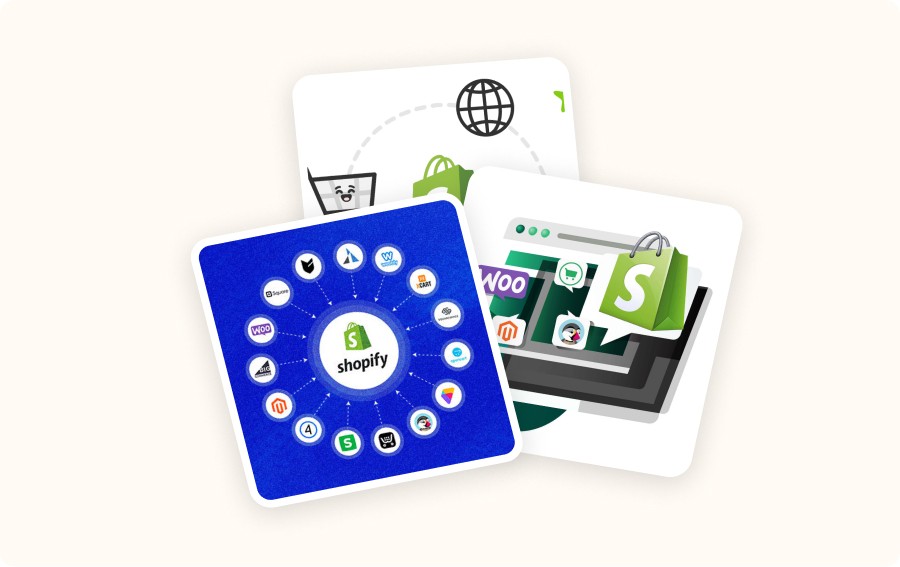












Our Free Adspys


Our Free Adspys


Our Free Adspys

Find out more
Read more
Minea © 2025

Find out more
Read more
Minea © 2025

Find out more
Read more
Minea © 2025

Find out more
Read more
Minea © 2025

Find out more
Read more
Minea © 2025

Find out more
Read more
Minea © 2025

Find out more
Read more
Minea © 2025


