Shopify vs BigCommerce: The Ultimate 2026 Comparison for E-commerce and Dropshipping
Shopify Reviews
Author: Elysa
January 30, 2026
Contents
Looking for the best e-commerce platform to launch an online store or start dropshipping?
This BigCommerce vs Shopify comparison answers that exact question and gives you everything you need to make the right choice in 2026.
With global e-commerce expected to exceed $8 trillion by 2027, choosing the right platform has never been more strategic. In this guide, you’ll find:
A quick verdict based on your profile
A clear comparison table
The key differences: pricing, ease of use, design, dropshipping, marketing tools, payments, support, and scalability
Practical advice for beginners and advanced entrepreneurs
Real-world examples and a helpful FAQ
No jargon, just what matters. By the end, you’ll know exactly which platform to choose to launch or scale your online business, without wasting time or money.
Quick Verdict: Which Platform Should You Choose Based on Your Profile?

Short on time? Here’s the one-minute answer:
Shopify is the best choice if you want a user-friendly e-commerce platform with a massive ecosystem of themes, apps, and fast support. It’s the go-to option for beginners, dropshipping stores, and entrepreneurs who want to test ideas quickly and scale fast.
BigCommerce is better suited for experienced merchants, SMBs, and businesses looking for a powerful, flexible platform with no transaction fees. It’s ideal if you manage a large catalog, sell internationally, or need advanced technical features (APIs, multi-store, headless commerce).
Bottom line:
Shopify wins on speed, ecosystem, and dropshipping. BigCommerce stands out for power, customization, and long-term cost control.
Shopify vs BigCommerce: Quick Comparison Table
Here’s a side-by-side overview to spot the key differences at a glance.
Criteria | Shopify | BigCommerce |
|---|---|---|
Ease of use | Very beginner-friendly | More technical, feature-rich |
Pricing | From $27/month + transaction fees | From $39/month, no transaction fees |
Dropshipping | Huge app ecosystem | Supported, fewer dropshipping apps |
Design & themes | 100+ modern, customizable themes | Fewer themes, high flexibility |
Marketing tools | App-driven ecosystem | Strong native marketing features |
Payments | Shopify Payments + 100+ gateways | 65+ built-in gateways, advanced currencies |
Support | 24/7 support, large community | 24/7 support, guided onboarding |
Scalability | Easy to scale, some advanced limits | Built for large growth & complex needs |
Key takeaway: Shopify shines with simplicity and apps, while BigCommerce excels with zero transaction fees and technical flexibility.

Looking for the best e-commerce platform to launch an online store or start dropshipping?
This BigCommerce vs Shopify comparison answers that exact question and gives you everything you need to make the right choice in 2026.
With global e-commerce expected to exceed $8 trillion by 2027, choosing the right platform has never been more strategic. In this guide, you’ll find:
A quick verdict based on your profile
A clear comparison table
The key differences: pricing, ease of use, design, dropshipping, marketing tools, payments, support, and scalability
Practical advice for beginners and advanced entrepreneurs
Real-world examples and a helpful FAQ
No jargon, just what matters. By the end, you’ll know exactly which platform to choose to launch or scale your online business, without wasting time or money.
Quick Verdict: Which Platform Should You Choose Based on Your Profile?

Short on time? Here’s the one-minute answer:
Shopify is the best choice if you want a user-friendly e-commerce platform with a massive ecosystem of themes, apps, and fast support. It’s the go-to option for beginners, dropshipping stores, and entrepreneurs who want to test ideas quickly and scale fast.
BigCommerce is better suited for experienced merchants, SMBs, and businesses looking for a powerful, flexible platform with no transaction fees. It’s ideal if you manage a large catalog, sell internationally, or need advanced technical features (APIs, multi-store, headless commerce).
Bottom line:
Shopify wins on speed, ecosystem, and dropshipping. BigCommerce stands out for power, customization, and long-term cost control.
Shopify vs BigCommerce: Quick Comparison Table
Here’s a side-by-side overview to spot the key differences at a glance.
Criteria | Shopify | BigCommerce |
|---|---|---|
Ease of use | Very beginner-friendly | More technical, feature-rich |
Pricing | From $27/month + transaction fees | From $39/month, no transaction fees |
Dropshipping | Huge app ecosystem | Supported, fewer dropshipping apps |
Design & themes | 100+ modern, customizable themes | Fewer themes, high flexibility |
Marketing tools | App-driven ecosystem | Strong native marketing features |
Payments | Shopify Payments + 100+ gateways | 65+ built-in gateways, advanced currencies |
Support | 24/7 support, large community | 24/7 support, guided onboarding |
Scalability | Easy to scale, some advanced limits | Built for large growth & complex needs |
Key takeaway: Shopify shines with simplicity and apps, while BigCommerce excels with zero transaction fees and technical flexibility.
Looking for the best e-commerce platform to launch an online store or start dropshipping?
This BigCommerce vs Shopify comparison answers that exact question and gives you everything you need to make the right choice in 2026.
With global e-commerce expected to exceed $8 trillion by 2027, choosing the right platform has never been more strategic. In this guide, you’ll find:
A quick verdict based on your profile
A clear comparison table
The key differences: pricing, ease of use, design, dropshipping, marketing tools, payments, support, and scalability
Practical advice for beginners and advanced entrepreneurs
Real-world examples and a helpful FAQ
No jargon, just what matters. By the end, you’ll know exactly which platform to choose to launch or scale your online business, without wasting time or money.
Quick Verdict: Which Platform Should You Choose Based on Your Profile?

Short on time? Here’s the one-minute answer:
Shopify is the best choice if you want a user-friendly e-commerce platform with a massive ecosystem of themes, apps, and fast support. It’s the go-to option for beginners, dropshipping stores, and entrepreneurs who want to test ideas quickly and scale fast.
BigCommerce is better suited for experienced merchants, SMBs, and businesses looking for a powerful, flexible platform with no transaction fees. It’s ideal if you manage a large catalog, sell internationally, or need advanced technical features (APIs, multi-store, headless commerce).
Bottom line:
Shopify wins on speed, ecosystem, and dropshipping. BigCommerce stands out for power, customization, and long-term cost control.
Shopify vs BigCommerce: Quick Comparison Table
Here’s a side-by-side overview to spot the key differences at a glance.
Criteria | Shopify | BigCommerce |
|---|---|---|
Ease of use | Very beginner-friendly | More technical, feature-rich |
Pricing | From $27/month + transaction fees | From $39/month, no transaction fees |
Dropshipping | Huge app ecosystem | Supported, fewer dropshipping apps |
Design & themes | 100+ modern, customizable themes | Fewer themes, high flexibility |
Marketing tools | App-driven ecosystem | Strong native marketing features |
Payments | Shopify Payments + 100+ gateways | 65+ built-in gateways, advanced currencies |
Support | 24/7 support, large community | 24/7 support, guided onboarding |
Scalability | Easy to scale, some advanced limits | Built for large growth & complex needs |
Key takeaway: Shopify shines with simplicity and apps, while BigCommerce excels with zero transaction fees and technical flexibility.
Looking for the best e-commerce platform to launch an online store or start dropshipping?
This BigCommerce vs Shopify comparison answers that exact question and gives you everything you need to make the right choice in 2026.
With global e-commerce expected to exceed $8 trillion by 2027, choosing the right platform has never been more strategic. In this guide, you’ll find:
A quick verdict based on your profile
A clear comparison table
The key differences: pricing, ease of use, design, dropshipping, marketing tools, payments, support, and scalability
Practical advice for beginners and advanced entrepreneurs
Real-world examples and a helpful FAQ
No jargon, just what matters. By the end, you’ll know exactly which platform to choose to launch or scale your online business, without wasting time or money.
Quick Verdict: Which Platform Should You Choose Based on Your Profile?

Short on time? Here’s the one-minute answer:
Shopify is the best choice if you want a user-friendly e-commerce platform with a massive ecosystem of themes, apps, and fast support. It’s the go-to option for beginners, dropshipping stores, and entrepreneurs who want to test ideas quickly and scale fast.
BigCommerce is better suited for experienced merchants, SMBs, and businesses looking for a powerful, flexible platform with no transaction fees. It’s ideal if you manage a large catalog, sell internationally, or need advanced technical features (APIs, multi-store, headless commerce).
Bottom line:
Shopify wins on speed, ecosystem, and dropshipping. BigCommerce stands out for power, customization, and long-term cost control.
Shopify vs BigCommerce: Quick Comparison Table
Here’s a side-by-side overview to spot the key differences at a glance.
Criteria | Shopify | BigCommerce |
|---|---|---|
Ease of use | Very beginner-friendly | More technical, feature-rich |
Pricing | From $27/month + transaction fees | From $39/month, no transaction fees |
Dropshipping | Huge app ecosystem | Supported, fewer dropshipping apps |
Design & themes | 100+ modern, customizable themes | Fewer themes, high flexibility |
Marketing tools | App-driven ecosystem | Strong native marketing features |
Payments | Shopify Payments + 100+ gateways | 65+ built-in gateways, advanced currencies |
Support | 24/7 support, large community | 24/7 support, guided onboarding |
Scalability | Easy to scale, some advanced limits | Built for large growth & complex needs |
Key takeaway: Shopify shines with simplicity and apps, while BigCommerce excels with zero transaction fees and technical flexibility.
Looking for the best e-commerce platform to launch an online store or start dropshipping?
This BigCommerce vs Shopify comparison answers that exact question and gives you everything you need to make the right choice in 2026.
With global e-commerce expected to exceed $8 trillion by 2027, choosing the right platform has never been more strategic. In this guide, you’ll find:
A quick verdict based on your profile
A clear comparison table
The key differences: pricing, ease of use, design, dropshipping, marketing tools, payments, support, and scalability
Practical advice for beginners and advanced entrepreneurs
Real-world examples and a helpful FAQ
No jargon, just what matters. By the end, you’ll know exactly which platform to choose to launch or scale your online business, without wasting time or money.
Quick Verdict: Which Platform Should You Choose Based on Your Profile?

Short on time? Here’s the one-minute answer:
Shopify is the best choice if you want a user-friendly e-commerce platform with a massive ecosystem of themes, apps, and fast support. It’s the go-to option for beginners, dropshipping stores, and entrepreneurs who want to test ideas quickly and scale fast.
BigCommerce is better suited for experienced merchants, SMBs, and businesses looking for a powerful, flexible platform with no transaction fees. It’s ideal if you manage a large catalog, sell internationally, or need advanced technical features (APIs, multi-store, headless commerce).
Bottom line:
Shopify wins on speed, ecosystem, and dropshipping. BigCommerce stands out for power, customization, and long-term cost control.
Shopify vs BigCommerce: Quick Comparison Table
Here’s a side-by-side overview to spot the key differences at a glance.
Criteria | Shopify | BigCommerce |
|---|---|---|
Ease of use | Very beginner-friendly | More technical, feature-rich |
Pricing | From $27/month + transaction fees | From $39/month, no transaction fees |
Dropshipping | Huge app ecosystem | Supported, fewer dropshipping apps |
Design & themes | 100+ modern, customizable themes | Fewer themes, high flexibility |
Marketing tools | App-driven ecosystem | Strong native marketing features |
Payments | Shopify Payments + 100+ gateways | 65+ built-in gateways, advanced currencies |
Support | 24/7 support, large community | 24/7 support, guided onboarding |
Scalability | Easy to scale, some advanced limits | Built for large growth & complex needs |
Key takeaway: Shopify shines with simplicity and apps, while BigCommerce excels with zero transaction fees and technical flexibility.
Looking for the best e-commerce platform to launch an online store or start dropshipping?
This BigCommerce vs Shopify comparison answers that exact question and gives you everything you need to make the right choice in 2026.
With global e-commerce expected to exceed $8 trillion by 2027, choosing the right platform has never been more strategic. In this guide, you’ll find:
A quick verdict based on your profile
A clear comparison table
The key differences: pricing, ease of use, design, dropshipping, marketing tools, payments, support, and scalability
Practical advice for beginners and advanced entrepreneurs
Real-world examples and a helpful FAQ
No jargon, just what matters. By the end, you’ll know exactly which platform to choose to launch or scale your online business, without wasting time or money.
Quick Verdict: Which Platform Should You Choose Based on Your Profile?

Short on time? Here’s the one-minute answer:
Shopify is the best choice if you want a user-friendly e-commerce platform with a massive ecosystem of themes, apps, and fast support. It’s the go-to option for beginners, dropshipping stores, and entrepreneurs who want to test ideas quickly and scale fast.
BigCommerce is better suited for experienced merchants, SMBs, and businesses looking for a powerful, flexible platform with no transaction fees. It’s ideal if you manage a large catalog, sell internationally, or need advanced technical features (APIs, multi-store, headless commerce).
Bottom line:
Shopify wins on speed, ecosystem, and dropshipping. BigCommerce stands out for power, customization, and long-term cost control.
Shopify vs BigCommerce: Quick Comparison Table
Here’s a side-by-side overview to spot the key differences at a glance.
Criteria | Shopify | BigCommerce |
|---|---|---|
Ease of use | Very beginner-friendly | More technical, feature-rich |
Pricing | From $27/month + transaction fees | From $39/month, no transaction fees |
Dropshipping | Huge app ecosystem | Supported, fewer dropshipping apps |
Design & themes | 100+ modern, customizable themes | Fewer themes, high flexibility |
Marketing tools | App-driven ecosystem | Strong native marketing features |
Payments | Shopify Payments + 100+ gateways | 65+ built-in gateways, advanced currencies |
Support | 24/7 support, large community | 24/7 support, guided onboarding |
Scalability | Easy to scale, some advanced limits | Built for large growth & complex needs |
Key takeaway: Shopify shines with simplicity and apps, while BigCommerce excels with zero transaction fees and technical flexibility.

Create and test your Shopify store for only $1 per day during 90 days


Create and test your Shopify store for only $1 per day during 90 days


Create and test your Shopify store for only $1 per day during 90 days


Create and test your Shopify store for only $1 per day during 90 days


Create and test your Shopify store for only $1 per day during 90 days


Create and test your Shopify store for only $1 per day during 90 days

Pricing & Fees: Which Platform Offers the Best Value?
Comparing Shopify versus BigCommerce also means understanding the real cost structure, especially if margins matter.
Shopify Pricing: Attractive Entry, Watch the Fees
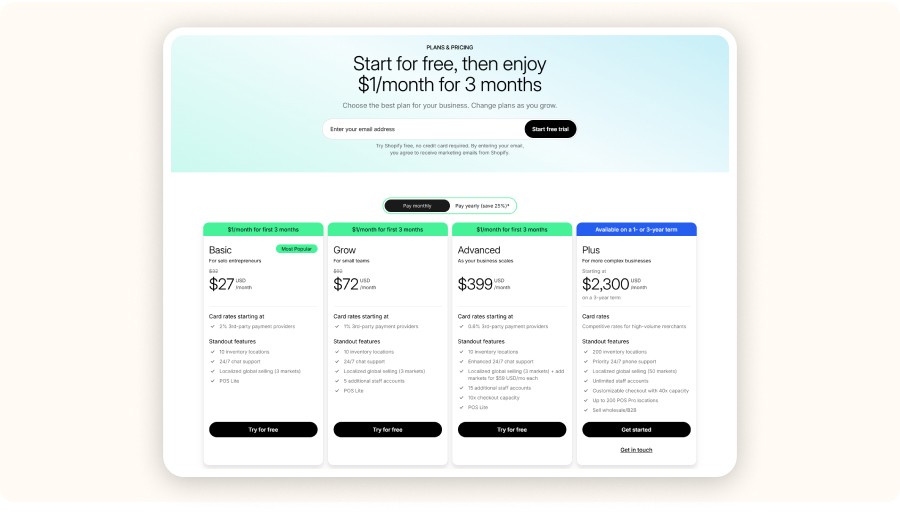
Shopify plans start at $27/month (Basic). However, transaction fees (from 2% to 0.6%) apply if you don’t use Shopify Payments. Higher plans unlock more staff accounts, advanced reports, and better payment rates.
For large businesses, Shopify Plus (from $2,300/month) offers B2B features and enterprise-level tools.
Shopify Plan | Monthly Price ($) | Transaction Fees | Key Features |
|---|---|---|---|
Basic | 27 | 2% (outside Shopify Payments) | 10 inventory locations, 24/7 chat |
Grow | 72 | 1% | Advanced sales tools |
Advanced | 399 | 0.6% | Priority support |
Plus | From 2,300 | Custom | Unlimited, B2B, 50 markets |
BigCommerce Pricing: Flat Fees, No Transactions
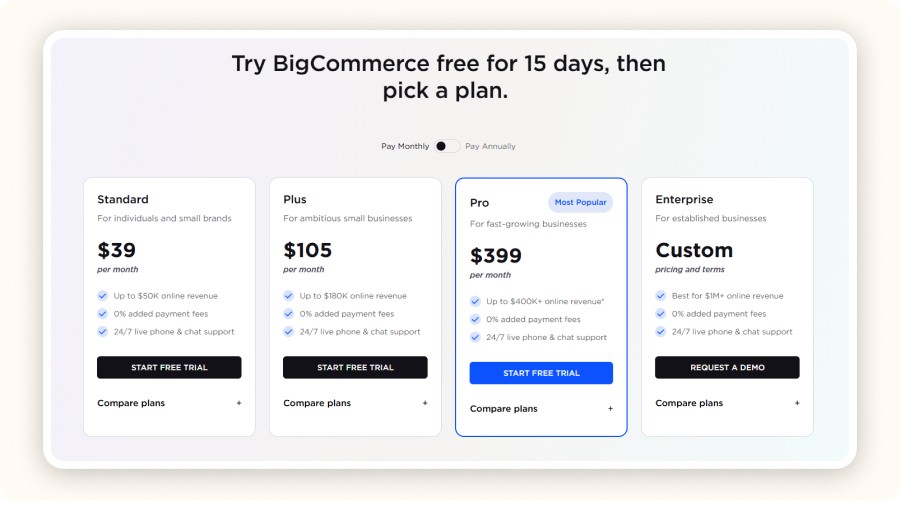
BigCommerce keeps things simple: zero transaction fees, regardless of your payment gateway. Plans start at $39/month, with revenue thresholds that automatically upgrade your plan as you grow.
BigCommerce Plan | Monthly Price ($) | Transaction Fees | Revenue Limit | Key Features |
|---|---|---|---|---|
Standard | 39 | 0% | $50,000 | Full e-commerce features |
Plus | 105 | 0% | $180,000 | Abandoned cart recovery |
Pro | 399 | 0% | $400,000 | Advanced filters & security |
Enterprise | Custom | 0% | $1M+ | Multi-store, priority support |
Ease of Use: Which Platform Is Easier to Launch?
Launching a store should be fast and stress-free. Here’s how BigCommerce vs Shopify dropshipping compares when it comes to usability.
Shopify: Built for Simplicity
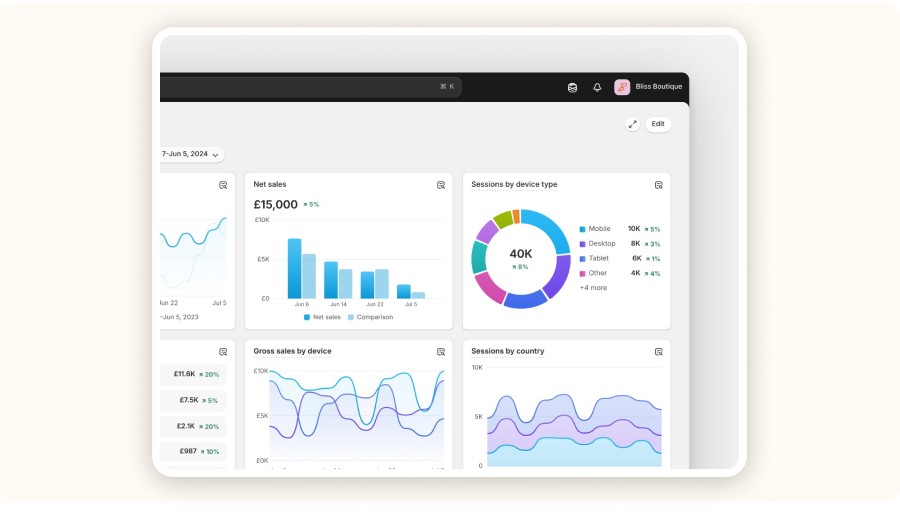
Shopify is famous for its intuitive interface. Setup takes minutes, and everything is guided step by step, from adding products to choosing a theme and activating payments.
The drag-and-drop editor, built-in tutorials, large community, and 24/7 support make Shopify extremely beginner-friendly. No coding required.
BigCommerce: Powerful, but More Demanding
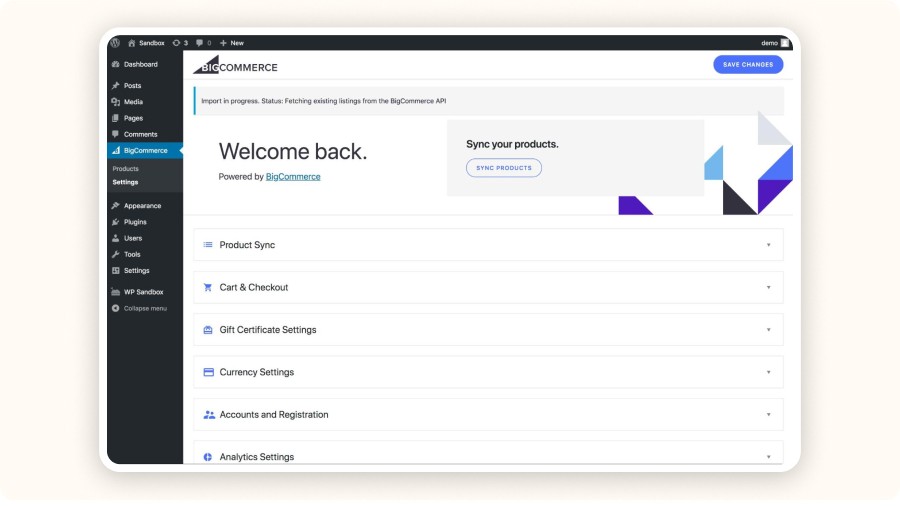
BigCommerce offers deeper control right from the start: advanced SEO settings, complex product rules, and multi-store options. That power comes with a learning curve.
While no coding is required, BigCommerce dropshipping platform suits users who want advanced customization and don’t mind spending more time configuring their store.
Final UX Verdict
If you want speed and ease, Shopify vs BigCommerce dropshipping favors Shopify. If you want control and scalability, BigCommerce delivers more depth.
Design & Customization: Themes, Layouts, and Mobile Experience
Your store’s visual identity isn’t just about taste, it’s a key conversion driver. So when it comes to BigCommerce vs Shopify, which platform gives you the most flexibility to build a professional, high-performing store that truly reflects your brand?
Shopify: Wide Theme Selection and Easy Customization

Shopify offers over 100 professional themes, including around 15 free options, designed for virtually every industry.
Every theme is fully responsive, meaning your store automatically adapts to desktop, tablet, and mobile screens, now a must-have for e-commerce.
Customization is handled through a visual drag-and-drop editor. You can adjust layouts, colors, and fonts without touching code. For advanced needs, Shopify allows custom development using HTML, CSS, and Liquid, making unique designs possible.
Shopify themes are frequently updated, ensuring strong security and full compatibility with new platform features.
BigCommerce: Advanced Technical Flexibility and Custom Builds
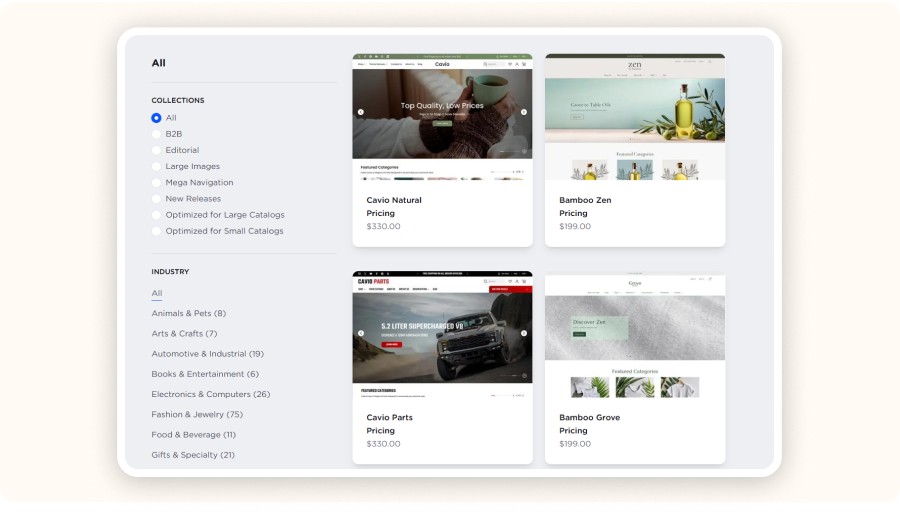
BigCommerce provides a library of 150+ themes, including a dozen free options and many premium (paid) themes.
Its Page Builder lets you customize your store visually without coding, similar to Shopify.
For advanced projects, BigCommerce goes further. You get full code access, advanced customization options, and even headless commerce capabilities, perfect for brands that want total control over front-end and back-end experiences.
All BigCommerce themes are also mobile-optimized, ensuring smooth performance across all devices.
In short:
Shopify makes fast, no-code customization easy and focuses on a smooth user experience. BigCommerce offers deeper technical freedom for stores that require fully custom designs or complex functionality.
Pricing & Fees: Which Platform Offers the Best Value?
Comparing Shopify versus BigCommerce also means understanding the real cost structure, especially if margins matter.
Shopify Pricing: Attractive Entry, Watch the Fees

Shopify plans start at $27/month (Basic). However, transaction fees (from 2% to 0.6%) apply if you don’t use Shopify Payments. Higher plans unlock more staff accounts, advanced reports, and better payment rates.
For large businesses, Shopify Plus (from $2,300/month) offers B2B features and enterprise-level tools.
Shopify Plan | Monthly Price ($) | Transaction Fees | Key Features |
|---|---|---|---|
Basic | 27 | 2% (outside Shopify Payments) | 10 inventory locations, 24/7 chat |
Grow | 72 | 1% | Advanced sales tools |
Advanced | 399 | 0.6% | Priority support |
Plus | From 2,300 | Custom | Unlimited, B2B, 50 markets |
BigCommerce Pricing: Flat Fees, No Transactions

BigCommerce keeps things simple: zero transaction fees, regardless of your payment gateway. Plans start at $39/month, with revenue thresholds that automatically upgrade your plan as you grow.
BigCommerce Plan | Monthly Price ($) | Transaction Fees | Revenue Limit | Key Features |
|---|---|---|---|---|
Standard | 39 | 0% | $50,000 | Full e-commerce features |
Plus | 105 | 0% | $180,000 | Abandoned cart recovery |
Pro | 399 | 0% | $400,000 | Advanced filters & security |
Enterprise | Custom | 0% | $1M+ | Multi-store, priority support |
Ease of Use: Which Platform Is Easier to Launch?
Launching a store should be fast and stress-free. Here’s how BigCommerce vs Shopify dropshipping compares when it comes to usability.
Shopify: Built for Simplicity

Shopify is famous for its intuitive interface. Setup takes minutes, and everything is guided step by step, from adding products to choosing a theme and activating payments.
The drag-and-drop editor, built-in tutorials, large community, and 24/7 support make Shopify extremely beginner-friendly. No coding required.
BigCommerce: Powerful, but More Demanding

BigCommerce offers deeper control right from the start: advanced SEO settings, complex product rules, and multi-store options. That power comes with a learning curve.
While no coding is required, BigCommerce dropshipping platform suits users who want advanced customization and don’t mind spending more time configuring their store.
Final UX Verdict
If you want speed and ease, Shopify vs BigCommerce dropshipping favors Shopify. If you want control and scalability, BigCommerce delivers more depth.
Design & Customization: Themes, Layouts, and Mobile Experience
Your store’s visual identity isn’t just about taste, it’s a key conversion driver. So when it comes to BigCommerce vs Shopify, which platform gives you the most flexibility to build a professional, high-performing store that truly reflects your brand?
Shopify: Wide Theme Selection and Easy Customization

Shopify offers over 100 professional themes, including around 15 free options, designed for virtually every industry.
Every theme is fully responsive, meaning your store automatically adapts to desktop, tablet, and mobile screens, now a must-have for e-commerce.
Customization is handled through a visual drag-and-drop editor. You can adjust layouts, colors, and fonts without touching code. For advanced needs, Shopify allows custom development using HTML, CSS, and Liquid, making unique designs possible.
Shopify themes are frequently updated, ensuring strong security and full compatibility with new platform features.
BigCommerce: Advanced Technical Flexibility and Custom Builds

BigCommerce provides a library of 150+ themes, including a dozen free options and many premium (paid) themes.
Its Page Builder lets you customize your store visually without coding, similar to Shopify.
For advanced projects, BigCommerce goes further. You get full code access, advanced customization options, and even headless commerce capabilities, perfect for brands that want total control over front-end and back-end experiences.
All BigCommerce themes are also mobile-optimized, ensuring smooth performance across all devices.
In short:
Shopify makes fast, no-code customization easy and focuses on a smooth user experience. BigCommerce offers deeper technical freedom for stores that require fully custom designs or complex functionality.
Pricing & Fees: Which Platform Offers the Best Value?
Comparing Shopify versus BigCommerce also means understanding the real cost structure, especially if margins matter.
Shopify Pricing: Attractive Entry, Watch the Fees

Shopify plans start at $27/month (Basic). However, transaction fees (from 2% to 0.6%) apply if you don’t use Shopify Payments. Higher plans unlock more staff accounts, advanced reports, and better payment rates.
For large businesses, Shopify Plus (from $2,300/month) offers B2B features and enterprise-level tools.
Shopify Plan | Monthly Price ($) | Transaction Fees | Key Features |
|---|---|---|---|
Basic | 27 | 2% (outside Shopify Payments) | 10 inventory locations, 24/7 chat |
Grow | 72 | 1% | Advanced sales tools |
Advanced | 399 | 0.6% | Priority support |
Plus | From 2,300 | Custom | Unlimited, B2B, 50 markets |
BigCommerce Pricing: Flat Fees, No Transactions

BigCommerce keeps things simple: zero transaction fees, regardless of your payment gateway. Plans start at $39/month, with revenue thresholds that automatically upgrade your plan as you grow.
BigCommerce Plan | Monthly Price ($) | Transaction Fees | Revenue Limit | Key Features |
|---|---|---|---|---|
Standard | 39 | 0% | $50,000 | Full e-commerce features |
Plus | 105 | 0% | $180,000 | Abandoned cart recovery |
Pro | 399 | 0% | $400,000 | Advanced filters & security |
Enterprise | Custom | 0% | $1M+ | Multi-store, priority support |
Ease of Use: Which Platform Is Easier to Launch?
Launching a store should be fast and stress-free. Here’s how BigCommerce vs Shopify dropshipping compares when it comes to usability.
Shopify: Built for Simplicity

Shopify is famous for its intuitive interface. Setup takes minutes, and everything is guided step by step, from adding products to choosing a theme and activating payments.
The drag-and-drop editor, built-in tutorials, large community, and 24/7 support make Shopify extremely beginner-friendly. No coding required.
BigCommerce: Powerful, but More Demanding

BigCommerce offers deeper control right from the start: advanced SEO settings, complex product rules, and multi-store options. That power comes with a learning curve.
While no coding is required, BigCommerce dropshipping platform suits users who want advanced customization and don’t mind spending more time configuring their store.
Final UX Verdict
If you want speed and ease, Shopify vs BigCommerce dropshipping favors Shopify. If you want control and scalability, BigCommerce delivers more depth.
Design & Customization: Themes, Layouts, and Mobile Experience
Your store’s visual identity isn’t just about taste, it’s a key conversion driver. So when it comes to BigCommerce vs Shopify, which platform gives you the most flexibility to build a professional, high-performing store that truly reflects your brand?
Shopify: Wide Theme Selection and Easy Customization

Shopify offers over 100 professional themes, including around 15 free options, designed for virtually every industry.
Every theme is fully responsive, meaning your store automatically adapts to desktop, tablet, and mobile screens, now a must-have for e-commerce.
Customization is handled through a visual drag-and-drop editor. You can adjust layouts, colors, and fonts without touching code. For advanced needs, Shopify allows custom development using HTML, CSS, and Liquid, making unique designs possible.
Shopify themes are frequently updated, ensuring strong security and full compatibility with new platform features.
BigCommerce: Advanced Technical Flexibility and Custom Builds

BigCommerce provides a library of 150+ themes, including a dozen free options and many premium (paid) themes.
Its Page Builder lets you customize your store visually without coding, similar to Shopify.
For advanced projects, BigCommerce goes further. You get full code access, advanced customization options, and even headless commerce capabilities, perfect for brands that want total control over front-end and back-end experiences.
All BigCommerce themes are also mobile-optimized, ensuring smooth performance across all devices.
In short:
Shopify makes fast, no-code customization easy and focuses on a smooth user experience. BigCommerce offers deeper technical freedom for stores that require fully custom designs or complex functionality.
Pricing & Fees: Which Platform Offers the Best Value?
Comparing Shopify versus BigCommerce also means understanding the real cost structure, especially if margins matter.
Shopify Pricing: Attractive Entry, Watch the Fees

Shopify plans start at $27/month (Basic). However, transaction fees (from 2% to 0.6%) apply if you don’t use Shopify Payments. Higher plans unlock more staff accounts, advanced reports, and better payment rates.
For large businesses, Shopify Plus (from $2,300/month) offers B2B features and enterprise-level tools.
Shopify Plan | Monthly Price ($) | Transaction Fees | Key Features |
|---|---|---|---|
Basic | 27 | 2% (outside Shopify Payments) | 10 inventory locations, 24/7 chat |
Grow | 72 | 1% | Advanced sales tools |
Advanced | 399 | 0.6% | Priority support |
Plus | From 2,300 | Custom | Unlimited, B2B, 50 markets |
BigCommerce Pricing: Flat Fees, No Transactions

BigCommerce keeps things simple: zero transaction fees, regardless of your payment gateway. Plans start at $39/month, with revenue thresholds that automatically upgrade your plan as you grow.
BigCommerce Plan | Monthly Price ($) | Transaction Fees | Revenue Limit | Key Features |
|---|---|---|---|---|
Standard | 39 | 0% | $50,000 | Full e-commerce features |
Plus | 105 | 0% | $180,000 | Abandoned cart recovery |
Pro | 399 | 0% | $400,000 | Advanced filters & security |
Enterprise | Custom | 0% | $1M+ | Multi-store, priority support |
Ease of Use: Which Platform Is Easier to Launch?
Launching a store should be fast and stress-free. Here’s how BigCommerce vs Shopify dropshipping compares when it comes to usability.
Shopify: Built for Simplicity

Shopify is famous for its intuitive interface. Setup takes minutes, and everything is guided step by step, from adding products to choosing a theme and activating payments.
The drag-and-drop editor, built-in tutorials, large community, and 24/7 support make Shopify extremely beginner-friendly. No coding required.
BigCommerce: Powerful, but More Demanding

BigCommerce offers deeper control right from the start: advanced SEO settings, complex product rules, and multi-store options. That power comes with a learning curve.
While no coding is required, BigCommerce dropshipping platform suits users who want advanced customization and don’t mind spending more time configuring their store.
Final UX Verdict
If you want speed and ease, Shopify vs BigCommerce dropshipping favors Shopify. If you want control and scalability, BigCommerce delivers more depth.
Design & Customization: Themes, Layouts, and Mobile Experience
Your store’s visual identity isn’t just about taste, it’s a key conversion driver. So when it comes to BigCommerce vs Shopify, which platform gives you the most flexibility to build a professional, high-performing store that truly reflects your brand?
Shopify: Wide Theme Selection and Easy Customization

Shopify offers over 100 professional themes, including around 15 free options, designed for virtually every industry.
Every theme is fully responsive, meaning your store automatically adapts to desktop, tablet, and mobile screens, now a must-have for e-commerce.
Customization is handled through a visual drag-and-drop editor. You can adjust layouts, colors, and fonts without touching code. For advanced needs, Shopify allows custom development using HTML, CSS, and Liquid, making unique designs possible.
Shopify themes are frequently updated, ensuring strong security and full compatibility with new platform features.
BigCommerce: Advanced Technical Flexibility and Custom Builds

BigCommerce provides a library of 150+ themes, including a dozen free options and many premium (paid) themes.
Its Page Builder lets you customize your store visually without coding, similar to Shopify.
For advanced projects, BigCommerce goes further. You get full code access, advanced customization options, and even headless commerce capabilities, perfect for brands that want total control over front-end and back-end experiences.
All BigCommerce themes are also mobile-optimized, ensuring smooth performance across all devices.
In short:
Shopify makes fast, no-code customization easy and focuses on a smooth user experience. BigCommerce offers deeper technical freedom for stores that require fully custom designs or complex functionality.
Pricing & Fees: Which Platform Offers the Best Value?
Comparing Shopify versus BigCommerce also means understanding the real cost structure, especially if margins matter.
Shopify Pricing: Attractive Entry, Watch the Fees

Shopify plans start at $27/month (Basic). However, transaction fees (from 2% to 0.6%) apply if you don’t use Shopify Payments. Higher plans unlock more staff accounts, advanced reports, and better payment rates.
For large businesses, Shopify Plus (from $2,300/month) offers B2B features and enterprise-level tools.
Shopify Plan | Monthly Price ($) | Transaction Fees | Key Features |
|---|---|---|---|
Basic | 27 | 2% (outside Shopify Payments) | 10 inventory locations, 24/7 chat |
Grow | 72 | 1% | Advanced sales tools |
Advanced | 399 | 0.6% | Priority support |
Plus | From 2,300 | Custom | Unlimited, B2B, 50 markets |
BigCommerce Pricing: Flat Fees, No Transactions

BigCommerce keeps things simple: zero transaction fees, regardless of your payment gateway. Plans start at $39/month, with revenue thresholds that automatically upgrade your plan as you grow.
BigCommerce Plan | Monthly Price ($) | Transaction Fees | Revenue Limit | Key Features |
|---|---|---|---|---|
Standard | 39 | 0% | $50,000 | Full e-commerce features |
Plus | 105 | 0% | $180,000 | Abandoned cart recovery |
Pro | 399 | 0% | $400,000 | Advanced filters & security |
Enterprise | Custom | 0% | $1M+ | Multi-store, priority support |
Ease of Use: Which Platform Is Easier to Launch?
Launching a store should be fast and stress-free. Here’s how BigCommerce vs Shopify dropshipping compares when it comes to usability.
Shopify: Built for Simplicity

Shopify is famous for its intuitive interface. Setup takes minutes, and everything is guided step by step, from adding products to choosing a theme and activating payments.
The drag-and-drop editor, built-in tutorials, large community, and 24/7 support make Shopify extremely beginner-friendly. No coding required.
BigCommerce: Powerful, but More Demanding

BigCommerce offers deeper control right from the start: advanced SEO settings, complex product rules, and multi-store options. That power comes with a learning curve.
While no coding is required, BigCommerce dropshipping platform suits users who want advanced customization and don’t mind spending more time configuring their store.
Final UX Verdict
If you want speed and ease, Shopify vs BigCommerce dropshipping favors Shopify. If you want control and scalability, BigCommerce delivers more depth.
Design & Customization: Themes, Layouts, and Mobile Experience
Your store’s visual identity isn’t just about taste, it’s a key conversion driver. So when it comes to BigCommerce vs Shopify, which platform gives you the most flexibility to build a professional, high-performing store that truly reflects your brand?
Shopify: Wide Theme Selection and Easy Customization

Shopify offers over 100 professional themes, including around 15 free options, designed for virtually every industry.
Every theme is fully responsive, meaning your store automatically adapts to desktop, tablet, and mobile screens, now a must-have for e-commerce.
Customization is handled through a visual drag-and-drop editor. You can adjust layouts, colors, and fonts without touching code. For advanced needs, Shopify allows custom development using HTML, CSS, and Liquid, making unique designs possible.
Shopify themes are frequently updated, ensuring strong security and full compatibility with new platform features.
BigCommerce: Advanced Technical Flexibility and Custom Builds

BigCommerce provides a library of 150+ themes, including a dozen free options and many premium (paid) themes.
Its Page Builder lets you customize your store visually without coding, similar to Shopify.
For advanced projects, BigCommerce goes further. You get full code access, advanced customization options, and even headless commerce capabilities, perfect for brands that want total control over front-end and back-end experiences.
All BigCommerce themes are also mobile-optimized, ensuring smooth performance across all devices.
In short:
Shopify makes fast, no-code customization easy and focuses on a smooth user experience. BigCommerce offers deeper technical freedom for stores that require fully custom designs or complex functionality.
Pricing & Fees: Which Platform Offers the Best Value?
Comparing Shopify versus BigCommerce also means understanding the real cost structure, especially if margins matter.
Shopify Pricing: Attractive Entry, Watch the Fees

Shopify plans start at $27/month (Basic). However, transaction fees (from 2% to 0.6%) apply if you don’t use Shopify Payments. Higher plans unlock more staff accounts, advanced reports, and better payment rates.
For large businesses, Shopify Plus (from $2,300/month) offers B2B features and enterprise-level tools.
Shopify Plan | Monthly Price ($) | Transaction Fees | Key Features |
|---|---|---|---|
Basic | 27 | 2% (outside Shopify Payments) | 10 inventory locations, 24/7 chat |
Grow | 72 | 1% | Advanced sales tools |
Advanced | 399 | 0.6% | Priority support |
Plus | From 2,300 | Custom | Unlimited, B2B, 50 markets |
BigCommerce Pricing: Flat Fees, No Transactions

BigCommerce keeps things simple: zero transaction fees, regardless of your payment gateway. Plans start at $39/month, with revenue thresholds that automatically upgrade your plan as you grow.
BigCommerce Plan | Monthly Price ($) | Transaction Fees | Revenue Limit | Key Features |
|---|---|---|---|---|
Standard | 39 | 0% | $50,000 | Full e-commerce features |
Plus | 105 | 0% | $180,000 | Abandoned cart recovery |
Pro | 399 | 0% | $400,000 | Advanced filters & security |
Enterprise | Custom | 0% | $1M+ | Multi-store, priority support |
Ease of Use: Which Platform Is Easier to Launch?
Launching a store should be fast and stress-free. Here’s how BigCommerce vs Shopify dropshipping compares when it comes to usability.
Shopify: Built for Simplicity

Shopify is famous for its intuitive interface. Setup takes minutes, and everything is guided step by step, from adding products to choosing a theme and activating payments.
The drag-and-drop editor, built-in tutorials, large community, and 24/7 support make Shopify extremely beginner-friendly. No coding required.
BigCommerce: Powerful, but More Demanding

BigCommerce offers deeper control right from the start: advanced SEO settings, complex product rules, and multi-store options. That power comes with a learning curve.
While no coding is required, BigCommerce dropshipping platform suits users who want advanced customization and don’t mind spending more time configuring their store.
Final UX Verdict
If you want speed and ease, Shopify vs BigCommerce dropshipping favors Shopify. If you want control and scalability, BigCommerce delivers more depth.
Design & Customization: Themes, Layouts, and Mobile Experience
Your store’s visual identity isn’t just about taste, it’s a key conversion driver. So when it comes to BigCommerce vs Shopify, which platform gives you the most flexibility to build a professional, high-performing store that truly reflects your brand?
Shopify: Wide Theme Selection and Easy Customization

Shopify offers over 100 professional themes, including around 15 free options, designed for virtually every industry.
Every theme is fully responsive, meaning your store automatically adapts to desktop, tablet, and mobile screens, now a must-have for e-commerce.
Customization is handled through a visual drag-and-drop editor. You can adjust layouts, colors, and fonts without touching code. For advanced needs, Shopify allows custom development using HTML, CSS, and Liquid, making unique designs possible.
Shopify themes are frequently updated, ensuring strong security and full compatibility with new platform features.
BigCommerce: Advanced Technical Flexibility and Custom Builds

BigCommerce provides a library of 150+ themes, including a dozen free options and many premium (paid) themes.
Its Page Builder lets you customize your store visually without coding, similar to Shopify.
For advanced projects, BigCommerce goes further. You get full code access, advanced customization options, and even headless commerce capabilities, perfect for brands that want total control over front-end and back-end experiences.
All BigCommerce themes are also mobile-optimized, ensuring smooth performance across all devices.
In short:
Shopify makes fast, no-code customization easy and focuses on a smooth user experience. BigCommerce offers deeper technical freedom for stores that require fully custom designs or complex functionality.
Minea
Reach $1,000 per day or get your money back

Minea
Reach $1,000 per day or get your money back

Minea
Reach $1,000 per day or get your money back

Minea
Reach $1,000 per day or get your money back

Minea
Reach $1,000 per day or get your money back

Minea
Reach $1,000 per day or get your money back

E-commerce & Dropshipping Features: Automation, Apps, and Catalog Management
To succeed in e-commerce, especially dropshipping, you need more than a store. You need automation, fast product sourcing, powerful apps, and a catalog that scales easily. So how do Shopify vs BigCommerce dropshipping really compare in real-world use?
Shopify: The Leading Ecosystem for Dropshipping Automation
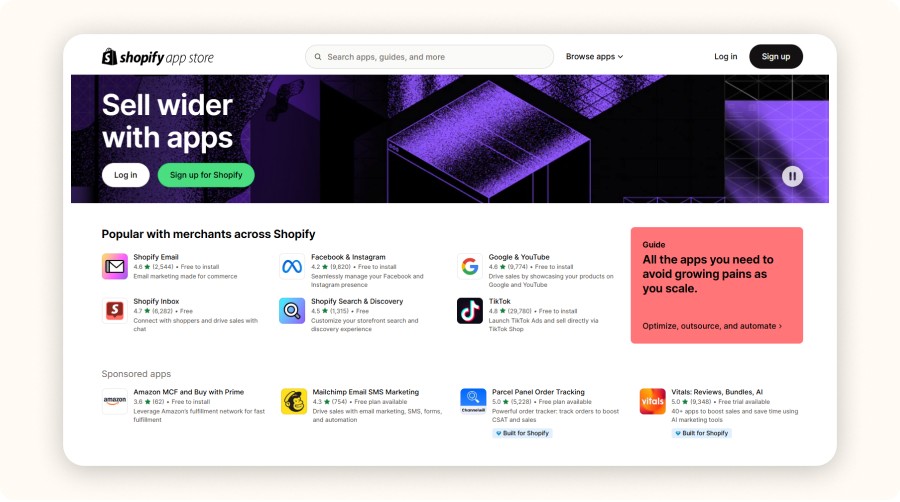
Shopify dominates dropshipping thanks to its massive app ecosystem with 8,000+ applications. Product sourcing, order automation, inventory sync, shipping tracking, everything is covered.
Apps like DSers, Dropified, and others allow you to import thousands of products from AliExpress or private suppliers in just a few clicks. Pricing rules, variants, and order fulfillment can all be automated.
Shopify’s API connects easily with advanced tools like CRMs, ERPs, marketing automation platforms, and analytics solutions.
Catalog management is simple: bulk imports, variant control, inventory tracking, and multi-channel selling (Instagram, Facebook, Google Shopping, marketplaces).
Tools like Minea, widely used for product research and trend tracking, integrate seamlessly with Shopify.
From abandoned cart recovery to promo codes and logistics, automation works without coding, directly from the dashboard or apps.
For dropshipping in Europe or the US, Shopify handles VAT, automated invoicing, and integrates with local shipping tools like Sendcloud or Boxtal.
BigCommerce: Strong Native Features, Smaller App Ecosystem
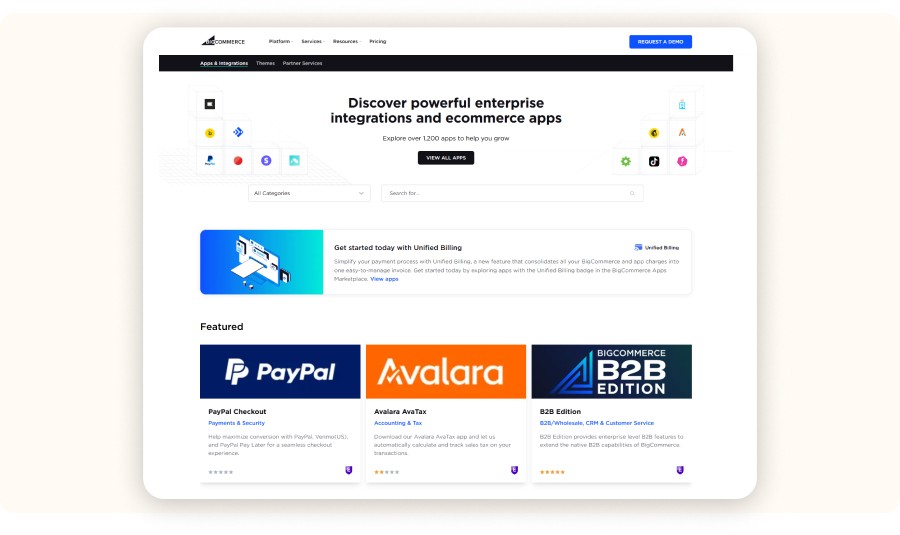
BigCommerce focuses on powerful built-in features: advanced inventory management, native multi-channel selling, customer segmentation, abandoned cart recovery, and direct integrations with Amazon, eBay, and Google Shopping.
Its app marketplace is smaller (around 1,000 apps), but covers core dropshipping needs: Spocket, Printful, Modalyst, AliExpress Dropshipping. Order automation is solid, and margin control is clear.
BigCommerce also offers a robust API, allowing integration with external systems like ERPs and analytics platforms.
The back office excels at catalog management, with unlimited variants, customer-based pricing, and advanced segmentation.
Most automation relies on third-party tools, but BigCommerce includes advanced features starting from the Plus plan, such as cart recovery and customer segmentation.
Bottom line:
Shopify clearly leads in dropshipping automation and app diversity. BigCommerce stands out with strong native tools and multi-channel management, but its ecosystem is less extensive for pure dropshippers.
Payments, Fees, and International Selling

To scale globally, your store must support all payment methods, international currencies, and transparent fees. This is where Shopify versus BigCommerce shows real differences.
Shopify: Maximum Flexibility, but Watch the Fees
Shopify supports 100+ payment gateways, including Stripe, PayPal, Mollie, Apple Pay, and its own solution, Shopify Payments.
If you use Shopify Payments, transaction fees are waived. Otherwise, fees apply (from 2% to 0.6%, depending on your plan).
Shopify handles international sales smoothly: multi-currency support, automatic conversion, tax calculation, VAT handling, and localized checkout.
For dropshipping, payments are processed instantly and work with all shipping models.
Shopify also offers Shopify POS for in-person sales (pop-up stores, retail), fully synced with your online store.
Note: Some local payment methods require third-party apps.
BigCommerce: Zero Transaction Fees and Open Payment Freedom
BigCommerce’s biggest advantage: 0% transaction fees, no matter which payment gateway you use.
It supports 65+ payment providers, including Stripe, PayPal, Adyen, Authorize.net, Amazon Pay, and Apple Pay.
Multi-currency and localized payment methods are handled natively.
BigCommerce includes advanced tools for international selling, such as tax calculation, VAT management, automated invoicing, and global shipping options.
It also supports B2B features like wholesale pricing, deferred payments, and professional invoicing.
Key takeaway:
Shopify focuses on ease of use and a powerful in-house payment system, but charges fees outside Shopify Payments. BigCommerce stands out with full transparency and zero transaction fees, making it especially appealing for high-volume or international sellers.
SEO & Marketing: Visibility, Traffic, and Built-In Growth Tools
Having an online store is a good start. Being visible and profitable is what really matters. SEO and integrated marketing tools are essential to drive qualified traffic and turn visitors into customers. So when it comes to BigCommerce vs Shopify, which platform performs better?
Shopify: Strong SEO Foundations and a Hyper-Connected Marketing Ecosystem
Shopify is built to help online stores rank on Google, Bing, and other search engines right out of the box.
SEO features include:
Native control over title tags, meta descriptions, custom URLs, automatic sitemaps, 301 redirects, mobile optimization, fast loading speeds, and image Alt tags.
SEO apps like Plug In SEO, SEO Manager, and Smart SEO take things further with semantic analysis, rich snippets, and personalized optimization recommendations.
Shopify also includes a built-in blog, making content marketing and organic traffic growth easy to manage.
On the marketing side, Shopify offers native tools for:
Email marketing (Shopify Email)
Automated abandoned cart recovery
Discount codes and promotions
Retargeting and remarketing
It integrates seamlessly with Google Analytics, Meta (Facebook/Instagram), TikTok, Pinterest, and more.
Key advantage: access to thousands of apps that expand acquisition channels, newsletters, pop-ups, retargeting, affiliate marketing, and advanced automation.
BigCommerce: Advanced SEO Control and Powerful Built-In Marketing Tools
BigCommerce stands out with deep technical SEO control, ideal for structured and scalable projects.
SEO capabilities include:
Fully customizable URL structures, meta tags, Open Graph data, 301 redirects, XML sitemaps, image Alt tags, and built-in structured data for rich snippets.
The platform follows a mobile-first approach and delivers strong server performance for fast load times.
BigCommerce also includes a native blog to support content marketing, backlink acquisition, and long-term SEO growth.
On the marketing side, BigCommerce offers:
Built-in promotions and discounts
Abandoned cart recovery
Newsletter integrations (Mailchimp, Sendinblue, etc.)
Promotional banners
Native multi-channel selling (Google Shopping, marketplaces, social media)
While it offers fewer marketing apps than Shopify, many advanced features are already included, reducing the need for third-party tools.
Customer Support & Security: Assistance, Compliance, and Data Protection
A successful e-commerce store must be efficient, secure, and supported by responsive customer service. How do Shopify versus BigCommerce compare?
Shopify: 24/7 Support and Security by Design
Shopify provides 24/7 customer support via chat, email, and phone (depending on the plan). Support is available in English and multiple languages, which is a major advantage for international sellers.
You also get access to:
A comprehensive help center
An active community forum
Step-by-step tutorials and documentation
On higher plans (Advanced, Shopify Plus), support becomes priority-based, with access to dedicated experts.
Security:
Shopify is PCI DSS Level 1 compliant, includes free SSL certificates, fraud protection, automatic backups, and continuous updates, no action required from merchants.
Data protection:
GDPR compliance, granular staff permissions, and detailed activity logs.
BigCommerce: Enterprise-Grade Support and Top-Tier Security
BigCommerce also offers 24/7 support via chat, phone, and email. Priority support starts with the Plus plan, and Enterprise users get dedicated account management.
Merchants benefit from:
A detailed knowledge base
Online guides and FAQs
Webinars for advanced use cases
Security:
PCI DSS compliance, SSL certificates, firewalls, real-time monitoring, fraud protection, regular backups, and automatic updates.
For larger businesses, BigCommerce provides a dedicated Trust Center outlining its security and compliance practices.
Data protection:
Advanced access controls, audit logs, GDPR compliance, and secure hosting infrastructure.
Summary:Both platforms offer excellent security and reliable 24/7 support. Shopify shines with ease of use and multilingual assistance, while BigCommerce focuses on enterprise-level transparency and customized support.
E-commerce & Dropshipping Features: Automation, Apps, and Catalog Management
To succeed in e-commerce, especially dropshipping, you need more than a store. You need automation, fast product sourcing, powerful apps, and a catalog that scales easily. So how do Shopify vs BigCommerce dropshipping really compare in real-world use?
Shopify: The Leading Ecosystem for Dropshipping Automation

Shopify dominates dropshipping thanks to its massive app ecosystem with 8,000+ applications. Product sourcing, order automation, inventory sync, shipping tracking, everything is covered.
Apps like DSers, Dropified, and others allow you to import thousands of products from AliExpress or private suppliers in just a few clicks. Pricing rules, variants, and order fulfillment can all be automated.
Shopify’s API connects easily with advanced tools like CRMs, ERPs, marketing automation platforms, and analytics solutions.
Catalog management is simple: bulk imports, variant control, inventory tracking, and multi-channel selling (Instagram, Facebook, Google Shopping, marketplaces).
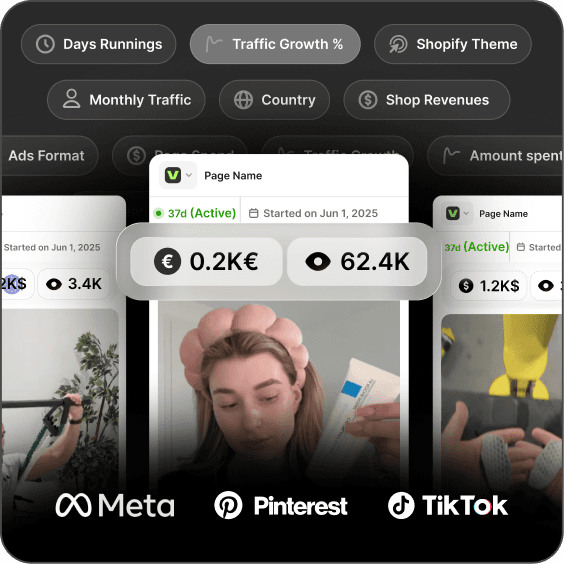
Tools like Minea, widely used for product research and trend tracking, integrate seamlessly with Shopify.
From abandoned cart recovery to promo codes and logistics, automation works without coding, directly from the dashboard or apps.
For dropshipping in Europe or the US, Shopify handles VAT, automated invoicing, and integrates with local shipping tools like Sendcloud or Boxtal.
BigCommerce: Strong Native Features, Smaller App Ecosystem

BigCommerce focuses on powerful built-in features: advanced inventory management, native multi-channel selling, customer segmentation, abandoned cart recovery, and direct integrations with Amazon, eBay, and Google Shopping.
Its app marketplace is smaller (around 1,000 apps), but covers core dropshipping needs: Spocket, Printful, Modalyst, AliExpress Dropshipping. Order automation is solid, and margin control is clear.
BigCommerce also offers a robust API, allowing integration with external systems like ERPs and analytics platforms.
The back office excels at catalog management, with unlimited variants, customer-based pricing, and advanced segmentation.
Most automation relies on third-party tools, but BigCommerce includes advanced features starting from the Plus plan, such as cart recovery and customer segmentation.
Bottom line:
Shopify clearly leads in dropshipping automation and app diversity. BigCommerce stands out with strong native tools and multi-channel management, but its ecosystem is less extensive for pure dropshippers.
Payments, Fees, and International Selling

To scale globally, your store must support all payment methods, international currencies, and transparent fees. This is where Shopify versus BigCommerce shows real differences.
Shopify: Maximum Flexibility, but Watch the Fees
Shopify supports 100+ payment gateways, including Stripe, PayPal, Mollie, Apple Pay, and its own solution, Shopify Payments.
If you use Shopify Payments, transaction fees are waived. Otherwise, fees apply (from 2% to 0.6%, depending on your plan).
Shopify handles international sales smoothly: multi-currency support, automatic conversion, tax calculation, VAT handling, and localized checkout.
For dropshipping, payments are processed instantly and work with all shipping models.
Shopify also offers Shopify POS for in-person sales (pop-up stores, retail), fully synced with your online store.
Note: Some local payment methods require third-party apps.
BigCommerce: Zero Transaction Fees and Open Payment Freedom
BigCommerce’s biggest advantage: 0% transaction fees, no matter which payment gateway you use.
It supports 65+ payment providers, including Stripe, PayPal, Adyen, Authorize.net, Amazon Pay, and Apple Pay.
Multi-currency and localized payment methods are handled natively.
BigCommerce includes advanced tools for international selling, such as tax calculation, VAT management, automated invoicing, and global shipping options.
It also supports B2B features like wholesale pricing, deferred payments, and professional invoicing.
Key takeaway:
Shopify focuses on ease of use and a powerful in-house payment system, but charges fees outside Shopify Payments. BigCommerce stands out with full transparency and zero transaction fees, making it especially appealing for high-volume or international sellers.
SEO & Marketing: Visibility, Traffic, and Built-In Growth Tools

Having an online store is a good start. Being visible and profitable is what really matters. SEO and integrated marketing tools are essential to drive qualified traffic and turn visitors into customers. So when it comes to BigCommerce vs Shopify, which platform performs better?
Shopify: Strong SEO Foundations and a Hyper-Connected Marketing Ecosystem
Shopify is built to help online stores rank on Google, Bing, and other search engines right out of the box.
SEO features include:
Native control over title tags, meta descriptions, custom URLs, automatic sitemaps, 301 redirects, mobile optimization, fast loading speeds, and image Alt tags.
SEO apps like Plug In SEO, SEO Manager, and Smart SEO take things further with semantic analysis, rich snippets, and personalized optimization recommendations.
Shopify also includes a built-in blog, making content marketing and organic traffic growth easy to manage.
On the marketing side, Shopify offers native tools for:
Email marketing (Shopify Email)
Automated abandoned cart recovery
Discount codes and promotions
Retargeting and remarketing
It integrates seamlessly with Google Analytics, Meta (Facebook/Instagram), TikTok, Pinterest, and more.
Key advantage: access to thousands of apps that expand acquisition channels, newsletters, pop-ups, retargeting, affiliate marketing, and advanced automation.
BigCommerce: Advanced SEO Control and Powerful Built-In Marketing Tools
BigCommerce stands out with deep technical SEO control, ideal for structured and scalable projects.
SEO capabilities include:
Fully customizable URL structures, meta tags, Open Graph data, 301 redirects, XML sitemaps, image Alt tags, and built-in structured data for rich snippets.
The platform follows a mobile-first approach and delivers strong server performance for fast load times.
BigCommerce also includes a native blog to support content marketing, backlink acquisition, and long-term SEO growth.
On the marketing side, BigCommerce offers:
Built-in promotions and discounts
Abandoned cart recovery
Newsletter integrations (Mailchimp, Sendinblue, etc.)
Promotional banners
Native multi-channel selling (Google Shopping, marketplaces, social media)
While it offers fewer marketing apps than Shopify, many advanced features are already included, reducing the need for third-party tools.
Customer Support & Security: Assistance, Compliance, and Data Protection
A successful e-commerce store must be efficient, secure, and supported by responsive customer service. How do Shopify versus BigCommerce compare?
Shopify: 24/7 Support and Security by Design
Shopify provides 24/7 customer support via chat, email, and phone (depending on the plan). Support is available in English and multiple languages, which is a major advantage for international sellers.
You also get access to:
A comprehensive help center
An active community forum
Step-by-step tutorials and documentation
On higher plans (Advanced, Shopify Plus), support becomes priority-based, with access to dedicated experts.
Security:
Shopify is PCI DSS Level 1 compliant, includes free SSL certificates, fraud protection, automatic backups, and continuous updates, no action required from merchants.
Data protection:
GDPR compliance, granular staff permissions, and detailed activity logs.
BigCommerce: Enterprise-Grade Support and Top-Tier Security
BigCommerce also offers 24/7 support via chat, phone, and email. Priority support starts with the Plus plan, and Enterprise users get dedicated account management.
Merchants benefit from:
A detailed knowledge base
Online guides and FAQs
Webinars for advanced use cases
Security:
PCI DSS compliance, SSL certificates, firewalls, real-time monitoring, fraud protection, regular backups, and automatic updates.
For larger businesses, BigCommerce provides a dedicated Trust Center outlining its security and compliance practices.
Data protection:
Advanced access controls, audit logs, GDPR compliance, and secure hosting infrastructure.
Summary:Both platforms offer excellent security and reliable 24/7 support. Shopify shines with ease of use and multilingual assistance, while BigCommerce focuses on enterprise-level transparency and customized support.
E-commerce & Dropshipping Features: Automation, Apps, and Catalog Management
To succeed in e-commerce, especially dropshipping, you need more than a store. You need automation, fast product sourcing, powerful apps, and a catalog that scales easily. So how do Shopify vs BigCommerce dropshipping really compare in real-world use?
Shopify: The Leading Ecosystem for Dropshipping Automation

Shopify dominates dropshipping thanks to its massive app ecosystem with 8,000+ applications. Product sourcing, order automation, inventory sync, shipping tracking, everything is covered.
Apps like DSers, Dropified, and others allow you to import thousands of products from AliExpress or private suppliers in just a few clicks. Pricing rules, variants, and order fulfillment can all be automated.
Shopify’s API connects easily with advanced tools like CRMs, ERPs, marketing automation platforms, and analytics solutions.
Catalog management is simple: bulk imports, variant control, inventory tracking, and multi-channel selling (Instagram, Facebook, Google Shopping, marketplaces).
Tools like Minea, widely used for product research and trend tracking, integrate seamlessly with Shopify.
From abandoned cart recovery to promo codes and logistics, automation works without coding, directly from the dashboard or apps.
For dropshipping in Europe or the US, Shopify handles VAT, automated invoicing, and integrates with local shipping tools like Sendcloud or Boxtal.
BigCommerce: Strong Native Features, Smaller App Ecosystem

BigCommerce focuses on powerful built-in features: advanced inventory management, native multi-channel selling, customer segmentation, abandoned cart recovery, and direct integrations with Amazon, eBay, and Google Shopping.
Its app marketplace is smaller (around 1,000 apps), but covers core dropshipping needs: Spocket, Printful, Modalyst, AliExpress Dropshipping. Order automation is solid, and margin control is clear.
BigCommerce also offers a robust API, allowing integration with external systems like ERPs and analytics platforms.
The back office excels at catalog management, with unlimited variants, customer-based pricing, and advanced segmentation.
Most automation relies on third-party tools, but BigCommerce includes advanced features starting from the Plus plan, such as cart recovery and customer segmentation.
Bottom line:
Shopify clearly leads in dropshipping automation and app diversity. BigCommerce stands out with strong native tools and multi-channel management, but its ecosystem is less extensive for pure dropshippers.
Payments, Fees, and International Selling

To scale globally, your store must support all payment methods, international currencies, and transparent fees. This is where Shopify versus BigCommerce shows real differences.
Shopify: Maximum Flexibility, but Watch the Fees
Shopify supports 100+ payment gateways, including Stripe, PayPal, Mollie, Apple Pay, and its own solution, Shopify Payments.
If you use Shopify Payments, transaction fees are waived. Otherwise, fees apply (from 2% to 0.6%, depending on your plan).
Shopify handles international sales smoothly: multi-currency support, automatic conversion, tax calculation, VAT handling, and localized checkout.
For dropshipping, payments are processed instantly and work with all shipping models.
Shopify also offers Shopify POS for in-person sales (pop-up stores, retail), fully synced with your online store.
Note: Some local payment methods require third-party apps.
BigCommerce: Zero Transaction Fees and Open Payment Freedom
BigCommerce’s biggest advantage: 0% transaction fees, no matter which payment gateway you use.
It supports 65+ payment providers, including Stripe, PayPal, Adyen, Authorize.net, Amazon Pay, and Apple Pay.
Multi-currency and localized payment methods are handled natively.
BigCommerce includes advanced tools for international selling, such as tax calculation, VAT management, automated invoicing, and global shipping options.
It also supports B2B features like wholesale pricing, deferred payments, and professional invoicing.
Key takeaway:
Shopify focuses on ease of use and a powerful in-house payment system, but charges fees outside Shopify Payments. BigCommerce stands out with full transparency and zero transaction fees, making it especially appealing for high-volume or international sellers.
SEO & Marketing: Visibility, Traffic, and Built-In Growth Tools

Having an online store is a good start. Being visible and profitable is what really matters. SEO and integrated marketing tools are essential to drive qualified traffic and turn visitors into customers. So when it comes to BigCommerce vs Shopify, which platform performs better?
Shopify: Strong SEO Foundations and a Hyper-Connected Marketing Ecosystem
Shopify is built to help online stores rank on Google, Bing, and other search engines right out of the box.
SEO features include:
Native control over title tags, meta descriptions, custom URLs, automatic sitemaps, 301 redirects, mobile optimization, fast loading speeds, and image Alt tags.
SEO apps like Plug In SEO, SEO Manager, and Smart SEO take things further with semantic analysis, rich snippets, and personalized optimization recommendations.
Shopify also includes a built-in blog, making content marketing and organic traffic growth easy to manage.
On the marketing side, Shopify offers native tools for:
Email marketing (Shopify Email)
Automated abandoned cart recovery
Discount codes and promotions
Retargeting and remarketing
It integrates seamlessly with Google Analytics, Meta (Facebook/Instagram), TikTok, Pinterest, and more.
Key advantage: access to thousands of apps that expand acquisition channels, newsletters, pop-ups, retargeting, affiliate marketing, and advanced automation.
BigCommerce: Advanced SEO Control and Powerful Built-In Marketing Tools
BigCommerce stands out with deep technical SEO control, ideal for structured and scalable projects.
SEO capabilities include:
Fully customizable URL structures, meta tags, Open Graph data, 301 redirects, XML sitemaps, image Alt tags, and built-in structured data for rich snippets.
The platform follows a mobile-first approach and delivers strong server performance for fast load times.
BigCommerce also includes a native blog to support content marketing, backlink acquisition, and long-term SEO growth.
On the marketing side, BigCommerce offers:
Built-in promotions and discounts
Abandoned cart recovery
Newsletter integrations (Mailchimp, Sendinblue, etc.)
Promotional banners
Native multi-channel selling (Google Shopping, marketplaces, social media)
While it offers fewer marketing apps than Shopify, many advanced features are already included, reducing the need for third-party tools.
Customer Support & Security: Assistance, Compliance, and Data Protection
A successful e-commerce store must be efficient, secure, and supported by responsive customer service. How do Shopify versus BigCommerce compare?
Shopify: 24/7 Support and Security by Design
Shopify provides 24/7 customer support via chat, email, and phone (depending on the plan). Support is available in English and multiple languages, which is a major advantage for international sellers.
You also get access to:
A comprehensive help center
An active community forum
Step-by-step tutorials and documentation
On higher plans (Advanced, Shopify Plus), support becomes priority-based, with access to dedicated experts.
Security:
Shopify is PCI DSS Level 1 compliant, includes free SSL certificates, fraud protection, automatic backups, and continuous updates, no action required from merchants.
Data protection:
GDPR compliance, granular staff permissions, and detailed activity logs.
BigCommerce: Enterprise-Grade Support and Top-Tier Security
BigCommerce also offers 24/7 support via chat, phone, and email. Priority support starts with the Plus plan, and Enterprise users get dedicated account management.
Merchants benefit from:
A detailed knowledge base
Online guides and FAQs
Webinars for advanced use cases
Security:
PCI DSS compliance, SSL certificates, firewalls, real-time monitoring, fraud protection, regular backups, and automatic updates.
For larger businesses, BigCommerce provides a dedicated Trust Center outlining its security and compliance practices.
Data protection:
Advanced access controls, audit logs, GDPR compliance, and secure hosting infrastructure.
Summary:Both platforms offer excellent security and reliable 24/7 support. Shopify shines with ease of use and multilingual assistance, while BigCommerce focuses on enterprise-level transparency and customized support.
E-commerce & Dropshipping Features: Automation, Apps, and Catalog Management
To succeed in e-commerce, especially dropshipping, you need more than a store. You need automation, fast product sourcing, powerful apps, and a catalog that scales easily. So how do Shopify vs BigCommerce dropshipping really compare in real-world use?
Shopify: The Leading Ecosystem for Dropshipping Automation

Shopify dominates dropshipping thanks to its massive app ecosystem with 8,000+ applications. Product sourcing, order automation, inventory sync, shipping tracking, everything is covered.
Apps like DSers, Dropified, and others allow you to import thousands of products from AliExpress or private suppliers in just a few clicks. Pricing rules, variants, and order fulfillment can all be automated.
Shopify’s API connects easily with advanced tools like CRMs, ERPs, marketing automation platforms, and analytics solutions.
Catalog management is simple: bulk imports, variant control, inventory tracking, and multi-channel selling (Instagram, Facebook, Google Shopping, marketplaces).
Tools like Minea, widely used for product research and trend tracking, integrate seamlessly with Shopify.
From abandoned cart recovery to promo codes and logistics, automation works without coding, directly from the dashboard or apps.
For dropshipping in Europe or the US, Shopify handles VAT, automated invoicing, and integrates with local shipping tools like Sendcloud or Boxtal.
BigCommerce: Strong Native Features, Smaller App Ecosystem

BigCommerce focuses on powerful built-in features: advanced inventory management, native multi-channel selling, customer segmentation, abandoned cart recovery, and direct integrations with Amazon, eBay, and Google Shopping.
Its app marketplace is smaller (around 1,000 apps), but covers core dropshipping needs: Spocket, Printful, Modalyst, AliExpress Dropshipping. Order automation is solid, and margin control is clear.
BigCommerce also offers a robust API, allowing integration with external systems like ERPs and analytics platforms.
The back office excels at catalog management, with unlimited variants, customer-based pricing, and advanced segmentation.
Most automation relies on third-party tools, but BigCommerce includes advanced features starting from the Plus plan, such as cart recovery and customer segmentation.
Bottom line:
Shopify clearly leads in dropshipping automation and app diversity. BigCommerce stands out with strong native tools and multi-channel management, but its ecosystem is less extensive for pure dropshippers.
Payments, Fees, and International Selling

To scale globally, your store must support all payment methods, international currencies, and transparent fees. This is where Shopify versus BigCommerce shows real differences.
Shopify: Maximum Flexibility, but Watch the Fees
Shopify supports 100+ payment gateways, including Stripe, PayPal, Mollie, Apple Pay, and its own solution, Shopify Payments.
If you use Shopify Payments, transaction fees are waived. Otherwise, fees apply (from 2% to 0.6%, depending on your plan).
Shopify handles international sales smoothly: multi-currency support, automatic conversion, tax calculation, VAT handling, and localized checkout.
For dropshipping, payments are processed instantly and work with all shipping models.
Shopify also offers Shopify POS for in-person sales (pop-up stores, retail), fully synced with your online store.
Note: Some local payment methods require third-party apps.
BigCommerce: Zero Transaction Fees and Open Payment Freedom
BigCommerce’s biggest advantage: 0% transaction fees, no matter which payment gateway you use.
It supports 65+ payment providers, including Stripe, PayPal, Adyen, Authorize.net, Amazon Pay, and Apple Pay.
Multi-currency and localized payment methods are handled natively.
BigCommerce includes advanced tools for international selling, such as tax calculation, VAT management, automated invoicing, and global shipping options.
It also supports B2B features like wholesale pricing, deferred payments, and professional invoicing.
Key takeaway:
Shopify focuses on ease of use and a powerful in-house payment system, but charges fees outside Shopify Payments. BigCommerce stands out with full transparency and zero transaction fees, making it especially appealing for high-volume or international sellers.
SEO & Marketing: Visibility, Traffic, and Built-In Growth Tools

Having an online store is a good start. Being visible and profitable is what really matters. SEO and integrated marketing tools are essential to drive qualified traffic and turn visitors into customers. So when it comes to BigCommerce vs Shopify, which platform performs better?
Shopify: Strong SEO Foundations and a Hyper-Connected Marketing Ecosystem
Shopify is built to help online stores rank on Google, Bing, and other search engines right out of the box.
SEO features include:
Native control over title tags, meta descriptions, custom URLs, automatic sitemaps, 301 redirects, mobile optimization, fast loading speeds, and image Alt tags.
SEO apps like Plug In SEO, SEO Manager, and Smart SEO take things further with semantic analysis, rich snippets, and personalized optimization recommendations.
Shopify also includes a built-in blog, making content marketing and organic traffic growth easy to manage.
On the marketing side, Shopify offers native tools for:
Email marketing (Shopify Email)
Automated abandoned cart recovery
Discount codes and promotions
Retargeting and remarketing
It integrates seamlessly with Google Analytics, Meta (Facebook/Instagram), TikTok, Pinterest, and more.
Key advantage: access to thousands of apps that expand acquisition channels, newsletters, pop-ups, retargeting, affiliate marketing, and advanced automation.
BigCommerce: Advanced SEO Control and Powerful Built-In Marketing Tools
BigCommerce stands out with deep technical SEO control, ideal for structured and scalable projects.
SEO capabilities include:
Fully customizable URL structures, meta tags, Open Graph data, 301 redirects, XML sitemaps, image Alt tags, and built-in structured data for rich snippets.
The platform follows a mobile-first approach and delivers strong server performance for fast load times.
BigCommerce also includes a native blog to support content marketing, backlink acquisition, and long-term SEO growth.
On the marketing side, BigCommerce offers:
Built-in promotions and discounts
Abandoned cart recovery
Newsletter integrations (Mailchimp, Sendinblue, etc.)
Promotional banners
Native multi-channel selling (Google Shopping, marketplaces, social media)
While it offers fewer marketing apps than Shopify, many advanced features are already included, reducing the need for third-party tools.
Customer Support & Security: Assistance, Compliance, and Data Protection
A successful e-commerce store must be efficient, secure, and supported by responsive customer service. How do Shopify versus BigCommerce compare?
Shopify: 24/7 Support and Security by Design
Shopify provides 24/7 customer support via chat, email, and phone (depending on the plan). Support is available in English and multiple languages, which is a major advantage for international sellers.
You also get access to:
A comprehensive help center
An active community forum
Step-by-step tutorials and documentation
On higher plans (Advanced, Shopify Plus), support becomes priority-based, with access to dedicated experts.
Security:
Shopify is PCI DSS Level 1 compliant, includes free SSL certificates, fraud protection, automatic backups, and continuous updates, no action required from merchants.
Data protection:
GDPR compliance, granular staff permissions, and detailed activity logs.
BigCommerce: Enterprise-Grade Support and Top-Tier Security
BigCommerce also offers 24/7 support via chat, phone, and email. Priority support starts with the Plus plan, and Enterprise users get dedicated account management.
Merchants benefit from:
A detailed knowledge base
Online guides and FAQs
Webinars for advanced use cases
Security:
PCI DSS compliance, SSL certificates, firewalls, real-time monitoring, fraud protection, regular backups, and automatic updates.
For larger businesses, BigCommerce provides a dedicated Trust Center outlining its security and compliance practices.
Data protection:
Advanced access controls, audit logs, GDPR compliance, and secure hosting infrastructure.
Summary:Both platforms offer excellent security and reliable 24/7 support. Shopify shines with ease of use and multilingual assistance, while BigCommerce focuses on enterprise-level transparency and customized support.
E-commerce & Dropshipping Features: Automation, Apps, and Catalog Management
To succeed in e-commerce, especially dropshipping, you need more than a store. You need automation, fast product sourcing, powerful apps, and a catalog that scales easily. So how do Shopify vs BigCommerce dropshipping really compare in real-world use?
Shopify: The Leading Ecosystem for Dropshipping Automation

Shopify dominates dropshipping thanks to its massive app ecosystem with 8,000+ applications. Product sourcing, order automation, inventory sync, shipping tracking, everything is covered.
Apps like DSers, Dropified, and others allow you to import thousands of products from AliExpress or private suppliers in just a few clicks. Pricing rules, variants, and order fulfillment can all be automated.
Shopify’s API connects easily with advanced tools like CRMs, ERPs, marketing automation platforms, and analytics solutions.
Catalog management is simple: bulk imports, variant control, inventory tracking, and multi-channel selling (Instagram, Facebook, Google Shopping, marketplaces).
Tools like Minea, widely used for product research and trend tracking, integrate seamlessly with Shopify.
From abandoned cart recovery to promo codes and logistics, automation works without coding, directly from the dashboard or apps.
For dropshipping in Europe or the US, Shopify handles VAT, automated invoicing, and integrates with local shipping tools like Sendcloud or Boxtal.
BigCommerce: Strong Native Features, Smaller App Ecosystem

BigCommerce focuses on powerful built-in features: advanced inventory management, native multi-channel selling, customer segmentation, abandoned cart recovery, and direct integrations with Amazon, eBay, and Google Shopping.
Its app marketplace is smaller (around 1,000 apps), but covers core dropshipping needs: Spocket, Printful, Modalyst, AliExpress Dropshipping. Order automation is solid, and margin control is clear.
BigCommerce also offers a robust API, allowing integration with external systems like ERPs and analytics platforms.
The back office excels at catalog management, with unlimited variants, customer-based pricing, and advanced segmentation.
Most automation relies on third-party tools, but BigCommerce includes advanced features starting from the Plus plan, such as cart recovery and customer segmentation.
Bottom line:
Shopify clearly leads in dropshipping automation and app diversity. BigCommerce stands out with strong native tools and multi-channel management, but its ecosystem is less extensive for pure dropshippers.
Payments, Fees, and International Selling

To scale globally, your store must support all payment methods, international currencies, and transparent fees. This is where Shopify versus BigCommerce shows real differences.
Shopify: Maximum Flexibility, but Watch the Fees
Shopify supports 100+ payment gateways, including Stripe, PayPal, Mollie, Apple Pay, and its own solution, Shopify Payments.
If you use Shopify Payments, transaction fees are waived. Otherwise, fees apply (from 2% to 0.6%, depending on your plan).
Shopify handles international sales smoothly: multi-currency support, automatic conversion, tax calculation, VAT handling, and localized checkout.
For dropshipping, payments are processed instantly and work with all shipping models.
Shopify also offers Shopify POS for in-person sales (pop-up stores, retail), fully synced with your online store.
Note: Some local payment methods require third-party apps.
BigCommerce: Zero Transaction Fees and Open Payment Freedom
BigCommerce’s biggest advantage: 0% transaction fees, no matter which payment gateway you use.
It supports 65+ payment providers, including Stripe, PayPal, Adyen, Authorize.net, Amazon Pay, and Apple Pay.
Multi-currency and localized payment methods are handled natively.
BigCommerce includes advanced tools for international selling, such as tax calculation, VAT management, automated invoicing, and global shipping options.
It also supports B2B features like wholesale pricing, deferred payments, and professional invoicing.
Key takeaway:
Shopify focuses on ease of use and a powerful in-house payment system, but charges fees outside Shopify Payments. BigCommerce stands out with full transparency and zero transaction fees, making it especially appealing for high-volume or international sellers.
SEO & Marketing: Visibility, Traffic, and Built-In Growth Tools

Having an online store is a good start. Being visible and profitable is what really matters. SEO and integrated marketing tools are essential to drive qualified traffic and turn visitors into customers. So when it comes to BigCommerce vs Shopify, which platform performs better?
Shopify: Strong SEO Foundations and a Hyper-Connected Marketing Ecosystem
Shopify is built to help online stores rank on Google, Bing, and other search engines right out of the box.
SEO features include:
Native control over title tags, meta descriptions, custom URLs, automatic sitemaps, 301 redirects, mobile optimization, fast loading speeds, and image Alt tags.
SEO apps like Plug In SEO, SEO Manager, and Smart SEO take things further with semantic analysis, rich snippets, and personalized optimization recommendations.
Shopify also includes a built-in blog, making content marketing and organic traffic growth easy to manage.
On the marketing side, Shopify offers native tools for:
Email marketing (Shopify Email)
Automated abandoned cart recovery
Discount codes and promotions
Retargeting and remarketing
It integrates seamlessly with Google Analytics, Meta (Facebook/Instagram), TikTok, Pinterest, and more.
Key advantage: access to thousands of apps that expand acquisition channels, newsletters, pop-ups, retargeting, affiliate marketing, and advanced automation.
BigCommerce: Advanced SEO Control and Powerful Built-In Marketing Tools
BigCommerce stands out with deep technical SEO control, ideal for structured and scalable projects.
SEO capabilities include:
Fully customizable URL structures, meta tags, Open Graph data, 301 redirects, XML sitemaps, image Alt tags, and built-in structured data for rich snippets.
The platform follows a mobile-first approach and delivers strong server performance for fast load times.
BigCommerce also includes a native blog to support content marketing, backlink acquisition, and long-term SEO growth.
On the marketing side, BigCommerce offers:
Built-in promotions and discounts
Abandoned cart recovery
Newsletter integrations (Mailchimp, Sendinblue, etc.)
Promotional banners
Native multi-channel selling (Google Shopping, marketplaces, social media)
While it offers fewer marketing apps than Shopify, many advanced features are already included, reducing the need for third-party tools.
Customer Support & Security: Assistance, Compliance, and Data Protection
A successful e-commerce store must be efficient, secure, and supported by responsive customer service. How do Shopify versus BigCommerce compare?
Shopify: 24/7 Support and Security by Design
Shopify provides 24/7 customer support via chat, email, and phone (depending on the plan). Support is available in English and multiple languages, which is a major advantage for international sellers.
You also get access to:
A comprehensive help center
An active community forum
Step-by-step tutorials and documentation
On higher plans (Advanced, Shopify Plus), support becomes priority-based, with access to dedicated experts.
Security:
Shopify is PCI DSS Level 1 compliant, includes free SSL certificates, fraud protection, automatic backups, and continuous updates, no action required from merchants.
Data protection:
GDPR compliance, granular staff permissions, and detailed activity logs.
BigCommerce: Enterprise-Grade Support and Top-Tier Security
BigCommerce also offers 24/7 support via chat, phone, and email. Priority support starts with the Plus plan, and Enterprise users get dedicated account management.
Merchants benefit from:
A detailed knowledge base
Online guides and FAQs
Webinars for advanced use cases
Security:
PCI DSS compliance, SSL certificates, firewalls, real-time monitoring, fraud protection, regular backups, and automatic updates.
For larger businesses, BigCommerce provides a dedicated Trust Center outlining its security and compliance practices.
Data protection:
Advanced access controls, audit logs, GDPR compliance, and secure hosting infrastructure.
Summary:Both platforms offer excellent security and reliable 24/7 support. Shopify shines with ease of use and multilingual assistance, while BigCommerce focuses on enterprise-level transparency and customized support.
E-commerce & Dropshipping Features: Automation, Apps, and Catalog Management
To succeed in e-commerce, especially dropshipping, you need more than a store. You need automation, fast product sourcing, powerful apps, and a catalog that scales easily. So how do Shopify vs BigCommerce dropshipping really compare in real-world use?
Shopify: The Leading Ecosystem for Dropshipping Automation

Shopify dominates dropshipping thanks to its massive app ecosystem with 8,000+ applications. Product sourcing, order automation, inventory sync, shipping tracking, everything is covered.
Apps like DSers, Dropified, and others allow you to import thousands of products from AliExpress or private suppliers in just a few clicks. Pricing rules, variants, and order fulfillment can all be automated.
Shopify’s API connects easily with advanced tools like CRMs, ERPs, marketing automation platforms, and analytics solutions.
Catalog management is simple: bulk imports, variant control, inventory tracking, and multi-channel selling (Instagram, Facebook, Google Shopping, marketplaces).
Tools like Minea, widely used for product research and trend tracking, integrate seamlessly with Shopify.
From abandoned cart recovery to promo codes and logistics, automation works without coding, directly from the dashboard or apps.
For dropshipping in Europe or the US, Shopify handles VAT, automated invoicing, and integrates with local shipping tools like Sendcloud or Boxtal.
BigCommerce: Strong Native Features, Smaller App Ecosystem

BigCommerce focuses on powerful built-in features: advanced inventory management, native multi-channel selling, customer segmentation, abandoned cart recovery, and direct integrations with Amazon, eBay, and Google Shopping.
Its app marketplace is smaller (around 1,000 apps), but covers core dropshipping needs: Spocket, Printful, Modalyst, AliExpress Dropshipping. Order automation is solid, and margin control is clear.
BigCommerce also offers a robust API, allowing integration with external systems like ERPs and analytics platforms.
The back office excels at catalog management, with unlimited variants, customer-based pricing, and advanced segmentation.
Most automation relies on third-party tools, but BigCommerce includes advanced features starting from the Plus plan, such as cart recovery and customer segmentation.
Bottom line:
Shopify clearly leads in dropshipping automation and app diversity. BigCommerce stands out with strong native tools and multi-channel management, but its ecosystem is less extensive for pure dropshippers.
Payments, Fees, and International Selling

To scale globally, your store must support all payment methods, international currencies, and transparent fees. This is where Shopify versus BigCommerce shows real differences.
Shopify: Maximum Flexibility, but Watch the Fees
Shopify supports 100+ payment gateways, including Stripe, PayPal, Mollie, Apple Pay, and its own solution, Shopify Payments.
If you use Shopify Payments, transaction fees are waived. Otherwise, fees apply (from 2% to 0.6%, depending on your plan).
Shopify handles international sales smoothly: multi-currency support, automatic conversion, tax calculation, VAT handling, and localized checkout.
For dropshipping, payments are processed instantly and work with all shipping models.
Shopify also offers Shopify POS for in-person sales (pop-up stores, retail), fully synced with your online store.
Note: Some local payment methods require third-party apps.
BigCommerce: Zero Transaction Fees and Open Payment Freedom
BigCommerce’s biggest advantage: 0% transaction fees, no matter which payment gateway you use.
It supports 65+ payment providers, including Stripe, PayPal, Adyen, Authorize.net, Amazon Pay, and Apple Pay.
Multi-currency and localized payment methods are handled natively.
BigCommerce includes advanced tools for international selling, such as tax calculation, VAT management, automated invoicing, and global shipping options.
It also supports B2B features like wholesale pricing, deferred payments, and professional invoicing.
Key takeaway:
Shopify focuses on ease of use and a powerful in-house payment system, but charges fees outside Shopify Payments. BigCommerce stands out with full transparency and zero transaction fees, making it especially appealing for high-volume or international sellers.
SEO & Marketing: Visibility, Traffic, and Built-In Growth Tools

Having an online store is a good start. Being visible and profitable is what really matters. SEO and integrated marketing tools are essential to drive qualified traffic and turn visitors into customers. So when it comes to BigCommerce vs Shopify, which platform performs better?
Shopify: Strong SEO Foundations and a Hyper-Connected Marketing Ecosystem
Shopify is built to help online stores rank on Google, Bing, and other search engines right out of the box.
SEO features include:
Native control over title tags, meta descriptions, custom URLs, automatic sitemaps, 301 redirects, mobile optimization, fast loading speeds, and image Alt tags.
SEO apps like Plug In SEO, SEO Manager, and Smart SEO take things further with semantic analysis, rich snippets, and personalized optimization recommendations.
Shopify also includes a built-in blog, making content marketing and organic traffic growth easy to manage.
On the marketing side, Shopify offers native tools for:
Email marketing (Shopify Email)
Automated abandoned cart recovery
Discount codes and promotions
Retargeting and remarketing
It integrates seamlessly with Google Analytics, Meta (Facebook/Instagram), TikTok, Pinterest, and more.
Key advantage: access to thousands of apps that expand acquisition channels, newsletters, pop-ups, retargeting, affiliate marketing, and advanced automation.
BigCommerce: Advanced SEO Control and Powerful Built-In Marketing Tools
BigCommerce stands out with deep technical SEO control, ideal for structured and scalable projects.
SEO capabilities include:
Fully customizable URL structures, meta tags, Open Graph data, 301 redirects, XML sitemaps, image Alt tags, and built-in structured data for rich snippets.
The platform follows a mobile-first approach and delivers strong server performance for fast load times.
BigCommerce also includes a native blog to support content marketing, backlink acquisition, and long-term SEO growth.
On the marketing side, BigCommerce offers:
Built-in promotions and discounts
Abandoned cart recovery
Newsletter integrations (Mailchimp, Sendinblue, etc.)
Promotional banners
Native multi-channel selling (Google Shopping, marketplaces, social media)
While it offers fewer marketing apps than Shopify, many advanced features are already included, reducing the need for third-party tools.
Customer Support & Security: Assistance, Compliance, and Data Protection
A successful e-commerce store must be efficient, secure, and supported by responsive customer service. How do Shopify versus BigCommerce compare?
Shopify: 24/7 Support and Security by Design
Shopify provides 24/7 customer support via chat, email, and phone (depending on the plan). Support is available in English and multiple languages, which is a major advantage for international sellers.
You also get access to:
A comprehensive help center
An active community forum
Step-by-step tutorials and documentation
On higher plans (Advanced, Shopify Plus), support becomes priority-based, with access to dedicated experts.
Security:
Shopify is PCI DSS Level 1 compliant, includes free SSL certificates, fraud protection, automatic backups, and continuous updates, no action required from merchants.
Data protection:
GDPR compliance, granular staff permissions, and detailed activity logs.
BigCommerce: Enterprise-Grade Support and Top-Tier Security
BigCommerce also offers 24/7 support via chat, phone, and email. Priority support starts with the Plus plan, and Enterprise users get dedicated account management.
Merchants benefit from:
A detailed knowledge base
Online guides and FAQs
Webinars for advanced use cases
Security:
PCI DSS compliance, SSL certificates, firewalls, real-time monitoring, fraud protection, regular backups, and automatic updates.
For larger businesses, BigCommerce provides a dedicated Trust Center outlining its security and compliance practices.
Data protection:
Advanced access controls, audit logs, GDPR compliance, and secure hosting infrastructure.
Summary:Both platforms offer excellent security and reliable 24/7 support. Shopify shines with ease of use and multilingual assistance, while BigCommerce focuses on enterprise-level transparency and customized support.


Who’s Behind the Platforms? Shopify vs BigCommerce Explained
Before choosing between BigCommerce vs Shopify, it helps to understand the companies behind the software.
Shopify: Making E-commerce Simple and Accessible

Founded in Canada in 2006, Shopify has become a go-to platform for launching, running, and scaling an online store. Today, it’s a global leader in e-commerce SaaS, with over 9 million sites created worldwide. Its mission is simple: make commerce accessible by giving entrepreneurs, small or large, an ultra-intuitive platform, continuously expanded with a massive library of apps and themes.
Today, Shopify powers everything from international brands to independent creators, dropshippers, and brick-and-mortar retailers through a multichannel, mobile-first approach. Everything is built to help you focus on what matters most: selling.
BigCommerce: Technical Power for Ambitious Projects
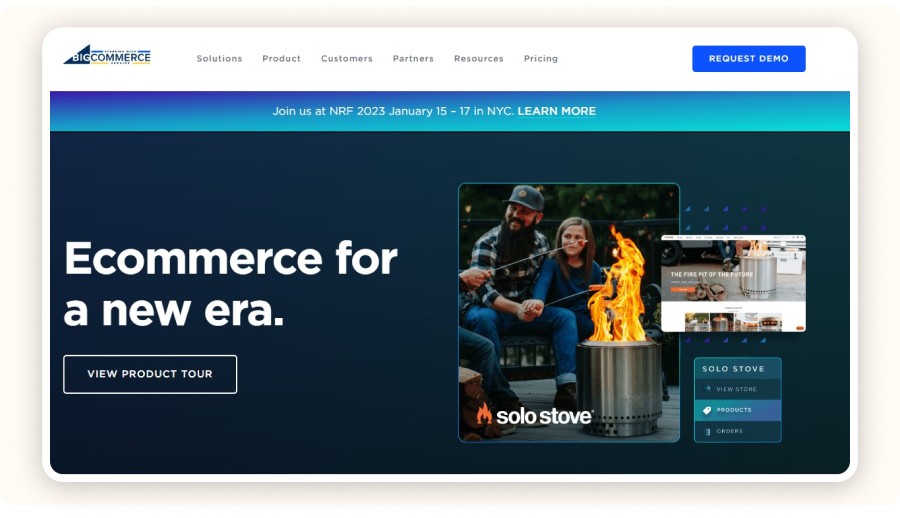
Founded in the US in 2009, BigCommerce targets businesses that need more control, customization, and scalability.
The platform emphasizes robust native features, advanced SEO, complex catalog management, international selling, and B2B capabilities, while remaining fully open to developers.
With zero transaction fees, BigCommerce positions itself as a strong alternative for brands seeking flexibility, performance, and long-term scalability.
Shopify or BigCommerce: Which Is Right for Your E-commerce Project in 2026?
Choosing between Shopify and BigCommerce isn’t just about pricing or design, it’s about strategy and vision.
Want to launch fast, test ideas, scale quickly, and leverage the largest app ecosystem in the market? Shopify is the obvious choice, especially for beginners and dropshipping businesses.
Need advanced customization, technical control, complex catalogs, B2B features, or global expansion without transaction fees? BigCommerce clearly stands out.
Both platforms allow you to build a professional, secure, and scalable online store. The key is aligning your choice with your business model, budget, and customer experience goals.
If you want to validate product ideas or spot winning trends faster, tools like Minea can accelerate growth, whether you choose Shopify or BigCommerce.
FAQ
Which is better: Shopify or BigCommerce?
Shopify is best for beginners, dropshippers, and fast-growing online stores thanks to its ease of use and massive app ecosystem. BigCommerce is better for advanced businesses that need more customization, no transaction fees, and strong native features.
Is Shopify or BigCommerce better for dropshipping?
Shopify is generally better for dropshipping. It offers more dropshipping apps, easier automation, and faster setup. BigCommerce supports dropshipping but has a smaller app ecosystem.
What is the main difference between BigCommerce and Shopify?
The main difference is flexibility versus simplicity. Shopify focuses on ease of use and scalability through apps, while BigCommerce offers more built-in features and zero transaction fees.
Is BigCommerce cheaper than Shopify?
BigCommerce can be cheaper at scale because it charges no transaction fees. Shopify may cost more over time if you don’t use Shopify Payments or rely heavily on paid apps.
Who’s Behind the Platforms? Shopify vs BigCommerce Explained
Before choosing between BigCommerce vs Shopify, it helps to understand the companies behind the software.
Shopify: Making E-commerce Simple and Accessible

Founded in Canada in 2006, Shopify has become a go-to platform for launching, running, and scaling an online store. Today, it’s a global leader in e-commerce SaaS, with over 9 million sites created worldwide. Its mission is simple: make commerce accessible by giving entrepreneurs, small or large, an ultra-intuitive platform, continuously expanded with a massive library of apps and themes.
Today, Shopify powers everything from international brands to independent creators, dropshippers, and brick-and-mortar retailers through a multichannel, mobile-first approach. Everything is built to help you focus on what matters most: selling.
BigCommerce: Technical Power for Ambitious Projects

Founded in the US in 2009, BigCommerce targets businesses that need more control, customization, and scalability.
The platform emphasizes robust native features, advanced SEO, complex catalog management, international selling, and B2B capabilities, while remaining fully open to developers.
With zero transaction fees, BigCommerce positions itself as a strong alternative for brands seeking flexibility, performance, and long-term scalability.
Shopify or BigCommerce: Which Is Right for Your E-commerce Project in 2026?
Choosing between Shopify and BigCommerce isn’t just about pricing or design, it’s about strategy and vision.
Want to launch fast, test ideas, scale quickly, and leverage the largest app ecosystem in the market? Shopify is the obvious choice, especially for beginners and dropshipping businesses.
Need advanced customization, technical control, complex catalogs, B2B features, or global expansion without transaction fees? BigCommerce clearly stands out.
Both platforms allow you to build a professional, secure, and scalable online store. The key is aligning your choice with your business model, budget, and customer experience goals.
If you want to validate product ideas or spot winning trends faster, tools like Minea can accelerate growth, whether you choose Shopify or BigCommerce.
FAQ
Which is better: Shopify or BigCommerce?
Shopify is best for beginners, dropshippers, and fast-growing online stores thanks to its ease of use and massive app ecosystem. BigCommerce is better for advanced businesses that need more customization, no transaction fees, and strong native features.
Is Shopify or BigCommerce better for dropshipping?
Shopify is generally better for dropshipping. It offers more dropshipping apps, easier automation, and faster setup. BigCommerce supports dropshipping but has a smaller app ecosystem.
What is the main difference between BigCommerce and Shopify?
The main difference is flexibility versus simplicity. Shopify focuses on ease of use and scalability through apps, while BigCommerce offers more built-in features and zero transaction fees.
Is BigCommerce cheaper than Shopify?
BigCommerce can be cheaper at scale because it charges no transaction fees. Shopify may cost more over time if you don’t use Shopify Payments or rely heavily on paid apps.
Who’s Behind the Platforms? Shopify vs BigCommerce Explained
Before choosing between BigCommerce vs Shopify, it helps to understand the companies behind the software.
Shopify: Making E-commerce Simple and Accessible

Founded in Canada in 2006, Shopify has become a go-to platform for launching, running, and scaling an online store. Today, it’s a global leader in e-commerce SaaS, with over 9 million sites created worldwide. Its mission is simple: make commerce accessible by giving entrepreneurs, small or large, an ultra-intuitive platform, continuously expanded with a massive library of apps and themes.
Today, Shopify powers everything from international brands to independent creators, dropshippers, and brick-and-mortar retailers through a multichannel, mobile-first approach. Everything is built to help you focus on what matters most: selling.
BigCommerce: Technical Power for Ambitious Projects

Founded in the US in 2009, BigCommerce targets businesses that need more control, customization, and scalability.
The platform emphasizes robust native features, advanced SEO, complex catalog management, international selling, and B2B capabilities, while remaining fully open to developers.
With zero transaction fees, BigCommerce positions itself as a strong alternative for brands seeking flexibility, performance, and long-term scalability.
Shopify or BigCommerce: Which Is Right for Your E-commerce Project in 2026?
Choosing between Shopify and BigCommerce isn’t just about pricing or design, it’s about strategy and vision.
Want to launch fast, test ideas, scale quickly, and leverage the largest app ecosystem in the market? Shopify is the obvious choice, especially for beginners and dropshipping businesses.
Need advanced customization, technical control, complex catalogs, B2B features, or global expansion without transaction fees? BigCommerce clearly stands out.
Both platforms allow you to build a professional, secure, and scalable online store. The key is aligning your choice with your business model, budget, and customer experience goals.
If you want to validate product ideas or spot winning trends faster, tools like Minea can accelerate growth, whether you choose Shopify or BigCommerce.
FAQ
Which is better: Shopify or BigCommerce?
Shopify is best for beginners, dropshippers, and fast-growing online stores thanks to its ease of use and massive app ecosystem. BigCommerce is better for advanced businesses that need more customization, no transaction fees, and strong native features.
Is Shopify or BigCommerce better for dropshipping?
Shopify is generally better for dropshipping. It offers more dropshipping apps, easier automation, and faster setup. BigCommerce supports dropshipping but has a smaller app ecosystem.
What is the main difference between BigCommerce and Shopify?
The main difference is flexibility versus simplicity. Shopify focuses on ease of use and scalability through apps, while BigCommerce offers more built-in features and zero transaction fees.
Is BigCommerce cheaper than Shopify?
BigCommerce can be cheaper at scale because it charges no transaction fees. Shopify may cost more over time if you don’t use Shopify Payments or rely heavily on paid apps.
Who’s Behind the Platforms? Shopify vs BigCommerce Explained
Before choosing between BigCommerce vs Shopify, it helps to understand the companies behind the software.
Shopify: Making E-commerce Simple and Accessible

Founded in Canada in 2006, Shopify has become a go-to platform for launching, running, and scaling an online store. Today, it’s a global leader in e-commerce SaaS, with over 9 million sites created worldwide. Its mission is simple: make commerce accessible by giving entrepreneurs, small or large, an ultra-intuitive platform, continuously expanded with a massive library of apps and themes.
Today, Shopify powers everything from international brands to independent creators, dropshippers, and brick-and-mortar retailers through a multichannel, mobile-first approach. Everything is built to help you focus on what matters most: selling.
BigCommerce: Technical Power for Ambitious Projects

Founded in the US in 2009, BigCommerce targets businesses that need more control, customization, and scalability.
The platform emphasizes robust native features, advanced SEO, complex catalog management, international selling, and B2B capabilities, while remaining fully open to developers.
With zero transaction fees, BigCommerce positions itself as a strong alternative for brands seeking flexibility, performance, and long-term scalability.
Shopify or BigCommerce: Which Is Right for Your E-commerce Project in 2026?
Choosing between Shopify and BigCommerce isn’t just about pricing or design, it’s about strategy and vision.
Want to launch fast, test ideas, scale quickly, and leverage the largest app ecosystem in the market? Shopify is the obvious choice, especially for beginners and dropshipping businesses.
Need advanced customization, technical control, complex catalogs, B2B features, or global expansion without transaction fees? BigCommerce clearly stands out.
Both platforms allow you to build a professional, secure, and scalable online store. The key is aligning your choice with your business model, budget, and customer experience goals.
If you want to validate product ideas or spot winning trends faster, tools like Minea can accelerate growth, whether you choose Shopify or BigCommerce.
FAQ
Which is better: Shopify or BigCommerce?
Shopify is best for beginners, dropshippers, and fast-growing online stores thanks to its ease of use and massive app ecosystem. BigCommerce is better for advanced businesses that need more customization, no transaction fees, and strong native features.
Is Shopify or BigCommerce better for dropshipping?
Shopify is generally better for dropshipping. It offers more dropshipping apps, easier automation, and faster setup. BigCommerce supports dropshipping but has a smaller app ecosystem.
What is the main difference between BigCommerce and Shopify?
The main difference is flexibility versus simplicity. Shopify focuses on ease of use and scalability through apps, while BigCommerce offers more built-in features and zero transaction fees.
Is BigCommerce cheaper than Shopify?
BigCommerce can be cheaper at scale because it charges no transaction fees. Shopify may cost more over time if you don’t use Shopify Payments or rely heavily on paid apps.
Who’s Behind the Platforms? Shopify vs BigCommerce Explained
Before choosing between BigCommerce vs Shopify, it helps to understand the companies behind the software.
Shopify: Making E-commerce Simple and Accessible

Founded in Canada in 2006, Shopify has become a go-to platform for launching, running, and scaling an online store. Today, it’s a global leader in e-commerce SaaS, with over 9 million sites created worldwide. Its mission is simple: make commerce accessible by giving entrepreneurs, small or large, an ultra-intuitive platform, continuously expanded with a massive library of apps and themes.
Today, Shopify powers everything from international brands to independent creators, dropshippers, and brick-and-mortar retailers through a multichannel, mobile-first approach. Everything is built to help you focus on what matters most: selling.
BigCommerce: Technical Power for Ambitious Projects

Founded in the US in 2009, BigCommerce targets businesses that need more control, customization, and scalability.
The platform emphasizes robust native features, advanced SEO, complex catalog management, international selling, and B2B capabilities, while remaining fully open to developers.
With zero transaction fees, BigCommerce positions itself as a strong alternative for brands seeking flexibility, performance, and long-term scalability.
Shopify or BigCommerce: Which Is Right for Your E-commerce Project in 2026?
Choosing between Shopify and BigCommerce isn’t just about pricing or design, it’s about strategy and vision.
Want to launch fast, test ideas, scale quickly, and leverage the largest app ecosystem in the market? Shopify is the obvious choice, especially for beginners and dropshipping businesses.
Need advanced customization, technical control, complex catalogs, B2B features, or global expansion without transaction fees? BigCommerce clearly stands out.
Both platforms allow you to build a professional, secure, and scalable online store. The key is aligning your choice with your business model, budget, and customer experience goals.
If you want to validate product ideas or spot winning trends faster, tools like Minea can accelerate growth, whether you choose Shopify or BigCommerce.
FAQ
Which is better: Shopify or BigCommerce?
Shopify is best for beginners, dropshippers, and fast-growing online stores thanks to its ease of use and massive app ecosystem. BigCommerce is better for advanced businesses that need more customization, no transaction fees, and strong native features.
Is Shopify or BigCommerce better for dropshipping?
Shopify is generally better for dropshipping. It offers more dropshipping apps, easier automation, and faster setup. BigCommerce supports dropshipping but has a smaller app ecosystem.
What is the main difference between BigCommerce and Shopify?
The main difference is flexibility versus simplicity. Shopify focuses on ease of use and scalability through apps, while BigCommerce offers more built-in features and zero transaction fees.
Is BigCommerce cheaper than Shopify?
BigCommerce can be cheaper at scale because it charges no transaction fees. Shopify may cost more over time if you don’t use Shopify Payments or rely heavily on paid apps.
Who’s Behind the Platforms? Shopify vs BigCommerce Explained
Before choosing between BigCommerce vs Shopify, it helps to understand the companies behind the software.
Shopify: Making E-commerce Simple and Accessible

Founded in Canada in 2006, Shopify has become a go-to platform for launching, running, and scaling an online store. Today, it’s a global leader in e-commerce SaaS, with over 9 million sites created worldwide. Its mission is simple: make commerce accessible by giving entrepreneurs, small or large, an ultra-intuitive platform, continuously expanded with a massive library of apps and themes.
Today, Shopify powers everything from international brands to independent creators, dropshippers, and brick-and-mortar retailers through a multichannel, mobile-first approach. Everything is built to help you focus on what matters most: selling.
BigCommerce: Technical Power for Ambitious Projects

Founded in the US in 2009, BigCommerce targets businesses that need more control, customization, and scalability.
The platform emphasizes robust native features, advanced SEO, complex catalog management, international selling, and B2B capabilities, while remaining fully open to developers.
With zero transaction fees, BigCommerce positions itself as a strong alternative for brands seeking flexibility, performance, and long-term scalability.
Shopify or BigCommerce: Which Is Right for Your E-commerce Project in 2026?
Choosing between Shopify and BigCommerce isn’t just about pricing or design, it’s about strategy and vision.
Want to launch fast, test ideas, scale quickly, and leverage the largest app ecosystem in the market? Shopify is the obvious choice, especially for beginners and dropshipping businesses.
Need advanced customization, technical control, complex catalogs, B2B features, or global expansion without transaction fees? BigCommerce clearly stands out.
Both platforms allow you to build a professional, secure, and scalable online store. The key is aligning your choice with your business model, budget, and customer experience goals.
If you want to validate product ideas or spot winning trends faster, tools like Minea can accelerate growth, whether you choose Shopify or BigCommerce.
FAQ
Which is better: Shopify or BigCommerce?
Shopify is best for beginners, dropshippers, and fast-growing online stores thanks to its ease of use and massive app ecosystem. BigCommerce is better for advanced businesses that need more customization, no transaction fees, and strong native features.
Is Shopify or BigCommerce better for dropshipping?
Shopify is generally better for dropshipping. It offers more dropshipping apps, easier automation, and faster setup. BigCommerce supports dropshipping but has a smaller app ecosystem.
What is the main difference between BigCommerce and Shopify?
The main difference is flexibility versus simplicity. Shopify focuses on ease of use and scalability through apps, while BigCommerce offers more built-in features and zero transaction fees.
Is BigCommerce cheaper than Shopify?
BigCommerce can be cheaper at scale because it charges no transaction fees. Shopify may cost more over time if you don’t use Shopify Payments or rely heavily on paid apps.
Similar articles
Big Cartel vs Shopify: Which Platform is Right for Your Dropshipping Business?
November 12, 2025
Shopify Reviews

Big Cartel vs Shopify: Which Platform is Right for Your Dropshipping Business?
November 12, 2025
Shopify Reviews

Big Cartel vs Shopify: Which Platform is Right for Your Dropshipping Business?
November 12, 2025
Shopify Reviews

Big Cartel vs Shopify: Which Platform is Right for Your Dropshipping Business?
November 12, 2025
Shopify Reviews

Big Cartel vs Shopify: Which Platform is Right for Your Dropshipping Business?
November 12, 2025
Shopify Reviews

Big Cartel vs Shopify: Which Platform is Right for Your Dropshipping Business?
November 12, 2025
Shopify Reviews


Our Free Adspys


Our Free Adspys


Our Free Adspys

Find out more
Read more
Minea © 2026

Find out more
Read more
Minea © 2026

Find out more
Read more
Minea © 2026

Find out more
Read more
Minea © 2026

Find out more
Read more
Minea © 2026

Find out more
Read more
Minea © 2026

Find out more
Read more
Minea © 2026