


How to Launch a Fitness Dropshipping Store
Best niche products dropshipping
Author:
January 15, 2026
Contents
To succeed in fitness dropshipping, you need to:
identify a profitable niche,
select high-demand products (fitness equipment, workout accessories, etc.),
work with reliable suppliers,
build an optimized store and run an effective marketing strategy.
Fitness is one of the best dropshipping niches because demand stays strong year-round. People want to stay in shape at home, buy online, and are willing to pay for quality gear. The result: consistent sales and solid margins, without managing inventory.
To succeed in fitness dropshipping, you need to:
identify a profitable niche,
select high-demand products (fitness equipment, workout accessories, etc.),
work with reliable suppliers,
build an optimized store and run an effective marketing strategy.
Fitness is one of the best dropshipping niches because demand stays strong year-round. People want to stay in shape at home, buy online, and are willing to pay for quality gear. The result: consistent sales and solid margins, without managing inventory.
To succeed in fitness dropshipping, you need to:
identify a profitable niche,
select high-demand products (fitness equipment, workout accessories, etc.),
work with reliable suppliers,
build an optimized store and run an effective marketing strategy.
Fitness is one of the best dropshipping niches because demand stays strong year-round. People want to stay in shape at home, buy online, and are willing to pay for quality gear. The result: consistent sales and solid margins, without managing inventory.
To succeed in fitness dropshipping, you need to:
identify a profitable niche,
select high-demand products (fitness equipment, workout accessories, etc.),
work with reliable suppliers,
build an optimized store and run an effective marketing strategy.
Fitness is one of the best dropshipping niches because demand stays strong year-round. People want to stay in shape at home, buy online, and are willing to pay for quality gear. The result: consistent sales and solid margins, without managing inventory.
To succeed in fitness dropshipping, you need to:
identify a profitable niche,
select high-demand products (fitness equipment, workout accessories, etc.),
work with reliable suppliers,
build an optimized store and run an effective marketing strategy.
Fitness is one of the best dropshipping niches because demand stays strong year-round. People want to stay in shape at home, buy online, and are willing to pay for quality gear. The result: consistent sales and solid margins, without managing inventory.
To succeed in fitness dropshipping, you need to:
identify a profitable niche,
select high-demand products (fitness equipment, workout accessories, etc.),
work with reliable suppliers,
build an optimized store and run an effective marketing strategy.
Fitness is one of the best dropshipping niches because demand stays strong year-round. People want to stay in shape at home, buy online, and are willing to pay for quality gear. The result: consistent sales and solid margins, without managing inventory.




Step 1: Understand the Fitness Dropshipping Model Before You Start
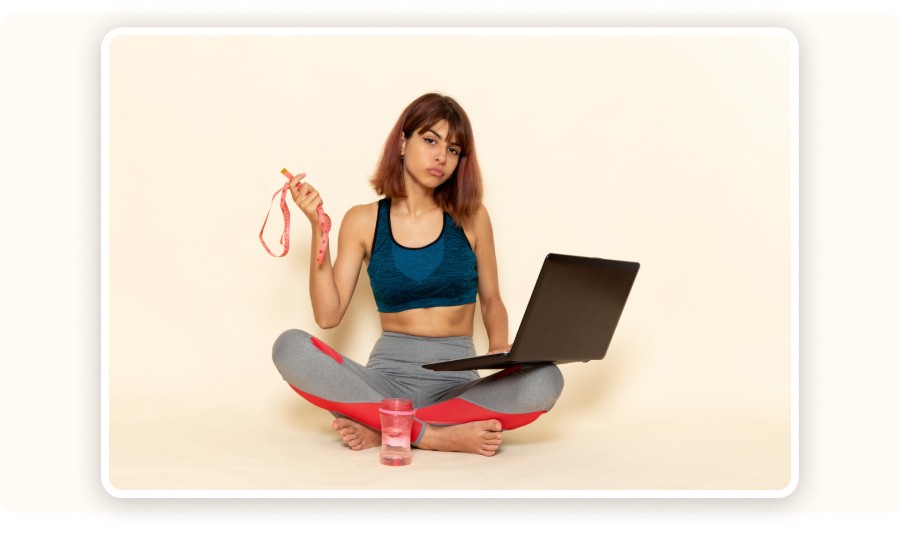
Since 2020, online fitness equipment sales have increased by +170%, according to Statista. This growth comes from the rise of home workouts and a stronger focus on health. It creates the perfect opportunity to sell fitness products without investing in stock.
What Is Fitness Dropshipping, Exactly?
Fitness dropshipping means selling sports products (equipment, accessories, men’s or women’s clothing) without holding inventory. You create an online store and list products. When a customer places an order, your supplier ships the product directly to them. No warehouse, no storage costs, no logistics to manage.
Why Fitness Is a Great Niche for Dropshipping
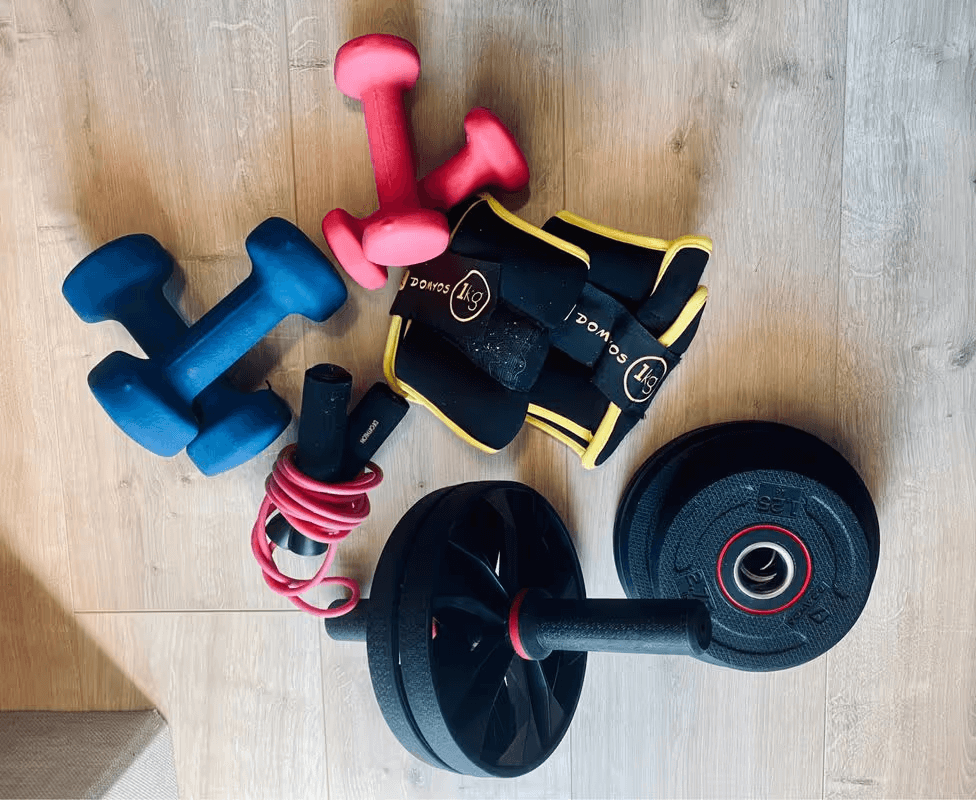
The fitness industry keeps growing. Between home gym users, casual exercisers, and fitness enthusiasts, demand remains stable. You can sell fitness equipment, lightweight accessories, or fitness clothing. There’s something for every level and budget.
Most importantly, many products are dropshipping-friendly: lightweight, compact, and easy to ship.
The Limits You Need to Know
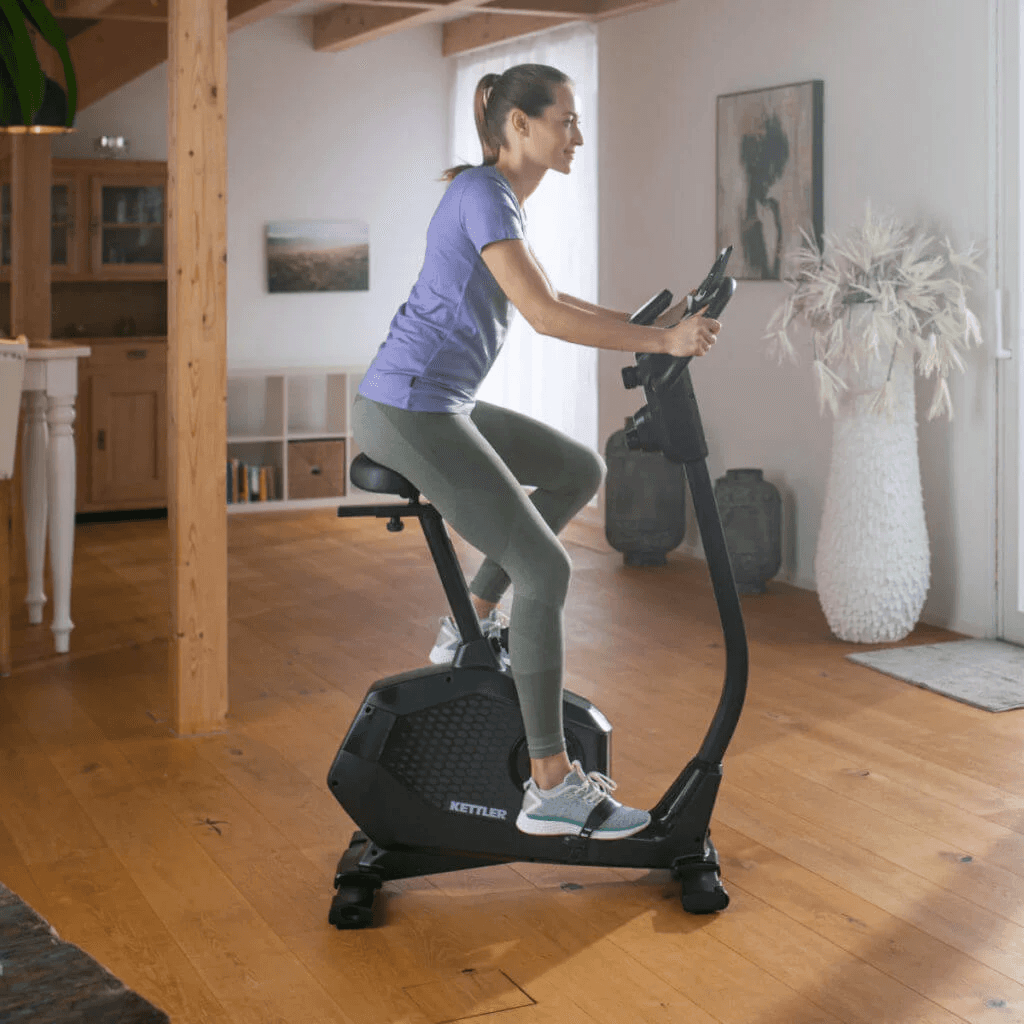
Some items, like rowing machines or exercise bikes, are heavy and expensive to ship. Others come with long delivery times when sourced overseas. And because fitness is profitable, competition is strong, especially on trending products. That’s why positioning matters.
Step 2: Validate Your Fitness Niche and Choose a Profitable Angle
The fitness niche is huge, but not all segments perform the same. In the US, searches related to “home workout” have increased by over 350% since 2020. To win, selling products isn’t enough. You need a clear sub-niche with strong demand and manageable competition.
Identify a Clear Fitness Sub-Niche
Fitness is broad. If you try to sell everything, you’ll sell nothing. Start with a focused angle, such as:
home fitness (very popular since the pandemic),
strength training accessories (resistance bands, dumbbells),
compact equipment (foldable rowers, steppers).
You can also target recovery products (massage rollers, massage guns) or fitness apparel. The more focused your niche, the easier it is to attract the right audience.
Analyze Demand Before Selling
Before launching, make sure demand exists. Use Google Trends to see whether interest is growing or declining. Search terms like “home workout” or “fitness equipment” clearly show demand spikes.
You can also use keyword tools like Ubersuggest or Semrush to check if fitness dropshipping products generate traffic. Focus on the US market, where trends usually appear first.
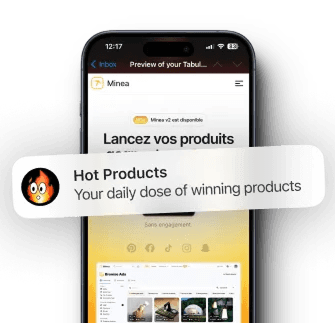
Most importantly, use Minea to validate your niche with real data. Minea is an all-in-one platform that helps you:
spot viral products using the daily Top 10 or Success Radar (updated every 8 hours),
analyze high-performing e-commerce ads on Facebook, TikTok, and Pinterest,
understand why products scale (engagement score, visuals, virality),
explore trending niches with AI Magic Search (for example: “women home fitness”).
With Minea, you see what’s working right now, before competitors. That’s the fastest way to find a promising fitness sub-niche.
Evaluate the Competition
Search your product on Google or TikTok Shop. If you see dozens of stores selling the same item, be careful. It’s not necessarily a deal breaker, but you’ll need a clear edge: better bundles, a stronger offer, or a less exploited angle. The goal is simple: don’t arrive last
Step 3: Choose the Right Fitness Products to Dropship
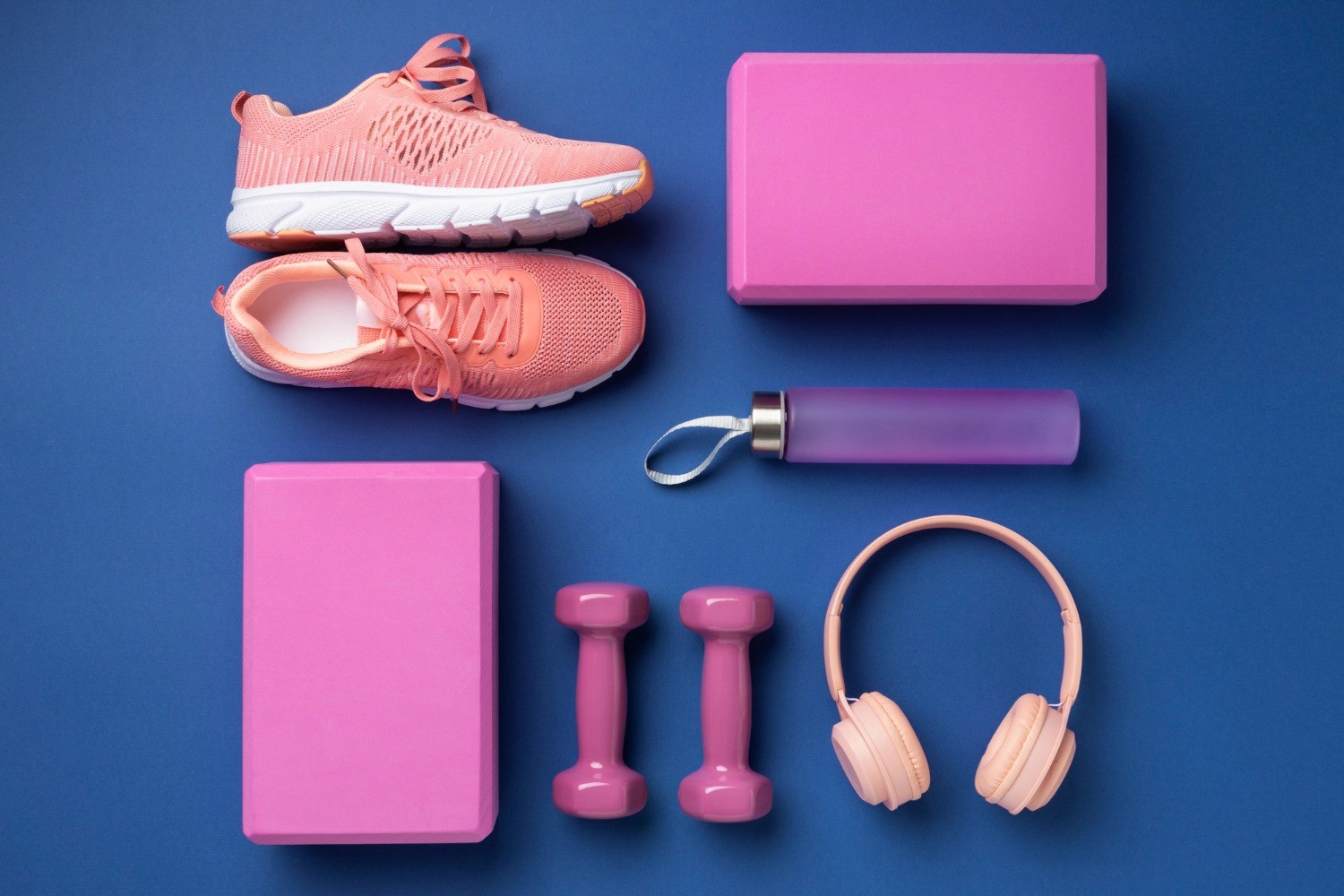
To succeed in fitness dropshipping, don’t pick products at random. Start with lightweight equipment or accessories that are easy to ship. Bulky items increase shipping costs and complicate logistics.
Next, focus on perceived value. A premium-looking yoga mat or an ergonomic ab wheel can sell for much more than it costs, simply because it looks more professional and high quality.
Criteria for Selecting a Profitable Product
A winning product balances several factors:
Weight and size: the more compact, the better.
Profit margin: aim for at least a 2x markup between cost and selling price.
Purchase frequency: accessories that wear out or complement other items are ideal for bundles.
Low return rate: avoid overly technical or hard-to-use products that disappoint customers. Fewer returns mean higher profits.
Examples of Products That Work Well for Fitness Dropshipping
Here are proven, simple, and profitable ideas for 2026:
Resistance bands: lightweight, low cost, high margins.
Yoga mats: mass-market products with endless design options.
Ab wheels: niche products with strong demand.
Compact machines: steppers, mini rowers, foldable bikes.
Strength training gear: adjustable dumbbells, push-up handles, suspension straps.
Fitness apparel (leggings, etc.) and shoes.
To sell consistently, focus on practical products that are easy to showcase and solve a clear problem.
Step 1: Understand the Fitness Dropshipping Model Before You Start

Since 2020, online fitness equipment sales have increased by +170%, according to Statista. This growth comes from the rise of home workouts and a stronger focus on health. It creates the perfect opportunity to sell fitness products without investing in stock.
What Is Fitness Dropshipping, Exactly?
Fitness dropshipping means selling sports products (equipment, accessories, men’s or women’s clothing) without holding inventory. You create an online store and list products. When a customer places an order, your supplier ships the product directly to them. No warehouse, no storage costs, no logistics to manage.
Why Fitness Is a Great Niche for Dropshipping
The fitness industry keeps growing. Between home gym users, casual exercisers, and fitness enthusiasts, demand remains stable. You can sell fitness equipment, lightweight accessories, or fitness clothing. There’s something for every level and budget.
Most importantly, many products are dropshipping-friendly: lightweight, compact, and easy to ship.
The Limits You Need to Know
Some items, like rowing machines or exercise bikes, are heavy and expensive to ship. Others come with long delivery times when sourced overseas. And because fitness is profitable, competition is strong, especially on trending products. That’s why positioning matters.
Step 2: Validate Your Fitness Niche and Choose a Profitable Angle

The fitness niche is huge, but not all segments perform the same. In the US, searches related to “home workout” have increased by over 350% since 2020. To win, selling products isn’t enough. You need a clear sub-niche with strong demand and manageable competition.
Identify a Clear Fitness Sub-Niche
Fitness is broad. If you try to sell everything, you’ll sell nothing. Start with a focused angle, such as:
home fitness (very popular since the pandemic),
strength training accessories (resistance bands, dumbbells),
compact equipment (foldable rowers, steppers).
You can also target recovery products (massage rollers, massage guns) or fitness apparel. The more focused your niche, the easier it is to attract the right audience.
Analyze Demand Before Selling
Before launching, make sure demand exists. Use Google Trends to see whether interest is growing or declining. Search terms like “home workout” or “fitness equipment” clearly show demand spikes.
You can also use keyword tools like Ubersuggest or Semrush to check if fitness dropshipping products generate traffic. Focus on the US market, where trends usually appear first.
Most importantly, use Minea to validate your niche with real data. Minea is an all-in-one platform that helps you:
spot viral products using the daily Top 10 or Success Radar (updated every 8 hours),
analyze high-performing e-commerce ads on Facebook, TikTok, and Pinterest,
understand why products scale (engagement score, visuals, virality),
explore trending niches with AI Magic Search (for example: “women home fitness”).
With Minea, you see what’s working right now, before competitors. That’s the fastest way to find a promising fitness sub-niche.
Evaluate the Competition
Search your product on Google or TikTok Shop. If you see dozens of stores selling the same item, be careful. It’s not necessarily a deal breaker, but you’ll need a clear edge: better bundles, a stronger offer, or a less exploited angle. The goal is simple: don’t arrive last
Step 3: Choose the Right Fitness Products to Dropship

To succeed in fitness dropshipping, don’t pick products at random. Start with lightweight equipment or accessories that are easy to ship. Bulky items increase shipping costs and complicate logistics.
Next, focus on perceived value. A premium-looking yoga mat or an ergonomic ab wheel can sell for much more than it costs, simply because it looks more professional and high quality.
Criteria for Selecting a Profitable Product
A winning product balances several factors:
Weight and size: the more compact, the better.
Profit margin: aim for at least a 2x markup between cost and selling price.
Purchase frequency: accessories that wear out or complement other items are ideal for bundles.
Low return rate: avoid overly technical or hard-to-use products that disappoint customers. Fewer returns mean higher profits.
Examples of Products That Work Well for Fitness Dropshipping
Here are proven, simple, and profitable ideas for 2026:
Resistance bands: lightweight, low cost, high margins.
Yoga mats: mass-market products with endless design options.
Ab wheels: niche products with strong demand.
Compact machines: steppers, mini rowers, foldable bikes.
Strength training gear: adjustable dumbbells, push-up handles, suspension straps.
Fitness apparel (leggings, etc.) and shoes.
To sell consistently, focus on practical products that are easy to showcase and solve a clear problem.
Step 1: Understand the Fitness Dropshipping Model Before You Start

Since 2020, online fitness equipment sales have increased by +170%, according to Statista. This growth comes from the rise of home workouts and a stronger focus on health. It creates the perfect opportunity to sell fitness products without investing in stock.
What Is Fitness Dropshipping, Exactly?
Fitness dropshipping means selling sports products (equipment, accessories, men’s or women’s clothing) without holding inventory. You create an online store and list products. When a customer places an order, your supplier ships the product directly to them. No warehouse, no storage costs, no logistics to manage.
Why Fitness Is a Great Niche for Dropshipping
The fitness industry keeps growing. Between home gym users, casual exercisers, and fitness enthusiasts, demand remains stable. You can sell fitness equipment, lightweight accessories, or fitness clothing. There’s something for every level and budget.
Most importantly, many products are dropshipping-friendly: lightweight, compact, and easy to ship.
The Limits You Need to Know
Some items, like rowing machines or exercise bikes, are heavy and expensive to ship. Others come with long delivery times when sourced overseas. And because fitness is profitable, competition is strong, especially on trending products. That’s why positioning matters.
Step 2: Validate Your Fitness Niche and Choose a Profitable Angle

The fitness niche is huge, but not all segments perform the same. In the US, searches related to “home workout” have increased by over 350% since 2020. To win, selling products isn’t enough. You need a clear sub-niche with strong demand and manageable competition.
Identify a Clear Fitness Sub-Niche
Fitness is broad. If you try to sell everything, you’ll sell nothing. Start with a focused angle, such as:
home fitness (very popular since the pandemic),
strength training accessories (resistance bands, dumbbells),
compact equipment (foldable rowers, steppers).
You can also target recovery products (massage rollers, massage guns) or fitness apparel. The more focused your niche, the easier it is to attract the right audience.
Analyze Demand Before Selling
Before launching, make sure demand exists. Use Google Trends to see whether interest is growing or declining. Search terms like “home workout” or “fitness equipment” clearly show demand spikes.
You can also use keyword tools like Ubersuggest or Semrush to check if fitness dropshipping products generate traffic. Focus on the US market, where trends usually appear first.
Most importantly, use Minea to validate your niche with real data. Minea is an all-in-one platform that helps you:
spot viral products using the daily Top 10 or Success Radar (updated every 8 hours),
analyze high-performing e-commerce ads on Facebook, TikTok, and Pinterest,
understand why products scale (engagement score, visuals, virality),
explore trending niches with AI Magic Search (for example: “women home fitness”).
With Minea, you see what’s working right now, before competitors. That’s the fastest way to find a promising fitness sub-niche.
Evaluate the Competition
Search your product on Google or TikTok Shop. If you see dozens of stores selling the same item, be careful. It’s not necessarily a deal breaker, but you’ll need a clear edge: better bundles, a stronger offer, or a less exploited angle. The goal is simple: don’t arrive last
Step 3: Choose the Right Fitness Products to Dropship

To succeed in fitness dropshipping, don’t pick products at random. Start with lightweight equipment or accessories that are easy to ship. Bulky items increase shipping costs and complicate logistics.
Next, focus on perceived value. A premium-looking yoga mat or an ergonomic ab wheel can sell for much more than it costs, simply because it looks more professional and high quality.
Criteria for Selecting a Profitable Product
A winning product balances several factors:
Weight and size: the more compact, the better.
Profit margin: aim for at least a 2x markup between cost and selling price.
Purchase frequency: accessories that wear out or complement other items are ideal for bundles.
Low return rate: avoid overly technical or hard-to-use products that disappoint customers. Fewer returns mean higher profits.
Examples of Products That Work Well for Fitness Dropshipping
Here are proven, simple, and profitable ideas for 2026:
Resistance bands: lightweight, low cost, high margins.
Yoga mats: mass-market products with endless design options.
Ab wheels: niche products with strong demand.
Compact machines: steppers, mini rowers, foldable bikes.
Strength training gear: adjustable dumbbells, push-up handles, suspension straps.
Fitness apparel (leggings, etc.) and shoes.
To sell consistently, focus on practical products that are easy to showcase and solve a clear problem.
Step 1: Understand the Fitness Dropshipping Model Before You Start

Since 2020, online fitness equipment sales have increased by +170%, according to Statista. This growth comes from the rise of home workouts and a stronger focus on health. It creates the perfect opportunity to sell fitness products without investing in stock.
What Is Fitness Dropshipping, Exactly?
Fitness dropshipping means selling sports products (equipment, accessories, men’s or women’s clothing) without holding inventory. You create an online store and list products. When a customer places an order, your supplier ships the product directly to them. No warehouse, no storage costs, no logistics to manage.
Why Fitness Is a Great Niche for Dropshipping
The fitness industry keeps growing. Between home gym users, casual exercisers, and fitness enthusiasts, demand remains stable. You can sell fitness equipment, lightweight accessories, or fitness clothing. There’s something for every level and budget.
Most importantly, many products are dropshipping-friendly: lightweight, compact, and easy to ship.
The Limits You Need to Know
Some items, like rowing machines or exercise bikes, are heavy and expensive to ship. Others come with long delivery times when sourced overseas. And because fitness is profitable, competition is strong, especially on trending products. That’s why positioning matters.
Step 2: Validate Your Fitness Niche and Choose a Profitable Angle

The fitness niche is huge, but not all segments perform the same. In the US, searches related to “home workout” have increased by over 350% since 2020. To win, selling products isn’t enough. You need a clear sub-niche with strong demand and manageable competition.
Identify a Clear Fitness Sub-Niche
Fitness is broad. If you try to sell everything, you’ll sell nothing. Start with a focused angle, such as:
home fitness (very popular since the pandemic),
strength training accessories (resistance bands, dumbbells),
compact equipment (foldable rowers, steppers).
You can also target recovery products (massage rollers, massage guns) or fitness apparel. The more focused your niche, the easier it is to attract the right audience.
Analyze Demand Before Selling
Before launching, make sure demand exists. Use Google Trends to see whether interest is growing or declining. Search terms like “home workout” or “fitness equipment” clearly show demand spikes.
You can also use keyword tools like Ubersuggest or Semrush to check if fitness dropshipping products generate traffic. Focus on the US market, where trends usually appear first.
Most importantly, use Minea to validate your niche with real data. Minea is an all-in-one platform that helps you:
spot viral products using the daily Top 10 or Success Radar (updated every 8 hours),
analyze high-performing e-commerce ads on Facebook, TikTok, and Pinterest,
understand why products scale (engagement score, visuals, virality),
explore trending niches with AI Magic Search (for example: “women home fitness”).
With Minea, you see what’s working right now, before competitors. That’s the fastest way to find a promising fitness sub-niche.
Evaluate the Competition
Search your product on Google or TikTok Shop. If you see dozens of stores selling the same item, be careful. It’s not necessarily a deal breaker, but you’ll need a clear edge: better bundles, a stronger offer, or a less exploited angle. The goal is simple: don’t arrive last
Step 3: Choose the Right Fitness Products to Dropship

To succeed in fitness dropshipping, don’t pick products at random. Start with lightweight equipment or accessories that are easy to ship. Bulky items increase shipping costs and complicate logistics.
Next, focus on perceived value. A premium-looking yoga mat or an ergonomic ab wheel can sell for much more than it costs, simply because it looks more professional and high quality.
Criteria for Selecting a Profitable Product
A winning product balances several factors:
Weight and size: the more compact, the better.
Profit margin: aim for at least a 2x markup between cost and selling price.
Purchase frequency: accessories that wear out or complement other items are ideal for bundles.
Low return rate: avoid overly technical or hard-to-use products that disappoint customers. Fewer returns mean higher profits.
Examples of Products That Work Well for Fitness Dropshipping
Here are proven, simple, and profitable ideas for 2026:
Resistance bands: lightweight, low cost, high margins.
Yoga mats: mass-market products with endless design options.
Ab wheels: niche products with strong demand.
Compact machines: steppers, mini rowers, foldable bikes.
Strength training gear: adjustable dumbbells, push-up handles, suspension straps.
Fitness apparel (leggings, etc.) and shoes.
To sell consistently, focus on practical products that are easy to showcase and solve a clear problem.
Step 1: Understand the Fitness Dropshipping Model Before You Start

Since 2020, online fitness equipment sales have increased by +170%, according to Statista. This growth comes from the rise of home workouts and a stronger focus on health. It creates the perfect opportunity to sell fitness products without investing in stock.
What Is Fitness Dropshipping, Exactly?
Fitness dropshipping means selling sports products (equipment, accessories, men’s or women’s clothing) without holding inventory. You create an online store and list products. When a customer places an order, your supplier ships the product directly to them. No warehouse, no storage costs, no logistics to manage.
Why Fitness Is a Great Niche for Dropshipping
The fitness industry keeps growing. Between home gym users, casual exercisers, and fitness enthusiasts, demand remains stable. You can sell fitness equipment, lightweight accessories, or fitness clothing. There’s something for every level and budget.
Most importantly, many products are dropshipping-friendly: lightweight, compact, and easy to ship.
The Limits You Need to Know
Some items, like rowing machines or exercise bikes, are heavy and expensive to ship. Others come with long delivery times when sourced overseas. And because fitness is profitable, competition is strong, especially on trending products. That’s why positioning matters.
Step 2: Validate Your Fitness Niche and Choose a Profitable Angle

The fitness niche is huge, but not all segments perform the same. In the US, searches related to “home workout” have increased by over 350% since 2020. To win, selling products isn’t enough. You need a clear sub-niche with strong demand and manageable competition.
Identify a Clear Fitness Sub-Niche
Fitness is broad. If you try to sell everything, you’ll sell nothing. Start with a focused angle, such as:
home fitness (very popular since the pandemic),
strength training accessories (resistance bands, dumbbells),
compact equipment (foldable rowers, steppers).
You can also target recovery products (massage rollers, massage guns) or fitness apparel. The more focused your niche, the easier it is to attract the right audience.
Analyze Demand Before Selling
Before launching, make sure demand exists. Use Google Trends to see whether interest is growing or declining. Search terms like “home workout” or “fitness equipment” clearly show demand spikes.
You can also use keyword tools like Ubersuggest or Semrush to check if fitness dropshipping products generate traffic. Focus on the US market, where trends usually appear first.
Most importantly, use Minea to validate your niche with real data. Minea is an all-in-one platform that helps you:
spot viral products using the daily Top 10 or Success Radar (updated every 8 hours),
analyze high-performing e-commerce ads on Facebook, TikTok, and Pinterest,
understand why products scale (engagement score, visuals, virality),
explore trending niches with AI Magic Search (for example: “women home fitness”).
With Minea, you see what’s working right now, before competitors. That’s the fastest way to find a promising fitness sub-niche.
Evaluate the Competition
Search your product on Google or TikTok Shop. If you see dozens of stores selling the same item, be careful. It’s not necessarily a deal breaker, but you’ll need a clear edge: better bundles, a stronger offer, or a less exploited angle. The goal is simple: don’t arrive last
Step 3: Choose the Right Fitness Products to Dropship

To succeed in fitness dropshipping, don’t pick products at random. Start with lightweight equipment or accessories that are easy to ship. Bulky items increase shipping costs and complicate logistics.
Next, focus on perceived value. A premium-looking yoga mat or an ergonomic ab wheel can sell for much more than it costs, simply because it looks more professional and high quality.
Criteria for Selecting a Profitable Product
A winning product balances several factors:
Weight and size: the more compact, the better.
Profit margin: aim for at least a 2x markup between cost and selling price.
Purchase frequency: accessories that wear out or complement other items are ideal for bundles.
Low return rate: avoid overly technical or hard-to-use products that disappoint customers. Fewer returns mean higher profits.
Examples of Products That Work Well for Fitness Dropshipping
Here are proven, simple, and profitable ideas for 2026:
Resistance bands: lightweight, low cost, high margins.
Yoga mats: mass-market products with endless design options.
Ab wheels: niche products with strong demand.
Compact machines: steppers, mini rowers, foldable bikes.
Strength training gear: adjustable dumbbells, push-up handles, suspension straps.
Fitness apparel (leggings, etc.) and shoes.
To sell consistently, focus on practical products that are easy to showcase and solve a clear problem.
Step 1: Understand the Fitness Dropshipping Model Before You Start

Since 2020, online fitness equipment sales have increased by +170%, according to Statista. This growth comes from the rise of home workouts and a stronger focus on health. It creates the perfect opportunity to sell fitness products without investing in stock.
What Is Fitness Dropshipping, Exactly?
Fitness dropshipping means selling sports products (equipment, accessories, men’s or women’s clothing) without holding inventory. You create an online store and list products. When a customer places an order, your supplier ships the product directly to them. No warehouse, no storage costs, no logistics to manage.
Why Fitness Is a Great Niche for Dropshipping
The fitness industry keeps growing. Between home gym users, casual exercisers, and fitness enthusiasts, demand remains stable. You can sell fitness equipment, lightweight accessories, or fitness clothing. There’s something for every level and budget.
Most importantly, many products are dropshipping-friendly: lightweight, compact, and easy to ship.
The Limits You Need to Know
Some items, like rowing machines or exercise bikes, are heavy and expensive to ship. Others come with long delivery times when sourced overseas. And because fitness is profitable, competition is strong, especially on trending products. That’s why positioning matters.
Step 2: Validate Your Fitness Niche and Choose a Profitable Angle

The fitness niche is huge, but not all segments perform the same. In the US, searches related to “home workout” have increased by over 350% since 2020. To win, selling products isn’t enough. You need a clear sub-niche with strong demand and manageable competition.
Identify a Clear Fitness Sub-Niche
Fitness is broad. If you try to sell everything, you’ll sell nothing. Start with a focused angle, such as:
home fitness (very popular since the pandemic),
strength training accessories (resistance bands, dumbbells),
compact equipment (foldable rowers, steppers).
You can also target recovery products (massage rollers, massage guns) or fitness apparel. The more focused your niche, the easier it is to attract the right audience.
Analyze Demand Before Selling
Before launching, make sure demand exists. Use Google Trends to see whether interest is growing or declining. Search terms like “home workout” or “fitness equipment” clearly show demand spikes.
You can also use keyword tools like Ubersuggest or Semrush to check if fitness dropshipping products generate traffic. Focus on the US market, where trends usually appear first.
Most importantly, use Minea to validate your niche with real data. Minea is an all-in-one platform that helps you:
spot viral products using the daily Top 10 or Success Radar (updated every 8 hours),
analyze high-performing e-commerce ads on Facebook, TikTok, and Pinterest,
understand why products scale (engagement score, visuals, virality),
explore trending niches with AI Magic Search (for example: “women home fitness”).
With Minea, you see what’s working right now, before competitors. That’s the fastest way to find a promising fitness sub-niche.
Evaluate the Competition
Search your product on Google or TikTok Shop. If you see dozens of stores selling the same item, be careful. It’s not necessarily a deal breaker, but you’ll need a clear edge: better bundles, a stronger offer, or a less exploited angle. The goal is simple: don’t arrive last
Step 3: Choose the Right Fitness Products to Dropship

To succeed in fitness dropshipping, don’t pick products at random. Start with lightweight equipment or accessories that are easy to ship. Bulky items increase shipping costs and complicate logistics.
Next, focus on perceived value. A premium-looking yoga mat or an ergonomic ab wheel can sell for much more than it costs, simply because it looks more professional and high quality.
Criteria for Selecting a Profitable Product
A winning product balances several factors:
Weight and size: the more compact, the better.
Profit margin: aim for at least a 2x markup between cost and selling price.
Purchase frequency: accessories that wear out or complement other items are ideal for bundles.
Low return rate: avoid overly technical or hard-to-use products that disappoint customers. Fewer returns mean higher profits.
Examples of Products That Work Well for Fitness Dropshipping
Here are proven, simple, and profitable ideas for 2026:
Resistance bands: lightweight, low cost, high margins.
Yoga mats: mass-market products with endless design options.
Ab wheels: niche products with strong demand.
Compact machines: steppers, mini rowers, foldable bikes.
Strength training gear: adjustable dumbbells, push-up handles, suspension straps.
Fitness apparel (leggings, etc.) and shoes.
To sell consistently, focus on practical products that are easy to showcase and solve a clear problem.
Step 4: Find Reliable Suppliers for Fitness Dropshipping
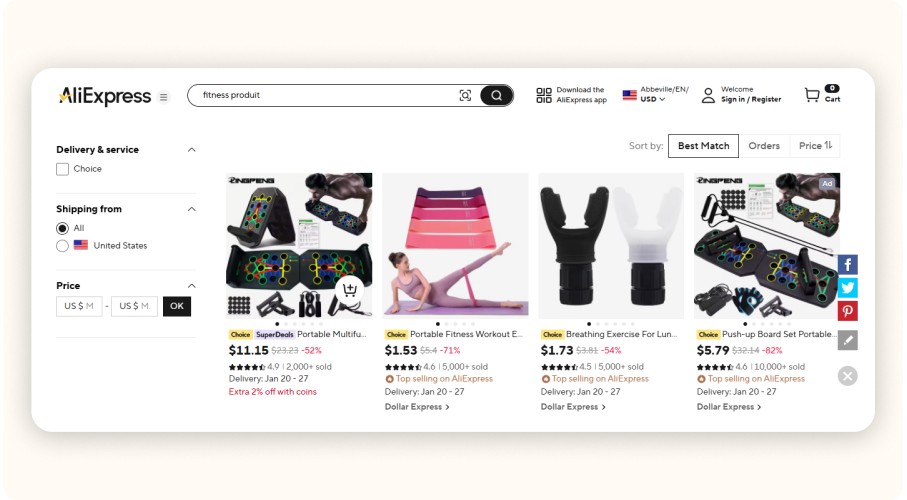
A supplier is more than a shipper, they represent your brand. Consistent quality, fast delivery, and clean packaging are non-negotiable if you want to reduce returns and build trust.
Where to Find Fitness Product Suppliers
For fitness dropshipping, you have three main options:
General marketplaces like AliExpress, CJ Dropshipping, or Zendrop, offering wide selection at low prices.
Specialized fitness suppliers such as BigBuy or Spocket, with more curated catalogs.
US/EU warehouses (AutoDS, BrandsGateway, etc.), ideal to reduce shipping times.
How to Check Supplier Reliability
Don’t choose based on price alone. A reliable supplier offers:
Positive customer reviews and ratings.
Clear and realistic shipping times.
Consistent product quality (check descriptions and real photos).
A solid return policy, especially for fitness equipment.
Test Products Before Selling
Before launching, order samples yourself. Check packaging, real quality, and delivery speed. This prevents surprises and helps you create authentic content for your store.
Step 5: Build a Specialized Fitness Dropshipping Store

Your store is your storefront. It must inspire trust from the first second with:
a clear structure,
smooth navigation,
persuasive product pages.
Choose the Right E-Commerce Platform
To launch a fitness dropshipping store, whether you sell fitness equipment, tech products, or beauty items, choose between:
Shopify: fast setup, built-in dropshipping apps (DSers, AutoDS), easy interface. Ideal for beginners.
WooCommerce: WordPress-based, more customizable, but requires basic technical skills. Better for long-term projects or tighter budgets.
Both platforms let you integrate suppliers and automate orders, perfect for selling fitness equipment without inventory.
Structure Your Store for Selling Fitness Equipment
Design your store for conversion:
Create clear categories (accessories, equipment, apparel, recovery).
Keep navigation simple, customers should find what they want in two clicks.
Focus product pages on benefits, not just technical specs.
Explain what the product changes for the customer (space-saving, targeted strength training, home use).
Optimize Product Pages for SEO and Conversions
No matter the product (home decor, security product), your pages must work for you. Optimize:
Product titles: clear and keyword-focused (e.g., “Compact Ab Wheel for Home Training”).
Descriptions: highlight results (toning, strength training), not just features.
Visuals: high-quality images, lifestyle shots, customer reviews. Social proof builds trust and drives sales.
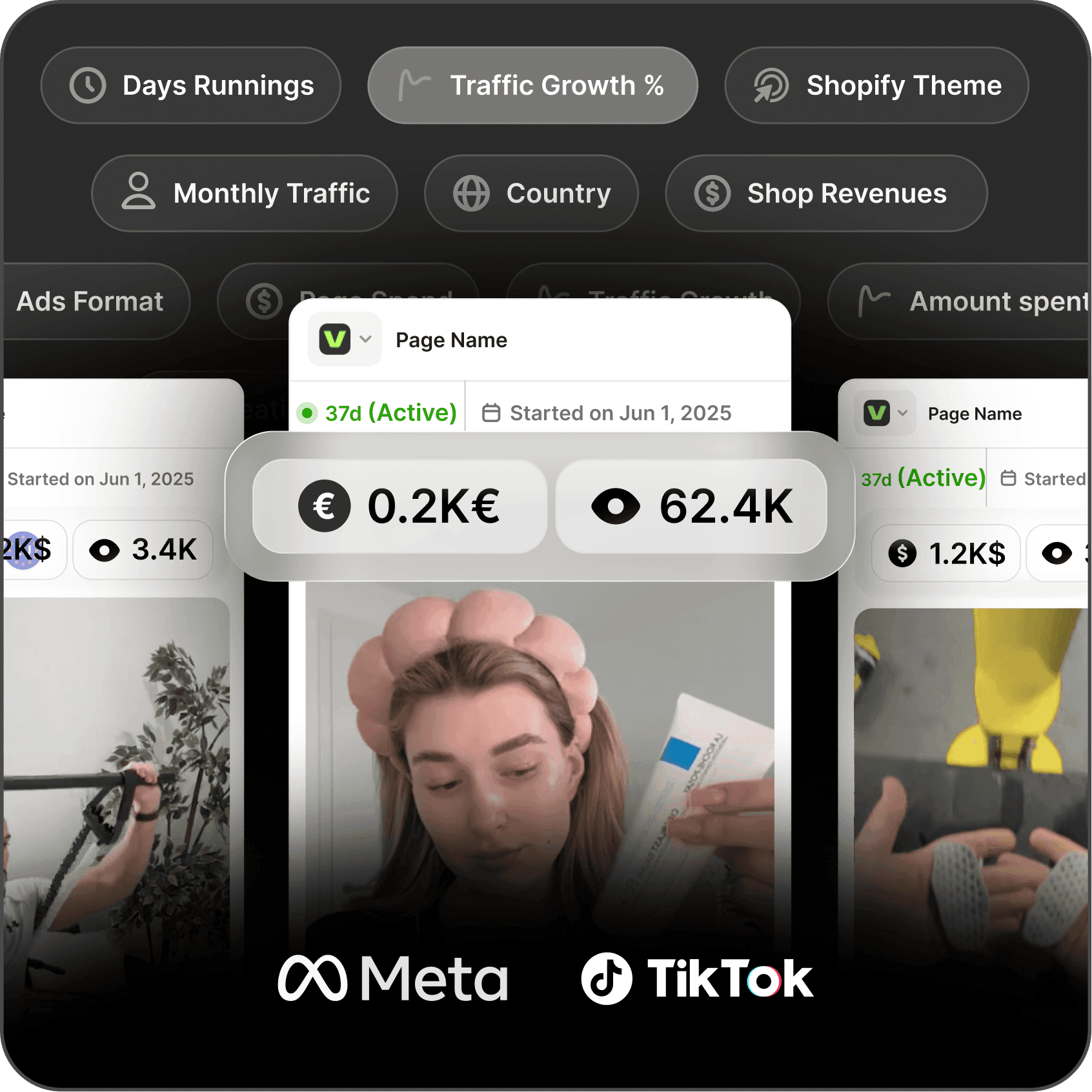
To speed things up, Minea’s Creative Finder helps you spot top-performing ads for specific products. You can then adapt your presentation to what already works in the market.
Step 6: Set Prices and Build a Profitable Offer

When setting your prices, don’t copy competitors blindly. Run the numbers. Understand your audience. Build an offer aligned with the product’s perceived value. That’s how you sell better, not just more.
Calculate Your Margins in Fitness Dropshipping
To stay profitable, start by calculating all your costs:
Product cost: purchase price from the supplier.
Shipping cost: depends on size, weight, and destination.
Ad costs: often 20–30% of the selling price.
Target net margin: aim for at least 25–40% after all expenses.
A solid pricing formula looks like this: Selling price = (Product cost + shipping + ads) ÷ (1 – target margin).
Effective Pricing Strategies
To price your products efficiently, use:
Psychological pricing: $29.90 converts better than $30.
Bundles: selling kits (e.g., resistance bands + yoga mat) increases average order value.
Upsell / cross-sell: add a complementary item at checkout (e.g., a gym bag with a mat).
Adjust Prices Based on Product Type
Adapt pricing to what you sell.
Accessories like resistance bands or yoga mats should stay affordable to encourage fast turnover.
Fitness equipment supports higher carts and stronger margins, but requires a more strategic approach.
Always factor in perceived quality. Entry-level items won’t sell at premium prices. Your pricing must match your audience’s expectations and budget.
Step 4: Find Reliable Suppliers for Fitness Dropshipping

A supplier is more than a shipper, they represent your brand. Consistent quality, fast delivery, and clean packaging are non-negotiable if you want to reduce returns and build trust.
Where to Find Fitness Product Suppliers
For fitness dropshipping, you have three main options:
General marketplaces like AliExpress, CJ Dropshipping, or Zendrop, offering wide selection at low prices.
Specialized fitness suppliers such as BigBuy or Spocket, with more curated catalogs.
US/EU warehouses (AutoDS, BrandsGateway, etc.), ideal to reduce shipping times.
How to Check Supplier Reliability
Don’t choose based on price alone. A reliable supplier offers:
Positive customer reviews and ratings.
Clear and realistic shipping times.
Consistent product quality (check descriptions and real photos).
A solid return policy, especially for fitness equipment.
Test Products Before Selling
Before launching, order samples yourself. Check packaging, real quality, and delivery speed. This prevents surprises and helps you create authentic content for your store.
Step 5: Build a Specialized Fitness Dropshipping Store

Your store is your storefront. It must inspire trust from the first second with:
a clear structure,
smooth navigation,
persuasive product pages.
Choose the Right E-Commerce Platform
To launch a fitness dropshipping store, whether you sell fitness equipment, tech products, or beauty items, choose between:
Shopify: fast setup, built-in dropshipping apps (DSers, AutoDS), easy interface. Ideal for beginners.
WooCommerce: WordPress-based, more customizable, but requires basic technical skills. Better for long-term projects or tighter budgets.
Both platforms let you integrate suppliers and automate orders, perfect for selling fitness equipment without inventory.
Structure Your Store for Selling Fitness Equipment
Design your store for conversion:
Create clear categories (accessories, equipment, apparel, recovery).
Keep navigation simple, customers should find what they want in two clicks.
Focus product pages on benefits, not just technical specs.
Explain what the product changes for the customer (space-saving, targeted strength training, home use).
Optimize Product Pages for SEO and Conversions
No matter the product (home decor, security product), your pages must work for you. Optimize:
Product titles: clear and keyword-focused (e.g., “Compact Ab Wheel for Home Training”).
Descriptions: highlight results (toning, strength training), not just features.
Visuals: high-quality images, lifestyle shots, customer reviews. Social proof builds trust and drives sales.
To speed things up, Minea’s Creative Finder helps you spot top-performing ads for specific products. You can then adapt your presentation to what already works in the market.
Step 6: Set Prices and Build a Profitable Offer

When setting your prices, don’t copy competitors blindly. Run the numbers. Understand your audience. Build an offer aligned with the product’s perceived value. That’s how you sell better, not just more.
Calculate Your Margins in Fitness Dropshipping
To stay profitable, start by calculating all your costs:
Product cost: purchase price from the supplier.
Shipping cost: depends on size, weight, and destination.
Ad costs: often 20–30% of the selling price.
Target net margin: aim for at least 25–40% after all expenses.
A solid pricing formula looks like this: Selling price = (Product cost + shipping + ads) ÷ (1 – target margin).
Effective Pricing Strategies
To price your products efficiently, use:
Psychological pricing: $29.90 converts better than $30.
Bundles: selling kits (e.g., resistance bands + yoga mat) increases average order value.
Upsell / cross-sell: add a complementary item at checkout (e.g., a gym bag with a mat).
Adjust Prices Based on Product Type
Adapt pricing to what you sell.
Accessories like resistance bands or yoga mats should stay affordable to encourage fast turnover.
Fitness equipment supports higher carts and stronger margins, but requires a more strategic approach.
Always factor in perceived quality. Entry-level items won’t sell at premium prices. Your pricing must match your audience’s expectations and budget.
Step 4: Find Reliable Suppliers for Fitness Dropshipping

A supplier is more than a shipper, they represent your brand. Consistent quality, fast delivery, and clean packaging are non-negotiable if you want to reduce returns and build trust.
Where to Find Fitness Product Suppliers
For fitness dropshipping, you have three main options:
General marketplaces like AliExpress, CJ Dropshipping, or Zendrop, offering wide selection at low prices.
Specialized fitness suppliers such as BigBuy or Spocket, with more curated catalogs.
US/EU warehouses (AutoDS, BrandsGateway, etc.), ideal to reduce shipping times.
How to Check Supplier Reliability
Don’t choose based on price alone. A reliable supplier offers:
Positive customer reviews and ratings.
Clear and realistic shipping times.
Consistent product quality (check descriptions and real photos).
A solid return policy, especially for fitness equipment.
Test Products Before Selling
Before launching, order samples yourself. Check packaging, real quality, and delivery speed. This prevents surprises and helps you create authentic content for your store.
Step 5: Build a Specialized Fitness Dropshipping Store

Your store is your storefront. It must inspire trust from the first second with:
a clear structure,
smooth navigation,
persuasive product pages.
Choose the Right E-Commerce Platform
To launch a fitness dropshipping store, whether you sell fitness equipment, tech products, or beauty items, choose between:
Shopify: fast setup, built-in dropshipping apps (DSers, AutoDS), easy interface. Ideal for beginners.
WooCommerce: WordPress-based, more customizable, but requires basic technical skills. Better for long-term projects or tighter budgets.
Both platforms let you integrate suppliers and automate orders, perfect for selling fitness equipment without inventory.
Structure Your Store for Selling Fitness Equipment
Design your store for conversion:
Create clear categories (accessories, equipment, apparel, recovery).
Keep navigation simple, customers should find what they want in two clicks.
Focus product pages on benefits, not just technical specs.
Explain what the product changes for the customer (space-saving, targeted strength training, home use).
Optimize Product Pages for SEO and Conversions
No matter the product (home decor, security product), your pages must work for you. Optimize:
Product titles: clear and keyword-focused (e.g., “Compact Ab Wheel for Home Training”).
Descriptions: highlight results (toning, strength training), not just features.
Visuals: high-quality images, lifestyle shots, customer reviews. Social proof builds trust and drives sales.
To speed things up, Minea’s Creative Finder helps you spot top-performing ads for specific products. You can then adapt your presentation to what already works in the market.
Step 6: Set Prices and Build a Profitable Offer

When setting your prices, don’t copy competitors blindly. Run the numbers. Understand your audience. Build an offer aligned with the product’s perceived value. That’s how you sell better, not just more.
Calculate Your Margins in Fitness Dropshipping
To stay profitable, start by calculating all your costs:
Product cost: purchase price from the supplier.
Shipping cost: depends on size, weight, and destination.
Ad costs: often 20–30% of the selling price.
Target net margin: aim for at least 25–40% after all expenses.
A solid pricing formula looks like this: Selling price = (Product cost + shipping + ads) ÷ (1 – target margin).
Effective Pricing Strategies
To price your products efficiently, use:
Psychological pricing: $29.90 converts better than $30.
Bundles: selling kits (e.g., resistance bands + yoga mat) increases average order value.
Upsell / cross-sell: add a complementary item at checkout (e.g., a gym bag with a mat).
Adjust Prices Based on Product Type
Adapt pricing to what you sell.
Accessories like resistance bands or yoga mats should stay affordable to encourage fast turnover.
Fitness equipment supports higher carts and stronger margins, but requires a more strategic approach.
Always factor in perceived quality. Entry-level items won’t sell at premium prices. Your pricing must match your audience’s expectations and budget.
Step 4: Find Reliable Suppliers for Fitness Dropshipping

A supplier is more than a shipper, they represent your brand. Consistent quality, fast delivery, and clean packaging are non-negotiable if you want to reduce returns and build trust.
Where to Find Fitness Product Suppliers
For fitness dropshipping, you have three main options:
General marketplaces like AliExpress, CJ Dropshipping, or Zendrop, offering wide selection at low prices.
Specialized fitness suppliers such as BigBuy or Spocket, with more curated catalogs.
US/EU warehouses (AutoDS, BrandsGateway, etc.), ideal to reduce shipping times.
How to Check Supplier Reliability
Don’t choose based on price alone. A reliable supplier offers:
Positive customer reviews and ratings.
Clear and realistic shipping times.
Consistent product quality (check descriptions and real photos).
A solid return policy, especially for fitness equipment.
Test Products Before Selling
Before launching, order samples yourself. Check packaging, real quality, and delivery speed. This prevents surprises and helps you create authentic content for your store.
Step 5: Build a Specialized Fitness Dropshipping Store

Your store is your storefront. It must inspire trust from the first second with:
a clear structure,
smooth navigation,
persuasive product pages.
Choose the Right E-Commerce Platform
To launch a fitness dropshipping store, whether you sell fitness equipment, tech products, or beauty items, choose between:
Shopify: fast setup, built-in dropshipping apps (DSers, AutoDS), easy interface. Ideal for beginners.
WooCommerce: WordPress-based, more customizable, but requires basic technical skills. Better for long-term projects or tighter budgets.
Both platforms let you integrate suppliers and automate orders, perfect for selling fitness equipment without inventory.
Structure Your Store for Selling Fitness Equipment
Design your store for conversion:
Create clear categories (accessories, equipment, apparel, recovery).
Keep navigation simple, customers should find what they want in two clicks.
Focus product pages on benefits, not just technical specs.
Explain what the product changes for the customer (space-saving, targeted strength training, home use).
Optimize Product Pages for SEO and Conversions
No matter the product (home decor, security product), your pages must work for you. Optimize:
Product titles: clear and keyword-focused (e.g., “Compact Ab Wheel for Home Training”).
Descriptions: highlight results (toning, strength training), not just features.
Visuals: high-quality images, lifestyle shots, customer reviews. Social proof builds trust and drives sales.
To speed things up, Minea’s Creative Finder helps you spot top-performing ads for specific products. You can then adapt your presentation to what already works in the market.
Step 6: Set Prices and Build a Profitable Offer

When setting your prices, don’t copy competitors blindly. Run the numbers. Understand your audience. Build an offer aligned with the product’s perceived value. That’s how you sell better, not just more.
Calculate Your Margins in Fitness Dropshipping
To stay profitable, start by calculating all your costs:
Product cost: purchase price from the supplier.
Shipping cost: depends on size, weight, and destination.
Ad costs: often 20–30% of the selling price.
Target net margin: aim for at least 25–40% after all expenses.
A solid pricing formula looks like this: Selling price = (Product cost + shipping + ads) ÷ (1 – target margin).
Effective Pricing Strategies
To price your products efficiently, use:
Psychological pricing: $29.90 converts better than $30.
Bundles: selling kits (e.g., resistance bands + yoga mat) increases average order value.
Upsell / cross-sell: add a complementary item at checkout (e.g., a gym bag with a mat).
Adjust Prices Based on Product Type
Adapt pricing to what you sell.
Accessories like resistance bands or yoga mats should stay affordable to encourage fast turnover.
Fitness equipment supports higher carts and stronger margins, but requires a more strategic approach.
Always factor in perceived quality. Entry-level items won’t sell at premium prices. Your pricing must match your audience’s expectations and budget.
Step 4: Find Reliable Suppliers for Fitness Dropshipping

A supplier is more than a shipper, they represent your brand. Consistent quality, fast delivery, and clean packaging are non-negotiable if you want to reduce returns and build trust.
Where to Find Fitness Product Suppliers
For fitness dropshipping, you have three main options:
General marketplaces like AliExpress, CJ Dropshipping, or Zendrop, offering wide selection at low prices.
Specialized fitness suppliers such as BigBuy or Spocket, with more curated catalogs.
US/EU warehouses (AutoDS, BrandsGateway, etc.), ideal to reduce shipping times.
How to Check Supplier Reliability
Don’t choose based on price alone. A reliable supplier offers:
Positive customer reviews and ratings.
Clear and realistic shipping times.
Consistent product quality (check descriptions and real photos).
A solid return policy, especially for fitness equipment.
Test Products Before Selling
Before launching, order samples yourself. Check packaging, real quality, and delivery speed. This prevents surprises and helps you create authentic content for your store.
Step 5: Build a Specialized Fitness Dropshipping Store

Your store is your storefront. It must inspire trust from the first second with:
a clear structure,
smooth navigation,
persuasive product pages.
Choose the Right E-Commerce Platform
To launch a fitness dropshipping store, whether you sell fitness equipment, tech products, or beauty items, choose between:
Shopify: fast setup, built-in dropshipping apps (DSers, AutoDS), easy interface. Ideal for beginners.
WooCommerce: WordPress-based, more customizable, but requires basic technical skills. Better for long-term projects or tighter budgets.
Both platforms let you integrate suppliers and automate orders, perfect for selling fitness equipment without inventory.
Structure Your Store for Selling Fitness Equipment
Design your store for conversion:
Create clear categories (accessories, equipment, apparel, recovery).
Keep navigation simple, customers should find what they want in two clicks.
Focus product pages on benefits, not just technical specs.
Explain what the product changes for the customer (space-saving, targeted strength training, home use).
Optimize Product Pages for SEO and Conversions
No matter the product (home decor, security product), your pages must work for you. Optimize:
Product titles: clear and keyword-focused (e.g., “Compact Ab Wheel for Home Training”).
Descriptions: highlight results (toning, strength training), not just features.
Visuals: high-quality images, lifestyle shots, customer reviews. Social proof builds trust and drives sales.
To speed things up, Minea’s Creative Finder helps you spot top-performing ads for specific products. You can then adapt your presentation to what already works in the market.
Step 6: Set Prices and Build a Profitable Offer

When setting your prices, don’t copy competitors blindly. Run the numbers. Understand your audience. Build an offer aligned with the product’s perceived value. That’s how you sell better, not just more.
Calculate Your Margins in Fitness Dropshipping
To stay profitable, start by calculating all your costs:
Product cost: purchase price from the supplier.
Shipping cost: depends on size, weight, and destination.
Ad costs: often 20–30% of the selling price.
Target net margin: aim for at least 25–40% after all expenses.
A solid pricing formula looks like this: Selling price = (Product cost + shipping + ads) ÷ (1 – target margin).
Effective Pricing Strategies
To price your products efficiently, use:
Psychological pricing: $29.90 converts better than $30.
Bundles: selling kits (e.g., resistance bands + yoga mat) increases average order value.
Upsell / cross-sell: add a complementary item at checkout (e.g., a gym bag with a mat).
Adjust Prices Based on Product Type
Adapt pricing to what you sell.
Accessories like resistance bands or yoga mats should stay affordable to encourage fast turnover.
Fitness equipment supports higher carts and stronger margins, but requires a more strategic approach.
Always factor in perceived quality. Entry-level items won’t sell at premium prices. Your pricing must match your audience’s expectations and budget.
Step 4: Find Reliable Suppliers for Fitness Dropshipping

A supplier is more than a shipper, they represent your brand. Consistent quality, fast delivery, and clean packaging are non-negotiable if you want to reduce returns and build trust.
Where to Find Fitness Product Suppliers
For fitness dropshipping, you have three main options:
General marketplaces like AliExpress, CJ Dropshipping, or Zendrop, offering wide selection at low prices.
Specialized fitness suppliers such as BigBuy or Spocket, with more curated catalogs.
US/EU warehouses (AutoDS, BrandsGateway, etc.), ideal to reduce shipping times.
How to Check Supplier Reliability
Don’t choose based on price alone. A reliable supplier offers:
Positive customer reviews and ratings.
Clear and realistic shipping times.
Consistent product quality (check descriptions and real photos).
A solid return policy, especially for fitness equipment.
Test Products Before Selling
Before launching, order samples yourself. Check packaging, real quality, and delivery speed. This prevents surprises and helps you create authentic content for your store.
Step 5: Build a Specialized Fitness Dropshipping Store

Your store is your storefront. It must inspire trust from the first second with:
a clear structure,
smooth navigation,
persuasive product pages.
Choose the Right E-Commerce Platform
To launch a fitness dropshipping store, whether you sell fitness equipment, tech products, or beauty items, choose between:
Shopify: fast setup, built-in dropshipping apps (DSers, AutoDS), easy interface. Ideal for beginners.
WooCommerce: WordPress-based, more customizable, but requires basic technical skills. Better for long-term projects or tighter budgets.
Both platforms let you integrate suppliers and automate orders, perfect for selling fitness equipment without inventory.
Structure Your Store for Selling Fitness Equipment
Design your store for conversion:
Create clear categories (accessories, equipment, apparel, recovery).
Keep navigation simple, customers should find what they want in two clicks.
Focus product pages on benefits, not just technical specs.
Explain what the product changes for the customer (space-saving, targeted strength training, home use).
Optimize Product Pages for SEO and Conversions
No matter the product (home decor, security product), your pages must work for you. Optimize:
Product titles: clear and keyword-focused (e.g., “Compact Ab Wheel for Home Training”).
Descriptions: highlight results (toning, strength training), not just features.
Visuals: high-quality images, lifestyle shots, customer reviews. Social proof builds trust and drives sales.
To speed things up, Minea’s Creative Finder helps you spot top-performing ads for specific products. You can then adapt your presentation to what already works in the market.
Step 6: Set Prices and Build a Profitable Offer

When setting your prices, don’t copy competitors blindly. Run the numbers. Understand your audience. Build an offer aligned with the product’s perceived value. That’s how you sell better, not just more.
Calculate Your Margins in Fitness Dropshipping
To stay profitable, start by calculating all your costs:
Product cost: purchase price from the supplier.
Shipping cost: depends on size, weight, and destination.
Ad costs: often 20–30% of the selling price.
Target net margin: aim for at least 25–40% after all expenses.
A solid pricing formula looks like this: Selling price = (Product cost + shipping + ads) ÷ (1 – target margin).
Effective Pricing Strategies
To price your products efficiently, use:
Psychological pricing: $29.90 converts better than $30.
Bundles: selling kits (e.g., resistance bands + yoga mat) increases average order value.
Upsell / cross-sell: add a complementary item at checkout (e.g., a gym bag with a mat).
Adjust Prices Based on Product Type
Adapt pricing to what you sell.
Accessories like resistance bands or yoga mats should stay affordable to encourage fast turnover.
Fitness equipment supports higher carts and stronger margins, but requires a more strategic approach.
Always factor in perceived quality. Entry-level items won’t sell at premium prices. Your pricing must match your audience’s expectations and budget.
Minea
Top 100 des produits les plus performants ce mois-ci
Détectés en temps réel par notre IA à partir de signaux de marché : ventes réelles, statistiques publicitaires et performances

Minea
Top 100 des produits les plus performants ce mois-ci
Détectés en temps réel par notre IA à partir de signaux de marché : ventes réelles, statistiques publicitaires et performances

Minea
Top 100 des produits les plus performants ce mois-ci
Détectés en temps réel par notre IA à partir de signaux de marché : ventes réelles, statistiques publicitaires et performances

Minea
Top 100 des produits les plus performants ce mois-ci
Détectés en temps réel par notre IA à partir de signaux de marché : ventes réelles, statistiques publicitaires et performances

Minea
Top 100 des produits les plus performants ce mois-ci
Détectés en temps réel par notre IA à partir de signaux de marché : ventes réelles, statistiques publicitaires et performances

Minea
Top 100 des produits les plus performants ce mois-ci
Détectés en temps réel par notre IA à partir de signaux de marché : ventes réelles, statistiques publicitaires et performances

Step 7: Drive Traffic to a Fitness Dropshipping Store
To generate sales, you need qualified traffic. The key is to combine several marketing channels.
Paid Ads for Fitness Dropshipping
To reach fitness enthusiasts, young parents, or wellness-focused buyers, Facebook and Instagram Ads work extremely well. TikTok is ideal for promoting fitness accessories through short, dynamic videos.
If you sell higher-ticket fitness equipment, consider Google Ads. It captures high-intent searches like “buy elliptical bike fast delivery.”
Content Marketing and SEO
To grow your store long term, publish blog posts on targeted topics such as “best equipment for home workouts” or “how to start fitness training at home.”
Create guides and tutorials around your products. This content boosts organic traffic, improves SEO, and builds trust.
Influencers and Social Media
Partner with micro-influencers in the fitness niche. Their audiences are smaller but highly engaged. Encourage user-generated content (UGC): real customers using your products in videos or photos. Social proof increases trust, and conversions
Step 8: Manage Logistics and the Customer Experience
The sale doesn’t end when customers click “order.” To avoid surprises and maximize positive reviews, you need tight logistics and a smooth customer experience.
Manage Shipping Times
Some products ship from overseas. Be transparent about delivery times on your product pages. Offer order tracking right after purchase and send automated updates (shipped, out for delivery). If delays happen, inform customers proactively. Clear communication prevents complaints and builds trust.
Set a Clear Return Policy
Some items, like yoga mats or strength training accessories, are easy to return. Others, such as bulky gym equipment or hygiene-related products (gloves, worn apparel), require specific conditions. Be clear from day one. A solid return policy reassures buyers and reduces disputes.
Deliver Efficient Customer Support
Fast support makes a real difference. At minimum, offer email support and, if possible, live chat. Anticipate common questions (shipping, product use, compatibility) with a dedicated fitness dropshipping FAQ. The goal: respond quickly, clearly, and remove friction.
Step 9: Optimize and Scale a Fitness Dropshipping Store
Your store is live and profitable, now it’s time to optimize. Growth comes from measuring what works and improving without losing efficiency.
Analyze Performance
Identify your most profitable products, those that sell well with healthy margins. Track your conversion rate (visitors vs. buyers) and customer acquisition cost (CAC). These metrics tell you where to invest and what to optimize.
Automate Processes
Saving time means making more money. Automate order fulfillment with syncing tools. Set up email flows (order confirmation, cart recovery, post-purchase). Improve supplier communication to track stock and delivery times without manual work.
Grow Long-Term
Regularly add new products:
innovative or electric gym equipment
trending fitness accessories
new fitness dropshipping products
Test international markets (USA, Canada, Europe) to expand reach. Consider launching your own fitness brand to stand out and build loyalty.
Step 7: Drive Traffic to a Fitness Dropshipping Store

To generate sales, you need qualified traffic. The key is to combine several marketing channels.
Paid Ads for Fitness Dropshipping
To reach fitness enthusiasts, young parents, or wellness-focused buyers, Facebook and Instagram Ads work extremely well. TikTok is ideal for promoting fitness accessories through short, dynamic videos.
If you sell higher-ticket fitness equipment, consider Google Ads. It captures high-intent searches like “buy elliptical bike fast delivery.”
Content Marketing and SEO
To grow your store long term, publish blog posts on targeted topics such as “best equipment for home workouts” or “how to start fitness training at home.”
Create guides and tutorials around your products. This content boosts organic traffic, improves SEO, and builds trust.
Influencers and Social Media
Partner with micro-influencers in the fitness niche. Their audiences are smaller but highly engaged. Encourage user-generated content (UGC): real customers using your products in videos or photos. Social proof increases trust, and conversions
Step 8: Manage Logistics and the Customer Experience

The sale doesn’t end when customers click “order.” To avoid surprises and maximize positive reviews, you need tight logistics and a smooth customer experience.
Manage Shipping Times
Some products ship from overseas. Be transparent about delivery times on your product pages. Offer order tracking right after purchase and send automated updates (shipped, out for delivery). If delays happen, inform customers proactively. Clear communication prevents complaints and builds trust.
Set a Clear Return Policy
Some items, like yoga mats or strength training accessories, are easy to return. Others, such as bulky gym equipment or hygiene-related products (gloves, worn apparel), require specific conditions. Be clear from day one. A solid return policy reassures buyers and reduces disputes.
Deliver Efficient Customer Support
Fast support makes a real difference. At minimum, offer email support and, if possible, live chat. Anticipate common questions (shipping, product use, compatibility) with a dedicated fitness dropshipping FAQ. The goal: respond quickly, clearly, and remove friction.
Step 9: Optimize and Scale a Fitness Dropshipping Store

Your store is live and profitable, now it’s time to optimize. Growth comes from measuring what works and improving without losing efficiency.
Analyze Performance
Identify your most profitable products, those that sell well with healthy margins. Track your conversion rate (visitors vs. buyers) and customer acquisition cost (CAC). These metrics tell you where to invest and what to optimize.
Automate Processes
Saving time means making more money. Automate order fulfillment with syncing tools. Set up email flows (order confirmation, cart recovery, post-purchase). Improve supplier communication to track stock and delivery times without manual work.
Grow Long-Term
Regularly add new products:
innovative or electric gym equipment
trending fitness accessories
new fitness dropshipping products
Test international markets (USA, Canada, Europe) to expand reach. Consider launching your own fitness brand to stand out and build loyalty.
Step 7: Drive Traffic to a Fitness Dropshipping Store

To generate sales, you need qualified traffic. The key is to combine several marketing channels.
Paid Ads for Fitness Dropshipping
To reach fitness enthusiasts, young parents, or wellness-focused buyers, Facebook and Instagram Ads work extremely well. TikTok is ideal for promoting fitness accessories through short, dynamic videos.
If you sell higher-ticket fitness equipment, consider Google Ads. It captures high-intent searches like “buy elliptical bike fast delivery.”
Content Marketing and SEO
To grow your store long term, publish blog posts on targeted topics such as “best equipment for home workouts” or “how to start fitness training at home.”
Create guides and tutorials around your products. This content boosts organic traffic, improves SEO, and builds trust.
Influencers and Social Media
Partner with micro-influencers in the fitness niche. Their audiences are smaller but highly engaged. Encourage user-generated content (UGC): real customers using your products in videos or photos. Social proof increases trust, and conversions
Step 8: Manage Logistics and the Customer Experience

The sale doesn’t end when customers click “order.” To avoid surprises and maximize positive reviews, you need tight logistics and a smooth customer experience.
Manage Shipping Times
Some products ship from overseas. Be transparent about delivery times on your product pages. Offer order tracking right after purchase and send automated updates (shipped, out for delivery). If delays happen, inform customers proactively. Clear communication prevents complaints and builds trust.
Set a Clear Return Policy
Some items, like yoga mats or strength training accessories, are easy to return. Others, such as bulky gym equipment or hygiene-related products (gloves, worn apparel), require specific conditions. Be clear from day one. A solid return policy reassures buyers and reduces disputes.
Deliver Efficient Customer Support
Fast support makes a real difference. At minimum, offer email support and, if possible, live chat. Anticipate common questions (shipping, product use, compatibility) with a dedicated fitness dropshipping FAQ. The goal: respond quickly, clearly, and remove friction.
Step 9: Optimize and Scale a Fitness Dropshipping Store

Your store is live and profitable, now it’s time to optimize. Growth comes from measuring what works and improving without losing efficiency.
Analyze Performance
Identify your most profitable products, those that sell well with healthy margins. Track your conversion rate (visitors vs. buyers) and customer acquisition cost (CAC). These metrics tell you where to invest and what to optimize.
Automate Processes
Saving time means making more money. Automate order fulfillment with syncing tools. Set up email flows (order confirmation, cart recovery, post-purchase). Improve supplier communication to track stock and delivery times without manual work.
Grow Long-Term
Regularly add new products:
innovative or electric gym equipment
trending fitness accessories
new fitness dropshipping products
Test international markets (USA, Canada, Europe) to expand reach. Consider launching your own fitness brand to stand out and build loyalty.
Step 7: Drive Traffic to a Fitness Dropshipping Store

To generate sales, you need qualified traffic. The key is to combine several marketing channels.
Paid Ads for Fitness Dropshipping
To reach fitness enthusiasts, young parents, or wellness-focused buyers, Facebook and Instagram Ads work extremely well. TikTok is ideal for promoting fitness accessories through short, dynamic videos.
If you sell higher-ticket fitness equipment, consider Google Ads. It captures high-intent searches like “buy elliptical bike fast delivery.”
Content Marketing and SEO
To grow your store long term, publish blog posts on targeted topics such as “best equipment for home workouts” or “how to start fitness training at home.”
Create guides and tutorials around your products. This content boosts organic traffic, improves SEO, and builds trust.
Influencers and Social Media
Partner with micro-influencers in the fitness niche. Their audiences are smaller but highly engaged. Encourage user-generated content (UGC): real customers using your products in videos or photos. Social proof increases trust, and conversions
Step 8: Manage Logistics and the Customer Experience

The sale doesn’t end when customers click “order.” To avoid surprises and maximize positive reviews, you need tight logistics and a smooth customer experience.
Manage Shipping Times
Some products ship from overseas. Be transparent about delivery times on your product pages. Offer order tracking right after purchase and send automated updates (shipped, out for delivery). If delays happen, inform customers proactively. Clear communication prevents complaints and builds trust.
Set a Clear Return Policy
Some items, like yoga mats or strength training accessories, are easy to return. Others, such as bulky gym equipment or hygiene-related products (gloves, worn apparel), require specific conditions. Be clear from day one. A solid return policy reassures buyers and reduces disputes.
Deliver Efficient Customer Support
Fast support makes a real difference. At minimum, offer email support and, if possible, live chat. Anticipate common questions (shipping, product use, compatibility) with a dedicated fitness dropshipping FAQ. The goal: respond quickly, clearly, and remove friction.
Step 9: Optimize and Scale a Fitness Dropshipping Store

Your store is live and profitable, now it’s time to optimize. Growth comes from measuring what works and improving without losing efficiency.
Analyze Performance
Identify your most profitable products, those that sell well with healthy margins. Track your conversion rate (visitors vs. buyers) and customer acquisition cost (CAC). These metrics tell you where to invest and what to optimize.
Automate Processes
Saving time means making more money. Automate order fulfillment with syncing tools. Set up email flows (order confirmation, cart recovery, post-purchase). Improve supplier communication to track stock and delivery times without manual work.
Grow Long-Term
Regularly add new products:
innovative or electric gym equipment
trending fitness accessories
new fitness dropshipping products
Test international markets (USA, Canada, Europe) to expand reach. Consider launching your own fitness brand to stand out and build loyalty.
Step 7: Drive Traffic to a Fitness Dropshipping Store

To generate sales, you need qualified traffic. The key is to combine several marketing channels.
Paid Ads for Fitness Dropshipping
To reach fitness enthusiasts, young parents, or wellness-focused buyers, Facebook and Instagram Ads work extremely well. TikTok is ideal for promoting fitness accessories through short, dynamic videos.
If you sell higher-ticket fitness equipment, consider Google Ads. It captures high-intent searches like “buy elliptical bike fast delivery.”
Content Marketing and SEO
To grow your store long term, publish blog posts on targeted topics such as “best equipment for home workouts” or “how to start fitness training at home.”
Create guides and tutorials around your products. This content boosts organic traffic, improves SEO, and builds trust.
Influencers and Social Media
Partner with micro-influencers in the fitness niche. Their audiences are smaller but highly engaged. Encourage user-generated content (UGC): real customers using your products in videos or photos. Social proof increases trust, and conversions
Step 8: Manage Logistics and the Customer Experience

The sale doesn’t end when customers click “order.” To avoid surprises and maximize positive reviews, you need tight logistics and a smooth customer experience.
Manage Shipping Times
Some products ship from overseas. Be transparent about delivery times on your product pages. Offer order tracking right after purchase and send automated updates (shipped, out for delivery). If delays happen, inform customers proactively. Clear communication prevents complaints and builds trust.
Set a Clear Return Policy
Some items, like yoga mats or strength training accessories, are easy to return. Others, such as bulky gym equipment or hygiene-related products (gloves, worn apparel), require specific conditions. Be clear from day one. A solid return policy reassures buyers and reduces disputes.
Deliver Efficient Customer Support
Fast support makes a real difference. At minimum, offer email support and, if possible, live chat. Anticipate common questions (shipping, product use, compatibility) with a dedicated fitness dropshipping FAQ. The goal: respond quickly, clearly, and remove friction.
Step 9: Optimize and Scale a Fitness Dropshipping Store

Your store is live and profitable, now it’s time to optimize. Growth comes from measuring what works and improving without losing efficiency.
Analyze Performance
Identify your most profitable products, those that sell well with healthy margins. Track your conversion rate (visitors vs. buyers) and customer acquisition cost (CAC). These metrics tell you where to invest and what to optimize.
Automate Processes
Saving time means making more money. Automate order fulfillment with syncing tools. Set up email flows (order confirmation, cart recovery, post-purchase). Improve supplier communication to track stock and delivery times without manual work.
Grow Long-Term
Regularly add new products:
innovative or electric gym equipment
trending fitness accessories
new fitness dropshipping products
Test international markets (USA, Canada, Europe) to expand reach. Consider launching your own fitness brand to stand out and build loyalty.
Step 7: Drive Traffic to a Fitness Dropshipping Store

To generate sales, you need qualified traffic. The key is to combine several marketing channels.
Paid Ads for Fitness Dropshipping
To reach fitness enthusiasts, young parents, or wellness-focused buyers, Facebook and Instagram Ads work extremely well. TikTok is ideal for promoting fitness accessories through short, dynamic videos.
If you sell higher-ticket fitness equipment, consider Google Ads. It captures high-intent searches like “buy elliptical bike fast delivery.”
Content Marketing and SEO
To grow your store long term, publish blog posts on targeted topics such as “best equipment for home workouts” or “how to start fitness training at home.”
Create guides and tutorials around your products. This content boosts organic traffic, improves SEO, and builds trust.
Influencers and Social Media
Partner with micro-influencers in the fitness niche. Their audiences are smaller but highly engaged. Encourage user-generated content (UGC): real customers using your products in videos or photos. Social proof increases trust, and conversions
Step 8: Manage Logistics and the Customer Experience

The sale doesn’t end when customers click “order.” To avoid surprises and maximize positive reviews, you need tight logistics and a smooth customer experience.
Manage Shipping Times
Some products ship from overseas. Be transparent about delivery times on your product pages. Offer order tracking right after purchase and send automated updates (shipped, out for delivery). If delays happen, inform customers proactively. Clear communication prevents complaints and builds trust.
Set a Clear Return Policy
Some items, like yoga mats or strength training accessories, are easy to return. Others, such as bulky gym equipment or hygiene-related products (gloves, worn apparel), require specific conditions. Be clear from day one. A solid return policy reassures buyers and reduces disputes.
Deliver Efficient Customer Support
Fast support makes a real difference. At minimum, offer email support and, if possible, live chat. Anticipate common questions (shipping, product use, compatibility) with a dedicated fitness dropshipping FAQ. The goal: respond quickly, clearly, and remove friction.
Step 9: Optimize and Scale a Fitness Dropshipping Store

Your store is live and profitable, now it’s time to optimize. Growth comes from measuring what works and improving without losing efficiency.
Analyze Performance
Identify your most profitable products, those that sell well with healthy margins. Track your conversion rate (visitors vs. buyers) and customer acquisition cost (CAC). These metrics tell you where to invest and what to optimize.
Automate Processes
Saving time means making more money. Automate order fulfillment with syncing tools. Set up email flows (order confirmation, cart recovery, post-purchase). Improve supplier communication to track stock and delivery times without manual work.
Grow Long-Term
Regularly add new products:
innovative or electric gym equipment
trending fitness accessories
new fitness dropshipping products
Test international markets (USA, Canada, Europe) to expand reach. Consider launching your own fitness brand to stand out and build loyalty.
Minea
Reach $1,000 per day or get your money back

Minea
Reach $1,000 per day or get your money back

Minea
Reach $1,000 per day or get your money back

Minea
Reach $1,000 per day or get your money back

Minea
Reach $1,000 per day or get your money back

Minea
Reach $1,000 per day or get your money back

Conclusion
Fitness dropshipping is profitable because it aligns with long-term trends: wellness, home workouts, and accessible health online. Whether you sell yoga mats, resistance bands, or compact gym equipment, demand stays strong. With this market, you can:
start without inventory
test products fast
build a brand around an active lifestyle
Success comes from discipline, product quality, delivery times, and real value added. Do that well, and you’ll build a scalable, sustainable fitness dropshipping business.
FAQ
Is fitness dropshipping profitable in 2025?
Yes. Fitness dropshipping remains profitable thanks to strong demand for home workout equipment, accessories, and wellness products. With the right niche and suppliers, margins can reach 30–40% without holding inventory.
Is fitness a good niche for dropshipping beginners?
Absolutely. Fitness is a beginner-friendly niche because many products are lightweight, easy to ship, and visually appealing. Accessories like resistance bands or yoga mats are ideal for testing with low risk.
What are the best fitness products to dropship?
Top-performing fitness dropshipping products include resistance bands, yoga mats, ab rollers, compact home gym equipment, fitness accessories, and recovery tools like massage rollers or guns.
Which supplier should you choose for dropshipping?
The best dropshipping supplier depends on your niche and target market. For fitness dropshipping, reliable options include:
AutoDS and US/EU warehouses for fast shipping
Spocket and BigBuy for curated fitness catalogs
AliExpress or CJ Dropshipping for testing products
Always check reviews, shipping times, return policies, and order samples before scaling.
Conclusion
Fitness dropshipping is profitable because it aligns with long-term trends: wellness, home workouts, and accessible health online. Whether you sell yoga mats, resistance bands, or compact gym equipment, demand stays strong. With this market, you can:
start without inventory
test products fast
build a brand around an active lifestyle
Success comes from discipline, product quality, delivery times, and real value added. Do that well, and you’ll build a scalable, sustainable fitness dropshipping business.
FAQ
Is fitness dropshipping profitable in 2025?
Yes. Fitness dropshipping remains profitable thanks to strong demand for home workout equipment, accessories, and wellness products. With the right niche and suppliers, margins can reach 30–40% without holding inventory.
Is fitness a good niche for dropshipping beginners?
Absolutely. Fitness is a beginner-friendly niche because many products are lightweight, easy to ship, and visually appealing. Accessories like resistance bands or yoga mats are ideal for testing with low risk.
What are the best fitness products to dropship?
Top-performing fitness dropshipping products include resistance bands, yoga mats, ab rollers, compact home gym equipment, fitness accessories, and recovery tools like massage rollers or guns.
Which supplier should you choose for dropshipping?
The best dropshipping supplier depends on your niche and target market. For fitness dropshipping, reliable options include:
AutoDS and US/EU warehouses for fast shipping
Spocket and BigBuy for curated fitness catalogs
AliExpress or CJ Dropshipping for testing products
Always check reviews, shipping times, return policies, and order samples before scaling.
Conclusion
Fitness dropshipping is profitable because it aligns with long-term trends: wellness, home workouts, and accessible health online. Whether you sell yoga mats, resistance bands, or compact gym equipment, demand stays strong. With this market, you can:
start without inventory
test products fast
build a brand around an active lifestyle
Success comes from discipline, product quality, delivery times, and real value added. Do that well, and you’ll build a scalable, sustainable fitness dropshipping business.
FAQ
Is fitness dropshipping profitable in 2025?
Yes. Fitness dropshipping remains profitable thanks to strong demand for home workout equipment, accessories, and wellness products. With the right niche and suppliers, margins can reach 30–40% without holding inventory.
Is fitness a good niche for dropshipping beginners?
Absolutely. Fitness is a beginner-friendly niche because many products are lightweight, easy to ship, and visually appealing. Accessories like resistance bands or yoga mats are ideal for testing with low risk.
What are the best fitness products to dropship?
Top-performing fitness dropshipping products include resistance bands, yoga mats, ab rollers, compact home gym equipment, fitness accessories, and recovery tools like massage rollers or guns.
Which supplier should you choose for dropshipping?
The best dropshipping supplier depends on your niche and target market. For fitness dropshipping, reliable options include:
AutoDS and US/EU warehouses for fast shipping
Spocket and BigBuy for curated fitness catalogs
AliExpress or CJ Dropshipping for testing products
Always check reviews, shipping times, return policies, and order samples before scaling.
Conclusion
Fitness dropshipping is profitable because it aligns with long-term trends: wellness, home workouts, and accessible health online. Whether you sell yoga mats, resistance bands, or compact gym equipment, demand stays strong. With this market, you can:
start without inventory
test products fast
build a brand around an active lifestyle
Success comes from discipline, product quality, delivery times, and real value added. Do that well, and you’ll build a scalable, sustainable fitness dropshipping business.
FAQ
Is fitness dropshipping profitable in 2025?
Yes. Fitness dropshipping remains profitable thanks to strong demand for home workout equipment, accessories, and wellness products. With the right niche and suppliers, margins can reach 30–40% without holding inventory.
Is fitness a good niche for dropshipping beginners?
Absolutely. Fitness is a beginner-friendly niche because many products are lightweight, easy to ship, and visually appealing. Accessories like resistance bands or yoga mats are ideal for testing with low risk.
What are the best fitness products to dropship?
Top-performing fitness dropshipping products include resistance bands, yoga mats, ab rollers, compact home gym equipment, fitness accessories, and recovery tools like massage rollers or guns.
Which supplier should you choose for dropshipping?
The best dropshipping supplier depends on your niche and target market. For fitness dropshipping, reliable options include:
AutoDS and US/EU warehouses for fast shipping
Spocket and BigBuy for curated fitness catalogs
AliExpress or CJ Dropshipping for testing products
Always check reviews, shipping times, return policies, and order samples before scaling.
Conclusion
Fitness dropshipping is profitable because it aligns with long-term trends: wellness, home workouts, and accessible health online. Whether you sell yoga mats, resistance bands, or compact gym equipment, demand stays strong. With this market, you can:
start without inventory
test products fast
build a brand around an active lifestyle
Success comes from discipline, product quality, delivery times, and real value added. Do that well, and you’ll build a scalable, sustainable fitness dropshipping business.
FAQ
Is fitness dropshipping profitable in 2025?
Yes. Fitness dropshipping remains profitable thanks to strong demand for home workout equipment, accessories, and wellness products. With the right niche and suppliers, margins can reach 30–40% without holding inventory.
Is fitness a good niche for dropshipping beginners?
Absolutely. Fitness is a beginner-friendly niche because many products are lightweight, easy to ship, and visually appealing. Accessories like resistance bands or yoga mats are ideal for testing with low risk.
What are the best fitness products to dropship?
Top-performing fitness dropshipping products include resistance bands, yoga mats, ab rollers, compact home gym equipment, fitness accessories, and recovery tools like massage rollers or guns.
Which supplier should you choose for dropshipping?
The best dropshipping supplier depends on your niche and target market. For fitness dropshipping, reliable options include:
AutoDS and US/EU warehouses for fast shipping
Spocket and BigBuy for curated fitness catalogs
AliExpress or CJ Dropshipping for testing products
Always check reviews, shipping times, return policies, and order samples before scaling.
Conclusion
Fitness dropshipping is profitable because it aligns with long-term trends: wellness, home workouts, and accessible health online. Whether you sell yoga mats, resistance bands, or compact gym equipment, demand stays strong. With this market, you can:
start without inventory
test products fast
build a brand around an active lifestyle
Success comes from discipline, product quality, delivery times, and real value added. Do that well, and you’ll build a scalable, sustainable fitness dropshipping business.
FAQ
Is fitness dropshipping profitable in 2025?
Yes. Fitness dropshipping remains profitable thanks to strong demand for home workout equipment, accessories, and wellness products. With the right niche and suppliers, margins can reach 30–40% without holding inventory.
Is fitness a good niche for dropshipping beginners?
Absolutely. Fitness is a beginner-friendly niche because many products are lightweight, easy to ship, and visually appealing. Accessories like resistance bands or yoga mats are ideal for testing with low risk.
What are the best fitness products to dropship?
Top-performing fitness dropshipping products include resistance bands, yoga mats, ab rollers, compact home gym equipment, fitness accessories, and recovery tools like massage rollers or guns.
Which supplier should you choose for dropshipping?
The best dropshipping supplier depends on your niche and target market. For fitness dropshipping, reliable options include:
AutoDS and US/EU warehouses for fast shipping
Spocket and BigBuy for curated fitness catalogs
AliExpress or CJ Dropshipping for testing products
Always check reviews, shipping times, return policies, and order samples before scaling.
Similar articles















Our Free Adspys


Our Free Adspys


Our Free Adspys

Find out more
Read more
Minea © 2026

Find out more
Read more
Minea © 2026

Find out more
Read more
Minea © 2026

Find out more
Read more
Minea © 2026

Find out more
Read more
Minea © 2026

Find out more
Read more
Minea © 2026

Find out more
Read more
Minea © 2026


