Fulfillify Review 2026: Fast U.S. Fulfillment for Dropshipping
Best Ecommerce Fulfillment Center
Author: Prince
Contents
If you’re a U.S. dropshipper trying to stop losing customers to slow delivery, choosing the best fulfillment partner and improving shipping speed are two of the fastest levers to pull for revenue.
Fulfillify fulfillment says it can reach 98.6% of the U.S. population in 1–2 days using UPS Ground, supported by four U.S. fulfillment centers.
The trade-off is simple: higher costs and inventory risk (you’ll need to stock units with a 3PL) versus pure supplier dropshipping.
Quick Verdict: Fulfillify is a strong fit for U.S.-focused dropshipping stores with steady demand that want predictable delivery speed.
Good fit if you can absorb pick-and-pack fees and keep inventory moving.
Skip it if you’re still validating product-market fit, or your margins can’t handle 3PL costs.
What Fulfillify Actually Does (and What It Doesn’t)
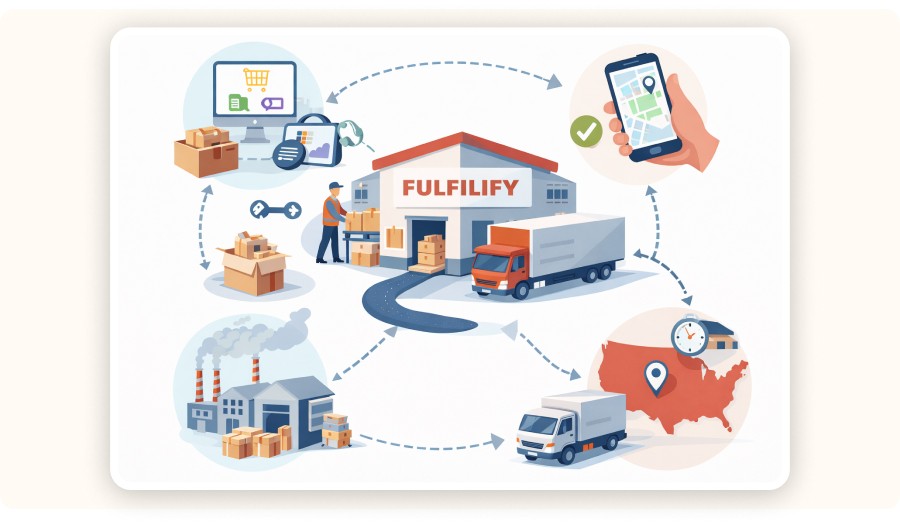
Fulfillify is a U.S.-based fulfillment provider that stores your inventory, then picks, packs, and ships customer orders for you. In practice, you send units to one of its warehouses, connect your ecommerce platform, and Fulfillify pushes tracking back to your store once orders ship.
What it isn’t: it’s not a supplier marketplace, and it doesn’t replace product sourcing.
Fulfillify sits in the middle of your fulfillment workflow:
You still choose the product and supplier. Fulfillify does not find you a factory or a dropshipping catalog.
You buy and store inventory. That’s the main difference versus classic dropshipping, where a supplier ships one order at a time.
Fulfillify ships domestically. The business case is faster delivery inside the United States.
The practical outcome: Fulfillify is closer to a 3PL than a dropshipping agent. That matters for cash flow, you pay for inventory upfront, and you pay fulfillment fees per order.
Minea
Reach $1,000 per day or get your money back

Key Features of Fulfillify Fulfillment (What You Actually Get)
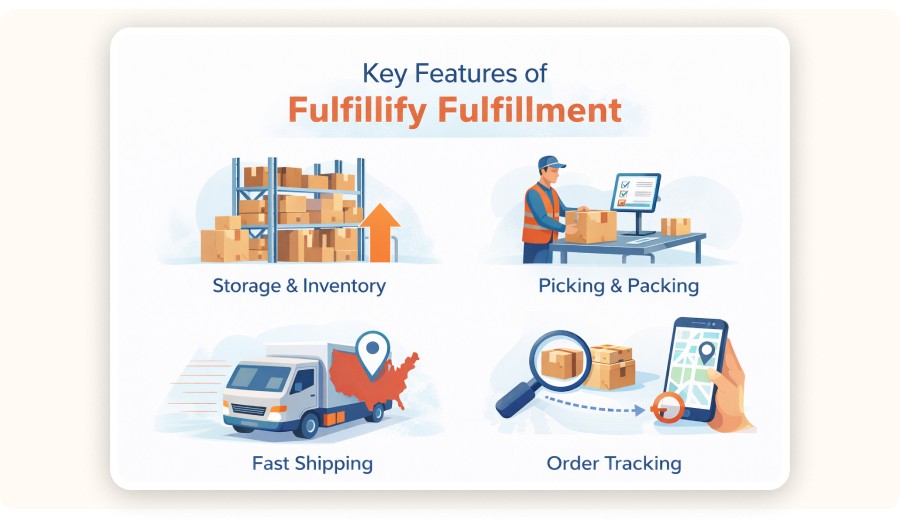
At its core, Fulfillify is built around the standard 3PL toolkit most Shopify sellers need once they’re past the testing phase: inventory control, fast order turnaround, and clean integrations. The biggest win is that you’re not duct-taping a fulfillment process together, your store, your stock, and your shipping workflow are meant to run in one predictable loop.
Here are the features that matter most in day-to-day operations:
Inventory Management: You get real-time stock tracking so you’re not guessing what’s actually available. This usually includes basic reporting and, in some setups, lot control (useful if you sell consumables, beauty, or anything with batch tracking).
Order Fulfillment (B2C + B2B): The main job is simple: pick, pack, ship, then push tracking back to your store. If you sell wholesale or do bulk shipments, having both B2C and B2B handling can reduce the “two systems” problem.
Returns Handling: Returns and exchanges are where brands quietly lose margin. A structured returns process helps you stay consistent (and faster) when issues come in.
Kitting & Assembly: If you bundle products, run promos, or sell multi-item sets, kitting lets you ship offers that don’t feel generic.
Custom Packaging: Branding is possible, but it’s rarely “free.” Expect added fees for custom inserts, specialty packaging, or extra handling.
eCommerce Integrations: Fulfillify-style setups typically connect with Shopify, and often support platforms like WooCommerce and Amazon, so orders flow in automatically and tracking flows out.
A few practical considerations before you lean on these features: Fulfillify is primarily built for U.S.-based fulfillment, high-volume sellers usually get the best economics, and Fulfillify pricing is typically quote-based, so you’ll want a real scenario quote (your AOV, SKUs, weights, and zones) before committing.
Fulfillment vs. Dropshipping: The Difference That Changes Your Cash Flow
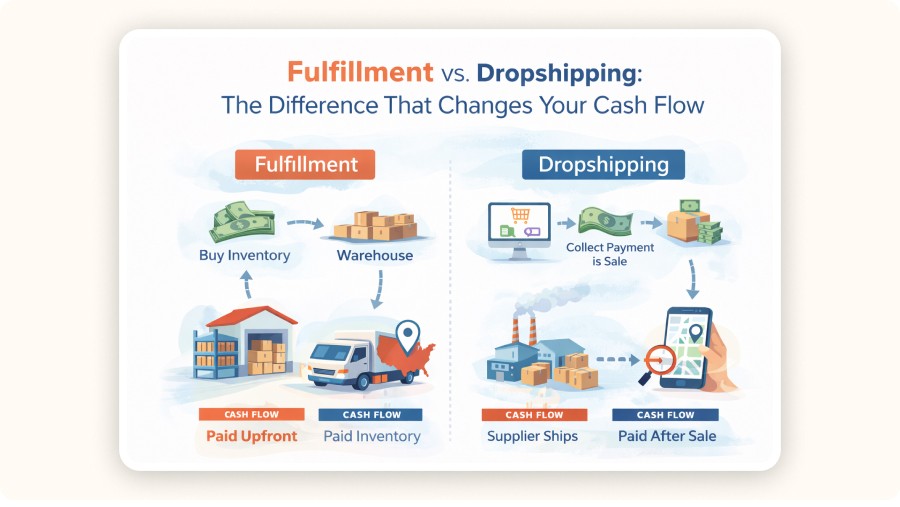
Dropshipping sends each customer order to a supplier who ships directly to the buyer (often from overseas). Fulfillment is when you hold inventory in a warehouse and a 3PL ships each order for you.
The biggest difference is when you pay:
Dropshipping: pay per order
Fulfillment: pay up front for inventory, plus storage and pick-and-pack
The customer experience can look similar on the surface, but the economics are not.
Dropshipping is best for testing: launch fast, carry no inventory, kill losers quickly.
Fulfillment is best for scaling winners: faster delivery, more control over packaging, fewer supplier surprises.
Simple decision rule:
If you’re still testing hooks and angles every week, keep your stack flexible (dropshipping or a sourcing agent).
If your store has stable demand on 1–3 SKUs, fulfillment becomes a margin + conversion decision.
Shipping Speed and Coverage: What Fulfillify Claims in 2026

Fulfillify states it ships same day and can reach 98.6% of the U.S. population in 1–2 days using major carriers, supported by four U.S. fulfillment centers. For a dropshipping-style store, that kind of speed can reduce delivery complaints and take pressure off refunds.
Your real results still depend on:
where your buyers live
your cutoff times
carrier performance during peak periods
Speed is the main reason sellers look at Fulfillify.
If your current delivery promise is 7–14 days, moving to a 1–2 day window can change the funnel:
your product page can set a tighter expectation
checkout abandonment can drop
post-purchase support load usually improves
The catch stays the same: speed only matters when you already have demand. A fast warehouse won’t fix a weak offer.
How to Tie This Back to the Minea Workflow
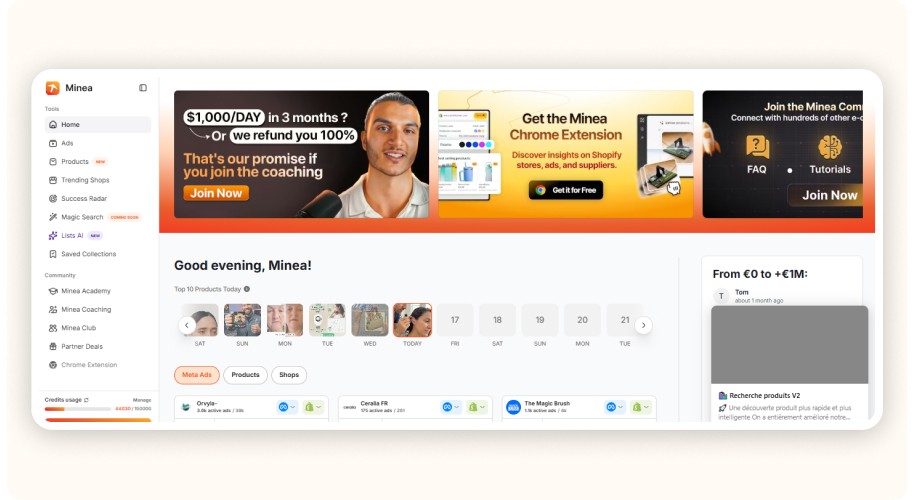
Before you move a product into U.S. fulfillment, validate that it’s already selling with multiple angles.
A practical validation loop:
Use Minea to spot a product already running ads at scale in the U.S. market
Identify the angles that keep showing up in winning creatives, then write your offer around those angles
Run a short test with flexible fulfillment, then move the winner into U.S. stock and 3PL fulfillment once demand is consistent
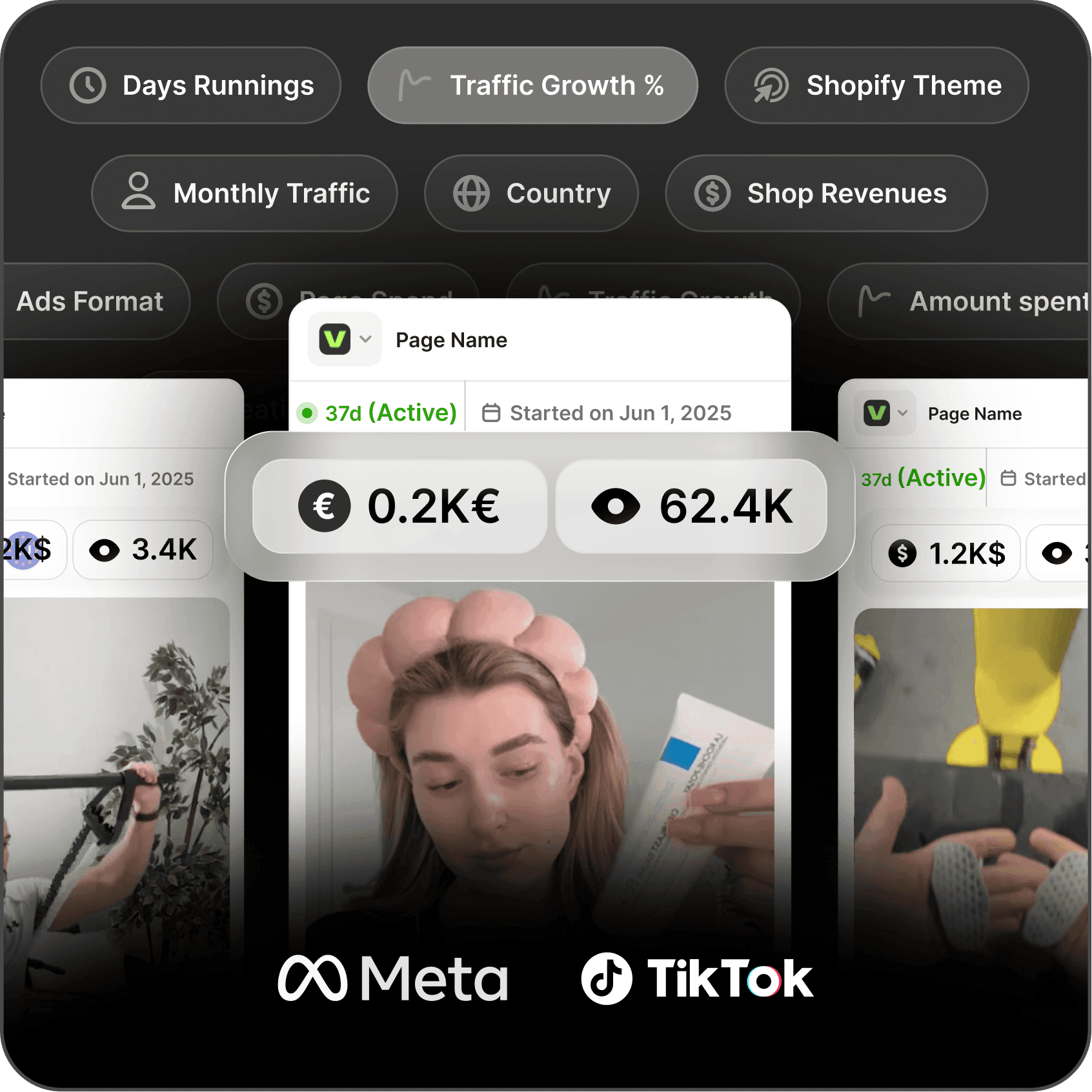
Minea product research for this brief points to fast-moving categories where delivery speed can lift conversion, especially impulse-friendly gadgets and beauty.
Minea
Minea takes care of everything for you
Access winning ads, products, and stores in real time, get inspired, learn, then get started.
The Strongest Fulfillify Advantage: Domestic Speed Without Reinventing Your Stack

Fulfillify’s main advantage is turning a Shopify store into a fast shipper without you owning a warehouse. You buy inventory in bulk, place it in U.S. fulfillment centers, and Fulfillify handles same-day pick, pack, and ship. For dropshipping sellers with a proven winner, this can tighten delivery promises and protect ad performance that would otherwise degrade from slow-shipping complaints.
A better approach is to plan the switch while the product is already working, not after complaints pile up.
A concrete playbook
Use Minea to confirm multiple stores are spending in the same product category in the U.S. market
Build an offer that matches the winning angle you’re seeing in active creatives
Run a short test with flexible fulfillment so you can iterate fast
When daily order volume becomes consistent, shift the winner into U.S. inventory and 3PL fulfillment
If you’re a U.S. dropshipper trying to stop losing customers to slow delivery, choosing the best fulfillment partner and improving shipping speed are two of the fastest levers to pull for revenue.
Fulfillify fulfillment says it can reach 98.6% of the U.S. population in 1–2 days using UPS Ground, supported by four U.S. fulfillment centers.
The trade-off is simple: higher costs and inventory risk (you’ll need to stock units with a 3PL) versus pure supplier dropshipping.
Quick Verdict: Fulfillify is a strong fit for U.S.-focused dropshipping stores with steady demand that want predictable delivery speed.
Good fit if you can absorb pick-and-pack fees and keep inventory moving.
Skip it if you’re still validating product-market fit, or your margins can’t handle 3PL costs.
What Fulfillify Actually Does (and What It Doesn’t)
Fulfillify is a U.S.-based fulfillment provider that stores your inventory, then picks, packs, and ships customer orders for you. In practice, you send units to one of its warehouses, connect your ecommerce platform, and Fulfillify pushes tracking back to your store once orders ship.
What it isn’t: it’s not a supplier marketplace, and it doesn’t replace product sourcing.
Fulfillify sits in the middle of your fulfillment workflow:
You still choose the product and supplier. Fulfillify does not find you a factory or a dropshipping catalog.
You buy and store inventory. That’s the main difference versus classic dropshipping, where a supplier ships one order at a time.
Fulfillify ships domestically. The business case is faster delivery inside the United States.
The practical outcome: Fulfillify is closer to a 3PL than a dropshipping agent. That matters for cash flow, you pay for inventory upfront, and you pay fulfillment fees per order.
Minea
Reach $1,000 per day or get your money back
Key Features of Fulfillify Fulfillment (What You Actually Get)
At its core, Fulfillify is built around the standard 3PL toolkit most Shopify sellers need once they’re past the testing phase: inventory control, fast order turnaround, and clean integrations. The biggest win is that you’re not duct-taping a fulfillment process together, your store, your stock, and your shipping workflow are meant to run in one predictable loop.
Here are the features that matter most in day-to-day operations:
Inventory Management: You get real-time stock tracking so you’re not guessing what’s actually available. This usually includes basic reporting and, in some setups, lot control (useful if you sell consumables, beauty, or anything with batch tracking).
Order Fulfillment (B2C + B2B): The main job is simple: pick, pack, ship, then push tracking back to your store. If you sell wholesale or do bulk shipments, having both B2C and B2B handling can reduce the “two systems” problem.
Returns Handling: Returns and exchanges are where brands quietly lose margin. A structured returns process helps you stay consistent (and faster) when issues come in.
Kitting & Assembly: If you bundle products, run promos, or sell multi-item sets, kitting lets you ship offers that don’t feel generic.
Custom Packaging: Branding is possible, but it’s rarely “free.” Expect added fees for custom inserts, specialty packaging, or extra handling.
eCommerce Integrations: Fulfillify-style setups typically connect with Shopify, and often support platforms like WooCommerce and Amazon, so orders flow in automatically and tracking flows out.
A few practical considerations before you lean on these features: Fulfillify is primarily built for U.S.-based fulfillment, high-volume sellers usually get the best economics, and Fulfillify pricing is typically quote-based, so you’ll want a real scenario quote (your AOV, SKUs, weights, and zones) before committing.
Fulfillment vs. Dropshipping: The Difference That Changes Your Cash Flow
Dropshipping sends each customer order to a supplier who ships directly to the buyer (often from overseas). Fulfillment is when you hold inventory in a warehouse and a 3PL ships each order for you.
The biggest difference is when you pay:
Dropshipping: pay per order
Fulfillment: pay up front for inventory, plus storage and pick-and-pack
The customer experience can look similar on the surface, but the economics are not.
Dropshipping is best for testing: launch fast, carry no inventory, kill losers quickly.
Fulfillment is best for scaling winners: faster delivery, more control over packaging, fewer supplier surprises.
Simple decision rule:
If you’re still testing hooks and angles every week, keep your stack flexible (dropshipping or a sourcing agent).
If your store has stable demand on 1–3 SKUs, fulfillment becomes a margin + conversion decision.
Shipping Speed and Coverage: What Fulfillify Claims in 2026
Fulfillify states it ships same day and can reach 98.6% of the U.S. population in 1–2 days using major carriers, supported by four U.S. fulfillment centers. For a dropshipping-style store, that kind of speed can reduce delivery complaints and take pressure off refunds.
Your real results still depend on:
where your buyers live
your cutoff times
carrier performance during peak periods
Speed is the main reason sellers look at Fulfillify.
If your current delivery promise is 7–14 days, moving to a 1–2 day window can change the funnel:
your product page can set a tighter expectation
checkout abandonment can drop
post-purchase support load usually improves
The catch stays the same: speed only matters when you already have demand. A fast warehouse won’t fix a weak offer.
How to Tie This Back to the Minea Workflow
Before you move a product into U.S. fulfillment, validate that it’s already selling with multiple angles.
A practical validation loop:
Use Minea to spot a product already running ads at scale in the U.S. market
Identify the angles that keep showing up in winning creatives, then write your offer around those angles
Run a short test with flexible fulfillment, then move the winner into U.S. stock and 3PL fulfillment once demand is consistent
Minea product research for this brief points to fast-moving categories where delivery speed can lift conversion, especially impulse-friendly gadgets and beauty.
Minea
Minea takes care of everything for you
Access winning ads, products, and stores in real time, get inspired, learn, then get started.
The Strongest Fulfillify Advantage: Domestic Speed Without Reinventing Your Stack
Fulfillify’s main advantage is turning a Shopify store into a fast shipper without you owning a warehouse. You buy inventory in bulk, place it in U.S. fulfillment centers, and Fulfillify handles same-day pick, pack, and ship. For dropshipping sellers with a proven winner, this can tighten delivery promises and protect ad performance that would otherwise degrade from slow-shipping complaints.
A better approach is to plan the switch while the product is already working, not after complaints pile up.
A concrete playbook
Use Minea to confirm multiple stores are spending in the same product category in the U.S. market
Build an offer that matches the winning angle you’re seeing in active creatives
Run a short test with flexible fulfillment so you can iterate fast
When daily order volume becomes consistent, shift the winner into U.S. inventory and 3PL fulfillment
If you’re a U.S. dropshipper trying to stop losing customers to slow delivery, choosing the best fulfillment partner and improving shipping speed are two of the fastest levers to pull for revenue.
Fulfillify fulfillment says it can reach 98.6% of the U.S. population in 1–2 days using UPS Ground, supported by four U.S. fulfillment centers.
The trade-off is simple: higher costs and inventory risk (you’ll need to stock units with a 3PL) versus pure supplier dropshipping.
Quick Verdict: Fulfillify is a strong fit for U.S.-focused dropshipping stores with steady demand that want predictable delivery speed.
Good fit if you can absorb pick-and-pack fees and keep inventory moving.
Skip it if you’re still validating product-market fit, or your margins can’t handle 3PL costs.
What Fulfillify Actually Does (and What It Doesn’t)
Fulfillify is a U.S.-based fulfillment provider that stores your inventory, then picks, packs, and ships customer orders for you. In practice, you send units to one of its warehouses, connect your ecommerce platform, and Fulfillify pushes tracking back to your store once orders ship.
What it isn’t: it’s not a supplier marketplace, and it doesn’t replace product sourcing.
Fulfillify sits in the middle of your fulfillment workflow:
You still choose the product and supplier. Fulfillify does not find you a factory or a dropshipping catalog.
You buy and store inventory. That’s the main difference versus classic dropshipping, where a supplier ships one order at a time.
Fulfillify ships domestically. The business case is faster delivery inside the United States.
The practical outcome: Fulfillify is closer to a 3PL than a dropshipping agent. That matters for cash flow, you pay for inventory upfront, and you pay fulfillment fees per order.
Minea
Reach $1,000 per day or get your money back
Key Features of Fulfillify Fulfillment (What You Actually Get)
At its core, Fulfillify is built around the standard 3PL toolkit most Shopify sellers need once they’re past the testing phase: inventory control, fast order turnaround, and clean integrations. The biggest win is that you’re not duct-taping a fulfillment process together, your store, your stock, and your shipping workflow are meant to run in one predictable loop.
Here are the features that matter most in day-to-day operations:
Inventory Management: You get real-time stock tracking so you’re not guessing what’s actually available. This usually includes basic reporting and, in some setups, lot control (useful if you sell consumables, beauty, or anything with batch tracking).
Order Fulfillment (B2C + B2B): The main job is simple: pick, pack, ship, then push tracking back to your store. If you sell wholesale or do bulk shipments, having both B2C and B2B handling can reduce the “two systems” problem.
Returns Handling: Returns and exchanges are where brands quietly lose margin. A structured returns process helps you stay consistent (and faster) when issues come in.
Kitting & Assembly: If you bundle products, run promos, or sell multi-item sets, kitting lets you ship offers that don’t feel generic.
Custom Packaging: Branding is possible, but it’s rarely “free.” Expect added fees for custom inserts, specialty packaging, or extra handling.
eCommerce Integrations: Fulfillify-style setups typically connect with Shopify, and often support platforms like WooCommerce and Amazon, so orders flow in automatically and tracking flows out.
A few practical considerations before you lean on these features: Fulfillify is primarily built for U.S.-based fulfillment, high-volume sellers usually get the best economics, and Fulfillify pricing is typically quote-based, so you’ll want a real scenario quote (your AOV, SKUs, weights, and zones) before committing.
Fulfillment vs. Dropshipping: The Difference That Changes Your Cash Flow
Dropshipping sends each customer order to a supplier who ships directly to the buyer (often from overseas). Fulfillment is when you hold inventory in a warehouse and a 3PL ships each order for you.
The biggest difference is when you pay:
Dropshipping: pay per order
Fulfillment: pay up front for inventory, plus storage and pick-and-pack
The customer experience can look similar on the surface, but the economics are not.
Dropshipping is best for testing: launch fast, carry no inventory, kill losers quickly.
Fulfillment is best for scaling winners: faster delivery, more control over packaging, fewer supplier surprises.
Simple decision rule:
If you’re still testing hooks and angles every week, keep your stack flexible (dropshipping or a sourcing agent).
If your store has stable demand on 1–3 SKUs, fulfillment becomes a margin + conversion decision.
Shipping Speed and Coverage: What Fulfillify Claims in 2026
Fulfillify states it ships same day and can reach 98.6% of the U.S. population in 1–2 days using major carriers, supported by four U.S. fulfillment centers. For a dropshipping-style store, that kind of speed can reduce delivery complaints and take pressure off refunds.
Your real results still depend on:
where your buyers live
your cutoff times
carrier performance during peak periods
Speed is the main reason sellers look at Fulfillify.
If your current delivery promise is 7–14 days, moving to a 1–2 day window can change the funnel:
your product page can set a tighter expectation
checkout abandonment can drop
post-purchase support load usually improves
The catch stays the same: speed only matters when you already have demand. A fast warehouse won’t fix a weak offer.
How to Tie This Back to the Minea Workflow
Before you move a product into U.S. fulfillment, validate that it’s already selling with multiple angles.
A practical validation loop:
Use Minea to spot a product already running ads at scale in the U.S. market
Identify the angles that keep showing up in winning creatives, then write your offer around those angles
Run a short test with flexible fulfillment, then move the winner into U.S. stock and 3PL fulfillment once demand is consistent
Minea product research for this brief points to fast-moving categories where delivery speed can lift conversion, especially impulse-friendly gadgets and beauty.
Minea
Minea takes care of everything for you
Access winning ads, products, and stores in real time, get inspired, learn, then get started.
The Strongest Fulfillify Advantage: Domestic Speed Without Reinventing Your Stack
Fulfillify’s main advantage is turning a Shopify store into a fast shipper without you owning a warehouse. You buy inventory in bulk, place it in U.S. fulfillment centers, and Fulfillify handles same-day pick, pack, and ship. For dropshipping sellers with a proven winner, this can tighten delivery promises and protect ad performance that would otherwise degrade from slow-shipping complaints.
A better approach is to plan the switch while the product is already working, not after complaints pile up.
A concrete playbook
Use Minea to confirm multiple stores are spending in the same product category in the U.S. market
Build an offer that matches the winning angle you’re seeing in active creatives
Run a short test with flexible fulfillment so you can iterate fast
When daily order volume becomes consistent, shift the winner into U.S. inventory and 3PL fulfillment
Pros and Cons of Fulfillify Fulfillment
No 3PL is “perfect,” and Fulfillify is no exception. What matters is whether its strengths line up with your business model right now, and whether the weak spots are dealbreakers for your margins or your growth stage.
Pros
Fast U.S. shipping coverage: With four fulfillment centers (commonly cited as Pennsylvania, New York, Oklahoma, and Nevada), Fulfillify is positioned for quick ground delivery across the U.S. the main reason most sellers consider it.
Operational visibility: Features like real-time inventory tracking, order status updates, and reporting help you avoid the classic “oversold SKU” problem that kills customer trust.
eCommerce compatibility: Fulfillify-style fulfillment workflows typically support Shopify, and often extend to platforms like WooCommerce and Amazon, which keeps orders + tracking synced without manual work.
Predictable process once set up: When a product is already selling consistently, 3PL fulfillment can bring stable shipping times and fewer fulfillment surprises compared to overseas suppliers.
Cons
Limited international focus: Fulfillify is primarily built for U.S.-based fulfillment, so international-first brands may find it restrictive depending on where their customers live.
Custom branding adds cost: Custom packaging, inserts, or kitting can improve the unboxing experience, but it usually comes with extra fees that can eat into margin fast.
Not ideal for low volume: Like most 3PLs, it tends to make the most sense for higher-volume shippers. If you’re small, inconsistent, or still testing products, the economics can feel heavy relative to pure dropshipping.
Bottom line: Fulfillify is strongest when you have a U.S. winner you’re ready to scale. If you’re still experimenting or your margins are thin, the “speed upgrade” can end up costing more than it returns.
What Competitors Do Better: When ShipBob, Flowspace, or SFN Make More Sense

Fulfillment providers differ on network density, software tooling, onboarding speed, and support responsiveness. Fulfillify’s positioning is mainly about fast U.S. coverage.
Competitors like ShipBob and Flowspace are often compared for multi-node networks and software maturity. Shopify Fulfillment Network (SFN) can make sense when you want native Shopify admin workflows.
The right choice depends on your order volume, your SKU complexity, and how much you need Shopify-native operations.
Anchor the comparison on your bottleneck
If you want Shopify-native operations, SFN can reduce workflow friction.
If you want a broader multi-node network, ShipBob or Flowspace can be a better fit.
If you want to prioritize U.S. ground delivery coverage, Fulfillify is the point of comparison.
The Catches: Where Fulfillment Can Hurt a Dropshipping Store
Fulfillment can improve delivery speed, but it also introduces inventory risk and operational overhead. You pay for units before they sell, you can get stuck with dead stock, and weak forecasting can create stockouts. Fees also stack quickly across receiving, storage, pick and pack, and returns.
Fulfillment is best used after you validate demand, not as a way to create it.
Three failure modes to watch for
You move too early. You stock a product that hasn’t proven repeatable demand, and you end up with dead inventory.
You underestimate fees. Your net margin shrinks, you raise prices to compensate, and conversion drops.
You lose agility. Testing new variations gets slower when inventory has to move through warehouses.
A warning that saves sellers money: don’t treat fulfillment as a fix for weak ads. Fix the offer first. Fulfillment is an accelerator.
Who Should Use Fulfillify for Dropshipping (and Who Should Skip It)

Fulfillify fits dropshipping sellers who want domestic U.S. delivery speed and are willing to hold inventory in the U.S. It’s a better match for stores with consistent order volume, stable SKUs, and enough margin to absorb pick-and-pack fees.
It’s a poor match for sellers who are still testing products daily, have low AOV, or can’t forecast inventory reliably.
Use Fulfillify if:
You sell primarily in the United States and need faster delivery
You have 1–3 winning SKUs with consistent demand
You can buy inventory in bulk without choking cash flow
Skip Fulfillify if:
You’re still in rapid testing mode
Your AOV and margins are too tight to absorb fulfillment fees
If you skip, the better play is to stay flexible with dropshipping fulfillment while you improve product selection and creative. Use Minea to spot less duplicated products and validate angles before you invest in inventory.
Fulfillify Alternatives: How to Choose the Right 3PL for Your Growth
When looking at Fulfillify alternatives, one thing becomes clear: not all 3PLs are built the same.
Some providers focus on fast shipping. Others stand out for their technology, warehouse network, or ability to support brands during rapid growth.
Popular alternatives include:
ShipBob for its strong e-commerce integrations
ShipMonk for its balance of automation and scalability
Red Stag Fulfillment for handling heavy, bulky, or high-value products
To choose the right partner, do not look at price alone.
Pay attention to:
Order accuracy
Shipping speed
Warehouse locations
Platform integrations
Customer support quality
Ability to scale without friction
The real goal is not just to replace Fulfillify with another provider.
It is to find a 3PL that helps you build a more reliable, more efficient, and more scalable operation.
By comparing Fulfillify alternatives carefully, you can avoid simply moving the problem elsewhere and instead choose a partner that truly supports your long-term growth.


Create and test your Shopify store for only $1 per day during 90 days
Verdict: Should You Use Fulfillify Fulfillment for Dropshipping in 2026?
Fulfillify makes sense when you have a proven product and you want domestic U.S. delivery speed without building your own warehouse. It doesn’t make sense as a starting point for new stores because inventory risk and stacked fees punish experimentation.
For most dropshipping stores, the clean path is: test with flexible fulfillment, then move winners into U.S. fulfillment once demand is repeatable.
If you’re searching “Fulfillify fulfillment dropshipping” because customers are already complaining about shipping, you’re late, but not doomed. Pick one SKU, run a 30-day pilot, and track margin, refunds, and support load.
Customer expectations keep moving toward faster delivery, even for smaller Shopify stores. Sellers who keep testing fast, then scale winners with domestic fulfillment, protect conversion and lower support workload.
If you want a tighter testing loop before you commit to inventory, start upstream. Use Minea to validate demand, pull angles from active ads, then choose fulfillment only when the product proves it can carry the extra cost.
FAQ
This FAQ covers the most common questions sellers ask when comparing fulfillment vs. dropshipping and deciding whether Fulfillify is worth it. Each answer is meant to be quick and checklist-friendly.
What is the difference between fulfillment and dropshipping?
Fulfillment means you store inventory in a warehouse and a 3PL ships orders for you. Dropshipping means a supplier ships each order directly to the customer after you forward the order.
The key difference is cash flow timing: fulfillment requires buying inventory up front, while dropshipping is more variable and easier for testing.
Do I have to pay to fulfill my dropship order?
Yes. Every model has costs.
In dropshipping, you pay the supplier for the product and shipping per order.
In a 3PL model, you pay for storage, pick and pack, and postage.
The best approach is calculating net profit per order after refunds and support costs—not just comparing shipping fees.
Is Shopify fulfillment worth it for a dropshipping store?
It can be worth it when you want tight Shopify admin workflows and you have stable volume on a small set of SKUs. It’s rarely worth it for early testing because inventory risk can slow iteration.
Many sellers start with flexible sourcing, then add fulfillment once a product becomes repeatable.
What is the average shipping time when using Fulfillify for dropshipping?
Fulfillify claims it can deliver to most U.S. buyers in 1–2 days via ground shipping, supported by multiple U.S. fulfillment centers.
Your actual timing depends on cutoff times, where your inventory is stored, and carrier performance in your zones. The clean way to verify is a one-SKU pilot and tracking on-time delivery rates for 30 days.
Does Fulfillify integrate with my ecommerce platform for dropshipping?
Most fulfillment providers integrate by importing orders from your ecommerce platform and exporting tracking once labels are created. The exact options depend on your store platform and setup.
Before committing, confirm:
automated order import
tracking sync
how inventory levels update across variants
What is Fulfyld LLC and is it the same as Fulfillify?
Fulfyld is a separate company in the fulfillment/3PL space. It is not the same brand as Fulfillify.
If you’re comparing them, focus on network coverage, onboarding speed, pricing transparency, and fit for your product size and order volume.
Pros and Cons of Fulfillify Fulfillment
No 3PL is “perfect,” and Fulfillify is no exception. What matters is whether its strengths line up with your business model right now, and whether the weak spots are dealbreakers for your margins or your growth stage.
Pros
Fast U.S. shipping coverage: With four fulfillment centers (commonly cited as Pennsylvania, New York, Oklahoma, and Nevada), Fulfillify is positioned for quick ground delivery across the U.S. the main reason most sellers consider it.
Operational visibility: Features like real-time inventory tracking, order status updates, and reporting help you avoid the classic “oversold SKU” problem that kills customer trust.
eCommerce compatibility: Fulfillify-style fulfillment workflows typically support Shopify, and often extend to platforms like WooCommerce and Amazon, which keeps orders + tracking synced without manual work.
Predictable process once set up: When a product is already selling consistently, 3PL fulfillment can bring stable shipping times and fewer fulfillment surprises compared to overseas suppliers.
Cons
Limited international focus: Fulfillify is primarily built for U.S.-based fulfillment, so international-first brands may find it restrictive depending on where their customers live.
Custom branding adds cost: Custom packaging, inserts, or kitting can improve the unboxing experience, but it usually comes with extra fees that can eat into margin fast.
Not ideal for low volume: Like most 3PLs, it tends to make the most sense for higher-volume shippers. If you’re small, inconsistent, or still testing products, the economics can feel heavy relative to pure dropshipping.
Bottom line: Fulfillify is strongest when you have a U.S. winner you’re ready to scale. If you’re still experimenting or your margins are thin, the “speed upgrade” can end up costing more than it returns.
What Competitors Do Better: When ShipBob, Flowspace, or SFN Make More Sense
Fulfillment providers differ on network density, software tooling, onboarding speed, and support responsiveness. Fulfillify’s positioning is mainly about fast U.S. coverage.
Competitors like ShipBob and Flowspace are often compared for multi-node networks and software maturity. Shopify Fulfillment Network (SFN) can make sense when you want native Shopify admin workflows.
The right choice depends on your order volume, your SKU complexity, and how much you need Shopify-native operations.
Anchor the comparison on your bottleneck
If you want Shopify-native operations, SFN can reduce workflow friction.
If you want a broader multi-node network, ShipBob or Flowspace can be a better fit.
If you want to prioritize U.S. ground delivery coverage, Fulfillify is the point of comparison.
The Catches: Where Fulfillment Can Hurt a Dropshipping Store
Fulfillment can improve delivery speed, but it also introduces inventory risk and operational overhead. You pay for units before they sell, you can get stuck with dead stock, and weak forecasting can create stockouts. Fees also stack quickly across receiving, storage, pick and pack, and returns.
Fulfillment is best used after you validate demand, not as a way to create it.
Three failure modes to watch for
You move too early. You stock a product that hasn’t proven repeatable demand, and you end up with dead inventory.
You underestimate fees. Your net margin shrinks, you raise prices to compensate, and conversion drops.
You lose agility. Testing new variations gets slower when inventory has to move through warehouses.
A warning that saves sellers money: don’t treat fulfillment as a fix for weak ads. Fix the offer first. Fulfillment is an accelerator.
Who Should Use Fulfillify for Dropshipping (and Who Should Skip It)
Fulfillify fits dropshipping sellers who want domestic U.S. delivery speed and are willing to hold inventory in the U.S. It’s a better match for stores with consistent order volume, stable SKUs, and enough margin to absorb pick-and-pack fees.
It’s a poor match for sellers who are still testing products daily, have low AOV, or can’t forecast inventory reliably.
Use Fulfillify if:
You sell primarily in the United States and need faster delivery
You have 1–3 winning SKUs with consistent demand
You can buy inventory in bulk without choking cash flow
Skip Fulfillify if:
You’re still in rapid testing mode
Your AOV and margins are too tight to absorb fulfillment fees
If you skip, the better play is to stay flexible with dropshipping fulfillment while you improve product selection and creative. Use Minea to spot less duplicated products and validate angles before you invest in inventory.
Fulfillify Alternatives: How to Choose the Right 3PL for Your Growth
When looking at Fulfillify alternatives, one thing becomes clear: not all 3PLs are built the same.
Some providers focus on fast shipping. Others stand out for their technology, warehouse network, or ability to support brands during rapid growth.
Popular alternatives include:
ShipBob for its strong e-commerce integrations
ShipMonk for its balance of automation and scalability
Red Stag Fulfillment for handling heavy, bulky, or high-value products
To choose the right partner, do not look at price alone.
Pay attention to:
Order accuracy
Shipping speed
Warehouse locations
Platform integrations
Customer support quality
Ability to scale without friction
The real goal is not just to replace Fulfillify with another provider.
It is to find a 3PL that helps you build a more reliable, more efficient, and more scalable operation.
By comparing Fulfillify alternatives carefully, you can avoid simply moving the problem elsewhere and instead choose a partner that truly supports your long-term growth.
Create and test your Shopify store for only $1 per day during 90 days
Verdict: Should You Use Fulfillify Fulfillment for Dropshipping in 2026?
Fulfillify makes sense when you have a proven product and you want domestic U.S. delivery speed without building your own warehouse. It doesn’t make sense as a starting point for new stores because inventory risk and stacked fees punish experimentation.
For most dropshipping stores, the clean path is: test with flexible fulfillment, then move winners into U.S. fulfillment once demand is repeatable.
If you’re searching “Fulfillify fulfillment dropshipping” because customers are already complaining about shipping, you’re late, but not doomed. Pick one SKU, run a 30-day pilot, and track margin, refunds, and support load.
Customer expectations keep moving toward faster delivery, even for smaller Shopify stores. Sellers who keep testing fast, then scale winners with domestic fulfillment, protect conversion and lower support workload.
If you want a tighter testing loop before you commit to inventory, start upstream. Use Minea to validate demand, pull angles from active ads, then choose fulfillment only when the product proves it can carry the extra cost.
FAQ
This FAQ covers the most common questions sellers ask when comparing fulfillment vs. dropshipping and deciding whether Fulfillify is worth it. Each answer is meant to be quick and checklist-friendly.
What is the difference between fulfillment and dropshipping?
Fulfillment means you store inventory in a warehouse and a 3PL ships orders for you. Dropshipping means a supplier ships each order directly to the customer after you forward the order.
The key difference is cash flow timing: fulfillment requires buying inventory up front, while dropshipping is more variable and easier for testing.
Do I have to pay to fulfill my dropship order?
Yes. Every model has costs.
In dropshipping, you pay the supplier for the product and shipping per order.
In a 3PL model, you pay for storage, pick and pack, and postage.
The best approach is calculating net profit per order after refunds and support costs—not just comparing shipping fees.
Is Shopify fulfillment worth it for a dropshipping store?
It can be worth it when you want tight Shopify admin workflows and you have stable volume on a small set of SKUs. It’s rarely worth it for early testing because inventory risk can slow iteration.
Many sellers start with flexible sourcing, then add fulfillment once a product becomes repeatable.
What is the average shipping time when using Fulfillify for dropshipping?
Fulfillify claims it can deliver to most U.S. buyers in 1–2 days via ground shipping, supported by multiple U.S. fulfillment centers.
Your actual timing depends on cutoff times, where your inventory is stored, and carrier performance in your zones. The clean way to verify is a one-SKU pilot and tracking on-time delivery rates for 30 days.
Does Fulfillify integrate with my ecommerce platform for dropshipping?
Most fulfillment providers integrate by importing orders from your ecommerce platform and exporting tracking once labels are created. The exact options depend on your store platform and setup.
Before committing, confirm:
automated order import
tracking sync
how inventory levels update across variants
What is Fulfyld LLC and is it the same as Fulfillify?
Fulfyld is a separate company in the fulfillment/3PL space. It is not the same brand as Fulfillify.
If you’re comparing them, focus on network coverage, onboarding speed, pricing transparency, and fit for your product size and order volume.
Pros and Cons of Fulfillify Fulfillment
No 3PL is “perfect,” and Fulfillify is no exception. What matters is whether its strengths line up with your business model right now, and whether the weak spots are dealbreakers for your margins or your growth stage.
Pros
Fast U.S. shipping coverage: With four fulfillment centers (commonly cited as Pennsylvania, New York, Oklahoma, and Nevada), Fulfillify is positioned for quick ground delivery across the U.S. the main reason most sellers consider it.
Operational visibility: Features like real-time inventory tracking, order status updates, and reporting help you avoid the classic “oversold SKU” problem that kills customer trust.
eCommerce compatibility: Fulfillify-style fulfillment workflows typically support Shopify, and often extend to platforms like WooCommerce and Amazon, which keeps orders + tracking synced without manual work.
Predictable process once set up: When a product is already selling consistently, 3PL fulfillment can bring stable shipping times and fewer fulfillment surprises compared to overseas suppliers.
Cons
Limited international focus: Fulfillify is primarily built for U.S.-based fulfillment, so international-first brands may find it restrictive depending on where their customers live.
Custom branding adds cost: Custom packaging, inserts, or kitting can improve the unboxing experience, but it usually comes with extra fees that can eat into margin fast.
Not ideal for low volume: Like most 3PLs, it tends to make the most sense for higher-volume shippers. If you’re small, inconsistent, or still testing products, the economics can feel heavy relative to pure dropshipping.
Bottom line: Fulfillify is strongest when you have a U.S. winner you’re ready to scale. If you’re still experimenting or your margins are thin, the “speed upgrade” can end up costing more than it returns.
What Competitors Do Better: When ShipBob, Flowspace, or SFN Make More Sense
Fulfillment providers differ on network density, software tooling, onboarding speed, and support responsiveness. Fulfillify’s positioning is mainly about fast U.S. coverage.
Competitors like ShipBob and Flowspace are often compared for multi-node networks and software maturity. Shopify Fulfillment Network (SFN) can make sense when you want native Shopify admin workflows.
The right choice depends on your order volume, your SKU complexity, and how much you need Shopify-native operations.
Anchor the comparison on your bottleneck
If you want Shopify-native operations, SFN can reduce workflow friction.
If you want a broader multi-node network, ShipBob or Flowspace can be a better fit.
If you want to prioritize U.S. ground delivery coverage, Fulfillify is the point of comparison.
The Catches: Where Fulfillment Can Hurt a Dropshipping Store
Fulfillment can improve delivery speed, but it also introduces inventory risk and operational overhead. You pay for units before they sell, you can get stuck with dead stock, and weak forecasting can create stockouts. Fees also stack quickly across receiving, storage, pick and pack, and returns.
Fulfillment is best used after you validate demand, not as a way to create it.
Three failure modes to watch for
You move too early. You stock a product that hasn’t proven repeatable demand, and you end up with dead inventory.
You underestimate fees. Your net margin shrinks, you raise prices to compensate, and conversion drops.
You lose agility. Testing new variations gets slower when inventory has to move through warehouses.
A warning that saves sellers money: don’t treat fulfillment as a fix for weak ads. Fix the offer first. Fulfillment is an accelerator.
Who Should Use Fulfillify for Dropshipping (and Who Should Skip It)
Fulfillify fits dropshipping sellers who want domestic U.S. delivery speed and are willing to hold inventory in the U.S. It’s a better match for stores with consistent order volume, stable SKUs, and enough margin to absorb pick-and-pack fees.
It’s a poor match for sellers who are still testing products daily, have low AOV, or can’t forecast inventory reliably.
Use Fulfillify if:
You sell primarily in the United States and need faster delivery
You have 1–3 winning SKUs with consistent demand
You can buy inventory in bulk without choking cash flow
Skip Fulfillify if:
You’re still in rapid testing mode
Your AOV and margins are too tight to absorb fulfillment fees
If you skip, the better play is to stay flexible with dropshipping fulfillment while you improve product selection and creative. Use Minea to spot less duplicated products and validate angles before you invest in inventory.
Fulfillify Alternatives: How to Choose the Right 3PL for Your Growth
When looking at Fulfillify alternatives, one thing becomes clear: not all 3PLs are built the same.
Some providers focus on fast shipping. Others stand out for their technology, warehouse network, or ability to support brands during rapid growth.
Popular alternatives include:
ShipBob for its strong e-commerce integrations
ShipMonk for its balance of automation and scalability
Red Stag Fulfillment for handling heavy, bulky, or high-value products
To choose the right partner, do not look at price alone.
Pay attention to:
Order accuracy
Shipping speed
Warehouse locations
Platform integrations
Customer support quality
Ability to scale without friction
The real goal is not just to replace Fulfillify with another provider.
It is to find a 3PL that helps you build a more reliable, more efficient, and more scalable operation.
By comparing Fulfillify alternatives carefully, you can avoid simply moving the problem elsewhere and instead choose a partner that truly supports your long-term growth.
Create and test your Shopify store for only $1 per day during 90 days
Verdict: Should You Use Fulfillify Fulfillment for Dropshipping in 2026?
Fulfillify makes sense when you have a proven product and you want domestic U.S. delivery speed without building your own warehouse. It doesn’t make sense as a starting point for new stores because inventory risk and stacked fees punish experimentation.
For most dropshipping stores, the clean path is: test with flexible fulfillment, then move winners into U.S. fulfillment once demand is repeatable.
If you’re searching “Fulfillify fulfillment dropshipping” because customers are already complaining about shipping, you’re late, but not doomed. Pick one SKU, run a 30-day pilot, and track margin, refunds, and support load.
Customer expectations keep moving toward faster delivery, even for smaller Shopify stores. Sellers who keep testing fast, then scale winners with domestic fulfillment, protect conversion and lower support workload.
If you want a tighter testing loop before you commit to inventory, start upstream. Use Minea to validate demand, pull angles from active ads, then choose fulfillment only when the product proves it can carry the extra cost.
FAQ
This FAQ covers the most common questions sellers ask when comparing fulfillment vs. dropshipping and deciding whether Fulfillify is worth it. Each answer is meant to be quick and checklist-friendly.
What is the difference between fulfillment and dropshipping?
Fulfillment means you store inventory in a warehouse and a 3PL ships orders for you. Dropshipping means a supplier ships each order directly to the customer after you forward the order.
The key difference is cash flow timing: fulfillment requires buying inventory up front, while dropshipping is more variable and easier for testing.
Do I have to pay to fulfill my dropship order?
Yes. Every model has costs.
In dropshipping, you pay the supplier for the product and shipping per order.
In a 3PL model, you pay for storage, pick and pack, and postage.
The best approach is calculating net profit per order after refunds and support costs—not just comparing shipping fees.
Is Shopify fulfillment worth it for a dropshipping store?
It can be worth it when you want tight Shopify admin workflows and you have stable volume on a small set of SKUs. It’s rarely worth it for early testing because inventory risk can slow iteration.
Many sellers start with flexible sourcing, then add fulfillment once a product becomes repeatable.
What is the average shipping time when using Fulfillify for dropshipping?
Fulfillify claims it can deliver to most U.S. buyers in 1–2 days via ground shipping, supported by multiple U.S. fulfillment centers.
Your actual timing depends on cutoff times, where your inventory is stored, and carrier performance in your zones. The clean way to verify is a one-SKU pilot and tracking on-time delivery rates for 30 days.
Does Fulfillify integrate with my ecommerce platform for dropshipping?
Most fulfillment providers integrate by importing orders from your ecommerce platform and exporting tracking once labels are created. The exact options depend on your store platform and setup.
Before committing, confirm:
automated order import
tracking sync
how inventory levels update across variants
What is Fulfyld LLC and is it the same as Fulfillify?
Fulfyld is a separate company in the fulfillment/3PL space. It is not the same brand as Fulfillify.
If you’re comparing them, focus on network coverage, onboarding speed, pricing transparency, and fit for your product size and order volume.
Similar articles
Easyship Fulfillment Review 2026: A Practical Ecommerce Pick for Dropshipping
Best Ecommerce Fulfillment Center
Easyship Fulfillment Review 2026: A Practical Ecommerce Pick for Dropshipping
Best Ecommerce Fulfillment Center
Easyship Fulfillment Review 2026: A Practical Ecommerce Pick for Dropshipping
Best Ecommerce Fulfillment Center
Easyship Fulfillment Review 2026: A Practical Ecommerce Pick for Dropshipping
Best Ecommerce Fulfillment Center
Amazon Fulfillment (FBA) in 2026: How It Works, Real Costs, Fulfillment Centers & TikTok Shop
Best Ecommerce Fulfillment Center
Amazon Fulfillment (FBA) in 2026: How It Works, Real Costs, Fulfillment Centers & TikTok Shop
Best Ecommerce Fulfillment Center
Amazon Fulfillment (FBA) in 2026: How It Works, Real Costs, Fulfillment Centers & TikTok Shop
Best Ecommerce Fulfillment Center
Amazon Fulfillment (FBA) in 2026: How It Works, Real Costs, Fulfillment Centers & TikTok Shop
Best Ecommerce Fulfillment Center
Fulfillman Dropshipping Services Review (2026): Speed, Costs, and Fit
Best Ecommerce Fulfillment Center
Fulfillman Dropshipping Services Review (2026): Speed, Costs, and Fit
Best Ecommerce Fulfillment Center
Fulfillman Dropshipping Services Review (2026): Speed, Costs, and Fit
Best Ecommerce Fulfillment Center
Fulfillman Dropshipping Services Review (2026): Speed, Costs, and Fit
Best Ecommerce Fulfillment Center
Deliverr Fulfillment Review 2026 for Dropshipping: The Flexport Reality
Best Ecommerce Fulfillment Center
Deliverr Fulfillment Review 2026 for Dropshipping: The Flexport Reality
Best Ecommerce Fulfillment Center
Deliverr Fulfillment Review 2026 for Dropshipping: The Flexport Reality
Best Ecommerce Fulfillment Center
Deliverr Fulfillment Review 2026 for Dropshipping: The Flexport Reality
Best Ecommerce Fulfillment Center


Our Free Adspys

Find winning products on our Tiktok adspy today!
Find winning products on our Facebook adspy today!
Find winning products on our Tiktok adspy today!
Find winning products on our Facebook adspy today!
Find winning products on our Tiktok adspy today!
Find winning products on our Facebook adspy today!
Find winning products on our Tiktok adspy today!
Find winning products on our Facebook adspy today!
1 winning product everyday.
Follow us!






Find out more
Read more
Minea © 2026
Find out more
Read more
Minea © 2026
Find out more
Read more
Minea © 2026
Find out more
Read more
Minea © 2026
Find out more
Read more
Minea © 2026
Find out more
Read more
Minea © 2026