ShipMonk Fulfillment Review for Ecommerce Dropshipping 2026: Strong 3PL, Hard on Thin Margins
Best Ecommerce Fulfillment Center
Author: Josa
Contents
If you’re scaling a Shopify dropshipping store and rising order volume is starting to eat your weekends, you’re usually looking for one thing: the best ecommerce fulfillment 3PL that can ship fast without losing track of inventory.
ShipMonk positions itself as that operator-grade solution, with claims like 99.95% order accuracy and shipping to 195 countries (per ShipMonk). The trade-off is pretty predictable: the more complex your catalog, and the tighter your margins, the more you’ll want to watch for fee creep and onboarding friction.
Quick verdict:
Choose ShipMonk if you sell higher-margin ecommerce products and need reliable pick, pack, kitting, and returns.
Skip it if your dropshipping AOV is low and you can’t tolerate variable fees or a longer setup phase.
What ShipMonk Actually Does and What It Doesn’t
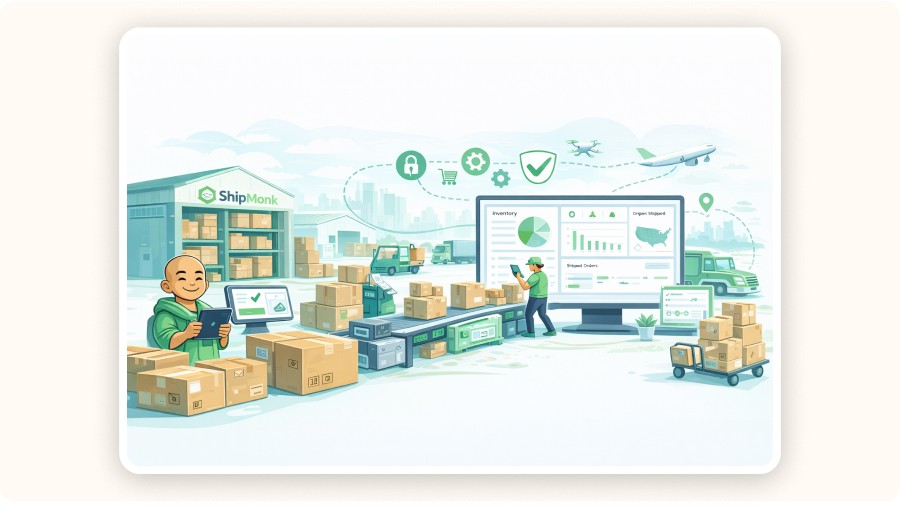
ShipMonk is a third-party logistics provider (3PL). In simple terms: it stores your inventory in its warehouses, receives orders from your ecommerce store via integrations, then picks, packs, and ships each order based on defined service levels.
It’s built for sellers who want operational consistency at scale, not for brands still validating demand with small test batches.
How it works
You send inventory in, then ShipMonk ships it out:
Inventory is received into a warehouse management system (WMS)
Each SKU is tracked by bin location
Orders are routed to picking stations
Items are packed, labeled, and handed off to carriers
What ShipMonk does well
For ecommerce sellers who’ve moved past the early stage, ShipMonk removes the day-to-day fulfillment bottleneck. That’s the real win: fulfillment stops being a daily fire drill and becomes a predictable operating layer.
What ShipMonk does not do
A 3PL won’t fix a weak offer:
It won’t create demand for a product that doesn’t sell
It won’t solve weak creative or poor positioning
It won’t make unprofitable ads magically work
If your offer has low demand, a faster warehouse just helps you burn ad spend faster. The workflow still starts with product selection, creative angles, and demand validation.
The “dropshipping reality check” for 2026
Treat ShipMonk as a step you earn after you have traction. You can still build like a dropshipper, you just stop fulfilling like one.
Minea
Minea takes care of everything for you
Access winning ads, products, and stores in real time, get inspired, learn, then get started.

Is ShipMonk Legit for Dropshipping Sellers?

ShipMonk is a legitimate fulfillment provider (3PL) with enterprise-scale positioning, including claims like SOC 2 Type II and platform uptime around 99.98%. For most dropshipping sellers, though, “legit” isn’t the real issue.
A better question is: Does ShipMonk fit your stage and your unit economics?
“Legit” vs. “Right fit”
ShipMonk says it supports 1,000+ enterprise brands worldwide (as of Q2 2026) and targets 99.9%+ operational accuracy. That typically points to mature warehouse processes, and pricing designed for businesses that can pay for process.
The real risks for dropshippers: operational mismatch
For a typical dropshipper, the red flags aren’t security or uptime. They’re practical:
If your catalog changes every two weeks, you may struggle with SKU setup and inbound receiving.
If your AOV is ~$30, fulfillment fees can wipe out your margin.
If your return rate is high, the returns workflow can become a quiet profit leak.
The clean way to use ShipMonk in a dropshipping model
If you want to use ShipMonk while keeping a dropshipping-style approach, the simplest path is:
Start with a few proven winners
Buy inventory for those winners
Hand those SKUs to the 3PL for consistent fulfillment
Integrations and Order Management for Shopify Stores
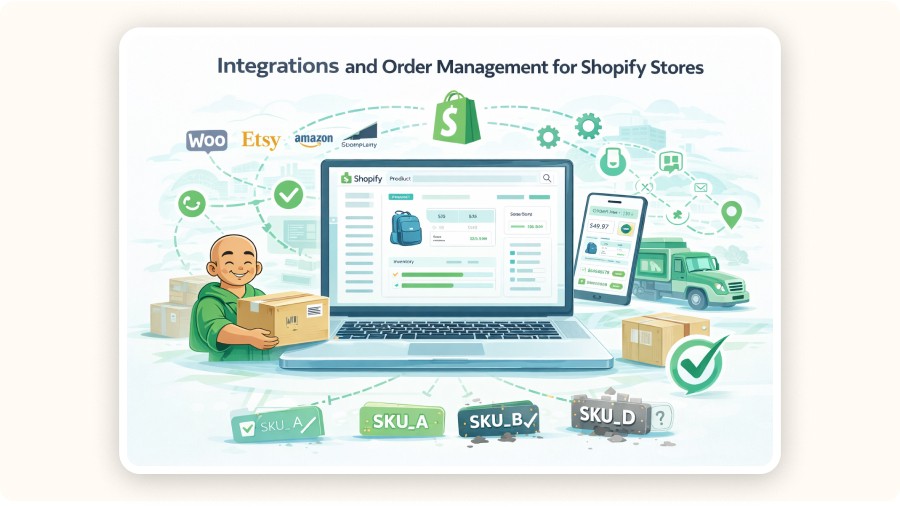
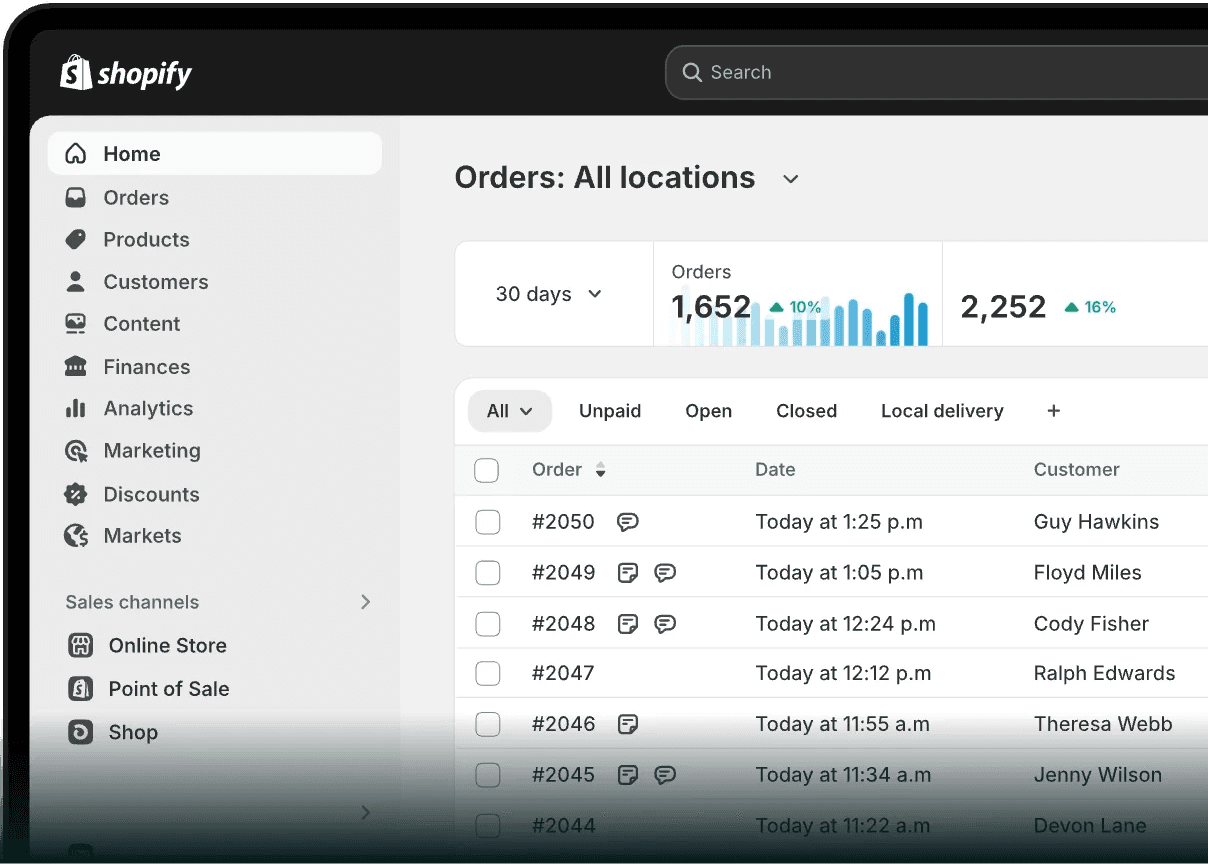
ShipMonk connects to ecommerce platforms through integrations, so orders can sync automatically, inventory updates flow back to your store, and tracking numbers get pushed to customers.
Your real risk isn’t whether an integration exists. It’s whether your store setup and SKU hygiene are clean enough to avoid messy sync issues.
How the Shopify loop works
For Shopify sellers, the operational flow is pretty straightforward:
Orders are created in Shopify after checkout
The integration sends order data into the 3PL queue
The warehouse picks and ships
Tracking updates come back so customers see shipping events in real time
Why this matters for dropshipping-style operations
For ecommerce dropshipping, integration quality is a quiet profit lever. A few practical rules keep things smooth:
Keep SKU naming consistent (no “same product, three names”)
Keep variant logic simple (sizes/colors should map cleanly)
Document bundles and kits so the warehouse doesn’t guess
Pricing Breakdown and the Real Cost Per Order
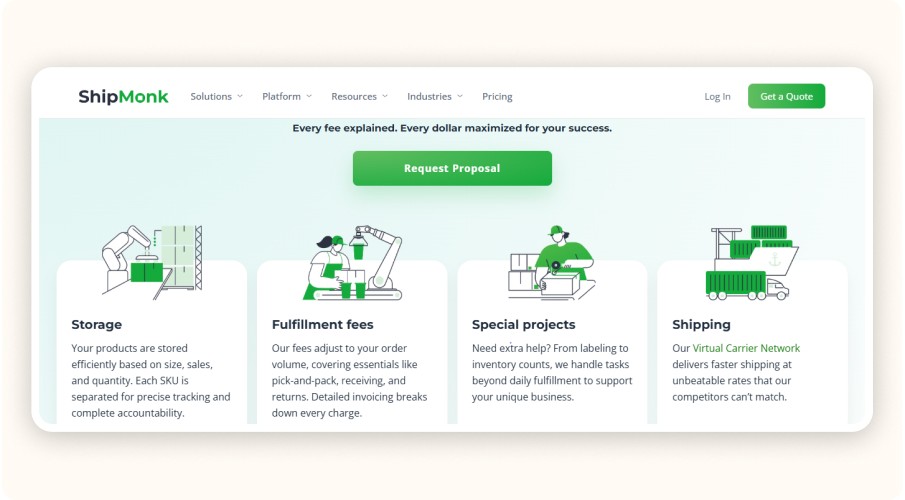
ShipMonk pricing is typically quote-based, and it depends on your SKU profile, order volume, storage, and add-on services like kitting and returns.
The only honest way to judge it is to translate the quote into a real cost per order, then compare that number to your gross margin per order. If the math doesn’t work, nothing else matters.
A review that pretends a 3PL has one flat price isn’t very useful. What matters is the shape of the bill, where you’ll pay consistently, and where costs can quietly creep up.
Cost component | What it usually includes | How to translate it into cost per order |
|---|---|---|
Fulfillment labor | Pick, pack, basic handling | Divide monthly fulfillment fees by shipped orders |
Packaging | Mailers, boxes, inserts you choose to add | Packaging cost per order based on your packout |
Receiving | Inbound processing for new inventory | Receiving fees divided by inbound units, then allocated per order |
Storage | Bin or pallet storage | Storage fees divided by average monthly orders |
Returns | Inspection, restock, disposal | Returns fees divided by return volume |
Postage | Carrier labels and zones | Postage cost per order from your carrier mix |
Your real per-order operations cost is basically the total of:
Pick-and-pack labor
Packaging materials
Inbound receiving (when applicable)
Storage tied to pallet/bin usage
Returns handling (if you process returns)
Postage that varies by carrier and shipping zone
To judge ShipMonk fulfillment for a dropshipping-style store, you only need one simple calculation:
Per-order margin buffer = gross margin per order − (fulfillment + shipping costs)
If your product sells for $29.99, that doesn’t automatically mean your margin buffer is healthy. The real question is how much gross margin you keep after product cost, ad spend, and refunds. If that buffer is thin, a premium 3PL is usually the wrong move.
Do this this week :
Pull your last 100 orders
Compute gross profit per order (before fulfillment)
Identify your median AOV and your median gross margin %
Then ask for a ShipMonk quote and translate it into a true per-order number
Minea
Reach $1,000 per day or get your money back

If you’re scaling a Shopify dropshipping store and rising order volume is starting to eat your weekends, you’re usually looking for one thing: the best ecommerce fulfillment 3PL that can ship fast without losing track of inventory.
ShipMonk positions itself as that operator-grade solution, with claims like 99.95% order accuracy and shipping to 195 countries (per ShipMonk). The trade-off is pretty predictable: the more complex your catalog, and the tighter your margins, the more you’ll want to watch for fee creep and onboarding friction.
Quick verdict:
Choose ShipMonk if you sell higher-margin ecommerce products and need reliable pick, pack, kitting, and returns.
Skip it if your dropshipping AOV is low and you can’t tolerate variable fees or a longer setup phase.
What ShipMonk Actually Does and What It Doesn’t
ShipMonk is a third-party logistics provider (3PL). In simple terms: it stores your inventory in its warehouses, receives orders from your ecommerce store via integrations, then picks, packs, and ships each order based on defined service levels.
It’s built for sellers who want operational consistency at scale, not for brands still validating demand with small test batches.
How it works
You send inventory in, then ShipMonk ships it out:
Inventory is received into a warehouse management system (WMS)
Each SKU is tracked by bin location
Orders are routed to picking stations
Items are packed, labeled, and handed off to carriers
What ShipMonk does well
For ecommerce sellers who’ve moved past the early stage, ShipMonk removes the day-to-day fulfillment bottleneck. That’s the real win: fulfillment stops being a daily fire drill and becomes a predictable operating layer.
What ShipMonk does not do
A 3PL won’t fix a weak offer:
It won’t create demand for a product that doesn’t sell
It won’t solve weak creative or poor positioning
It won’t make unprofitable ads magically work
If your offer has low demand, a faster warehouse just helps you burn ad spend faster. The workflow still starts with product selection, creative angles, and demand validation.
The “dropshipping reality check” for 2026
Treat ShipMonk as a step you earn after you have traction. You can still build like a dropshipper, you just stop fulfilling like one.
Minea
Minea takes care of everything for you
Access winning ads, products, and stores in real time, get inspired, learn, then get started.
Is ShipMonk Legit for Dropshipping Sellers?
ShipMonk is a legitimate fulfillment provider (3PL) with enterprise-scale positioning, including claims like SOC 2 Type II and platform uptime around 99.98%. For most dropshipping sellers, though, “legit” isn’t the real issue.
A better question is: Does ShipMonk fit your stage and your unit economics?
“Legit” vs. “Right fit”
ShipMonk says it supports 1,000+ enterprise brands worldwide (as of Q2 2026) and targets 99.9%+ operational accuracy. That typically points to mature warehouse processes, and pricing designed for businesses that can pay for process.
The real risks for dropshippers: operational mismatch
For a typical dropshipper, the red flags aren’t security or uptime. They’re practical:
If your catalog changes every two weeks, you may struggle with SKU setup and inbound receiving.
If your AOV is ~$30, fulfillment fees can wipe out your margin.
If your return rate is high, the returns workflow can become a quiet profit leak.
The clean way to use ShipMonk in a dropshipping model
If you want to use ShipMonk while keeping a dropshipping-style approach, the simplest path is:
Start with a few proven winners
Buy inventory for those winners
Hand those SKUs to the 3PL for consistent fulfillment
Integrations and Order Management for Shopify Stores
ShipMonk connects to ecommerce platforms through integrations, so orders can sync automatically, inventory updates flow back to your store, and tracking numbers get pushed to customers.
Your real risk isn’t whether an integration exists. It’s whether your store setup and SKU hygiene are clean enough to avoid messy sync issues.
How the Shopify loop works
For Shopify sellers, the operational flow is pretty straightforward:
Orders are created in Shopify after checkout
The integration sends order data into the 3PL queue
The warehouse picks and ships
Tracking updates come back so customers see shipping events in real time
Why this matters for dropshipping-style operations
For ecommerce dropshipping, integration quality is a quiet profit lever. A few practical rules keep things smooth:
Keep SKU naming consistent (no “same product, three names”)
Keep variant logic simple (sizes/colors should map cleanly)
Document bundles and kits so the warehouse doesn’t guess
Pricing Breakdown and the Real Cost Per Order
ShipMonk pricing is typically quote-based, and it depends on your SKU profile, order volume, storage, and add-on services like kitting and returns.
The only honest way to judge it is to translate the quote into a real cost per order, then compare that number to your gross margin per order. If the math doesn’t work, nothing else matters.
A review that pretends a 3PL has one flat price isn’t very useful. What matters is the shape of the bill, where you’ll pay consistently, and where costs can quietly creep up.
Cost component | What it usually includes | How to translate it into cost per order |
|---|---|---|
Fulfillment labor | Pick, pack, basic handling | Divide monthly fulfillment fees by shipped orders |
Packaging | Mailers, boxes, inserts you choose to add | Packaging cost per order based on your packout |
Receiving | Inbound processing for new inventory | Receiving fees divided by inbound units, then allocated per order |
Storage | Bin or pallet storage | Storage fees divided by average monthly orders |
Returns | Inspection, restock, disposal | Returns fees divided by return volume |
Postage | Carrier labels and zones | Postage cost per order from your carrier mix |
Your real per-order operations cost is basically the total of:
Pick-and-pack labor
Packaging materials
Inbound receiving (when applicable)
Storage tied to pallet/bin usage
Returns handling (if you process returns)
Postage that varies by carrier and shipping zone
To judge ShipMonk fulfillment for a dropshipping-style store, you only need one simple calculation:
Per-order margin buffer = gross margin per order − (fulfillment + shipping costs)
If your product sells for $29.99, that doesn’t automatically mean your margin buffer is healthy. The real question is how much gross margin you keep after product cost, ad spend, and refunds. If that buffer is thin, a premium 3PL is usually the wrong move.
Do this this week :
Pull your last 100 orders
Compute gross profit per order (before fulfillment)
Identify your median AOV and your median gross margin %
Then ask for a ShipMonk quote and translate it into a true per-order number
Minea
Reach $1,000 per day or get your money back
If you’re scaling a Shopify dropshipping store and rising order volume is starting to eat your weekends, you’re usually looking for one thing: the best ecommerce fulfillment 3PL that can ship fast without losing track of inventory.
ShipMonk positions itself as that operator-grade solution, with claims like 99.95% order accuracy and shipping to 195 countries (per ShipMonk). The trade-off is pretty predictable: the more complex your catalog, and the tighter your margins, the more you’ll want to watch for fee creep and onboarding friction.
Quick verdict:
Choose ShipMonk if you sell higher-margin ecommerce products and need reliable pick, pack, kitting, and returns.
Skip it if your dropshipping AOV is low and you can’t tolerate variable fees or a longer setup phase.
What ShipMonk Actually Does and What It Doesn’t
ShipMonk is a third-party logistics provider (3PL). In simple terms: it stores your inventory in its warehouses, receives orders from your ecommerce store via integrations, then picks, packs, and ships each order based on defined service levels.
It’s built for sellers who want operational consistency at scale, not for brands still validating demand with small test batches.
How it works
You send inventory in, then ShipMonk ships it out:
Inventory is received into a warehouse management system (WMS)
Each SKU is tracked by bin location
Orders are routed to picking stations
Items are packed, labeled, and handed off to carriers
What ShipMonk does well
For ecommerce sellers who’ve moved past the early stage, ShipMonk removes the day-to-day fulfillment bottleneck. That’s the real win: fulfillment stops being a daily fire drill and becomes a predictable operating layer.
What ShipMonk does not do
A 3PL won’t fix a weak offer:
It won’t create demand for a product that doesn’t sell
It won’t solve weak creative or poor positioning
It won’t make unprofitable ads magically work
If your offer has low demand, a faster warehouse just helps you burn ad spend faster. The workflow still starts with product selection, creative angles, and demand validation.
The “dropshipping reality check” for 2026
Treat ShipMonk as a step you earn after you have traction. You can still build like a dropshipper, you just stop fulfilling like one.
Minea
Minea takes care of everything for you
Access winning ads, products, and stores in real time, get inspired, learn, then get started.
Is ShipMonk Legit for Dropshipping Sellers?
ShipMonk is a legitimate fulfillment provider (3PL) with enterprise-scale positioning, including claims like SOC 2 Type II and platform uptime around 99.98%. For most dropshipping sellers, though, “legit” isn’t the real issue.
A better question is: Does ShipMonk fit your stage and your unit economics?
“Legit” vs. “Right fit”
ShipMonk says it supports 1,000+ enterprise brands worldwide (as of Q2 2026) and targets 99.9%+ operational accuracy. That typically points to mature warehouse processes, and pricing designed for businesses that can pay for process.
The real risks for dropshippers: operational mismatch
For a typical dropshipper, the red flags aren’t security or uptime. They’re practical:
If your catalog changes every two weeks, you may struggle with SKU setup and inbound receiving.
If your AOV is ~$30, fulfillment fees can wipe out your margin.
If your return rate is high, the returns workflow can become a quiet profit leak.
The clean way to use ShipMonk in a dropshipping model
If you want to use ShipMonk while keeping a dropshipping-style approach, the simplest path is:
Start with a few proven winners
Buy inventory for those winners
Hand those SKUs to the 3PL for consistent fulfillment
Integrations and Order Management for Shopify Stores
ShipMonk connects to ecommerce platforms through integrations, so orders can sync automatically, inventory updates flow back to your store, and tracking numbers get pushed to customers.
Your real risk isn’t whether an integration exists. It’s whether your store setup and SKU hygiene are clean enough to avoid messy sync issues.
How the Shopify loop works
For Shopify sellers, the operational flow is pretty straightforward:
Orders are created in Shopify after checkout
The integration sends order data into the 3PL queue
The warehouse picks and ships
Tracking updates come back so customers see shipping events in real time
Why this matters for dropshipping-style operations
For ecommerce dropshipping, integration quality is a quiet profit lever. A few practical rules keep things smooth:
Keep SKU naming consistent (no “same product, three names”)
Keep variant logic simple (sizes/colors should map cleanly)
Document bundles and kits so the warehouse doesn’t guess
Pricing Breakdown and the Real Cost Per Order
ShipMonk pricing is typically quote-based, and it depends on your SKU profile, order volume, storage, and add-on services like kitting and returns.
The only honest way to judge it is to translate the quote into a real cost per order, then compare that number to your gross margin per order. If the math doesn’t work, nothing else matters.
A review that pretends a 3PL has one flat price isn’t very useful. What matters is the shape of the bill, where you’ll pay consistently, and where costs can quietly creep up.
Cost component | What it usually includes | How to translate it into cost per order |
|---|---|---|
Fulfillment labor | Pick, pack, basic handling | Divide monthly fulfillment fees by shipped orders |
Packaging | Mailers, boxes, inserts you choose to add | Packaging cost per order based on your packout |
Receiving | Inbound processing for new inventory | Receiving fees divided by inbound units, then allocated per order |
Storage | Bin or pallet storage | Storage fees divided by average monthly orders |
Returns | Inspection, restock, disposal | Returns fees divided by return volume |
Postage | Carrier labels and zones | Postage cost per order from your carrier mix |
Your real per-order operations cost is basically the total of:
Pick-and-pack labor
Packaging materials
Inbound receiving (when applicable)
Storage tied to pallet/bin usage
Returns handling (if you process returns)
Postage that varies by carrier and shipping zone
To judge ShipMonk fulfillment for a dropshipping-style store, you only need one simple calculation:
Per-order margin buffer = gross margin per order − (fulfillment + shipping costs)
If your product sells for $29.99, that doesn’t automatically mean your margin buffer is healthy. The real question is how much gross margin you keep after product cost, ad spend, and refunds. If that buffer is thin, a premium 3PL is usually the wrong move.
Do this this week :
Pull your last 100 orders
Compute gross profit per order (before fulfillment)
Identify your median AOV and your median gross margin %
Then ask for a ShipMonk quote and translate it into a true per-order number
Minea
Reach $1,000 per day or get your money back
The Strongest Feature for Ecommerce Sellers: Operational Accuracy at Scale
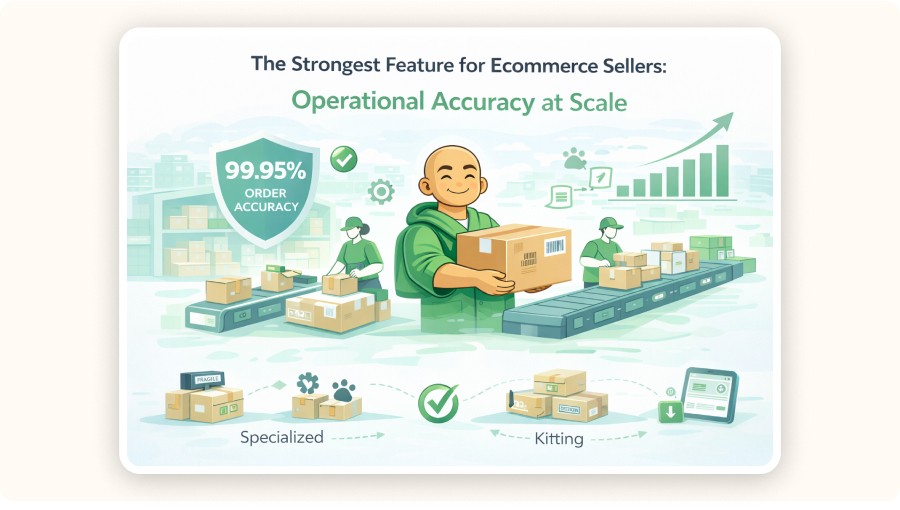
The best reason to consider ShipMonk is consistent execution at scale, including claims of 99.95% order accuracy and support for more complex workflows like kitting and specialized handling. That consistency matters most when you’re shipping enough volume that even small error rates turn into daily customer support and chargeback risk.
For dropshipping sellers who have already validated a product, operational accuracy is a real revenue lever. A late shipment isn’t just a support ticket, it’s ad account risk and refund exposure.
The comparison point is simple: ShipMonk aims for a heavier, process-driven setup than lighter 3PL options like ShipBob or ShipHero. If you want the fastest onboarding with a simple SKU set, those alternatives can feel easier. If you want deeper operational rigor as volume grows, ShipMonk is built for that trade-off.
If ShipMonk delivers 99.95% accuracy in your operation, the remaining error rate is small, but the key detail is volume. If you ship 2,000 orders per month, even a small error rate can still create a steady stream of exceptions.
A workflow that tends to work for ecommerce dropshipping brands
Use Minea trend snapshots to pick a product that can support buying inventory, not just running test orders. Recent examples in Minea data include a posture corrector belt with a 92 trend score and an LED face mask with an 88 trend score.
Move the winner into a branded Shopify offer so repeat orders are plausible.
Buy inventory in a controlled batch.
Send only the winning SKUs to the 3PL.
Keep testing new products in parallel, but don’t dump unstable test SKUs into the warehouse.
This is how you keep the speed benefits of a 3PL without turning fulfillment into your product-testing lab.
Apparel and Returns: The Louisville Expansion Signal
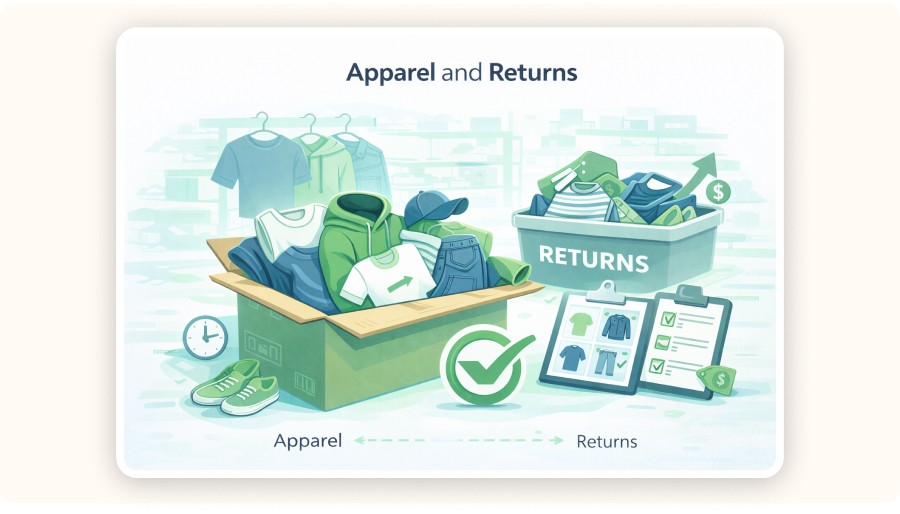
ShipMonk announced an apparel-specific fulfillment center in Louisville on April 2, 2026, designed for size/style SKUs, higher return rates, and value-add services like poly-bagging and embroidery. That matters if your dropshipping business is moving into apparel, where returns are basically the business-model tax.
A dedicated apparel facility usually signals two things:
Vertical specialization (they’re leaning into apparel as a category)
Enough demand to justify tighter processes for returns and variant handling
If you’re a dropshipper selling apparel, this kind of capability can be the difference between scaling… and drowning in returns.
The caution is still margin math. Apparel margins can get fragile fast once you include return processing.
The Catches: Where ShipMonk Can Hurt a Dropshipping Business

The biggest risks with ShipMonk aren’t marketing claims, they’re operational friction, variable fees, and the time it takes to get fully stable. If your store depends on fast pivots and thin margins, those risks can outweigh the speed benefit.
Here are the limitations that show up most often when sellers move too early:
Onboarding takes real work. You need clean SKUs, solid carton labeling, and clear bundling rules. If your product data is messy, you’ll pay for it in exceptions.
Fee creep is easy. Kitting, special packaging, return processing, and custom inserts all add cost. If your AOV is low, every add-on pushes you closer to break-even.
Inventory planning becomes mandatory. A 3PL forces you to think like an operator. Stockouts are now your fault, not your supplier’s.
If you’re still changing products every week, a premium 3PL is the wrong tool. Use a simpler fulfillment setup until you have a stable catalog.
Furthermore, here is a summary of the advantages and disadvantages of the tool.
Pros | Cons |
|---|---|
Accurate fulfillment at scale | Fees can add up (returns, kitting, extras) |
Good for stable winners + inventory | Slower setup (SKUs, inbound, rules) |
Handles kitting + returns | Not ideal if you change SKUs weekly |
Solid Shopify integration | Can hurt when AOV/margins are low |
What Real Users Say and What to Look For in Reviews

When sellers review a 3PL, the most useful feedback is usually about integration reliability, inventory accuracy, and how issues are handled during peak periods. Generic star ratings matter less than repeatable details, things like recurring billing disputes, consistent delays, or stable performance once the first six months are behind them.
The brief highlights positive feedback in 2026 around seamless Shopify integration, automatic order processing, and inventory forecasting. It also mentions a long enough usage window, specifically, positive feedback after six months of use.
For your own due diligence, look for patterns that match your store profile, especially order volume, SKU count, and returns volume. In other words: don’t just read “5 stars” read why.


Create and test your Shopify store for only $1 per day during 90 days
Who Should Use ShipMonk (and Who Should Skip It)

ShipMonk fits ecommerce sellers who have proven demand, stable SKUs, and enough gross margin to absorb professional fulfillment costs. It’s a poor fit for early-stage dropshipping stores that rely on constant product churn and minimal operational overhead.
Use ShipMonk if:
You have a Shopify store with stable winners and you’re buying inventory.
Your products are higher margin and you can absorb fulfillment and returns fees.
You ship enough volume that shipping speed and accuracy move your refund rate.
You sell internationally and need a system built to ship to many destinations (who uses ShipMonk often comes down to multi-channel, multi-country operations).
Skip ShipMonk if:
Your dropshipping model is still test-heavy and your SKUs change weekly.
Your AOV is low and your margin buffer is thin.
You don’t have time to clean product data and manage inbound inventory.
If you skip it, the move isn’t to quit fulfillment upgrades. The move is to choose a simpler 3PL (or a hybrid approach) until your catalog is stable.
Verdict: Should You Use ShipMonk Fulfillment in 2026?
ShipMonk fulfillment can be the right operational backbone for an ecommerce dropshipping brand that has moved into real inventory and wants predictable shipping. The legitimacy signals look strong, including claims like SOC 2 Type II, platform uptime around 99.98%, and enterprise-scale operations (per ShipMonk).
The business case is still math. If your AOV and gross margin are thin, ShipMonk can pressure margins fast.
Choose ShipMonk when you have 2–5 stable winners, you’re ready to buy inventory, and you’re serious about building an ecommerce operation that runs like a brand.
Don’t choose it as a way to rescue a shaky dropshipping store. A premium 3PL won’t fix weak demand.
If you’re picking winners in 2026, keep the loop tight. Use Minea trend signals, like a portable blender with an 85 trend score or a smart ring fitness tracker with an 81 trend score, to prioritize products that can support inventory buying. Then upgrade fulfillment only after the product proves it can carry the cost.
Try Minea to spot higher-margin product trends, then decide if ShipMonk is the right fulfillment layer for your store.
FAQ
What brands use ShipMonk?
ShipMonk states it supports 1,000+ enterprise brands worldwide (as of Q2 2026). For a dropshipping seller, the more useful move is confirming ShipMonk has experience with your product type and your order volume before you commit.
Does Amazon use ShipMonk?
Amazon has its own fulfillment network and also works with many logistics partners depending on the program. If you’re really asking “is ShipMonk built for huge scale,” the better test is whether ShipMonk can hit your service levels consistently at your volume.
What are ShipMonk pricing plans?
ShipMonk pricing is typically quote-based and depends on order volume, SKU complexity, storage, and add-ons. Ask for a quote, translate it into a true per-order operations cost, and compare it to your gross margin per order.
What integrations does ShipMonk offer?
Common integrations for ecommerce sellers are designed to sync orders, update inventory, and push tracking back to your store. Before you sign, confirm the integration supports your exact setup, especially bundles, variants, and any subscription logic.
How does ShipMonk handle returns and refunds?
Returns handling is usually a defined workflow: receive the return, inspect the item, restock or quarantine it, and report status back to the seller. For dropshipping brands, the key is the fee structure and how returns performance affects your refund rate.
The Strongest Feature for Ecommerce Sellers: Operational Accuracy at Scale
The best reason to consider ShipMonk is consistent execution at scale, including claims of 99.95% order accuracy and support for more complex workflows like kitting and specialized handling. That consistency matters most when you’re shipping enough volume that even small error rates turn into daily customer support and chargeback risk.
For dropshipping sellers who have already validated a product, operational accuracy is a real revenue lever. A late shipment isn’t just a support ticket, it’s ad account risk and refund exposure.
The comparison point is simple: ShipMonk aims for a heavier, process-driven setup than lighter 3PL options like ShipBob or ShipHero. If you want the fastest onboarding with a simple SKU set, those alternatives can feel easier. If you want deeper operational rigor as volume grows, ShipMonk is built for that trade-off.
If ShipMonk delivers 99.95% accuracy in your operation, the remaining error rate is small, but the key detail is volume. If you ship 2,000 orders per month, even a small error rate can still create a steady stream of exceptions.
A workflow that tends to work for ecommerce dropshipping brands
Use Minea trend snapshots to pick a product that can support buying inventory, not just running test orders. Recent examples in Minea data include a posture corrector belt with a 92 trend score and an LED face mask with an 88 trend score.
Move the winner into a branded Shopify offer so repeat orders are plausible.
Buy inventory in a controlled batch.
Send only the winning SKUs to the 3PL.
Keep testing new products in parallel, but don’t dump unstable test SKUs into the warehouse.
This is how you keep the speed benefits of a 3PL without turning fulfillment into your product-testing lab.
Apparel and Returns: The Louisville Expansion Signal
ShipMonk announced an apparel-specific fulfillment center in Louisville on April 2, 2026, designed for size/style SKUs, higher return rates, and value-add services like poly-bagging and embroidery. That matters if your dropshipping business is moving into apparel, where returns are basically the business-model tax.
A dedicated apparel facility usually signals two things:
Vertical specialization (they’re leaning into apparel as a category)
Enough demand to justify tighter processes for returns and variant handling
If you’re a dropshipper selling apparel, this kind of capability can be the difference between scaling… and drowning in returns.
The caution is still margin math. Apparel margins can get fragile fast once you include return processing.
The Catches: Where ShipMonk Can Hurt a Dropshipping Business
The biggest risks with ShipMonk aren’t marketing claims, they’re operational friction, variable fees, and the time it takes to get fully stable. If your store depends on fast pivots and thin margins, those risks can outweigh the speed benefit.
Here are the limitations that show up most often when sellers move too early:
Onboarding takes real work. You need clean SKUs, solid carton labeling, and clear bundling rules. If your product data is messy, you’ll pay for it in exceptions.
Fee creep is easy. Kitting, special packaging, return processing, and custom inserts all add cost. If your AOV is low, every add-on pushes you closer to break-even.
Inventory planning becomes mandatory. A 3PL forces you to think like an operator. Stockouts are now your fault, not your supplier’s.
If you’re still changing products every week, a premium 3PL is the wrong tool. Use a simpler fulfillment setup until you have a stable catalog.
Furthermore, here is a summary of the advantages and disadvantages of the tool.
Pros | Cons |
|---|---|
Accurate fulfillment at scale | Fees can add up (returns, kitting, extras) |
Good for stable winners + inventory | Slower setup (SKUs, inbound, rules) |
Handles kitting + returns | Not ideal if you change SKUs weekly |
Solid Shopify integration | Can hurt when AOV/margins are low |
What Real Users Say and What to Look For in Reviews
When sellers review a 3PL, the most useful feedback is usually about integration reliability, inventory accuracy, and how issues are handled during peak periods. Generic star ratings matter less than repeatable details, things like recurring billing disputes, consistent delays, or stable performance once the first six months are behind them.
The brief highlights positive feedback in 2026 around seamless Shopify integration, automatic order processing, and inventory forecasting. It also mentions a long enough usage window, specifically, positive feedback after six months of use.
For your own due diligence, look for patterns that match your store profile, especially order volume, SKU count, and returns volume. In other words: don’t just read “5 stars” read why.
Create and test your Shopify store for only $1 per day during 90 days
Who Should Use ShipMonk (and Who Should Skip It)
ShipMonk fits ecommerce sellers who have proven demand, stable SKUs, and enough gross margin to absorb professional fulfillment costs. It’s a poor fit for early-stage dropshipping stores that rely on constant product churn and minimal operational overhead.
Use ShipMonk if:
You have a Shopify store with stable winners and you’re buying inventory.
Your products are higher margin and you can absorb fulfillment and returns fees.
You ship enough volume that shipping speed and accuracy move your refund rate.
You sell internationally and need a system built to ship to many destinations (who uses ShipMonk often comes down to multi-channel, multi-country operations).
Skip ShipMonk if:
Your dropshipping model is still test-heavy and your SKUs change weekly.
Your AOV is low and your margin buffer is thin.
You don’t have time to clean product data and manage inbound inventory.
If you skip it, the move isn’t to quit fulfillment upgrades. The move is to choose a simpler 3PL (or a hybrid approach) until your catalog is stable.
Verdict: Should You Use ShipMonk Fulfillment in 2026?
ShipMonk fulfillment can be the right operational backbone for an ecommerce dropshipping brand that has moved into real inventory and wants predictable shipping. The legitimacy signals look strong, including claims like SOC 2 Type II, platform uptime around 99.98%, and enterprise-scale operations (per ShipMonk).
The business case is still math. If your AOV and gross margin are thin, ShipMonk can pressure margins fast.
Choose ShipMonk when you have 2–5 stable winners, you’re ready to buy inventory, and you’re serious about building an ecommerce operation that runs like a brand.
Don’t choose it as a way to rescue a shaky dropshipping store. A premium 3PL won’t fix weak demand.
If you’re picking winners in 2026, keep the loop tight. Use Minea trend signals, like a portable blender with an 85 trend score or a smart ring fitness tracker with an 81 trend score, to prioritize products that can support inventory buying. Then upgrade fulfillment only after the product proves it can carry the cost.
Try Minea to spot higher-margin product trends, then decide if ShipMonk is the right fulfillment layer for your store.
FAQ
What brands use ShipMonk?
ShipMonk states it supports 1,000+ enterprise brands worldwide (as of Q2 2026). For a dropshipping seller, the more useful move is confirming ShipMonk has experience with your product type and your order volume before you commit.
Does Amazon use ShipMonk?
Amazon has its own fulfillment network and also works with many logistics partners depending on the program. If you’re really asking “is ShipMonk built for huge scale,” the better test is whether ShipMonk can hit your service levels consistently at your volume.
What are ShipMonk pricing plans?
ShipMonk pricing is typically quote-based and depends on order volume, SKU complexity, storage, and add-ons. Ask for a quote, translate it into a true per-order operations cost, and compare it to your gross margin per order.
What integrations does ShipMonk offer?
Common integrations for ecommerce sellers are designed to sync orders, update inventory, and push tracking back to your store. Before you sign, confirm the integration supports your exact setup, especially bundles, variants, and any subscription logic.
How does ShipMonk handle returns and refunds?
Returns handling is usually a defined workflow: receive the return, inspect the item, restock or quarantine it, and report status back to the seller. For dropshipping brands, the key is the fee structure and how returns performance affects your refund rate.
The Strongest Feature for Ecommerce Sellers: Operational Accuracy at Scale
The best reason to consider ShipMonk is consistent execution at scale, including claims of 99.95% order accuracy and support for more complex workflows like kitting and specialized handling. That consistency matters most when you’re shipping enough volume that even small error rates turn into daily customer support and chargeback risk.
For dropshipping sellers who have already validated a product, operational accuracy is a real revenue lever. A late shipment isn’t just a support ticket, it’s ad account risk and refund exposure.
The comparison point is simple: ShipMonk aims for a heavier, process-driven setup than lighter 3PL options like ShipBob or ShipHero. If you want the fastest onboarding with a simple SKU set, those alternatives can feel easier. If you want deeper operational rigor as volume grows, ShipMonk is built for that trade-off.
If ShipMonk delivers 99.95% accuracy in your operation, the remaining error rate is small, but the key detail is volume. If you ship 2,000 orders per month, even a small error rate can still create a steady stream of exceptions.
A workflow that tends to work for ecommerce dropshipping brands
Use Minea trend snapshots to pick a product that can support buying inventory, not just running test orders. Recent examples in Minea data include a posture corrector belt with a 92 trend score and an LED face mask with an 88 trend score.
Move the winner into a branded Shopify offer so repeat orders are plausible.
Buy inventory in a controlled batch.
Send only the winning SKUs to the 3PL.
Keep testing new products in parallel, but don’t dump unstable test SKUs into the warehouse.
This is how you keep the speed benefits of a 3PL without turning fulfillment into your product-testing lab.
Apparel and Returns: The Louisville Expansion Signal
ShipMonk announced an apparel-specific fulfillment center in Louisville on April 2, 2026, designed for size/style SKUs, higher return rates, and value-add services like poly-bagging and embroidery. That matters if your dropshipping business is moving into apparel, where returns are basically the business-model tax.
A dedicated apparel facility usually signals two things:
Vertical specialization (they’re leaning into apparel as a category)
Enough demand to justify tighter processes for returns and variant handling
If you’re a dropshipper selling apparel, this kind of capability can be the difference between scaling… and drowning in returns.
The caution is still margin math. Apparel margins can get fragile fast once you include return processing.
The Catches: Where ShipMonk Can Hurt a Dropshipping Business
The biggest risks with ShipMonk aren’t marketing claims, they’re operational friction, variable fees, and the time it takes to get fully stable. If your store depends on fast pivots and thin margins, those risks can outweigh the speed benefit.
Here are the limitations that show up most often when sellers move too early:
Onboarding takes real work. You need clean SKUs, solid carton labeling, and clear bundling rules. If your product data is messy, you’ll pay for it in exceptions.
Fee creep is easy. Kitting, special packaging, return processing, and custom inserts all add cost. If your AOV is low, every add-on pushes you closer to break-even.
Inventory planning becomes mandatory. A 3PL forces you to think like an operator. Stockouts are now your fault, not your supplier’s.
If you’re still changing products every week, a premium 3PL is the wrong tool. Use a simpler fulfillment setup until you have a stable catalog.
Furthermore, here is a summary of the advantages and disadvantages of the tool.
Pros | Cons |
|---|---|
Accurate fulfillment at scale | Fees can add up (returns, kitting, extras) |
Good for stable winners + inventory | Slower setup (SKUs, inbound, rules) |
Handles kitting + returns | Not ideal if you change SKUs weekly |
Solid Shopify integration | Can hurt when AOV/margins are low |
What Real Users Say and What to Look For in Reviews
When sellers review a 3PL, the most useful feedback is usually about integration reliability, inventory accuracy, and how issues are handled during peak periods. Generic star ratings matter less than repeatable details, things like recurring billing disputes, consistent delays, or stable performance once the first six months are behind them.
The brief highlights positive feedback in 2026 around seamless Shopify integration, automatic order processing, and inventory forecasting. It also mentions a long enough usage window, specifically, positive feedback after six months of use.
For your own due diligence, look for patterns that match your store profile, especially order volume, SKU count, and returns volume. In other words: don’t just read “5 stars” read why.
Create and test your Shopify store for only $1 per day during 90 days
Who Should Use ShipMonk (and Who Should Skip It)
ShipMonk fits ecommerce sellers who have proven demand, stable SKUs, and enough gross margin to absorb professional fulfillment costs. It’s a poor fit for early-stage dropshipping stores that rely on constant product churn and minimal operational overhead.
Use ShipMonk if:
You have a Shopify store with stable winners and you’re buying inventory.
Your products are higher margin and you can absorb fulfillment and returns fees.
You ship enough volume that shipping speed and accuracy move your refund rate.
You sell internationally and need a system built to ship to many destinations (who uses ShipMonk often comes down to multi-channel, multi-country operations).
Skip ShipMonk if:
Your dropshipping model is still test-heavy and your SKUs change weekly.
Your AOV is low and your margin buffer is thin.
You don’t have time to clean product data and manage inbound inventory.
If you skip it, the move isn’t to quit fulfillment upgrades. The move is to choose a simpler 3PL (or a hybrid approach) until your catalog is stable.
Verdict: Should You Use ShipMonk Fulfillment in 2026?
ShipMonk fulfillment can be the right operational backbone for an ecommerce dropshipping brand that has moved into real inventory and wants predictable shipping. The legitimacy signals look strong, including claims like SOC 2 Type II, platform uptime around 99.98%, and enterprise-scale operations (per ShipMonk).
The business case is still math. If your AOV and gross margin are thin, ShipMonk can pressure margins fast.
Choose ShipMonk when you have 2–5 stable winners, you’re ready to buy inventory, and you’re serious about building an ecommerce operation that runs like a brand.
Don’t choose it as a way to rescue a shaky dropshipping store. A premium 3PL won’t fix weak demand.
If you’re picking winners in 2026, keep the loop tight. Use Minea trend signals, like a portable blender with an 85 trend score or a smart ring fitness tracker with an 81 trend score, to prioritize products that can support inventory buying. Then upgrade fulfillment only after the product proves it can carry the cost.
Try Minea to spot higher-margin product trends, then decide if ShipMonk is the right fulfillment layer for your store.
FAQ
What brands use ShipMonk?
ShipMonk states it supports 1,000+ enterprise brands worldwide (as of Q2 2026). For a dropshipping seller, the more useful move is confirming ShipMonk has experience with your product type and your order volume before you commit.
Does Amazon use ShipMonk?
Amazon has its own fulfillment network and also works with many logistics partners depending on the program. If you’re really asking “is ShipMonk built for huge scale,” the better test is whether ShipMonk can hit your service levels consistently at your volume.
What are ShipMonk pricing plans?
ShipMonk pricing is typically quote-based and depends on order volume, SKU complexity, storage, and add-ons. Ask for a quote, translate it into a true per-order operations cost, and compare it to your gross margin per order.
What integrations does ShipMonk offer?
Common integrations for ecommerce sellers are designed to sync orders, update inventory, and push tracking back to your store. Before you sign, confirm the integration supports your exact setup, especially bundles, variants, and any subscription logic.
How does ShipMonk handle returns and refunds?
Returns handling is usually a defined workflow: receive the return, inspect the item, restock or quarantine it, and report status back to the seller. For dropshipping brands, the key is the fee structure and how returns performance affects your refund rate.
Similar articles

Easyship Fulfillment Review 2026: A Practical Ecommerce Pick for Dropshipping
Best Ecommerce Fulfillment Center
Easyship Fulfillment Review 2026: A Practical Ecommerce Pick for Dropshipping
Best Ecommerce Fulfillment Center
Easyship Fulfillment Review 2026: A Practical Ecommerce Pick for Dropshipping
Best Ecommerce Fulfillment Center
Easyship Fulfillment Review 2026: A Practical Ecommerce Pick for Dropshipping
Best Ecommerce Fulfillment Center
Amazon Fulfillment (FBA) in 2026: How It Works, Real Costs, Fulfillment Centers & TikTok Shop
Best Ecommerce Fulfillment Center
Amazon Fulfillment (FBA) in 2026: How It Works, Real Costs, Fulfillment Centers & TikTok Shop
Best Ecommerce Fulfillment Center
Amazon Fulfillment (FBA) in 2026: How It Works, Real Costs, Fulfillment Centers & TikTok Shop
Best Ecommerce Fulfillment Center
Amazon Fulfillment (FBA) in 2026: How It Works, Real Costs, Fulfillment Centers & TikTok Shop
Best Ecommerce Fulfillment Center
Fulfillman Dropshipping Services Review (2026): Speed, Costs, and Fit
Best Ecommerce Fulfillment Center
Fulfillman Dropshipping Services Review (2026): Speed, Costs, and Fit
Best Ecommerce Fulfillment Center
Fulfillman Dropshipping Services Review (2026): Speed, Costs, and Fit
Best Ecommerce Fulfillment Center
Fulfillman Dropshipping Services Review (2026): Speed, Costs, and Fit
Best Ecommerce Fulfillment Center


Our Free Adspys

Find winning products on our Tiktok adspy today!
Find winning products on our Facebook adspy today!
Find winning products on our Tiktok adspy today!
Find winning products on our Facebook adspy today!
Find winning products on our Tiktok adspy today!
Find winning products on our Facebook adspy today!
Find winning products on our Tiktok adspy today!
Find winning products on our Facebook adspy today!
1 winning product everyday.
Follow us!






Find out more
Read more
Minea © 2026
Find out more
Read more
Minea © 2026
Find out more
Read more
Minea © 2026
Find out more
Read more
Minea © 2026
Find out more
Read more
Minea © 2026
Find out more
Read more
Minea © 2026