Red Stag Fulfillment : Locations, Pricing & Fit (2026)
Best Ecommerce Fulfillment Center
Author: Prince
Contents
If you’re a dropshipper or ecommerce seller and your orders are getting heavier, larger, or more fragile, fulfillment is usually the part that breaks first. Red Stag Fulfillment is a U.S.-based 3PL built for that category and it backs the promise with service guarantees, including refunds on the fix plus $50 per mistake.
In this guide, you’ll see what Red Stag actually does, where it operates, what “legit” looks like for a 3PL, and how to decide if it fits your store.
Key takeaways
Red Stag Fulfillment is a 3PL, not a dropshipping supplier. It stores inventory and ships orders for ecommerce brands.
It’s positioned for big, heavy, bulky, and high-value items, where packaging quality and accuracy protect margin.
It cites warehouses in Salt Lake City, Utah and Sweetwater, Tennessee, with two-day-or-less ground reach for most U.S. addresses.
For dropshipping/ecommerce sellers, the safest path is to move one proven SKU first, then expand after a real-order pilot.
Bottom line: Red Stag Fulfillment is a third-party logistics provider that stores your inventory, picks and packs orders, and ships them to customers, with a strong operational focus on big, heavy, and high-value ecommerce items.
Minea
Minea takes care of everything for you
Access winning ads, products, and stores in real time, get inspired, learn, then get started.

Red Stag Fulfillment explained in plain English

Red Stag Fulfillment is a 3PL that takes over warehousing and shipping for ecommerce stores. You send inventory to its warehouses, it syncs orders from platforms like Shopify, then it picks, packs, and ships those orders based on defined service levels.
Red Stag Fulfillment is not a dropshipping supplier. It doesn’t manufacture products, it’s a fulfillment operator.
So if you’re a dropshipping business that’s moving into holding inventory, or an ecommerce brand that already buys in bulk, a 3PL like Red Stag becomes the operations layer behind your Shopify storefront.
Where Red Stag differs from a more generic 3PL is what it optimizes for. Based on its positioning and published guarantees, it’s built for sellers who can’t tolerate shrinkage, damage, or “close enough” picking.
How Red Stag Fulfillment works for a Shopify dropshipping ecommerce store

The mechanics are straightforward: you inbound inventory to Red Stag, they receive it and put it away, your order channels push orders into their system, warehouse staff pick and pack, then parcels (or freight) go out and tracking flows back to your store.
A practical workflow for a dropshipping/ecommerce store owner looks like this:
Inbound: You place a bulk PO with your supplier and route the shipment to the 3PL receiving dock.
Receiving: The warehouse counts units, verifies SKUs, and checks inventory into storage.
Sync: Shopify (and other channels) sends orders into the fulfillment system.
Pick and pack: Each order is picked, packed under your rules, and labeled.
Ship: The order enters the carrier network, and tracking updates your storefront.
Exception handling: Returns, reships, and damages follow an agreed workflow.
The real operational risk for dropshippers moving into inventory is exception handling. Mis-picks trigger refunds. Late scans create support tickets. Weak packaging leads to damage claims. A 3PL becomes a margin lever when it cuts those failures while keeping shipping speed predictable.
Is Red Stag Fulfillment legit for ecommerce and dropshipping sellers?

Red Stag signals legitimacy through named U.S. warehouse locations and performance guarantees, including refunds plus a fixed $50 compensation when SLAs fail.
For a 3PL, “legit” mostly comes down to operational accountability. Here’s a checklist that ties directly to your P&L:
Clear service boundary: warehousing, pick and pack, shipping, returns, and integrations are clearly defined.
Transparent locations: you can verify where inventory will physically sit.
Written SLAs and guarantees: accuracy, speed, and inventory controls are contractual.
Integration reality: your storefront reliably sends orders and receives tracking.
That said, this doesn’t replace basic diligence. With any 3PL, validate the fit the same way you’d validate a product in dropshipping/ecommerce.
Run a two-track test:
Operational test: samples, packaging instructions, and a small batch of real orders.
Demand test: confirm the SKU has repeatable demand before you tie cash up in inventory.
Minea helps on the demand side. In the Minea dataset referenced in this brief, trending products like a posture corrector belt and an LED face mask score 92 and 88 on trend strength, with an average product price of $29.99. That’s a useful reality check: most “winning product” tests start small and light, then move into harder-to-ship SKUs only once demand is proven.
What Red Stag does well : the big, heavy, bulky niche
Red Stag’s core positioning is fulfillment for big, heavy, bulky, and high-value items, where packaging quality and low error rates matter more than chasing the lowest possible pick fee.
Not every dropshipping/ecommerce store needs a specialized 3PL. A lot of brands start with lightweight products because shipping is simpler and returns usually cost less.
Red Stag becomes relevant when at least one of these is true:
Your products trigger dimensional-weight pricing and surcharges.
Damage risk is high, and packaging choices directly change refund rates.
Order accuracy needs to be close to perfect because reships are expensive.
You ship a mix of parcel and freight and need both executed under one SOP.
A good rule of thumb: outsource fulfillment when growth is limited by operations, not by demand.
How Red Stag Fulfillment pricing works
Red Stag pricing is quote-based, but they do share typical 3PL ranges to anchor expectations. For many brands, that means:
One-time setup: often $150–$1,500+ (depending on complexity)
Storage: commonly $15–$40 per pallet / month
Pick & pack: frequently starts around $0.20–$2.00+ (then scales with items, size, and handling)
On top of that baseline, your total can move fast with:
Receiving (inbound processing),
Packaging materials and DIM surcharges for bulky SKUs,
Returns processing and special workflows (kitting, fragile prep, freight).
One thing to watch: some 3PLs use a monthly minimum (Red Stag even gives an example threshold like ~200 orders in its “hidden costs” guidance).
Best practice: request a quote, then validate with a small pilot so you can compare total landed cost against your current refund/reship baseline.
Where Red Stag Fulfillment operates and why locations matter

Red Stag cites a two-warehouse U.S. footprint and says it can reach 96% of U.S. addresses in two days or less with ground shipping.
Locations change two things you feel immediately in your dropshipping/ecommerce P&L: shipping cost and delivery speed.
Red Stag’s published footprint includes warehouses in Salt Lake City, Utah and Sweetwater, Tennessee.
For many U.S. ecommerce stores, a two-node model is a practical sweet spot. West coverage from the Mountain region plus East coverage from the Southeast can reduce average shipping zones, without paying for premium shipping on every order.
Minea
Top 100 best-performing products this month
Detected in real time by our AI from market signals: real sales, advertising statistics, and performance
Who is the parent company of Red Stag Fulfillment

“Parent company” is a legal detail that can change over time, so the safest approach is to verify the contracting entity and the liability structure during procurement.
If you’re asking about the parent company, you’re usually trying to gauge financial stability. Treat it like a simple procurement control:
Ask for the legal entity name that will appear on the contract.
Confirm who carries liability and inventory insurance.
Confirm what happens to your inventory if ownership changes.
That gives you the risk signal you actually need.
If you’re a dropshipper or ecommerce seller and your orders are getting heavier, larger, or more fragile, fulfillment is usually the part that breaks first. Red Stag Fulfillment is a U.S.-based 3PL built for that category and it backs the promise with service guarantees, including refunds on the fix plus $50 per mistake.
In this guide, you’ll see what Red Stag actually does, where it operates, what “legit” looks like for a 3PL, and how to decide if it fits your store.
Key takeaways
Red Stag Fulfillment is a 3PL, not a dropshipping supplier. It stores inventory and ships orders for ecommerce brands.
It’s positioned for big, heavy, bulky, and high-value items, where packaging quality and accuracy protect margin.
It cites warehouses in Salt Lake City, Utah and Sweetwater, Tennessee, with two-day-or-less ground reach for most U.S. addresses.
For dropshipping/ecommerce sellers, the safest path is to move one proven SKU first, then expand after a real-order pilot.
Bottom line: Red Stag Fulfillment is a third-party logistics provider that stores your inventory, picks and packs orders, and ships them to customers, with a strong operational focus on big, heavy, and high-value ecommerce items.
Minea
Minea takes care of everything for you
Access winning ads, products, and stores in real time, get inspired, learn, then get started.
Red Stag Fulfillment explained in plain English
Red Stag Fulfillment is a 3PL that takes over warehousing and shipping for ecommerce stores. You send inventory to its warehouses, it syncs orders from platforms like Shopify, then it picks, packs, and ships those orders based on defined service levels.
Red Stag Fulfillment is not a dropshipping supplier. It doesn’t manufacture products, it’s a fulfillment operator.
So if you’re a dropshipping business that’s moving into holding inventory, or an ecommerce brand that already buys in bulk, a 3PL like Red Stag becomes the operations layer behind your Shopify storefront.
Where Red Stag differs from a more generic 3PL is what it optimizes for. Based on its positioning and published guarantees, it’s built for sellers who can’t tolerate shrinkage, damage, or “close enough” picking.
How Red Stag Fulfillment works for a Shopify dropshipping ecommerce store
The mechanics are straightforward: you inbound inventory to Red Stag, they receive it and put it away, your order channels push orders into their system, warehouse staff pick and pack, then parcels (or freight) go out and tracking flows back to your store.
A practical workflow for a dropshipping/ecommerce store owner looks like this:
Inbound: You place a bulk PO with your supplier and route the shipment to the 3PL receiving dock.
Receiving: The warehouse counts units, verifies SKUs, and checks inventory into storage.
Sync: Shopify (and other channels) sends orders into the fulfillment system.
Pick and pack: Each order is picked, packed under your rules, and labeled.
Ship: The order enters the carrier network, and tracking updates your storefront.
Exception handling: Returns, reships, and damages follow an agreed workflow.
The real operational risk for dropshippers moving into inventory is exception handling. Mis-picks trigger refunds. Late scans create support tickets. Weak packaging leads to damage claims. A 3PL becomes a margin lever when it cuts those failures while keeping shipping speed predictable.
Is Red Stag Fulfillment legit for ecommerce and dropshipping sellers?
Red Stag signals legitimacy through named U.S. warehouse locations and performance guarantees, including refunds plus a fixed $50 compensation when SLAs fail.
For a 3PL, “legit” mostly comes down to operational accountability. Here’s a checklist that ties directly to your P&L:
Clear service boundary: warehousing, pick and pack, shipping, returns, and integrations are clearly defined.
Transparent locations: you can verify where inventory will physically sit.
Written SLAs and guarantees: accuracy, speed, and inventory controls are contractual.
Integration reality: your storefront reliably sends orders and receives tracking.
That said, this doesn’t replace basic diligence. With any 3PL, validate the fit the same way you’d validate a product in dropshipping/ecommerce.
Run a two-track test:
Operational test: samples, packaging instructions, and a small batch of real orders.
Demand test: confirm the SKU has repeatable demand before you tie cash up in inventory.
Minea helps on the demand side. In the Minea dataset referenced in this brief, trending products like a posture corrector belt and an LED face mask score 92 and 88 on trend strength, with an average product price of $29.99. That’s a useful reality check: most “winning product” tests start small and light, then move into harder-to-ship SKUs only once demand is proven.
What Red Stag does well : the big, heavy, bulky niche
Red Stag’s core positioning is fulfillment for big, heavy, bulky, and high-value items, where packaging quality and low error rates matter more than chasing the lowest possible pick fee.
Not every dropshipping/ecommerce store needs a specialized 3PL. A lot of brands start with lightweight products because shipping is simpler and returns usually cost less.
Red Stag becomes relevant when at least one of these is true:
Your products trigger dimensional-weight pricing and surcharges.
Damage risk is high, and packaging choices directly change refund rates.
Order accuracy needs to be close to perfect because reships are expensive.
You ship a mix of parcel and freight and need both executed under one SOP.
A good rule of thumb: outsource fulfillment when growth is limited by operations, not by demand.
How Red Stag Fulfillment pricing works
Red Stag pricing is quote-based, but they do share typical 3PL ranges to anchor expectations. For many brands, that means:
One-time setup: often $150–$1,500+ (depending on complexity)
Storage: commonly $15–$40 per pallet / month
Pick & pack: frequently starts around $0.20–$2.00+ (then scales with items, size, and handling)
On top of that baseline, your total can move fast with:
Receiving (inbound processing),
Packaging materials and DIM surcharges for bulky SKUs,
Returns processing and special workflows (kitting, fragile prep, freight).
One thing to watch: some 3PLs use a monthly minimum (Red Stag even gives an example threshold like ~200 orders in its “hidden costs” guidance).
Best practice: request a quote, then validate with a small pilot so you can compare total landed cost against your current refund/reship baseline.
Where Red Stag Fulfillment operates and why locations matter
Red Stag cites a two-warehouse U.S. footprint and says it can reach 96% of U.S. addresses in two days or less with ground shipping.
Locations change two things you feel immediately in your dropshipping/ecommerce P&L: shipping cost and delivery speed.
Red Stag’s published footprint includes warehouses in Salt Lake City, Utah and Sweetwater, Tennessee.
For many U.S. ecommerce stores, a two-node model is a practical sweet spot. West coverage from the Mountain region plus East coverage from the Southeast can reduce average shipping zones, without paying for premium shipping on every order.
Minea
Top 100 best-performing products this month
Detected in real time by our AI from market signals: real sales, advertising statistics, and performance
Who is the parent company of Red Stag Fulfillment
“Parent company” is a legal detail that can change over time, so the safest approach is to verify the contracting entity and the liability structure during procurement.
If you’re asking about the parent company, you’re usually trying to gauge financial stability. Treat it like a simple procurement control:
Ask for the legal entity name that will appear on the contract.
Confirm who carries liability and inventory insurance.
Confirm what happens to your inventory if ownership changes.
That gives you the risk signal you actually need.
If you’re a dropshipper or ecommerce seller and your orders are getting heavier, larger, or more fragile, fulfillment is usually the part that breaks first. Red Stag Fulfillment is a U.S.-based 3PL built for that category and it backs the promise with service guarantees, including refunds on the fix plus $50 per mistake.
In this guide, you’ll see what Red Stag actually does, where it operates, what “legit” looks like for a 3PL, and how to decide if it fits your store.
Key takeaways
Red Stag Fulfillment is a 3PL, not a dropshipping supplier. It stores inventory and ships orders for ecommerce brands.
It’s positioned for big, heavy, bulky, and high-value items, where packaging quality and accuracy protect margin.
It cites warehouses in Salt Lake City, Utah and Sweetwater, Tennessee, with two-day-or-less ground reach for most U.S. addresses.
For dropshipping/ecommerce sellers, the safest path is to move one proven SKU first, then expand after a real-order pilot.
Bottom line: Red Stag Fulfillment is a third-party logistics provider that stores your inventory, picks and packs orders, and ships them to customers, with a strong operational focus on big, heavy, and high-value ecommerce items.
Minea
Minea takes care of everything for you
Access winning ads, products, and stores in real time, get inspired, learn, then get started.
Red Stag Fulfillment explained in plain English
Red Stag Fulfillment is a 3PL that takes over warehousing and shipping for ecommerce stores. You send inventory to its warehouses, it syncs orders from platforms like Shopify, then it picks, packs, and ships those orders based on defined service levels.
Red Stag Fulfillment is not a dropshipping supplier. It doesn’t manufacture products, it’s a fulfillment operator.
So if you’re a dropshipping business that’s moving into holding inventory, or an ecommerce brand that already buys in bulk, a 3PL like Red Stag becomes the operations layer behind your Shopify storefront.
Where Red Stag differs from a more generic 3PL is what it optimizes for. Based on its positioning and published guarantees, it’s built for sellers who can’t tolerate shrinkage, damage, or “close enough” picking.
How Red Stag Fulfillment works for a Shopify dropshipping ecommerce store
The mechanics are straightforward: you inbound inventory to Red Stag, they receive it and put it away, your order channels push orders into their system, warehouse staff pick and pack, then parcels (or freight) go out and tracking flows back to your store.
A practical workflow for a dropshipping/ecommerce store owner looks like this:
Inbound: You place a bulk PO with your supplier and route the shipment to the 3PL receiving dock.
Receiving: The warehouse counts units, verifies SKUs, and checks inventory into storage.
Sync: Shopify (and other channels) sends orders into the fulfillment system.
Pick and pack: Each order is picked, packed under your rules, and labeled.
Ship: The order enters the carrier network, and tracking updates your storefront.
Exception handling: Returns, reships, and damages follow an agreed workflow.
The real operational risk for dropshippers moving into inventory is exception handling. Mis-picks trigger refunds. Late scans create support tickets. Weak packaging leads to damage claims. A 3PL becomes a margin lever when it cuts those failures while keeping shipping speed predictable.
Is Red Stag Fulfillment legit for ecommerce and dropshipping sellers?
Red Stag signals legitimacy through named U.S. warehouse locations and performance guarantees, including refunds plus a fixed $50 compensation when SLAs fail.
For a 3PL, “legit” mostly comes down to operational accountability. Here’s a checklist that ties directly to your P&L:
Clear service boundary: warehousing, pick and pack, shipping, returns, and integrations are clearly defined.
Transparent locations: you can verify where inventory will physically sit.
Written SLAs and guarantees: accuracy, speed, and inventory controls are contractual.
Integration reality: your storefront reliably sends orders and receives tracking.
That said, this doesn’t replace basic diligence. With any 3PL, validate the fit the same way you’d validate a product in dropshipping/ecommerce.
Run a two-track test:
Operational test: samples, packaging instructions, and a small batch of real orders.
Demand test: confirm the SKU has repeatable demand before you tie cash up in inventory.
Minea helps on the demand side. In the Minea dataset referenced in this brief, trending products like a posture corrector belt and an LED face mask score 92 and 88 on trend strength, with an average product price of $29.99. That’s a useful reality check: most “winning product” tests start small and light, then move into harder-to-ship SKUs only once demand is proven.
What Red Stag does well : the big, heavy, bulky niche
Red Stag’s core positioning is fulfillment for big, heavy, bulky, and high-value items, where packaging quality and low error rates matter more than chasing the lowest possible pick fee.
Not every dropshipping/ecommerce store needs a specialized 3PL. A lot of brands start with lightweight products because shipping is simpler and returns usually cost less.
Red Stag becomes relevant when at least one of these is true:
Your products trigger dimensional-weight pricing and surcharges.
Damage risk is high, and packaging choices directly change refund rates.
Order accuracy needs to be close to perfect because reships are expensive.
You ship a mix of parcel and freight and need both executed under one SOP.
A good rule of thumb: outsource fulfillment when growth is limited by operations, not by demand.
How Red Stag Fulfillment pricing works
Red Stag pricing is quote-based, but they do share typical 3PL ranges to anchor expectations. For many brands, that means:
One-time setup: often $150–$1,500+ (depending on complexity)
Storage: commonly $15–$40 per pallet / month
Pick & pack: frequently starts around $0.20–$2.00+ (then scales with items, size, and handling)
On top of that baseline, your total can move fast with:
Receiving (inbound processing),
Packaging materials and DIM surcharges for bulky SKUs,
Returns processing and special workflows (kitting, fragile prep, freight).
One thing to watch: some 3PLs use a monthly minimum (Red Stag even gives an example threshold like ~200 orders in its “hidden costs” guidance).
Best practice: request a quote, then validate with a small pilot so you can compare total landed cost against your current refund/reship baseline.
Where Red Stag Fulfillment operates and why locations matter
Red Stag cites a two-warehouse U.S. footprint and says it can reach 96% of U.S. addresses in two days or less with ground shipping.
Locations change two things you feel immediately in your dropshipping/ecommerce P&L: shipping cost and delivery speed.
Red Stag’s published footprint includes warehouses in Salt Lake City, Utah and Sweetwater, Tennessee.
For many U.S. ecommerce stores, a two-node model is a practical sweet spot. West coverage from the Mountain region plus East coverage from the Southeast can reduce average shipping zones, without paying for premium shipping on every order.
Minea
Top 100 best-performing products this month
Detected in real time by our AI from market signals: real sales, advertising statistics, and performance
Who is the parent company of Red Stag Fulfillment
“Parent company” is a legal detail that can change over time, so the safest approach is to verify the contracting entity and the liability structure during procurement.
If you’re asking about the parent company, you’re usually trying to gauge financial stability. Treat it like a simple procurement control:
Ask for the legal entity name that will appear on the contract.
Confirm who carries liability and inventory insurance.
Confirm what happens to your inventory if ownership changes.
That gives you the risk signal you actually need.
What companies use Red Stag Fulfillment (and what that means for you)
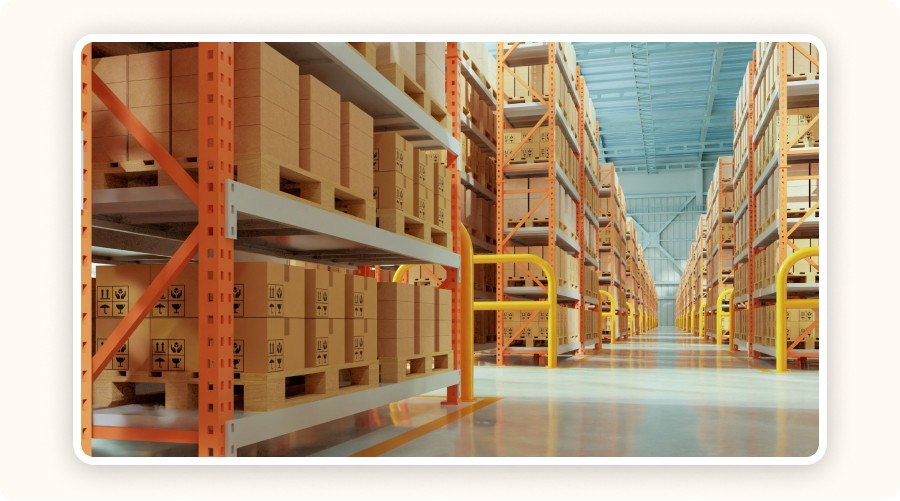
The useful part of “who uses them” is pattern matching: product weight, margins, return rates, and customer expectations that look like your ecommerce store.
A list of logos can be misleading. A better fit check for dropshipping/ecommerce is to ask for proof that matches your real constraints:
Case studies that match your SKU reality, including weight and fragility.
A packaging SOP example that shows how damage prevention is handled.
Returns handling rules, including inspection and restock disposition.
If the 3PL’s best-fit customer profile doesn’t match you, the partnership can still work—but onboarding friction usually goes up.
The real economics for a dropshipping ecommerce seller moving into a 3PL
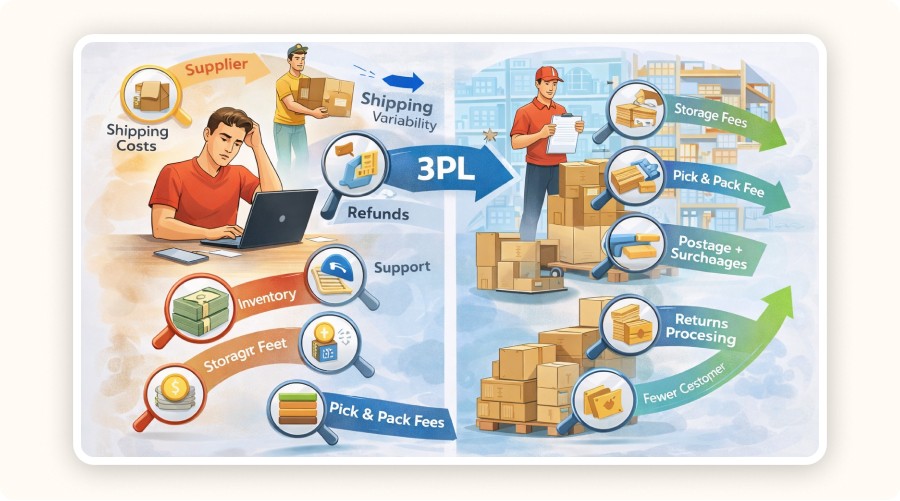
A 3PL changes your cost structure: you move from supplier shipping variability to storage, pick & pack, and postage. The business case usually isn’t “cheaper shipping” on paper, it’s fewer exceptions and better customer retention.
The real question isn’t whether a 3PL looks cheaper on a quote. It’s whether it creates margin by reducing failure.
Model the full stack:
Inventory cash tied up upfront
Storage fees
Pick & pack fees
Shipping + surcharges
Returns processing
A simple seller-level rule:
If your current flow creates frequent refunds, reships, or heavy support load, a high-accuracy 3PL can raise net margin even when per-order fees are higher.
If your demand is still unstable, inventory risk can slow your testing loop.
That’s why Minea belongs in the decision process. Validate demand and creative angles before you commit to inventory and 3PL onboarding.
A simple validation workflow:
Use Minea to identify a product category with sustained trend strength, not a one-week spike.
Use Minea to observe which ad angles keep repeating across stores, then build your own creatives around those angles.
Only after the angle is repeatable, move to inventory and fulfillment optimization.
Summary table: quick fit checklist for Red Stag
This is a fast way to catch obvious mismatches before you request a quote and start onboarding.
Decision factor | Example threshold | Fit signal | Next step |
|---|---|---|---|
SKU weight | 10 lb+ average | Higher | Request packaging SOP and carrier options |
Damage cost | Refunds are expensive | Higher | Ask about claims workflow and packaging controls |
Demand stability | Repeat orders weekly | Higher | Build inbound plan and safety stock |
Product price | Higher AOV items | Higher | Confirm inventory controls and shrinkage policy |
Returns | Inspection required | Medium | Map returns SOP before onboarding |
Advantages and limitations of using Red Stag for ecommerce fulfillment
The upside is operational precision for difficult products. The trade-off is that a specialized 3PL is most valuable when demand is stable and when shipping mistakes are expensive.
Advantages for dropshipping ecommerce sellers:
Accuracy-first operations, backed by a financial guarantee
Packaging discipline that reduces damage on bulky items
Fast ground coverage supported by a two-warehouse model
Limitations you should plan for:
Inventory commitment is new for many dropshippers
Onboarding takes real work: SKUs, packaging rules, and returns SOPs
Small, cheap, lightweight SKUs may not benefit as much from premium controls
One field reality that catches ecommerce sellers: when you switch from supplier-fulfilled dropshipping to a 3PL, customer service often gets quieter fast. The real win is fewer reship escalations and fewer “where is my order” conversations.
How to get started with Red Stag without breaking your dropshipping testing loop
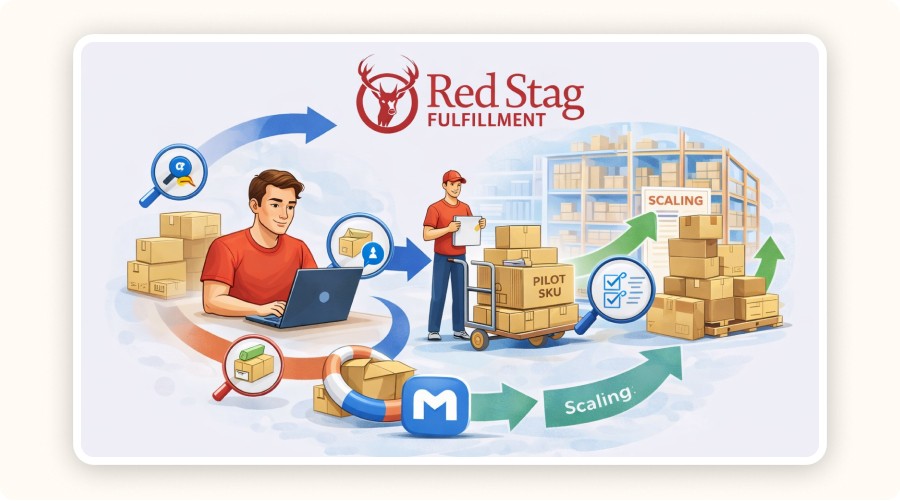
The safest path is to move one proven SKU into inventory + 3PL fulfillment, keep testing new products through your normal dropshipping workflow, and expand only after a real-order pilot.
A clean migration plan:
Pick one SKU with stable demand and predictable margins.
Inbound a limited quantity and define packaging rules.
Run a real-order pilot for two to four weeks.
Expand SKU coverage only after accuracy, damage rates, and support load beat your baseline.
You can keep the testing engine moving with Minea while the 3PL stabilizes operations. The brief’s Minea snapshot also lists common supplier countries for trending products, including China, Turkey, and Vietnam. That matters because longer inbound lead times make fulfillment reliability even more important once you’re holding inventory.
If you want a cleaner way to validate demand and creative angles before you commit to inventory, start with Minea’s product and ad research library.


Alternatives to Red Stag Fulfillment: when to consider other options
Red Stag is not the only way to handle ecommerce fulfillment. The right choice depends on your product, order volume, and growth stage.
Stay with dropshipping (no inventory)
Best for testing new products
No upfront inventory cost
Fast and flexible setup
Ideal if demand is still uncertain
Use a general 3PL
Examples include ShipBob and ShipMonk
Better for small, lightweight, fast-moving items
Often simpler and lower cost than specialized 3PLs
Good step before moving to a premium provider
Handle fulfillment in-house
Works for low order volume
Full control over packing and customer experience
Can be cheaper early on
Becomes harder to scale over time
The best option depends on timing. Validate demand first. Then upgrade your operations when errors, delays, or volume start hurting your margins.
parler seulement des autres outils alternatives stp
Réflexion durant quelques secondes
Alternatives to Red Stag Fulfillment
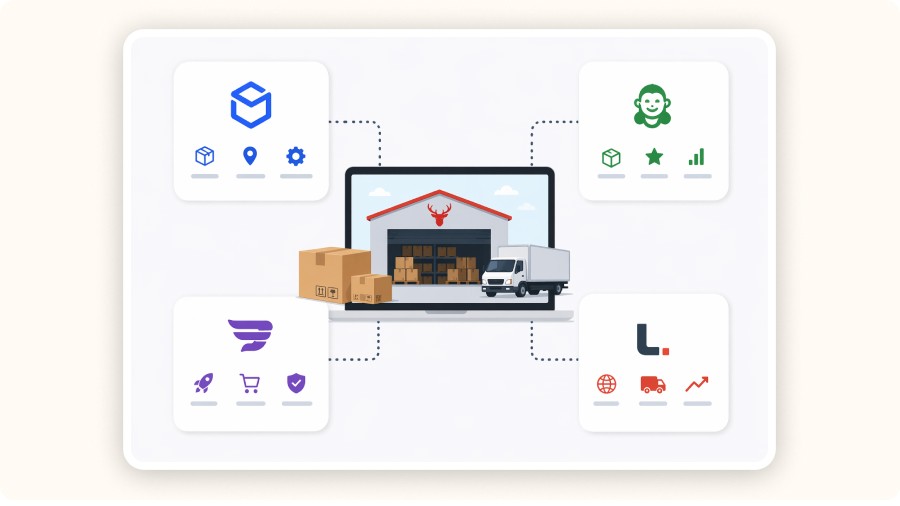
If Red Stag is not the right fit, other fulfillment tools can make more sense for your store. The best alternative depends on what you sell and how complex your shipping needs are.
ShipBob
Strong fit for standard ecommerce brands
Good for lightweight and fast-moving products
Offers broad integrations and simple order management
Often better suited for brands that want speed and scale
ShipMonk
Good option for growing ecommerce stores
Works well for DTC brands, subscriptions, and multi-channel sales
Helpful if you need kitting, custom packaging, or flexible workflows
Often a better fit for brands with mixed product catalogs
Deliverr
Built for fast fulfillment across ecommerce marketplaces
Useful for sellers who want simple logistics support
Can be a good match for products that do not need special handling
Flexport Fulfillment
Better suited for brands that want fulfillment plus supply chain visibility
Useful if inbound logistics and inventory planning matter as much as shipping
Stronger fit for operators with larger growth plans
These alternatives are usually a better fit for smaller, lighter, and less fragile products.
Bottom line for dropshipping ecommerce sellers
Red Stag Fulfillment is a strong fit when your ecommerce business has moved past pure dropshipping and into inventory-backed shipping, especially for heavier or more fragile products. Its positioning and guarantees target the failure modes that quietly erase margin on bulky SKUs.
The decision stays simple: prove demand first, then optimize operations. Use Minea to validate demand and angles, then use a 3PL to protect profit when the SKU gets harder to ship.
FAQ
Is Red Stag Fulfillment legit?
Red Stag’s main legitimacy signal is operational accountability: named warehouse locations, reliable integrations, and a published guarantee that includes refunds plus a fixed cash compensation per failure. Still, do your homework—run a pilot, and confirm contract terms, insurance, and SLAs.
What does the company Red Stag do?
Red Stag stores your inventory, receives inbound shipments, syncs orders from your ecommerce channels, then picks, packs, and ships orders to customers. It also supports exceptions like returns, reships, and shipping claims.
Where is Red Stag Fulfillment located?
Red Stag cites warehouse operations in Salt Lake City, Utah and Sweetwater, Tennessee. Location matters because it changes your average shipping zones, delivery speed, and the shipping costs you feel inside your store.
Who is the parent company of Red Stag Fulfillment?
Parent-company details can change, so verify them using current corporate filings and the legal entity listed on your contract. For most sellers, the practical checks are financial stability, liability coverage, and what happens to your inventory if there’s an acquisition.
How does Red Stag Fulfillment pricing work?
3PL pricing is usually a bundle of storage fees, pick & pack fees, and shipping costs, with add-ons for returns processing and special handling. Evaluate it as total landed fulfillment cost (plus error-related costs) versus your baseline—not line items in isolation.
What companies use Red Stag Fulfillment (and what that means for you)
The useful part of “who uses them” is pattern matching: product weight, margins, return rates, and customer expectations that look like your ecommerce store.
A list of logos can be misleading. A better fit check for dropshipping/ecommerce is to ask for proof that matches your real constraints:
Case studies that match your SKU reality, including weight and fragility.
A packaging SOP example that shows how damage prevention is handled.
Returns handling rules, including inspection and restock disposition.
If the 3PL’s best-fit customer profile doesn’t match you, the partnership can still work—but onboarding friction usually goes up.
The real economics for a dropshipping ecommerce seller moving into a 3PL
A 3PL changes your cost structure: you move from supplier shipping variability to storage, pick & pack, and postage. The business case usually isn’t “cheaper shipping” on paper, it’s fewer exceptions and better customer retention.
The real question isn’t whether a 3PL looks cheaper on a quote. It’s whether it creates margin by reducing failure.
Model the full stack:
Inventory cash tied up upfront
Storage fees
Pick & pack fees
Shipping + surcharges
Returns processing
A simple seller-level rule:
If your current flow creates frequent refunds, reships, or heavy support load, a high-accuracy 3PL can raise net margin even when per-order fees are higher.
If your demand is still unstable, inventory risk can slow your testing loop.
That’s why Minea belongs in the decision process. Validate demand and creative angles before you commit to inventory and 3PL onboarding.
A simple validation workflow:
Use Minea to identify a product category with sustained trend strength, not a one-week spike.
Use Minea to observe which ad angles keep repeating across stores, then build your own creatives around those angles.
Only after the angle is repeatable, move to inventory and fulfillment optimization.
Summary table: quick fit checklist for Red Stag
This is a fast way to catch obvious mismatches before you request a quote and start onboarding.
Decision factor | Example threshold | Fit signal | Next step |
|---|---|---|---|
SKU weight | 10 lb+ average | Higher | Request packaging SOP and carrier options |
Damage cost | Refunds are expensive | Higher | Ask about claims workflow and packaging controls |
Demand stability | Repeat orders weekly | Higher | Build inbound plan and safety stock |
Product price | Higher AOV items | Higher | Confirm inventory controls and shrinkage policy |
Returns | Inspection required | Medium | Map returns SOP before onboarding |
Advantages and limitations of using Red Stag for ecommerce fulfillment
The upside is operational precision for difficult products. The trade-off is that a specialized 3PL is most valuable when demand is stable and when shipping mistakes are expensive.
Advantages for dropshipping ecommerce sellers:
Accuracy-first operations, backed by a financial guarantee
Packaging discipline that reduces damage on bulky items
Fast ground coverage supported by a two-warehouse model
Limitations you should plan for:
Inventory commitment is new for many dropshippers
Onboarding takes real work: SKUs, packaging rules, and returns SOPs
Small, cheap, lightweight SKUs may not benefit as much from premium controls
One field reality that catches ecommerce sellers: when you switch from supplier-fulfilled dropshipping to a 3PL, customer service often gets quieter fast. The real win is fewer reship escalations and fewer “where is my order” conversations.
How to get started with Red Stag without breaking your dropshipping testing loop
The safest path is to move one proven SKU into inventory + 3PL fulfillment, keep testing new products through your normal dropshipping workflow, and expand only after a real-order pilot.
A clean migration plan:
Pick one SKU with stable demand and predictable margins.
Inbound a limited quantity and define packaging rules.
Run a real-order pilot for two to four weeks.
Expand SKU coverage only after accuracy, damage rates, and support load beat your baseline.
You can keep the testing engine moving with Minea while the 3PL stabilizes operations. The brief’s Minea snapshot also lists common supplier countries for trending products, including China, Turkey, and Vietnam. That matters because longer inbound lead times make fulfillment reliability even more important once you’re holding inventory.
If you want a cleaner way to validate demand and creative angles before you commit to inventory, start with Minea’s product and ad research library.
Alternatives to Red Stag Fulfillment: when to consider other options
Red Stag is not the only way to handle ecommerce fulfillment. The right choice depends on your product, order volume, and growth stage.
Stay with dropshipping (no inventory)
Best for testing new products
No upfront inventory cost
Fast and flexible setup
Ideal if demand is still uncertain
Use a general 3PL
Examples include ShipBob and ShipMonk
Better for small, lightweight, fast-moving items
Often simpler and lower cost than specialized 3PLs
Good step before moving to a premium provider
Handle fulfillment in-house
Works for low order volume
Full control over packing and customer experience
Can be cheaper early on
Becomes harder to scale over time
The best option depends on timing. Validate demand first. Then upgrade your operations when errors, delays, or volume start hurting your margins.
parler seulement des autres outils alternatives stp
Réflexion durant quelques secondes
Alternatives to Red Stag Fulfillment
If Red Stag is not the right fit, other fulfillment tools can make more sense for your store. The best alternative depends on what you sell and how complex your shipping needs are.
ShipBob
Strong fit for standard ecommerce brands
Good for lightweight and fast-moving products
Offers broad integrations and simple order management
Often better suited for brands that want speed and scale
ShipMonk
Good option for growing ecommerce stores
Works well for DTC brands, subscriptions, and multi-channel sales
Helpful if you need kitting, custom packaging, or flexible workflows
Often a better fit for brands with mixed product catalogs
Deliverr
Built for fast fulfillment across ecommerce marketplaces
Useful for sellers who want simple logistics support
Can be a good match for products that do not need special handling
Flexport Fulfillment
Better suited for brands that want fulfillment plus supply chain visibility
Useful if inbound logistics and inventory planning matter as much as shipping
Stronger fit for operators with larger growth plans
These alternatives are usually a better fit for smaller, lighter, and less fragile products.
Bottom line for dropshipping ecommerce sellers
Red Stag Fulfillment is a strong fit when your ecommerce business has moved past pure dropshipping and into inventory-backed shipping, especially for heavier or more fragile products. Its positioning and guarantees target the failure modes that quietly erase margin on bulky SKUs.
The decision stays simple: prove demand first, then optimize operations. Use Minea to validate demand and angles, then use a 3PL to protect profit when the SKU gets harder to ship.
FAQ
Is Red Stag Fulfillment legit?
Red Stag’s main legitimacy signal is operational accountability: named warehouse locations, reliable integrations, and a published guarantee that includes refunds plus a fixed cash compensation per failure. Still, do your homework—run a pilot, and confirm contract terms, insurance, and SLAs.
What does the company Red Stag do?
Red Stag stores your inventory, receives inbound shipments, syncs orders from your ecommerce channels, then picks, packs, and ships orders to customers. It also supports exceptions like returns, reships, and shipping claims.
Where is Red Stag Fulfillment located?
Red Stag cites warehouse operations in Salt Lake City, Utah and Sweetwater, Tennessee. Location matters because it changes your average shipping zones, delivery speed, and the shipping costs you feel inside your store.
Who is the parent company of Red Stag Fulfillment?
Parent-company details can change, so verify them using current corporate filings and the legal entity listed on your contract. For most sellers, the practical checks are financial stability, liability coverage, and what happens to your inventory if there’s an acquisition.
How does Red Stag Fulfillment pricing work?
3PL pricing is usually a bundle of storage fees, pick & pack fees, and shipping costs, with add-ons for returns processing and special handling. Evaluate it as total landed fulfillment cost (plus error-related costs) versus your baseline—not line items in isolation.
What companies use Red Stag Fulfillment (and what that means for you)
The useful part of “who uses them” is pattern matching: product weight, margins, return rates, and customer expectations that look like your ecommerce store.
A list of logos can be misleading. A better fit check for dropshipping/ecommerce is to ask for proof that matches your real constraints:
Case studies that match your SKU reality, including weight and fragility.
A packaging SOP example that shows how damage prevention is handled.
Returns handling rules, including inspection and restock disposition.
If the 3PL’s best-fit customer profile doesn’t match you, the partnership can still work—but onboarding friction usually goes up.
The real economics for a dropshipping ecommerce seller moving into a 3PL
A 3PL changes your cost structure: you move from supplier shipping variability to storage, pick & pack, and postage. The business case usually isn’t “cheaper shipping” on paper, it’s fewer exceptions and better customer retention.
The real question isn’t whether a 3PL looks cheaper on a quote. It’s whether it creates margin by reducing failure.
Model the full stack:
Inventory cash tied up upfront
Storage fees
Pick & pack fees
Shipping + surcharges
Returns processing
A simple seller-level rule:
If your current flow creates frequent refunds, reships, or heavy support load, a high-accuracy 3PL can raise net margin even when per-order fees are higher.
If your demand is still unstable, inventory risk can slow your testing loop.
That’s why Minea belongs in the decision process. Validate demand and creative angles before you commit to inventory and 3PL onboarding.
A simple validation workflow:
Use Minea to identify a product category with sustained trend strength, not a one-week spike.
Use Minea to observe which ad angles keep repeating across stores, then build your own creatives around those angles.
Only after the angle is repeatable, move to inventory and fulfillment optimization.
Summary table: quick fit checklist for Red Stag
This is a fast way to catch obvious mismatches before you request a quote and start onboarding.
Decision factor | Example threshold | Fit signal | Next step |
|---|---|---|---|
SKU weight | 10 lb+ average | Higher | Request packaging SOP and carrier options |
Damage cost | Refunds are expensive | Higher | Ask about claims workflow and packaging controls |
Demand stability | Repeat orders weekly | Higher | Build inbound plan and safety stock |
Product price | Higher AOV items | Higher | Confirm inventory controls and shrinkage policy |
Returns | Inspection required | Medium | Map returns SOP before onboarding |
Advantages and limitations of using Red Stag for ecommerce fulfillment
The upside is operational precision for difficult products. The trade-off is that a specialized 3PL is most valuable when demand is stable and when shipping mistakes are expensive.
Advantages for dropshipping ecommerce sellers:
Accuracy-first operations, backed by a financial guarantee
Packaging discipline that reduces damage on bulky items
Fast ground coverage supported by a two-warehouse model
Limitations you should plan for:
Inventory commitment is new for many dropshippers
Onboarding takes real work: SKUs, packaging rules, and returns SOPs
Small, cheap, lightweight SKUs may not benefit as much from premium controls
One field reality that catches ecommerce sellers: when you switch from supplier-fulfilled dropshipping to a 3PL, customer service often gets quieter fast. The real win is fewer reship escalations and fewer “where is my order” conversations.
How to get started with Red Stag without breaking your dropshipping testing loop
The safest path is to move one proven SKU into inventory + 3PL fulfillment, keep testing new products through your normal dropshipping workflow, and expand only after a real-order pilot.
A clean migration plan:
Pick one SKU with stable demand and predictable margins.
Inbound a limited quantity and define packaging rules.
Run a real-order pilot for two to four weeks.
Expand SKU coverage only after accuracy, damage rates, and support load beat your baseline.
You can keep the testing engine moving with Minea while the 3PL stabilizes operations. The brief’s Minea snapshot also lists common supplier countries for trending products, including China, Turkey, and Vietnam. That matters because longer inbound lead times make fulfillment reliability even more important once you’re holding inventory.
If you want a cleaner way to validate demand and creative angles before you commit to inventory, start with Minea’s product and ad research library.
Alternatives to Red Stag Fulfillment: when to consider other options
Red Stag is not the only way to handle ecommerce fulfillment. The right choice depends on your product, order volume, and growth stage.
Stay with dropshipping (no inventory)
Best for testing new products
No upfront inventory cost
Fast and flexible setup
Ideal if demand is still uncertain
Use a general 3PL
Examples include ShipBob and ShipMonk
Better for small, lightweight, fast-moving items
Often simpler and lower cost than specialized 3PLs
Good step before moving to a premium provider
Handle fulfillment in-house
Works for low order volume
Full control over packing and customer experience
Can be cheaper early on
Becomes harder to scale over time
The best option depends on timing. Validate demand first. Then upgrade your operations when errors, delays, or volume start hurting your margins.
parler seulement des autres outils alternatives stp
Réflexion durant quelques secondes
Alternatives to Red Stag Fulfillment
If Red Stag is not the right fit, other fulfillment tools can make more sense for your store. The best alternative depends on what you sell and how complex your shipping needs are.
ShipBob
Strong fit for standard ecommerce brands
Good for lightweight and fast-moving products
Offers broad integrations and simple order management
Often better suited for brands that want speed and scale
ShipMonk
Good option for growing ecommerce stores
Works well for DTC brands, subscriptions, and multi-channel sales
Helpful if you need kitting, custom packaging, or flexible workflows
Often a better fit for brands with mixed product catalogs
Deliverr
Built for fast fulfillment across ecommerce marketplaces
Useful for sellers who want simple logistics support
Can be a good match for products that do not need special handling
Flexport Fulfillment
Better suited for brands that want fulfillment plus supply chain visibility
Useful if inbound logistics and inventory planning matter as much as shipping
Stronger fit for operators with larger growth plans
These alternatives are usually a better fit for smaller, lighter, and less fragile products.
Bottom line for dropshipping ecommerce sellers
Red Stag Fulfillment is a strong fit when your ecommerce business has moved past pure dropshipping and into inventory-backed shipping, especially for heavier or more fragile products. Its positioning and guarantees target the failure modes that quietly erase margin on bulky SKUs.
The decision stays simple: prove demand first, then optimize operations. Use Minea to validate demand and angles, then use a 3PL to protect profit when the SKU gets harder to ship.
FAQ
Is Red Stag Fulfillment legit?
Red Stag’s main legitimacy signal is operational accountability: named warehouse locations, reliable integrations, and a published guarantee that includes refunds plus a fixed cash compensation per failure. Still, do your homework—run a pilot, and confirm contract terms, insurance, and SLAs.
What does the company Red Stag do?
Red Stag stores your inventory, receives inbound shipments, syncs orders from your ecommerce channels, then picks, packs, and ships orders to customers. It also supports exceptions like returns, reships, and shipping claims.
Where is Red Stag Fulfillment located?
Red Stag cites warehouse operations in Salt Lake City, Utah and Sweetwater, Tennessee. Location matters because it changes your average shipping zones, delivery speed, and the shipping costs you feel inside your store.
Who is the parent company of Red Stag Fulfillment?
Parent-company details can change, so verify them using current corporate filings and the legal entity listed on your contract. For most sellers, the practical checks are financial stability, liability coverage, and what happens to your inventory if there’s an acquisition.
How does Red Stag Fulfillment pricing work?
3PL pricing is usually a bundle of storage fees, pick & pack fees, and shipping costs, with add-ons for returns processing and special handling. Evaluate it as total landed fulfillment cost (plus error-related costs) versus your baseline—not line items in isolation.
Similar articles
Easyship Fulfillment Review 2026: A Practical Ecommerce Pick for Dropshipping
Best Ecommerce Fulfillment Center
Easyship Fulfillment Review 2026: A Practical Ecommerce Pick for Dropshipping
Best Ecommerce Fulfillment Center
Easyship Fulfillment Review 2026: A Practical Ecommerce Pick for Dropshipping
Best Ecommerce Fulfillment Center
Easyship Fulfillment Review 2026: A Practical Ecommerce Pick for Dropshipping
Best Ecommerce Fulfillment Center
Amazon Fulfillment (FBA) in 2026: How It Works, Real Costs, Fulfillment Centers & TikTok Shop
Best Ecommerce Fulfillment Center
Amazon Fulfillment (FBA) in 2026: How It Works, Real Costs, Fulfillment Centers & TikTok Shop
Best Ecommerce Fulfillment Center
Amazon Fulfillment (FBA) in 2026: How It Works, Real Costs, Fulfillment Centers & TikTok Shop
Best Ecommerce Fulfillment Center
Amazon Fulfillment (FBA) in 2026: How It Works, Real Costs, Fulfillment Centers & TikTok Shop
Best Ecommerce Fulfillment Center
Fulfillman Dropshipping Services Review (2026): Speed, Costs, and Fit
Best Ecommerce Fulfillment Center
Fulfillman Dropshipping Services Review (2026): Speed, Costs, and Fit
Best Ecommerce Fulfillment Center
Fulfillman Dropshipping Services Review (2026): Speed, Costs, and Fit
Best Ecommerce Fulfillment Center
Fulfillman Dropshipping Services Review (2026): Speed, Costs, and Fit
Best Ecommerce Fulfillment Center



Our Free Adspys

Find winning products on our Tiktok adspy today!
Find winning products on our Facebook adspy today!
Find winning products on our Tiktok adspy today!
Find winning products on our Facebook adspy today!
Find winning products on our Tiktok adspy today!
Find winning products on our Facebook adspy today!
Find winning products on our Tiktok adspy today!
Find winning products on our Facebook adspy today!
1 winning product everyday.
Follow us!






Find out more
Read more
Minea © 2026
Find out more
Read more
Minea © 2026
Find out more
Read more
Minea © 2026
Find out more
Read more
Minea © 2026
Find out more
Read more
Minea © 2026
Find out more
Read more
Minea © 2026