
How to Make a Hair Products Sale in Dropshipping
Best niche products dropshipping
Author:
Contents
To succeed dropship hair products, keep it simple:
define a clear scope (wigs, hair extensions, hair care),
reduce customer returns by clarifying specs and hygiene rules,
build a credible brand with proof (real photos, precise descriptions, FAQ, and a clear return policy).
Hair is a profitable niche, but mistakes around texture, length, or density can get expensive fast. The goal is to make your offer understandable in 10 seconds and solid on the points that usually trigger disputes. Here’s how to do it.
Step 1: Define Your Hair Dropshipping Scope
If you sell hair products, you usually don’t lose money because “the product is bad.” You lose money because your scope is unclear. The more categories and variants you mix, the more order errors you create, leading to returns and chargebacks. For a successful dropship hair product, pick a clear, profitable niche. That way, every page, visual, and message sells the same promise.
Choose Your Risk Level by Category
Select a category based on its real return risk. Like many beauty items, hair care products such as shampoo, conditioner, and styling products are often purchased repeatedly and generate fewer disputes. Expectations are easier to manage.
On the other hand, wigs and extensions offer a higher average order value but trigger more returns if you don’t control the details: texture, length, density, lace, size, and real-life look.
Limit Your Scope at the Beginning
Avoid a “catch-all” store. Start with 1 hero category and 2 support categories.
Example: wigs (hero) + hair care + accessories (support).
This structure makes your offer clearer and more reassuring. It helps you execute better without spreading yourself too thin. You can expand later, once returns and support tickets are under control, an essential step in any dropship hair products strategy.
Step 2: Choose the Right Product and Build a Specific Hair Offer
Choosing the right hair products means avoiding fragile trends. If you start with a product that already sells but fail to frame specs and expectations, you may convert early, then lose money to returns and disputes.
Choose a Winning Product
To sell, whether hair, health items, or home decor, focus on demand signals, not intuition. Target a clear problem (dry hair, lack of density, visible lace, edge control) and check three things: social proof, margin potential, and manageable return risk (simple specs, obvious use, reasonable shipping).
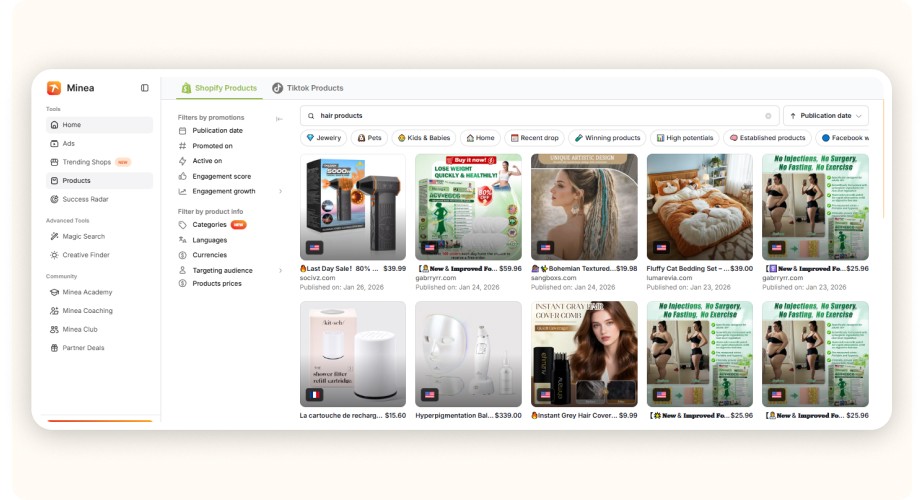
To find the best hair care products, use Minea’s features:
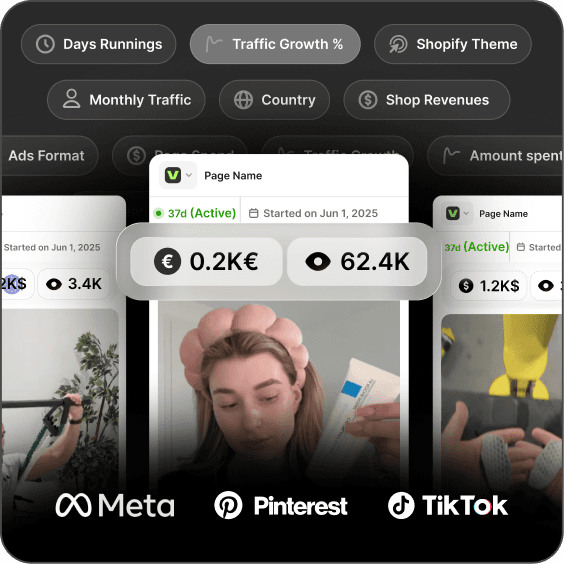
Ads Library: filter by platform (Meta/TikTok/Pinterest), country (US), date, and format to spot ads that last over time.
Success Radar: available on the premium plan, showing the top 100 detected products, updated regularly.
AI Magic Search: enter an intent (“hair care routine,” “edge control,” “lace wig”) to surface ads and angles.
Trending Shops: see which Shopify stores are performing and which creatives they use.
With Minea, pick a product that already shows signals, then adapt the offer. Avoid copying creatives blindly. Start from a validated hair product, tailor the angle to your audience and store, and prioritize maintenance products that get reordered and bundled easily. This approach works especially well for natural hair care products
Define Your Customer Promise in One Sentence
If you can’t explain your promise in one sentence, you’ll look like everyone else.
Example: “I help [audience] achieve [result] with [type of product], delivered fast, with clear specs and fair returns.”
Repeat this promise everywhere: headlines, product pages, FAQ, and return policy.
Build Your “Trust Stack” (4 Pillars)
In hair products dropshipping, just like in safety equipment, your offer must reassure quickly. Otherwise, you lose the sale or end up with a dispute. Build trust around four pillars:
Quality control: mention a “tested samples” approach (without overdoing it) and show visual proof.
Spec transparency: texture, length, density, lace, everything must be clear and consistent.
Realistic delivery: communicate understandable delivery windows, not vague promises.
Clear returns: with strict hygiene rules, especially for wigs and extensions.
These elements make your site credible and support a sustainable dropship hair products
Step 3: Set Up a Minimal Quality Control Process
Quality is not a “nice to have.” It’s your anti-dispute insurance. Without a minimum level of control, you might sell a decent product once, then ship a different batch the following week.
Run a Consistency Test With Two Samples
In hair, your biggest risk isn’t “the product” itself, it’s inconsistency. To reduce surprises, always test products. If possible, order the same item twice, ideally one to two weeks apart. Then compare the exact same criteria:
texture feel
shedding
tangling
scent
actual length
If you notice a clear difference between the two samples, that’s a strong signal you’ll face returns and disputes once you scale dropship hair products at volume.
Inspect Wigs and Hair Extensions Carefully
For wigs, check lace quality, knot finishing, density consistency, and cap size. These are the most common reasons customers claim “not as described.”
For extensions, inspect bundle consistency, tip thickness (avoid thin ends), and stitching/weft quality.
Document Your QC for Your Store
Your test photos and videos become real assets. Use them on product pages to reduce disputes. Add a simple, defensible note like “samples tested” and avoid claims you can’t prove. This step directly supports a safer dropship hair products strategy.
Step 4: Build Product Pages That Reduce Returns
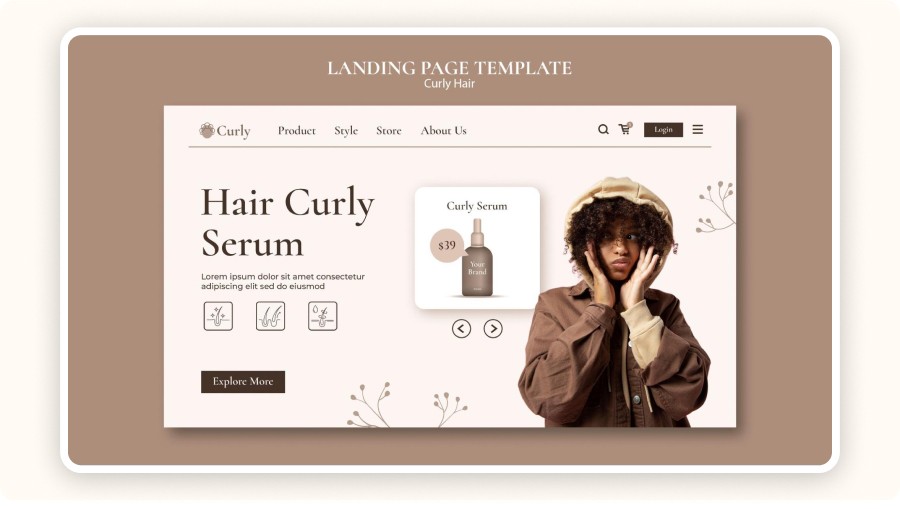
Your product page is your first anti-return barrier. If specs are unclear or poorly structured, you create order mistakes, and refunds.
Structure Pages for Hair Products
Whether you do hair dropshipping or beauty dropshipping, your page must be understandable in 10 seconds.
Include:
a specs table: length, texture, density, lace, cap size, weight
a “what’s included” section (bundle, closure, accessories)
real media proof: natural light photos, short videos, close-ups
Clearly state a delivery window (not a vague promise), then end with a concise returns summary and hygiene rules (conditions, lace not cut, seal intact). Add a per-product FAQ to address objections before purchase, this is critical to sustainable dropship hair products.
Write Useful Specs by Product Type
Be precise.
For extensions:
weight in grams
recommended number of bundles by length
clearly named textures (e.g., straight, body wave, kinky curly)
For wigs:
lace type
density percentage
cap size
explain what “pre-plucked” or “knots” really mean
For hair care items like shampoo and conditioner, start from the targeted need. Like with toys, give clear usage instructions. Present ingredients factually, no medical claims. This approach aligns well with the best dropship hair products pages.
Step 5: Define Hair-Specific Policies

To sell safely, you need policies tailored to hair products. Grey areas around hygiene, returns, or delivery cost you refunds and chargebacks.
Write a “Hair-Safe” Return Policy
A vague policy is expensive. Keep it simple: returns accepted only if the product is unused/unworn, lace not cut, and hygiene seal intact (if applicable). Add a clear timeframe (e.g., X days after delivery) and proof rules (photos required for defects, proof requested before approval).
The goal is to protect margins while staying fair, essential for long-term dropship private label hair products
Separate Defects From “Preference” Returns
You must clearly distinguish:
Defects (stitching issues, damaged lace, incorrect length): replacement or refund with proof
Preference (texture not liked, density “feels” different): exchange or partial refund only if hygiene rules are met
Without this separation, you refund unsellable products and weaken your dropship hair products model.
Reduce Chargebacks With Proactive Communication
Chargebacks often happen when customers don’t have enough information.
To prevent them, set up a clear tracking update schedule (order confirmed, shipped, in transit, delivered), whether you dropship hair products or sell any other category like watches, tech products. Prepare simple delay scripts and a “What to do if…” support page (package stuck, wrong address, partial delivery). That’s also how you demonstrate excellent customer service.

Step 6: Add Private Label Without Over-Investing
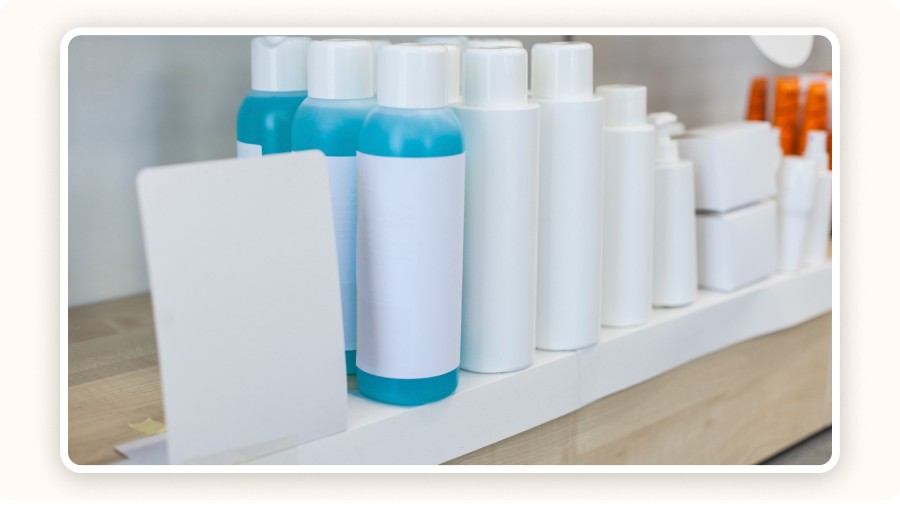
If you want to build your own hair brand, keep this in mind: private label isn’t “just a logo on a box.” It’s a clearer, more reassuring, and more memorable customer experience. To succeed, start light, validate demand, and invest only once returns and support stay stable. That’s the safest way to dropship hair products while preparing for brand growth.
How to Choose Your Private Label Level
Standard dropshipping: no customization. Fast, but not very differentiating.
Light branding: insert card, care instructions, branded invoice, blind shipping. Best effort-to-result ratio.
Full private label: custom packaging + consistent naming, best when winners are proven and you’re ready to dropship private label hair products seriously.
How Inserts Reduce Returns and Increase Reorders
Add care instructions (washing, storage, detangling), a “choose your length/density” card, and a QR code linking to your routine products and accessories. This reduces usage mistakes and increases repeat purchases, especially when you dropship hair care products.
Keep Brand Consistency Across Your Store
Set simple rules: logo, tone, naming conventions (e.g., “Body Wave 180% HD Lace”), and a consistent photo style. This turns a generic store into a real brand in hair products dropshipping.
Step 7: “Proof-First” Marketing (UGC) That Converts

Marketing doesn’t just drive sales, it prevents returns. The more your visuals show the real result (texture, application, outcome), the less customers imagine, and the more they buy with realistic expectations. That’s essential when you dropship hair products.
Copy/Paste UGC Brief for Hair
If you dropship hair care products and cleaning products, don’t sell with promises, sell with proof. Ask creators for:
the product in hand (texture/consistency),
the application (how much, how it’s used),
an honest before/after (shine, curl definition, frizz reduction).
Add a “day 1 / day 3” routine if possible. Ask them to confirm what was ordered (size, variants). No filters that change results. This makes dropshipping hair products feel safer and more credible.
Choose Creators (Stylists + Micro-Influencers)
Pick creators based on audience match, not follower count. Stylists who show install + maintenance outperform selfie-only creators, especially if you dropship black hair products.
Launch a Mini Funnel (Organic + Retargeting)
Post consistently (3–5 pieces/week). Retarget viewers to the product page with a “spec-first” angle: texture, density, lace, delivery, returns. This is how hair products dropshipping converts with trust.
Step 8: Price for Real Profit

Pricing right means building from your real all-in cost (product + shipping + fees). Add a returns buffer from day one. Otherwise, you win one order and lose the next, common when people start dropshipping hair products without a margin framework.
Calculate the Full Product Cost
Product cost + shipping + packaging + payment fees, then add discounts/coupons and a slice of support time. In this niche, one return can erase profit from multiple orders, especially with wigs and extensions.
Add a Returns/Chargebacks Buffer by Category
Wigs/extensions: higher buffer (spec errors, high expectations).
Hair care: lower buffer, because bundles and reorders stabilize the business when you dropship hair care products.
Structure Bundles Without Confusion
Name bundles clearly. List everything included. Keep variants simple. Clarity reduces tickets and keeps pricing stable, key for hair products dropshipping.
Step 9: Operate Like a Hair Brand

If you run fulfillment “by feel,” costs explode. Every delay becomes a dispute fast. Build predictable operations to dropship hair products without chaos.
Build a Simple Fulfillment SOP
Use the same flow for every order:
confirmation (variant recap),
processing (clear timeframe),
shipment (tracking sent ASAP),
post-delivery follow-up + support link.
Create Support Scripts That Prevent Refunds
Prepare copy/paste scripts:
wrong variant,
delay,
defect proof request.
Fast, consistent support reduces chargebacks in dropshipping hair products.
Track the Key Metrics
Track return rate, chargebacks, average delivery time, and “expectation mismatch” tickets (texture, density, lace, length). This is how you improve systems while you dropship hair products.
Step 10: Scale Without Breaking Quality

The fastest way to break a hair store is adding too many variants too early. More lengths, textures, and densities = more mistakes and tickets. If you want to scale hair products dropshipping, cut the worst variants and keep only what sells with low returns.
Improve Speed and Expectation Management
Tighten delivery windows. Improve tracking updates. Tools:
AfterShip (tracking page)
Klaviyo/Omnisend (status-based email/SMS)
Gorgias (macros + fast replies)
Then upgrade your FAQ: choosing length, recognizing texture, what to do upon delivery. Less ambiguity = fewer disputes when you dropship hair products.
Expand Carefully Into Hair Care
Once your base is stable, expand with one goal: reorders. Add routine-aligned maintenance products (hydration, detangling, protection, definition). That’s how you grow LTV without making your store harder to run when you dropship hair care products.


FAQ
Is hair products dropshipping profitable?
Yes, hair products dropshipping can be very profitable when you focus on clear product specs, quality control, and repeat-purchase items like hair care routines. The key is reducing returns and setting realistic expectations.
Can you dropship hair care products safely?
You can dropship hair care products safely by choosing reliable suppliers, testing samples, and avoiding medical claims. Clear usage instructions and transparent ingredient lists help build trust and reduce disputes.
What is the most profitable product to dropship?
There isn’t one single “most profitable” product forever. In general, the most profitable dropshipping products combine:
strong demand + clear problem/solution,
healthy margins,
low return risk,
easy-to-market visuals (UGC),
and upsell/bundle potential.
In hair, higher-margin options often include routine bundles, scalp serums/oils, and branded kits, especially when you move toward private label.
Can you dropship beauty products?
Yes, you can dropship beauty products, including hair care. Beauty performs well because it’s highly visual, repeat-buy, and routine-driven. The main watch-outs are product compliance (claims, ingredients), shipping constraints (liquids), and customer trust, so branding, packaging, and clear usage directions matter.
Similar articles