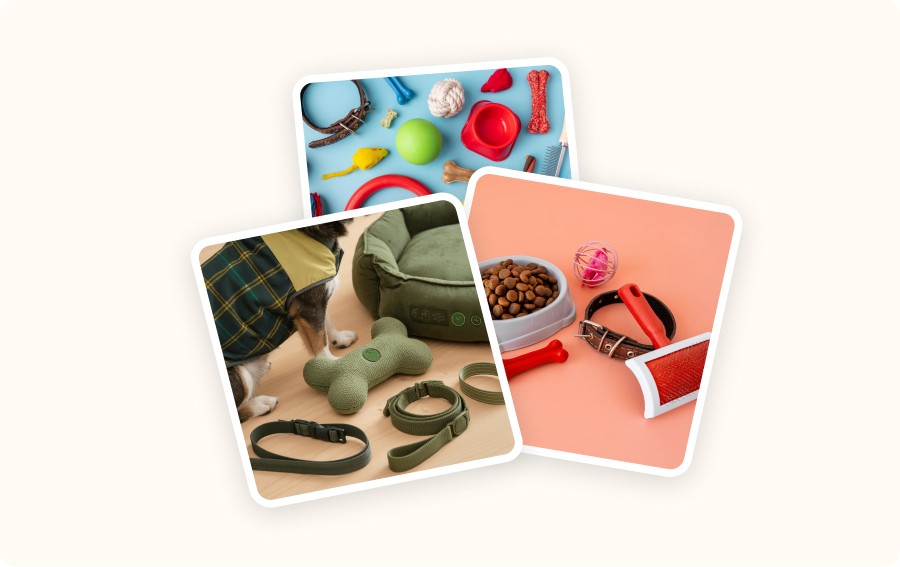
Pet Dropshipping Suppliers in 2026: Where to Source and What Actually Sells
Suppliers by Product Type
Author: Baptistin
Contents
The pet niche is one of the few where the economics genuinely favour a small seller. Owners buy repeatedly, they buy emotionally, and they tolerate a higher price for something that solves a daily annoyance.
That combination is rarer than it sounds — and it is also why the niche is crowded. This page covers where to source, which product categories carry margin, and the three that generate more returns than they are worth.
TL;DR
Repeat purchase is the reason to be here. Consumables and wear items beat one-off gadgets on lifetime value.
Emotional purchase supports margin. Owners spend on their animal in ways they do not spend on themselves.
Sizing is the main return driver. Anything fitted — harnesses, clothing, beds — needs a real size guide or it comes back.
Avoid ingestibles and health claims. Supplements and anything medical bring liability and advertising restrictions.
Delivery speed matters more here because a proportion of orders are urgent replacements.
Minea
Minea takes care of everything for you
Access winning ads, products, and stores in real time, get inspired, learn, then get started.

Why the pet niche works
Three structural advantages, and they compound.
Owners buy again. Food, treats, litter, toys that get destroyed, harnesses that wear out. A customer acquired once can be sold to for years, which changes what you can afford to spend on acquisition. In a niche of one-off purchases the whole margin has to come from the first sale.
Perceived value is high relative to cost. People reason differently about their animal than about themselves. A product that visibly improves an animal's comfort carries a price a comparable human product would not.
The problems are visible and demonstrable. Tangled leads, shedding, a dog that pulls, a cat that scratches furniture. Visible problems make short-form video work, because the before/after is obvious in a few seconds.
The counterpart: it is a well-known niche. Saturation is relative to who is running the ads — an established seller with a mature pixel, custom creative and a tight supply chain stays profitable on products that would sink a newcomer. Being early on a specific product matters more here than in a quiet niche.
What sells, and what to avoid

Categories that carry margin
Grooming tools — deshedding brushes, nail grinders, bath aids. Solve a recurring chore, demonstrate well on video, no sizing risk.
Training and walking gear — no-pull harnesses, long leads, treat pouches. Strong perceived value because they solve a behavioural problem. Sizing needs care.
Comfort and sleep — orthopaedic beds, calming products, car seat covers. Higher price points and good margins; watch bulk shipping costs.
Feeding accessories — slow feeders, elevated bowls, travel bottles. Cheap to ship, easy to bundle, genuine repeat potential.
Toys with a durability angle — the buying trigger is the last toy being destroyed in a day.
Three categories to avoid
Supplements and anything ingestible. Health claims face advertising restrictions, and liability for an animal's health is not a risk worth a dropshipping margin.
Anything medical or therapeutic. Same problem, plus regulatory exposure that varies by country.
Large bulky items — crates, big beds, furniture. Shipping cost and damage rate destroy the economics, and a single return can erase several sales.
The best pet dropshipping suppliers in 2026
General suppliers with strong pet catalogues
CJDropshipping — warehouses in several countries, sourcing on request, quality checks before dispatch. The usual choice once a product is validated and delivery time starts costing refunds.
EPROLO — no subscription, US and China warehousing, white-label on part of the catalogue. The free tier makes it a reasonable place to test before committing to fixed costs.
Spocket — US and EU suppliers with branded invoicing. Higher unit cost, materially shorter delivery.
AliExpress — still the cheapest way to test a pet product before committing. Delivery of two to four weeks is the trade-off, and in a niche with urgent replacement purchases that hurts more than elsewhere.
Specialist and regional options
BigBuy — European warehousing with a pet section. Days rather than weeks inside the EU.
Avasam — verified UK suppliers, domestic delivery, full automation.
A sourcing agent — once a pet product sells consistently, an agent usually beats any marketplace: better unit price at volume, improved packaging, quality control before dispatch, and variants a catalogue does not list. That last point matters in pet, where colour and size ranges drive conversion. See dropshipping agents for when the switch is worth it.
A fuller comparison across niches is in best dropshipping suppliers.
Sizing: the return driver nobody plans for
In pet, most returns come from fit rather than quality.
Breeds vary enormously, owners guess, and a harness that does not fit comes back. Three things reduce it materially:
Measurement instructions, not just a size chart. Tell the buyer where to measure — chest girth, neck, length — with a picture.
Breed examples per size. "Fits most beagles" converts better and returns less than "size M".
Order the product yourself and check the stated measurements are real. Supplier size charts are frequently optimistic.
That test order is the same discipline that applies to any supplier: you learn the true delivery time, the packaging and the product before a customer does.
Minea
Reach $1,000 per day or get your money back

Finding pet products before they saturate
Marketplace best-seller lists show what already sold — useful for confirmation, late for discovery. Ad platforms show what is being pushed right now, because advertisers commit budget weeks before demand appears in search data.
That gap is the whole argument for reading ad data: an ad spy surfaces a pet product while spend is ramping rather than after it peaks. I go through the filter sequence in this product-research video (French), and I am explicit about the limit in the same series: searching with one saved filter set returns the same products to everyone using it.
The criteria a pet product still has to clear — perceived value, margin, sourcing — are in winning dropshipping products.
FAQ
Is pet dropshipping profitable in 2026?
Yes, and structurally more so than most niches because of repeat purchase. The constraint is competition on well-known products, not demand. Margin comes from finding a specific problem rather than a broad category.
What pet products sell best for dropshipping?
Grooming tools, no-pull walking gear, comfort and sleep products, and feeding accessories. They combine a visible problem, demonstrable results and repeat or replacement purchase.
Which pet products should I avoid?
Supplements and anything ingestible (liability plus advertising restrictions), medical or therapeutic products, and large bulky items where shipping and damage destroy the economics.
Who are the best pet dropshipping suppliers?
CJDropshipping and EPROLO for general catalogues, Spocket and BigBuy for faster Western delivery, Avasam for the UK. A sourcing agent becomes the better option once a product sells consistently.
How do I reduce returns on pet products?
Mostly by fixing sizing: give measurement instructions with a diagram, add breed examples per size, and verify the supplier's chart yourself with a test order before listing.
Do I need a pet-specialist supplier?
No. General suppliers carry deep pet catalogues, and specialising matters less than delivery speed and product quality. A specialist becomes useful when you need variants a general catalogue does not stock.
The pet niche is one of the few where the economics genuinely favour a small seller. Owners buy repeatedly, they buy emotionally, and they tolerate a higher price for something that solves a daily annoyance.
That combination is rarer than it sounds — and it is also why the niche is crowded. This page covers where to source, which product categories carry margin, and the three that generate more returns than they are worth.
TL;DR
Repeat purchase is the reason to be here. Consumables and wear items beat one-off gadgets on lifetime value.
Emotional purchase supports margin. Owners spend on their animal in ways they do not spend on themselves.
Sizing is the main return driver. Anything fitted — harnesses, clothing, beds — needs a real size guide or it comes back.
Avoid ingestibles and health claims. Supplements and anything medical bring liability and advertising restrictions.
Delivery speed matters more here because a proportion of orders are urgent replacements.
Minea
Minea takes care of everything for you
Access winning ads, products, and stores in real time, get inspired, learn, then get started.
Why the pet niche works
Three structural advantages, and they compound.
Owners buy again. Food, treats, litter, toys that get destroyed, harnesses that wear out. A customer acquired once can be sold to for years, which changes what you can afford to spend on acquisition. In a niche of one-off purchases the whole margin has to come from the first sale.
Perceived value is high relative to cost. People reason differently about their animal than about themselves. A product that visibly improves an animal's comfort carries a price a comparable human product would not.
The problems are visible and demonstrable. Tangled leads, shedding, a dog that pulls, a cat that scratches furniture. Visible problems make short-form video work, because the before/after is obvious in a few seconds.
The counterpart: it is a well-known niche. Saturation is relative to who is running the ads — an established seller with a mature pixel, custom creative and a tight supply chain stays profitable on products that would sink a newcomer. Being early on a specific product matters more here than in a quiet niche.
What sells, and what to avoid
Categories that carry margin
Grooming tools — deshedding brushes, nail grinders, bath aids. Solve a recurring chore, demonstrate well on video, no sizing risk.
Training and walking gear — no-pull harnesses, long leads, treat pouches. Strong perceived value because they solve a behavioural problem. Sizing needs care.
Comfort and sleep — orthopaedic beds, calming products, car seat covers. Higher price points and good margins; watch bulk shipping costs.
Feeding accessories — slow feeders, elevated bowls, travel bottles. Cheap to ship, easy to bundle, genuine repeat potential.
Toys with a durability angle — the buying trigger is the last toy being destroyed in a day.
Three categories to avoid
Supplements and anything ingestible. Health claims face advertising restrictions, and liability for an animal's health is not a risk worth a dropshipping margin.
Anything medical or therapeutic. Same problem, plus regulatory exposure that varies by country.
Large bulky items — crates, big beds, furniture. Shipping cost and damage rate destroy the economics, and a single return can erase several sales.
The best pet dropshipping suppliers in 2026
General suppliers with strong pet catalogues
CJDropshipping — warehouses in several countries, sourcing on request, quality checks before dispatch. The usual choice once a product is validated and delivery time starts costing refunds.
EPROLO — no subscription, US and China warehousing, white-label on part of the catalogue. The free tier makes it a reasonable place to test before committing to fixed costs.
Spocket — US and EU suppliers with branded invoicing. Higher unit cost, materially shorter delivery.
AliExpress — still the cheapest way to test a pet product before committing. Delivery of two to four weeks is the trade-off, and in a niche with urgent replacement purchases that hurts more than elsewhere.
Specialist and regional options
BigBuy — European warehousing with a pet section. Days rather than weeks inside the EU.
Avasam — verified UK suppliers, domestic delivery, full automation.
A sourcing agent — once a pet product sells consistently, an agent usually beats any marketplace: better unit price at volume, improved packaging, quality control before dispatch, and variants a catalogue does not list. That last point matters in pet, where colour and size ranges drive conversion. See dropshipping agents for when the switch is worth it.
A fuller comparison across niches is in best dropshipping suppliers.
Sizing: the return driver nobody plans for
In pet, most returns come from fit rather than quality.
Breeds vary enormously, owners guess, and a harness that does not fit comes back. Three things reduce it materially:
Measurement instructions, not just a size chart. Tell the buyer where to measure — chest girth, neck, length — with a picture.
Breed examples per size. "Fits most beagles" converts better and returns less than "size M".
Order the product yourself and check the stated measurements are real. Supplier size charts are frequently optimistic.
That test order is the same discipline that applies to any supplier: you learn the true delivery time, the packaging and the product before a customer does.
Minea
Reach $1,000 per day or get your money back
Finding pet products before they saturate
Marketplace best-seller lists show what already sold — useful for confirmation, late for discovery. Ad platforms show what is being pushed right now, because advertisers commit budget weeks before demand appears in search data.
That gap is the whole argument for reading ad data: an ad spy surfaces a pet product while spend is ramping rather than after it peaks. I go through the filter sequence in this product-research video (French), and I am explicit about the limit in the same series: searching with one saved filter set returns the same products to everyone using it.
The criteria a pet product still has to clear — perceived value, margin, sourcing — are in winning dropshipping products.
FAQ
Is pet dropshipping profitable in 2026?
Yes, and structurally more so than most niches because of repeat purchase. The constraint is competition on well-known products, not demand. Margin comes from finding a specific problem rather than a broad category.
What pet products sell best for dropshipping?
Grooming tools, no-pull walking gear, comfort and sleep products, and feeding accessories. They combine a visible problem, demonstrable results and repeat or replacement purchase.
Which pet products should I avoid?
Supplements and anything ingestible (liability plus advertising restrictions), medical or therapeutic products, and large bulky items where shipping and damage destroy the economics.
Who are the best pet dropshipping suppliers?
CJDropshipping and EPROLO for general catalogues, Spocket and BigBuy for faster Western delivery, Avasam for the UK. A sourcing agent becomes the better option once a product sells consistently.
How do I reduce returns on pet products?
Mostly by fixing sizing: give measurement instructions with a diagram, add breed examples per size, and verify the supplier's chart yourself with a test order before listing.
Do I need a pet-specialist supplier?
No. General suppliers carry deep pet catalogues, and specialising matters less than delivery speed and product quality. A specialist becomes useful when you need variants a general catalogue does not stock.
The pet niche is one of the few where the economics genuinely favour a small seller. Owners buy repeatedly, they buy emotionally, and they tolerate a higher price for something that solves a daily annoyance.
That combination is rarer than it sounds — and it is also why the niche is crowded. This page covers where to source, which product categories carry margin, and the three that generate more returns than they are worth.
TL;DR
Repeat purchase is the reason to be here. Consumables and wear items beat one-off gadgets on lifetime value.
Emotional purchase supports margin. Owners spend on their animal in ways they do not spend on themselves.
Sizing is the main return driver. Anything fitted — harnesses, clothing, beds — needs a real size guide or it comes back.
Avoid ingestibles and health claims. Supplements and anything medical bring liability and advertising restrictions.
Delivery speed matters more here because a proportion of orders are urgent replacements.
Minea
Minea takes care of everything for you
Access winning ads, products, and stores in real time, get inspired, learn, then get started.
Why the pet niche works
Three structural advantages, and they compound.
Owners buy again. Food, treats, litter, toys that get destroyed, harnesses that wear out. A customer acquired once can be sold to for years, which changes what you can afford to spend on acquisition. In a niche of one-off purchases the whole margin has to come from the first sale.
Perceived value is high relative to cost. People reason differently about their animal than about themselves. A product that visibly improves an animal's comfort carries a price a comparable human product would not.
The problems are visible and demonstrable. Tangled leads, shedding, a dog that pulls, a cat that scratches furniture. Visible problems make short-form video work, because the before/after is obvious in a few seconds.
The counterpart: it is a well-known niche. Saturation is relative to who is running the ads — an established seller with a mature pixel, custom creative and a tight supply chain stays profitable on products that would sink a newcomer. Being early on a specific product matters more here than in a quiet niche.
What sells, and what to avoid
Categories that carry margin
Grooming tools — deshedding brushes, nail grinders, bath aids. Solve a recurring chore, demonstrate well on video, no sizing risk.
Training and walking gear — no-pull harnesses, long leads, treat pouches. Strong perceived value because they solve a behavioural problem. Sizing needs care.
Comfort and sleep — orthopaedic beds, calming products, car seat covers. Higher price points and good margins; watch bulk shipping costs.
Feeding accessories — slow feeders, elevated bowls, travel bottles. Cheap to ship, easy to bundle, genuine repeat potential.
Toys with a durability angle — the buying trigger is the last toy being destroyed in a day.
Three categories to avoid
Supplements and anything ingestible. Health claims face advertising restrictions, and liability for an animal's health is not a risk worth a dropshipping margin.
Anything medical or therapeutic. Same problem, plus regulatory exposure that varies by country.
Large bulky items — crates, big beds, furniture. Shipping cost and damage rate destroy the economics, and a single return can erase several sales.
The best pet dropshipping suppliers in 2026
General suppliers with strong pet catalogues
CJDropshipping — warehouses in several countries, sourcing on request, quality checks before dispatch. The usual choice once a product is validated and delivery time starts costing refunds.
EPROLO — no subscription, US and China warehousing, white-label on part of the catalogue. The free tier makes it a reasonable place to test before committing to fixed costs.
Spocket — US and EU suppliers with branded invoicing. Higher unit cost, materially shorter delivery.
AliExpress — still the cheapest way to test a pet product before committing. Delivery of two to four weeks is the trade-off, and in a niche with urgent replacement purchases that hurts more than elsewhere.
Specialist and regional options
BigBuy — European warehousing with a pet section. Days rather than weeks inside the EU.
Avasam — verified UK suppliers, domestic delivery, full automation.
A sourcing agent — once a pet product sells consistently, an agent usually beats any marketplace: better unit price at volume, improved packaging, quality control before dispatch, and variants a catalogue does not list. That last point matters in pet, where colour and size ranges drive conversion. See dropshipping agents for when the switch is worth it.
A fuller comparison across niches is in best dropshipping suppliers.
Sizing: the return driver nobody plans for
In pet, most returns come from fit rather than quality.
Breeds vary enormously, owners guess, and a harness that does not fit comes back. Three things reduce it materially:
Measurement instructions, not just a size chart. Tell the buyer where to measure — chest girth, neck, length — with a picture.
Breed examples per size. "Fits most beagles" converts better and returns less than "size M".
Order the product yourself and check the stated measurements are real. Supplier size charts are frequently optimistic.
That test order is the same discipline that applies to any supplier: you learn the true delivery time, the packaging and the product before a customer does.
Minea
Reach $1,000 per day or get your money back
Finding pet products before they saturate
Marketplace best-seller lists show what already sold — useful for confirmation, late for discovery. Ad platforms show what is being pushed right now, because advertisers commit budget weeks before demand appears in search data.
That gap is the whole argument for reading ad data: an ad spy surfaces a pet product while spend is ramping rather than after it peaks. I go through the filter sequence in this product-research video (French), and I am explicit about the limit in the same series: searching with one saved filter set returns the same products to everyone using it.
The criteria a pet product still has to clear — perceived value, margin, sourcing — are in winning dropshipping products.
FAQ
Is pet dropshipping profitable in 2026?
Yes, and structurally more so than most niches because of repeat purchase. The constraint is competition on well-known products, not demand. Margin comes from finding a specific problem rather than a broad category.
What pet products sell best for dropshipping?
Grooming tools, no-pull walking gear, comfort and sleep products, and feeding accessories. They combine a visible problem, demonstrable results and repeat or replacement purchase.
Which pet products should I avoid?
Supplements and anything ingestible (liability plus advertising restrictions), medical or therapeutic products, and large bulky items where shipping and damage destroy the economics.
Who are the best pet dropshipping suppliers?
CJDropshipping and EPROLO for general catalogues, Spocket and BigBuy for faster Western delivery, Avasam for the UK. A sourcing agent becomes the better option once a product sells consistently.
How do I reduce returns on pet products?
Mostly by fixing sizing: give measurement instructions with a diagram, add breed examples per size, and verify the supplier's chart yourself with a test order before listing.
Do I need a pet-specialist supplier?
No. General suppliers carry deep pet catalogues, and specialising matters less than delivery speed and product quality. A specialist becomes useful when you need variants a general catalogue does not stock.
Similar articles






Our Free Adspys

Find winning products on our Tiktok adspy today!
Find winning products on our Facebook adspy today!
Find winning products on our Tiktok adspy today!
Find winning products on our Facebook adspy today!
Find winning products on our Tiktok adspy today!
Find winning products on our Facebook adspy today!
Find winning products on our Tiktok adspy today!
Find winning products on our Facebook adspy today!
1 winning product everyday.
Follow us!






Find out more
Read more
Minea © 2026
Find out more
Read more
Minea © 2026
Find out more
Read more
Minea © 2026
Find out more
Read more
Minea © 2026
Find out more
Read more
Minea © 2026
Find out more
Read more
Minea © 2026