How to Find Your Competitors on Instagram for Dropshipping (2026)
Find Competitors Websites
Author: Prince
Contents
You're running a dropshipping store and watching your Instagram engagement plateau while someone else in your niche is racking up 10K+ likes per post. You need to know what they're doing differently, what products they're pushing, and what angles are converting.
This guide shows you how to identify and analyze your competitors in Instagram in under 30 minutes using free tools and Minea's AdSpy. You'll walk away with a competitor tracking system that reveals their winning products, creative angles, and engagement patterns.
What You'll Achieve: A list of 5-10 direct competitors ranked by threat level; Access to their top-performing content and ad creatives; A tracking system you can check weekly in 10 minutes; Insights into their product launches and marketing angles; Time: 30 minutes for initial setup, 10 minutes weekly; Cost: Free tools + Minea Starter ($49/mo recommended); Skill level: Beginner
Before You Start: What You Need
Identify your niche, product category, and target market first. Without knowing who you serve, you can't identify who's competing for the same audience.
Your competitor research setup requires:
Instagram account with business profile recommended for analytics access
Minea account with AdSpy access at Starter plan level for $49 monthly
Spreadsheet tool like Google Sheets or Excel
30 minutes of focused time
Clear definition of your niche such as "pet accessories for dog owners" rather than "general dropshipping"
Optional but helpful: Facebook Ad Library account for free cross-platform verification.
Step 1: Define Your Competitive Landscape

Clarify exactly what "competitor" means for your store. A general pet store isn't your competitor if you sell only dog training collars. Precision here determines the quality of every insight that follows.
Time: 5 minutes
Cost: Free
Tool: Spreadsheet
Write down three categories:
Direct competitors: Stores selling the exact same product category to the same audience.
Indirect competitors: Stores serving the same audience with different products, competing for attention and budget.
Aspirational competitors: Larger accounts you want to emulate for their strategy and branding.
Common mistake: Treating every dropshipping store as a competitor. Narrow your scope to accounts that would show up in the same Instagram Explore feed as your ideal customer.
Step 2: Use Instagram Search to Find Direct Competitors
Instagram's native search reveals active competitors faster than Google. Hashtags show you who's already winning attention in your niche.
Time: 10 minutes
Cost: Free
Tool: Instagram app or web
Open Instagram and search for your primary product keywords plus "shop" or "store":
Search: "posture corrector shop"
Search: "dog training collar store"
Search: "led face mask official"
Switch to the "Accounts" tab. Scroll through the first 20-30 results. You're looking for:
Business accounts (not personal influencers)
Recent posts (within the last 7 days)
Engagement rates above 2 percent calculated as likes plus comments divided by followers times 100
Product-focused content rather than pure lifestyle posts
Follower counts between 1,000 and 100,000 representing your realistic competitive range
Add 5-10 accounts to your spreadsheet with:
Username
Follower count
Avg engagement per post (estimate from last 3 posts)
Primary product(s)
Content style (UGC, lifestyle, educational, meme-based)
Now search relevant hashtags. For dropshipping, try:
#[yourniche]dropshipping (e.g., #beautydropshipping)
#[yourproduct]sale
#shopsmallbusiness + [niche]
Click "Recent" instead of "Top" to find active competitors launching products now, not viral posts from 2024. Check the accounts posting under these hashtags three or more times per week. Those represent active stores rather than one-off influencers.
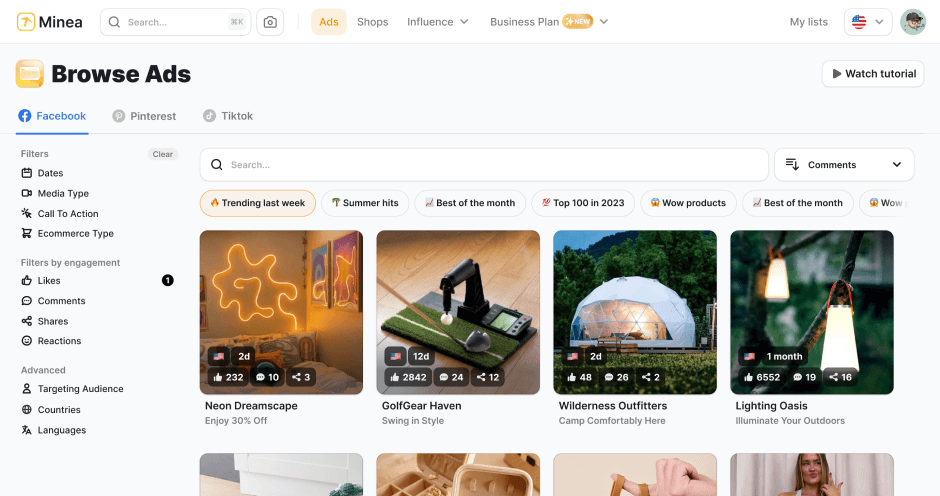
Minea Insight: Before diving deeper into any competitor, validate they're running paid ads. Open Minea AdSpy, search their brand name or product, and filter by Instagram placements. If they have 5+ active creatives, they're a serious player worth tracking.
Common mistake: Focusing only on accounts with huge follower counts. A store with 8,000 followers and 500 likes per post at 6.25 percent engagement is more valuable to study than a 50,000-follower account getting 400 likes at 0.8 percent engagement. The first one has an engaged audience while the second likely bought followers or lost relevance.
Step 3: Track Their Content Strategy with Manual Audit
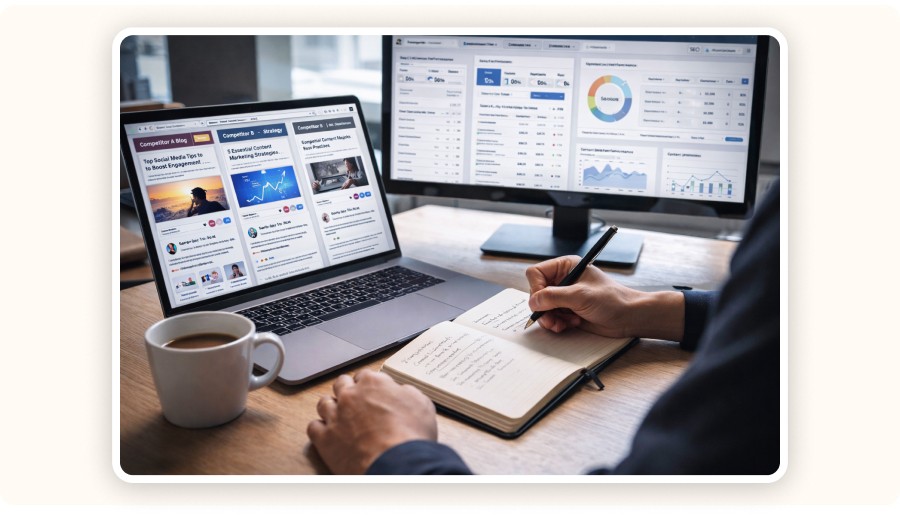
Content patterns reveal what's converting. Your competitors post what sells, not what they personally enjoy. Reverse-engineer their editorial calendar.
Time: 10 minutes per competitor, start with top 3
Cost: Free
Tool: Instagram plus spreadsheet
Pick your top 3 competitors from Step 2. For each one:
Visit their profile and scroll through their last 20 posts. Note post frequency, content formats like product showcases or UGC, hook patterns in captions, engagement spikes worth screenshotting, and product launch signals such as "NEW" tags or carousel posts.
Log this in your spreadsheet:
Competitor | Post Frequency | Top Format | Avg Engagement | Best Post Likes | Launch Pattern Observed |
|---|---|---|---|---|---|
@rival_store | 5 per week | UGC videos | 450 likes | 1,200 testimonial | Tuesday launches with 3-post burst |
This reveals their content calendar rhythm. If they launch products every Tuesday with a testimonial video + feature carousel + discount story, you've identified a repeatable pattern.
Step 4: Analyze Their Paid Ad Strategy with Minea AdSpy
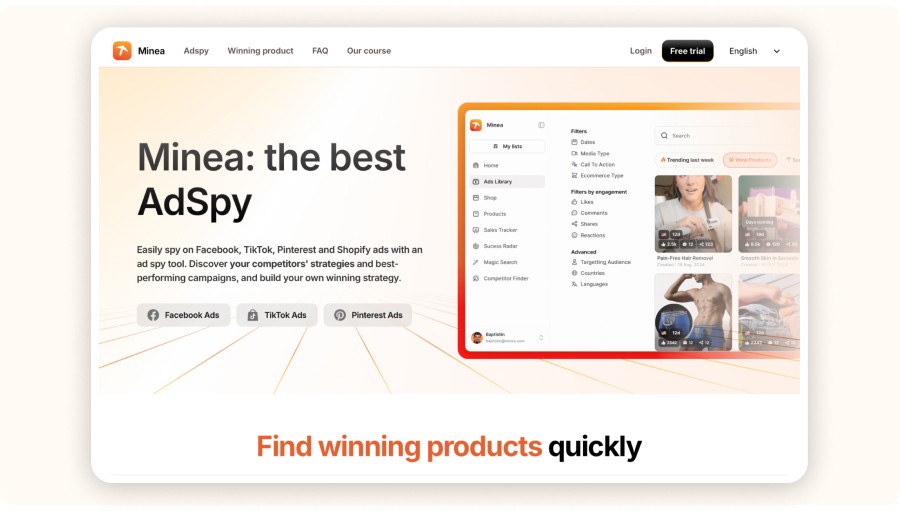
Organic content builds audience. Paid ads generate revenue. Your competitors' ad creatives reveal what's actually making them money, not just engagement.
Time: 15 minutes
Cost: Minea Starter plan ($49/mo)
Tool: Minea AdSpy
Log into Minea, navigate to AdSpy, and filter:
Platform: Select Instagram or "All" to include Facebook placements
Search: Enter competitor brand name or their primary product keyword
Date: Last 30 days
Engagement: Select All without filtering by performance initially
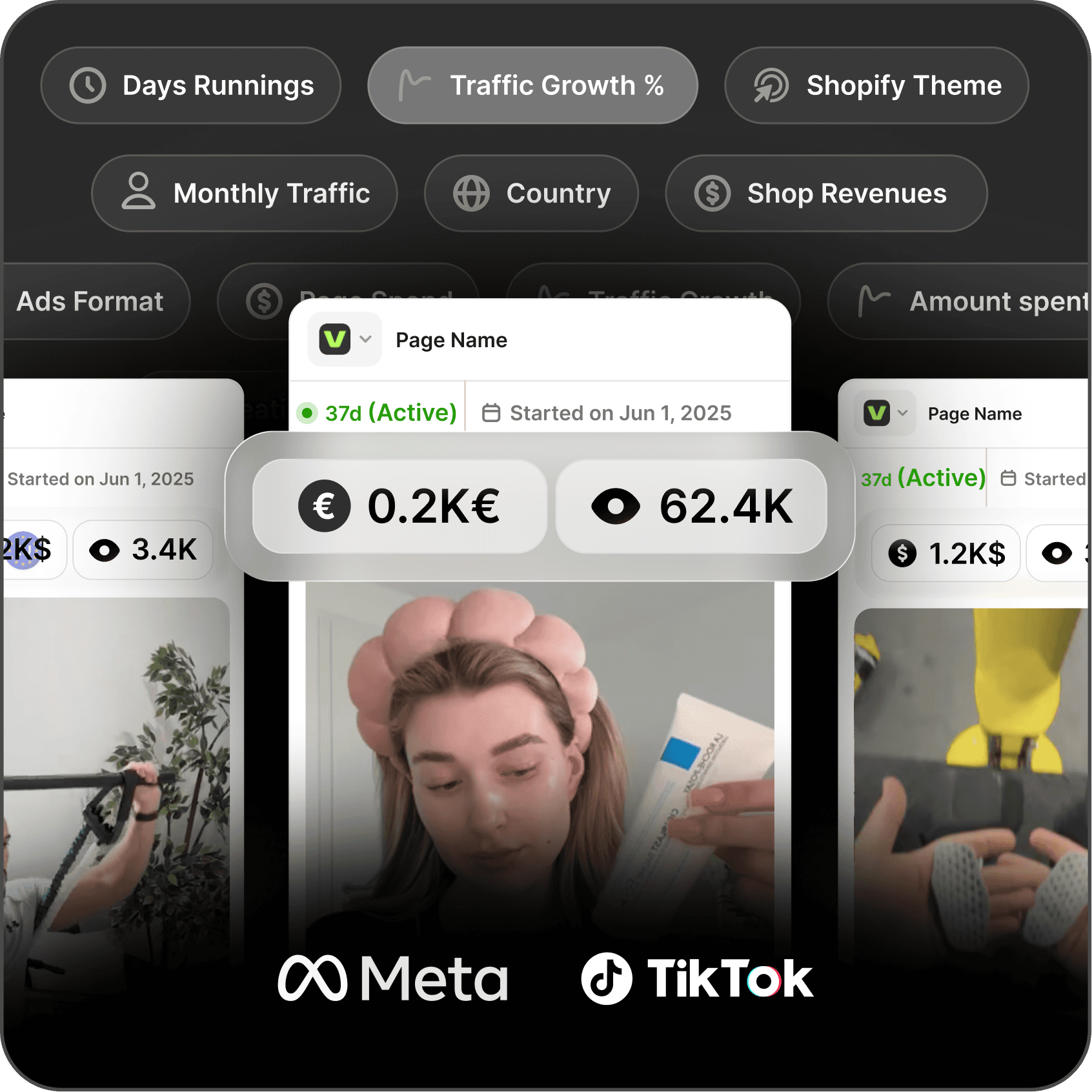
For each competitor, identify creative angles like problem-awareness, social proof, curiosity, or urgency. Note media format, ad volume, and engagement velocity. High volume signals scaling or testing; low volume running 30-plus days signals a proven winner.
Click into their top 3 performing ads. Read the full captions, note the CTA like "Shop now," "Learn more," or "Limited stock," and screenshot the first 3 seconds of any video to capture the hook that stopped the scroll.
Minea Insight: Use Minea's "Duplications" filter to see how many other stores copied your competitor's product. If a product shows 40+ duplications, the market is saturated. If it shows under 10, your competitor might be early on a rising trend. That's your window to enter.
Common mistake: Assuming high engagement means high revenue. An ad with 5,000 likes might be entertaining but not converting. Look for ads that run for 30-plus days with steady spend. Meta doesn't keep funding ads that don't convert, so longevity equals profitability.
Step 5: Monitor Engagement Patterns and Audience Behavior
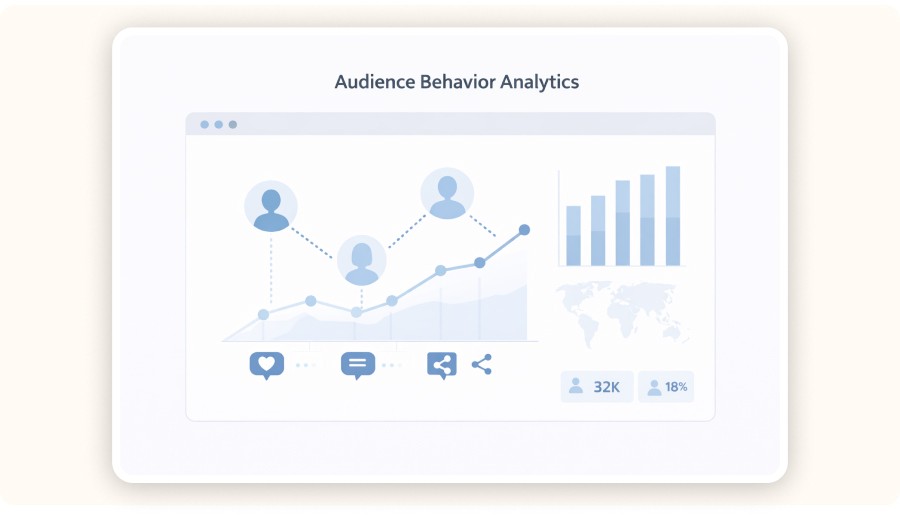
Who's engaging with your competitors? That's your lookalike audience. Their comment sections reveal buying objections, desired features, and unmet needs.
Time: 10 minutes per competitor
Cost: Free
Tool: Instagram
Open their 5 most-engaged posts from the last 30 days. Read the top 20-30 comments mining for buying signals like "Where can I buy this?", objections like "Shipping takes too long," and feature requests like "Do you have this in blue?"
These reveal pre-qualified prospects, friction points you can solve, and unmet demand gaps. Check who's engaging to build your ideal customer profile and Instagram targeting cluster.
Step 6: Set Up a Weekly Tracking System
Competitor research isn't one-and-done. Markets shift weekly. Your tracking system needs to surface changes in under 10 minutes per week.
Time: 5 minutes setup, 10 minutes weekly maintenance
Cost: Free
Tool: Spreadsheet + Instagram notifications
Create a tracking spreadsheet logging date, competitor, new products, new ad creatives, and engagement changes.
Every Monday: visit each competitor's profile for new posts, check Minea AdSpy for new creatives, note follower and engagement changes above 20 percent, and update your spreadsheet. Total: 10 minutes for 3 competitors.
Set Instagram notifications for your top 2 competitors by visiting their profile, tapping the bell icon, and selecting "All Posts." You'll get notified when they post, letting you check once daily or batch notifications for your Monday review.
What to flag immediately:
Sudden follower spike of 500-plus in a week likely means they ran a giveaway or went viral. Check what content caused it.
New product with 3 or more ad creatives in 48 hours means they're betting hard. Test the same product if your supplier has it.
Engagement drop by 50 percent or more signals algorithm change, audience fatigue, or fake followers decaying. Don't copy their recent strategy.
Common Mistakes (and How to Fix Them)

Most dropshippers track competitors once, get overwhelmed, and quit. Or they copy blindly without understanding why something worked. Both fail.
Tracking too many competitors: Start with 3 direct competitors. Add more only after maintaining a monthly tracking rhythm for 60 days.
Copying content without context: Their audience expects memes; yours expects education. Copy the underlying strategy, not literal content. Try "5 myths about [product]" instead of memes.
Ignoring small competitors: Track by engagement rate and ad spend in Minea rather than vanity metrics. A 3,000-follower account with 8 percent engagement and 20 ad creatives outperforms a 50,000-follower account coasting on old followers.

Expected Results + Timeline
Competitor intelligence is a multiplier, not magic. You'll see faster wins in month 2-3 once you've identified patterns across multiple product cycles.
Timeframe | What to Expect | Benchmark |
|---|---|---|
Week 1 | Competitor list built, first tracking entry logged | 3-5 competitors tracked |
Week 2-4 | Patterns emerge: launch days, content formats, ad angles | 2-3 actionable insights captured |
Month 2 | You launch a product inspired by competitor gap analysis | 1 product tested with differentiated angle |
Month 3-6 | Weekly tracking becomes 10-minute habit, 30-40% of your product ideas sourced from competitor intel | 3-5 products launched, 1-2 winners identified |
Competitor research cuts your testing time in half by showing what's validated. If your competitor spent $2,000 testing 10 products and found 2 winners, you skipped 8 dead ends. The ROI comes from avoiding bad bets.
Verdict
Learning how to find competitors on Instagram for dropshipping gives you a powerful advantage when identifying winning products and marketing angles. It takes 30 minutes using native search and Minea AdSpy. The value isn't in the initial list, it's in the weekly tracking system that surfaces product trends, creative angles, and audience gaps before your niche gets saturated.
Start with 3 direct competitors, log their content and ad patterns weekly, and use Minea to verify what's actually converting into ad spend. Your competitive edge comes from acting faster, not just watching.
For deeper competitor product tracking across Facebook, TikTok, and Pinterest ads, explore Minea's full AdSpy dashboard at minea.com.
FAQ
What is the 5 3 1 rule on Instagram?
The 5-3-1 rule is a content strategy: for every 9 posts, share 5 posts from others as curated content, 3 posts of your own as product or brand content, and 1 promotional post for direct sales. For dropshipping stores, this ratio rarely works because curated content doesn't drive transactions. Most successful dropshipping accounts flip it: 5 product showcases, 3 educational or UGC posts, and 1 pure entertainment or community engagement post.
Do likes increase reach on Instagram?
Likes contribute to reach, but they're not the primary factor. Instagram's 2025-2026 algorithm prioritizes "sends" meaning shares via DM and saves over likes. A post with 100 likes and 20 sends will reach more accounts than a post with 500 likes and 2 sends. For dropshipping content, aim for saves by providing valuable info people want to reference and sends through share-worthy hooks or deals.
How can I find my competitors?
Search Instagram for your niche plus "shop" or "store," check hashtags like your product name plus "sale," and use Minea AdSpy to filter ads by product keywords or niche. Focus on accounts with 1,000-100,000 followers, recent posts from the last 7 days, and engagement rates above 2 percent. Cross-reference with Facebook Ad Library to confirm they're running paid campaigns. Competitors running ads consistently are the ones converting rather than just collecting followers.
What is the 3 second rule on Instagram?
The 3-second rule refers to video hooks: you have 3 seconds to stop the scroll before a user swipes away. On Instagram Reels and Stories, this translates to leading with the payoff like the result, the shock, or the before-and-after rather than slow intros. For dropshipping ads, show the product solving the problem in the first 3 seconds. Don't waste time on logos, text intros, or greetings. Start with the transformation or the wow moment.
Published by Minea
This article was created by Minea's content team to help dropshipping entrepreneurs research competitors and identify winning products faster. For tools, trends, and strategies to scale your store, visit minea.com
Similar articles