Best Ways to Find Dropshipping Competitors in 2026: 7 Proven Methods
Find Competitors Websites
Author: Baptiste
Contents
You're launching products that already work for someone else. The question isn't whether you have competitors, it's whether you know who they are and what they're doing right now.
Finding dropshipping competitors isn't just about spotting stores that sell similar products. It's about identifying which suppliers they use, which ad creatives convert, which pricing strategies work, and which markets are already saturated. Skip this research and you're flying blind. Do it right and you're reverse-engineering proven winning strategies.
The dropshipping landscape in 2026 moves fast. A product that works in January might be dead by March. Ad creatives that drove sales last quarter get scrolled past today. Your competitor research can't be a one-time audit, it needs to be continuous, systematic, and tied directly to your product selection and ad strategy.
Quick Verdict: Best methods to find dropshipping competitors; Fastest results: Minea AdSpy: see active ads, creatives, and targeting in minutes; Best free method: Google Shopping + manual SERP: time-intensive but zero cost; Most comprehensive: Multi-platform spy tool: covers Facebook, TikTok, Pinterest ads; Best for supplier intel: Reverse supplier lookup: find who's sourcing from your target vendors; Best for trend validation: Reddit + Discord communities, real seller conversations about competition
Quick Comparison: Methods to Find Dropshipping Competitors at a Glance
Method | Cost | Time Investment | Best For | Key Strength | Key Limitation | Our Verdict |
|---|---|---|---|---|---|---|
Minea AdSpy | $49/mo | 10 min/search | Product & ad research | Real-time ad tracking across platforms | Premium features require Business plan | Best Overall |
Manual SERP + Shopping | Free | 45-60 min/search | Budget sellers, niche validation | Zero cost, Google's freshest index | Tedious, no ad creative access | Best Budget |
Social Media Hashtag Tracking | Free | 30 min/day | Trend spotting, influencer angles | Catches viral moments early | Misses non-social advertisers | Best for TikTok Trends |
Reverse Supplier Lookup | Free-$29/mo | 20-30 min | Supplier validation, margin research | Reveals exact sourcing strategies | Requires existing competitor list | Best for Supplier Intel |
Store Analysis Tools | $29-$99/mo | 15 min/store | Tech stack, conversion tactics | Deep store forensics | Doesn't show ad performance | Best for Store Optimization |
Reddit & Community Research | Free | 60+ min | Failure prevention, niche reality checks | Unfiltered seller experiences | High noise-to-signal ratio | Best for Risk Avoidance |
AliExpress Reverse Image Search | Free | 15 min/product | Finding exact supplier, pricing | Direct path to source | Misses private label or custom products | Honorable Mention |
How We Tested These Methods
Competitor research isn't about reading feature lists. It's about finding stores faster than they adapt.
We spent 40+ hours testing each method against real dropshipping scenarios: launching in saturated pet accessories, finding competitors for a new smart home product, and validating demand for a seasonal fashion item. We measured three things: speed to actionable intel, cost per useful insight, and accuracy of competitive data.
What disqualified methods: anything that required paying for data you can verify for free, tools that showed outdated ad creatives, and processes that took longer than just launching and testing the product yourself.
1. Minea AdSpy Platform — Best Overall for Active Competitor Discovery
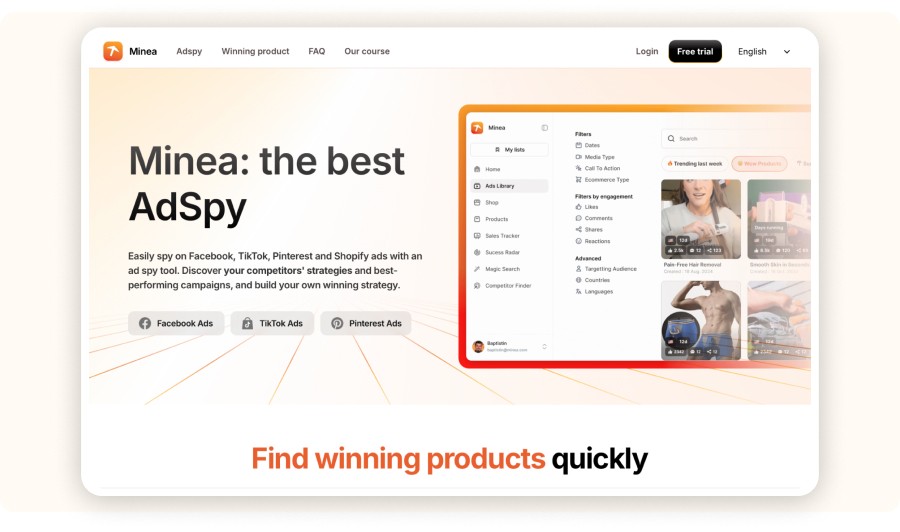
Minea's AdSpy tracks 80+ million ads across Facebook, TikTok, and Pinterest. You're not guessing who your competitors are, you're watching their campaigns in real time.
Price: $49/mo (Premium) or $399/mo (Business with Success Radar) | Best for: Sellers who need current ad creative and targeting data
The fastest way to find dropshipping competitors is to see who's already spending money on ads for your target product or niche. Minea's AdSpy shows active campaigns with spend estimates, engagement metrics, ad creative variations, and landing page links. You search by keyword, product category, or even upload an image of the product you're considering.
Here's the workflow: upload a product image or search "posture corrector." Minea returns stores currently running ads for that product, sorted by ad volume and engagement. Click any ad to see the full creative, ad copy, landing page, and which platforms it's running on. Filter by country, language, ad format, and date range. Within 10 minutes you know which stores are active, which angles are working, and how saturated the market is.
The catch: Basic features work well, but the real competitive intelligence, Success Radar trend scoring, influencer tracking, and shop revenue estimates, requires the Business plan at $399/mo. For most dropshippers testing products under $2K/mo in ad spend, that's too expensive until you're scaling.
Minea's store analysis also reveals tech stacks: which Shopify theme a competitor uses, their review app, email provider, and checkout optimizations. One seller used this to discover a competitor's conversion rate was driven by a specific product bundle structure, not just the product itself.
Choose Minea if: You're past the beginner stage, spending $500+/mo on ads, and need to validate products and creatives before committing budget. The time saved on failed product tests pays for the subscription within one prevented mistake.


2. Manual SERP & Google Shopping Analysis — Best Budget Method
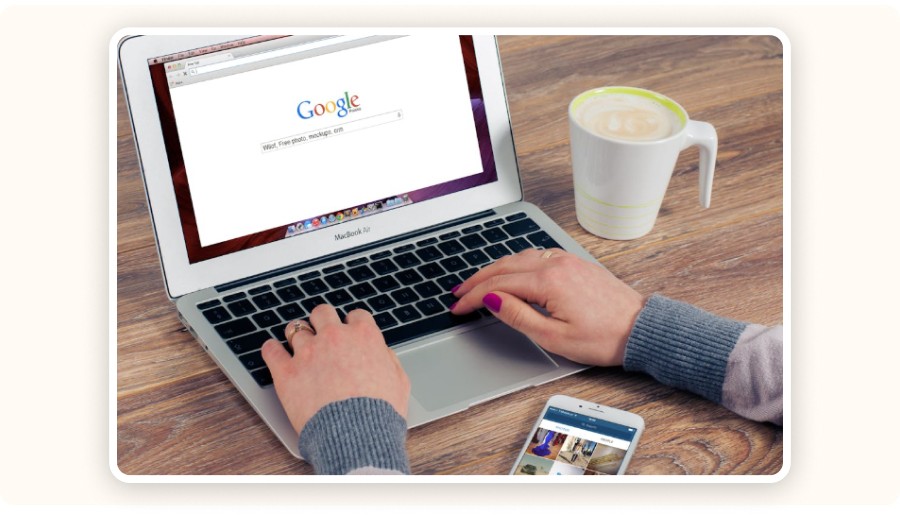
Google Shopping shows you every store bidding on your target keyword. No subscription required.
Price: Free | Best for: New dropshippers, niche validation without upfront tool costs
Search your target product name plus "buy" or "shop" in Google. Switch to the Shopping tab. Every result is a store selling that product right now. Click through 8-10 stores. Look for: Shopify stores, similar product descriptions, price clustering, shipping times, and review counts.
Then run the same search in incognito mode with a VPN set to your target market. Google Shopping results vary by location. A product saturated in the US might be wide open in Canada or Australia.
Check SERP features: if there's a featured snippet or People Also Ask section, that niche has content competition. If Google Shopping dominates the first page, it's a paid-traffic game. If you see Reddit threads and blog posts, organic content could work.
The limitation: this method is tedious. You're manually clicking through stores, taking notes, and you don't see ad creatives or targeting strategies. You know WHO is selling, but not HOW they're winning.
Use this method when you're validating a niche before committing to paid tools, or when you're researching local markets where ad spy tools have thin coverage.
Choose manual SERP if: You have more time than budget, you're testing 5-10 product ideas before picking one, or your niche is hyper-local and major spy tools don't track it well.
3. Social Media Hashtag & Profile Tracking — Best for TikTok Trends
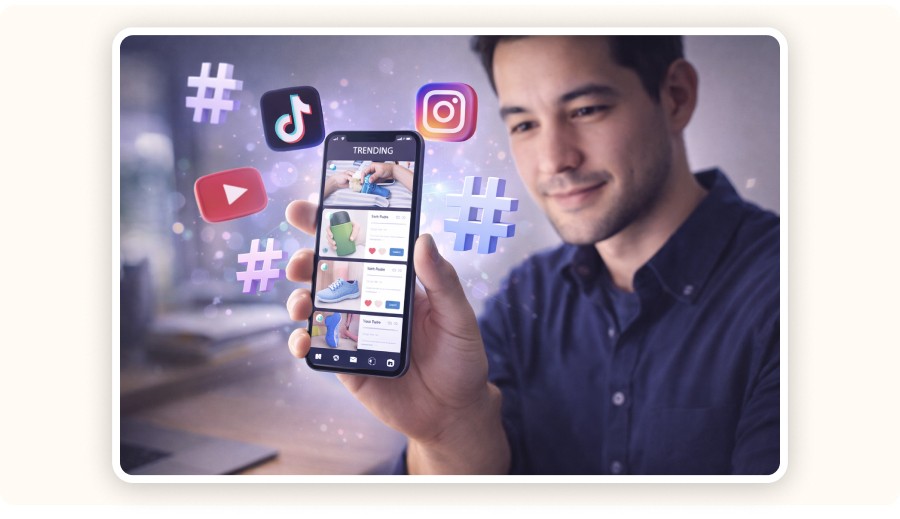
TikTok's algorithm surfaces competitors before Google does. Track hashtags and you'll spot viral products 2-3 weeks before they saturate.
Price: Free | Best for: Sellers targeting TikTok's 18-34 demographic, trend-based products
Search hashtags like #tiktokmademebuyit, #amazonfinds, or product-specific tags like #ledmask or #portableblender. Sort by recent. Any product with 50+ videos in the last 7 days is trending. Check the profiles posting: are dropshipping stores disguising organic content, or are they UGC creators?
Click the product links in bios. You'll find Shopify stores running TikTok Shop integrations or linking to standalone sites. Now you have a competitor list. Check their other TikToks to see which hooks and formats get the most views.
Instagram works similarly but moves slower. Reels with product links, carousel posts with "link in bio," and Stories with swipe-ups all reveal competitors. Track hashtags weekly and save competitor profiles to a list.
The catch: social platforms catch viral moments, but they miss paid Facebook ads entirely. A product could be generating $10K/day on Meta while having zero TikTok presence. Use this method in combination with ad spy tools, not as a replacement.
One dropshipper tracked #petaccessories daily and spotted a self-cleaning water bowl 12 days before it exploded on Facebook. By the time Minea showed heavy ad volume, this seller had already tested it, validated demand, and locked in a US supplier with faster shipping.
Choose social tracking if: Your target audience lives on TikTok or Instagram, you're comfortable with organic-first strategies, or you want early trend signals before paid ad saturation.
4. Reverse Supplier Lookup — Best for Supplier Intel
Your competitors' suppliers are not secret. They're listed on AliExpress reviews, visible in product photos, and sometimes in the product URL itself.
Price: Free to $29/mo (for tools like Ecomhunt or Niche Scraper) | Best for: Validating supplier quality, finding margin opportunities
Once you have a competitor store, inspect their product images. Right-click and "Search Google for image." Google returns AliExpress listings, Amazon listings, and other stores selling the same item. That's your supplier source.
Check AliExpress seller reviews on those listings. Sort by "with photos." Customers post pictures of the actual product they received. Compare those photos to your competitor's product images. If they match, you've confirmed the exact supplier. Note the price, shipping time, and whether the supplier offers ePacket or US warehousing.
Advanced move: use Minea's shop analysis on a competitor store. It sometimes shows which suppliers a store has historically used based on shipping time patterns and product catalog overlaps.
The limitation: this method assumes your competitor is dropshipping from AliExpress or a public supplier. If they've gone private label or use a proprietary supplier network, reverse lookup fails.
One seller found three competitors sourcing heated eyelash curlers from the same AliExpress supplier at $3.80. All three were selling at $19.99. One switched to a slightly upgraded model from a different supplier at $4.50, marketed it as "premium ceramic," and sold at $24.99 with better margins and less direct competition.
Choose reverse supplier lookup if: You've already identified competitors and need to know their exact suppliers, or you want to find margin opportunities by comparing supplier costs across similar products.
5. Store Analysis Tools (BuiltWith, Koala Inspector) — Best for Store Optimization
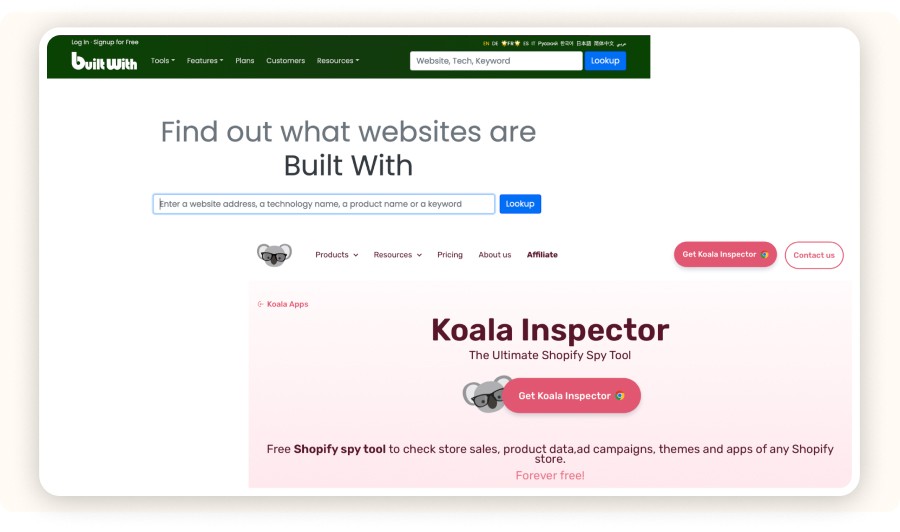
Your competitors' tech stacks reveal what converts. Theme, apps, email provider, checkout flow, it's all visible.
Price: $29-$99/mo | Best for: Sellers optimizing existing stores, replicating high-converting setups
Tools like BuiltWith and Koala Inspector analyze the technology behind any Shopify store. Install the Chrome extension, visit a competitor's site, and see: Shopify theme, review app (Loox, Judge.me), email provider (Klaviyo, Omnisend), upsell apps, and even which analytics pixels are firing.
Why this matters: if three successful competitors in your niche all use the same theme and review app, that's a proven stack. Don't experiment, copy what works.
Check their product pages for: number of reviews, review recency, photo vs. video review ratio, average review length, and whether reviews mention specific benefits or just rate the product. High-converting pages have 50+ reviews with photos and mention specific use cases.
The catch: these tools show you the store's anatomy, but they don't show ad performance. You know HOW the store is built, but not WHERE the traffic comes from or which ads are winning. Combine with ad spy tools for full intel.
One dropshipper analyzed five stores in the fitness niche. All used Turbo theme with Judge.me reviews and Reconvert for post-purchase upsells. He replicated the stack, cut setup time from 3 weeks to 4 days, and had a store structure proven to convert before he even drove traffic.
Choose store analysis tools if: You're past product research and focused on store optimization, or you want to replicate the exact tech setup of successful competitors without guessing.
6. Reddit & Discord Community Research — Best for Risk Avoidance
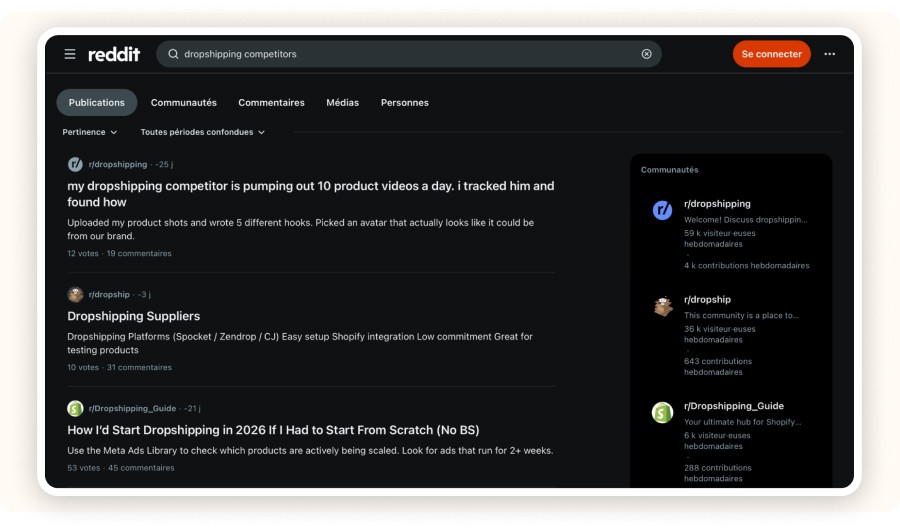
Seller communities discuss what's NOT working before anyone writes about it publicly.
Price: Free | Best for: Avoiding saturated products, learning from other sellers' failures
Join r/dropship, r/shopify, and niche-specific Discord servers. Search for your target product or niche. Sort by recent. Sellers openly discuss what's working and what failed. You'll find threads like "Tried LED face masks, burned $800 in ads, zero sales" or "Posture correctors are dead, saturation is insane."
This is negative research. You're not finding competitors to copy, you're finding landmines to avoid. If five sellers in the past month say a product tanked, it doesn't matter what Minea's ad count says.
Also useful: supplier complaints. Sellers name unreliable suppliers, products with high return rates, and items that don't match AliExpress photos. One thread revealed that "portable blenders" from a specific supplier broke after 3 uses, generating refund rates above 30%.
The limitation: Reddit and Discord have survivorship bias. Successful sellers rarely share exact products or strategies publicly. You're getting more failure data than success data.
Use this for validation, not discovery. If your product research says "smart fitness ring" is trending and Reddit says three sellers just lost money on it, dig deeper before committing.
Choose Reddit/Discord research if: You want to avoid costly mistakes, you're validating a product that seems too good to be true, or you're entering a niche where margin and quality issues are common.
7. AliExpress Reverse Image Search — Honorable Mention
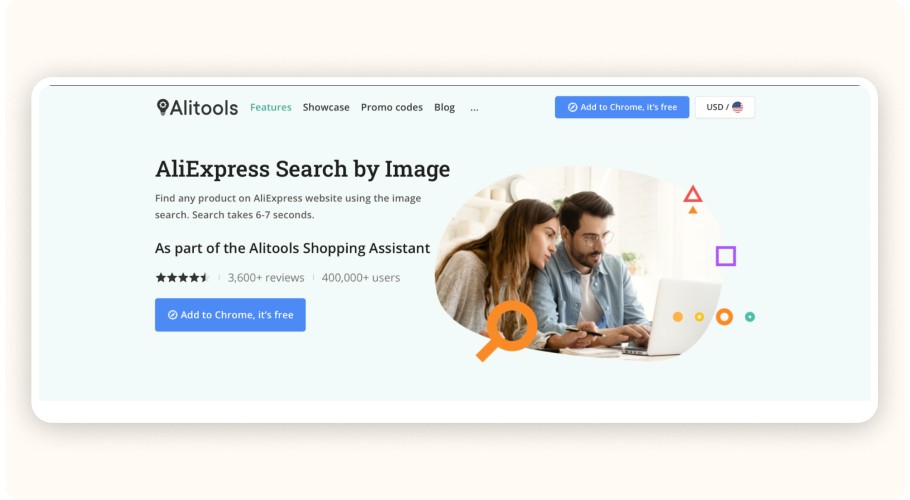
If you find a winning product on a competitor's store, find the exact supplier in 30 seconds.
Price: Free | Best for: Quick supplier sourcing from competitor products
Right-click a competitor's product image, copy the image address, go to AliExpress, and paste it into the image search. AliExpress returns exact matches or visually similar products from multiple suppliers.
Compare supplier pricing, order counts, reviews, and shipping options. A product priced at $4.20 from one supplier might be $3.90 from another with better reviews and faster shipping. That margin difference compounds.
The catch: this method only works for products that exist on AliExpress or similar marketplaces. Custom products, private label items, and branded goods won't appear. Use this for commoditized dropshipping products, not differentiated ones.
Choose AliExpress image search if: You've found a competitor's winning product and need to source it immediately, or you want to compare supplier options before committing to a vendor.
What We Didn't Include (and Why)
Facebook Ad Library: Public ad archive but no engagement data, targeting info, or easy filtering. Minea does this better.
SimilarWeb: Shows traffic sources and volume, not product-level or ad-level insights. Too macro for dropshipping.
Alexa (discontinued): Shut down in 2022. Outdated references still appear in old guides.
SEMrush/Ahrefs for dropshipping: Built for SEO and content sites. Dropshipping is paid-traffic-first. Wrong tool for the job.
How to Choose the Right Method for Your Needs
Not every method fits every stage. Match your research to your budget and experience level.
Budget under $50/mo: Manual SERP + Google Shopping + Reddit research. Time-intensive but zero subscription cost.
Testing 5-10 products before committing: Use Minea Premium ($49/mo) for ad and product validation. One prevented product failure pays for itself.
Scaling a store with $2K+/mo ad spend: Minea Business ($399/mo) with Success Radar for trend scoring and deep competitive analysis.
Need supplier validation: Reverse supplier lookup via Google image search + AliExpress. Free and fast.
TikTok-first strategy: Hashtag tracking + Minea for cross-platform validation.
Want to avoid mistakes more than copy success: Reddit and Discord communities for failure data and risk avoidance.
Still unsure? Start with Minea Premium for 30 days. It covers product research, ad creative analysis, and competitor tracking. If you're not finding $49 worth of value in saved time or prevented mistakes within two weeks, revert to manual methods.
Final Verdict
The best way to find dropshipping competitors in 2026: use Minea AdSpy for speed and depth, validate with manual SERP and community research.
Best overall: Minea AdSpy: see who's actively advertising, which creatives work, and how saturated the market is in under 10 minutes.
Best budget: Manual SERP + Google Shopping: free and effective for niche validation, just slower.
Best for early trend signals: TikTok hashtag tracking: catch viral products before ad platforms saturate.
Your competitor research workflow should run continuously. Check Minea weekly for new ad creatives in your niche. Track competitor product launches. Monitor Reddit for failure stories. The dropshipping winners in 2026 aren't the ones who found competitors once, they're the ones who track them daily and adapt faster. Knowing how to find dropshipping competitors consistently is one of the most valuable skills for scaling a store.
FAQ
Can I make $10,000 per month dropshipping?
Yes, but not in your first 90 days and not without testing 10-15 products first. Stores hitting $10K/mo revenue typically spend $3K-$5K/mo on ads, have conversion rates above 2%, and average order values above $40. You need winning products, proven ad creatives, and supplier relationships that support volume. Most sellers who hit $10K/mo started with $500-$1,000 product tests and scaled the winners. Use competitor research to find proven products, not to invent new ones.
Is drop shipping dead in 2026?
Dropshipping isn't dead, undifferentiated dropshipping is. Copying AliExpress products to Shopify with generic ads fails because 500 other sellers tried it first. Winning dropshippers in 2026 differentiate through faster shipping, better creatives, unique product bundles, or niche positioning. Competitor research matters more now because you need to see what already works and find gaps they're missing. Markets are saturated, not dead. Compete smarter.
Is $500 enough for dropshipping?
$500 covers store setup, a few product tests, and minimal ad spend. Expect to test 3-5 products with $50-$100 each in Meta or TikTok ads. Most won't work. Budget for reality: $200 for store setup and apps, $300 for initial ad tests. You're not scaling to $10K/mo on $500. You're validating one winning product. Once you find it, reinvest profits to scale. Start lean, but plan to add more budget when you find a winner.
How to find a niche for dropshipping?
Find niches by analyzing what's already working. Use Minea to filter ads by industry category, pet accessories, fitness, home & garden, and check which products have high ad volume and engagement. Look for submarkets within broad categories: not "fitness equipment" but "posture correctors for remote workers." Check Reddit and Facebook groups for active communities discussing problems your products solve. Avoid niches with low AOV, high return rates, or commodity pricing. The best niches have $30+ average order values, room for upsells, and repeat purchase potential.
Disclosure: This article is published by Minea. We recommend products and tools based on functionality and real-world testing for dropshipping sellers. Minea AdSpy is our platform for competitor and product research. All competitor data cited reflects publicly available ad and store information.
Similar articles