Before listing a product on TikTok Shop, know what it will really cost you. Here is how referral and transaction fees affect your margin.
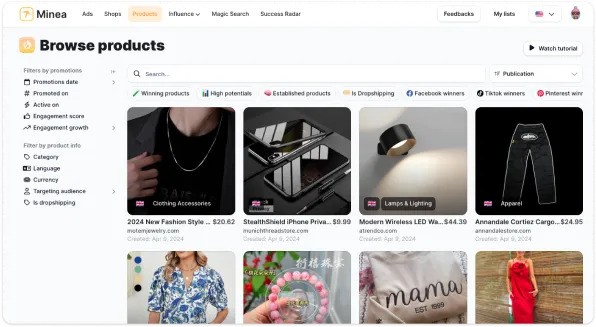
Knowing the fees is half the work. Minea helps you find TikTok Shop products with proven demand, so your margin holds up once the fees are paid.

Before listing a product on TikTok Shop, know what it will really cost you. Here is how referral and transaction fees affect your margin.
Knowing the fees is half the work. Minea helps you find TikTok Shop products with proven demand, so your margin holds up once the fees are paid.
Before listing a product on TikTok Shop, know what it will really cost you. Here is how referral and transaction fees affect your margin.
Knowing the fees is half the work. Minea helps you find TikTok Shop products with proven demand, so your margin holds up once the fees are paid.
Before listing a product on TikTok Shop, know what it will really cost you. Here is how referral and transaction fees affect your margin.
Knowing the fees is half the work. Minea helps you find TikTok Shop products with proven demand, so your margin holds up once the fees are paid.
Before listing a product on TikTok Shop, know what it will really cost you. Here is how referral and transaction fees affect your margin.
Knowing the fees is half the work. Minea helps you find TikTok Shop products with proven demand, so your margin holds up once the fees are paid.
Before listing a product on TikTok Shop, know what it will really cost you. Here is how referral and transaction fees affect your margin.
Knowing the fees is half the work. Minea helps you find TikTok Shop products with proven demand, so your margin holds up once the fees are paid.
Contents
TikTok Shop Fees in 2026: What Sellers Actually Pay, and What Is Left
Most articles about TikTok Shop fees list percentages and stop there. That is the least useful version of the answer, because a commission rate on its own tells you nothing about whether a product is worth selling.
What decides that is what remains after every deduction, platform commission, transaction costs, the product itself, shipping, and the advertising it takes to make the sale happen. This page covers the fee structure, and then the arithmetic that actually matters.
TL;DR, TikTok Shop fees at a glance
There are two platform fees to plan for: a referral commission on each sale, and a payment transaction fee.
Rates vary by marketplace and by product category, and TikTok has revised them more than once. Always check the current rate in Seller Center for your market before pricing a product.
Platform fees are rarely what kills a product. Advertising cost is.
The number that decides everything is what remains after all deductions, not the commission percentage.
A product that only works at zero ad spend is not a product, it is a hobby.
Price at a minimum of three times product cost, and treat everything below that as unsellable at scale.
Minea
Reach $1,000 per day or get your money back

The two platform fees
Referral commission. TikTok takes a percentage of each completed sale. The rate depends on your marketplace and often on the product category, and TikTok has changed it since launch, including introductory rates for new sellers that later increased. This is the fee people mean when they talk about "TikTok Shop fees".
Transaction fee. A separate, smaller payment-processing charge applied per transaction.
Both are deducted before the money reaches you, which is why sellers who price against product cost alone are surprised by their first payout.
Check the current rates yourself. I am deliberately not quoting a rate as fact here: TikTok publishes them per market in Seller Center, they differ by category, and any number written into an article ages badly. A fee article with a stale percentage is worse than no article, you find out the difference at payout.
What the fee structure looks like on a real sale
Platform fees are easier to judge when you see them against everything else coming out of the same sale.

The illustration uses a €30 sale with a €10 product cost and a roughly 9% referral commission. The point is not the exact figures, check yours, it is the proportion. Platform fees take a visible but modest slice. Product cost takes far more. And the largest deduction is not shown at all, because it happens before the sale exists: advertising.
The deduction nobody puts in the fee table
Advertising is not a TikTok Shop fee, so it never appears in fee articles. It is also, for most sellers, the largest single cost of making a sale.
This is where the naive margin calculation falls apart.

Selling a €5 product for €19 looks like €14 of margin. After advertising, shipping and the platform's cut, real net margin in dropshipping lands closer to 20–25%, as I work through in my full breakdown of how dropshipping actually works.
Fee percentages matter. They matter much less than the cost of acquiring the customer.
The margin rule that makes fees survivable
The working rule I apply before listing anything: sell at a minimum of three times product cost, and target a gross margin of at least €20 per sale.
That margin is not greed. It is the buffer that absorbs platform commission, transaction fees, shipping, returns and advertising. A product with €8 of gross margin can be genuinely profitable on paper and lose money on every sale once a realistic cost per acquisition lands on it.
The price band I work in on paid social is €25–60, with a minimum €20 gross margin, the grid is in my 2026 product research video. Below that band, platform fees stop being a line item and start being the difference between profit and loss.
The stop rule
Once you are running ads, the decision is arithmetic rather than opinion.

When cost per acquisition exceeds gross margin, every additional sale loses money. That threshold, not the commission rate, not the view count, is the number to watch. I explain the full testing structure in my Facebook Ads walkthrough.
Choosing products that survive the fee structure
Fees are fixed; product choice is not. The practical lever is picking products whose economics tolerate the deductions.
What that means in practice:
Perceived value above cost. A product that looks like €40 and costs €8 survives fees. One that looks like €12 does not, whatever it costs.
A wow effect. Without it there is no perceived value, so no price premium, so no margin to absorb fees.
Sourcing that holds at volume. A margin that only exists at one supplier's price is fragile.
Content that already exists. If you have to produce every asset from scratch, add that to your real cost per sale.
The full criteria set is in how to find winning products for Facebook Ads, and the TikTok-specific version in TikTok Shop products.
Researching before you list
You can see which products are already being pushed on TikTok before committing to one. The free route is TikTok's Creative Center; the method is in how to spy on competitor TikTok ads.
What you are looking for is longevity, not virality. An ad running for weeks is being paid for repeatedly, which is the closest thing to public evidence that the economics work after fees.

Most ads stop early. The ones still running after a month are the interesting ones, and they are the products whose margins survived the same fee structure you are about to enter.


FAQ
How much does TikTok Shop take per sale?
TikTok charges a referral commission plus a payment transaction fee on each sale. The commission rate varies by marketplace and product category and has been revised since launch, so check the current rate for your market in TikTok Seller Center rather than relying on a figure quoted in an article.
Are TikTok Shop fees higher than Amazon or Shopify?
They are structured differently. Marketplaces like TikTok Shop and Amazon take a commission per sale; Shopify charges a subscription plus payment processing. Which works out cheaper depends entirely on your volume and margin, not on the headline percentage.
Do TikTok Shop fees make dropshipping unprofitable?
No, advertising cost is what usually does. Platform fees take a visible but manageable slice of a sale. A product priced at three times its cost with at least €20 of gross margin absorbs them comfortably; a product with thin margin was already unprofitable before fees.
What margin do I need to cover TikTok Shop fees?
Aim for a minimum of €20 gross margin per sale and a selling price of at least three times product cost. That buffer covers commission, transaction fees, shipping and a realistic cost per acquisition with room left over.
Can I avoid TikTok Shop fees by selling on my own store?
You avoid the marketplace commission, but you take on the traffic problem entirely. TikTok Shop supplies in-app demand; your own store does not. Most sellers running both find the fee buys distribution they would otherwise pay for in advertising.
TikTok Shop Fees in 2026: What Sellers Actually Pay, and What Is Left
Most articles about TikTok Shop fees list percentages and stop there. That is the least useful version of the answer, because a commission rate on its own tells you nothing about whether a product is worth selling.
What decides that is what remains after every deduction, platform commission, transaction costs, the product itself, shipping, and the advertising it takes to make the sale happen. This page covers the fee structure, and then the arithmetic that actually matters.
TL;DR, TikTok Shop fees at a glance
There are two platform fees to plan for: a referral commission on each sale, and a payment transaction fee.
Rates vary by marketplace and by product category, and TikTok has revised them more than once. Always check the current rate in Seller Center for your market before pricing a product.
Platform fees are rarely what kills a product. Advertising cost is.
The number that decides everything is what remains after all deductions, not the commission percentage.
A product that only works at zero ad spend is not a product, it is a hobby.
Price at a minimum of three times product cost, and treat everything below that as unsellable at scale.
Minea
Reach $1,000 per day or get your money back
The two platform fees
Referral commission. TikTok takes a percentage of each completed sale. The rate depends on your marketplace and often on the product category, and TikTok has changed it since launch, including introductory rates for new sellers that later increased. This is the fee people mean when they talk about "TikTok Shop fees".
Transaction fee. A separate, smaller payment-processing charge applied per transaction.
Both are deducted before the money reaches you, which is why sellers who price against product cost alone are surprised by their first payout.
Check the current rates yourself. I am deliberately not quoting a rate as fact here: TikTok publishes them per market in Seller Center, they differ by category, and any number written into an article ages badly. A fee article with a stale percentage is worse than no article, you find out the difference at payout.
What the fee structure looks like on a real sale
Platform fees are easier to judge when you see them against everything else coming out of the same sale.
The illustration uses a €30 sale with a €10 product cost and a roughly 9% referral commission. The point is not the exact figures, check yours, it is the proportion. Platform fees take a visible but modest slice. Product cost takes far more. And the largest deduction is not shown at all, because it happens before the sale exists: advertising.
The deduction nobody puts in the fee table
Advertising is not a TikTok Shop fee, so it never appears in fee articles. It is also, for most sellers, the largest single cost of making a sale.
This is where the naive margin calculation falls apart.
Selling a €5 product for €19 looks like €14 of margin. After advertising, shipping and the platform's cut, real net margin in dropshipping lands closer to 20–25%, as I work through in my full breakdown of how dropshipping actually works.
Fee percentages matter. They matter much less than the cost of acquiring the customer.
The margin rule that makes fees survivable
The working rule I apply before listing anything: sell at a minimum of three times product cost, and target a gross margin of at least €20 per sale.
That margin is not greed. It is the buffer that absorbs platform commission, transaction fees, shipping, returns and advertising. A product with €8 of gross margin can be genuinely profitable on paper and lose money on every sale once a realistic cost per acquisition lands on it.
The price band I work in on paid social is €25–60, with a minimum €20 gross margin, the grid is in my 2026 product research video. Below that band, platform fees stop being a line item and start being the difference between profit and loss.
The stop rule
Once you are running ads, the decision is arithmetic rather than opinion.
When cost per acquisition exceeds gross margin, every additional sale loses money. That threshold, not the commission rate, not the view count, is the number to watch. I explain the full testing structure in my Facebook Ads walkthrough.
Choosing products that survive the fee structure
Fees are fixed; product choice is not. The practical lever is picking products whose economics tolerate the deductions.
What that means in practice:
Perceived value above cost. A product that looks like €40 and costs €8 survives fees. One that looks like €12 does not, whatever it costs.
A wow effect. Without it there is no perceived value, so no price premium, so no margin to absorb fees.
Sourcing that holds at volume. A margin that only exists at one supplier's price is fragile.
Content that already exists. If you have to produce every asset from scratch, add that to your real cost per sale.
The full criteria set is in how to find winning products for Facebook Ads, and the TikTok-specific version in TikTok Shop products.
Researching before you list
You can see which products are already being pushed on TikTok before committing to one. The free route is TikTok's Creative Center; the method is in how to spy on competitor TikTok ads.
What you are looking for is longevity, not virality. An ad running for weeks is being paid for repeatedly, which is the closest thing to public evidence that the economics work after fees.
Most ads stop early. The ones still running after a month are the interesting ones, and they are the products whose margins survived the same fee structure you are about to enter.
FAQ
How much does TikTok Shop take per sale?
TikTok charges a referral commission plus a payment transaction fee on each sale. The commission rate varies by marketplace and product category and has been revised since launch, so check the current rate for your market in TikTok Seller Center rather than relying on a figure quoted in an article.
Are TikTok Shop fees higher than Amazon or Shopify?
They are structured differently. Marketplaces like TikTok Shop and Amazon take a commission per sale; Shopify charges a subscription plus payment processing. Which works out cheaper depends entirely on your volume and margin, not on the headline percentage.
Do TikTok Shop fees make dropshipping unprofitable?
No, advertising cost is what usually does. Platform fees take a visible but manageable slice of a sale. A product priced at three times its cost with at least €20 of gross margin absorbs them comfortably; a product with thin margin was already unprofitable before fees.
What margin do I need to cover TikTok Shop fees?
Aim for a minimum of €20 gross margin per sale and a selling price of at least three times product cost. That buffer covers commission, transaction fees, shipping and a realistic cost per acquisition with room left over.
Can I avoid TikTok Shop fees by selling on my own store?
You avoid the marketplace commission, but you take on the traffic problem entirely. TikTok Shop supplies in-app demand; your own store does not. Most sellers running both find the fee buys distribution they would otherwise pay for in advertising.


Our Free Adspys

Find winning products on our Tiktok adspy today!
Find winning products on our Facebook adspy today!
Find winning products on our Tiktok adspy today!
Find winning products on our Facebook adspy today!
Find winning products on our Tiktok adspy today!
Find winning products on our Facebook adspy today!
Find winning products on our Tiktok adspy today!
Find winning products on our Facebook adspy today!
1 winning product everyday.
Follow us!






Find out more
Read more
Minea © 2026
Find out more
Read more
Minea © 2026
Find out more
Read more
Minea © 2026
Find out more
Read more
Minea © 2026
Find out more
Read more
Minea © 2026
Find out more
Read more
Minea © 2026