How to Find Trending Products on TikTok for Dropshipping (Step-by-Step)
Find dropshipping products
Author: Elysa
Contents
If you’re a dropshipper trying to pick your next winning product without burning a week on guesses, TikTok can feel like cheating, if you know where to look.
Key Takeaways:
Don’t trust “viral” views alone, validate trends with 3 signals: repeat creators, repeat comments (“where can I buy?”), and multi-day consistency.
Use TikTok Creative Center + TikTok Shop Seller Center to confirm demand (keywords/hashtags) before you source inventory.
A practical shortlist of “TikTok-friendly” products is usually $20–$40 AOV with a visual “wow” moment and a clear problem/benefit.
Cross-check fast: Trend discovery (TikTok) → demand proof (keywords/shop) → supply proof (suppliers + margins) → creative angles (ads/UGC).
How do you find out which products are trending on TikTok?
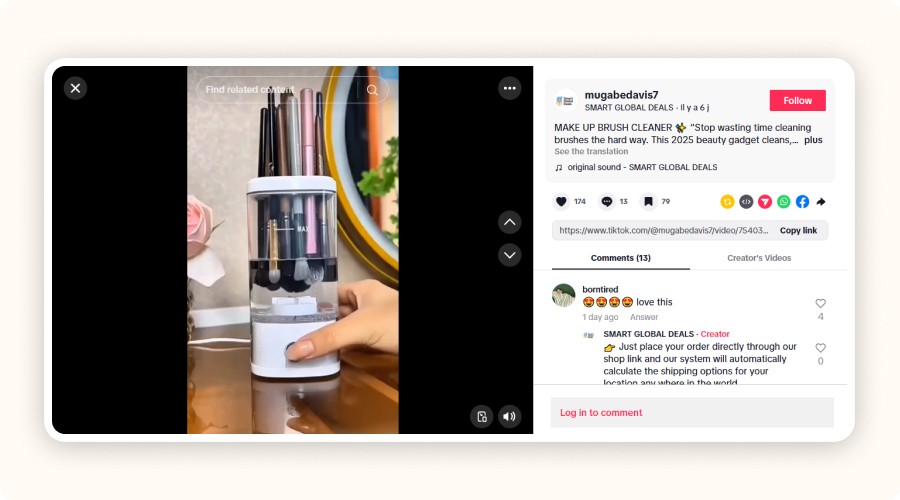
TikTok trends become sellable product opportunities when the same item shows up across multiple creators, multiple videos, and multiple days, plus the comments show buying intent. Start with TikTok’s Creative Center Top Products/Keyword Insights, then confirm with TikTok Shop Seller Center opportunities, and only then shortlist products you can source with clean margins.
The 60-minute trend validation loop (what to do first)
If you do nothing else, do this loop once a week. It’s built for product research.
Discover: Identify 10–20 candidates in TikTok Creative Center (Top Products / Keyword Insights).
Confirm demand: Check whether people are searching for it in the Seller Center (search volume + competition).
Confirm “buy intent”: Read comments on 5–10 videos for the product. You’re looking for patterns like:
“Where can I buy this?”
“Link?”
“Does it ship to…?”
“I ordered one” / “Just bought”
Confirm durability: See if the product keeps showing up over 7+ days, not just 24 hours.
Confirm supply: Find 2–3 supplier options (countries, shipping, cost) and do margin math.
This loop is boring. That’s why it works.
Minea
Reach $1,000 per day or get your money back

How to see trending stuff on TikTok (7 places that actually matter)
The fastest way to find trending products is to use “structured” sources (Creative Center, Seller Center, Product Marketplace) before “unstructured” sources (For You Page scrolling). Structured sources surface patterns; scrolling mostly surfaces entertainment.
1) TikTok Creative Center: Top Products + Keyword Insights
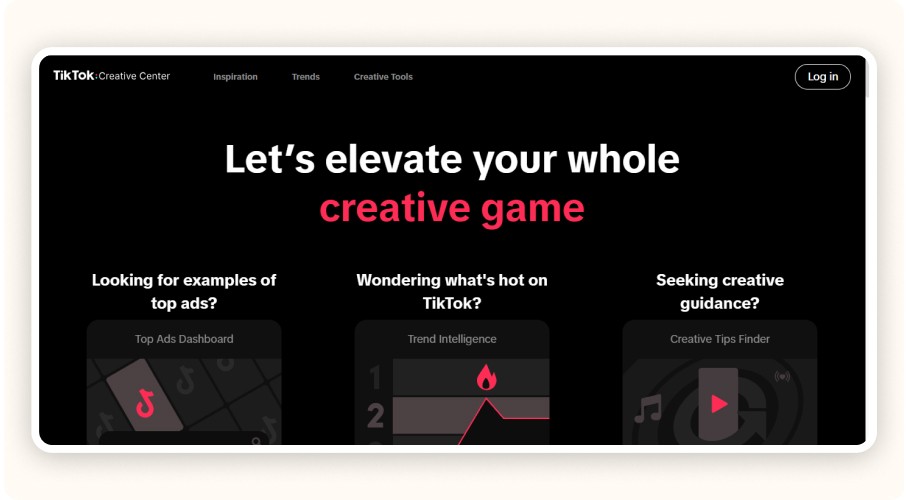
TikTok’s own Creative Center is the cleanest starting point because it’s designed for advertisers.
What to do:
Go to TikTok Creative Center → Top Products (and/or product inspiration pages). Then open Keyword Insights to find product keywords, related hashtags and the videos driving the spike
How to interpret it like a seller:
A trend is stronger when you can spot repeat formats (same hook structure), not just repeat hashtags. Save 10–15 videos and tag them by angle, not by product. Example: “pain relief,” “before/after,” “giftable,” “oddly satisfying.”
2) TikTok Shop Seller Center: Product Opportunities
If you sell through TikTok Shop (or plan to), Seller Center can show mismatches between demand and supply.
What you’re looking for:
High search volume keywords/hashtags
Low competition (few related products)
A visible sales window (often 30–60 days) where demand is not a one-day spike
Seller Center is also useful even if you’re dropshipping to Shopify. Why? Because it’s one of the few places where you can infer “shopping intent” rather than “entertainment intent.”
3) TikTok Shop Product Marketplace
TikTok’s Product Marketplace is where you can see what affiliates are pushing and what’s getting traction.
How to use it:
Filter by category ! In other words, check products that have repeat affiliate videos, consistent engagement and commission that still leaves room for your margin. A product with high affiliate activity often means there’s a repeatable creative format, and that’s gold for scaling.
4) Your For You Page (but with rules)
Scrolling can still work, but only if you treat it as sampling, not research.
Rules that keep it useful:
Create a fresh account that only follows product niches you care about.
Save videos into collections named by angle (not “cool stuff”).
Don’t shortlist a product until you’ve seen it from at least 3 creators.
5) Hashtag + keyword search (the “comment mining” method)
Search the product keyword and read comments before you even watch full videos.
Why do comments matter? Views can be curiosity and comments can be commerce.
Fast signals of buying intent:
“Link?” / “Where can I get it?” repeats across multiple videos
questions about shipping, price, colors/sizes
people posting their results (“mine arrived”), that’s friction being solved in public
6) Creator trend pages (finding “who drives” the trend)
Some products don’t trend as products first. They trend as creator formats.
Look for:
creators repeatedly featuring “problem-solving gadgets,” “Amazon finds,” “TikTok made me buy it,” “before/after” niches
series formats (Part 1/2/3) that can keep a product hot for weeks
When creators drive the trend, your real job is to copy the format, not the personality.
7) Third-party trend tools (useful for cross-validation)
External tools can help you reduce the “fads” problem by verifying that a spike is durable.
Practical rule: Only trust a trend if you can validate it in two different data sources.
Examples of cross-validation:
TikTok Creative Center (trend discovery) + Exploding Topics (trend durability)
Seller Center (demand) + ad analytics (creative repetition)
What makes a product go viral on TikTok? (the 5-product traits)
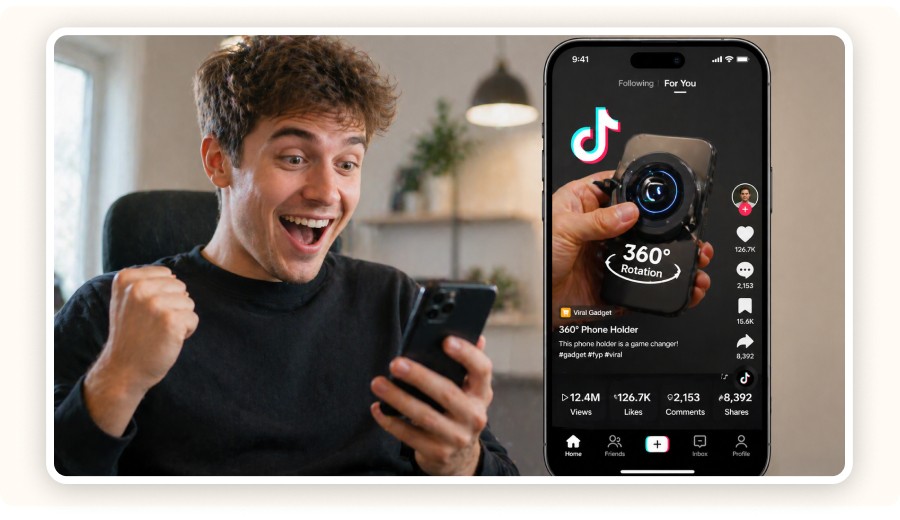
TikTok products go viral when the video delivers a “scroll-stopping” moment in the first 1–2 seconds, and the product has a simple benefit you can prove visually.
Here are the traits that keep showing up in winning products:
Visual proof: a demo that looks “too good to be true” but is believable.
Instant transformation: before/after, cleaning, glow-up, posture, hair, skin, organizing.
Problem-first narrative: the hook is the pain (“my neck hurt”) not the product name.
Repeatable creative: you can shoot 10 variations without new locations or actors.
Affordable impulse range: most TikTok-driven buys sit around $20–$40 (easy yes, low deliberation).
The big mistake: treating virality like magic. It’s usually just a repeatable format + a product that demonstrates well.

Start deploying your TikTok Ads strategy with the best offer available on the market.
Spend $30, Get $20
Spend $100, Get $100
Limited Time Offer
If you’re a dropshipper trying to pick your next winning product without burning a week on guesses, TikTok can feel like cheating, if you know where to look.
Key Takeaways:
Don’t trust “viral” views alone, validate trends with 3 signals: repeat creators, repeat comments (“where can I buy?”), and multi-day consistency.
Use TikTok Creative Center + TikTok Shop Seller Center to confirm demand (keywords/hashtags) before you source inventory.
A practical shortlist of “TikTok-friendly” products is usually $20–$40 AOV with a visual “wow” moment and a clear problem/benefit.
Cross-check fast: Trend discovery (TikTok) → demand proof (keywords/shop) → supply proof (suppliers + margins) → creative angles (ads/UGC).
How do you find out which products are trending on TikTok?
TikTok trends become sellable product opportunities when the same item shows up across multiple creators, multiple videos, and multiple days, plus the comments show buying intent. Start with TikTok’s Creative Center Top Products/Keyword Insights, then confirm with TikTok Shop Seller Center opportunities, and only then shortlist products you can source with clean margins.
The 60-minute trend validation loop (what to do first)
If you do nothing else, do this loop once a week. It’s built for product research.
Discover: Identify 10–20 candidates in TikTok Creative Center (Top Products / Keyword Insights).
Confirm demand: Check whether people are searching for it in the Seller Center (search volume + competition).
Confirm “buy intent”: Read comments on 5–10 videos for the product. You’re looking for patterns like:
“Where can I buy this?”
“Link?”
“Does it ship to…?”
“I ordered one” / “Just bought”
Confirm durability: See if the product keeps showing up over 7+ days, not just 24 hours.
Confirm supply: Find 2–3 supplier options (countries, shipping, cost) and do margin math.
This loop is boring. That’s why it works.
Minea
Reach $1,000 per day or get your money back
How to see trending stuff on TikTok (7 places that actually matter)
The fastest way to find trending products is to use “structured” sources (Creative Center, Seller Center, Product Marketplace) before “unstructured” sources (For You Page scrolling). Structured sources surface patterns; scrolling mostly surfaces entertainment.
1) TikTok Creative Center: Top Products + Keyword Insights
TikTok’s own Creative Center is the cleanest starting point because it’s designed for advertisers.
What to do:
Go to TikTok Creative Center → Top Products (and/or product inspiration pages). Then open Keyword Insights to find product keywords, related hashtags and the videos driving the spike
How to interpret it like a seller:
A trend is stronger when you can spot repeat formats (same hook structure), not just repeat hashtags. Save 10–15 videos and tag them by angle, not by product. Example: “pain relief,” “before/after,” “giftable,” “oddly satisfying.”
2) TikTok Shop Seller Center: Product Opportunities
If you sell through TikTok Shop (or plan to), Seller Center can show mismatches between demand and supply.
What you’re looking for:
High search volume keywords/hashtags
Low competition (few related products)
A visible sales window (often 30–60 days) where demand is not a one-day spike
Seller Center is also useful even if you’re dropshipping to Shopify. Why? Because it’s one of the few places where you can infer “shopping intent” rather than “entertainment intent.”
3) TikTok Shop Product Marketplace
TikTok’s Product Marketplace is where you can see what affiliates are pushing and what’s getting traction.
How to use it:
Filter by category ! In other words, check products that have repeat affiliate videos, consistent engagement and commission that still leaves room for your margin. A product with high affiliate activity often means there’s a repeatable creative format, and that’s gold for scaling.
4) Your For You Page (but with rules)
Scrolling can still work, but only if you treat it as sampling, not research.
Rules that keep it useful:
Create a fresh account that only follows product niches you care about.
Save videos into collections named by angle (not “cool stuff”).
Don’t shortlist a product until you’ve seen it from at least 3 creators.
5) Hashtag + keyword search (the “comment mining” method)
Search the product keyword and read comments before you even watch full videos.
Why do comments matter? Views can be curiosity and comments can be commerce.
Fast signals of buying intent:
“Link?” / “Where can I get it?” repeats across multiple videos
questions about shipping, price, colors/sizes
people posting their results (“mine arrived”), that’s friction being solved in public
6) Creator trend pages (finding “who drives” the trend)
Some products don’t trend as products first. They trend as creator formats.
Look for:
creators repeatedly featuring “problem-solving gadgets,” “Amazon finds,” “TikTok made me buy it,” “before/after” niches
series formats (Part 1/2/3) that can keep a product hot for weeks
When creators drive the trend, your real job is to copy the format, not the personality.
7) Third-party trend tools (useful for cross-validation)
External tools can help you reduce the “fads” problem by verifying that a spike is durable.
Practical rule: Only trust a trend if you can validate it in two different data sources.
Examples of cross-validation:
TikTok Creative Center (trend discovery) + Exploding Topics (trend durability)
Seller Center (demand) + ad analytics (creative repetition)
What makes a product go viral on TikTok? (the 5-product traits)
TikTok products go viral when the video delivers a “scroll-stopping” moment in the first 1–2 seconds, and the product has a simple benefit you can prove visually.
Here are the traits that keep showing up in winning products:
Visual proof: a demo that looks “too good to be true” but is believable.
Instant transformation: before/after, cleaning, glow-up, posture, hair, skin, organizing.
Problem-first narrative: the hook is the pain (“my neck hurt”) not the product name.
Repeatable creative: you can shoot 10 variations without new locations or actors.
Affordable impulse range: most TikTok-driven buys sit around $20–$40 (easy yes, low deliberation).
The big mistake: treating virality like magic. It’s usually just a repeatable format + a product that demonstrates well.
Start deploying your TikTok Ads strategy with the best offer available on the market.
Spend $30, Get $20
Spend $100, Get $100
Limited Time Offer
If you’re a dropshipper trying to pick your next winning product without burning a week on guesses, TikTok can feel like cheating, if you know where to look.
Key Takeaways:
Don’t trust “viral” views alone, validate trends with 3 signals: repeat creators, repeat comments (“where can I buy?”), and multi-day consistency.
Use TikTok Creative Center + TikTok Shop Seller Center to confirm demand (keywords/hashtags) before you source inventory.
A practical shortlist of “TikTok-friendly” products is usually $20–$40 AOV with a visual “wow” moment and a clear problem/benefit.
Cross-check fast: Trend discovery (TikTok) → demand proof (keywords/shop) → supply proof (suppliers + margins) → creative angles (ads/UGC).
How do you find out which products are trending on TikTok?
TikTok trends become sellable product opportunities when the same item shows up across multiple creators, multiple videos, and multiple days, plus the comments show buying intent. Start with TikTok’s Creative Center Top Products/Keyword Insights, then confirm with TikTok Shop Seller Center opportunities, and only then shortlist products you can source with clean margins.
The 60-minute trend validation loop (what to do first)
If you do nothing else, do this loop once a week. It’s built for product research.
Discover: Identify 10–20 candidates in TikTok Creative Center (Top Products / Keyword Insights).
Confirm demand: Check whether people are searching for it in the Seller Center (search volume + competition).
Confirm “buy intent”: Read comments on 5–10 videos for the product. You’re looking for patterns like:
“Where can I buy this?”
“Link?”
“Does it ship to…?”
“I ordered one” / “Just bought”
Confirm durability: See if the product keeps showing up over 7+ days, not just 24 hours.
Confirm supply: Find 2–3 supplier options (countries, shipping, cost) and do margin math.
This loop is boring. That’s why it works.
Minea
Reach $1,000 per day or get your money back
How to see trending stuff on TikTok (7 places that actually matter)
The fastest way to find trending products is to use “structured” sources (Creative Center, Seller Center, Product Marketplace) before “unstructured” sources (For You Page scrolling). Structured sources surface patterns; scrolling mostly surfaces entertainment.
1) TikTok Creative Center: Top Products + Keyword Insights
TikTok’s own Creative Center is the cleanest starting point because it’s designed for advertisers.
What to do:
Go to TikTok Creative Center → Top Products (and/or product inspiration pages). Then open Keyword Insights to find product keywords, related hashtags and the videos driving the spike
How to interpret it like a seller:
A trend is stronger when you can spot repeat formats (same hook structure), not just repeat hashtags. Save 10–15 videos and tag them by angle, not by product. Example: “pain relief,” “before/after,” “giftable,” “oddly satisfying.”
2) TikTok Shop Seller Center: Product Opportunities
If you sell through TikTok Shop (or plan to), Seller Center can show mismatches between demand and supply.
What you’re looking for:
High search volume keywords/hashtags
Low competition (few related products)
A visible sales window (often 30–60 days) where demand is not a one-day spike
Seller Center is also useful even if you’re dropshipping to Shopify. Why? Because it’s one of the few places where you can infer “shopping intent” rather than “entertainment intent.”
3) TikTok Shop Product Marketplace
TikTok’s Product Marketplace is where you can see what affiliates are pushing and what’s getting traction.
How to use it:
Filter by category ! In other words, check products that have repeat affiliate videos, consistent engagement and commission that still leaves room for your margin. A product with high affiliate activity often means there’s a repeatable creative format, and that’s gold for scaling.
4) Your For You Page (but with rules)
Scrolling can still work, but only if you treat it as sampling, not research.
Rules that keep it useful:
Create a fresh account that only follows product niches you care about.
Save videos into collections named by angle (not “cool stuff”).
Don’t shortlist a product until you’ve seen it from at least 3 creators.
5) Hashtag + keyword search (the “comment mining” method)
Search the product keyword and read comments before you even watch full videos.
Why do comments matter? Views can be curiosity and comments can be commerce.
Fast signals of buying intent:
“Link?” / “Where can I get it?” repeats across multiple videos
questions about shipping, price, colors/sizes
people posting their results (“mine arrived”), that’s friction being solved in public
6) Creator trend pages (finding “who drives” the trend)
Some products don’t trend as products first. They trend as creator formats.
Look for:
creators repeatedly featuring “problem-solving gadgets,” “Amazon finds,” “TikTok made me buy it,” “before/after” niches
series formats (Part 1/2/3) that can keep a product hot for weeks
When creators drive the trend, your real job is to copy the format, not the personality.
7) Third-party trend tools (useful for cross-validation)
External tools can help you reduce the “fads” problem by verifying that a spike is durable.
Practical rule: Only trust a trend if you can validate it in two different data sources.
Examples of cross-validation:
TikTok Creative Center (trend discovery) + Exploding Topics (trend durability)
Seller Center (demand) + ad analytics (creative repetition)
What makes a product go viral on TikTok? (the 5-product traits)
TikTok products go viral when the video delivers a “scroll-stopping” moment in the first 1–2 seconds, and the product has a simple benefit you can prove visually.
Here are the traits that keep showing up in winning products:
Visual proof: a demo that looks “too good to be true” but is believable.
Instant transformation: before/after, cleaning, glow-up, posture, hair, skin, organizing.
Problem-first narrative: the hook is the pain (“my neck hurt”) not the product name.
Repeatable creative: you can shoot 10 variations without new locations or actors.
Affordable impulse range: most TikTok-driven buys sit around $20–$40 (easy yes, low deliberation).
The big mistake: treating virality like magic. It’s usually just a repeatable format + a product that demonstrates well.
Start deploying your TikTok Ads strategy with the best offer available on the market.
Spend $30, Get $20
Spend $100, Get $100
Limited Time Offer
Step-by-step: how to find trending products on TikTok (and turn them into a shortlist)
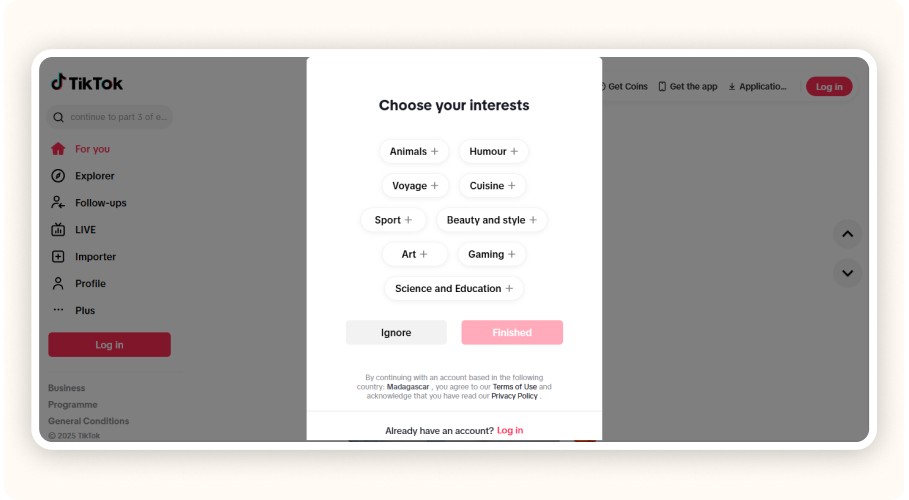
If your goal is dropshipping, the winning workflow is: discover → validate demand → validate margins → validate creative angles → test small.
Step 1: Start with a niche “lane” (so you don’t chase random virality)
Pick 1–2 lanes you can commit to for 30 days:
beauty gadgets
wellness / posture / pain relief
kitchen “convenience” tools
home organization
pet accessories
Why this matters: your store needs a coherent audience. Random trending items turn your ad account into a dumpster fire.
Step 2: Pull 15–30 candidates from Creative Center
In practice, you’re not searching for “the product.” You’re searching for patterns.
Create a simple sheet with columns: - product name - niche lane - hook format (problem / curiosity / transformation) - top 3 creator examples - comment intent score (low/medium/high) - sourcing difficulty (low/medium/high)
Step 3: Confirm buying intent in comments (the 10-minute filter)
Open 5 videos for the same product.
If you see this, keep it: - repeat “where can I buy?” questions - repeat mention of price (“is it really $X?”) - repeat shipping/location questions
If you see this, drop it: - people only tagging friends (“lol,” “need this”) with no purchase questions - trend is about a sound/meme, not the product
Step 4: Confirm demand with Seller Center (search volume vs competition)
Your goal is not “popular.” Your goal is opportunity.
A simple way to think about it: - High search volume + low product count = you can enter with a strong creative and win. - High search volume + saturated listings = you need a better angle, bundle, or price edge.
Step 5: Do margin math before you fall in love
For dropshipping, a quick sanity check looks like this:
Target selling price: $29.99
Product cost + shipping: $9–$14
Payment fees + app costs: ~$2–$3
Ads (test phase): assume you can afford $10–$15 CPA
If that math doesn’t work, the “trend” is a trap.
Minea Insight: In a typical TikTok-friendly testing range, many trending gadgets cluster around ~$29.99 average price. Use that as a baseline for your own pricing sanity check.
Step 6: Validate supply (and avoid the shipping-time disaster)
Don’t just pick the cheapest supplier. Pick the supplier that supports your customer experience.
What to check:
supplier country options (for shipping and returns)
tracking reliability
packaging quality (TikTok buyers are giftable buyers)
Minea Insight: A practical supplier mix for fast-moving products often includes China, Turkey, and Vietnam as sourcing bases. Don’t treat this as a rule, treat it as a starting shortlist when you want options beyond a single country.
Step 7: Validate creative angles (this is where most “trend” picks die)
A product isn’t a winner if you can’t make 10 ads.
Before you test, write:
10 hooks (first 2 seconds)
5 demos (what the viewer sees)
3 offers (bundle, free shipping threshold, add-on)
If you can’t do that on paper, you won’t do it in ads.
Examples of TikTok products that trend (and why they work)
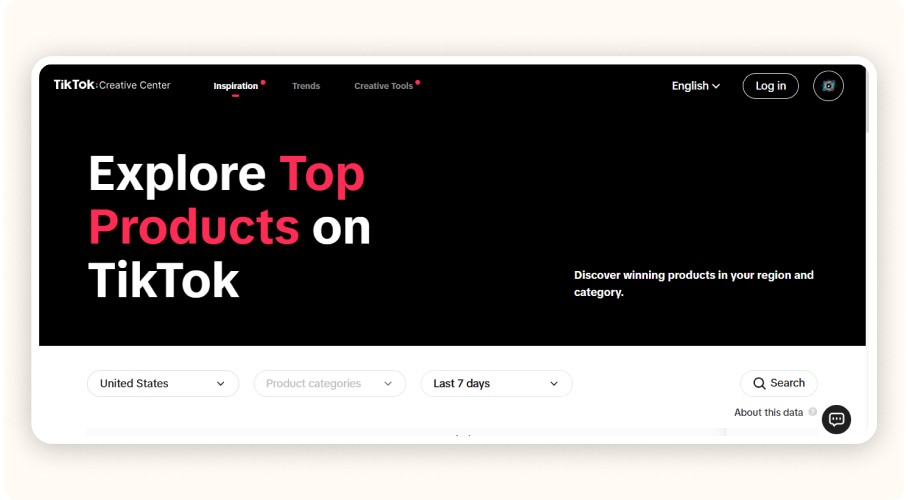
Examples of trending products on TikTok don’t predict the future, but they teach you the pattern: visual demo + quick payoff + repeatable creative.
Here are 5 product types that tend to do well on TikTok-style creative:
Posture corrector belt (trend score: 92): clear before/after posture angle, strong “pain relief” hooks.
LED face mask (trend score: 88): beauty gadget with “future tech” vibe and strong creator demo formats.
Portable blender (trend score: 85): convenience + visual result (smoothie) in seconds.
Smart ring fitness tracker (trend score: 81): lifestyle aspiration + quantified benefits (sleep/steps), but higher trust barrier.
Heated eyelash curler (trend score: 78): transformation demo is instant; easy to shoot many variations.
The pattern: these products aren’t unique. They’re filmable.
How often does TikTok’s trending product list update?
Most TikTok trend surfaces refresh continuously, but the useful signal is not the refresh rate, it’s whether the trend holds for multiple days. Treat anything under 72 hours as “interesting,” and anything that holds 7+ days as “testable.”
Practical cadence:
check trend sources 2–3 times per week
build your shortlist weekly
run tests in 3–5 day sprints
Are there tools to help identify trending products on TikTok?
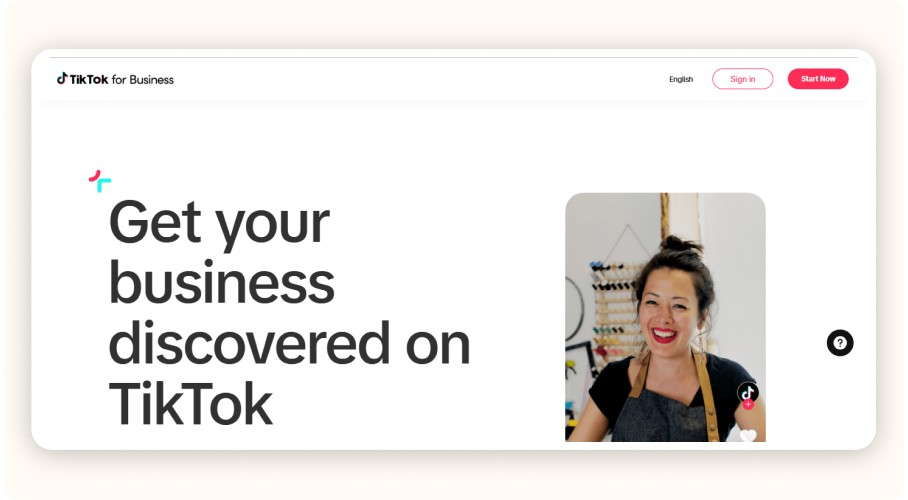
Yes. The best stack is a combination of TikTok-native tools (Creative Center, Seller Center) and a product research tool that helps you validate winning creatives and competitors before you spend on testing.
A seller-friendly stack looks like this:
TikTok Creative Center for top products/keywords and creative inspiration
TikTok Seller Center for demand vs competition (especially for TikTok Shop)
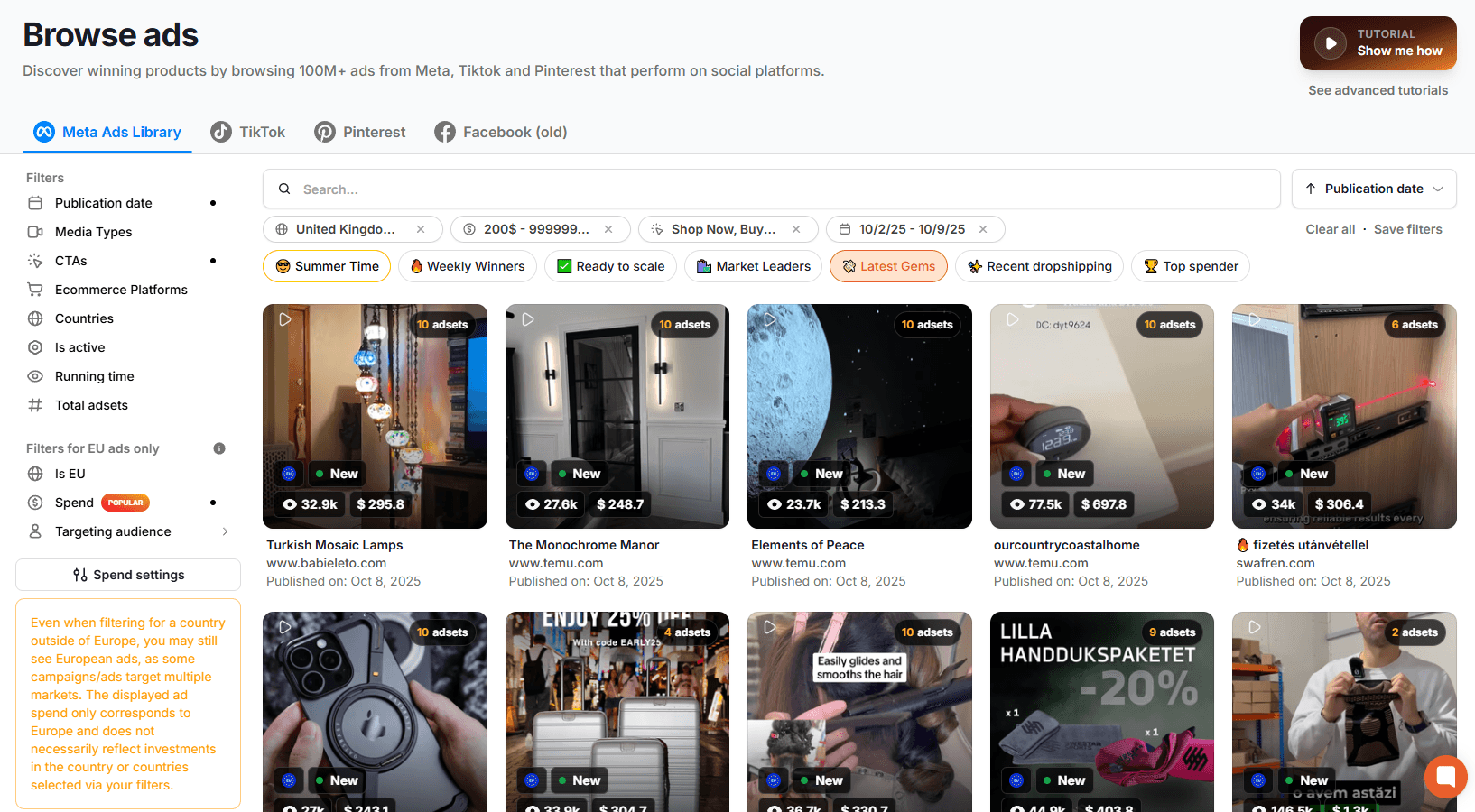
A product research + ad intelligence tool to validate whether competitors are scaling the same product and angles across ads
Where Minea fits in the workflow (concrete, not theoretical):
Spot the product trend on TikTok. Save 10 videos.
Use Minea to check whether the product is being pushed in paid ads (Meta/TikTok creatives) and whether you see repeat angles.
Extract the winning angles (hooks, offer framing, visuals) and build 3 creative variants per angle.
Launch small tests, then come back to Minea to see what competitors change when they scale.
That loop is how you avoid testing “cool products” that don’t sell.


Common mistakes (and how to avoid them)
Chasing views instead of intent
Fix: shortlist only products with repeat buying-intent comments across multiple creators.
Testing a product without 10 hooks ready
Fix: if you can’t write 10 hooks in 15 minutes, pick another product.
Ignoring fulfillment reality
Fix: validate supplier options and shipping expectations before you run ads.
Copying a creator instead of copying a format
Fix: recreate the structure (hook → demo → payoff → CTA) with your own brand voice.
Scaling too early
Fix: test with a controlled budget until you see stable results across multiple creatives.
FAQ
What products are currently trending on TikTok?
TikTok trends change daily, so the “best” answer is a method: check Creative Center top products, then confirm buying intent in comments and demand in Seller Center. Product categories that frequently trend include beauty gadgets, wellness, home organization, and convenience kitchen items because they demo well in video.
How to find out which products are trending on TikTok for TikTok Shop?
Start inside TikTok: Seller Center opportunities and Product Marketplace give you a demand-and-supply view that’s closer to purchase intent than the For You Page. Then validate with Creative Center to find the ad/UGC formats driving the trend. Only after that should you compare suppliers and margins.
How can I use TikTok analytics to find trending products?
Use analytics to track which product videos keep getting repeat traffic over multiple days and which hooks retain viewers in the first seconds. Trends that persist usually show consistent engagement across multiple creators, not just one viral post. Combine that with keyword/hashtag growth from Creative Center.
What makes a product go viral on TikTok?
The product needs a fast, visual payoff: transformation, “wow,” or problem-solving. The video needs a hook in the first 1–2 seconds and a demo that proves the claim without explanation. When the same format works across multiple creators, you have a scalable trend.
How many TikTok followers do I need to make $2000 a month?
Follower count matters less than conversion mechanics. You can reach $2,000/month with a small account if you consistently publish videos that get search traffic, generate buying-intent comments, and link to an offer with healthy margins. If you rely on virality alone, even a big follower count can produce unpredictable revenue.
Step-by-step: how to find trending products on TikTok (and turn them into a shortlist)
If your goal is dropshipping, the winning workflow is: discover → validate demand → validate margins → validate creative angles → test small.
Step 1: Start with a niche “lane” (so you don’t chase random virality)
Pick 1–2 lanes you can commit to for 30 days:
beauty gadgets
wellness / posture / pain relief
kitchen “convenience” tools
home organization
pet accessories
Why this matters: your store needs a coherent audience. Random trending items turn your ad account into a dumpster fire.
Step 2: Pull 15–30 candidates from Creative Center
In practice, you’re not searching for “the product.” You’re searching for patterns.
Create a simple sheet with columns: - product name - niche lane - hook format (problem / curiosity / transformation) - top 3 creator examples - comment intent score (low/medium/high) - sourcing difficulty (low/medium/high)
Step 3: Confirm buying intent in comments (the 10-minute filter)
Open 5 videos for the same product.
If you see this, keep it: - repeat “where can I buy?” questions - repeat mention of price (“is it really $X?”) - repeat shipping/location questions
If you see this, drop it: - people only tagging friends (“lol,” “need this”) with no purchase questions - trend is about a sound/meme, not the product
Step 4: Confirm demand with Seller Center (search volume vs competition)
Your goal is not “popular.” Your goal is opportunity.
A simple way to think about it: - High search volume + low product count = you can enter with a strong creative and win. - High search volume + saturated listings = you need a better angle, bundle, or price edge.
Step 5: Do margin math before you fall in love
For dropshipping, a quick sanity check looks like this:
Target selling price: $29.99
Product cost + shipping: $9–$14
Payment fees + app costs: ~$2–$3
Ads (test phase): assume you can afford $10–$15 CPA
If that math doesn’t work, the “trend” is a trap.
Minea Insight: In a typical TikTok-friendly testing range, many trending gadgets cluster around ~$29.99 average price. Use that as a baseline for your own pricing sanity check.
Step 6: Validate supply (and avoid the shipping-time disaster)
Don’t just pick the cheapest supplier. Pick the supplier that supports your customer experience.
What to check:
supplier country options (for shipping and returns)
tracking reliability
packaging quality (TikTok buyers are giftable buyers)
Minea Insight: A practical supplier mix for fast-moving products often includes China, Turkey, and Vietnam as sourcing bases. Don’t treat this as a rule, treat it as a starting shortlist when you want options beyond a single country.
Step 7: Validate creative angles (this is where most “trend” picks die)
A product isn’t a winner if you can’t make 10 ads.
Before you test, write:
10 hooks (first 2 seconds)
5 demos (what the viewer sees)
3 offers (bundle, free shipping threshold, add-on)
If you can’t do that on paper, you won’t do it in ads.
Examples of TikTok products that trend (and why they work)
Examples of trending products on TikTok don’t predict the future, but they teach you the pattern: visual demo + quick payoff + repeatable creative.
Here are 5 product types that tend to do well on TikTok-style creative:
Posture corrector belt (trend score: 92): clear before/after posture angle, strong “pain relief” hooks.
LED face mask (trend score: 88): beauty gadget with “future tech” vibe and strong creator demo formats.
Portable blender (trend score: 85): convenience + visual result (smoothie) in seconds.
Smart ring fitness tracker (trend score: 81): lifestyle aspiration + quantified benefits (sleep/steps), but higher trust barrier.
Heated eyelash curler (trend score: 78): transformation demo is instant; easy to shoot many variations.
The pattern: these products aren’t unique. They’re filmable.
How often does TikTok’s trending product list update?
Most TikTok trend surfaces refresh continuously, but the useful signal is not the refresh rate, it’s whether the trend holds for multiple days. Treat anything under 72 hours as “interesting,” and anything that holds 7+ days as “testable.”
Practical cadence:
check trend sources 2–3 times per week
build your shortlist weekly
run tests in 3–5 day sprints
Are there tools to help identify trending products on TikTok?
Yes. The best stack is a combination of TikTok-native tools (Creative Center, Seller Center) and a product research tool that helps you validate winning creatives and competitors before you spend on testing.
A seller-friendly stack looks like this:
TikTok Creative Center for top products/keywords and creative inspiration
TikTok Seller Center for demand vs competition (especially for TikTok Shop)
A product research + ad intelligence tool to validate whether competitors are scaling the same product and angles across ads
Where Minea fits in the workflow (concrete, not theoretical):
Spot the product trend on TikTok. Save 10 videos.
Use Minea to check whether the product is being pushed in paid ads (Meta/TikTok creatives) and whether you see repeat angles.
Extract the winning angles (hooks, offer framing, visuals) and build 3 creative variants per angle.
Launch small tests, then come back to Minea to see what competitors change when they scale.
That loop is how you avoid testing “cool products” that don’t sell.
Common mistakes (and how to avoid them)
Chasing views instead of intent
Fix: shortlist only products with repeat buying-intent comments across multiple creators.
Testing a product without 10 hooks ready
Fix: if you can’t write 10 hooks in 15 minutes, pick another product.
Ignoring fulfillment reality
Fix: validate supplier options and shipping expectations before you run ads.
Copying a creator instead of copying a format
Fix: recreate the structure (hook → demo → payoff → CTA) with your own brand voice.
Scaling too early
Fix: test with a controlled budget until you see stable results across multiple creatives.
FAQ
What products are currently trending on TikTok?
TikTok trends change daily, so the “best” answer is a method: check Creative Center top products, then confirm buying intent in comments and demand in Seller Center. Product categories that frequently trend include beauty gadgets, wellness, home organization, and convenience kitchen items because they demo well in video.
How to find out which products are trending on TikTok for TikTok Shop?
Start inside TikTok: Seller Center opportunities and Product Marketplace give you a demand-and-supply view that’s closer to purchase intent than the For You Page. Then validate with Creative Center to find the ad/UGC formats driving the trend. Only after that should you compare suppliers and margins.
How can I use TikTok analytics to find trending products?
Use analytics to track which product videos keep getting repeat traffic over multiple days and which hooks retain viewers in the first seconds. Trends that persist usually show consistent engagement across multiple creators, not just one viral post. Combine that with keyword/hashtag growth from Creative Center.
What makes a product go viral on TikTok?
The product needs a fast, visual payoff: transformation, “wow,” or problem-solving. The video needs a hook in the first 1–2 seconds and a demo that proves the claim without explanation. When the same format works across multiple creators, you have a scalable trend.
How many TikTok followers do I need to make $2000 a month?
Follower count matters less than conversion mechanics. You can reach $2,000/month with a small account if you consistently publish videos that get search traffic, generate buying-intent comments, and link to an offer with healthy margins. If you rely on virality alone, even a big follower count can produce unpredictable revenue.
Step-by-step: how to find trending products on TikTok (and turn them into a shortlist)
If your goal is dropshipping, the winning workflow is: discover → validate demand → validate margins → validate creative angles → test small.
Step 1: Start with a niche “lane” (so you don’t chase random virality)
Pick 1–2 lanes you can commit to for 30 days:
beauty gadgets
wellness / posture / pain relief
kitchen “convenience” tools
home organization
pet accessories
Why this matters: your store needs a coherent audience. Random trending items turn your ad account into a dumpster fire.
Step 2: Pull 15–30 candidates from Creative Center
In practice, you’re not searching for “the product.” You’re searching for patterns.
Create a simple sheet with columns: - product name - niche lane - hook format (problem / curiosity / transformation) - top 3 creator examples - comment intent score (low/medium/high) - sourcing difficulty (low/medium/high)
Step 3: Confirm buying intent in comments (the 10-minute filter)
Open 5 videos for the same product.
If you see this, keep it: - repeat “where can I buy?” questions - repeat mention of price (“is it really $X?”) - repeat shipping/location questions
If you see this, drop it: - people only tagging friends (“lol,” “need this”) with no purchase questions - trend is about a sound/meme, not the product
Step 4: Confirm demand with Seller Center (search volume vs competition)
Your goal is not “popular.” Your goal is opportunity.
A simple way to think about it: - High search volume + low product count = you can enter with a strong creative and win. - High search volume + saturated listings = you need a better angle, bundle, or price edge.
Step 5: Do margin math before you fall in love
For dropshipping, a quick sanity check looks like this:
Target selling price: $29.99
Product cost + shipping: $9–$14
Payment fees + app costs: ~$2–$3
Ads (test phase): assume you can afford $10–$15 CPA
If that math doesn’t work, the “trend” is a trap.
Minea Insight: In a typical TikTok-friendly testing range, many trending gadgets cluster around ~$29.99 average price. Use that as a baseline for your own pricing sanity check.
Step 6: Validate supply (and avoid the shipping-time disaster)
Don’t just pick the cheapest supplier. Pick the supplier that supports your customer experience.
What to check:
supplier country options (for shipping and returns)
tracking reliability
packaging quality (TikTok buyers are giftable buyers)
Minea Insight: A practical supplier mix for fast-moving products often includes China, Turkey, and Vietnam as sourcing bases. Don’t treat this as a rule, treat it as a starting shortlist when you want options beyond a single country.
Step 7: Validate creative angles (this is where most “trend” picks die)
A product isn’t a winner if you can’t make 10 ads.
Before you test, write:
10 hooks (first 2 seconds)
5 demos (what the viewer sees)
3 offers (bundle, free shipping threshold, add-on)
If you can’t do that on paper, you won’t do it in ads.
Examples of TikTok products that trend (and why they work)
Examples of trending products on TikTok don’t predict the future, but they teach you the pattern: visual demo + quick payoff + repeatable creative.
Here are 5 product types that tend to do well on TikTok-style creative:
Posture corrector belt (trend score: 92): clear before/after posture angle, strong “pain relief” hooks.
LED face mask (trend score: 88): beauty gadget with “future tech” vibe and strong creator demo formats.
Portable blender (trend score: 85): convenience + visual result (smoothie) in seconds.
Smart ring fitness tracker (trend score: 81): lifestyle aspiration + quantified benefits (sleep/steps), but higher trust barrier.
Heated eyelash curler (trend score: 78): transformation demo is instant; easy to shoot many variations.
The pattern: these products aren’t unique. They’re filmable.
How often does TikTok’s trending product list update?
Most TikTok trend surfaces refresh continuously, but the useful signal is not the refresh rate, it’s whether the trend holds for multiple days. Treat anything under 72 hours as “interesting,” and anything that holds 7+ days as “testable.”
Practical cadence:
check trend sources 2–3 times per week
build your shortlist weekly
run tests in 3–5 day sprints
Are there tools to help identify trending products on TikTok?
Yes. The best stack is a combination of TikTok-native tools (Creative Center, Seller Center) and a product research tool that helps you validate winning creatives and competitors before you spend on testing.
A seller-friendly stack looks like this:
TikTok Creative Center for top products/keywords and creative inspiration
TikTok Seller Center for demand vs competition (especially for TikTok Shop)
A product research + ad intelligence tool to validate whether competitors are scaling the same product and angles across ads
Where Minea fits in the workflow (concrete, not theoretical):
Spot the product trend on TikTok. Save 10 videos.
Use Minea to check whether the product is being pushed in paid ads (Meta/TikTok creatives) and whether you see repeat angles.
Extract the winning angles (hooks, offer framing, visuals) and build 3 creative variants per angle.
Launch small tests, then come back to Minea to see what competitors change when they scale.
That loop is how you avoid testing “cool products” that don’t sell.
Common mistakes (and how to avoid them)
Chasing views instead of intent
Fix: shortlist only products with repeat buying-intent comments across multiple creators.
Testing a product without 10 hooks ready
Fix: if you can’t write 10 hooks in 15 minutes, pick another product.
Ignoring fulfillment reality
Fix: validate supplier options and shipping expectations before you run ads.
Copying a creator instead of copying a format
Fix: recreate the structure (hook → demo → payoff → CTA) with your own brand voice.
Scaling too early
Fix: test with a controlled budget until you see stable results across multiple creatives.
FAQ
What products are currently trending on TikTok?
TikTok trends change daily, so the “best” answer is a method: check Creative Center top products, then confirm buying intent in comments and demand in Seller Center. Product categories that frequently trend include beauty gadgets, wellness, home organization, and convenience kitchen items because they demo well in video.
How to find out which products are trending on TikTok for TikTok Shop?
Start inside TikTok: Seller Center opportunities and Product Marketplace give you a demand-and-supply view that’s closer to purchase intent than the For You Page. Then validate with Creative Center to find the ad/UGC formats driving the trend. Only after that should you compare suppliers and margins.
How can I use TikTok analytics to find trending products?
Use analytics to track which product videos keep getting repeat traffic over multiple days and which hooks retain viewers in the first seconds. Trends that persist usually show consistent engagement across multiple creators, not just one viral post. Combine that with keyword/hashtag growth from Creative Center.
What makes a product go viral on TikTok?
The product needs a fast, visual payoff: transformation, “wow,” or problem-solving. The video needs a hook in the first 1–2 seconds and a demo that proves the claim without explanation. When the same format works across multiple creators, you have a scalable trend.
How many TikTok followers do I need to make $2000 a month?
Follower count matters less than conversion mechanics. You can reach $2,000/month with a small account if you consistently publish videos that get search traffic, generate buying-intent comments, and link to an offer with healthy margins. If you rely on virality alone, even a big follower count can produce unpredictable revenue.
Similar articles


Find winning dropshipping products on Webdrop Market: all you need to know
Find dropshipping products
Find winning dropshipping products on Webdrop Market: all you need to know
Find dropshipping products
Find winning dropshipping products on Webdrop Market: all you need to know
Find dropshipping products
Find winning dropshipping products on Webdrop Market: all you need to know
Find dropshipping products


Our Free Adspys

Find winning products on our Tiktok adspy today!
Find winning products on our Facebook adspy today!
Find winning products on our Tiktok adspy today!
Find winning products on our Facebook adspy today!
Find winning products on our Tiktok adspy today!
Find winning products on our Facebook adspy today!
Find winning products on our Tiktok adspy today!
Find winning products on our Facebook adspy today!
1 winning product everyday.
Follow us!





Find out more
Read more
Minea © 2026
Find out more
Read more
Minea © 2026
Find out more
Read more
Minea © 2026
Find out more
Read more
Minea © 2026
Find out more
Read more
Minea © 2026
Find out more
Read more
Minea © 2026