
BigBuy Reviews for Dropshipping (2026): Costs, Shipping, and Fit for US Sellers
Best Dropshipping Suppliers
Author: Josa
Contents
If you’re a US dropshipper trying to add EU suppliers, BigBuy can look like a shortcut, until you hit the real constraints: pricing, shipping lanes, and automation reliability.
Key Takeaways : BigBuy is a Europe-first B2B dropshipping platform. It’s built for cross-border selling inside the EU more than fast US delivery; The main upside is operational scope: a large catalog, multilingual content, and integrated logistics workflows; The main downside is risk in day-to-day execution : sellers frequently report connector/sync issues and slow support during problems. If you sell to the US, treat BigBuy as a testing lane, not your only supplier until you prove delivery times and costs on your SKUs.
BigBuy reviews: What is BigBuy (and what it isn’t)?
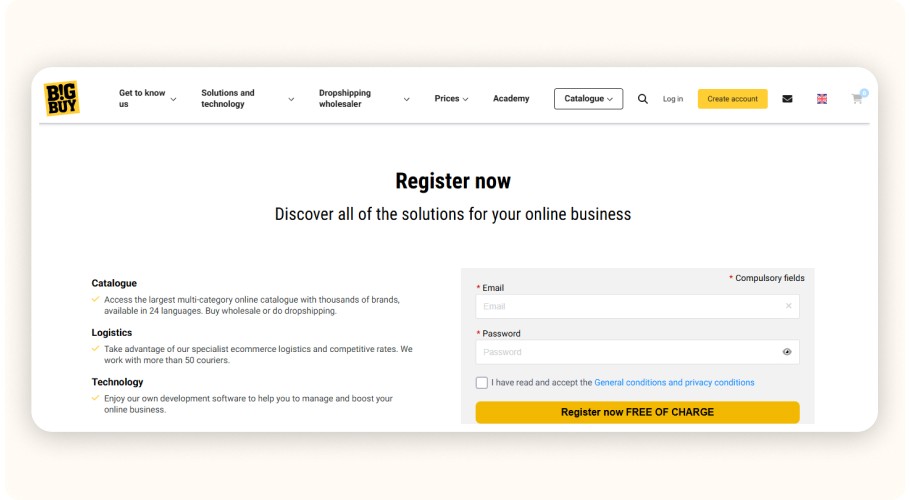
BigBuy is a B2B dropshipping supplier and logistics platform based in Spain that helps online sellers list products, sync inventory, and route orders to carriers, primarily optimized for European fulfillment.
BigBuy sits somewhere between a wholesaler and a fulfillment network.
What it is : a supplier ecosystem + integrations (connectors/APIs) + logistics services that can ship orders on your behalf.
What it isn’t : a magic “print money” supplier or a US domestic fulfillment provider.
For most sellers, the decision isn’t “Is BigBuy legit?” The decision is:
Can you profit after subscription fees + shipping costs + marketplace/connector fees?
Can you run your store without spending hours each week fixing sync errors, exclusions, and listing mismatches?
Can you hit acceptable delivery expectations for your target market (EU vs US)?
Does BigBuy ship to the USA?

Yes, BigBuy can ship internationally, including to the USA, but it’s not designed to behave like a US domestic supplier. Expect higher shipping costs, longer delivery windows, and more variance by product category and carrier.
Here’s the practical way to think about it if you’re US-based:
Country-of-origin and warehouse location matter more than the brand name. A “BigBuy product” can still be an item that effectively moves through EU-first logistics.
Your store promise has to match reality. If your product pages imply 2–5 day delivery and BigBuy needs 2+ weeks on some lanes, your chargebacks and support load will spike.
Test before you commit. Don’t bet your entire catalog on a shipping lane you haven’t validated with real orders.
A simple test protocol (worth doing):
Pick 10 products across your main categories.
Place 1 paid test order per product shipped to real US addresses (friends/family works).
Track: time to dispatch, time in transit, carrier handoffs, and “delivered” accuracy.
Decide on BigBuy only after you have your own dataset.
Where is BigBuy based?
BigBuy is based in Spain and is widely positioned as a European B2B dropshipping platform.
Why this matters: the “center of gravity” for operations, support, warehouses, carrier contracts, and cross-border routing, tends to favor Europe. If your customers are mostly in the EU, that’s a feature. If your customers are mostly in the US, it can become frustrating.
Minea
Reach $1,000 per day or get your money back

BigBuy pricing: what you’ll actually pay (not just the headline)

BigBuy’s cost isn’t just a monthly plan. Your real cost is the stack: subscription + connectors/API + shipping + packaging/handling + any marketplace sync add-ons.
Public pricing changes over time, and different plans bundle different capabilities. What matters is building a per-order cost model.
A quick cost model you can use
Use this structure to avoid surprises:
Fixed monthly costs
Platform subscription (plan tier)
Connector / sync modules (if paid separately)
API access (if your workflow depends on it)
Variable costs per order
Product cost (COGS)
Shipping cost (by destination + weight/size)
Handling/packaging fees (if applicable)
Taxes/VAT handling (depends on lanes and your compliance setup)
The profitability question for dropshipping
For most dropshipping offers, you need enough margin room to absorb shipping variance andpaid traffic costs (Meta/TikTok), plus refunds and support.
If US shipping is expensive or slow, you usually lose on both margin and conversion.
Practical takeaway: BigBuy can work if your products can absorb shipping cost (higher AOV) or if you’re selling to EU customers where lanes are stronger.
Catalog size and product quality: the “selection vs control” trade-off
BigBuy’s large catalog can speed up store building, but it also increases “commodity risk”: the more sellers list the same items, the harder it is to differentiate and protect margin. If you use BigBuy, you win by selecting products with strong creative angles and enough AOV to absorb shipping.
BigBuy is often marketed around a very large product catalog and multilingual content support. The advantage is speed to listing; the risk is low control over differentiation and quality.
Large catalogs help when you want to:
quickly populate a store,
test multiple categories,
sell in multiple European languages.
But large catalogs also create problems:
You become one of many sellers listing the same commodity products. That pushes you toward a race to the bottom.
Your product page quality depends on the upstream data. If descriptions are generic, your conversion rate usually suffers.
Variation/compatibility issues appear later (wrong model fit, missing accessories, unclear specs).
If you use BigBuy, win with selection discipline:
choose products where you can create better creatives and positioning,
build bundles or add-ons that competitors don’t,
avoid hyper-commoditized items unless you have a clear distribution edge.
Integrations and automation: what to expect in real store operations

BigBuy can be attractive if you want catalog import + inventory sync + order routing in one system. But integration-led suppliers fail in predictable ways: sync exclusions, variant mismatches, and delayed tracking updates. Your job is to limit blast radius with a small SKU rollout and a daily sync audit.
BigBuy’s value proposition relies heavily on synchronization and connectors. The risk is that automation failures turn “hands-off” into “hands-on,” and you pay twice: in subscription fees and in time.
When everything behaves, the workflow is simple: import products, sync stock/prices, route orders, and push tracking back to your storefront. When it doesn’t, the pain is predictable: exclusions, variant mismatches, inventory errors, and delayed tracking.
How to protect yourself (even if you love the platform):
Start with a small, controlled catalog (20–50 SKUs).
Lock down your product taxonomy (collections, tags, variant structure).
Build an internal “sync audit” routine: spot-check stock, prices, and tracking daily.
Keep a fallback fulfillment plan for best-sellers.
Shipping times: what matters more than “2–5 days” claims

Shipping performance isn’t a single number. What matters is: time-to-dispatch, transit time, and on-time rate for your best-selling SKUs. If your customers are in the US, you should assume delivery variance until you have your own test-order dataset for BigBuy on your exact product mix.
For dropshipping, the number that matters isn’t the marketing delivery estimate, it’s the distribution of actual delivery times on your top SKUs.
Even if a platform advertises fast EU delivery for certain lanes, your reality will vary by warehouse location, carrier selection, seasonality, customs handoffs, and product size.
What you should measure (minimum):
time from order to first carrier scan,
on-time delivery rate versus your promise.
If you’re US-focused, treat BigBuy shipping as a hypothesis until proven.
If you’re a US dropshipper trying to add EU suppliers, BigBuy can look like a shortcut, until you hit the real constraints: pricing, shipping lanes, and automation reliability.
Key Takeaways : BigBuy is a Europe-first B2B dropshipping platform. It’s built for cross-border selling inside the EU more than fast US delivery; The main upside is operational scope: a large catalog, multilingual content, and integrated logistics workflows; The main downside is risk in day-to-day execution : sellers frequently report connector/sync issues and slow support during problems. If you sell to the US, treat BigBuy as a testing lane, not your only supplier until you prove delivery times and costs on your SKUs.
BigBuy reviews: What is BigBuy (and what it isn’t)?
BigBuy is a B2B dropshipping supplier and logistics platform based in Spain that helps online sellers list products, sync inventory, and route orders to carriers, primarily optimized for European fulfillment.
BigBuy sits somewhere between a wholesaler and a fulfillment network.
What it is : a supplier ecosystem + integrations (connectors/APIs) + logistics services that can ship orders on your behalf.
What it isn’t : a magic “print money” supplier or a US domestic fulfillment provider.
For most sellers, the decision isn’t “Is BigBuy legit?” The decision is:
Can you profit after subscription fees + shipping costs + marketplace/connector fees?
Can you run your store without spending hours each week fixing sync errors, exclusions, and listing mismatches?
Can you hit acceptable delivery expectations for your target market (EU vs US)?
Does BigBuy ship to the USA?
Yes, BigBuy can ship internationally, including to the USA, but it’s not designed to behave like a US domestic supplier. Expect higher shipping costs, longer delivery windows, and more variance by product category and carrier.
Here’s the practical way to think about it if you’re US-based:
Country-of-origin and warehouse location matter more than the brand name. A “BigBuy product” can still be an item that effectively moves through EU-first logistics.
Your store promise has to match reality. If your product pages imply 2–5 day delivery and BigBuy needs 2+ weeks on some lanes, your chargebacks and support load will spike.
Test before you commit. Don’t bet your entire catalog on a shipping lane you haven’t validated with real orders.
A simple test protocol (worth doing):
Pick 10 products across your main categories.
Place 1 paid test order per product shipped to real US addresses (friends/family works).
Track: time to dispatch, time in transit, carrier handoffs, and “delivered” accuracy.
Decide on BigBuy only after you have your own dataset.
Where is BigBuy based?
BigBuy is based in Spain and is widely positioned as a European B2B dropshipping platform.
Why this matters: the “center of gravity” for operations, support, warehouses, carrier contracts, and cross-border routing, tends to favor Europe. If your customers are mostly in the EU, that’s a feature. If your customers are mostly in the US, it can become frustrating.
Minea
Reach $1,000 per day or get your money back
BigBuy pricing: what you’ll actually pay (not just the headline)
BigBuy’s cost isn’t just a monthly plan. Your real cost is the stack: subscription + connectors/API + shipping + packaging/handling + any marketplace sync add-ons.
Public pricing changes over time, and different plans bundle different capabilities. What matters is building a per-order cost model.
A quick cost model you can use
Use this structure to avoid surprises:
Fixed monthly costs
Platform subscription (plan tier)
Connector / sync modules (if paid separately)
API access (if your workflow depends on it)
Variable costs per order
Product cost (COGS)
Shipping cost (by destination + weight/size)
Handling/packaging fees (if applicable)
Taxes/VAT handling (depends on lanes and your compliance setup)
The profitability question for dropshipping
For most dropshipping offers, you need enough margin room to absorb shipping variance andpaid traffic costs (Meta/TikTok), plus refunds and support.
If US shipping is expensive or slow, you usually lose on both margin and conversion.
Practical takeaway: BigBuy can work if your products can absorb shipping cost (higher AOV) or if you’re selling to EU customers where lanes are stronger.
Catalog size and product quality: the “selection vs control” trade-off
BigBuy’s large catalog can speed up store building, but it also increases “commodity risk”: the more sellers list the same items, the harder it is to differentiate and protect margin. If you use BigBuy, you win by selecting products with strong creative angles and enough AOV to absorb shipping.
BigBuy is often marketed around a very large product catalog and multilingual content support. The advantage is speed to listing; the risk is low control over differentiation and quality.
Large catalogs help when you want to:
quickly populate a store,
test multiple categories,
sell in multiple European languages.
But large catalogs also create problems:
You become one of many sellers listing the same commodity products. That pushes you toward a race to the bottom.
Your product page quality depends on the upstream data. If descriptions are generic, your conversion rate usually suffers.
Variation/compatibility issues appear later (wrong model fit, missing accessories, unclear specs).
If you use BigBuy, win with selection discipline:
choose products where you can create better creatives and positioning,
build bundles or add-ons that competitors don’t,
avoid hyper-commoditized items unless you have a clear distribution edge.
Integrations and automation: what to expect in real store operations
BigBuy can be attractive if you want catalog import + inventory sync + order routing in one system. But integration-led suppliers fail in predictable ways: sync exclusions, variant mismatches, and delayed tracking updates. Your job is to limit blast radius with a small SKU rollout and a daily sync audit.
BigBuy’s value proposition relies heavily on synchronization and connectors. The risk is that automation failures turn “hands-off” into “hands-on,” and you pay twice: in subscription fees and in time.
When everything behaves, the workflow is simple: import products, sync stock/prices, route orders, and push tracking back to your storefront. When it doesn’t, the pain is predictable: exclusions, variant mismatches, inventory errors, and delayed tracking.
How to protect yourself (even if you love the platform):
Start with a small, controlled catalog (20–50 SKUs).
Lock down your product taxonomy (collections, tags, variant structure).
Build an internal “sync audit” routine: spot-check stock, prices, and tracking daily.
Keep a fallback fulfillment plan for best-sellers.
Shipping times: what matters more than “2–5 days” claims
Shipping performance isn’t a single number. What matters is: time-to-dispatch, transit time, and on-time rate for your best-selling SKUs. If your customers are in the US, you should assume delivery variance until you have your own test-order dataset for BigBuy on your exact product mix.
For dropshipping, the number that matters isn’t the marketing delivery estimate, it’s the distribution of actual delivery times on your top SKUs.
Even if a platform advertises fast EU delivery for certain lanes, your reality will vary by warehouse location, carrier selection, seasonality, customs handoffs, and product size.
What you should measure (minimum):
time from order to first carrier scan,
on-time delivery rate versus your promise.
If you’re US-focused, treat BigBuy shipping as a hypothesis until proven.
If you’re a US dropshipper trying to add EU suppliers, BigBuy can look like a shortcut, until you hit the real constraints: pricing, shipping lanes, and automation reliability.
Key Takeaways : BigBuy is a Europe-first B2B dropshipping platform. It’s built for cross-border selling inside the EU more than fast US delivery; The main upside is operational scope: a large catalog, multilingual content, and integrated logistics workflows; The main downside is risk in day-to-day execution : sellers frequently report connector/sync issues and slow support during problems. If you sell to the US, treat BigBuy as a testing lane, not your only supplier until you prove delivery times and costs on your SKUs.
BigBuy reviews: What is BigBuy (and what it isn’t)?
BigBuy is a B2B dropshipping supplier and logistics platform based in Spain that helps online sellers list products, sync inventory, and route orders to carriers, primarily optimized for European fulfillment.
BigBuy sits somewhere between a wholesaler and a fulfillment network.
What it is : a supplier ecosystem + integrations (connectors/APIs) + logistics services that can ship orders on your behalf.
What it isn’t : a magic “print money” supplier or a US domestic fulfillment provider.
For most sellers, the decision isn’t “Is BigBuy legit?” The decision is:
Can you profit after subscription fees + shipping costs + marketplace/connector fees?
Can you run your store without spending hours each week fixing sync errors, exclusions, and listing mismatches?
Can you hit acceptable delivery expectations for your target market (EU vs US)?
Does BigBuy ship to the USA?
Yes, BigBuy can ship internationally, including to the USA, but it’s not designed to behave like a US domestic supplier. Expect higher shipping costs, longer delivery windows, and more variance by product category and carrier.
Here’s the practical way to think about it if you’re US-based:
Country-of-origin and warehouse location matter more than the brand name. A “BigBuy product” can still be an item that effectively moves through EU-first logistics.
Your store promise has to match reality. If your product pages imply 2–5 day delivery and BigBuy needs 2+ weeks on some lanes, your chargebacks and support load will spike.
Test before you commit. Don’t bet your entire catalog on a shipping lane you haven’t validated with real orders.
A simple test protocol (worth doing):
Pick 10 products across your main categories.
Place 1 paid test order per product shipped to real US addresses (friends/family works).
Track: time to dispatch, time in transit, carrier handoffs, and “delivered” accuracy.
Decide on BigBuy only after you have your own dataset.
Where is BigBuy based?
BigBuy is based in Spain and is widely positioned as a European B2B dropshipping platform.
Why this matters: the “center of gravity” for operations, support, warehouses, carrier contracts, and cross-border routing, tends to favor Europe. If your customers are mostly in the EU, that’s a feature. If your customers are mostly in the US, it can become frustrating.
Minea
Reach $1,000 per day or get your money back
BigBuy pricing: what you’ll actually pay (not just the headline)
BigBuy’s cost isn’t just a monthly plan. Your real cost is the stack: subscription + connectors/API + shipping + packaging/handling + any marketplace sync add-ons.
Public pricing changes over time, and different plans bundle different capabilities. What matters is building a per-order cost model.
A quick cost model you can use
Use this structure to avoid surprises:
Fixed monthly costs
Platform subscription (plan tier)
Connector / sync modules (if paid separately)
API access (if your workflow depends on it)
Variable costs per order
Product cost (COGS)
Shipping cost (by destination + weight/size)
Handling/packaging fees (if applicable)
Taxes/VAT handling (depends on lanes and your compliance setup)
The profitability question for dropshipping
For most dropshipping offers, you need enough margin room to absorb shipping variance andpaid traffic costs (Meta/TikTok), plus refunds and support.
If US shipping is expensive or slow, you usually lose on both margin and conversion.
Practical takeaway: BigBuy can work if your products can absorb shipping cost (higher AOV) or if you’re selling to EU customers where lanes are stronger.
Catalog size and product quality: the “selection vs control” trade-off
BigBuy’s large catalog can speed up store building, but it also increases “commodity risk”: the more sellers list the same items, the harder it is to differentiate and protect margin. If you use BigBuy, you win by selecting products with strong creative angles and enough AOV to absorb shipping.
BigBuy is often marketed around a very large product catalog and multilingual content support. The advantage is speed to listing; the risk is low control over differentiation and quality.
Large catalogs help when you want to:
quickly populate a store,
test multiple categories,
sell in multiple European languages.
But large catalogs also create problems:
You become one of many sellers listing the same commodity products. That pushes you toward a race to the bottom.
Your product page quality depends on the upstream data. If descriptions are generic, your conversion rate usually suffers.
Variation/compatibility issues appear later (wrong model fit, missing accessories, unclear specs).
If you use BigBuy, win with selection discipline:
choose products where you can create better creatives and positioning,
build bundles or add-ons that competitors don’t,
avoid hyper-commoditized items unless you have a clear distribution edge.
Integrations and automation: what to expect in real store operations
BigBuy can be attractive if you want catalog import + inventory sync + order routing in one system. But integration-led suppliers fail in predictable ways: sync exclusions, variant mismatches, and delayed tracking updates. Your job is to limit blast radius with a small SKU rollout and a daily sync audit.
BigBuy’s value proposition relies heavily on synchronization and connectors. The risk is that automation failures turn “hands-off” into “hands-on,” and you pay twice: in subscription fees and in time.
When everything behaves, the workflow is simple: import products, sync stock/prices, route orders, and push tracking back to your storefront. When it doesn’t, the pain is predictable: exclusions, variant mismatches, inventory errors, and delayed tracking.
How to protect yourself (even if you love the platform):
Start with a small, controlled catalog (20–50 SKUs).
Lock down your product taxonomy (collections, tags, variant structure).
Build an internal “sync audit” routine: spot-check stock, prices, and tracking daily.
Keep a fallback fulfillment plan for best-sellers.
Shipping times: what matters more than “2–5 days” claims
Shipping performance isn’t a single number. What matters is: time-to-dispatch, transit time, and on-time rate for your best-selling SKUs. If your customers are in the US, you should assume delivery variance until you have your own test-order dataset for BigBuy on your exact product mix.
For dropshipping, the number that matters isn’t the marketing delivery estimate, it’s the distribution of actual delivery times on your top SKUs.
Even if a platform advertises fast EU delivery for certain lanes, your reality will vary by warehouse location, carrier selection, seasonality, customs handoffs, and product size.
What you should measure (minimum):
time from order to first carrier scan,
on-time delivery rate versus your promise.
If you’re US-focused, treat BigBuy shipping as a hypothesis until proven.
Customer service: why it becomes the deciding factor

In dropshipping, support is part of the product. If a connector breaks or a parcel stalls and you can’t get a clear resolution fast, your refund rate climbs and your ad account gets stressed by negative feedback. Treat BigBuy support like a KPI: test it during onboarding with real tickets.
With suppliers and logistics platforms, you don’t find out how good support is when everything works, you find out when something breaks.
Support quality matters because dropshipping is a chain. A single broken link (stock mismatch, lost parcel, tracking bug) becomes your brand problem.
When sellers complain about a platform, the pattern is usually one of these:
slow response during peak periods,
answers that don’t resolve the issue,
escalation gaps for technical connector problems,
unclear ownership between “platform issue” vs “carrier issue.”
A useful way to judge BigBuy support before you rely on it:
Open 3 to 5 test tickets during your trial phase.
Make them realistic: a sync mismatch, a tracking delay, a listing attribute error.
Track time-to-first-response and time-to-resolution.
If it takes days to resolve issues while you’re still “a prospect,” it won’t get better once you’re dependent.
Is BigBuy good for beginners?

BigBuy isn’t the easiest “first supplier” because it rewards operational discipline. If you’re new, you’ll spend time learning connector setup, product data cleanup, and shipping math. You can still use it, but start small, and only scale what you can monitor.
For true beginners, BigBuy can be a tough first supplier because the platform’s upside depends on getting integrations, product data, and operations right, skills most beginners haven’t built yet.
BigBuy can still work for newer sellers if you operate like an intermediate:
You understand margins and shipping math.
You can troubleshoot connectors or at least manage a structured QA routine.
You have a way to validate demand so you’re not listing random products.
If you’re brand new, you’re usually better off starting with a supplier setup that gives you:
simpler fulfillment,
clearer pricing,
fewer moving parts.
Then you can graduate to “platform suppliers” like BigBuy once your store has stable demand.


BigBuy pros and cons (for sellers)
BigBuy’s upside is scale and European operational coverage. The downside is that when automation or support fails, the seller absorbs the time cost. If you can’t afford “ops surprises,” you’ll feel that downside fast.
Pros | Cons |
|---|---|
|
|
Who should use BigBuy (and who should skip it)

BigBuy is strongest when you’re selling into Europe or running a cross-border EU strategy. If you’re US-first and need fast delivery, you should treat BigBuy as a secondary lane unless your test orders prove otherwise.
BigBuy is a good fit if…
You sell primarily to EU customers or you have EU-friendly lanes.
You’re comfortable running a structured operations process (audits, QA, fallback plans).
You’re aiming for breadth (large catalog testing) more than deep product differentiation.
You should skip (or delay) BigBuy if…
Your brand promise depends on fast US delivery.
You don’t have margin room for shipping variance.
You want “hands-off automation” and you can’t afford to babysit a connector.
BigBuy alternatives (depending on your constraint)

Alternatives only matter if they solve the constraint BigBuy can’t. If your constraint is US delivery speed, pick domestic fulfillment. If your constraint is differentiation, pick sourcing that gives you control. If your constraint is connector reliability, pick a simpler stack with fewer moving parts.
The best alternative isn’t “the most popular platform.” It’s the one that solves your biggest constraint: shipping speed, product differentiation, or operational reliability.
Here are practical alternative directions:
US/EU domestic suppliers (when delivery time is your bottleneck): prioritizes speed, usually smaller catalogs.
Agent-based sourcing (when product differentiation is your bottleneck): more control, more process.
Simpler dropshipping connectors (when automation reliability is your bottleneck): fewer features, fewer failure points.
If you’re evaluating multiple suppliers, anchor your decision to your store’s reality:
Internal links (replace with exact Minea URLs): Best dropshipping suppliers • How to find winning products • Meta/TikTok product research workflow
target market (EU vs US),
AOV and margin profile,
category constraints (fragile/bulky items),
your operational bandwidth.
A Minea-style way to decide: validate products before you validate a supplier
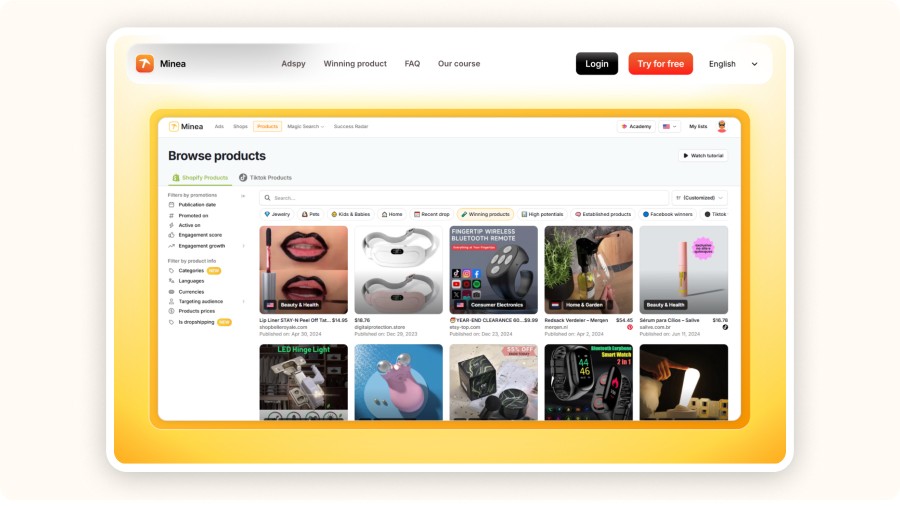
The highest-leverage move is validating demand before you validate a supplier. When you pick products that already sell, you can evaluate BigBuy on fulfillment reality instead of hopes. This is also where Minea fits naturally: using ad intelligence to spot what’s working before you import anything.
Most supplier “reviews” fail because they start with the supplier. Sellers win when they start with demand, creatives, and pricing, then choose the supplier that can fulfill that specific offer.
Here’s a workflow you can run in a week:
Find products that already convert (don’t guess).
Use an ad intelligence workflow to spot repeatable winners.
Pick 3–5 products with clear creative angles.
Example categories that often work with sub-$30 AOV: posture corrector belts, LED face masks, portable blenders.
In a Q1 2026 Minea trend snapshot, the average “impulse buy” price point clustered around ~$29.99 (supplier countries: China, Turkey, Vietnam), giving you an AOV anchor before you touch supplier math.
Build a margin model per product.
Use your target CPA and expected conversion rate to back-calculate the maximum shipping you can afford.
Test BigBuy on those specific products.
Not on a random catalog import. On the exact SKUs you’d actually advertise.
That approach forces reality fast. You’ll learn in days whether BigBuy is a fit for your niche and lanes.
BigBuy reviews verdict: should you use it for dropshipping in 2026?

BigBuy is worth testing for EU-first dropshipping operations. For US-first stores, it’s only worth scaling after you prove shipping speed, total landed cost, and connector stability on your exact SKUs.
If you sell mostly in Europe (or you’re building a cross-border EU offer), BigBuy can be worth testing because the platform is built around European logistics workflows and multilingual catalog operations.
If you sell mostly to the US, the smart stance is cautious: BigBuy may still work for specific SKUs and margins, but you should validate shipping speed and support responsiveness first, then scale only what survives real orders.
Practical recommendation: treat BigBuy as a “prove it” supplier and scale only after test orders confirm the lane.
FAQ
These FAQs answer the questions that show up most in BigBuy reviews: US shipping reality, what BigBuy actually is, whether it’s beginner-friendly, and where it’s based. Use them as a quick decision filter, then validate the rest with test orders and a basic sync-audit routine.
Does BigBuy ship to the USA?
Yes, BigBuy can ship internationally, including to the USA. The key question is whether shipping cost and delivery time match what your US customers expect for your product category.
What is BigBuy?
BigBuy is a Spain-based dropshipping and logistics platform that provides a product catalog, integrations, and fulfillment services, oriented toward European cross-border selling.
Is BigBuy good for beginners?
It can be challenging for beginners because success depends on managing integrations, margin math, and operational QA. Beginners usually do better starting with simpler fulfillment before adopting a larger platform ecosystem.
Where is BigBuy based?
BigBuy is based in Spain, with operations and positioning that skew toward European fulfillment lanes.
Is BigBuy a reliable dropshipping supplier?
Reliability depends on the specific workflow you run: catalog quality, integration stability, shipping lanes, and support responsiveness. Treat it as reliable only after you’ve validated it with test orders and a real sync audit routine.
Customer service: why it becomes the deciding factor
In dropshipping, support is part of the product. If a connector breaks or a parcel stalls and you can’t get a clear resolution fast, your refund rate climbs and your ad account gets stressed by negative feedback. Treat BigBuy support like a KPI: test it during onboarding with real tickets.
With suppliers and logistics platforms, you don’t find out how good support is when everything works, you find out when something breaks.
Support quality matters because dropshipping is a chain. A single broken link (stock mismatch, lost parcel, tracking bug) becomes your brand problem.
When sellers complain about a platform, the pattern is usually one of these:
slow response during peak periods,
answers that don’t resolve the issue,
escalation gaps for technical connector problems,
unclear ownership between “platform issue” vs “carrier issue.”
A useful way to judge BigBuy support before you rely on it:
Open 3 to 5 test tickets during your trial phase.
Make them realistic: a sync mismatch, a tracking delay, a listing attribute error.
Track time-to-first-response and time-to-resolution.
If it takes days to resolve issues while you’re still “a prospect,” it won’t get better once you’re dependent.
Is BigBuy good for beginners?
BigBuy isn’t the easiest “first supplier” because it rewards operational discipline. If you’re new, you’ll spend time learning connector setup, product data cleanup, and shipping math. You can still use it, but start small, and only scale what you can monitor.
For true beginners, BigBuy can be a tough first supplier because the platform’s upside depends on getting integrations, product data, and operations right, skills most beginners haven’t built yet.
BigBuy can still work for newer sellers if you operate like an intermediate:
You understand margins and shipping math.
You can troubleshoot connectors or at least manage a structured QA routine.
You have a way to validate demand so you’re not listing random products.
If you’re brand new, you’re usually better off starting with a supplier setup that gives you:
simpler fulfillment,
clearer pricing,
fewer moving parts.
Then you can graduate to “platform suppliers” like BigBuy once your store has stable demand.
BigBuy pros and cons (for sellers)
BigBuy’s upside is scale and European operational coverage. The downside is that when automation or support fails, the seller absorbs the time cost. If you can’t afford “ops surprises,” you’ll feel that downside fast.
Pros | Cons |
|---|---|
|
|
Who should use BigBuy (and who should skip it)
BigBuy is strongest when you’re selling into Europe or running a cross-border EU strategy. If you’re US-first and need fast delivery, you should treat BigBuy as a secondary lane unless your test orders prove otherwise.
BigBuy is a good fit if…
You sell primarily to EU customers or you have EU-friendly lanes.
You’re comfortable running a structured operations process (audits, QA, fallback plans).
You’re aiming for breadth (large catalog testing) more than deep product differentiation.
You should skip (or delay) BigBuy if…
Your brand promise depends on fast US delivery.
You don’t have margin room for shipping variance.
You want “hands-off automation” and you can’t afford to babysit a connector.
BigBuy alternatives (depending on your constraint)
Alternatives only matter if they solve the constraint BigBuy can’t. If your constraint is US delivery speed, pick domestic fulfillment. If your constraint is differentiation, pick sourcing that gives you control. If your constraint is connector reliability, pick a simpler stack with fewer moving parts.
The best alternative isn’t “the most popular platform.” It’s the one that solves your biggest constraint: shipping speed, product differentiation, or operational reliability.
Here are practical alternative directions:
US/EU domestic suppliers (when delivery time is your bottleneck): prioritizes speed, usually smaller catalogs.
Agent-based sourcing (when product differentiation is your bottleneck): more control, more process.
Simpler dropshipping connectors (when automation reliability is your bottleneck): fewer features, fewer failure points.
If you’re evaluating multiple suppliers, anchor your decision to your store’s reality:
Internal links (replace with exact Minea URLs): Best dropshipping suppliers • How to find winning products • Meta/TikTok product research workflow
target market (EU vs US),
AOV and margin profile,
category constraints (fragile/bulky items),
your operational bandwidth.
A Minea-style way to decide: validate products before you validate a supplier
The highest-leverage move is validating demand before you validate a supplier. When you pick products that already sell, you can evaluate BigBuy on fulfillment reality instead of hopes. This is also where Minea fits naturally: using ad intelligence to spot what’s working before you import anything.
Most supplier “reviews” fail because they start with the supplier. Sellers win when they start with demand, creatives, and pricing, then choose the supplier that can fulfill that specific offer.
Here’s a workflow you can run in a week:
Find products that already convert (don’t guess).
Use an ad intelligence workflow to spot repeatable winners.
Pick 3–5 products with clear creative angles.
Example categories that often work with sub-$30 AOV: posture corrector belts, LED face masks, portable blenders.
In a Q1 2026 Minea trend snapshot, the average “impulse buy” price point clustered around ~$29.99 (supplier countries: China, Turkey, Vietnam), giving you an AOV anchor before you touch supplier math.
Build a margin model per product.
Use your target CPA and expected conversion rate to back-calculate the maximum shipping you can afford.
Test BigBuy on those specific products.
Not on a random catalog import. On the exact SKUs you’d actually advertise.
That approach forces reality fast. You’ll learn in days whether BigBuy is a fit for your niche and lanes.
BigBuy reviews verdict: should you use it for dropshipping in 2026?
BigBuy is worth testing for EU-first dropshipping operations. For US-first stores, it’s only worth scaling after you prove shipping speed, total landed cost, and connector stability on your exact SKUs.
If you sell mostly in Europe (or you’re building a cross-border EU offer), BigBuy can be worth testing because the platform is built around European logistics workflows and multilingual catalog operations.
If you sell mostly to the US, the smart stance is cautious: BigBuy may still work for specific SKUs and margins, but you should validate shipping speed and support responsiveness first, then scale only what survives real orders.
Practical recommendation: treat BigBuy as a “prove it” supplier and scale only after test orders confirm the lane.
FAQ
These FAQs answer the questions that show up most in BigBuy reviews: US shipping reality, what BigBuy actually is, whether it’s beginner-friendly, and where it’s based. Use them as a quick decision filter, then validate the rest with test orders and a basic sync-audit routine.
Does BigBuy ship to the USA?
Yes, BigBuy can ship internationally, including to the USA. The key question is whether shipping cost and delivery time match what your US customers expect for your product category.
What is BigBuy?
BigBuy is a Spain-based dropshipping and logistics platform that provides a product catalog, integrations, and fulfillment services, oriented toward European cross-border selling.
Is BigBuy good for beginners?
It can be challenging for beginners because success depends on managing integrations, margin math, and operational QA. Beginners usually do better starting with simpler fulfillment before adopting a larger platform ecosystem.
Where is BigBuy based?
BigBuy is based in Spain, with operations and positioning that skew toward European fulfillment lanes.
Is BigBuy a reliable dropshipping supplier?
Reliability depends on the specific workflow you run: catalog quality, integration stability, shipping lanes, and support responsiveness. Treat it as reliable only after you’ve validated it with test orders and a real sync audit routine.
Customer service: why it becomes the deciding factor
In dropshipping, support is part of the product. If a connector breaks or a parcel stalls and you can’t get a clear resolution fast, your refund rate climbs and your ad account gets stressed by negative feedback. Treat BigBuy support like a KPI: test it during onboarding with real tickets.
With suppliers and logistics platforms, you don’t find out how good support is when everything works, you find out when something breaks.
Support quality matters because dropshipping is a chain. A single broken link (stock mismatch, lost parcel, tracking bug) becomes your brand problem.
When sellers complain about a platform, the pattern is usually one of these:
slow response during peak periods,
answers that don’t resolve the issue,
escalation gaps for technical connector problems,
unclear ownership between “platform issue” vs “carrier issue.”
A useful way to judge BigBuy support before you rely on it:
Open 3 to 5 test tickets during your trial phase.
Make them realistic: a sync mismatch, a tracking delay, a listing attribute error.
Track time-to-first-response and time-to-resolution.
If it takes days to resolve issues while you’re still “a prospect,” it won’t get better once you’re dependent.
Is BigBuy good for beginners?
BigBuy isn’t the easiest “first supplier” because it rewards operational discipline. If you’re new, you’ll spend time learning connector setup, product data cleanup, and shipping math. You can still use it, but start small, and only scale what you can monitor.
For true beginners, BigBuy can be a tough first supplier because the platform’s upside depends on getting integrations, product data, and operations right, skills most beginners haven’t built yet.
BigBuy can still work for newer sellers if you operate like an intermediate:
You understand margins and shipping math.
You can troubleshoot connectors or at least manage a structured QA routine.
You have a way to validate demand so you’re not listing random products.
If you’re brand new, you’re usually better off starting with a supplier setup that gives you:
simpler fulfillment,
clearer pricing,
fewer moving parts.
Then you can graduate to “platform suppliers” like BigBuy once your store has stable demand.
BigBuy pros and cons (for sellers)
BigBuy’s upside is scale and European operational coverage. The downside is that when automation or support fails, the seller absorbs the time cost. If you can’t afford “ops surprises,” you’ll feel that downside fast.
Pros | Cons |
|---|---|
|
|
Who should use BigBuy (and who should skip it)
BigBuy is strongest when you’re selling into Europe or running a cross-border EU strategy. If you’re US-first and need fast delivery, you should treat BigBuy as a secondary lane unless your test orders prove otherwise.
BigBuy is a good fit if…
You sell primarily to EU customers or you have EU-friendly lanes.
You’re comfortable running a structured operations process (audits, QA, fallback plans).
You’re aiming for breadth (large catalog testing) more than deep product differentiation.
You should skip (or delay) BigBuy if…
Your brand promise depends on fast US delivery.
You don’t have margin room for shipping variance.
You want “hands-off automation” and you can’t afford to babysit a connector.
BigBuy alternatives (depending on your constraint)
Alternatives only matter if they solve the constraint BigBuy can’t. If your constraint is US delivery speed, pick domestic fulfillment. If your constraint is differentiation, pick sourcing that gives you control. If your constraint is connector reliability, pick a simpler stack with fewer moving parts.
The best alternative isn’t “the most popular platform.” It’s the one that solves your biggest constraint: shipping speed, product differentiation, or operational reliability.
Here are practical alternative directions:
US/EU domestic suppliers (when delivery time is your bottleneck): prioritizes speed, usually smaller catalogs.
Agent-based sourcing (when product differentiation is your bottleneck): more control, more process.
Simpler dropshipping connectors (when automation reliability is your bottleneck): fewer features, fewer failure points.
If you’re evaluating multiple suppliers, anchor your decision to your store’s reality:
Internal links (replace with exact Minea URLs): Best dropshipping suppliers • How to find winning products • Meta/TikTok product research workflow
target market (EU vs US),
AOV and margin profile,
category constraints (fragile/bulky items),
your operational bandwidth.
A Minea-style way to decide: validate products before you validate a supplier
The highest-leverage move is validating demand before you validate a supplier. When you pick products that already sell, you can evaluate BigBuy on fulfillment reality instead of hopes. This is also where Minea fits naturally: using ad intelligence to spot what’s working before you import anything.
Most supplier “reviews” fail because they start with the supplier. Sellers win when they start with demand, creatives, and pricing, then choose the supplier that can fulfill that specific offer.
Here’s a workflow you can run in a week:
Find products that already convert (don’t guess).
Use an ad intelligence workflow to spot repeatable winners.
Pick 3–5 products with clear creative angles.
Example categories that often work with sub-$30 AOV: posture corrector belts, LED face masks, portable blenders.
In a Q1 2026 Minea trend snapshot, the average “impulse buy” price point clustered around ~$29.99 (supplier countries: China, Turkey, Vietnam), giving you an AOV anchor before you touch supplier math.
Build a margin model per product.
Use your target CPA and expected conversion rate to back-calculate the maximum shipping you can afford.
Test BigBuy on those specific products.
Not on a random catalog import. On the exact SKUs you’d actually advertise.
That approach forces reality fast. You’ll learn in days whether BigBuy is a fit for your niche and lanes.
BigBuy reviews verdict: should you use it for dropshipping in 2026?
BigBuy is worth testing for EU-first dropshipping operations. For US-first stores, it’s only worth scaling after you prove shipping speed, total landed cost, and connector stability on your exact SKUs.
If you sell mostly in Europe (or you’re building a cross-border EU offer), BigBuy can be worth testing because the platform is built around European logistics workflows and multilingual catalog operations.
If you sell mostly to the US, the smart stance is cautious: BigBuy may still work for specific SKUs and margins, but you should validate shipping speed and support responsiveness first, then scale only what survives real orders.
Practical recommendation: treat BigBuy as a “prove it” supplier and scale only after test orders confirm the lane.
FAQ
These FAQs answer the questions that show up most in BigBuy reviews: US shipping reality, what BigBuy actually is, whether it’s beginner-friendly, and where it’s based. Use them as a quick decision filter, then validate the rest with test orders and a basic sync-audit routine.
Does BigBuy ship to the USA?
Yes, BigBuy can ship internationally, including to the USA. The key question is whether shipping cost and delivery time match what your US customers expect for your product category.
What is BigBuy?
BigBuy is a Spain-based dropshipping and logistics platform that provides a product catalog, integrations, and fulfillment services, oriented toward European cross-border selling.
Is BigBuy good for beginners?
It can be challenging for beginners because success depends on managing integrations, margin math, and operational QA. Beginners usually do better starting with simpler fulfillment before adopting a larger platform ecosystem.
Where is BigBuy based?
BigBuy is based in Spain, with operations and positioning that skew toward European fulfillment lanes.
Is BigBuy a reliable dropshipping supplier?
Reliability depends on the specific workflow you run: catalog quality, integration stability, shipping lanes, and support responsiveness. Treat it as reliable only after you’ve validated it with test orders and a real sync audit routine.
Similar articles

Alibaba Dropshipping Suppliers in 2026: When It Works and When It Doesn't
Best Dropshipping Suppliers
Alibaba Dropshipping Suppliers in 2026: When It Works and When It Doesn't
Best Dropshipping Suppliers
Alibaba Dropshipping Suppliers in 2026: When It Works and When It Doesn't
Best Dropshipping Suppliers
Alibaba Dropshipping Suppliers in 2026: When It Works and When It Doesn't
Best Dropshipping Suppliers



Our Free Adspys

Find winning products on our Tiktok adspy today!
Find winning products on our Facebook adspy today!
Find winning products on our Tiktok adspy today!
Find winning products on our Facebook adspy today!
Find winning products on our Tiktok adspy today!
Find winning products on our Facebook adspy today!
Find winning products on our Tiktok adspy today!
Find winning products on our Facebook adspy today!
1 winning product everyday.
Follow us!






Find out more
Read more
Minea © 2026
Find out more
Read more
Minea © 2026
Find out more
Read more
Minea © 2026
Find out more
Read more
Minea © 2026
Find out more
Read more
Minea © 2026
Find out more
Read more
Minea © 2026