Alibaba Dropshipping Suppliers in 2026: When It Works and When It Doesn't
Best Dropshipping Suppliers
Author: Elysa
Contents
Alibaba is not a dropshipping platform. That is the first thing to understand, and most guides skip it.
It is a wholesale marketplace connecting you to manufacturers. There is a Dropshipping Center, and it works, but the reason to be on Alibaba is different: it is where you go when a product has proven itself and you want better unit economics than a retail marketplace can offer.
TL;DR
Alibaba sells wholesale, AliExpress sells retail. Same parent company, different purpose.
Use AliExpress to test, Alibaba to scale. Switching too early ties up cash in stock you have not validated.
MOQ is negotiable far more often than the listing suggests.
Always order a sample before any bulk commitment. Non-negotiable.
Verified status is a floor, not a guarantee, Gold Supplier and Trade Assurance reduce risk without eliminating it.
Lead times are long. Production plus freight can run four to eight weeks.
Alibaba vs AliExpress: the actual difference

AliExpress | Alibaba
| |
|---|---|---|
Model | Retail, single units | Wholesale, bulk |
MOQ | None | Usually 50–500 units, negotiable (as listed on Alibaba, August 2026) |
Unit price | Higher | Materially lower at volume |
Customisation | Almost none | Packaging, branding, product changes |
Lead time | 2–4 weeks shipping | 2–4 weeks production + freight |
Best for | Testing a product | Scaling one that works |
The practical rule: test on AliExpress, scale on Alibaba. Committing to a minimum order before a product has sold is how sellers end up with a garage full of stock that never moved.
The Dropshipping Center
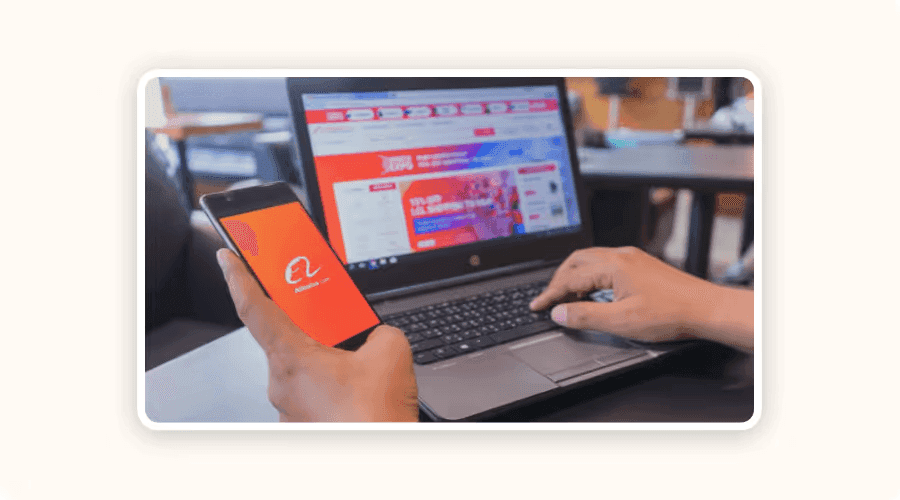
Alibaba's Dropshipping Center exists for sellers who want the sourcing depth without the bulk commitment. It surfaces suppliers willing to ship single units and integrates with common store platforms.
Two honest caveats. The supplier pool is narrower than the main marketplace, and unit prices sit closer to retail, you give up much of the wholesale advantage. It is a useful bridge, not the reason Alibaba matters.
How to find and vet a supplier

1. Filter on the badges that mean something
Trade Assurance is the one that matters: it holds payment until you confirm the order arrived as agreed. Treat suppliers without it as a materially different risk.
Gold Supplier means a paid membership plus verification, a floor, not proof of quality. Verified Supplier adds third-party inspection and is the stronger signal.
Filter on years active too. A supplier trading for eight years has survived things a six-month-old listing has not.
2. Read the response, not just the profile
Message three or four suppliers with the same specific question, a customisation, a lead time, a price at a given quantity. The quality of the answers separates them faster than any badge.
Watch for: a real answer to the actual question, a named contact, and a willingness to discuss MOQ. Vagueness at this stage becomes vagueness when something goes wrong.
3. Negotiate the MOQ
Listed minimums are opening positions. Suppliers routinely accept a smaller first order from a buyer who looks like a repeat customer.
What works: explaining you are validating before a larger order, asking for a trial quantity, and being specific about the follow-up volume. What does not: asking for a discount without context.
4. Order a sample, always
Pay for one unit, shipped to you. It costs less than one bad batch and tells you the true quality, the packaging and the real lead time.
This is the same discipline as any supplier: what a customer receives is the only thing that matters, and you cannot know it from a listing photo.


Getting started, in order

Validate the product first, on a retail marketplace or with ads. Alibaba is the second step, never the first.
Shortlist three suppliers with Trade Assurance and comparable specs.
Order samples from all three. The price difference is noise next to picking the wrong one.
Negotiate MOQ and lead time on the winner.
Place a small first order, smaller than you think you need.
Only then scale the quantity.
The three real problems, and what to do
Long lead times. Production plus freight can run four to eight weeks, as quoted by suppliers in August 2026. Plan inventory around it, or use a supplier with local warehousing for the fast lane while Alibaba handles restocking.
Quality variance between batches. The sample is not a guarantee. Ask for pre-shipment photos, or use an inspection service on larger orders.
Communication. Be specific and written. Confirm every agreed detail, quantity, spec, packaging, date, in a message rather than a call. Ambiguity resolves in the supplier's favour by default.
When Alibaba is the wrong answer
You have not validated the product. Use AliExpress or a dropshipping supplier first.
You need delivery in days. Lead times do not allow it.
You cannot fund stock. Wholesale means paying before selling.
You want zero handling. Alibaba assumes you are more involved than a dropshipping platform requires.
For those cases, best dropshipping suppliers covers the platforms that ship single units, and dropshipping agents covers the middle ground, an agent gives you sourcing and quality control without managing a factory relationship yourself.
Knowing what to source
Sourcing is the second half of the problem. The first is knowing which product justifies a bulk order at all, and that decision is made on demand data, not on a catalogue.
Marketplace history shows what already sold; ad platforms show what is being pushed now, because advertisers commit budget before demand appears in search. An ad spy surfaces a product while spend is ramping. I walk through the filter sequence in this product-research video (French), and cover finding a supplier from a competitor's ad in this one on suppliers.
The criteria a product must clear before you order 300 units are in winning dropshipping products.
FAQ
Can I dropship with Alibaba?
Yes, through the Dropshipping Center, which lists suppliers willing to ship single units. The main marketplace is wholesale and generally requires a minimum order, so most sellers use Alibaba to scale a proven product rather than to start.
What is the difference between Alibaba and AliExpress?
Alibaba is wholesale, bulk quantities, lower unit prices, customisation possible. AliExpress is retail — single units, higher prices, no customisation. Same parent company, opposite use cases.
Is there a minimum order on Alibaba?
Usually, and it is negotiable more often than the listing implies. Suppliers frequently accept a smaller trial order from a buyer who explains they are validating before a larger commitment.
How do I know an Alibaba supplier is reliable?
Trade Assurance first, then Verified Supplier status and years active. But the decisive test is a paid sample shipped to you, badges reduce risk, a sample tells you what your customer will actually receive.
How long does Alibaba shipping take?
Production plus freight typically runs four to eight weeks as of August 2026, depending on quantity and shipping method. Air freight is faster and materially more expensive; plan restocking around the lead time rather than reacting to it.
Should I use Alibaba as a beginner?
Not for your first product. Validate on a platform that ships single units, then move to Alibaba once the product sells consistently and the unit economics justify a bulk order.
Alibaba is not a dropshipping platform. That is the first thing to understand, and most guides skip it.
It is a wholesale marketplace connecting you to manufacturers. There is a Dropshipping Center, and it works, but the reason to be on Alibaba is different: it is where you go when a product has proven itself and you want better unit economics than a retail marketplace can offer.
TL;DR
Alibaba sells wholesale, AliExpress sells retail. Same parent company, different purpose.
Use AliExpress to test, Alibaba to scale. Switching too early ties up cash in stock you have not validated.
MOQ is negotiable far more often than the listing suggests.
Always order a sample before any bulk commitment. Non-negotiable.
Verified status is a floor, not a guarantee, Gold Supplier and Trade Assurance reduce risk without eliminating it.
Lead times are long. Production plus freight can run four to eight weeks.
Alibaba vs AliExpress: the actual difference
AliExpress | Alibaba
| |
|---|---|---|
Model | Retail, single units | Wholesale, bulk |
MOQ | None | Usually 50–500 units, negotiable (as listed on Alibaba, August 2026) |
Unit price | Higher | Materially lower at volume |
Customisation | Almost none | Packaging, branding, product changes |
Lead time | 2–4 weeks shipping | 2–4 weeks production + freight |
Best for | Testing a product | Scaling one that works |
The practical rule: test on AliExpress, scale on Alibaba. Committing to a minimum order before a product has sold is how sellers end up with a garage full of stock that never moved.
The Dropshipping Center
Alibaba's Dropshipping Center exists for sellers who want the sourcing depth without the bulk commitment. It surfaces suppliers willing to ship single units and integrates with common store platforms.
Two honest caveats. The supplier pool is narrower than the main marketplace, and unit prices sit closer to retail, you give up much of the wholesale advantage. It is a useful bridge, not the reason Alibaba matters.
How to find and vet a supplier
1. Filter on the badges that mean something
Trade Assurance is the one that matters: it holds payment until you confirm the order arrived as agreed. Treat suppliers without it as a materially different risk.
Gold Supplier means a paid membership plus verification, a floor, not proof of quality. Verified Supplier adds third-party inspection and is the stronger signal.
Filter on years active too. A supplier trading for eight years has survived things a six-month-old listing has not.
2. Read the response, not just the profile
Message three or four suppliers with the same specific question, a customisation, a lead time, a price at a given quantity. The quality of the answers separates them faster than any badge.
Watch for: a real answer to the actual question, a named contact, and a willingness to discuss MOQ. Vagueness at this stage becomes vagueness when something goes wrong.
3. Negotiate the MOQ
Listed minimums are opening positions. Suppliers routinely accept a smaller first order from a buyer who looks like a repeat customer.
What works: explaining you are validating before a larger order, asking for a trial quantity, and being specific about the follow-up volume. What does not: asking for a discount without context.
4. Order a sample, always
Pay for one unit, shipped to you. It costs less than one bad batch and tells you the true quality, the packaging and the real lead time.
This is the same discipline as any supplier: what a customer receives is the only thing that matters, and you cannot know it from a listing photo.
Getting started, in order
Validate the product first, on a retail marketplace or with ads. Alibaba is the second step, never the first.
Shortlist three suppliers with Trade Assurance and comparable specs.
Order samples from all three. The price difference is noise next to picking the wrong one.
Negotiate MOQ and lead time on the winner.
Place a small first order, smaller than you think you need.
Only then scale the quantity.
The three real problems, and what to do
Long lead times. Production plus freight can run four to eight weeks, as quoted by suppliers in August 2026. Plan inventory around it, or use a supplier with local warehousing for the fast lane while Alibaba handles restocking.
Quality variance between batches. The sample is not a guarantee. Ask for pre-shipment photos, or use an inspection service on larger orders.
Communication. Be specific and written. Confirm every agreed detail, quantity, spec, packaging, date, in a message rather than a call. Ambiguity resolves in the supplier's favour by default.
When Alibaba is the wrong answer
You have not validated the product. Use AliExpress or a dropshipping supplier first.
You need delivery in days. Lead times do not allow it.
You cannot fund stock. Wholesale means paying before selling.
You want zero handling. Alibaba assumes you are more involved than a dropshipping platform requires.
For those cases, best dropshipping suppliers covers the platforms that ship single units, and dropshipping agents covers the middle ground, an agent gives you sourcing and quality control without managing a factory relationship yourself.
Knowing what to source
Sourcing is the second half of the problem. The first is knowing which product justifies a bulk order at all, and that decision is made on demand data, not on a catalogue.
Marketplace history shows what already sold; ad platforms show what is being pushed now, because advertisers commit budget before demand appears in search. An ad spy surfaces a product while spend is ramping. I walk through the filter sequence in this product-research video (French), and cover finding a supplier from a competitor's ad in this one on suppliers.
The criteria a product must clear before you order 300 units are in winning dropshipping products.
FAQ
Can I dropship with Alibaba?
Yes, through the Dropshipping Center, which lists suppliers willing to ship single units. The main marketplace is wholesale and generally requires a minimum order, so most sellers use Alibaba to scale a proven product rather than to start.
What is the difference between Alibaba and AliExpress?
Alibaba is wholesale, bulk quantities, lower unit prices, customisation possible. AliExpress is retail — single units, higher prices, no customisation. Same parent company, opposite use cases.
Is there a minimum order on Alibaba?
Usually, and it is negotiable more often than the listing implies. Suppliers frequently accept a smaller trial order from a buyer who explains they are validating before a larger commitment.
How do I know an Alibaba supplier is reliable?
Trade Assurance first, then Verified Supplier status and years active. But the decisive test is a paid sample shipped to you, badges reduce risk, a sample tells you what your customer will actually receive.
How long does Alibaba shipping take?
Production plus freight typically runs four to eight weeks as of August 2026, depending on quantity and shipping method. Air freight is faster and materially more expensive; plan restocking around the lead time rather than reacting to it.
Should I use Alibaba as a beginner?
Not for your first product. Validate on a platform that ships single units, then move to Alibaba once the product sells consistently and the unit economics justify a bulk order.
Alibaba is not a dropshipping platform. That is the first thing to understand, and most guides skip it.
It is a wholesale marketplace connecting you to manufacturers. There is a Dropshipping Center, and it works, but the reason to be on Alibaba is different: it is where you go when a product has proven itself and you want better unit economics than a retail marketplace can offer.
TL;DR
Alibaba sells wholesale, AliExpress sells retail. Same parent company, different purpose.
Use AliExpress to test, Alibaba to scale. Switching too early ties up cash in stock you have not validated.
MOQ is negotiable far more often than the listing suggests.
Always order a sample before any bulk commitment. Non-negotiable.
Verified status is a floor, not a guarantee, Gold Supplier and Trade Assurance reduce risk without eliminating it.
Lead times are long. Production plus freight can run four to eight weeks.
Alibaba vs AliExpress: the actual difference
AliExpress | Alibaba
| |
|---|---|---|
Model | Retail, single units | Wholesale, bulk |
MOQ | None | Usually 50–500 units, negotiable (as listed on Alibaba, August 2026) |
Unit price | Higher | Materially lower at volume |
Customisation | Almost none | Packaging, branding, product changes |
Lead time | 2–4 weeks shipping | 2–4 weeks production + freight |
Best for | Testing a product | Scaling one that works |
The practical rule: test on AliExpress, scale on Alibaba. Committing to a minimum order before a product has sold is how sellers end up with a garage full of stock that never moved.
The Dropshipping Center
Alibaba's Dropshipping Center exists for sellers who want the sourcing depth without the bulk commitment. It surfaces suppliers willing to ship single units and integrates with common store platforms.
Two honest caveats. The supplier pool is narrower than the main marketplace, and unit prices sit closer to retail, you give up much of the wholesale advantage. It is a useful bridge, not the reason Alibaba matters.
How to find and vet a supplier
1. Filter on the badges that mean something
Trade Assurance is the one that matters: it holds payment until you confirm the order arrived as agreed. Treat suppliers without it as a materially different risk.
Gold Supplier means a paid membership plus verification, a floor, not proof of quality. Verified Supplier adds third-party inspection and is the stronger signal.
Filter on years active too. A supplier trading for eight years has survived things a six-month-old listing has not.
2. Read the response, not just the profile
Message three or four suppliers with the same specific question, a customisation, a lead time, a price at a given quantity. The quality of the answers separates them faster than any badge.
Watch for: a real answer to the actual question, a named contact, and a willingness to discuss MOQ. Vagueness at this stage becomes vagueness when something goes wrong.
3. Negotiate the MOQ
Listed minimums are opening positions. Suppliers routinely accept a smaller first order from a buyer who looks like a repeat customer.
What works: explaining you are validating before a larger order, asking for a trial quantity, and being specific about the follow-up volume. What does not: asking for a discount without context.
4. Order a sample, always
Pay for one unit, shipped to you. It costs less than one bad batch and tells you the true quality, the packaging and the real lead time.
This is the same discipline as any supplier: what a customer receives is the only thing that matters, and you cannot know it from a listing photo.
Getting started, in order
Validate the product first, on a retail marketplace or with ads. Alibaba is the second step, never the first.
Shortlist three suppliers with Trade Assurance and comparable specs.
Order samples from all three. The price difference is noise next to picking the wrong one.
Negotiate MOQ and lead time on the winner.
Place a small first order, smaller than you think you need.
Only then scale the quantity.
The three real problems, and what to do
Long lead times. Production plus freight can run four to eight weeks, as quoted by suppliers in August 2026. Plan inventory around it, or use a supplier with local warehousing for the fast lane while Alibaba handles restocking.
Quality variance between batches. The sample is not a guarantee. Ask for pre-shipment photos, or use an inspection service on larger orders.
Communication. Be specific and written. Confirm every agreed detail, quantity, spec, packaging, date, in a message rather than a call. Ambiguity resolves in the supplier's favour by default.
When Alibaba is the wrong answer
You have not validated the product. Use AliExpress or a dropshipping supplier first.
You need delivery in days. Lead times do not allow it.
You cannot fund stock. Wholesale means paying before selling.
You want zero handling. Alibaba assumes you are more involved than a dropshipping platform requires.
For those cases, best dropshipping suppliers covers the platforms that ship single units, and dropshipping agents covers the middle ground, an agent gives you sourcing and quality control without managing a factory relationship yourself.
Knowing what to source
Sourcing is the second half of the problem. The first is knowing which product justifies a bulk order at all, and that decision is made on demand data, not on a catalogue.
Marketplace history shows what already sold; ad platforms show what is being pushed now, because advertisers commit budget before demand appears in search. An ad spy surfaces a product while spend is ramping. I walk through the filter sequence in this product-research video (French), and cover finding a supplier from a competitor's ad in this one on suppliers.
The criteria a product must clear before you order 300 units are in winning dropshipping products.
FAQ
Can I dropship with Alibaba?
Yes, through the Dropshipping Center, which lists suppliers willing to ship single units. The main marketplace is wholesale and generally requires a minimum order, so most sellers use Alibaba to scale a proven product rather than to start.
What is the difference between Alibaba and AliExpress?
Alibaba is wholesale, bulk quantities, lower unit prices, customisation possible. AliExpress is retail — single units, higher prices, no customisation. Same parent company, opposite use cases.
Is there a minimum order on Alibaba?
Usually, and it is negotiable more often than the listing implies. Suppliers frequently accept a smaller trial order from a buyer who explains they are validating before a larger commitment.
How do I know an Alibaba supplier is reliable?
Trade Assurance first, then Verified Supplier status and years active. But the decisive test is a paid sample shipped to you, badges reduce risk, a sample tells you what your customer will actually receive.
How long does Alibaba shipping take?
Production plus freight typically runs four to eight weeks as of August 2026, depending on quantity and shipping method. Air freight is faster and materially more expensive; plan restocking around the lead time rather than reacting to it.
Should I use Alibaba as a beginner?
Not for your first product. Validate on a platform that ships single units, then move to Alibaba once the product sells consistently and the unit economics justify a bulk order.
Similar articles


BigBuy Reviews for Dropshipping (2026): Costs, Shipping, and Fit for US Sellers
Best Dropshipping Suppliers
BigBuy Reviews for Dropshipping (2026): Costs, Shipping, and Fit for US Sellers
Best Dropshipping Suppliers
BigBuy Reviews for Dropshipping (2026): Costs, Shipping, and Fit for US Sellers
Best Dropshipping Suppliers
BigBuy Reviews for Dropshipping (2026): Costs, Shipping, and Fit for US Sellers
Best Dropshipping Suppliers


Our Free Adspys

Find winning products on our Tiktok adspy today!
Find winning products on our Facebook adspy today!
Find winning products on our Tiktok adspy today!
Find winning products on our Facebook adspy today!
Find winning products on our Tiktok adspy today!
Find winning products on our Facebook adspy today!
Find winning products on our Tiktok adspy today!
Find winning products on our Facebook adspy today!
1 winning product everyday.
Follow us!






Find out more
Read more
Minea © 2026
Find out more
Read more
Minea © 2026
Find out more
Read more
Minea © 2026
Find out more
Read more
Minea © 2026
Find out more
Read more
Minea © 2026
Find out more
Read more
Minea © 2026