How to Effectively Manage a Drop Shipping Invoice in 2026?
Dropshipping Fees
Author: Josa
Contents
To properly handle a drop shipping invoice, as an online seller, you must centralize your documents, verify compliance, and make sure they meet tax requirements. Many beginners overlook these steps. However, they are essential.
They help you avoid pricing errors, accounting mistakes, and issues related to shipping costs. More importantly, they protect your margins and overall profitability.
Dropshipping relies on outsourced logistics. You sell products online through your store. Your supplier ships the items directly to your customers. For every order, the supplier issues an ecommerce invoice to you. As your order volume grows, your supplier network expands, or you start selling internationally, tracking every invoice dropshipping document quickly becomes complex.
In this guide, you’ll learn best practices to organize, automate, and optimize your drop shipping invoice management system.
What Is a Drop Shipping Invoice?
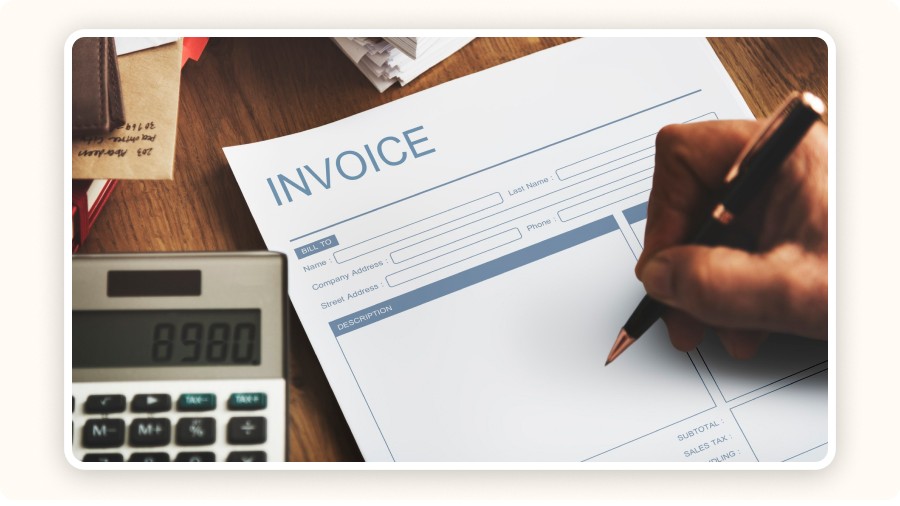
A drop shipping invoice is an accounting document that confirms the sale of a product between a supplier and an online store.
In this ecommerce model, the seller markets products they do not physically stock. The supplier ships the items directly to the customer. After fulfillment, the supplier bills the dropshipper through an ecommerce invoice.
The invoice serves as legal proof of the transaction. In dropshipping, it becomes:
A tax record
A legal compliance document
A financial reference point to manage your business
A drop shipping invoice typically details:
The goods sold
Quantities
Unit prices
Applied taxes
Payment terms
Without accurate documentation, you can’t properly manage supplier invoices, monitor your margins, or ensure regulatory compliance.
What Must Be Included in a Drop Shipping Invoice?
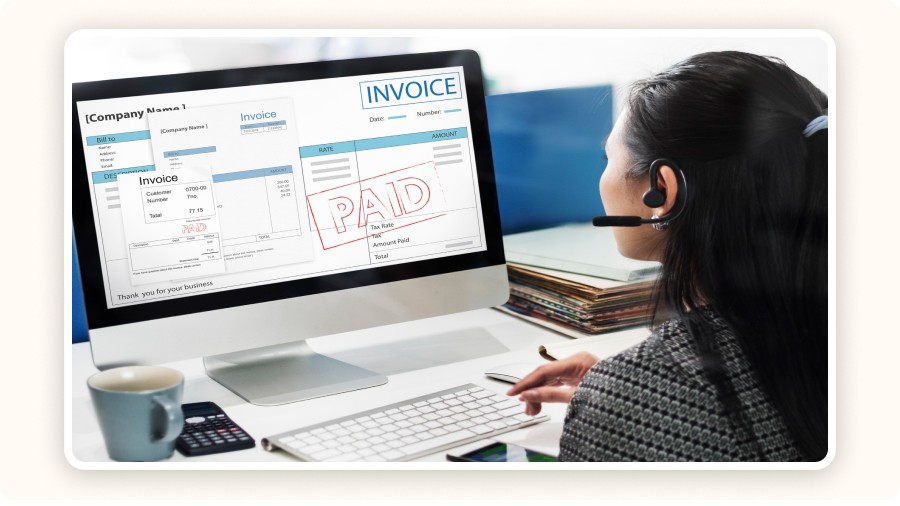
For an invoice to be valid and usable, it must include key mandatory elements. Missing information can create problems during a tax audit or in case of a shipping dispute. A properly structured ecommerce invoice protects your business.
A compliant drop shipping invoice should include:
A unique, chronological invoice number
A purchase order (PO) reference
SKU codes (product identifiers)
Customer information
A detailed sales tax line
The total cost (including shipping fees and discounts)
A tracking number for the shipment
These elements ensure transparency, improve dropship vendor management, and help you manage supplier invoices efficiently.
Understanding the Billing Flow in Dropshipping Operations
Your invoice management depends on the path each order follows. In dropshipping, multiple parties are involved. To structure your accounting correctly, you must understand every step of the billing process.
Overview of the Process
The billing flow follows a sequence of actions:
The customer places an order on your online store.
Your store sends the order to the supplier via a purchase order or automated system.
The supplier ships the product directly to the customer.
The supplier issues an ecommerce invoice to your store.
Your store generates a customer invoice to formalize the sale.
Each order creates two accounting flows:
A B2B flow between your store and the supplier
A B2C flow between your store and the final customer
Understanding this structure is essential if you want to centralize suppliers invoices, protect your margins, and stay compliant.
The B2B Flow (Business to Business)

In the B2B flow, your store acts as the buyer, even if you never handle the product physically.
This flow includes:
A purchase order sent to the supplier
A supplier-issued drop shipping invoice addressed to your store
The supplier’s invoice should clearly state:
The actual product cost
Any shipping fees
Negotiated payment terms (immediate, net 30, etc.)
The tracking number, if included
This document allows you to justify expenses, calculate margins, prepare VAT or sales tax reports, and properly manage supplier invoices as part of your broader dropship vendor management strategy.
The B2C Flow (Business to Consumer)
The B2C flow represents the final sale between your store and the customer.
In this case, your store is the official seller, even if you don’t handle fulfillment. Your ecommerce platform usually generates the customer-facing ecommerce invoice automatically.
This invoice includes:
The total selling price (including tax)
The applicable sales tax rate based on customer location
Product details
Shipping fees (included or separate)
Your business name or legal entity
Sometimes a tracking number
To properly manage invoice dropshipping processes, you must clearly separate B2B and B2C flows.
The B2B invoice confirms your expenses.
The B2C invoice confirms your revenue.
Confusing the two can distort your margins, damage your financial visibility, and expose you to tax risks during an audit

What Are the Three Types of Drop Shipping Invoice?

Not all invoices are the same. Depending on your workflow, order volume, and level of professionalism, different formats of drop shipping invoice exist:
Per-order invoice
Consolidated supplier invoice
Drop shipping commercial invoice
Understanding these formats helps you manage supplier invoices properly and improve your overall dropship vendor management strategy.
The Per-Order Invoice
The per-order invoice is typically used by beginners. It’s also common on platforms like AliExpress. For every customer order placed, the supplier issues a separate ecommerce invoice.
This model is simple and easy to implement.
Each transaction has:
Its own invoice
Its own price
Its own product reference
Often its own tracking number
This structure makes it easier to handle disputes, refunds, or chargebacks.
However, as order volume increases, this type of invoice dropshipping system becomes time-consuming. Receiving 50 invoices for 50 orders in one day complicates accounting. It also increases the risk of errors, missed payments, or duplicate entries.
Consolidated Supplier Invoices
Most suppliers offer the option to group multiple orders into weekly or monthly invoices. This is common when you work with recurring partners or process higher volumes.
In a consolidated drop shipping invoice, multiple shipments appear under a single batch document. The invoice is usually identified by an invoice batch ID.
Each line includes:
Order date
Product reference
Amount
Invoice status (paid, pending, overdue)
With this format, you reduce the number of documents to process. It simplifies bank reconciliation and makes it easier to centralize supplier invoices.
For scaling stores, consolidated invoicing improves efficiency and strengthens your dropship vendor management process.
Drop Shipping Commercial Invoice
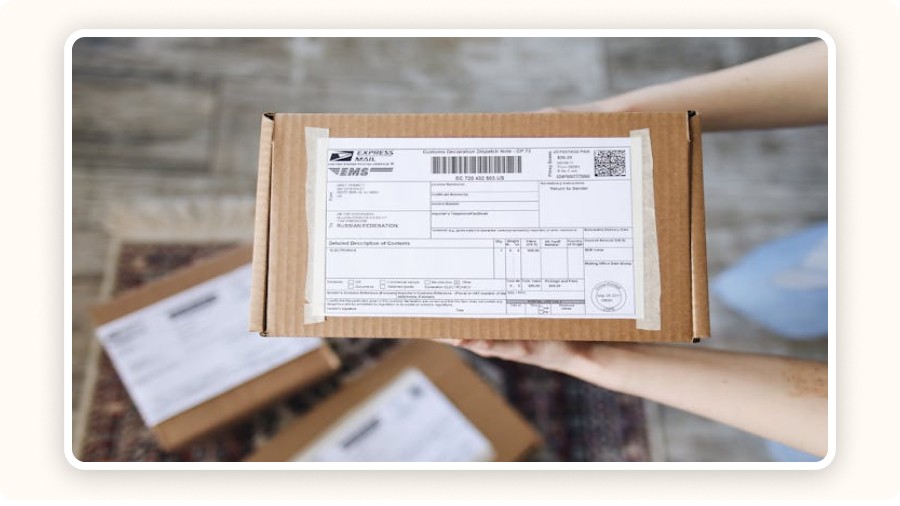
A drop shipping commercial invoice is mandatory for international shipments.
It serves as a customs document. Without it, packages may be delayed, blocked, or taxed upon arrival. Customs authorities use this document to identify:
The nature of the goods
Their declared value
Their country of origin
A compliant drop shipping commercial invoice must include:
The HS (Harmonized System) code
The declared value
Country of origin
Country of destination
If you sell globally, this type of ecommerce invoice is not optional. It protects your shipments and ensures regulatory compliance.
Centralizing and Managing Supplier Invoices Efficiently
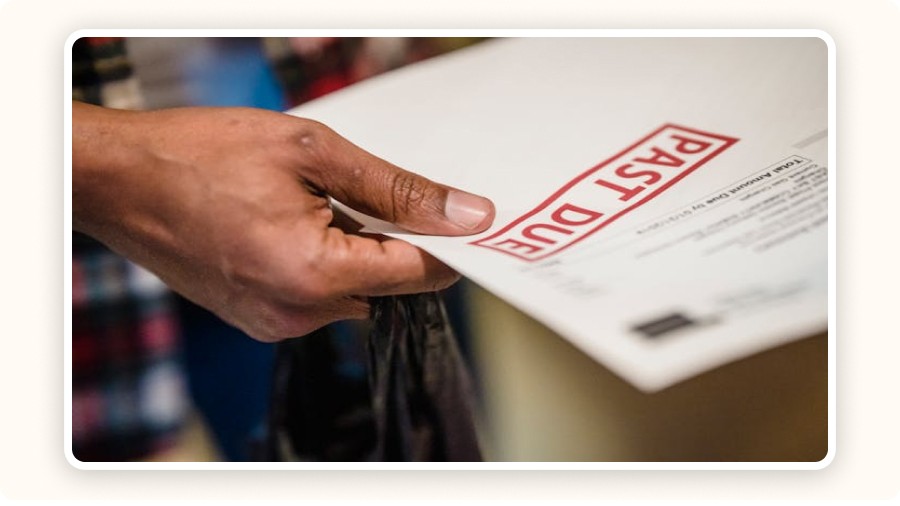
The more suppliers you work with, the more complex invoice management becomes.
Without a structured system, risks multiply:
Duplicate invoices
Late payments
Accounting inconsistencies
To avoid these issues, you must centralize your drop shipping invoice documents.
Why Centralize Your Drop Shipping Invoice System?
In dropshipping, orders often involve multiple suppliers. Each supplier issues separate ecommerce invoice documents.
Without a clear system, you may:
Lose invoices
Forget payments
Create duplicates
To properly manage supplier invoices, centralization is essential.
When you centralize suppliers invoices, you gain:
Clear visibility on what is paid, pending, or overdue
Better financial control
Reduced tax errors in case of audit
Well-organized invoices help you avoid unpleasant surprises during compliance checks. They also simplify your overall dropship vendor management, especially as your order volume grows.
Centralizing Invoices with Dedicated Tools

To structure your invoice dropshipping system, use specialized tools such as:
Accounting Software
Xero
Bill.com
These tools offer automatic import, classification, and bank reconciliation features to help you manage supplier invoices more efficiently.
Ecommerce Extensions
If you use Shopify, you can install apps such as:
AVADA Invoice
Order Printer Pro
These tools automate invoice generation, sending, and storage. They also help maintain consistent numbering for every drop shipping invoice you receive or issue.
Most centralization tools integrate with ecommerce platforms and connect to other systems through APIs, making it easier to centralize suppliers invoices across multiple sales channels.
Folder Organization and Automation
To stay organized, adopt a clear naming convention for every ecommerce invoice.
For example:
2026-03-SupplierName
You can automate classification using:
Google Sheets
Airtable
Zapier
For instance, when you receive a supplier invoice by email, the file can automatically be renamed, stored, and categorized in the correct folder.
This reduces manual tasks, improves data consistency, and ensures you always know the status of each drop shipping invoice.
A structured system doesn’t just save time, it protects your margins and supports long-term scalability.

Ensuring Accuracy and Legal Compliance for Your Drop Shipping Invoice
An inaccurate or non-compliant drop shipping invoice can be expensive. To avoid legal or tax risks, you must understand accounting rules, tax obligations, and proper archiving practices.
When you manage a high volume of ecommerce invoice documents, even small errors can hurt your profitability. That’s why precision matters.
Common Mistakes to Avoid When Managing Invoices

Billing mistakes happen easily, especially if you handle documents manually or work with disorganized suppliers. A single anomaly in your invoice dropshipping process can affect your margins.
Pay attention to these common issues:
Incorrect totals due to calculation errors or forgotten discounts
Duplicate SKUs that distort inventory and sales data
Wrong tracking numbers that prevent you from linking the invoice to the actual shipment
Some supplier invoices may also omit tax lines or shipping fees. This creates inconsistencies between logistics reality and accounting data.
Always review every drop shipping invoice you receive. It’s a critical part of effective dropship vendor management and helps you properly manage supplier invoices.
Tax and Legal Compliance
A valid ecommerce invoice must meet the tax requirements of the country where your business is registered.
United States
Sales tax varies by state. You must apply the correct rate and clearly display it on the customer invoice.
Europe & United Kingdom
VAT must appear on the invoice, including:
VAT rate
VAT amount
Intracommunity VAT number (if required)
Canada
Tax rules depend on the province. You may need to include:
GST (Goods and Services Tax)
QST (Quebec Sales Tax)
HST (Harmonized Sales Tax)
Australia
A 10% GST applies to domestic sales. Your ABN (Australian Business Number) must appear on the invoice.
Switzerland
Swiss VAT (MWST) applies once revenue thresholds are exceeded. The VAT rate and IDE number must appear on the invoice.
Asia
Japan applies a consumption tax.
India requires GST (CGST, SGST, or IGST depending on the transaction type).
For international shipments, your drop shipping commercial invoice must include:
Declared product value
Country of origin
Incoterms used (e.g., DDP, DDU)
Failing to include these details may result in customs delays or additional charges.
Archiving and Record Retention

Archiving supplier invoices is mandatory. It ensures transaction traceability and legal compliance in case of an audit. It also supports returns, refunds, and financial analysis.
In the United States, invoices generally must be kept for 3 to 7 years, depending on local tax rules.
Best practices:
Store each drop shipping invoice in PDF format
Maintain a CSV database or SaaS system for search and export
Ensure easy retrieval of any ecommerce invoice at any time
If you want to properly centralize supplier invoices, archiving must be structured and automated.
What Should a Professional Drop Shipping Invoice Include?
A valid invoice must follow a precise structure. Some elements are mandatory. Others are optional but improve professionalism and payment efficiency.
Mandatory Fields
A professional drop shipping invoice must include:
Your company name (or sole proprietor name) and full address
Customer details (name, address, country) and supplier details
A unique invoice number and purchase order reference
Tax identification number (if applicable)
SKU for each product
Quantity, unit price, and total cost
Payment terms (immediate, net 30, deposit, etc.)
Due date
Shipping data, including carrier and tracking number
These elements ensure compliance and help you manage supplier invoices accurately.
Optional Elements
To strengthen your brand image, you may add:
Your logo and brand colors
A QR code for faster payment
A “no invoice in package” note for white-label fulfillment
This protects supplier anonymity and supports professional dropship vendor management.
Automating Your Drop Shipping Invoice System
As orders increase, manual invoice management becomes inefficient. Automation improves both productivity and reliability.
Automating your invoice dropshipping workflow helps you scale safely.
Benefits of Automation
When invoice volume grows, manual entry becomes risky.
Automation allows:
Reduced human errors (amounts, dates, payment status)
Significant time savings
Stronger supplier relationships through on-time payments
Real-time invoice status tracking
With automation, your drop shipping invoice system aligns with your actual sales flow.
Tools to Automate Invoice Management

Choose tools that integrate directly with your ecommerce platform.
For Shopify:
AVADA Invoice (customization + automation)
Order Printer Pro (automatic customer invoice generation)
QuickBooks Sync (automated accounting integration)
For WooCommerce:
Sliced Invoices (automatic billing + tracking)
WP PDF Invoices (professional PDF generation)
For AliExpress:
Importify or DSers (automatic supplier invoice import per order)
These tools help you centralize supplier invoices and simplify how you manage supplier invoices.
Accounting & CRM Integration
Automation goes beyond document creation.
A robust system allows:
Automatic invoice status updates (paid, pending, overdue)
Bank reconciliation with Stripe, PayPal, or wire transfers
Weekly or monthly financial reports
This level of control improves supplier management and makes your accounting more reliable.
Scaling Your Invoice Management System
At the beginning, a spreadsheet may be enough. But as your business grows, basic tools can slow you down.
Managing hundreds, or thousands, of invoices per month requires a scalable drop shipping invoice structure.
Volume and Growth

As your store grows, manual payment tracking becomes insufficient. Moving from a few orders per week to over 1,000 invoices per month requires scalable systems.
To manage high volumes:
Group supplier payments instead of paying individually
Organize payments by supplier or by time period
Reduce transaction fees and simplify cash flow
You should also assign invoices automatically based on order source (AliExpress, your main site, marketplace, etc.).
This approach strengthens your ability to centralize suppliers invoices and improves your dropship vendor management strategy, even at scale.
Analysis and Reporting

Managing invoices doesn’t stop at issuing them. You must analyze the data.
Use reporting tools to track:
Profit margins per product or supplier
Unpaid invoices by status or date
Late payments affecting profitability
With this visibility, you can:
Adjust sourcing strategies
Optimize inventory
Prioritize reliable suppliers
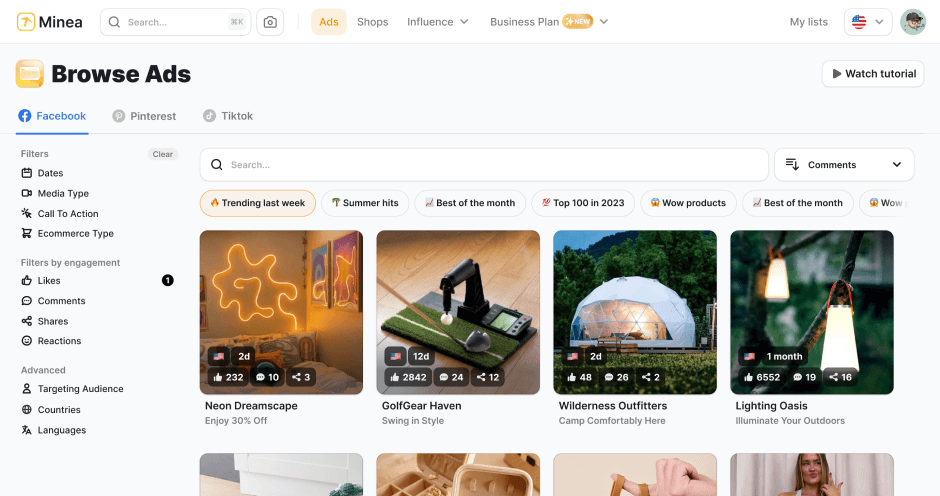
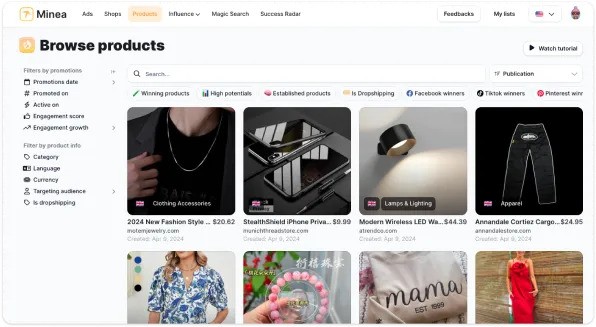
Advanced tools like Minea allow you to cross-analyze product performance, supplier costs, and margin data. This helps you identify your most profitable partners and align procurement strategies directly with your drop shipping invoice flows.


Common Invoicing Mistakes and How to Avoid Them
Even with a structured drop shipping invoice system in place, mistakes can happen. The good news? Most of them are predictable, and preventable.
Here are the most common invoicing errors in dropshipping and how to fix them before they impact your profitability.
Error 1: Confusing Customer and Supplier Invoices

You should never confuse a customer invoice with a supplier invoice.
The customer invoice formalizes the sale made to your client (B2C).
The supplier invoice documents the purchase you made from your vendor (B2B).
Mixing these two types of ecommerce invoice documents distorts your accounting and margins. It can also create serious issues during tax audits.
To avoid this:
Separate B2B and B2C documents into different folders.
Use accounting tools that automatically categorize each invoice dropshipping flow.
Structure your dropship vendor management system clearly from day one.
A clean separation helps you properly manage supplier invoices and maintain accurate reporting.
Error 2: Non-Compliant Invoice Format
If your drop shipping invoice is missing required information, it may be rejected during an audit. In some countries, this can prevent VAT deductions.
Common issues include:
Missing invoice number
Missing legal information
Incorrect totals
Incomplete tax breakdown
To avoid compliance problems:
Use a legally validated invoice template.
Include all mandatory fields (invoice number, issue date, tax rate, seller and buyer details, totals).
Regularly review your ecommerce invoice templates to ensure they match local regulations.
Compliance protects both your accounting and your business reputation.
Error 3: Forgetting VAT or Local Sales Taxes

If VAT or sales tax applies, it must appear clearly on the drop shipping invoice.
Failing to include tax can lead to:
Legal non-compliance
Financial penalties
Back taxes with interest
Distorted revenue and margin calculations
For example:
In the EU or UK, VAT must appear with rate and amount.
In the United States, sales tax varies by state and must be applied correctly.
In Canada, GST, QST, or HST may apply depending on the province.
To prevent mistakes:
Configure your invoicing system to apply taxes automatically based on location.
Double-check your VAT or tax ID numbers.
Audit your ecommerce invoice data monthly.
Proper tax handling is a core part of effective dropship vendor management and helps you manage supplier invoices accurately.
Error 4: 100% Manual and Non-Auditable Workflow
Managing invoices entirely manually creates risk.
If your invoice dropshipping workflow relies only on spreadsheets without automation:
You increase the chance of human error.
You make audits more difficult.
You lose transaction traceability.
In case of an audit, proving consistency across your drop shipping invoice documents becomes complicated.
To avoid this:
Use partial or full automation tools connected to your ecommerce platform.
Sync invoices with accounting software.
Keep a structured digital archive to centralize suppliers invoices.
Automation improves control, reduces errors, and ensures better transparency.
Error 5: No Verification Before Tax Filing

Before submitting any tax declaration, always review:
Invoice amounts
Payment status
Tax calculations
Missing documents
Skipping this step can lead to:
Incorrect revenue reporting
VAT declaration errors
Forgotten supplier expenses
To prevent these issues:
Set up a monthly review process for all drop shipping invoice batches.
Use a tracking dashboard to monitor payments and inconsistencies.
Cross-check your supplier documents before finalizing reports.
This final control step strengthens your ability to manage supplier invoices, improves compliance, and protects your long-term profitability.
FAQ
What is a drop ship invoice?
A drop ship invoice is a billing document used in the dropshipping model. It can refer to either the supplier invoice (B2B) sent to the store owner or the customer invoice (B2C) issued to the buyer.
It includes product details, quantities, pricing, taxes, and payment terms. In international orders, it may also serve as a drop shipping commercial invoice for customs clearance.
Can I start dropshipping with $1000?
Yes, you can start dropshipping with $1,000. In fact, that budget is more than enough to launch properly.
With $1,000, you can typically cover:
Shopify subscription and apps
Domain and branding
Product testing ads
Basic automation tools
Accounting or invoice management software
The key is managing cash flow carefully, tracking margins, and setting up a structured drop shipping invoice system from day one to avoid financial mistakes.
What is a shipping invoice?
A shipping invoice is a document that outlines the details of goods being shipped. It includes product descriptions, quantities, value, shipping costs, and delivery information.
In international trade, it often functions as a commercial invoice used by customs authorities to calculate duties and taxes.
How to make a shipping invoice?
To create a shipping invoice, include the following essential elements:
Seller and buyer information
Unique invoice number
Product description and SKU
Quantity and unit price
Total amount and taxes
Shipping fees
Payment terms
Tracking number
For international shipments, add:
HS code
Country of origin
Declared value
Incoterms (e.g., DDP or DDU)
You can generate shipping invoices automatically using ecommerce platforms like Shopify, WooCommerce, or accounting tools such as QuickBooks.
Similar articles