Easyship Fulfillment Review 2026: A Practical Ecommerce Pick for Dropshipping
Best Ecommerce Fulfillment Center
Author: Elysa
Contents
If you run a Shopify dropshipping store and shipping is starting to cap your growth, Easyship fulfillment can be a credible path to a cleaner operation and a strong contender if you’re aiming for the best ecommerce fulfillment setup for your lanes. It combines multi-carrier shipping automation (through the Easyship Shopify integration) with access to a global warehouse network. That mix can reduce support tickets and failed deliveries, but it only pays off if the numbers work for your AOV and your core shipping lanes.
Quick take:
Worth testing if you ship to multiple countries or you’re moving a proven winner from pure dropshipping into stocked fulfillment.
Skip it if you need fully transparent, fixed fulfillment pricing before any quote process.
What Easyship Fulfillment Actually Does and What It Doesn’t
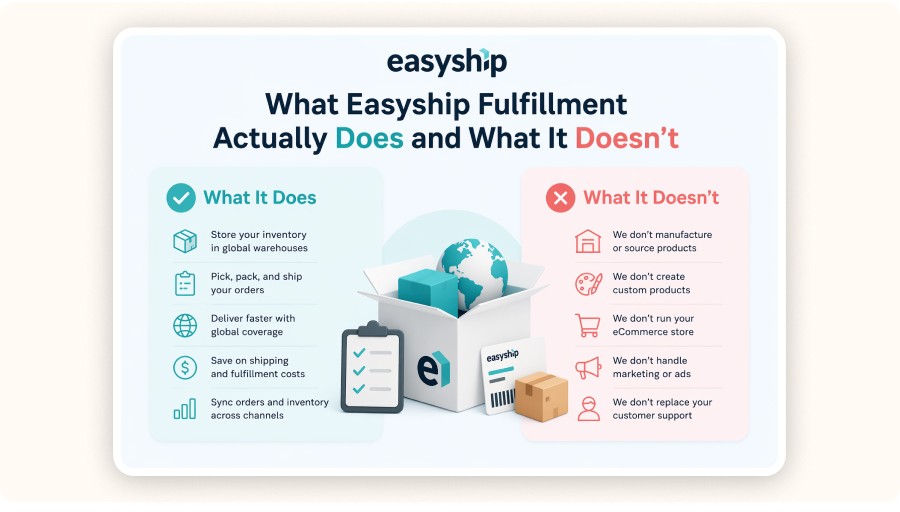
Easyship fulfillment really covers two jobs (often bundled under Easyship fulfillment services):
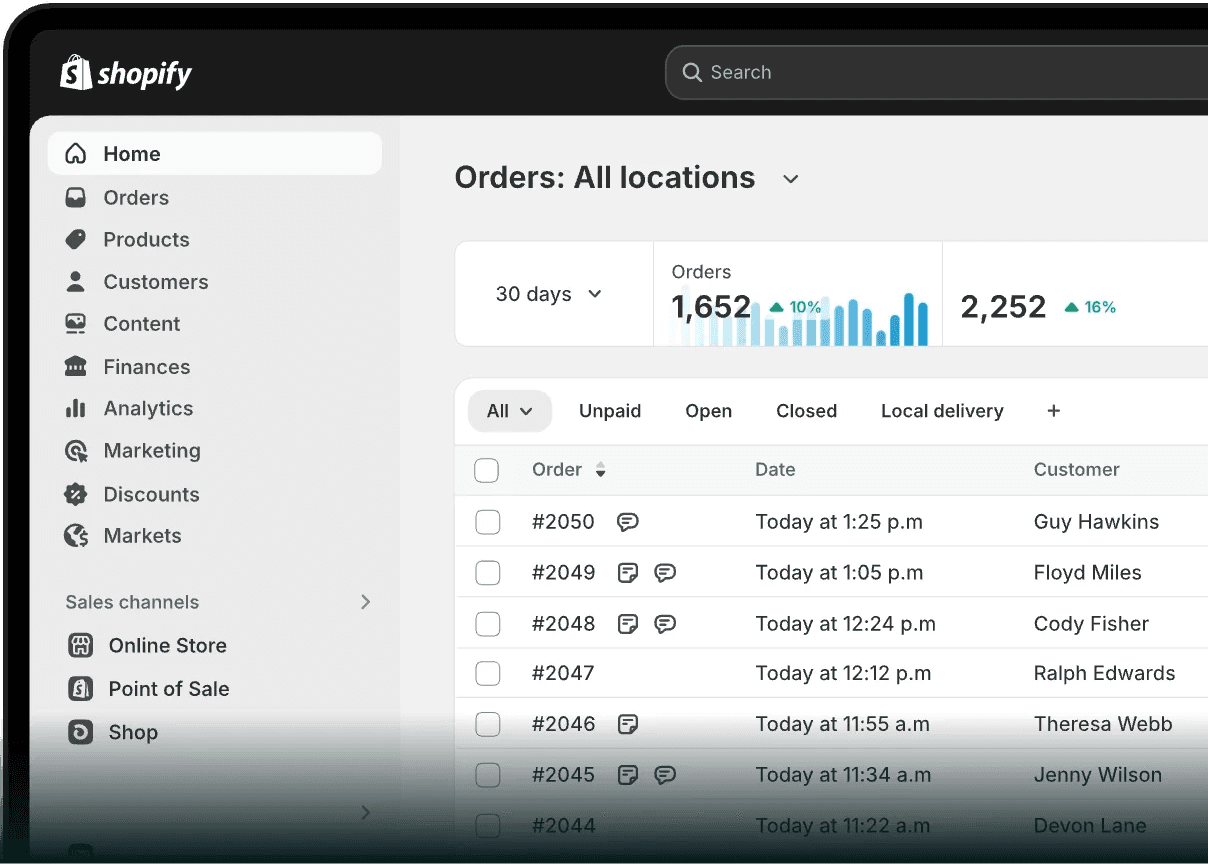
Shipping software: compares rates across multiple carriers, generates labels, and syncs tracking back to your store (Shopify Easyship / easyship Shopify integration, or Easyship WooCommerce / WooCommerce Easyship).
Fulfillment operations: through partner warehouses, it handles inventory storage plus pick, pack, ship, and returns.
The main value is standardization across shipping lanes and carriers. So you’re not reinventing your process every time you change destination, courier, or product mix.
For ecommerce sellers, the operational promise is simple:
You connect your store, map products and parcel defaults, then use shipping rules to select services based on conditions like destination, weight, or order value. When you add warehousing, orders can route to a fulfillment location that ships domestically instead of cross-border, which can reduce delivery friction in certain markets.
What it does well for dropshipping
One control center: manage carrier logic in one place instead of juggling multiple label tools.
Cross-border support: helps where customs documents and duties/taxes are common failure points.
Hybrid-friendly: keep long-tail items in supplier dropshipping while stocking only your winners.
What it does not do
No universal warehouse guarantee: partner warehouse performance can vary.
No lane testing shortcut: carrier performance is still lane-specific, so you have to test your main routes.
No automatic margin protection: you still need to track your blended cost per shipped order and confirm it works with your AOV.
Minea
Reach $1,000 per day or get your money back

Pricing Reality: What You’ll Actually Pay as an Ecommerce Seller
Your total cost with Easyship fulfillment is typically a blend of:
Shipping charges (varies by lane + service level)
Software subscription (based on plan)
Fulfillment fees if you store inventory via easyship fulfillment services (storage + pick & pack + packaging, plus returns if applicable—often quote-based)
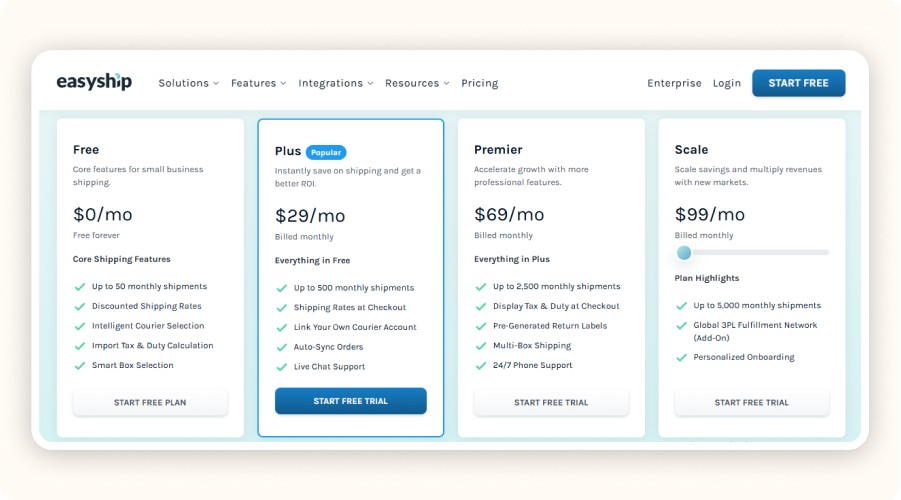
Easyship software plans (billed monthly)
Free $0/mo (free forever): up to 50 monthly shipments
Plus $29/mo: up to 500 monthly shipments + shipping rates at checkout, link your own courier, auto-sync orders, live chat support
Premier $69/mo: up to 2,500 monthly shipments + tax & duty display at checkout, pre-generated return labels, multi-box shipping, 24/7 phone support
Scale $99/mo: up to 5,000 monthly shipments + Global 3PL Fulfillment Network (add-on) and personalized onboarding
A clean evaluation method (do this before you commit)
Pick one lane that reflects real volume (example: US domestic standard).
Estimate your next 30 days of orders on that lane.
Ask for a quote that separates storage, pick & pack, packaging, and any monthly software/account fee.
Compute your blended cost per order.
Blended cost per order = pick & pack + packaging + storage allocation + (monthly fee ÷ orders)
Why this matters more on low-ticket dropshipping
In the Minea snapshot used for this brief, the average product price is around $29.99. At that AOV, a surprise $2–$4 per order can turn a scalable ad into a breakeven campaign.
Carrier Coverage: What Shipping Carriers Does Easyship Use?

Easyship is built around multi-carrier shipping. It compares rates across 550+ courier services (DHL, Fedex, Globalpost, APC, UPS, etc.) and helps you choose services based on cost and speed, instead of defaulting to one carrier out of habit.
The practical win is repeatable decisions through rules.
The practical limitation: every lane behaves differently (price, scan quality, delivery speed).
Treat carrier coverage as a lane question, not a brand question.
A shipping stack is “good” when it gives you:
A low-cost tracked option for standard delivery
A predictable express option when customers pay for speed
Consistent scan events that reduce delivery anxiety
Tracking quality drives support volume. If tracking is noisy, your inbox fills up.
How to validate carrier performance without wasting a month
Pick your top 3 destination countries
For each, test 10–20 shipments across two services
Compare delivered days and scan-event timing
Easyship can speed up this process because rate shopping and label creation are centralized, but you still need the discipline to measure outcomes per lane.
What Is Easyship USPS?
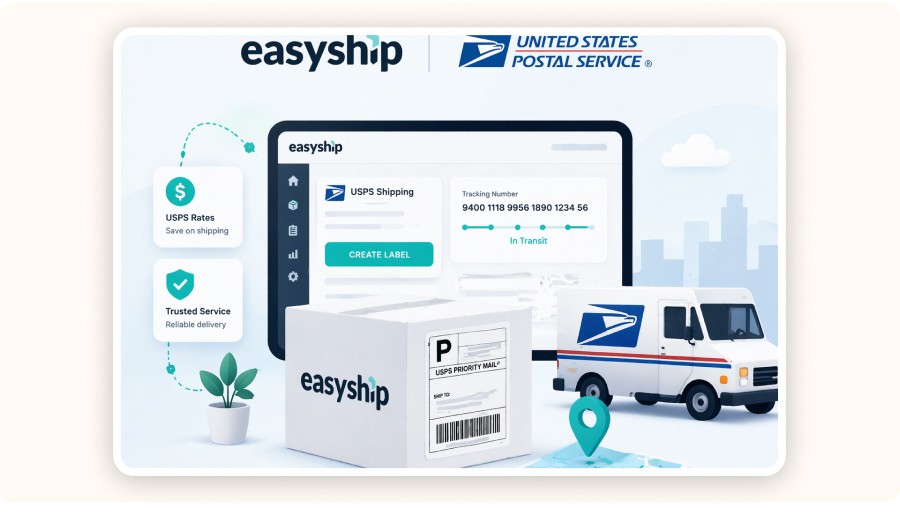
Easyship USPS refers to USPS services you access through Easyship for label creation, rate comparison, and tracking sync back to your store (via Easyship Shopify integration or WooCommerce Easyship, depending on your platform). USPS is often a baseline carrier for US ecommerce shipping. The upside is simpler label workflows and the ability to compare USPS services against alternatives in the same interface.
For US dropshipping operations that ship from a US location, USPS can be a strong default for standard delivery.
The checks that protect your store
Service level matches what your checkout promises.
Address validation reduces return-to-sender losses.
Tracking updates hit Shopify (or WooCommerce) quickly enough to trigger customer notifications.
For cross-border operations, a common issue is delayed early tracking: a customer sees a tracking number, but scan events show up late. If you use Easyship for cross-border lanes, pick services that provide earlier scans when your margin allows it and set shipping expectations clearly.
Warehousing and Fulfillment Network: Where the Real Value Can Show Up

Easyship fulfillment uses a network of warehouse partners to store inventory and ship orders locally. The payoff can be faster delivery and fewer customs delays for international buyers. The risk is variability in receiving speed, cut-off times, packaging consistency, and returns handling across locations. Validate one location before scaling inventory.
This is where many dropshippers can make a smart move:
Stay in pure dropshipping while you test demand.
Stock only the winner when the data is clear.
If you’re shipping heavily into Asia, it can also be worth evaluating regional options like Easyship fulfillment Hong Kong (when available for your lanes and product type).
A Concrete Minea Workflow That Connects Product Research to Fulfillment
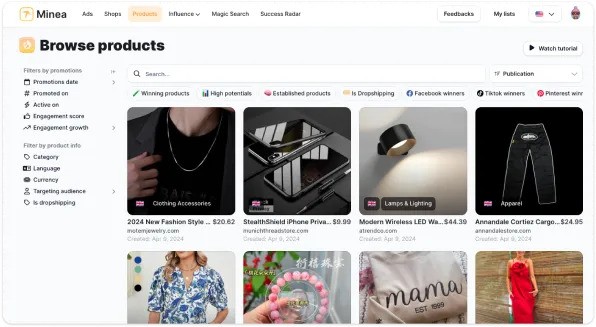
This brief lists trending products that match typical dropshipping baskets, including posture corrector belts, LED face masks, portable blenders, smart ring fitness trackers, and heated eyelash curlers.
Use Minea to validate demand before you commit inventory.
Simple workflow (Shopify or WooCommerce)
In Minea, search active ads for the product category in your target country.
Look for repeated creatives and stable angles across multiple stores.
Use that evidence to decide which single product deserves inventory.
Then use Easyship fulfillment services to ship the winner from a local warehouse.
This is the operational upgrade that can turn a fragile dropshipping offer into a more repeatable ecommerce business.


If you run a Shopify dropshipping store and shipping is starting to cap your growth, Easyship fulfillment can be a credible path to a cleaner operation and a strong contender if you’re aiming for the best ecommerce fulfillment setup for your lanes. It combines multi-carrier shipping automation (through the Easyship Shopify integration) with access to a global warehouse network. That mix can reduce support tickets and failed deliveries, but it only pays off if the numbers work for your AOV and your core shipping lanes.
Quick take:
Worth testing if you ship to multiple countries or you’re moving a proven winner from pure dropshipping into stocked fulfillment.
Skip it if you need fully transparent, fixed fulfillment pricing before any quote process.
What Easyship Fulfillment Actually Does and What It Doesn’t
Easyship fulfillment really covers two jobs (often bundled under Easyship fulfillment services):
Shipping software: compares rates across multiple carriers, generates labels, and syncs tracking back to your store (Shopify Easyship / easyship Shopify integration, or Easyship WooCommerce / WooCommerce Easyship).
Fulfillment operations: through partner warehouses, it handles inventory storage plus pick, pack, ship, and returns.
The main value is standardization across shipping lanes and carriers. So you’re not reinventing your process every time you change destination, courier, or product mix.
For ecommerce sellers, the operational promise is simple:
You connect your store, map products and parcel defaults, then use shipping rules to select services based on conditions like destination, weight, or order value. When you add warehousing, orders can route to a fulfillment location that ships domestically instead of cross-border, which can reduce delivery friction in certain markets.
What it does well for dropshipping
One control center: manage carrier logic in one place instead of juggling multiple label tools.
Cross-border support: helps where customs documents and duties/taxes are common failure points.
Hybrid-friendly: keep long-tail items in supplier dropshipping while stocking only your winners.
What it does not do
No universal warehouse guarantee: partner warehouse performance can vary.
No lane testing shortcut: carrier performance is still lane-specific, so you have to test your main routes.
No automatic margin protection: you still need to track your blended cost per shipped order and confirm it works with your AOV.
Minea
Reach $1,000 per day or get your money back
Pricing Reality: What You’ll Actually Pay as an Ecommerce Seller
Your total cost with Easyship fulfillment is typically a blend of:
Shipping charges (varies by lane + service level)
Software subscription (based on plan)
Fulfillment fees if you store inventory via easyship fulfillment services (storage + pick & pack + packaging, plus returns if applicable—often quote-based)
Easyship software plans (billed monthly)
Free $0/mo (free forever): up to 50 monthly shipments
Plus $29/mo: up to 500 monthly shipments + shipping rates at checkout, link your own courier, auto-sync orders, live chat support
Premier $69/mo: up to 2,500 monthly shipments + tax & duty display at checkout, pre-generated return labels, multi-box shipping, 24/7 phone support
Scale $99/mo: up to 5,000 monthly shipments + Global 3PL Fulfillment Network (add-on) and personalized onboarding
A clean evaluation method (do this before you commit)
Pick one lane that reflects real volume (example: US domestic standard).
Estimate your next 30 days of orders on that lane.
Ask for a quote that separates storage, pick & pack, packaging, and any monthly software/account fee.
Compute your blended cost per order.
Blended cost per order = pick & pack + packaging + storage allocation + (monthly fee ÷ orders)
Why this matters more on low-ticket dropshipping
In the Minea snapshot used for this brief, the average product price is around $29.99. At that AOV, a surprise $2–$4 per order can turn a scalable ad into a breakeven campaign.
Carrier Coverage: What Shipping Carriers Does Easyship Use?
Easyship is built around multi-carrier shipping. It compares rates across 550+ courier services (DHL, Fedex, Globalpost, APC, UPS, etc.) and helps you choose services based on cost and speed, instead of defaulting to one carrier out of habit.
The practical win is repeatable decisions through rules.
The practical limitation: every lane behaves differently (price, scan quality, delivery speed).
Treat carrier coverage as a lane question, not a brand question.
A shipping stack is “good” when it gives you:
A low-cost tracked option for standard delivery
A predictable express option when customers pay for speed
Consistent scan events that reduce delivery anxiety
Tracking quality drives support volume. If tracking is noisy, your inbox fills up.
How to validate carrier performance without wasting a month
Pick your top 3 destination countries
For each, test 10–20 shipments across two services
Compare delivered days and scan-event timing
Easyship can speed up this process because rate shopping and label creation are centralized, but you still need the discipline to measure outcomes per lane.
What Is Easyship USPS?
Easyship USPS refers to USPS services you access through Easyship for label creation, rate comparison, and tracking sync back to your store (via Easyship Shopify integration or WooCommerce Easyship, depending on your platform). USPS is often a baseline carrier for US ecommerce shipping. The upside is simpler label workflows and the ability to compare USPS services against alternatives in the same interface.
For US dropshipping operations that ship from a US location, USPS can be a strong default for standard delivery.
The checks that protect your store
Service level matches what your checkout promises.
Address validation reduces return-to-sender losses.
Tracking updates hit Shopify (or WooCommerce) quickly enough to trigger customer notifications.
For cross-border operations, a common issue is delayed early tracking: a customer sees a tracking number, but scan events show up late. If you use Easyship for cross-border lanes, pick services that provide earlier scans when your margin allows it and set shipping expectations clearly.
Warehousing and Fulfillment Network: Where the Real Value Can Show Up
Easyship fulfillment uses a network of warehouse partners to store inventory and ship orders locally. The payoff can be faster delivery and fewer customs delays for international buyers. The risk is variability in receiving speed, cut-off times, packaging consistency, and returns handling across locations. Validate one location before scaling inventory.
This is where many dropshippers can make a smart move:
Stay in pure dropshipping while you test demand.
Stock only the winner when the data is clear.
If you’re shipping heavily into Asia, it can also be worth evaluating regional options like Easyship fulfillment Hong Kong (when available for your lanes and product type).
A Concrete Minea Workflow That Connects Product Research to Fulfillment
This brief lists trending products that match typical dropshipping baskets, including posture corrector belts, LED face masks, portable blenders, smart ring fitness trackers, and heated eyelash curlers.
Use Minea to validate demand before you commit inventory.
Simple workflow (Shopify or WooCommerce)
In Minea, search active ads for the product category in your target country.
Look for repeated creatives and stable angles across multiple stores.
Use that evidence to decide which single product deserves inventory.
Then use Easyship fulfillment services to ship the winner from a local warehouse.
This is the operational upgrade that can turn a fragile dropshipping offer into a more repeatable ecommerce business.
If you run a Shopify dropshipping store and shipping is starting to cap your growth, Easyship fulfillment can be a credible path to a cleaner operation and a strong contender if you’re aiming for the best ecommerce fulfillment setup for your lanes. It combines multi-carrier shipping automation (through the Easyship Shopify integration) with access to a global warehouse network. That mix can reduce support tickets and failed deliveries, but it only pays off if the numbers work for your AOV and your core shipping lanes.
Quick take:
Worth testing if you ship to multiple countries or you’re moving a proven winner from pure dropshipping into stocked fulfillment.
Skip it if you need fully transparent, fixed fulfillment pricing before any quote process.
What Easyship Fulfillment Actually Does and What It Doesn’t
Easyship fulfillment really covers two jobs (often bundled under Easyship fulfillment services):
Shipping software: compares rates across multiple carriers, generates labels, and syncs tracking back to your store (Shopify Easyship / easyship Shopify integration, or Easyship WooCommerce / WooCommerce Easyship).
Fulfillment operations: through partner warehouses, it handles inventory storage plus pick, pack, ship, and returns.
The main value is standardization across shipping lanes and carriers. So you’re not reinventing your process every time you change destination, courier, or product mix.
For ecommerce sellers, the operational promise is simple:
You connect your store, map products and parcel defaults, then use shipping rules to select services based on conditions like destination, weight, or order value. When you add warehousing, orders can route to a fulfillment location that ships domestically instead of cross-border, which can reduce delivery friction in certain markets.
What it does well for dropshipping
One control center: manage carrier logic in one place instead of juggling multiple label tools.
Cross-border support: helps where customs documents and duties/taxes are common failure points.
Hybrid-friendly: keep long-tail items in supplier dropshipping while stocking only your winners.
What it does not do
No universal warehouse guarantee: partner warehouse performance can vary.
No lane testing shortcut: carrier performance is still lane-specific, so you have to test your main routes.
No automatic margin protection: you still need to track your blended cost per shipped order and confirm it works with your AOV.
Minea
Reach $1,000 per day or get your money back
Pricing Reality: What You’ll Actually Pay as an Ecommerce Seller
Your total cost with Easyship fulfillment is typically a blend of:
Shipping charges (varies by lane + service level)
Software subscription (based on plan)
Fulfillment fees if you store inventory via easyship fulfillment services (storage + pick & pack + packaging, plus returns if applicable—often quote-based)
Easyship software plans (billed monthly)
Free $0/mo (free forever): up to 50 monthly shipments
Plus $29/mo: up to 500 monthly shipments + shipping rates at checkout, link your own courier, auto-sync orders, live chat support
Premier $69/mo: up to 2,500 monthly shipments + tax & duty display at checkout, pre-generated return labels, multi-box shipping, 24/7 phone support
Scale $99/mo: up to 5,000 monthly shipments + Global 3PL Fulfillment Network (add-on) and personalized onboarding
A clean evaluation method (do this before you commit)
Pick one lane that reflects real volume (example: US domestic standard).
Estimate your next 30 days of orders on that lane.
Ask for a quote that separates storage, pick & pack, packaging, and any monthly software/account fee.
Compute your blended cost per order.
Blended cost per order = pick & pack + packaging + storage allocation + (monthly fee ÷ orders)
Why this matters more on low-ticket dropshipping
In the Minea snapshot used for this brief, the average product price is around $29.99. At that AOV, a surprise $2–$4 per order can turn a scalable ad into a breakeven campaign.
Carrier Coverage: What Shipping Carriers Does Easyship Use?
Easyship is built around multi-carrier shipping. It compares rates across 550+ courier services (DHL, Fedex, Globalpost, APC, UPS, etc.) and helps you choose services based on cost and speed, instead of defaulting to one carrier out of habit.
The practical win is repeatable decisions through rules.
The practical limitation: every lane behaves differently (price, scan quality, delivery speed).
Treat carrier coverage as a lane question, not a brand question.
A shipping stack is “good” when it gives you:
A low-cost tracked option for standard delivery
A predictable express option when customers pay for speed
Consistent scan events that reduce delivery anxiety
Tracking quality drives support volume. If tracking is noisy, your inbox fills up.
How to validate carrier performance without wasting a month
Pick your top 3 destination countries
For each, test 10–20 shipments across two services
Compare delivered days and scan-event timing
Easyship can speed up this process because rate shopping and label creation are centralized, but you still need the discipline to measure outcomes per lane.
What Is Easyship USPS?
Easyship USPS refers to USPS services you access through Easyship for label creation, rate comparison, and tracking sync back to your store (via Easyship Shopify integration or WooCommerce Easyship, depending on your platform). USPS is often a baseline carrier for US ecommerce shipping. The upside is simpler label workflows and the ability to compare USPS services against alternatives in the same interface.
For US dropshipping operations that ship from a US location, USPS can be a strong default for standard delivery.
The checks that protect your store
Service level matches what your checkout promises.
Address validation reduces return-to-sender losses.
Tracking updates hit Shopify (or WooCommerce) quickly enough to trigger customer notifications.
For cross-border operations, a common issue is delayed early tracking: a customer sees a tracking number, but scan events show up late. If you use Easyship for cross-border lanes, pick services that provide earlier scans when your margin allows it and set shipping expectations clearly.
Warehousing and Fulfillment Network: Where the Real Value Can Show Up
Easyship fulfillment uses a network of warehouse partners to store inventory and ship orders locally. The payoff can be faster delivery and fewer customs delays for international buyers. The risk is variability in receiving speed, cut-off times, packaging consistency, and returns handling across locations. Validate one location before scaling inventory.
This is where many dropshippers can make a smart move:
Stay in pure dropshipping while you test demand.
Stock only the winner when the data is clear.
If you’re shipping heavily into Asia, it can also be worth evaluating regional options like Easyship fulfillment Hong Kong (when available for your lanes and product type).
A Concrete Minea Workflow That Connects Product Research to Fulfillment
This brief lists trending products that match typical dropshipping baskets, including posture corrector belts, LED face masks, portable blenders, smart ring fitness trackers, and heated eyelash curlers.
Use Minea to validate demand before you commit inventory.
Simple workflow (Shopify or WooCommerce)
In Minea, search active ads for the product category in your target country.
Look for repeated creatives and stable angles across multiple stores.
Use that evidence to decide which single product deserves inventory.
Then use Easyship fulfillment services to ship the winner from a local warehouse.
This is the operational upgrade that can turn a fragile dropshipping offer into a more repeatable ecommerce business.
Customs, Duties, and Returns: The Part That Breaks Cross-Border Ecommerce
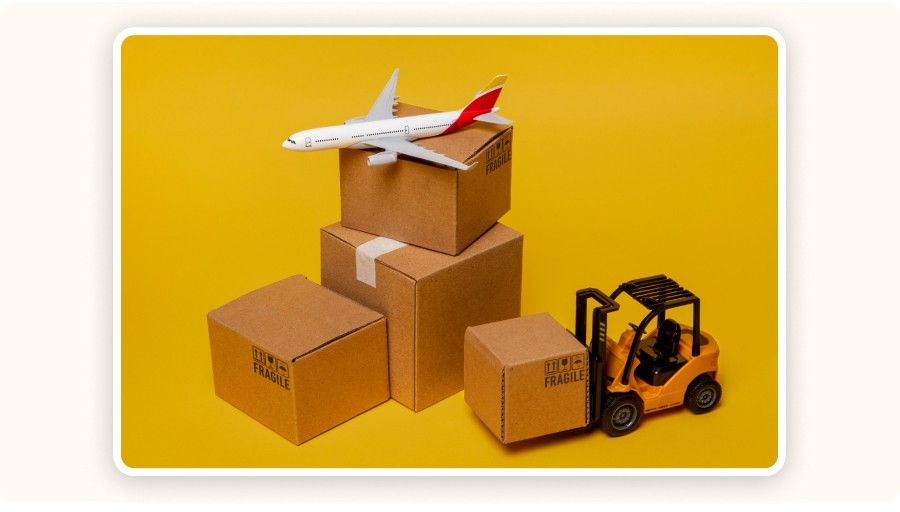
For cross-border ecommerce, customs paperwork and duties/taxes aren’t small details. They directly impact delivery times, failed deliveries, and customer satisfaction. Easyship highlights automated document generation and configurable duties/taxes handling, which can help reduce border delays, but you still need a clear policy and lane-by-lane testing.
Many dropshipping stores lose customers on expectations:
The buyer expects a domestic-like experience.
If duties show up at delivery, refunds spike.
A practical policy that reduces damage
Decide whether the buyer pays duties on delivery or you build duties into price + shipping.
Keep the policy consistent across lanes.
Mirror it in checkout messaging and in post-purchase emails (order confirmation + shipping update).
Returns are part of the same system:
If you stock inventory locally, returns can be faster and cheaper.
If you ship cross-border from suppliers, returns can become uneconomical, especially on low-ticket items.
That’s why the hybrid model matters:
Stock winners (where the math works).
Keep experiments in supplier dropshipping.
The Catches: Where Easyship Fulfillment Can Fail for Dropshipping

Easyship is attractive because it standardizes shipping and offers a path into Easyship fulfillment services, but it’s not a plug-and-play fix. The most common friction points are unclear all-in pricing, complexity from rule systems, and inconsistent experiences across different warehouse partners. These issues get more expensive as volume rises.
Three catches to plan for
1) Pricing clarity can be slower than sellers want
If your decision process requires a published, fixed fee schedule, you can stall. A quote-based model can still work, but only if you calculate blended cost per order before you move inventory.
2) Rule systems can create edge cases
Rules are how you scale shipping. Rules also create exceptions. Start with a small rule set that covers most orders, then expand based on real patterns you see week to week.
3) Low-AOV ecommerce hits a margin wall
At an average product price around $29.99, even a small logistics cost increase can erase profit. For low-ticket dropshipping, the best play is often to stock one proven winner in a local location (for example, a US hub or Easyship fulfillment Hong Kong if you’re scaling APAC), and keep the long tail in supplier fulfillment.
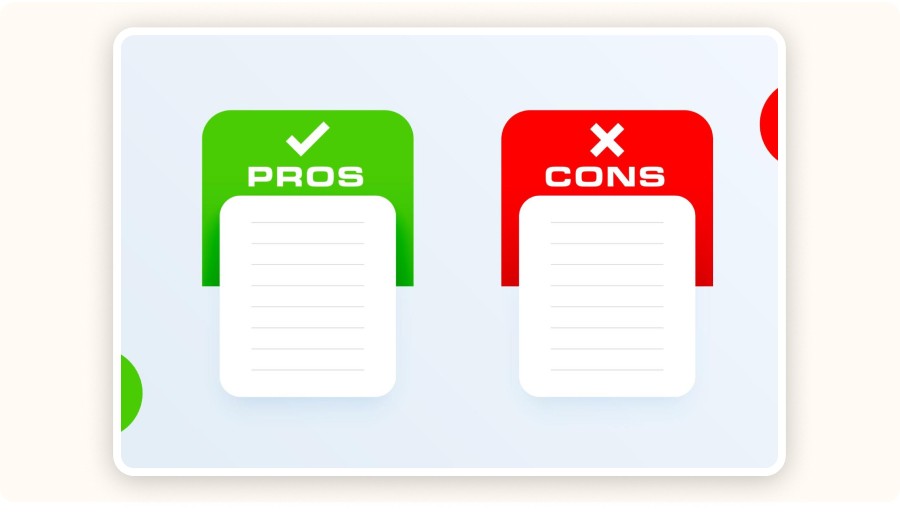
Pros & Cons
Pros
Centralizes multi-carrier rate shopping, labels, and tracking useful when scaling easyship fulfillment across multiple lanes.
Automation via rules reduces manual work and keeps shipping decisions consistent.
Smooth setup for easyship shopify integration (shopify easyship) and easyship woocommerce (woocommerce easyship).
Supports a hybrid model: test in dropshipping, then move winners into easyship fulfillment services (including easyship fulfillment hong kong when it matches your lanes).
Cons
True cost can be hard to judge without a quote; discounts don’t guarantee profit.
Warehouse-partner performance varies cutoffs, packaging, and returns can differ by location.
Lane testing is still required (delivery speed + scan quality).
The easyship vs woocommerce plugin choice can add complexity; on low AOV products, small fees can erase margin.


Create and test your Shopify store for only $1 per day during 90 days
Alternatives to Easyship Fulfillment
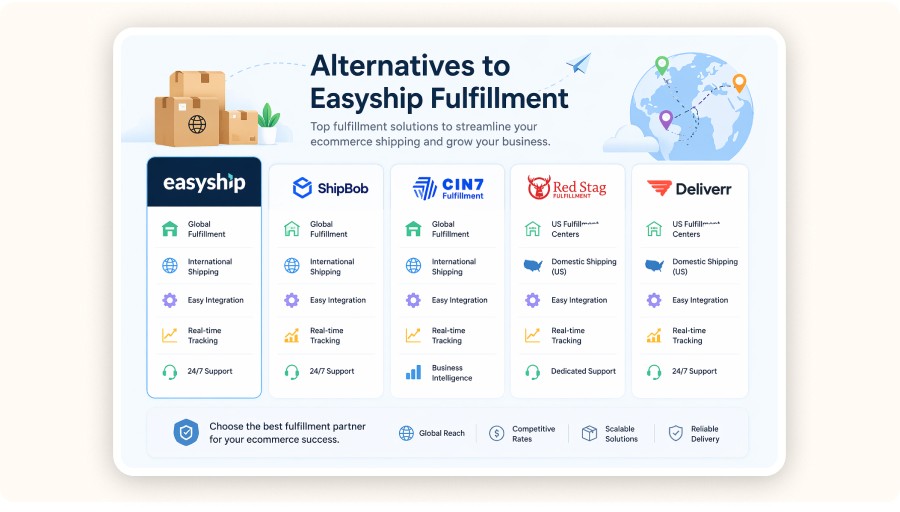
Alternative | Best for | Quick note |
|---|---|---|
ShipStation | Shipping automation | Multi-carrier labels + automation rules (no warehousing focus). |
Shippo | Rates/labels + tracking | Multi-carrier rates, label buying, and tracking (app or API). |
3PL fulfillment | Warehousing + pick/pack/ship + returns for stocked inventory. | |
Amazon MCF | Fast multi-channel fulfillment | Use Amazon’s network to fulfill off-Amazon orders from FBA inventory. |
Verdict: Should You Use Easyship Fulfillment for a Dropshipping Ecommerce Store?
Easyship fulfillment is a solid fit when you’re scaling and you need multi-carrier shipping automation plus a credible path into local fulfillment (via Easyship fulfillment services). The decision should be made on one lane with real shipments, measured by delivered days, scan quality, and blended cost per shipped order. If you require simple, fixed pricing with full transparency upfront, you may prefer a specialized 3PL.
In plain terms: Easyship fulfillment is worth testing if you already have traction and shipping has become the bottleneck.
A practical decision path
Validate a product winner with Minea before you commit inventory. (Internal link suggestion: “validate a product winner with Minea” → a relevant Minea page on minea.com.)
Pick one warehouse location that matches where most of your demand is.
Test 20–50 real orders on a single lane.
Decide based on delivered performance and all-in cost per shipped order.
This keeps you disciplined. It also helps you avoid paying storage for products that never deserved inventory in the first place.
If you want to improve product selection before you upgrade logistics, use Minea to spot what’s already selling and avoid saturated dropshipping products before you invest in fulfillment.
FAQ
Is Easyship.com legit?
Easyship is a real company that provides shipping and fulfillment-related services for ecommerce sellers. The operational validation is lane-specific and cost-based. A short test on your main lane plus a clear all-in quote is the safest way to confirm fit.
What are the benefits of using Easyship for fulfillment?
Benefits include multi-carrier rate shopping, shipping rules that reduce manual work, and access to fulfillment locations that can shorten delivery times. For dropshipping sellers, the most valuable benefit is operational consistency, because consistency reduces support load and refunds.
What shipping carriers does Easyship use?
Easyship supports a large catalog of courier services. Availability depends on origin, destination, and account configuration. The real value is the ability to compare services side by side and enforce consistent selection through rules.
What is Easyship USPS?
Easyship USPS refers to using USPS services through Easyship for labels, rate comparison, and tracking sync. It is common in US ecommerce workflows because USPS often sets the baseline price for standard delivery.
What is the pricing structure for Easyship fulfillment services?
Fulfillment pricing is typically a blend of storage plus per-order pick and pack fees, while shipping cost depends on the carrier service and lane. Sellers should evaluate blended cost per shipped order using their top lane and a detailed quote.
Where are Easyship fulfillment centers located?
Easyship uses a network of global warehouse partners, so locations vary. Sellers should request a location list for their target markets and confirm cut-off times, receiving speed, packaging standards, and returns handling for the specific site.
Customs, Duties, and Returns: The Part That Breaks Cross-Border Ecommerce
For cross-border ecommerce, customs paperwork and duties/taxes aren’t small details. They directly impact delivery times, failed deliveries, and customer satisfaction. Easyship highlights automated document generation and configurable duties/taxes handling, which can help reduce border delays, but you still need a clear policy and lane-by-lane testing.
Many dropshipping stores lose customers on expectations:
The buyer expects a domestic-like experience.
If duties show up at delivery, refunds spike.
A practical policy that reduces damage
Decide whether the buyer pays duties on delivery or you build duties into price + shipping.
Keep the policy consistent across lanes.
Mirror it in checkout messaging and in post-purchase emails (order confirmation + shipping update).
Returns are part of the same system:
If you stock inventory locally, returns can be faster and cheaper.
If you ship cross-border from suppliers, returns can become uneconomical, especially on low-ticket items.
That’s why the hybrid model matters:
Stock winners (where the math works).
Keep experiments in supplier dropshipping.
The Catches: Where Easyship Fulfillment Can Fail for Dropshipping
Easyship is attractive because it standardizes shipping and offers a path into Easyship fulfillment services, but it’s not a plug-and-play fix. The most common friction points are unclear all-in pricing, complexity from rule systems, and inconsistent experiences across different warehouse partners. These issues get more expensive as volume rises.
Three catches to plan for
1) Pricing clarity can be slower than sellers want
If your decision process requires a published, fixed fee schedule, you can stall. A quote-based model can still work, but only if you calculate blended cost per order before you move inventory.
2) Rule systems can create edge cases
Rules are how you scale shipping. Rules also create exceptions. Start with a small rule set that covers most orders, then expand based on real patterns you see week to week.
3) Low-AOV ecommerce hits a margin wall
At an average product price around $29.99, even a small logistics cost increase can erase profit. For low-ticket dropshipping, the best play is often to stock one proven winner in a local location (for example, a US hub or Easyship fulfillment Hong Kong if you’re scaling APAC), and keep the long tail in supplier fulfillment.
Pros & Cons
Pros
Centralizes multi-carrier rate shopping, labels, and tracking useful when scaling easyship fulfillment across multiple lanes.
Automation via rules reduces manual work and keeps shipping decisions consistent.
Smooth setup for easyship shopify integration (shopify easyship) and easyship woocommerce (woocommerce easyship).
Supports a hybrid model: test in dropshipping, then move winners into easyship fulfillment services (including easyship fulfillment hong kong when it matches your lanes).
Cons
True cost can be hard to judge without a quote; discounts don’t guarantee profit.
Warehouse-partner performance varies cutoffs, packaging, and returns can differ by location.
Lane testing is still required (delivery speed + scan quality).
The easyship vs woocommerce plugin choice can add complexity; on low AOV products, small fees can erase margin.
Create and test your Shopify store for only $1 per day during 90 days
Alternatives to Easyship Fulfillment
Alternative | Best for | Quick note |
|---|---|---|
ShipStation | Shipping automation | Multi-carrier labels + automation rules (no warehousing focus). |
Shippo | Rates/labels + tracking | Multi-carrier rates, label buying, and tracking (app or API). |
3PL fulfillment | Warehousing + pick/pack/ship + returns for stocked inventory. | |
Amazon MCF | Fast multi-channel fulfillment | Use Amazon’s network to fulfill off-Amazon orders from FBA inventory. |
Verdict: Should You Use Easyship Fulfillment for a Dropshipping Ecommerce Store?
Easyship fulfillment is a solid fit when you’re scaling and you need multi-carrier shipping automation plus a credible path into local fulfillment (via Easyship fulfillment services). The decision should be made on one lane with real shipments, measured by delivered days, scan quality, and blended cost per shipped order. If you require simple, fixed pricing with full transparency upfront, you may prefer a specialized 3PL.
In plain terms: Easyship fulfillment is worth testing if you already have traction and shipping has become the bottleneck.
A practical decision path
Validate a product winner with Minea before you commit inventory. (Internal link suggestion: “validate a product winner with Minea” → a relevant Minea page on minea.com.)
Pick one warehouse location that matches where most of your demand is.
Test 20–50 real orders on a single lane.
Decide based on delivered performance and all-in cost per shipped order.
This keeps you disciplined. It also helps you avoid paying storage for products that never deserved inventory in the first place.
If you want to improve product selection before you upgrade logistics, use Minea to spot what’s already selling and avoid saturated dropshipping products before you invest in fulfillment.
FAQ
Is Easyship.com legit?
Easyship is a real company that provides shipping and fulfillment-related services for ecommerce sellers. The operational validation is lane-specific and cost-based. A short test on your main lane plus a clear all-in quote is the safest way to confirm fit.
What are the benefits of using Easyship for fulfillment?
Benefits include multi-carrier rate shopping, shipping rules that reduce manual work, and access to fulfillment locations that can shorten delivery times. For dropshipping sellers, the most valuable benefit is operational consistency, because consistency reduces support load and refunds.
What shipping carriers does Easyship use?
Easyship supports a large catalog of courier services. Availability depends on origin, destination, and account configuration. The real value is the ability to compare services side by side and enforce consistent selection through rules.
What is Easyship USPS?
Easyship USPS refers to using USPS services through Easyship for labels, rate comparison, and tracking sync. It is common in US ecommerce workflows because USPS often sets the baseline price for standard delivery.
What is the pricing structure for Easyship fulfillment services?
Fulfillment pricing is typically a blend of storage plus per-order pick and pack fees, while shipping cost depends on the carrier service and lane. Sellers should evaluate blended cost per shipped order using their top lane and a detailed quote.
Where are Easyship fulfillment centers located?
Easyship uses a network of global warehouse partners, so locations vary. Sellers should request a location list for their target markets and confirm cut-off times, receiving speed, packaging standards, and returns handling for the specific site.
Customs, Duties, and Returns: The Part That Breaks Cross-Border Ecommerce
For cross-border ecommerce, customs paperwork and duties/taxes aren’t small details. They directly impact delivery times, failed deliveries, and customer satisfaction. Easyship highlights automated document generation and configurable duties/taxes handling, which can help reduce border delays, but you still need a clear policy and lane-by-lane testing.
Many dropshipping stores lose customers on expectations:
The buyer expects a domestic-like experience.
If duties show up at delivery, refunds spike.
A practical policy that reduces damage
Decide whether the buyer pays duties on delivery or you build duties into price + shipping.
Keep the policy consistent across lanes.
Mirror it in checkout messaging and in post-purchase emails (order confirmation + shipping update).
Returns are part of the same system:
If you stock inventory locally, returns can be faster and cheaper.
If you ship cross-border from suppliers, returns can become uneconomical, especially on low-ticket items.
That’s why the hybrid model matters:
Stock winners (where the math works).
Keep experiments in supplier dropshipping.
The Catches: Where Easyship Fulfillment Can Fail for Dropshipping
Easyship is attractive because it standardizes shipping and offers a path into Easyship fulfillment services, but it’s not a plug-and-play fix. The most common friction points are unclear all-in pricing, complexity from rule systems, and inconsistent experiences across different warehouse partners. These issues get more expensive as volume rises.
Three catches to plan for
1) Pricing clarity can be slower than sellers want
If your decision process requires a published, fixed fee schedule, you can stall. A quote-based model can still work, but only if you calculate blended cost per order before you move inventory.
2) Rule systems can create edge cases
Rules are how you scale shipping. Rules also create exceptions. Start with a small rule set that covers most orders, then expand based on real patterns you see week to week.
3) Low-AOV ecommerce hits a margin wall
At an average product price around $29.99, even a small logistics cost increase can erase profit. For low-ticket dropshipping, the best play is often to stock one proven winner in a local location (for example, a US hub or Easyship fulfillment Hong Kong if you’re scaling APAC), and keep the long tail in supplier fulfillment.
Pros & Cons
Pros
Centralizes multi-carrier rate shopping, labels, and tracking useful when scaling easyship fulfillment across multiple lanes.
Automation via rules reduces manual work and keeps shipping decisions consistent.
Smooth setup for easyship shopify integration (shopify easyship) and easyship woocommerce (woocommerce easyship).
Supports a hybrid model: test in dropshipping, then move winners into easyship fulfillment services (including easyship fulfillment hong kong when it matches your lanes).
Cons
True cost can be hard to judge without a quote; discounts don’t guarantee profit.
Warehouse-partner performance varies cutoffs, packaging, and returns can differ by location.
Lane testing is still required (delivery speed + scan quality).
The easyship vs woocommerce plugin choice can add complexity; on low AOV products, small fees can erase margin.
Create and test your Shopify store for only $1 per day during 90 days
Alternatives to Easyship Fulfillment
Alternative | Best for | Quick note |
|---|---|---|
ShipStation | Shipping automation | Multi-carrier labels + automation rules (no warehousing focus). |
Shippo | Rates/labels + tracking | Multi-carrier rates, label buying, and tracking (app or API). |
3PL fulfillment | Warehousing + pick/pack/ship + returns for stocked inventory. | |
Amazon MCF | Fast multi-channel fulfillment | Use Amazon’s network to fulfill off-Amazon orders from FBA inventory. |
Verdict: Should You Use Easyship Fulfillment for a Dropshipping Ecommerce Store?
Easyship fulfillment is a solid fit when you’re scaling and you need multi-carrier shipping automation plus a credible path into local fulfillment (via Easyship fulfillment services). The decision should be made on one lane with real shipments, measured by delivered days, scan quality, and blended cost per shipped order. If you require simple, fixed pricing with full transparency upfront, you may prefer a specialized 3PL.
In plain terms: Easyship fulfillment is worth testing if you already have traction and shipping has become the bottleneck.
A practical decision path
Validate a product winner with Minea before you commit inventory. (Internal link suggestion: “validate a product winner with Minea” → a relevant Minea page on minea.com.)
Pick one warehouse location that matches where most of your demand is.
Test 20–50 real orders on a single lane.
Decide based on delivered performance and all-in cost per shipped order.
This keeps you disciplined. It also helps you avoid paying storage for products that never deserved inventory in the first place.
If you want to improve product selection before you upgrade logistics, use Minea to spot what’s already selling and avoid saturated dropshipping products before you invest in fulfillment.
FAQ
Is Easyship.com legit?
Easyship is a real company that provides shipping and fulfillment-related services for ecommerce sellers. The operational validation is lane-specific and cost-based. A short test on your main lane plus a clear all-in quote is the safest way to confirm fit.
What are the benefits of using Easyship for fulfillment?
Benefits include multi-carrier rate shopping, shipping rules that reduce manual work, and access to fulfillment locations that can shorten delivery times. For dropshipping sellers, the most valuable benefit is operational consistency, because consistency reduces support load and refunds.
What shipping carriers does Easyship use?
Easyship supports a large catalog of courier services. Availability depends on origin, destination, and account configuration. The real value is the ability to compare services side by side and enforce consistent selection through rules.
What is Easyship USPS?
Easyship USPS refers to using USPS services through Easyship for labels, rate comparison, and tracking sync. It is common in US ecommerce workflows because USPS often sets the baseline price for standard delivery.
What is the pricing structure for Easyship fulfillment services?
Fulfillment pricing is typically a blend of storage plus per-order pick and pack fees, while shipping cost depends on the carrier service and lane. Sellers should evaluate blended cost per shipped order using their top lane and a detailed quote.
Where are Easyship fulfillment centers located?
Easyship uses a network of global warehouse partners, so locations vary. Sellers should request a location list for their target markets and confirm cut-off times, receiving speed, packaging standards, and returns handling for the specific site.
Similar articles
Amazon Fulfillment (FBA) in 2026: How It Works, Real Costs, Fulfillment Centers & TikTok Shop
Best Ecommerce Fulfillment Center
Amazon Fulfillment (FBA) in 2026: How It Works, Real Costs, Fulfillment Centers & TikTok Shop
Best Ecommerce Fulfillment Center
Amazon Fulfillment (FBA) in 2026: How It Works, Real Costs, Fulfillment Centers & TikTok Shop
Best Ecommerce Fulfillment Center
Amazon Fulfillment (FBA) in 2026: How It Works, Real Costs, Fulfillment Centers & TikTok Shop
Best Ecommerce Fulfillment Center
Fulfillman Dropshipping Services Review (2026): Speed, Costs, and Fit
Best Ecommerce Fulfillment Center
Fulfillman Dropshipping Services Review (2026): Speed, Costs, and Fit
Best Ecommerce Fulfillment Center
Fulfillman Dropshipping Services Review (2026): Speed, Costs, and Fit
Best Ecommerce Fulfillment Center
Fulfillman Dropshipping Services Review (2026): Speed, Costs, and Fit
Best Ecommerce Fulfillment Center
Deliverr Fulfillment Review 2026 for Dropshipping: The Flexport Reality
Best Ecommerce Fulfillment Center
Deliverr Fulfillment Review 2026 for Dropshipping: The Flexport Reality
Best Ecommerce Fulfillment Center
Deliverr Fulfillment Review 2026 for Dropshipping: The Flexport Reality
Best Ecommerce Fulfillment Center
Deliverr Fulfillment Review 2026 for Dropshipping: The Flexport Reality
Best Ecommerce Fulfillment Center


Our Free Adspys

Find winning products on our Tiktok adspy today!
Find winning products on our Facebook adspy today!
Find winning products on our Tiktok adspy today!
Find winning products on our Facebook adspy today!
Find winning products on our Tiktok adspy today!
Find winning products on our Facebook adspy today!
Find winning products on our Tiktok adspy today!
Find winning products on our Facebook adspy today!
1 winning product everyday.
Follow us!






Find out more
Read more
Minea © 2026
Find out more
Read more
Minea © 2026
Find out more
Read more
Minea © 2026
Find out more
Read more
Minea © 2026
Find out more
Read more
Minea © 2026
Find out more
Read more
Minea © 2026