What Are the Best Enterprise Ecommerce Platforms in 2026?
Dropshipping Platforms
Author: Prince
Contents
To scale your online business in 2026, you need the right enterprise ecommerce platforms in place. The solution you choose will directly impact your operations, integrations, and long-term growth.
Among the top enterprise ecommerce platforms today are:
Salesforce Commerce Cloud
Adobe Commerce (Magento)
SAP Commerce Cloud
BigCommerce Enterprise
Shopify Plus
Oracle Commerce Cloud
These dropshipping ecommerce platforms are widely recognized for their advanced features. They support scalability, ERP and CRM integration, multichannel management, and enterprise-level data security.
With the right enterprise ecommerce platforms, you can automate operations, personalize the customer experience, and sell across multiple channels, all while maintaining full control over workflows, inventory, and data.
Most modern ecommerce platforms and enterprise solutions also integrate seamlessly with your existing tech stack. They support headless APIs, advanced analytics dashboards, and omnichannel payment systems. That flexibility makes them ideal not only for B2B companies but also for businesses searching for the best ecommerce platform for large business environments.

Salesforce Commerce Cloud
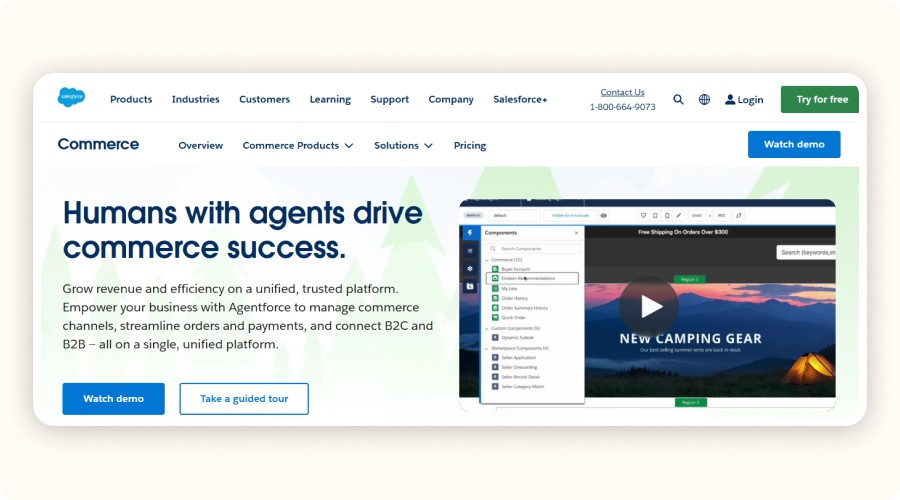
Salesforce Commerce Cloud is a premium option among best enterprise ecommerce platforms. It’s designed for companies managing large product catalogs and operating across multiple markets.
Thanks to its scalable cloud architecture, it can handle:
Traffic spikes
Massive product catalogs
Complex ordering processes
For global organizations that require reliability and security, this is one of the strongest enterprise ecommerce platforms available.
Advantages of Salesforce Commerce Cloud
Native Integration with Salesforce CRM
Salesforce Commerce Cloud connects directly to Salesforce CRM. This gives you a unified view of each customer across web, mobile, and support channels.
Your marketing campaigns become more precise because they rely on behavioral data. Customer journey automation becomes fully operational. This level of crm and ecommerce integration is a key reason many enterprises choose this solution.
Fully Controlled Omnichannel Strategy
With a single backend, you can synchronize sales across:
Your website
Social media
Physical retail locations
This unified approach ensures a consistent experience across channels. It also simplifies order, inventory, and returns management, essential capabilities for ecommerce enterprise platforms.
Built-In Artificial Intelligence
Salesforce Commerce Cloud uses Einstein AI to:
Deliver product recommendations
Power intelligent search
Generate personalized content in real time
These features help position it among the best enterprise ecommerce platforms for data-driven personalization.
Limitations of Salesforce Commerce Cloud
Despite its strengths, this solution has drawbacks:
High cost, estimated at around $200,000 per year
Technical complexity requiring an experienced development team
A relatively closed ecosystem that limits deep customization
For that reason, it is better suited for large corporations rather than businesses looking for the best ecommerce platforms for dropshipping.
Adobe Commerce (Magento)
Adobe Commerce is a powerful and flexible open-source solution. Its modular architecture makes it ideal for B2B organizations that need advanced customization within their enterprise ecommerce platforms strategy.
It can handle:
Large product catalogs
Complex transactions
High customer volumes
This makes it one of the most adaptable ecommerce enterprise platforms on the market.
Advantages of Adobe Commerce
Open-Source Flexibility
Adobe Commerce provides full access to the source code. You can modify and customize the platform to match your exact requirements.
Unlike more closed ecommerce platforms enterprise systems, this solution allows deep structural customization.
Advanced Personalization
Magento includes extensive customization capabilities that help create unique customer experiences. You can efficiently manage:
Product catalogs
Promotions
Marketing campaigns
Pricing structures
This flexibility places Adobe Commerce among the best enterprise ecommerce platforms for businesses that require full control.
Integration with Adobe Experience Cloud
Adobe Commerce integrates with Adobe Experience Cloud, giving you access to advanced analytics, marketing automation, and data management tools.
This strengthens your crm and ecommerce integration strategy and allows real-time marketing personalization.
Scalability and Multichannel Management
With Adobe Commerce, you can manage web, mobile, and social channels from a single interface.
For global companies with complex operational needs, this makes it one of the most complete enterprise ecommerce platforms available.
Limitations of Adobe Commerce
Despite its advantages, there are challenges:
High cost: the enterprise version costs tens of thousands of dollars per year
Hosting and development expenses
Requires strong technical expertise
Ongoing maintenance, updates, and security demand a dedicated team
Because of its complexity, it may not be ideal for businesses looking for the best ecommerce platform for large businesses without an internal development department.
SAP Commerce Cloud
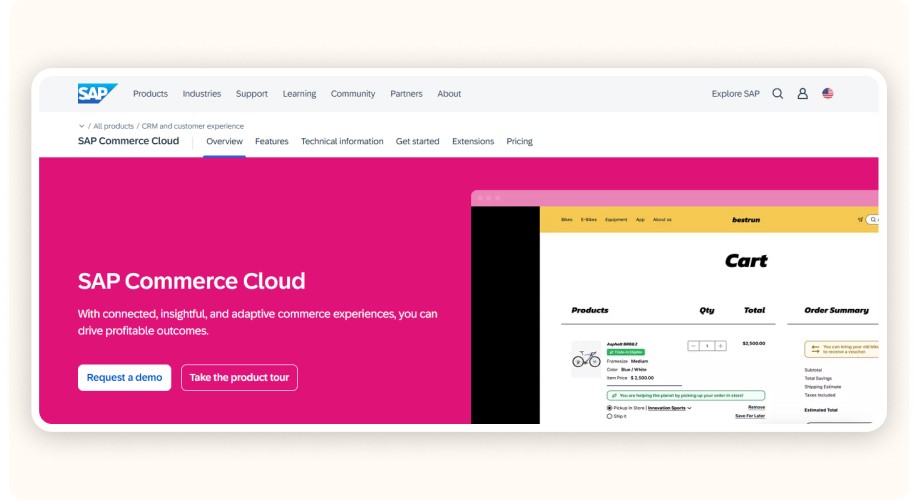
SAP Commerce Cloud is one of the most robust enterprise ecommerce platforms for large multinational companies. It is specifically built to manage complex orders and extensive product catalogs.
Its scalability ensures optimized performance, even at a global scale.
Advantages of SAP Commerce Cloud
Designed Specifically for B2B
SAP Commerce Cloud is engineered for B2B environments. It works well for businesses with multi-level customer relationships and long sales cycles.
You can easily manage:
Complex customer accounts
Custom pricing structures
Partner management portals
These capabilities position it among the top enterprise ecommerce platforms for industrial and wholesale businesses.
Seamless Integration with SAP S/4HANA
SAP Commerce Cloud integrates directly with SAP S/4HANA. This centralizes and synchronizes data across your organization, including:
Orders
Inventory
Financial data
Customer interactions
This level of crm and ecommerce integration and ERP synchronization makes it highly attractive for enterprises already within the SAP ecosystem.
Multilingual and Multi-Currency Capabilities
For companies operating globally, SAP Commerce Cloud offers built-in multilingual and multi-currency options.
You can create localized catalogs for each country and configure region-specific storefronts. This ensures a consistent yet locally adapted experience, an essential feature for global ecommerce enterprise platforms.
Limitations of SAP Commerce Cloud
Initial setup and integration require specialized SAP expertise
High licensing and integration costs
Less suitable for mid-sized companies due to pricing
While powerful, it may not fit organizations searching for the best ecommerce platforms for dropshipping, as it targets enterprise-level B2B complexity.
BigCommerce Enterprise
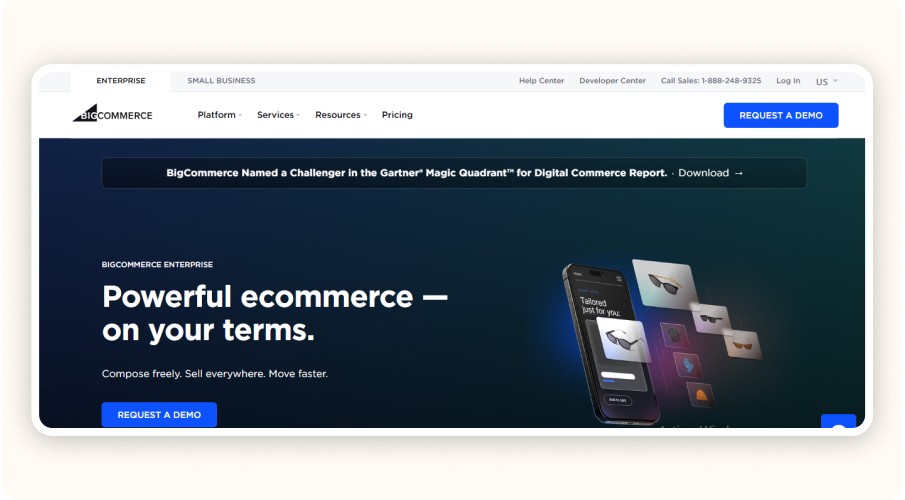
BigCommerce Enterprise is a SaaS-based solution that emphasizes simplicity and flexibility. Updates happen automatically, and the platform offers strong built-in security.
Its open architecture allows integration with third-party applications, making it one of the most flexible enterprise ecommerce platforms in the SaaS category.
Unlike highly technical systems, BigCommerce Enterprise can also appeal to companies transitioning from mid-market solutions to more advanced ecommerce platforms enterprise environments.
It provides:
Simplified management
Enhanced security
Multichannel selling capabilities
For organizations seeking scalable SaaS enterprise ecommerce platforms without the heavy infrastructure of on-premise systems, BigCommerce Enterprise is a serious contender.
Advantages of BigCommerce Enterprise
BigCommerce Enterprise stands out among modern enterprise ecommerce platforms thanks to its flexibility and multichannel capabilities.
Omnichannel Support
With BigCommerce Enterprise, you’re not limited to selling on your website. You can also sell across multiple external channels, including:
Facebook Marketplace
Amazon
eBay
And more
This multichannel system ensures a consistent customer experience, regardless of where the purchase happens. For companies evaluating ecommerce enterprise platforms, this unified commerce approach is a major advantage.
Built-In B2B Features
BigCommerce Enterprise includes advanced B2B functionality such as:
Custom pricing structures
Bulk ordering options
Professional customer account management
These features allow you to sell wholesale and manage business accounts efficiently. That’s why it ranks among the best enterprise ecommerce platforms for companies that need both B2C and B2B capabilities within the same infrastructure.
Designed to Support Brand Growth
Unlike some rigid systems, BigCommerce Enterprise scales as your business grows. It handles increasing transaction volumes without compromising performance.
You can use it to:
Improve online performance
Optimize operational workflows
Support international expansion
For organizations looking for scalable enterprise ecommerce platforms without building everything from scratch, it offers a strong SaaS alternative.
Limitations of BigCommerce Enterprise
BigCommerce Enterprise is not without drawbacks.
It can be expensive. Pricing is typically tied to annual sales volume, which may limit accessibility for smaller companies.
Integration with certain third-party applications can be more complex or limited.
The interface may feel less intuitive for beginners.
While it is one of the most accessible ecommerce platforms enterprise solutions, it may not suit startups searching for the best ecommerce platforms for dropshipping at a lower cost.
Shopify Plus
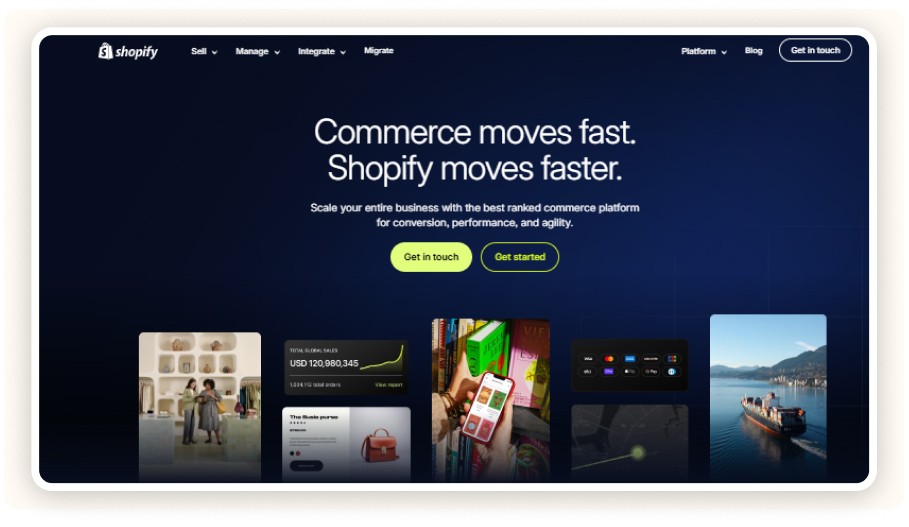
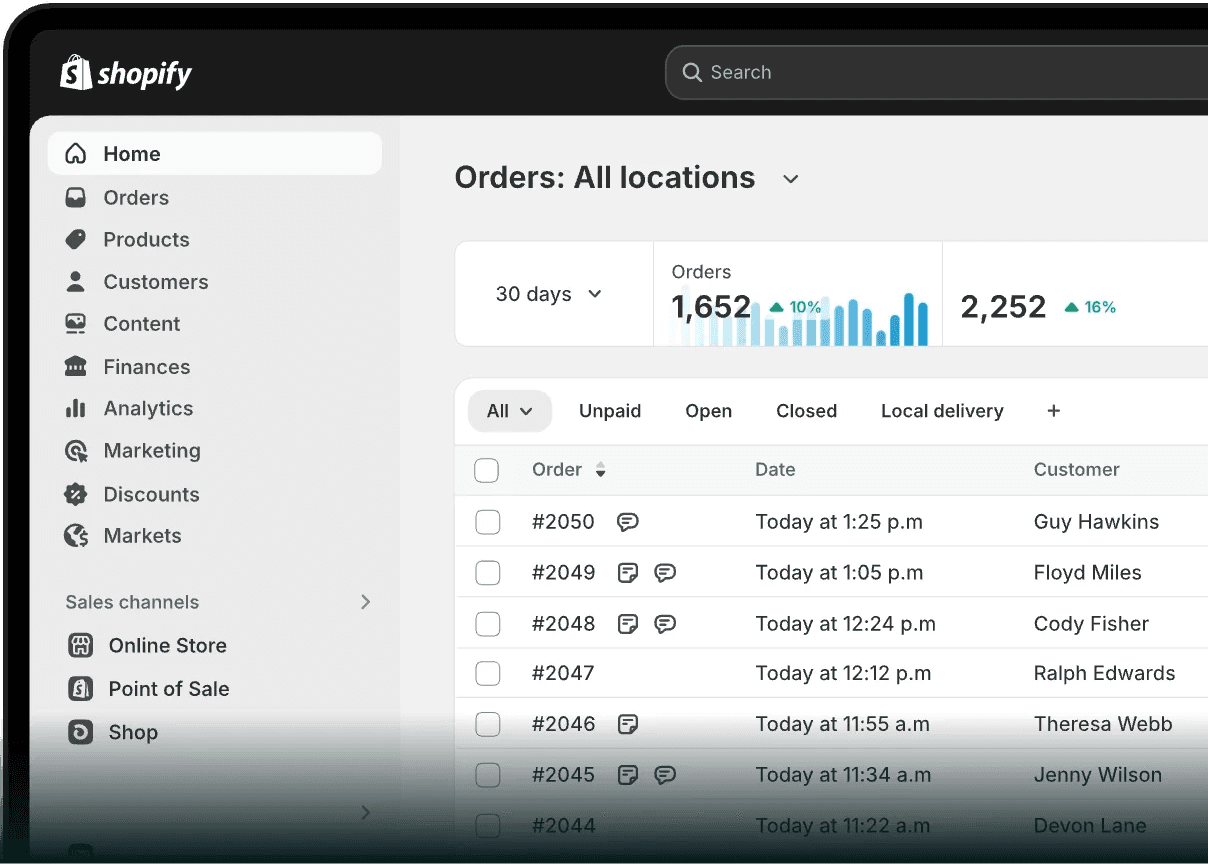
Shopify Plus is a premium SaaS solution designed for professional businesses that want to scale quickly. Its popularity comes from its simplicity and rapid deployment capabilities. Users can launch a store in just a few hours.
Among enterprise ecommerce platforms, Shopify Plus is often considered one of the most agile options.
Advantages of Shopify Plus
Built for Professional Dropshipping
Shopify Plus is ideal for large-scale dropshipping operations. It integrates smoothly with dropshipping suppliers and offers advanced order management tools.
This simplifies inventory management and optimizes sales operations. For brands evaluating the best ecommerce platforms for dropshipping, Shopify Plus is frequently a top contender.
Fast Deployment
Shopify Plus streamlines setup and customization. Its intuitive interface allows you to launch quickly and focus on growth instead of technical configuration.
For businesses seeking the best ecommerce platform for large business with minimal development overhead, this ease of use is a major advantage.
Premium 24/7 Support
Shopify Plus offers dedicated 24/7 customer support. Users receive personalized assistance at every stage of business growth.
This level of service reinforces its position among the top enterprise ecommerce platforms, especially for fast-moving brands.
Limitations of Shopify Plus
Like all enterprise ecommerce platforms, Shopify Plus has limitations:
Limited access to core code compared to open-source solutions. Deep customization may require workarounds.
Higher cost compared to standard SaaS platforms. It may not be viable for small or mid-sized businesses.
Smaller companies may benefit from more affordable solutions if they are not yet operating at an enterprise scale.


Oracle Commerce Cloud
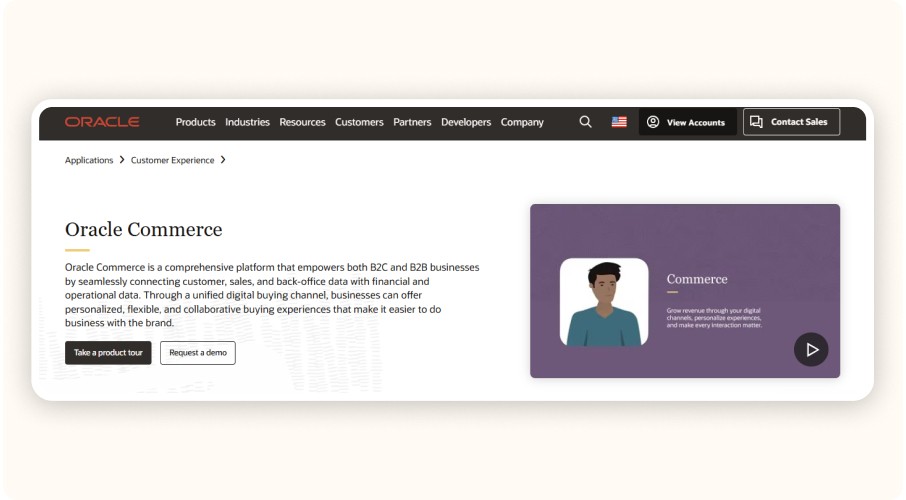
Oracle Commerce Cloud is a robust cloud-based solution built on an API-first architecture. It integrates easily with third-party tools and enterprise systems.
As one of the most powerful enterprise ecommerce platforms, it supports complex business environments.
Oracle Commerce Cloud also enables multi-site management. You can operate multiple online stores from a single system. This makes it ideal for large enterprises managing multiple brands.
Cybersecurity is central to this platform. Users benefit from enhanced protection through Oracle Cloud Infrastructure (OCI), reinforcing its reputation among secure ecommerce enterprise platforms.
Despite its strengths:
Pricing is higher than many competing solutions.
Implementation and configuration are complex, particularly for teams unfamiliar with the Oracle ecosystem.
It is best suited for organizations already using Oracle products. Migration can be long and costly.
For companies deeply integrated into Oracle systems, however, it remains one of the most advanced enterprise ecommerce platforms available.
B2B Ecommerce Platform | Key Features | Advantages | Limitations | Pricing |
|---|---|---|---|---|
Salesforce Commerce Cloud | CRM, omnichannel | Scalability, security | High cost, complexity | Custom quote |
Adobe Commerce (Magento) | Open source, customization | Flexibility, strong community | Technical maintenance | Custom quote |
SAP Commerce Cloud | B2B-focused, multilingual, large catalogs | Ideal for global markets | Steep learning curve | Custom quote |
BigCommerce Enterprise | Open SaaS, B2B support | Easy deployment | Limited themes | Custom quote |
Shopify Plus | Fast launch, omnichannel, dropshipping | Simplicity, strong support | Transaction fees | ≈ $2,300/month |
Oracle Commerce Cloud | API-first, multi-site, ERP integration | Power, security | Complex implementation | Custom quote |
What Is an Enterprise Ecommerce Platform?

An enterprise ecommerce platform is a software solution that allows one business to sell products or services to another business online.
Unlike standard ecommerce tools, enterprise ecommerce platforms offer advanced scalability features. They support rapid growth without sacrificing performance.
Most ecommerce enterprise platforms integrate with ERP (Enterprise Resource Planning) and CRM (Customer Relationship Management) systems. This allows companies to manage resources, customer relationships, and operations more efficiently.
They also provide deep customization options, enabling businesses to tailor the experience to their specific needs. For companies operating at scale, these platforms represent the foundation of a long-term digital commerce strategy.
Why Choosing the Right Ecommerce Platform Can Determine Your Business Success

Choosing the right solution among today’s enterprise ecommerce platforms has a direct impact on your company’s growth. Scalability, transaction management, and operational performance all depend on the strength of your infrastructure.
The right ecommerce enterprise platforms do more than process orders. They shape the entire customer experience and directly influence retention.
A strong platform allows you to:
Deliver smooth navigation
Offer a simple and frictionless checkout process
Personalize your product offerings
When evaluating enterprise ecommerce platforms, your decision affects long-term scalability, customer loyalty, and revenue growth. For companies operating at scale, selecting the right ecommerce platforms enterprise solution is not just a technical decision, it’s a strategic one.
What Are the Different Types of Ecommerce Platforms for Businesses?

There are several types of enterprise ecommerce platforms, each designed to meet specific business needs depending on company size, technical resources, and operational complexity.
On-Premise Platforms
On-premise platforms are installed and managed internally. They provide full control over infrastructure and customization.
However, they require significant investment in hardware, hosting, and ongoing maintenance. These systems are typically chosen by large organizations that want complete technical control over their enterprise ecommerce platforms.
Cloud Platforms
Cloud platforms are hosted solutions accessible remotely and designed for scalability. They offer flexibility while reducing infrastructure costs.
For businesses seeking agility and lower upfront investment, cloud-based ecommerce enterprise platforms are often the preferred choice.
Hybrid Solutions
Hybrid solutions combine the benefits of on-premise and cloud models. They offer internal control with external flexibility.
This approach appeals to enterprises transitioning from legacy systems to more modern enterprise ecommerce platforms without fully abandoning existing infrastructure.
SaaS Ecommerce Platforms
SaaS (Software as a Service) platforms are turnkey solutions where the provider manages hosting, maintenance, and updates.
These platforms are flexible, scalable, and ideal for companies that want to focus on growth instead of technical management. Many of the best enterprise ecommerce platforms today operate under a SaaS model.
Open-Source Ecommerce Software
Open-source platforms allow deep customization because the source code is accessible.
However, they require in-house technical expertise for development, integration, and security management. These ecommerce platforms enterprise solutions are ideal for companies needing advanced customization.
Headless Ecommerce Solutions
Headless ecommerce separates the front-end from the back-end.
This architecture allows full interface customization while maintaining a powerful back-end system. It improves user experience and simplifies integration with third-party tools.
For businesses seeking modern, API-driven enterprise ecommerce platforms, headless architecture is becoming increasingly popular.

What Features Should a Strong Enterprise Ecommerce Platform Offer?
A high-performing solution among enterprise ecommerce platforms must combine advanced capabilities that support both operational efficiency and customer experience.
The features you choose directly impact performance, scalability, and long-term growth.
Scalability
Scalability allows your platform to handle increased traffic, higher transaction volumes, and growing product catalogs without performance issues.
Strong enterprise ecommerce platforms adapt as demand evolves. They ensure your business can grow without technical bottlenecks.
Security

Robust security protects sensitive customer data and secures online transactions from cyber threats.
A secure B2B platform should include:
PCI-DSS certifications
HTTPS encryption
Multi-layer authentication mechanisms
Security is non-negotiable when evaluating ecommerce enterprise platforms, especially for companies processing high transaction volumes.
ERP, CRM, and Third-Party Integration
A powerful enterprise ecommerce platform must integrate seamlessly with ERP and CRM systems.
This allows you to:
Manage customer data
Automate workflows
Improve inventory management
Payment gateways and third-party software integrations ensure consistent management of sales, stock, and orders.
Strong crm and ecommerce integration capabilities are essential for companies that need centralized data control across departments.
Inventory Management and Customer Data Analytics
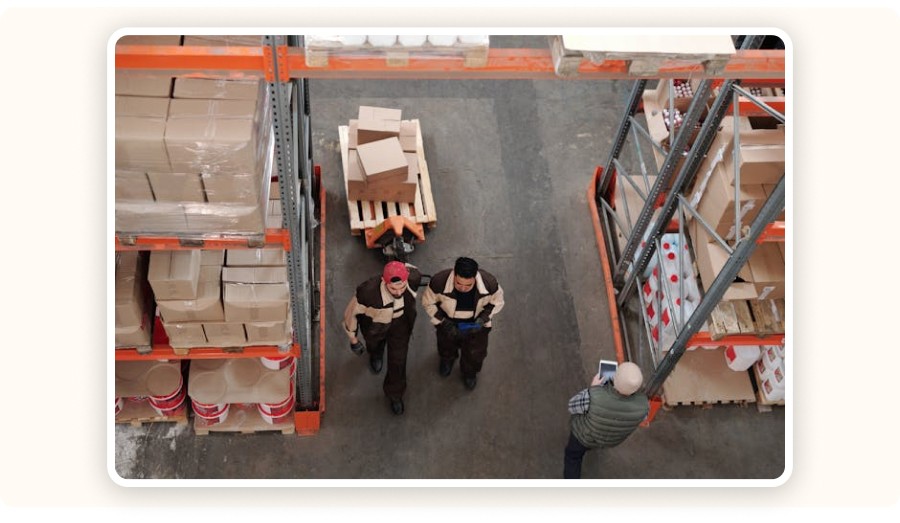
Inventory management is critical in ecommerce. It prevents stockouts and overstock situations.
Reliable enterprise ecommerce platforms provide real-time inventory tracking and automation tools.
Advanced analytics tools also help you analyze customer data. These insights allow you to personalize the shopping experience and optimize marketing strategies.
Mobile Optimization and Omnichannel Capabilities
Your chosen solution must be mobile-optimized and omnichannel-ready.
Modern enterprise ecommerce platforms ensure a seamless experience across:
Desktop
Mobile
Marketplaces
Social channels
This omnichannel consistency strengthens brand presence and improves customer satisfaction across every touchpoint.
How to Choose the Best Ecommerce Platform for Your Business
To choose the right solution, you need a clear evaluation framework. The best enterprise ecommerce platforms aren’t “one-size-fits-all”, your decision should match your budget, your technical resources, and your growth plans.
Below are the key criteria to review when comparing ecommerce enterprise platforms and identifying the best ecommerce platform for large business needs.
Budget and Total Cost of Ownership (TCO)

Budget matters, but the upfront price is only part of the equation. To make a smart decision, you also need to evaluate total cost of ownership (TCO), which includes:
Recurring fees
Maintenance costs
Updates
Technical support
If your budget is limited, you may consider a free ecommerce platform for early-stage projects. However, don’t choose purely based on a low entry cost. Many enterprise ecommerce platforms come with hidden long-term costs, especially for integrations, performance optimization, and support, which can impact profitability over time.
When comparing ecommerce platforms enterprise, always estimate TCO before committing.
Security
Security is non-negotiable. Before you choose any enterprise ecommerce platforms, confirm they offer strong standards such as:
PCI-DSS compliance
HTTPS encryption
Multi-layer authentication
These measures protect your business and customer data against cyberattacks and fraud. Strong security is also a key differentiator among top enterprise ecommerce platforms.
Integrations
Integration with external tools is essential for automation and efficiency. A strong platform should connect smoothly with:
ERP systems
CRM tools
Payment gateways
This is where crm and ecommerce integration becomes critical. When your platform integrates well with your stack, you can automate workflows, reduce manual errors, and improve operational speed.
The most scalable ecommerce enterprise platforms are built for integration-first environments.
Customization

Customization determines how well the platform can match your exact business requirements. Choose enterprise ecommerce platforms that allow you to adapt:
Interface design
Customer experience
Core features
The more complex your catalog, pricing rules, or B2B workflow, the more customization matters. This is one reason many businesses favor best enterprise ecommerce platforms that support modular or headless setups.
Scalability
Scalability supports growth without performance loss. Choose enterprise ecommerce platforms that can handle increases in:
Transaction volume
Product catalog size
User accounts
In every case, evaluate your real needs first. Then compare features across ecommerce platforms enterprise options to ensure they meet current requirements while leaving room to scale.
Find the Right Products With the Right Tools
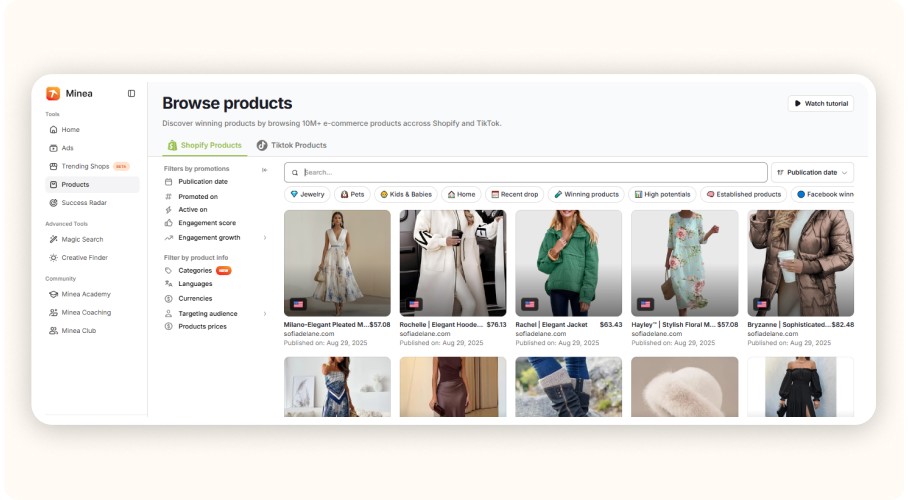
After selecting the right platform, the next step is choosing winning products that can actually sell. In dropshipping, product selection often determines success more than the platform itself.
If your business model includes dropshipping workflows, you should consider how your platform supports that. Many teams look for the best ecommerce platforms for dropshipping and the best dropshipping ecommerce platform when they want faster product testing and expansion.
Tools like Minea help you spot winning products by analyzing real-time market trends. Minea’s competitive intelligence data helps identify profitable opportunities based on what’s already performing in ads and ecommerce stores.
With Minea, you can:
Track product performance over time
Adapt your catalog based on trends
Avoid common beginner mistakes
Move faster on sourcing and testing
If you want to get results quickly, pairing strong enterprise ecommerce platforms with smart product research tools gives you a serious advantage.



Key Takeaways
A B2B ecommerce platform is an online solution that allows you to sell products or services to other businesses through a dedicated storefront. With the right enterprise ecommerce platforms, you can automate sales, manage inventory more effectively, improve customer experience, and scale across channels with strong security.
If you’re looking for the best enterprise ecommerce platforms, the top options include:
Salesforce Commerce Cloud
Adobe Commerce (Magento)
SAP Commerce Cloud
BigCommerce Enterprise
Shopify Plus
Oracle Commerce Cloud
And to maximize results, especially if you also run dropshipping workflows, combine your platform with a high-performance sourcing tool like Minea. It helps you identify winning products faster, strengthen your go-to-market strategy, and save time.
FAQ
What are enterprise ecommerce platforms?
Enterprise ecommerce platforms are advanced software solutions designed for large businesses. They support high transaction volumes, complex catalogs, ERP and CRM integration, and global scalability.
What is the best enterprise ecommerce platform for large business?
The best ecommerce platform for large business depends on your needs. Salesforce Commerce Cloud, Adobe Commerce, SAP Commerce Cloud, and Shopify Plus are among the top enterprise ecommerce platforms for scalability and integrations.
How do enterprise ecommerce platforms differ from standard ecommerce platforms?
Enterprise ecommerce platforms offer deeper customization, stronger security, advanced automation, and better integration with ERP and CRM systems compared to standard ecommerce solutions.
Are enterprise ecommerce platforms suitable for dropshipping?
Some enterprise ecommerce platforms, such as Shopify Plus and BigCommerce Enterprise, are considered among the best ecommerce platforms for dropshipping at scale, especially for brands managing high order volumes.
Similar articles