
How to Build a Customer Retention Email for Dropshipping?
Dropshipping Emailing
Author: Josa
Contents
In dropshipping, paid acquisition is getting more expensive and less predictable. A strong dropshipping emailing strategy is how you protect margins and generate repeat sales without constantly increasing ad spend. Retention isn’t “more emails”, it’s smarter emails triggered by behavior:
purchase
delivery
inactivity.
In customer loyalty dropshipping, strong flows also reduce delivery anxiety, support tickets, and refunds, which directly improves profitability.
Quick recap : A customer retention email targets existing buyers to drive repeat purchases, reviews, loyalty actions, or reactivation. A practical system uses a 7-email flow (welcome, thank-you, loyalty launch, bonus points, recommendations, review request, winback) and runs on automation tools like Mailchimp or Klaviyo.
Why Customer Loyalty Matters in Dropshipping ?

In customer loyalty dropshipping, acquisition costs keep rising, so profitability depends on what you do after the first purchase. Strong loyalty and customer retention email flows turn one-time buyers into repeat customers, reduce refunds and support tickets, and create compounding growth through reviews and referrals, without relying on more ad spend.
Minea
Reach $1,000 per day or get your money back

Retention vs Acquisition: Profitability
In customer loyalty dropshipping, acquisition is the most expensive lever. You pay for traffic, test creatives, then start over for the next sale. A customer retention email flow flips the model: you monetize the customers you already paid to acquire. It’s faster, cheaper, and more predictable because the trust is already there.
CLV (Customer Lifetime Value)
CLV is where margins are made. A returning customer typically:
buys again with less hesitation
spends more on bundles and add-ons
costs less to reactivate than a cold prospect
A simple retention sequence (post-purchase → post-delivery → recommendation → loyalty/VIP) turns one-time buyers into repeat buyers and stabilizes revenue.
Trust, refunds, reviews and the “network effect”
Dropshipping has friction points :
delivery time
tracking
support.
Good retention emails reduce anxiety and prevent refunds by setting expectations and guiding usage. They also generate more reviews and UGC, which increases conversion for new visitors.
Over time, happy customers share products, leave screenshots, and recommend you creating a compounding network effect that brings sales without extra ad spend.
The Foundations of a Winning Customer Retention Email Strategy
To build a customer retention email strategy that works, you need a solid base:
clean customer data
smart segmentation
behavior-based triggers.
Without these foundations, your emails turn into generic blasts that hurt deliverability instead of driving repeat purchases.
Customer journey and CRM basics (what to track)
Strong customer loyalty email campaigns start with clean data. You don’t need a complex stack, but you must track the basics :
purchase history (products, order count, AOV)
delivery status (shipped, delivered, delayed)
support tickets and refund reasons
browsing signals (category interest, repeat visits)
This lets you match emails to real moments in the customer journey, not random blasts.
Personalization and segmentation (dynamic segments)
Performance comes from dynamic segments, not “one list for everyone”. In practice, your loyalty email campaigns should at least separate:
first-time buyers
repeat buyers
VIP/high spenders
inactive customers (30/60/90 days)
Then personalize with simple fields: last product bought, category, country, and purchase frequency. Even basic personalization beats generic promos.
Timing, triggers and simple campaign logic
Retention works when emails are triggered by behavior : purchase, delivery, review window, inactivity. Keep the logic simple:
1 email = 1 goal = 1 CTA
one clear trigger per flow
one reminder if there’s no click
Too many emails hurts deliverability. The right cadence drives repeat purchases.
The 7 Loyalty Email Campaigns That Actually Work
These loyalty email campaigns cover the full customer cycle from first contact to reactivation. Keep each message simple :
one goal
one benefit
one CTA.
Below are the 7 must-have emails, with a mini customer retention email template under each.
Welcome email

This email sets expectations and reduces anxiety. In dropshipping, clarity beats “brand storytelling”. Tell customers what happens next (tracking, delivery, support), then give one useful action.
Example:
Subject: Welcome, Your perk is ready
Thanks for joining [Store]. You’ll get clear tracking, product tips, and VIP offers.
Here’s your welcome perk: 10% off (48h).
Need help? Reply to this email, we answer fast.
CTA: Activate my perk
Thank-you / order confirmation email
This email prevents support tickets by making the process obvious: confirmation, ETA, and where to track. It builds trust immediately.
Example :
Subject: Thanks for your order
Your order is confirmed and being prepared.
Tracking link: [link]
Estimated delivery: X–Y days
CTA: Track my order
Loyalty program launch email
A loyalty email campaign works best when it’s simple: earn points, redeem rewards, get VIP access. Send it after a positive first experience (post-delivery or after a smooth support interaction).
Example :
Subject: New: earn points on every purchase
Every order earns you points automatically.
Redeem for discounts, gifts, and early access.
Join in one click (free).
CTA: Join the program
Birthday / bonus points email

This email drives repeat purchases “softly” with a small, time-limited reward. It also works for first-purchase anniversaries or milestone point tiers.
Example :
Subject: A small gift for you (48h)
We just added X bonus points to your account.
Bonus expires soon, use it anytime.
Thanks for being an active customer.
CTA: Use my points
Product recommendation email
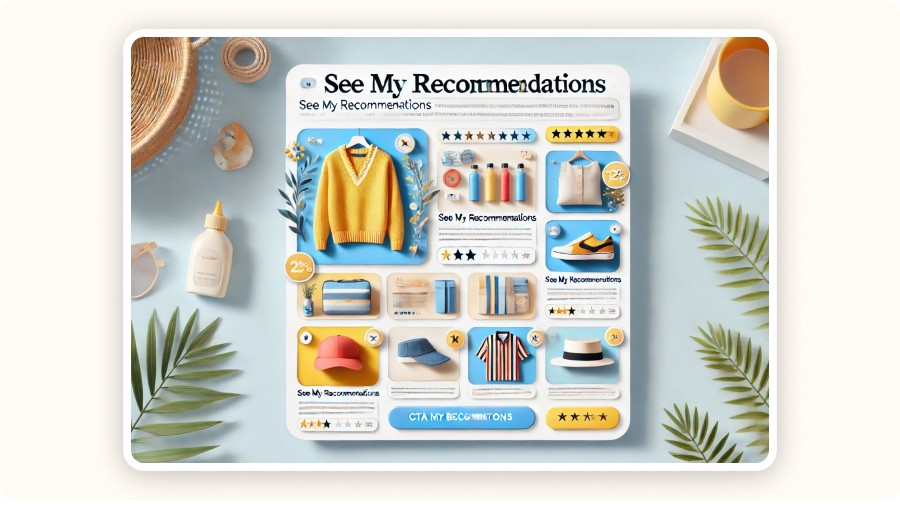
This email increases AOV when recommendations are highly relevant. Keep it tight: 3 products max (add-on, upgrade, bundle). The more focused the selection, the higher the click rate.
Example :
Subject: Perfect with your purchase: 3 picks
If you liked [Product], you’ll love these:
[Add-on] 2) [Upgrade] 3) [Bundle]
Today only: 10% off the bundle
CTA: See my recommendations
Review and feedback request email
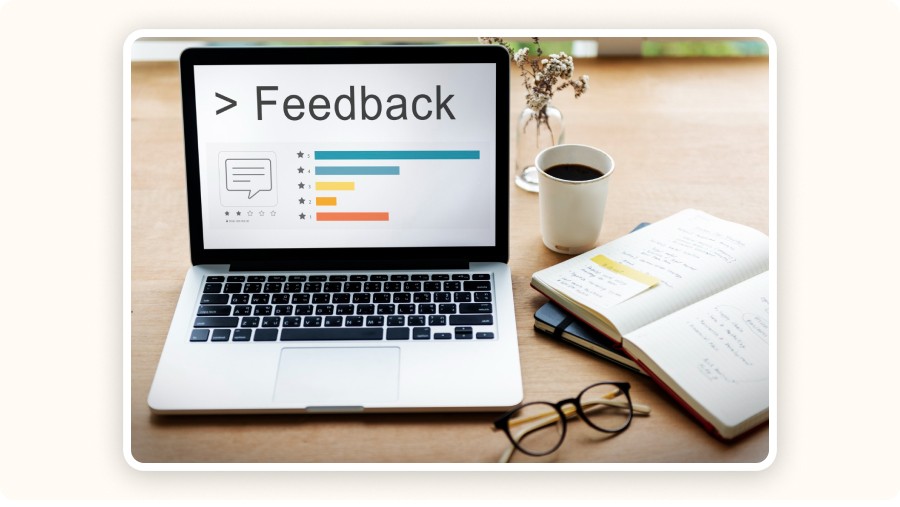
Reviews boost conversion and reduce hesitation for new visitors. Send after delivery, make it effortless, and keep the request to one action.
Example :
Subject: Your feedback in 20 seconds
Did everything arrive OK?
Rate us in one click: [link]
Your review helps other customers choose.
CTA: Leave a review
Re-engagement (winback) email

Winback emails should not train customers to wait for discounts. Lead with value (new arrivals, best sellers), then add a short incentive with a clear deadline.
Example :
Subject: We saved you an advantage
It’s been a while, here are new arrivals + best sellers: [link]
For you: 10% off or free shipping (ends tonight).
Not interested? Unsubscribe in one click.
CTA: Claim my advantage
These 7 emails form a complete loyalty email campaign system: predictable, scalable, and designed to increase repeat purchases without spamming your list.


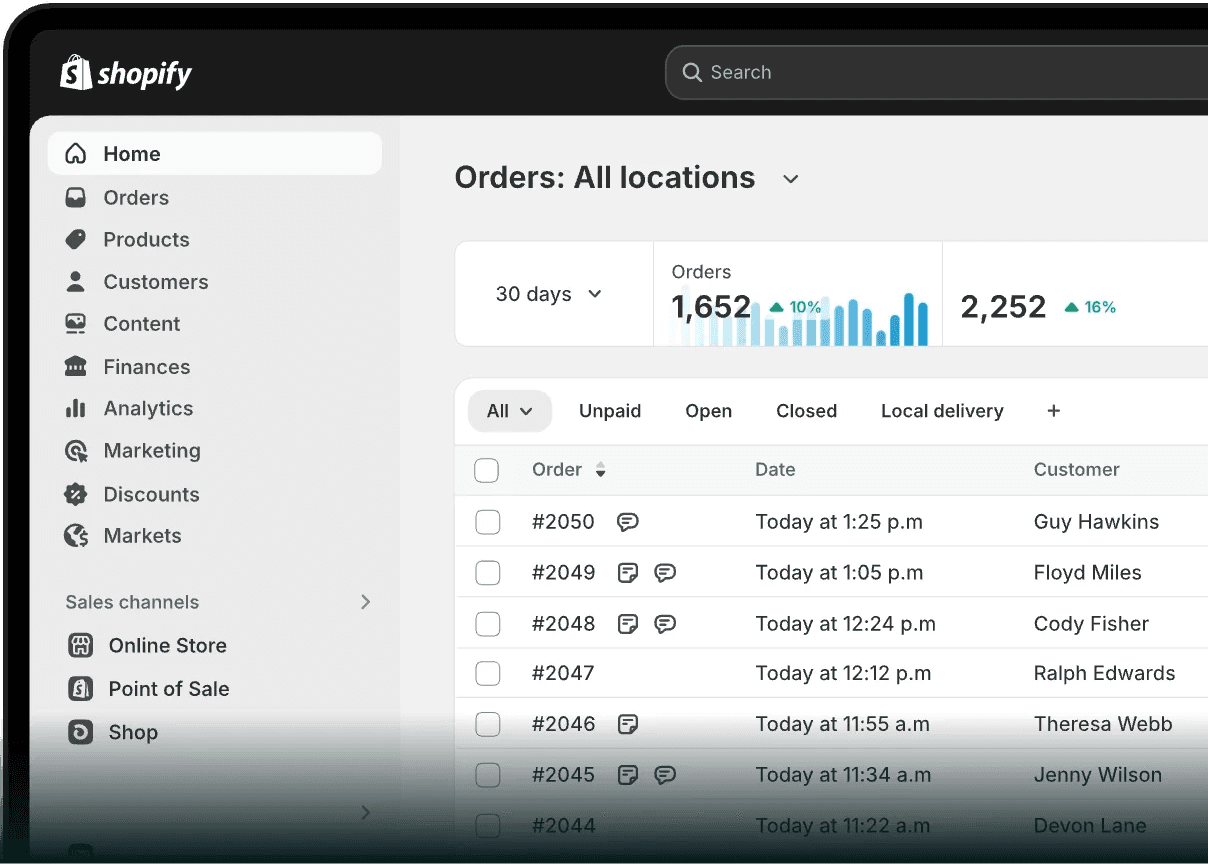
Create and test your Shopify store for only $1 per day during 90 days
In dropshipping, paid acquisition is getting more expensive and less predictable. A strong dropshipping emailing strategy is how you protect margins and generate repeat sales without constantly increasing ad spend. Retention isn’t “more emails”, it’s smarter emails triggered by behavior:
purchase
delivery
inactivity.
In customer loyalty dropshipping, strong flows also reduce delivery anxiety, support tickets, and refunds, which directly improves profitability.
Quick recap : A customer retention email targets existing buyers to drive repeat purchases, reviews, loyalty actions, or reactivation. A practical system uses a 7-email flow (welcome, thank-you, loyalty launch, bonus points, recommendations, review request, winback) and runs on automation tools like Mailchimp or Klaviyo.
Why Customer Loyalty Matters in Dropshipping ?
In customer loyalty dropshipping, acquisition costs keep rising, so profitability depends on what you do after the first purchase. Strong loyalty and customer retention email flows turn one-time buyers into repeat customers, reduce refunds and support tickets, and create compounding growth through reviews and referrals, without relying on more ad spend.
Minea
Reach $1,000 per day or get your money back
Retention vs Acquisition: Profitability
In customer loyalty dropshipping, acquisition is the most expensive lever. You pay for traffic, test creatives, then start over for the next sale. A customer retention email flow flips the model: you monetize the customers you already paid to acquire. It’s faster, cheaper, and more predictable because the trust is already there.
CLV (Customer Lifetime Value)
CLV is where margins are made. A returning customer typically:
buys again with less hesitation
spends more on bundles and add-ons
costs less to reactivate than a cold prospect
A simple retention sequence (post-purchase → post-delivery → recommendation → loyalty/VIP) turns one-time buyers into repeat buyers and stabilizes revenue.
Trust, refunds, reviews and the “network effect”
Dropshipping has friction points :
delivery time
tracking
support.
Good retention emails reduce anxiety and prevent refunds by setting expectations and guiding usage. They also generate more reviews and UGC, which increases conversion for new visitors.
Over time, happy customers share products, leave screenshots, and recommend you creating a compounding network effect that brings sales without extra ad spend.
The Foundations of a Winning Customer Retention Email Strategy
To build a customer retention email strategy that works, you need a solid base:
clean customer data
smart segmentation
behavior-based triggers.
Without these foundations, your emails turn into generic blasts that hurt deliverability instead of driving repeat purchases.
Customer journey and CRM basics (what to track)
Strong customer loyalty email campaigns start with clean data. You don’t need a complex stack, but you must track the basics :
purchase history (products, order count, AOV)
delivery status (shipped, delivered, delayed)
support tickets and refund reasons
browsing signals (category interest, repeat visits)
This lets you match emails to real moments in the customer journey, not random blasts.
Personalization and segmentation (dynamic segments)
Performance comes from dynamic segments, not “one list for everyone”. In practice, your loyalty email campaigns should at least separate:
first-time buyers
repeat buyers
VIP/high spenders
inactive customers (30/60/90 days)
Then personalize with simple fields: last product bought, category, country, and purchase frequency. Even basic personalization beats generic promos.
Timing, triggers and simple campaign logic
Retention works when emails are triggered by behavior : purchase, delivery, review window, inactivity. Keep the logic simple:
1 email = 1 goal = 1 CTA
one clear trigger per flow
one reminder if there’s no click
Too many emails hurts deliverability. The right cadence drives repeat purchases.
The 7 Loyalty Email Campaigns That Actually Work
These loyalty email campaigns cover the full customer cycle from first contact to reactivation. Keep each message simple :
one goal
one benefit
one CTA.
Below are the 7 must-have emails, with a mini customer retention email template under each.
Welcome email
This email sets expectations and reduces anxiety. In dropshipping, clarity beats “brand storytelling”. Tell customers what happens next (tracking, delivery, support), then give one useful action.
Example:
Subject: Welcome, Your perk is ready
Thanks for joining [Store]. You’ll get clear tracking, product tips, and VIP offers.
Here’s your welcome perk: 10% off (48h).
Need help? Reply to this email, we answer fast.
CTA: Activate my perk
Thank-you / order confirmation email
This email prevents support tickets by making the process obvious: confirmation, ETA, and where to track. It builds trust immediately.
Example :
Subject: Thanks for your order
Your order is confirmed and being prepared.
Tracking link: [link]
Estimated delivery: X–Y days
CTA: Track my order
Loyalty program launch email
A loyalty email campaign works best when it’s simple: earn points, redeem rewards, get VIP access. Send it after a positive first experience (post-delivery or after a smooth support interaction).
Example :
Subject: New: earn points on every purchase
Every order earns you points automatically.
Redeem for discounts, gifts, and early access.
Join in one click (free).
CTA: Join the program
Birthday / bonus points email
This email drives repeat purchases “softly” with a small, time-limited reward. It also works for first-purchase anniversaries or milestone point tiers.
Example :
Subject: A small gift for you (48h)
We just added X bonus points to your account.
Bonus expires soon, use it anytime.
Thanks for being an active customer.
CTA: Use my points
Product recommendation email
This email increases AOV when recommendations are highly relevant. Keep it tight: 3 products max (add-on, upgrade, bundle). The more focused the selection, the higher the click rate.
Example :
Subject: Perfect with your purchase: 3 picks
If you liked [Product], you’ll love these:
[Add-on] 2) [Upgrade] 3) [Bundle]
Today only: 10% off the bundle
CTA: See my recommendations
Review and feedback request email
Reviews boost conversion and reduce hesitation for new visitors. Send after delivery, make it effortless, and keep the request to one action.
Example :
Subject: Your feedback in 20 seconds
Did everything arrive OK?
Rate us in one click: [link]
Your review helps other customers choose.
CTA: Leave a review
Re-engagement (winback) email
Winback emails should not train customers to wait for discounts. Lead with value (new arrivals, best sellers), then add a short incentive with a clear deadline.
Example :
Subject: We saved you an advantage
It’s been a while, here are new arrivals + best sellers: [link]
For you: 10% off or free shipping (ends tonight).
Not interested? Unsubscribe in one click.
CTA: Claim my advantage
These 7 emails form a complete loyalty email campaign system: predictable, scalable, and designed to increase repeat purchases without spamming your list.
Create and test your Shopify store for only $1 per day during 90 days
In dropshipping, paid acquisition is getting more expensive and less predictable. A strong dropshipping emailing strategy is how you protect margins and generate repeat sales without constantly increasing ad spend. Retention isn’t “more emails”, it’s smarter emails triggered by behavior:
purchase
delivery
inactivity.
In customer loyalty dropshipping, strong flows also reduce delivery anxiety, support tickets, and refunds, which directly improves profitability.
Quick recap : A customer retention email targets existing buyers to drive repeat purchases, reviews, loyalty actions, or reactivation. A practical system uses a 7-email flow (welcome, thank-you, loyalty launch, bonus points, recommendations, review request, winback) and runs on automation tools like Mailchimp or Klaviyo.
Why Customer Loyalty Matters in Dropshipping ?
In customer loyalty dropshipping, acquisition costs keep rising, so profitability depends on what you do after the first purchase. Strong loyalty and customer retention email flows turn one-time buyers into repeat customers, reduce refunds and support tickets, and create compounding growth through reviews and referrals, without relying on more ad spend.
Minea
Reach $1,000 per day or get your money back
Retention vs Acquisition: Profitability
In customer loyalty dropshipping, acquisition is the most expensive lever. You pay for traffic, test creatives, then start over for the next sale. A customer retention email flow flips the model: you monetize the customers you already paid to acquire. It’s faster, cheaper, and more predictable because the trust is already there.
CLV (Customer Lifetime Value)
CLV is where margins are made. A returning customer typically:
buys again with less hesitation
spends more on bundles and add-ons
costs less to reactivate than a cold prospect
A simple retention sequence (post-purchase → post-delivery → recommendation → loyalty/VIP) turns one-time buyers into repeat buyers and stabilizes revenue.
Trust, refunds, reviews and the “network effect”
Dropshipping has friction points :
delivery time
tracking
support.
Good retention emails reduce anxiety and prevent refunds by setting expectations and guiding usage. They also generate more reviews and UGC, which increases conversion for new visitors.
Over time, happy customers share products, leave screenshots, and recommend you creating a compounding network effect that brings sales without extra ad spend.
The Foundations of a Winning Customer Retention Email Strategy
To build a customer retention email strategy that works, you need a solid base:
clean customer data
smart segmentation
behavior-based triggers.
Without these foundations, your emails turn into generic blasts that hurt deliverability instead of driving repeat purchases.
Customer journey and CRM basics (what to track)
Strong customer loyalty email campaigns start with clean data. You don’t need a complex stack, but you must track the basics :
purchase history (products, order count, AOV)
delivery status (shipped, delivered, delayed)
support tickets and refund reasons
browsing signals (category interest, repeat visits)
This lets you match emails to real moments in the customer journey, not random blasts.
Personalization and segmentation (dynamic segments)
Performance comes from dynamic segments, not “one list for everyone”. In practice, your loyalty email campaigns should at least separate:
first-time buyers
repeat buyers
VIP/high spenders
inactive customers (30/60/90 days)
Then personalize with simple fields: last product bought, category, country, and purchase frequency. Even basic personalization beats generic promos.
Timing, triggers and simple campaign logic
Retention works when emails are triggered by behavior : purchase, delivery, review window, inactivity. Keep the logic simple:
1 email = 1 goal = 1 CTA
one clear trigger per flow
one reminder if there’s no click
Too many emails hurts deliverability. The right cadence drives repeat purchases.
The 7 Loyalty Email Campaigns That Actually Work
These loyalty email campaigns cover the full customer cycle from first contact to reactivation. Keep each message simple :
one goal
one benefit
one CTA.
Below are the 7 must-have emails, with a mini customer retention email template under each.
Welcome email
This email sets expectations and reduces anxiety. In dropshipping, clarity beats “brand storytelling”. Tell customers what happens next (tracking, delivery, support), then give one useful action.
Example:
Subject: Welcome, Your perk is ready
Thanks for joining [Store]. You’ll get clear tracking, product tips, and VIP offers.
Here’s your welcome perk: 10% off (48h).
Need help? Reply to this email, we answer fast.
CTA: Activate my perk
Thank-you / order confirmation email
This email prevents support tickets by making the process obvious: confirmation, ETA, and where to track. It builds trust immediately.
Example :
Subject: Thanks for your order
Your order is confirmed and being prepared.
Tracking link: [link]
Estimated delivery: X–Y days
CTA: Track my order
Loyalty program launch email
A loyalty email campaign works best when it’s simple: earn points, redeem rewards, get VIP access. Send it after a positive first experience (post-delivery or after a smooth support interaction).
Example :
Subject: New: earn points on every purchase
Every order earns you points automatically.
Redeem for discounts, gifts, and early access.
Join in one click (free).
CTA: Join the program
Birthday / bonus points email
This email drives repeat purchases “softly” with a small, time-limited reward. It also works for first-purchase anniversaries or milestone point tiers.
Example :
Subject: A small gift for you (48h)
We just added X bonus points to your account.
Bonus expires soon, use it anytime.
Thanks for being an active customer.
CTA: Use my points
Product recommendation email
This email increases AOV when recommendations are highly relevant. Keep it tight: 3 products max (add-on, upgrade, bundle). The more focused the selection, the higher the click rate.
Example :
Subject: Perfect with your purchase: 3 picks
If you liked [Product], you’ll love these:
[Add-on] 2) [Upgrade] 3) [Bundle]
Today only: 10% off the bundle
CTA: See my recommendations
Review and feedback request email
Reviews boost conversion and reduce hesitation for new visitors. Send after delivery, make it effortless, and keep the request to one action.
Example :
Subject: Your feedback in 20 seconds
Did everything arrive OK?
Rate us in one click: [link]
Your review helps other customers choose.
CTA: Leave a review
Re-engagement (winback) email
Winback emails should not train customers to wait for discounts. Lead with value (new arrivals, best sellers), then add a short incentive with a clear deadline.
Example :
Subject: We saved you an advantage
It’s been a while, here are new arrivals + best sellers: [link]
For you: 10% off or free shipping (ends tonight).
Not interested? Unsubscribe in one click.
CTA: Claim my advantage
These 7 emails form a complete loyalty email campaign system: predictable, scalable, and designed to increase repeat purchases without spamming your list.
Create and test your Shopify store for only $1 per day during 90 days
How to Write Retention Emails That Convert ?

To convert, retention emails must be built like micro-decisions: one message, one benefit, one next step, sent at the right moment to the right segment. The goal isn’t to sound “nice”. It’s to be clear, useful, and action-driven (subject line, message, CTA, timing).
Subject lines + A/B testing
Subject lines decide opens. Keep them short, benefit-driven, and specific to the moment (order, delivery, points, inactivity). Test continuously with A/B tests so you don’t guess. Rotate three styles:
Direct: “Your order update inside”
Curiosity: “Quick question about your [Product]”
Offer: “Bonus points added (48h)”
Keep the winner, drop the rest.
Simple storytelling (1 idea, 1 proof, 1 action)
Retention emails work when they feel personal and useful. Use a simple structure:
One Context: “Your order should be arriving soon.”
One Value: “Here are 3 tips to get the best result.”
One Proof: “Customers using tip #1 report fewer issues.”
Then move to the action.
CTA that drives one decision
Every email should drive one decision. One CTA, visible, and aligned with the goal: Track my order, Use my points, See my picks, Leave a review. Too many links dilute clicks; one clear CTA increases conversions.
Real Examples of Effective Retention Emails (Dropshipping-ready)

Below are four ready-to-send retention emails you can plug into your flows. Keep them short, clear, and focused on one action.
Winback (30–45 days inactive)
Subject: We saved you an advantage
It’s been a while since your last order. Here are 3 best sellers picked for you: [link]
Today only: 10% off (expires tonight).
If you’re not interested anymore, you can unsubscribe in one click.
CTA: Claim my advantage
Post-delivery usage tips (anti-refund)
Subject: 3 quick tips to get the best result
Your order is delivered, here’s how to avoid the most common mistake.
Tip #1 takes 10 seconds and prevents most issues.
Need help? Reply to this email and we’ll guide you.
CTA: See the quick guide
Review request (1-click)
Subject: Your feedback in 20 seconds
Did everything arrive OK?
Rate your experience in one click: [link]
Thanks, your review helps other customers choose.
CTA: Leave a review
VIP / early access
Subject: Early access for active customers only
New drop is live before everyone else. Stock is limited.
VIP perk: first access + priority availability.
CTA: Get early access
Tools to Automate Customer Loyalty Email Campaigns
To automate customer loyalty email campaigns, you need email marketing tools that can trigger the right emails based on customer behavior (purchase, delivery, inactivity) while keeping personalization at scale. With the right setup, you save time, keep messaging consistent, and improve repeat purchases without blasting your list.
Mailchimp Ecommerce Referral Loyalty Campaign (step-by-step)

A mailchimp ecommerce referral loyalty campaign works best when it’s simple: clear segments, clear triggers, and one CTA per email. Start by creating these segments:
First-time buyers (1 order)
Repeat buyers (2+ orders)
VIP (top spenders or 3+ orders)
Inactive (no purchase in 30/60/90 days)
Delivered (orders marked delivered)
Then build automations for your customer loyalty email campaigns:
Post-purchase flow: order confirmation → tracking update → delivery reassurance
Post-delivery flow: usage tips (anti-refund) → review request (1-click)
Cross-sell flow: recommendation email based on last product/category
Winback flow: 30–45 days inactive → curated best sellers + limited perk
Loyalty flow: points/VIP update → early access announcement
Referral timing matters. Don’t push referrals on day one. Trigger the referral email after satisfaction: a positive review, a “delivered and no ticket” window, or the second purchase. That’s when customers are most likely to recommend without feeling pressured.
Minea
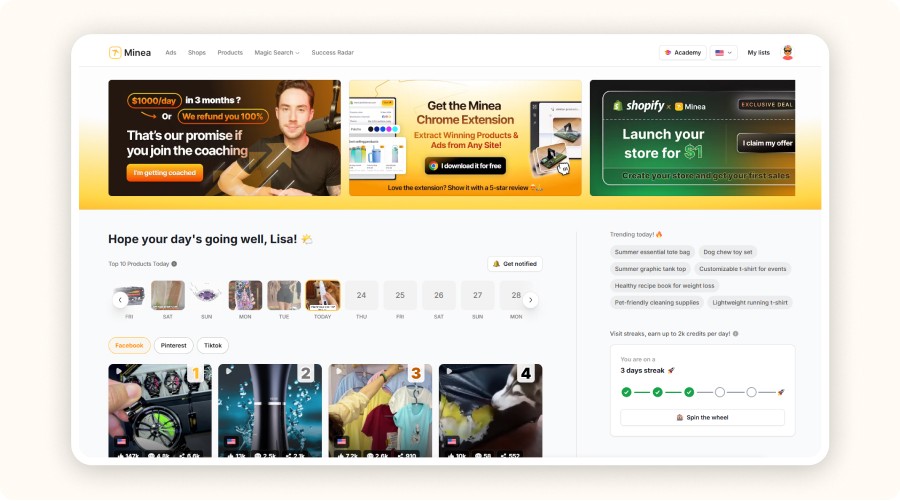
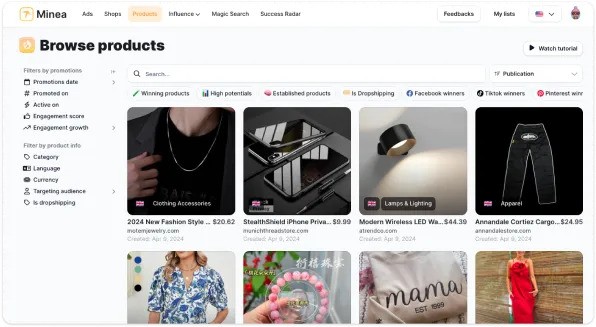
Minea helps you choose what to promote inside retention flows: products that drive repeat buying, bundles that convert, and angles that perform. Use it to improve your recommendation emails and send more relevant offers per segment.
Ads: identify products that are already scaling and reuse winning angles for cross-sell and winback emails.
Trending Shops: see what top stores push post-purchase, then mirror the best retention sequences.
Success Radar: detect rising products before they peak, ideal for VIP early access campaigns.
Magic Search : faster discovery to match offers to specific niches and segments.
Alternatives
Klaviyo: best for deep behavioral segmentation and Shopify-centric flows
Omnisend: simple setup, solid for ecommerce automations
ActiveCampaign: advanced logic (scoring, CRM-style journeys) when you need more control


Measuring Customer Retention Email Performance

Without measurement, you can’t tell if your customer retention email flow drives revenue or just opens. A few KPIs are enough to spot what’s broken (subject line, offer, timing) and improve results without sending more emails.
Key metrics
Measure retention with a few KPIs and you’ll know exactly what to fix, without increasing email volume. Open rate tells you if subject lines and timing are working. Click rate shows whether the content and offer are relevant. Repeat purchase rate is the core metric: it proves your emails generate revenue, not just attention.
Watch unsubscribe rate closely. If it climbs, your targeting is off or your cadence is too aggressive. Finally, track CLV to confirm long-term profitability. If CLV rises, your retention system is doing its job.
Feedback loops
Numbers don’t explain “why”. Add lightweight feedback loops to improve fast:
1-click surveys (“Everything ok?” Yes/No)
post-delivery micro questions (“Was the product easy to use?”)
quick review prompts with an optional comment box
These insights help you adjust segments, messaging, and timing—so your customer loyalty emails get better results with the same send volume.
Conclusion
In dropshipping, retention is a margin lever, not a “nice to have”. The fastest way to make it work is to keep your system simple :
build clear segments (first-time, repeat, VIP, inactive)
use behavior-based triggers (purchase, delivery, inactivity)
follow one rule: 1 email = 1 goal = 1 CTA.
Automate your core flows with Mailchimp so every customer gets the right message at the right time, without manual work. Then use Minea insights to push smarter offers, best sellers, bundles, and repeat-buy products. So your campaigns stay relevant by segment. Done right, you get more repeat purchases, higher CLV, and less dependence on paid acquisition.
FAQ
What is a customer retention email?
A customer retention email is sent to existing customers to drive repeat purchases, reduce churn, collect reviews, activate loyalty, or re-engage inactive buyers. In ecommerce/dropshipping, it also helps reduce delivery anxiety and support tickets by setting clear expectations.
How do you write a customer retention email?
Keep it simple: 1 email = 1 goal = 1 CTA. Use a short subject line tied to the moment (order, delivery, points, inactivity), write 3–6 lines focused on the customer, add one quick proof (review, result, benefit), then finish with one clear CTA like Track my order, Use my points, See my picks, or Leave a review. Segment before sending (first-time, repeat, VIP, inactive) to avoid generic blasts.
What is a concrete customer retention example?
A practical flow: after delivery, send 3 usage tips to prevent refunds → day 7 request a one-click review → day 14 send a relevant add-on/bundle recommendation → day 45 trigger a winback email if inactive with best sellers + a limited perk. This increases CLV without more ad spend.
What is the 30/30/50 rule for cold emails?
It’s a prospecting framework: ~30% personalization/context, ~30% value (what you offer), ~50% proof + CTA/follow-up. It’s not universal, but it keeps cold emails short and outcome-focused.
How to Write Retention Emails That Convert ?
To convert, retention emails must be built like micro-decisions: one message, one benefit, one next step, sent at the right moment to the right segment. The goal isn’t to sound “nice”. It’s to be clear, useful, and action-driven (subject line, message, CTA, timing).
Subject lines + A/B testing
Subject lines decide opens. Keep them short, benefit-driven, and specific to the moment (order, delivery, points, inactivity). Test continuously with A/B tests so you don’t guess. Rotate three styles:
Direct: “Your order update inside”
Curiosity: “Quick question about your [Product]”
Offer: “Bonus points added (48h)”
Keep the winner, drop the rest.
Simple storytelling (1 idea, 1 proof, 1 action)
Retention emails work when they feel personal and useful. Use a simple structure:
One Context: “Your order should be arriving soon.”
One Value: “Here are 3 tips to get the best result.”
One Proof: “Customers using tip #1 report fewer issues.”
Then move to the action.
CTA that drives one decision
Every email should drive one decision. One CTA, visible, and aligned with the goal: Track my order, Use my points, See my picks, Leave a review. Too many links dilute clicks; one clear CTA increases conversions.
Real Examples of Effective Retention Emails (Dropshipping-ready)
Below are four ready-to-send retention emails you can plug into your flows. Keep them short, clear, and focused on one action.
Winback (30–45 days inactive)
Subject: We saved you an advantage
It’s been a while since your last order. Here are 3 best sellers picked for you: [link]
Today only: 10% off (expires tonight).
If you’re not interested anymore, you can unsubscribe in one click.
CTA: Claim my advantage
Post-delivery usage tips (anti-refund)
Subject: 3 quick tips to get the best result
Your order is delivered, here’s how to avoid the most common mistake.
Tip #1 takes 10 seconds and prevents most issues.
Need help? Reply to this email and we’ll guide you.
CTA: See the quick guide
Review request (1-click)
Subject: Your feedback in 20 seconds
Did everything arrive OK?
Rate your experience in one click: [link]
Thanks, your review helps other customers choose.
CTA: Leave a review
VIP / early access
Subject: Early access for active customers only
New drop is live before everyone else. Stock is limited.
VIP perk: first access + priority availability.
CTA: Get early access
Tools to Automate Customer Loyalty Email Campaigns
To automate customer loyalty email campaigns, you need email marketing tools that can trigger the right emails based on customer behavior (purchase, delivery, inactivity) while keeping personalization at scale. With the right setup, you save time, keep messaging consistent, and improve repeat purchases without blasting your list.
Mailchimp Ecommerce Referral Loyalty Campaign (step-by-step)
A mailchimp ecommerce referral loyalty campaign works best when it’s simple: clear segments, clear triggers, and one CTA per email. Start by creating these segments:
First-time buyers (1 order)
Repeat buyers (2+ orders)
VIP (top spenders or 3+ orders)
Inactive (no purchase in 30/60/90 days)
Delivered (orders marked delivered)
Then build automations for your customer loyalty email campaigns:
Post-purchase flow: order confirmation → tracking update → delivery reassurance
Post-delivery flow: usage tips (anti-refund) → review request (1-click)
Cross-sell flow: recommendation email based on last product/category
Winback flow: 30–45 days inactive → curated best sellers + limited perk
Loyalty flow: points/VIP update → early access announcement
Referral timing matters. Don’t push referrals on day one. Trigger the referral email after satisfaction: a positive review, a “delivered and no ticket” window, or the second purchase. That’s when customers are most likely to recommend without feeling pressured.
Minea
Minea helps you choose what to promote inside retention flows: products that drive repeat buying, bundles that convert, and angles that perform. Use it to improve your recommendation emails and send more relevant offers per segment.
Ads: identify products that are already scaling and reuse winning angles for cross-sell and winback emails.
Trending Shops: see what top stores push post-purchase, then mirror the best retention sequences.
Success Radar: detect rising products before they peak, ideal for VIP early access campaigns.
Magic Search : faster discovery to match offers to specific niches and segments.
Alternatives
Klaviyo: best for deep behavioral segmentation and Shopify-centric flows
Omnisend: simple setup, solid for ecommerce automations
ActiveCampaign: advanced logic (scoring, CRM-style journeys) when you need more control
Measuring Customer Retention Email Performance
Without measurement, you can’t tell if your customer retention email flow drives revenue or just opens. A few KPIs are enough to spot what’s broken (subject line, offer, timing) and improve results without sending more emails.
Key metrics
Measure retention with a few KPIs and you’ll know exactly what to fix, without increasing email volume. Open rate tells you if subject lines and timing are working. Click rate shows whether the content and offer are relevant. Repeat purchase rate is the core metric: it proves your emails generate revenue, not just attention.
Watch unsubscribe rate closely. If it climbs, your targeting is off or your cadence is too aggressive. Finally, track CLV to confirm long-term profitability. If CLV rises, your retention system is doing its job.
Feedback loops
Numbers don’t explain “why”. Add lightweight feedback loops to improve fast:
1-click surveys (“Everything ok?” Yes/No)
post-delivery micro questions (“Was the product easy to use?”)
quick review prompts with an optional comment box
These insights help you adjust segments, messaging, and timing—so your customer loyalty emails get better results with the same send volume.
Conclusion
In dropshipping, retention is a margin lever, not a “nice to have”. The fastest way to make it work is to keep your system simple :
build clear segments (first-time, repeat, VIP, inactive)
use behavior-based triggers (purchase, delivery, inactivity)
follow one rule: 1 email = 1 goal = 1 CTA.
Automate your core flows with Mailchimp so every customer gets the right message at the right time, without manual work. Then use Minea insights to push smarter offers, best sellers, bundles, and repeat-buy products. So your campaigns stay relevant by segment. Done right, you get more repeat purchases, higher CLV, and less dependence on paid acquisition.
FAQ
What is a customer retention email?
A customer retention email is sent to existing customers to drive repeat purchases, reduce churn, collect reviews, activate loyalty, or re-engage inactive buyers. In ecommerce/dropshipping, it also helps reduce delivery anxiety and support tickets by setting clear expectations.
How do you write a customer retention email?
Keep it simple: 1 email = 1 goal = 1 CTA. Use a short subject line tied to the moment (order, delivery, points, inactivity), write 3–6 lines focused on the customer, add one quick proof (review, result, benefit), then finish with one clear CTA like Track my order, Use my points, See my picks, or Leave a review. Segment before sending (first-time, repeat, VIP, inactive) to avoid generic blasts.
What is a concrete customer retention example?
A practical flow: after delivery, send 3 usage tips to prevent refunds → day 7 request a one-click review → day 14 send a relevant add-on/bundle recommendation → day 45 trigger a winback email if inactive with best sellers + a limited perk. This increases CLV without more ad spend.
What is the 30/30/50 rule for cold emails?
It’s a prospecting framework: ~30% personalization/context, ~30% value (what you offer), ~50% proof + CTA/follow-up. It’s not universal, but it keeps cold emails short and outcome-focused.
How to Write Retention Emails That Convert ?
To convert, retention emails must be built like micro-decisions: one message, one benefit, one next step, sent at the right moment to the right segment. The goal isn’t to sound “nice”. It’s to be clear, useful, and action-driven (subject line, message, CTA, timing).
Subject lines + A/B testing
Subject lines decide opens. Keep them short, benefit-driven, and specific to the moment (order, delivery, points, inactivity). Test continuously with A/B tests so you don’t guess. Rotate three styles:
Direct: “Your order update inside”
Curiosity: “Quick question about your [Product]”
Offer: “Bonus points added (48h)”
Keep the winner, drop the rest.
Simple storytelling (1 idea, 1 proof, 1 action)
Retention emails work when they feel personal and useful. Use a simple structure:
One Context: “Your order should be arriving soon.”
One Value: “Here are 3 tips to get the best result.”
One Proof: “Customers using tip #1 report fewer issues.”
Then move to the action.
CTA that drives one decision
Every email should drive one decision. One CTA, visible, and aligned with the goal: Track my order, Use my points, See my picks, Leave a review. Too many links dilute clicks; one clear CTA increases conversions.
Real Examples of Effective Retention Emails (Dropshipping-ready)
Below are four ready-to-send retention emails you can plug into your flows. Keep them short, clear, and focused on one action.
Winback (30–45 days inactive)
Subject: We saved you an advantage
It’s been a while since your last order. Here are 3 best sellers picked for you: [link]
Today only: 10% off (expires tonight).
If you’re not interested anymore, you can unsubscribe in one click.
CTA: Claim my advantage
Post-delivery usage tips (anti-refund)
Subject: 3 quick tips to get the best result
Your order is delivered, here’s how to avoid the most common mistake.
Tip #1 takes 10 seconds and prevents most issues.
Need help? Reply to this email and we’ll guide you.
CTA: See the quick guide
Review request (1-click)
Subject: Your feedback in 20 seconds
Did everything arrive OK?
Rate your experience in one click: [link]
Thanks, your review helps other customers choose.
CTA: Leave a review
VIP / early access
Subject: Early access for active customers only
New drop is live before everyone else. Stock is limited.
VIP perk: first access + priority availability.
CTA: Get early access
Tools to Automate Customer Loyalty Email Campaigns
To automate customer loyalty email campaigns, you need email marketing tools that can trigger the right emails based on customer behavior (purchase, delivery, inactivity) while keeping personalization at scale. With the right setup, you save time, keep messaging consistent, and improve repeat purchases without blasting your list.
Mailchimp Ecommerce Referral Loyalty Campaign (step-by-step)
A mailchimp ecommerce referral loyalty campaign works best when it’s simple: clear segments, clear triggers, and one CTA per email. Start by creating these segments:
First-time buyers (1 order)
Repeat buyers (2+ orders)
VIP (top spenders or 3+ orders)
Inactive (no purchase in 30/60/90 days)
Delivered (orders marked delivered)
Then build automations for your customer loyalty email campaigns:
Post-purchase flow: order confirmation → tracking update → delivery reassurance
Post-delivery flow: usage tips (anti-refund) → review request (1-click)
Cross-sell flow: recommendation email based on last product/category
Winback flow: 30–45 days inactive → curated best sellers + limited perk
Loyalty flow: points/VIP update → early access announcement
Referral timing matters. Don’t push referrals on day one. Trigger the referral email after satisfaction: a positive review, a “delivered and no ticket” window, or the second purchase. That’s when customers are most likely to recommend without feeling pressured.
Minea
Minea helps you choose what to promote inside retention flows: products that drive repeat buying, bundles that convert, and angles that perform. Use it to improve your recommendation emails and send more relevant offers per segment.
Ads: identify products that are already scaling and reuse winning angles for cross-sell and winback emails.
Trending Shops: see what top stores push post-purchase, then mirror the best retention sequences.
Success Radar: detect rising products before they peak, ideal for VIP early access campaigns.
Magic Search : faster discovery to match offers to specific niches and segments.
Alternatives
Klaviyo: best for deep behavioral segmentation and Shopify-centric flows
Omnisend: simple setup, solid for ecommerce automations
ActiveCampaign: advanced logic (scoring, CRM-style journeys) when you need more control
Measuring Customer Retention Email Performance
Without measurement, you can’t tell if your customer retention email flow drives revenue or just opens. A few KPIs are enough to spot what’s broken (subject line, offer, timing) and improve results without sending more emails.
Key metrics
Measure retention with a few KPIs and you’ll know exactly what to fix, without increasing email volume. Open rate tells you if subject lines and timing are working. Click rate shows whether the content and offer are relevant. Repeat purchase rate is the core metric: it proves your emails generate revenue, not just attention.
Watch unsubscribe rate closely. If it climbs, your targeting is off or your cadence is too aggressive. Finally, track CLV to confirm long-term profitability. If CLV rises, your retention system is doing its job.
Feedback loops
Numbers don’t explain “why”. Add lightweight feedback loops to improve fast:
1-click surveys (“Everything ok?” Yes/No)
post-delivery micro questions (“Was the product easy to use?”)
quick review prompts with an optional comment box
These insights help you adjust segments, messaging, and timing—so your customer loyalty emails get better results with the same send volume.
Conclusion
In dropshipping, retention is a margin lever, not a “nice to have”. The fastest way to make it work is to keep your system simple :
build clear segments (first-time, repeat, VIP, inactive)
use behavior-based triggers (purchase, delivery, inactivity)
follow one rule: 1 email = 1 goal = 1 CTA.
Automate your core flows with Mailchimp so every customer gets the right message at the right time, without manual work. Then use Minea insights to push smarter offers, best sellers, bundles, and repeat-buy products. So your campaigns stay relevant by segment. Done right, you get more repeat purchases, higher CLV, and less dependence on paid acquisition.
FAQ
What is a customer retention email?
A customer retention email is sent to existing customers to drive repeat purchases, reduce churn, collect reviews, activate loyalty, or re-engage inactive buyers. In ecommerce/dropshipping, it also helps reduce delivery anxiety and support tickets by setting clear expectations.
How do you write a customer retention email?
Keep it simple: 1 email = 1 goal = 1 CTA. Use a short subject line tied to the moment (order, delivery, points, inactivity), write 3–6 lines focused on the customer, add one quick proof (review, result, benefit), then finish with one clear CTA like Track my order, Use my points, See my picks, or Leave a review. Segment before sending (first-time, repeat, VIP, inactive) to avoid generic blasts.
What is a concrete customer retention example?
A practical flow: after delivery, send 3 usage tips to prevent refunds → day 7 request a one-click review → day 14 send a relevant add-on/bundle recommendation → day 45 trigger a winback email if inactive with best sellers + a limited perk. This increases CLV without more ad spend.
What is the 30/30/50 rule for cold emails?
It’s a prospecting framework: ~30% personalization/context, ~30% value (what you offer), ~50% proof + CTA/follow-up. It’s not universal, but it keeps cold emails short and outcome-focused.
Similar articles



Our Free Adspys

Find winning products on our Tiktok adspy today!
Find winning products on our Facebook adspy today!
Find winning products on our Tiktok adspy today!
Find winning products on our Facebook adspy today!
Find winning products on our Tiktok adspy today!
Find winning products on our Facebook adspy today!
Find winning products on our Tiktok adspy today!
Find winning products on our Facebook adspy today!
1 winning product everyday.
Follow us!





Find out more
Read more
Minea © 2026
Find out more
Read more
Minea © 2026
Find out more
Read more
Minea © 2026
Find out more
Read more
Minea © 2026
Find out more
Read more
Minea © 2026
Find out more
Read more
Minea © 2026