How to Build a Zipify Pages Landing Page for Your Dropshipping Store in 60 Minutes
Best Shopify apps
Author: Baptiste
Contents
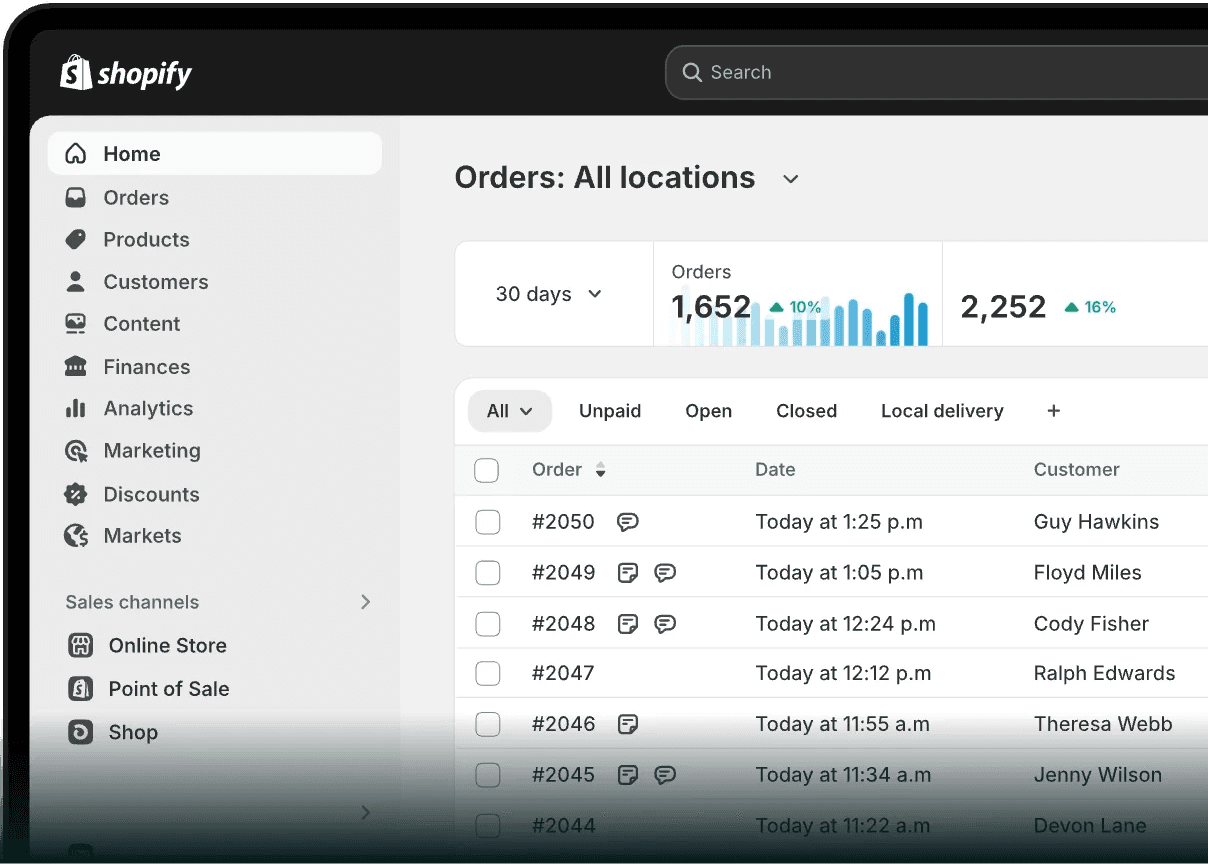
If you run a dropshipping store, you already know the problem: you can buy traffic in 10 minutes, but a generic product page rarely converts on cold traffic. Your landing page is where your margin is made or lost.
Zipify Pages is a one of the best Shopify apps built for conversion-focused landing pages. It’s fast to launch with. But only if you follow a tight process and avoid the common mistakes that quietly destroy your ecommerce conversion rate.
Key Takeaways
You can launch a focused Zipify Pages landing page for a dropshipping product in about 60 minutes if you reuse a proven section structure and keep one clear goal per page.
Zipify Pages pricing starts at around $19/month for a limited number of published pages, then scales as you unlock more pages and features.
Shopify can handle landing pages without Zipify Pages, but most sellers end up sacrificing conversion speed for added theme complexity.
The fastest workflow is simple: validate demand and angles in Minea, map your offer, build the page, then A/B test your hooks and hero sections.
Before you start: what you need (and what you should decide first)

You’ll build a Zipify Pages landing page faster when you decide the offer, the traffic source, and the single page goal before touching the builder.
Prepare your product assets, account for your fulfillment constraints, and set up basic tracking so you can measure conversion rate and cost per purchase properly.
You need:
A Shopify store (a trial is fine)
Zipify Pages installed from the Shopify App Store
A product page that already exists in Shopify (even if it’s basic)
6–10 product images or short clips, plus 2–3 real objections you’ll address on-page
Tracking: Meta Pixel or TikTok Pixel installed, plus a way to read conversion rate by landing page
Decide first (10 minutes):
Traffic source: Meta, TikTok, Google, or influencer
Page goal: add-to-cart or purchase, not both
Offer: price, bundle, shipping promise, and return policy stance
In practice, this “decision first” step is what prevents you from building a pretty page that doesn’t match your ad angle.


Step 1: Validate the product angle you will build the page around
A landing page converts when it aligns with a single buyer belief from the ad. Validate that belief by studying live competitors’ creatives and the offers that keep showing up. Then choose one primary angle and build your hero section and first two sections around it.
Time, cost, tool
Time: 15 minutes
Cost: Free if you already have the tools
Tool: Minea (product and ad research)
How to do it (fast, no theory)
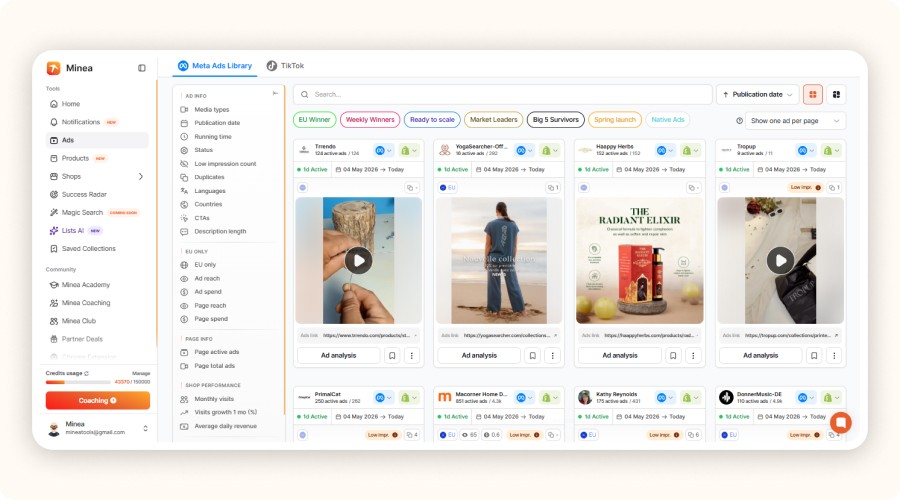
Open Minea’s Ads Library and search your product category.
Filter by your target country and likely traffic channel.
Save 10–20 ads that repeat the same promise, problem, or before/after claim.
Write one sentence that describes the dominant angle in plain English.
Completion criteria : You should be able to state your landing page’s core promise in one sentence, without mentioning features.
Example (use the data as a starting point)
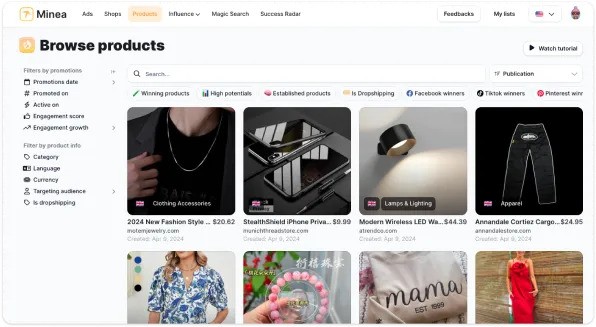
Minea trend tracking currently highlights products like a posture corrector belt (trend score 92), an LED face mask (88), and a portable blender (85).
The goal isn’t to copy those products. It’s to copy the pattern: pick one promise that is already being heavily advertised, then build your Zipify Pages layout to support that promise.
Common mistake
Choosing a landing page angle because it sounds “premium.” Your ads will be simple. Your landing page needs to be even simpler.
Step 2: Pick the right Zipify Pages plan for a dropshipping test (so you don’t overpay)
Zipify Pages is easiest to justify when your cost is tied to how many landing pages you publish and how quickly you can launch new test pages. Start with the smallest plan that supports your testing cadence, then upgrade only when page volume and workflow limits become real bottlenecks.
Time: 10 minutes
Cost: Typically $19/month and up
Tool: Zipify Pages pricing inside Shopify
What the pricing means in practice
Starter tier (around $19/month): built for a small number of published landing pages. This is usually enough when testing 1–2 products at a time.
Basic tier (around $39/month): designed for more published pages and faster iteration. This fits sellers running multiple live offers.
Zipify Pages is often labeled “expensive” by early-stage dropshippers. A better way to look at it is cost per experiment. If you launch two focused test pages and improve your conversion rate even slightly, the subscription quickly becomes small compared to your ad spend.
A simple budget check
If you spend $1,000/month on ads, a $19–$39 page-builder subscription equals 1.9%–3.9% of ad spend.
If you spend $3,000/month on ads, it equals 0.6%–1.3% of ad spend.
Completion criteria
You can clearly state your monthly page-builder budget, and you know how many landing pages you plan to publish in the next 30 days.
Step 3: Choose the Shopify landing page approach that matches your speed and control needs

Shopify can create landing pages natively by adding pages in your admin and styling them inside your theme. That approach works, but it’s slower when you need fast iterative testing.
Zipify Pages runs on top of Shopify and lets you assemble sections quickly. That’s why it fits dropshipping funnels, where creative and offers can change weekly.
Time: 10 minutes
Cost: Free for native pages, paid for builders
Tool: Shopify admin and your theme, or Zipify Pages
Your decision framework (keep it binary)
Choose native Shopify pages if you run one evergreen store and want minimal apps.
Choose Zipify Pages if you test products and angles frequently and need fast page iteration without touching theme code.
Completion criteria
Commit to one approach for the next two weeks.
This matters because splitting your attention between theme edits and a builder often leads to broken layouts and inconsistent mobile experience.


Create and test your Shopify store for only $1 per day during 90 days
If you run a dropshipping store, you already know the problem: you can buy traffic in 10 minutes, but a generic product page rarely converts on cold traffic. Your landing page is where your margin is made or lost.
Zipify Pages is a one of the best Shopify apps built for conversion-focused landing pages. It’s fast to launch with. But only if you follow a tight process and avoid the common mistakes that quietly destroy your ecommerce conversion rate.
Key Takeaways
You can launch a focused Zipify Pages landing page for a dropshipping product in about 60 minutes if you reuse a proven section structure and keep one clear goal per page.
Zipify Pages pricing starts at around $19/month for a limited number of published pages, then scales as you unlock more pages and features.
Shopify can handle landing pages without Zipify Pages, but most sellers end up sacrificing conversion speed for added theme complexity.
The fastest workflow is simple: validate demand and angles in Minea, map your offer, build the page, then A/B test your hooks and hero sections.
Before you start: what you need (and what you should decide first)
You’ll build a Zipify Pages landing page faster when you decide the offer, the traffic source, and the single page goal before touching the builder.
Prepare your product assets, account for your fulfillment constraints, and set up basic tracking so you can measure conversion rate and cost per purchase properly.
You need:
A Shopify store (a trial is fine)
Zipify Pages installed from the Shopify App Store
A product page that already exists in Shopify (even if it’s basic)
6–10 product images or short clips, plus 2–3 real objections you’ll address on-page
Tracking: Meta Pixel or TikTok Pixel installed, plus a way to read conversion rate by landing page
Decide first (10 minutes):
Traffic source: Meta, TikTok, Google, or influencer
Page goal: add-to-cart or purchase, not both
Offer: price, bundle, shipping promise, and return policy stance
In practice, this “decision first” step is what prevents you from building a pretty page that doesn’t match your ad angle.
Step 1: Validate the product angle you will build the page around
A landing page converts when it aligns with a single buyer belief from the ad. Validate that belief by studying live competitors’ creatives and the offers that keep showing up. Then choose one primary angle and build your hero section and first two sections around it.
Time, cost, tool
Time: 15 minutes
Cost: Free if you already have the tools
Tool: Minea (product and ad research)
How to do it (fast, no theory)
Open Minea’s Ads Library and search your product category.
Filter by your target country and likely traffic channel.
Save 10–20 ads that repeat the same promise, problem, or before/after claim.
Write one sentence that describes the dominant angle in plain English.
Completion criteria : You should be able to state your landing page’s core promise in one sentence, without mentioning features.
Example (use the data as a starting point)
Minea trend tracking currently highlights products like a posture corrector belt (trend score 92), an LED face mask (88), and a portable blender (85).
The goal isn’t to copy those products. It’s to copy the pattern: pick one promise that is already being heavily advertised, then build your Zipify Pages layout to support that promise.
Common mistake
Choosing a landing page angle because it sounds “premium.” Your ads will be simple. Your landing page needs to be even simpler.
Step 2: Pick the right Zipify Pages plan for a dropshipping test (so you don’t overpay)
Zipify Pages is easiest to justify when your cost is tied to how many landing pages you publish and how quickly you can launch new test pages. Start with the smallest plan that supports your testing cadence, then upgrade only when page volume and workflow limits become real bottlenecks.
Time: 10 minutes
Cost: Typically $19/month and up
Tool: Zipify Pages pricing inside Shopify
What the pricing means in practice
Starter tier (around $19/month): built for a small number of published landing pages. This is usually enough when testing 1–2 products at a time.
Basic tier (around $39/month): designed for more published pages and faster iteration. This fits sellers running multiple live offers.
Zipify Pages is often labeled “expensive” by early-stage dropshippers. A better way to look at it is cost per experiment. If you launch two focused test pages and improve your conversion rate even slightly, the subscription quickly becomes small compared to your ad spend.
A simple budget check
If you spend $1,000/month on ads, a $19–$39 page-builder subscription equals 1.9%–3.9% of ad spend.
If you spend $3,000/month on ads, it equals 0.6%–1.3% of ad spend.
Completion criteria
You can clearly state your monthly page-builder budget, and you know how many landing pages you plan to publish in the next 30 days.
Step 3: Choose the Shopify landing page approach that matches your speed and control needs
Shopify can create landing pages natively by adding pages in your admin and styling them inside your theme. That approach works, but it’s slower when you need fast iterative testing.
Zipify Pages runs on top of Shopify and lets you assemble sections quickly. That’s why it fits dropshipping funnels, where creative and offers can change weekly.
Time: 10 minutes
Cost: Free for native pages, paid for builders
Tool: Shopify admin and your theme, or Zipify Pages
Your decision framework (keep it binary)
Choose native Shopify pages if you run one evergreen store and want minimal apps.
Choose Zipify Pages if you test products and angles frequently and need fast page iteration without touching theme code.
Completion criteria
Commit to one approach for the next two weeks.
This matters because splitting your attention between theme edits and a builder often leads to broken layouts and inconsistent mobile experience.
Create and test your Shopify store for only $1 per day during 90 days
If you run a dropshipping store, you already know the problem: you can buy traffic in 10 minutes, but a generic product page rarely converts on cold traffic. Your landing page is where your margin is made or lost.
Zipify Pages is a one of the best Shopify apps built for conversion-focused landing pages. It’s fast to launch with. But only if you follow a tight process and avoid the common mistakes that quietly destroy your ecommerce conversion rate.
Key Takeaways
You can launch a focused Zipify Pages landing page for a dropshipping product in about 60 minutes if you reuse a proven section structure and keep one clear goal per page.
Zipify Pages pricing starts at around $19/month for a limited number of published pages, then scales as you unlock more pages and features.
Shopify can handle landing pages without Zipify Pages, but most sellers end up sacrificing conversion speed for added theme complexity.
The fastest workflow is simple: validate demand and angles in Minea, map your offer, build the page, then A/B test your hooks and hero sections.
Before you start: what you need (and what you should decide first)
You’ll build a Zipify Pages landing page faster when you decide the offer, the traffic source, and the single page goal before touching the builder.
Prepare your product assets, account for your fulfillment constraints, and set up basic tracking so you can measure conversion rate and cost per purchase properly.
You need:
A Shopify store (a trial is fine)
Zipify Pages installed from the Shopify App Store
A product page that already exists in Shopify (even if it’s basic)
6–10 product images or short clips, plus 2–3 real objections you’ll address on-page
Tracking: Meta Pixel or TikTok Pixel installed, plus a way to read conversion rate by landing page
Decide first (10 minutes):
Traffic source: Meta, TikTok, Google, or influencer
Page goal: add-to-cart or purchase, not both
Offer: price, bundle, shipping promise, and return policy stance
In practice, this “decision first” step is what prevents you from building a pretty page that doesn’t match your ad angle.
Step 1: Validate the product angle you will build the page around
A landing page converts when it aligns with a single buyer belief from the ad. Validate that belief by studying live competitors’ creatives and the offers that keep showing up. Then choose one primary angle and build your hero section and first two sections around it.
Time, cost, tool
Time: 15 minutes
Cost: Free if you already have the tools
Tool: Minea (product and ad research)
How to do it (fast, no theory)
Open Minea’s Ads Library and search your product category.
Filter by your target country and likely traffic channel.
Save 10–20 ads that repeat the same promise, problem, or before/after claim.
Write one sentence that describes the dominant angle in plain English.
Completion criteria : You should be able to state your landing page’s core promise in one sentence, without mentioning features.
Example (use the data as a starting point)
Minea trend tracking currently highlights products like a posture corrector belt (trend score 92), an LED face mask (88), and a portable blender (85).
The goal isn’t to copy those products. It’s to copy the pattern: pick one promise that is already being heavily advertised, then build your Zipify Pages layout to support that promise.
Common mistake
Choosing a landing page angle because it sounds “premium.” Your ads will be simple. Your landing page needs to be even simpler.
Step 2: Pick the right Zipify Pages plan for a dropshipping test (so you don’t overpay)
Zipify Pages is easiest to justify when your cost is tied to how many landing pages you publish and how quickly you can launch new test pages. Start with the smallest plan that supports your testing cadence, then upgrade only when page volume and workflow limits become real bottlenecks.
Time: 10 minutes
Cost: Typically $19/month and up
Tool: Zipify Pages pricing inside Shopify
What the pricing means in practice
Starter tier (around $19/month): built for a small number of published landing pages. This is usually enough when testing 1–2 products at a time.
Basic tier (around $39/month): designed for more published pages and faster iteration. This fits sellers running multiple live offers.
Zipify Pages is often labeled “expensive” by early-stage dropshippers. A better way to look at it is cost per experiment. If you launch two focused test pages and improve your conversion rate even slightly, the subscription quickly becomes small compared to your ad spend.
A simple budget check
If you spend $1,000/month on ads, a $19–$39 page-builder subscription equals 1.9%–3.9% of ad spend.
If you spend $3,000/month on ads, it equals 0.6%–1.3% of ad spend.
Completion criteria
You can clearly state your monthly page-builder budget, and you know how many landing pages you plan to publish in the next 30 days.
Step 3: Choose the Shopify landing page approach that matches your speed and control needs
Shopify can create landing pages natively by adding pages in your admin and styling them inside your theme. That approach works, but it’s slower when you need fast iterative testing.
Zipify Pages runs on top of Shopify and lets you assemble sections quickly. That’s why it fits dropshipping funnels, where creative and offers can change weekly.
Time: 10 minutes
Cost: Free for native pages, paid for builders
Tool: Shopify admin and your theme, or Zipify Pages
Your decision framework (keep it binary)
Choose native Shopify pages if you run one evergreen store and want minimal apps.
Choose Zipify Pages if you test products and angles frequently and need fast page iteration without touching theme code.
Completion criteria
Commit to one approach for the next two weeks.
This matters because splitting your attention between theme edits and a builder often leads to broken layouts and inconsistent mobile experience.
Create and test your Shopify store for only $1 per day during 90 days
Step 4: Build the page in Zipify Pages using a conversion-first section order
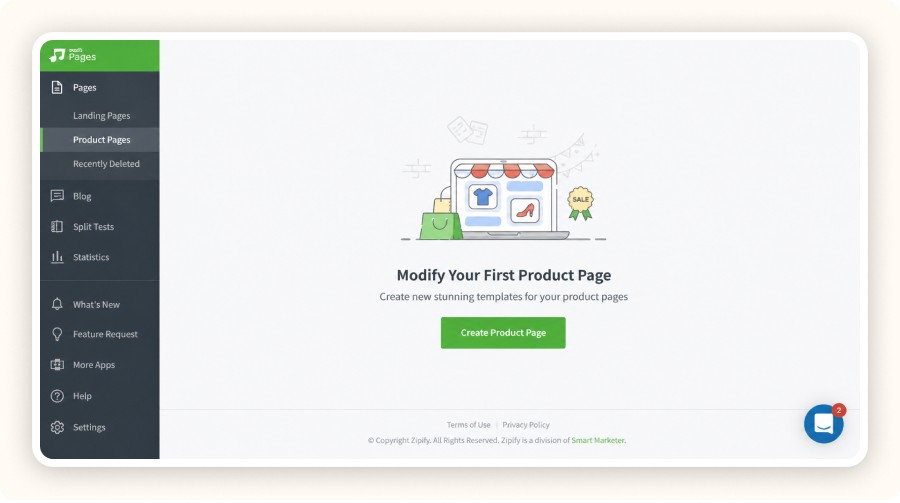
The highest-converting dropshipping landing pages follow a predictable structure: promise, proof, offer, friction killers, and a clean checkout path. Build that structure first, then refine copy and visuals. This keeps you from spending time on design before the conversion mechanism is in place.
Time: 20 minutes
Cost: Included in your plan
Tool: Zipify Pages builder
Section order that works for ecommerce cold traffic
Hero: one promise, one primary image or video, one call to action
Problem-to-solution: 3–5 bullets mapping pain to outcome
Social proof: reviews, UGC-style images, or credibility cues you can support
Product details: what it is, how it works, what’s included
Offer and bundles: one recommended bundle, plus a clear single-item option
Shipping and returns: your real constraints, stated clearly
FAQ: top objections answered briefly on-page
What to do inside Zipify Pages (practical build checklist)
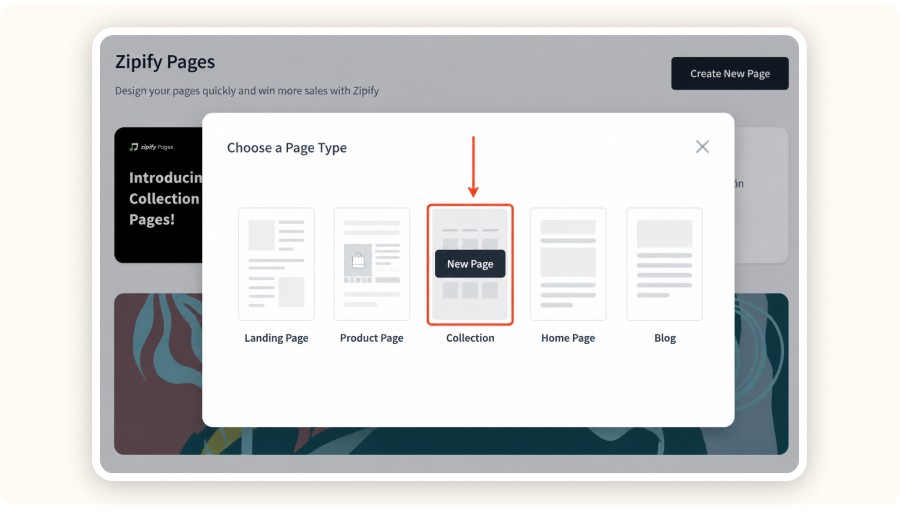
Create a new page and choose a template that already includes hero, benefits, and FAQ sections.
Replace images first so spacing and mobile stacking are visible immediately.
Write the hero copy last. The hero needs one outcome, not a feature list.
Use one consistent CTA label across the page. “Add to cart” is usually the cleanest option for dropshipping.
Completion criteria : The page is publishable, and the mobile version reads cleanly without horizontal scrolling.
Field note that saves time
If you’re sourcing from China, your delivery promise often becomes your biggest conversion limiter. Minea supplier tracking for ecommerce sellers frequently highlights supplier countries like China, Turkey, and Vietnam.
If you can’t ship within 7–12 days, your landing page needs to reduce uncertainty with transparent shipping language and clear refund rules.
Step 5: Set up your offer structure for dropshipping margins and AOV
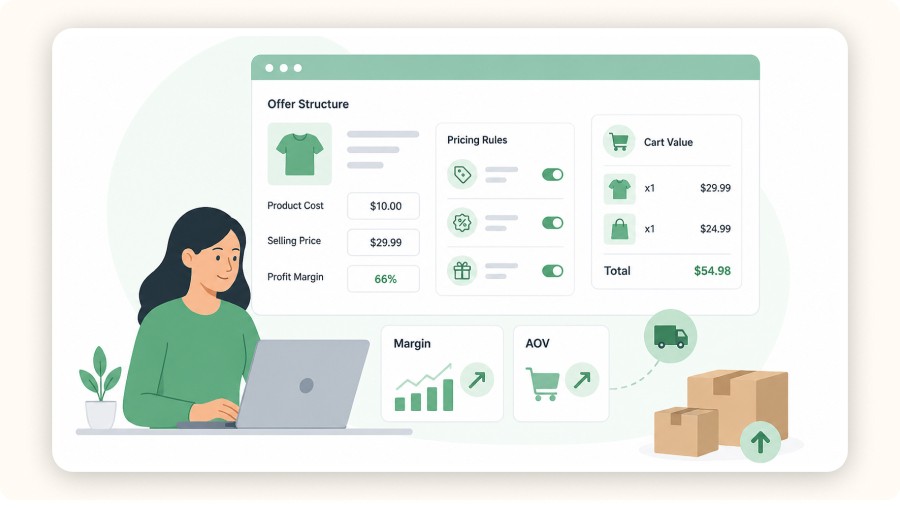
Zipify Pages won’t fix a weak offer. Your offer structure needs to protect your margin, justify shipping time, and increase average order value (AOV).
The simplest setup is one primary bundle that clearly delivers better value than the single-unit option.
Time: 15 minutes
Cost: Free
Tool: Shopify products and bundle apps if needed
A simple offer structure that fits most dropshipping stores
1 unit: baseline price
2 units: 10%–15% discount
3 units: 15%–25% discount, “best value” badge
How to decide your price quickly
Start from a realistic average selling price in your niche.
For many impulse-friendly products, Minea market snapshots often cluster around the $29.99 range as a workable middle price point.
Completion criteria : You can clearly state your margin per order for one unit and for your best-value bundle.
Step 6: Launch the page with a tracking-first test plan
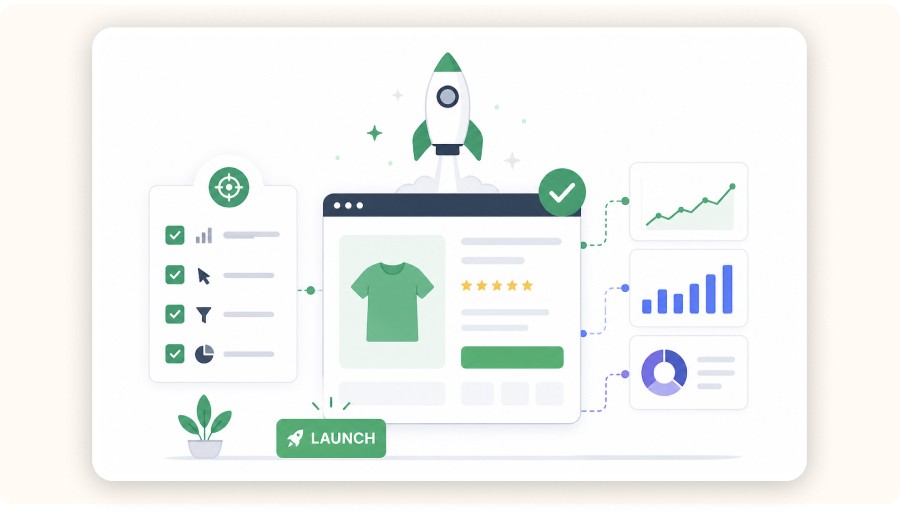
A landing page test is only useful if you can connect one change to one result. Launch with a clear baseline, run one test at a time, and measure conversion rate, add-to-cart rate, and cost per purchase by landing page.
Time: 20 minutes
Cost: Your ad budget
Tool: Meta Ads or TikTok Ads, plus Shopify analytics
Your minimum viable testing plan
Start with one landing page and one offer.
Test two hero variants, not two completely different pages.
Keep the product and checkout identical while testing the page.
Metrics to track for a dropshipping landing page
Landing page view → add-to-cart rate: shows whether the page promise matches the ad.
Checkout initiated rate: shows whether shipping, price, or trust is the main blocker.
Purchase conversion rate: shows whether the overall funnel is working.
Completion criteria : You can pull a report that shows results by landing page URL.
Minea
Track Trending Shops
Explore key insights on traffic, revenue, and top ads, plus the vital tools and apps that fuel their success. Leverage theses informations to replicate their winning strategies.
Common mistakes that kill Zipify Pages conversion for dropshipping
Most Zipify Pages failures aren’t design problems. They’re mismatch problems: the ad angle doesn’t align with the hero, the offer isn’t clear, or shipping friction is hidden. Fix those first. Then worry about templates and styling.
Building a page that tries to sell to everyone. Keep one audience and one promise per landing page. If you have two angles, build two pages.
Hiding shipping reality until checkout. State delivery windows and your policy directly on the page. Dropshippers who hide shipping usually pay for it through chargebacks and refund requests.
Changing five things at once. A/B test the hero first, then the offer block, then proof. One variable per test.
Expected results and a realistic timeline
You should see directional conversion signals within 48–72 hours on paid traffic, but stable conclusions usually need 7–14 days. Early results are noisy. Use short windows to kill bad creative, then use longer windows to improve the landing page.
Timeframe | What to expect | Benchmark you can use |
|---|---|---|
Day 1–3 | Clear signal on the hero and offer clarity | Add-to-cart rate moves up or down noticeably |
Week 1 | Baseline conversion rate for the page | A consistent purchase rate on your core traffic |
Week 2–4 | Better trust and bundle performance | AOV increases from bundles, refunds do not spike |
Month 2–3 | Repeatable page system | New products can launch with the same section order |
Verdict
Zipify Pages for a dropshipping business works when you treat it as an experimentation system, not a design project. Pick one angle, build the page using a conversion-first section order, then test the hero and offer the same way you test ads.
If you want the fastest loop, validate angles first with Minea, then build your Zipify Pages landing page around what is already working in the market. That’s how you shorten time-to-learning and protect your ad budget.
If you want a structured way to choose which products deserve a landing page, start with Minea and shortlist products showing sustained creative activity. Then build one landing page per angle and test.
FAQ
How much does Zipify Pages cost?
Zipify Pages typically starts around $19/month for a limited number of published landing pages, with higher tiers around $39/month when you need more pages and workflow capacity. The real question is how many landing pages you will publish per month, because that determines whether you are paying for experiments you actually run.
Does Shopify do landing pages without Zipify Pages?
Shopify can create landing pages using native pages and theme sections, and many ecommerce brands run that way. Most dropshipping sellers choose a builder like Zipify Pages when they need to iterate quickly, because theme-based landing pages become slow to change and harder to keep consistent on mobile.
Is Zipify Pages good for a dropshipping business?
Zipify Pages is a strong fit when your dropshipping store relies on paid traffic and frequent offer testing, because you can publish focused pages without touching theme code. It is a poor fit when you will only ever run one evergreen product page and you do not plan to A/B test anything.
How much money do you need to start dropshipping on Shopify?
A realistic minimum is enough for the store, a few tools, and a test budget. Many sellers start with a few hundred dollars available, then add more as they validate a product. The key constraint is not the Shopify subscription. It is your ability to run enough paid tests to learn what converts.
What is the best dropshipping app for Shopify?
There is no single best app for every store, because the best choice depends on what you need to automate. If your bottleneck is product research and angle validation, a research platform like Minea helps earlier in the workflow. If your bottleneck is fulfillment, you will evaluate supplier and order automation apps.
Step 4: Build the page in Zipify Pages using a conversion-first section order
The highest-converting dropshipping landing pages follow a predictable structure: promise, proof, offer, friction killers, and a clean checkout path. Build that structure first, then refine copy and visuals. This keeps you from spending time on design before the conversion mechanism is in place.
Time: 20 minutes
Cost: Included in your plan
Tool: Zipify Pages builder
Section order that works for ecommerce cold traffic
Hero: one promise, one primary image or video, one call to action
Problem-to-solution: 3–5 bullets mapping pain to outcome
Social proof: reviews, UGC-style images, or credibility cues you can support
Product details: what it is, how it works, what’s included
Offer and bundles: one recommended bundle, plus a clear single-item option
Shipping and returns: your real constraints, stated clearly
FAQ: top objections answered briefly on-page
What to do inside Zipify Pages (practical build checklist)
Create a new page and choose a template that already includes hero, benefits, and FAQ sections.
Replace images first so spacing and mobile stacking are visible immediately.
Write the hero copy last. The hero needs one outcome, not a feature list.
Use one consistent CTA label across the page. “Add to cart” is usually the cleanest option for dropshipping.
Completion criteria : The page is publishable, and the mobile version reads cleanly without horizontal scrolling.
Field note that saves time
If you’re sourcing from China, your delivery promise often becomes your biggest conversion limiter. Minea supplier tracking for ecommerce sellers frequently highlights supplier countries like China, Turkey, and Vietnam.
If you can’t ship within 7–12 days, your landing page needs to reduce uncertainty with transparent shipping language and clear refund rules.
Step 5: Set up your offer structure for dropshipping margins and AOV
Zipify Pages won’t fix a weak offer. Your offer structure needs to protect your margin, justify shipping time, and increase average order value (AOV).
The simplest setup is one primary bundle that clearly delivers better value than the single-unit option.
Time: 15 minutes
Cost: Free
Tool: Shopify products and bundle apps if needed
A simple offer structure that fits most dropshipping stores
1 unit: baseline price
2 units: 10%–15% discount
3 units: 15%–25% discount, “best value” badge
How to decide your price quickly
Start from a realistic average selling price in your niche.
For many impulse-friendly products, Minea market snapshots often cluster around the $29.99 range as a workable middle price point.
Completion criteria : You can clearly state your margin per order for one unit and for your best-value bundle.
Step 6: Launch the page with a tracking-first test plan
A landing page test is only useful if you can connect one change to one result. Launch with a clear baseline, run one test at a time, and measure conversion rate, add-to-cart rate, and cost per purchase by landing page.
Time: 20 minutes
Cost: Your ad budget
Tool: Meta Ads or TikTok Ads, plus Shopify analytics
Your minimum viable testing plan
Start with one landing page and one offer.
Test two hero variants, not two completely different pages.
Keep the product and checkout identical while testing the page.
Metrics to track for a dropshipping landing page
Landing page view → add-to-cart rate: shows whether the page promise matches the ad.
Checkout initiated rate: shows whether shipping, price, or trust is the main blocker.
Purchase conversion rate: shows whether the overall funnel is working.
Completion criteria : You can pull a report that shows results by landing page URL.
Minea
Track Trending Shops
Explore key insights on traffic, revenue, and top ads, plus the vital tools and apps that fuel their success. Leverage theses informations to replicate their winning strategies.
Common mistakes that kill Zipify Pages conversion for dropshipping
Most Zipify Pages failures aren’t design problems. They’re mismatch problems: the ad angle doesn’t align with the hero, the offer isn’t clear, or shipping friction is hidden. Fix those first. Then worry about templates and styling.
Building a page that tries to sell to everyone. Keep one audience and one promise per landing page. If you have two angles, build two pages.
Hiding shipping reality until checkout. State delivery windows and your policy directly on the page. Dropshippers who hide shipping usually pay for it through chargebacks and refund requests.
Changing five things at once. A/B test the hero first, then the offer block, then proof. One variable per test.
Expected results and a realistic timeline
You should see directional conversion signals within 48–72 hours on paid traffic, but stable conclusions usually need 7–14 days. Early results are noisy. Use short windows to kill bad creative, then use longer windows to improve the landing page.
Timeframe | What to expect | Benchmark you can use |
|---|---|---|
Day 1–3 | Clear signal on the hero and offer clarity | Add-to-cart rate moves up or down noticeably |
Week 1 | Baseline conversion rate for the page | A consistent purchase rate on your core traffic |
Week 2–4 | Better trust and bundle performance | AOV increases from bundles, refunds do not spike |
Month 2–3 | Repeatable page system | New products can launch with the same section order |
Verdict
Zipify Pages for a dropshipping business works when you treat it as an experimentation system, not a design project. Pick one angle, build the page using a conversion-first section order, then test the hero and offer the same way you test ads.
If you want the fastest loop, validate angles first with Minea, then build your Zipify Pages landing page around what is already working in the market. That’s how you shorten time-to-learning and protect your ad budget.
If you want a structured way to choose which products deserve a landing page, start with Minea and shortlist products showing sustained creative activity. Then build one landing page per angle and test.
FAQ
How much does Zipify Pages cost?
Zipify Pages typically starts around $19/month for a limited number of published landing pages, with higher tiers around $39/month when you need more pages and workflow capacity. The real question is how many landing pages you will publish per month, because that determines whether you are paying for experiments you actually run.
Does Shopify do landing pages without Zipify Pages?
Shopify can create landing pages using native pages and theme sections, and many ecommerce brands run that way. Most dropshipping sellers choose a builder like Zipify Pages when they need to iterate quickly, because theme-based landing pages become slow to change and harder to keep consistent on mobile.
Is Zipify Pages good for a dropshipping business?
Zipify Pages is a strong fit when your dropshipping store relies on paid traffic and frequent offer testing, because you can publish focused pages without touching theme code. It is a poor fit when you will only ever run one evergreen product page and you do not plan to A/B test anything.
How much money do you need to start dropshipping on Shopify?
A realistic minimum is enough for the store, a few tools, and a test budget. Many sellers start with a few hundred dollars available, then add more as they validate a product. The key constraint is not the Shopify subscription. It is your ability to run enough paid tests to learn what converts.
What is the best dropshipping app for Shopify?
There is no single best app for every store, because the best choice depends on what you need to automate. If your bottleneck is product research and angle validation, a research platform like Minea helps earlier in the workflow. If your bottleneck is fulfillment, you will evaluate supplier and order automation apps.
Similar articles


Our Free Adspys

Find winning products on our Tiktok adspy today!
Find winning products on our Facebook adspy today!
Find winning products on our Tiktok adspy today!
Find winning products on our Facebook adspy today!
Find winning products on our Tiktok adspy today!
Find winning products on our Facebook adspy today!
Find winning products on our Tiktok adspy today!
Find winning products on our Facebook adspy today!
1 winning product everyday.
Follow us!






Find out more
Read more
Minea © 2026
Find out more
Read more
Minea © 2026
Find out more
Read more
Minea © 2026
Find out more
Read more
Minea © 2026
Find out more
Read more
Minea © 2026
Find out more
Read more
Minea © 2026