Mailchimp Marketing for Dropshipping Business: Step-by-Step Playbook for 2026
Best Email Marketing Tools
Author: Alexandra
Contents
If you run a dropshipping store and you rely on paid traffic, email is your best shot at turning one-time clicks into repeat revenue, especially when powered by the best email marketing tools like Mailchimp.
Key Takeaways
Start with tracking and segmentation. Without purchase data, Mailchimp becomes guesswork.
Build three flows first: Welcome, Abandoned Cart, Post-Purchase.
Segment by product category, margin, and geography so promos don’t crush profit.
Use Minea to spot winning products early (so you build campaigns around what’s already working).
What you need to hit $10,000 per month with dropshipping
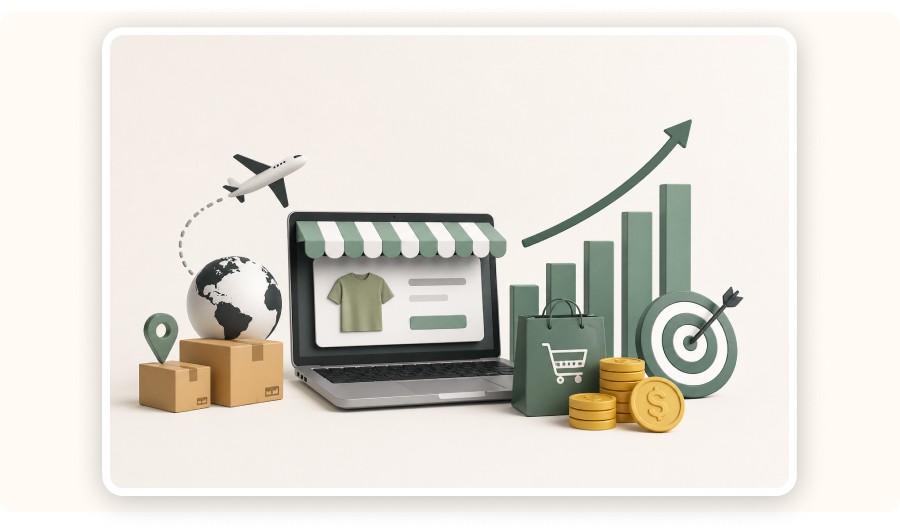
$10,000/month in dropshipping is realistic when you have an offer with healthy margin, stable traffic, and a system that recovers missed intent. Mailchimp helps by capturing leads, converting subscribers with a welcome series, recovering abandoned carts, and driving a second purchase with post-purchase automation.
Most stores don’t stall because they’re not trying hard enough, they stall because the math doesn’t work.
If your gross margin is thin, discounts and ad costs eat you alive.
If your shipping experience is unclear, refunds and chargebacks wipe out your wins.
If you never build a list, you pay for the same customer again and again.
Email won’t save a weak product. It will stabilize a store that already shows signs of product–market fit.
Step 1: Integrate Mailchimp with your dropshipping store and verify revenue tracking
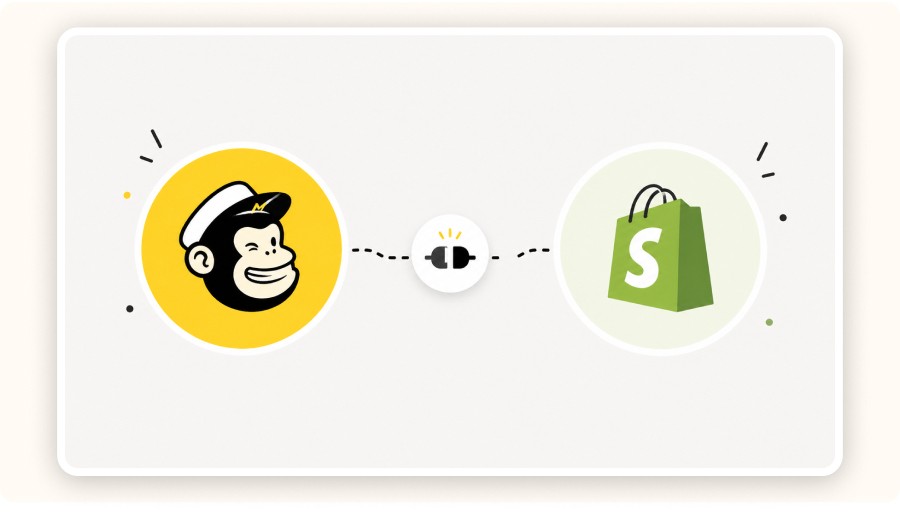
Connect Mailchimp to your ecommerce platform so it can sync customers, orders, and product data. This data unlocks behavior triggers like Added to Cart and Purchased, which power automations and revenue attribution. If Mailchimp can’t see purchases, your segmentation and flow reporting become hard to trust.
Estimated time: 15–45 minutes
For most dropshipping stores, the priority isn’t design. It’s data integrity.
Your setup is solid when you can do all three:
See new subscribers and their source
See order events tied to emails and automations
See product-level data (e.g., items purchased and order value)
Deliverability basics to handle early
Authenticate your sending domain with SPF, DKIM, and ideally DMARC
Use double opt-in if your traffic quality is mixed
Never import bought lists
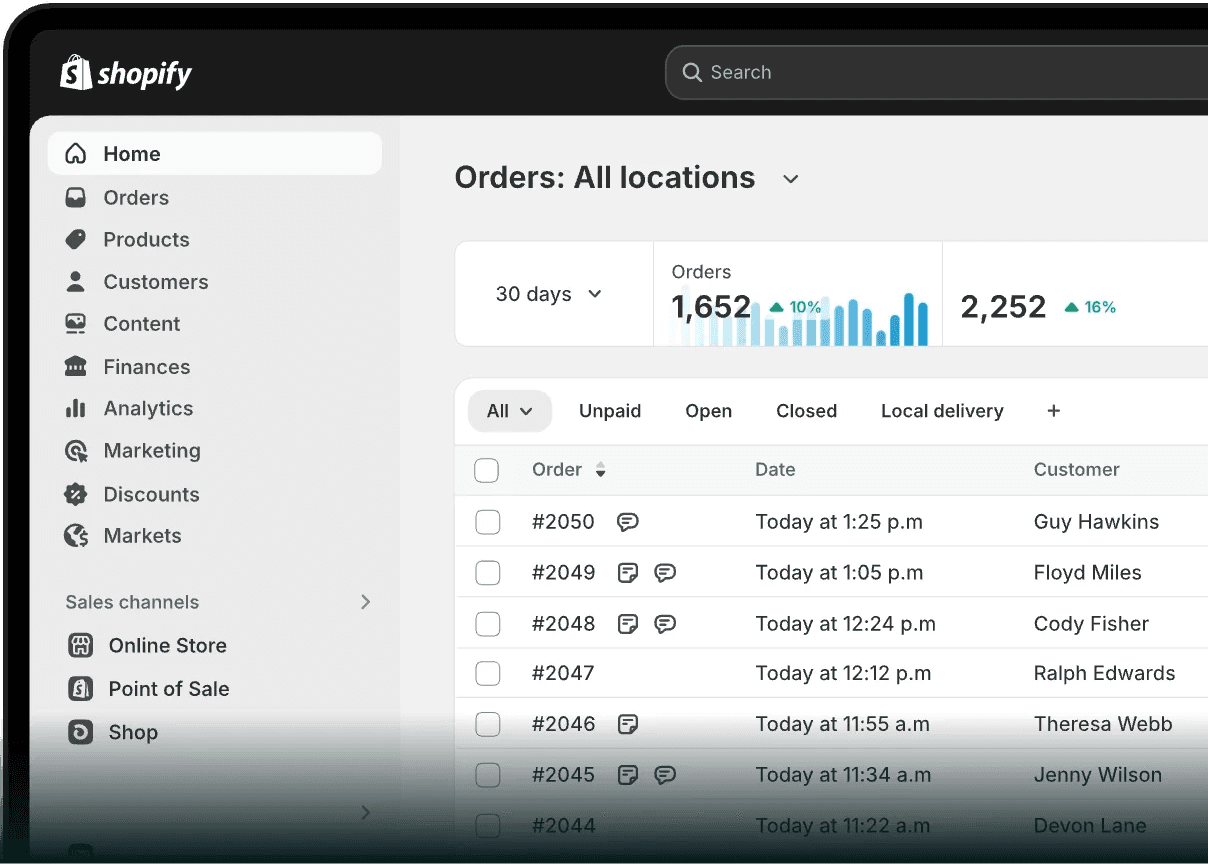
If you’re on Shopify, use the official integration so events sync automatically. If you’re on another platform, the goal is the same: event-level tracking + order sync.


Create and test your Shopify store for only $1 per day during 90 days
Step 2: Build segmentation that matches how dropshipping actually works
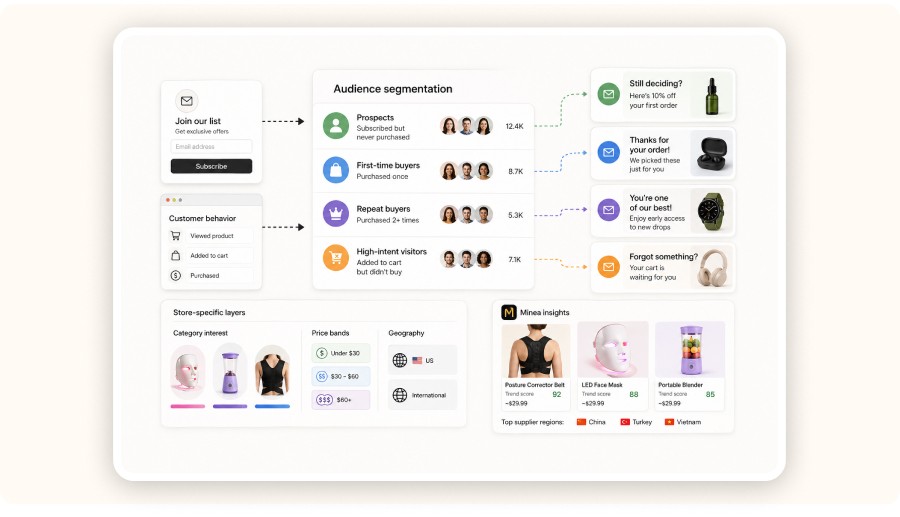
Segmentation is what separates profitable email from spam. In dropshipping, your segments should reflect purchase behavior, intent signals, and real constraints like margin and shipping. Start with prospects vs. buyers, then layer in product category, price band, and geography so the right offer reaches the right person.
Estimated time: 30–60 minutes
Keep your audience structure simple and let your segments do the heavy lifting.
Core segments that work for almost every store
Prospects who subscribed but never purchased
First-time buyers who purchased once
Repeat buyers who purchased two or more times
High-intent visitors who added to cart recently but didn’t buy
Then add store-specific layers
Category interest (based on browsing or last purchase)
Price bands (e.g., under $30, $30–$60, $60+)
Geography (at least split US vs. international if shipping differs)
This is where you protect your margin. A blanket 15% discount might be fine on a high-margin product and lethal on a low-margin one.
Minea gives you a practical way to decide which segments are worth building. If your Minea insights show your momentum is in beauty devices, your list shouldn’t suddenly receive kitchen offers.
For example, if your Minea snapshot highlights products like a posture corrector belt (trend score 92), an LED face mask (trend score 88), and a portable blender (trend score 85), with an average price around $29.99, and common supplier regions such as China, Turkey, or Vietnam that’s not trivia. It’s a direct signal for how to segment by category, price band, and shipping expectations.
Step 3: Launch a welcome series that converts (without training customers to wait for discounts)
A dropshipping welcome series converts new subscribers while intent is highest. A simple 3-email sequence works well: deliver the promised offer right away, address trust concerns the next day, then add a final nudge with real urgency (based on an actual deadline). Use bundles, free-shipping thresholds, or bonuses when a % discount would hurt your margin.
Estimated time: 60–120 minutes
Your welcome series has one job: move a new subscriber from curious to confident.
A simple 3-email structure you can run every week
Email 1 (immediately): Deliver what you promised. One product. One clear CTA.
Email 2 (≈24 hours later): Trust builder. Cover shipping, returns, tracking, and realistic product expectations.
Email 3 (48–72 hours later): Deadline-driven push with a margin-safe incentive.
Margin-safe incentives that often beat “always-on” discounts
Bundle savings (e.g., Buy 2, save a fixed amount)
Free-shipping threshold (to lift AOV)
A bonus add-on that costs you little but feels valuable
Product fit matters:
For trust-heavy products like an LED face mask, include usage guidance and realistic results.
For problem-solution products like a posture corrector belt, explain the mechanism, comfort, and what “good posture” should actually feel like.
Step 4: Set up the automations that make email profitable in dropshipping
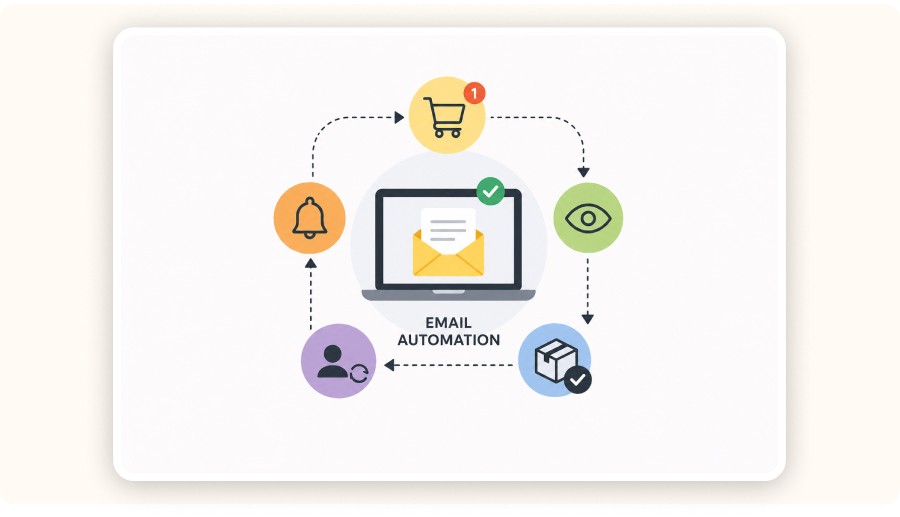
In dropshipping, your highest-ROI emails are triggered automations tied to behavior and purchase events. Start with abandoned cart, browse abandonment, post-purchase education, win-back, and back-in-stock alerts. Each flow should do one of three things: reduce friction, build trust, or drive a second purchase—without spending more on ads.
Estimated time: 2–4 hours
If you only build a few flows, build these first.
Abandoned cart
Trigger: Checkout started or cart created → no purchase
Goal: Bring the shopper back and remove the “last-mile” fear.
Simple structure:
Email 1 (after 1–2 hours): Cart reminder + clear CTA
Email 2 (after 12–24 hours): FAQ-style trust reset (shipping, returns, tracking)
Email 3 (after 24–48 hours): Final nudge + incentive only if margin allows
In dropshipping, cart emails must make shipping and returns crystal clear. If you hide that, you might recover the order and then lose it to refunds.
Browse abandonment
Trigger: Product viewed → no cart action → no purchase
Goal: Bring them back while the product is still top of mind.
Keep it tight:
Email 1: The exact product + one key benefit
Email 2: Light education (use cases, comparisons, “who it’s for”)
Post-purchase
Trigger: Purchase completed
Goal: Reduce refunds and create the next order.
Minimum sequence:
What to expect for shipping and tracking
A “how to use it” guide (reduces regret)
Review request timed after likely delivery
Cross-sell that matches the original product
Example: a portable blender cross-sell should be accessories like extra lids, a cleaning kit, or a travel bottle. Random gadgets feel spammy and lower trust.
Back-in-stock & restock alerts
Trigger: Variant becomes available again / promo returns
Goal: Convert high-intent shoppers who were blocked.
Use this only for real availability changes. Fake scarcity can damage your brand fast.
Win-back
Trigger: Subscriber or buyer inactive for a set period
Goal: Reactivate your list so you’re not carrying dead weight.
Win-back angles that work in practice:
What changed in your store (better tracking, faster shipping, clearer returns)
A curated list of best-sellers right now
A new product drop sent to the right segment first
Minea
Reach $1,000 per day or get your money back

If you run a dropshipping store and you rely on paid traffic, email is your best shot at turning one-time clicks into repeat revenue, especially when powered by the best email marketing tools like Mailchimp.
Key Takeaways
Start with tracking and segmentation. Without purchase data, Mailchimp becomes guesswork.
Build three flows first: Welcome, Abandoned Cart, Post-Purchase.
Segment by product category, margin, and geography so promos don’t crush profit.
Use Minea to spot winning products early (so you build campaigns around what’s already working).
What you need to hit $10,000 per month with dropshipping
$10,000/month in dropshipping is realistic when you have an offer with healthy margin, stable traffic, and a system that recovers missed intent. Mailchimp helps by capturing leads, converting subscribers with a welcome series, recovering abandoned carts, and driving a second purchase with post-purchase automation.
Most stores don’t stall because they’re not trying hard enough, they stall because the math doesn’t work.
If your gross margin is thin, discounts and ad costs eat you alive.
If your shipping experience is unclear, refunds and chargebacks wipe out your wins.
If you never build a list, you pay for the same customer again and again.
Email won’t save a weak product. It will stabilize a store that already shows signs of product–market fit.
Step 1: Integrate Mailchimp with your dropshipping store and verify revenue tracking
Connect Mailchimp to your ecommerce platform so it can sync customers, orders, and product data. This data unlocks behavior triggers like Added to Cart and Purchased, which power automations and revenue attribution. If Mailchimp can’t see purchases, your segmentation and flow reporting become hard to trust.
Estimated time: 15–45 minutes
For most dropshipping stores, the priority isn’t design. It’s data integrity.
Your setup is solid when you can do all three:
See new subscribers and their source
See order events tied to emails and automations
See product-level data (e.g., items purchased and order value)
Deliverability basics to handle early
Authenticate your sending domain with SPF, DKIM, and ideally DMARC
Use double opt-in if your traffic quality is mixed
Never import bought lists
If you’re on Shopify, use the official integration so events sync automatically. If you’re on another platform, the goal is the same: event-level tracking + order sync.
Create and test your Shopify store for only $1 per day during 90 days
Step 2: Build segmentation that matches how dropshipping actually works
Segmentation is what separates profitable email from spam. In dropshipping, your segments should reflect purchase behavior, intent signals, and real constraints like margin and shipping. Start with prospects vs. buyers, then layer in product category, price band, and geography so the right offer reaches the right person.
Estimated time: 30–60 minutes
Keep your audience structure simple and let your segments do the heavy lifting.
Core segments that work for almost every store
Prospects who subscribed but never purchased
First-time buyers who purchased once
Repeat buyers who purchased two or more times
High-intent visitors who added to cart recently but didn’t buy
Then add store-specific layers
Category interest (based on browsing or last purchase)
Price bands (e.g., under $30, $30–$60, $60+)
Geography (at least split US vs. international if shipping differs)
This is where you protect your margin. A blanket 15% discount might be fine on a high-margin product and lethal on a low-margin one.
Minea gives you a practical way to decide which segments are worth building. If your Minea insights show your momentum is in beauty devices, your list shouldn’t suddenly receive kitchen offers.
For example, if your Minea snapshot highlights products like a posture corrector belt (trend score 92), an LED face mask (trend score 88), and a portable blender (trend score 85), with an average price around $29.99, and common supplier regions such as China, Turkey, or Vietnam that’s not trivia. It’s a direct signal for how to segment by category, price band, and shipping expectations.
Step 3: Launch a welcome series that converts (without training customers to wait for discounts)
A dropshipping welcome series converts new subscribers while intent is highest. A simple 3-email sequence works well: deliver the promised offer right away, address trust concerns the next day, then add a final nudge with real urgency (based on an actual deadline). Use bundles, free-shipping thresholds, or bonuses when a % discount would hurt your margin.
Estimated time: 60–120 minutes
Your welcome series has one job: move a new subscriber from curious to confident.
A simple 3-email structure you can run every week
Email 1 (immediately): Deliver what you promised. One product. One clear CTA.
Email 2 (≈24 hours later): Trust builder. Cover shipping, returns, tracking, and realistic product expectations.
Email 3 (48–72 hours later): Deadline-driven push with a margin-safe incentive.
Margin-safe incentives that often beat “always-on” discounts
Bundle savings (e.g., Buy 2, save a fixed amount)
Free-shipping threshold (to lift AOV)
A bonus add-on that costs you little but feels valuable
Product fit matters:
For trust-heavy products like an LED face mask, include usage guidance and realistic results.
For problem-solution products like a posture corrector belt, explain the mechanism, comfort, and what “good posture” should actually feel like.
Step 4: Set up the automations that make email profitable in dropshipping
In dropshipping, your highest-ROI emails are triggered automations tied to behavior and purchase events. Start with abandoned cart, browse abandonment, post-purchase education, win-back, and back-in-stock alerts. Each flow should do one of three things: reduce friction, build trust, or drive a second purchase—without spending more on ads.
Estimated time: 2–4 hours
If you only build a few flows, build these first.
Abandoned cart
Trigger: Checkout started or cart created → no purchase
Goal: Bring the shopper back and remove the “last-mile” fear.
Simple structure:
Email 1 (after 1–2 hours): Cart reminder + clear CTA
Email 2 (after 12–24 hours): FAQ-style trust reset (shipping, returns, tracking)
Email 3 (after 24–48 hours): Final nudge + incentive only if margin allows
In dropshipping, cart emails must make shipping and returns crystal clear. If you hide that, you might recover the order and then lose it to refunds.
Browse abandonment
Trigger: Product viewed → no cart action → no purchase
Goal: Bring them back while the product is still top of mind.
Keep it tight:
Email 1: The exact product + one key benefit
Email 2: Light education (use cases, comparisons, “who it’s for”)
Post-purchase
Trigger: Purchase completed
Goal: Reduce refunds and create the next order.
Minimum sequence:
What to expect for shipping and tracking
A “how to use it” guide (reduces regret)
Review request timed after likely delivery
Cross-sell that matches the original product
Example: a portable blender cross-sell should be accessories like extra lids, a cleaning kit, or a travel bottle. Random gadgets feel spammy and lower trust.
Back-in-stock & restock alerts
Trigger: Variant becomes available again / promo returns
Goal: Convert high-intent shoppers who were blocked.
Use this only for real availability changes. Fake scarcity can damage your brand fast.
Win-back
Trigger: Subscriber or buyer inactive for a set period
Goal: Reactivate your list so you’re not carrying dead weight.
Win-back angles that work in practice:
What changed in your store (better tracking, faster shipping, clearer returns)
A curated list of best-sellers right now
A new product drop sent to the right segment first
Minea
Reach $1,000 per day or get your money back
If you run a dropshipping store and you rely on paid traffic, email is your best shot at turning one-time clicks into repeat revenue, especially when powered by the best email marketing tools like Mailchimp.
Key Takeaways
Start with tracking and segmentation. Without purchase data, Mailchimp becomes guesswork.
Build three flows first: Welcome, Abandoned Cart, Post-Purchase.
Segment by product category, margin, and geography so promos don’t crush profit.
Use Minea to spot winning products early (so you build campaigns around what’s already working).
What you need to hit $10,000 per month with dropshipping
$10,000/month in dropshipping is realistic when you have an offer with healthy margin, stable traffic, and a system that recovers missed intent. Mailchimp helps by capturing leads, converting subscribers with a welcome series, recovering abandoned carts, and driving a second purchase with post-purchase automation.
Most stores don’t stall because they’re not trying hard enough, they stall because the math doesn’t work.
If your gross margin is thin, discounts and ad costs eat you alive.
If your shipping experience is unclear, refunds and chargebacks wipe out your wins.
If you never build a list, you pay for the same customer again and again.
Email won’t save a weak product. It will stabilize a store that already shows signs of product–market fit.
Step 1: Integrate Mailchimp with your dropshipping store and verify revenue tracking
Connect Mailchimp to your ecommerce platform so it can sync customers, orders, and product data. This data unlocks behavior triggers like Added to Cart and Purchased, which power automations and revenue attribution. If Mailchimp can’t see purchases, your segmentation and flow reporting become hard to trust.
Estimated time: 15–45 minutes
For most dropshipping stores, the priority isn’t design. It’s data integrity.
Your setup is solid when you can do all three:
See new subscribers and their source
See order events tied to emails and automations
See product-level data (e.g., items purchased and order value)
Deliverability basics to handle early
Authenticate your sending domain with SPF, DKIM, and ideally DMARC
Use double opt-in if your traffic quality is mixed
Never import bought lists
If you’re on Shopify, use the official integration so events sync automatically. If you’re on another platform, the goal is the same: event-level tracking + order sync.
Create and test your Shopify store for only $1 per day during 90 days
Step 2: Build segmentation that matches how dropshipping actually works
Segmentation is what separates profitable email from spam. In dropshipping, your segments should reflect purchase behavior, intent signals, and real constraints like margin and shipping. Start with prospects vs. buyers, then layer in product category, price band, and geography so the right offer reaches the right person.
Estimated time: 30–60 minutes
Keep your audience structure simple and let your segments do the heavy lifting.
Core segments that work for almost every store
Prospects who subscribed but never purchased
First-time buyers who purchased once
Repeat buyers who purchased two or more times
High-intent visitors who added to cart recently but didn’t buy
Then add store-specific layers
Category interest (based on browsing or last purchase)
Price bands (e.g., under $30, $30–$60, $60+)
Geography (at least split US vs. international if shipping differs)
This is where you protect your margin. A blanket 15% discount might be fine on a high-margin product and lethal on a low-margin one.
Minea gives you a practical way to decide which segments are worth building. If your Minea insights show your momentum is in beauty devices, your list shouldn’t suddenly receive kitchen offers.
For example, if your Minea snapshot highlights products like a posture corrector belt (trend score 92), an LED face mask (trend score 88), and a portable blender (trend score 85), with an average price around $29.99, and common supplier regions such as China, Turkey, or Vietnam that’s not trivia. It’s a direct signal for how to segment by category, price band, and shipping expectations.
Step 3: Launch a welcome series that converts (without training customers to wait for discounts)
A dropshipping welcome series converts new subscribers while intent is highest. A simple 3-email sequence works well: deliver the promised offer right away, address trust concerns the next day, then add a final nudge with real urgency (based on an actual deadline). Use bundles, free-shipping thresholds, or bonuses when a % discount would hurt your margin.
Estimated time: 60–120 minutes
Your welcome series has one job: move a new subscriber from curious to confident.
A simple 3-email structure you can run every week
Email 1 (immediately): Deliver what you promised. One product. One clear CTA.
Email 2 (≈24 hours later): Trust builder. Cover shipping, returns, tracking, and realistic product expectations.
Email 3 (48–72 hours later): Deadline-driven push with a margin-safe incentive.
Margin-safe incentives that often beat “always-on” discounts
Bundle savings (e.g., Buy 2, save a fixed amount)
Free-shipping threshold (to lift AOV)
A bonus add-on that costs you little but feels valuable
Product fit matters:
For trust-heavy products like an LED face mask, include usage guidance and realistic results.
For problem-solution products like a posture corrector belt, explain the mechanism, comfort, and what “good posture” should actually feel like.
Step 4: Set up the automations that make email profitable in dropshipping
In dropshipping, your highest-ROI emails are triggered automations tied to behavior and purchase events. Start with abandoned cart, browse abandonment, post-purchase education, win-back, and back-in-stock alerts. Each flow should do one of three things: reduce friction, build trust, or drive a second purchase—without spending more on ads.
Estimated time: 2–4 hours
If you only build a few flows, build these first.
Abandoned cart
Trigger: Checkout started or cart created → no purchase
Goal: Bring the shopper back and remove the “last-mile” fear.
Simple structure:
Email 1 (after 1–2 hours): Cart reminder + clear CTA
Email 2 (after 12–24 hours): FAQ-style trust reset (shipping, returns, tracking)
Email 3 (after 24–48 hours): Final nudge + incentive only if margin allows
In dropshipping, cart emails must make shipping and returns crystal clear. If you hide that, you might recover the order and then lose it to refunds.
Browse abandonment
Trigger: Product viewed → no cart action → no purchase
Goal: Bring them back while the product is still top of mind.
Keep it tight:
Email 1: The exact product + one key benefit
Email 2: Light education (use cases, comparisons, “who it’s for”)
Post-purchase
Trigger: Purchase completed
Goal: Reduce refunds and create the next order.
Minimum sequence:
What to expect for shipping and tracking
A “how to use it” guide (reduces regret)
Review request timed after likely delivery
Cross-sell that matches the original product
Example: a portable blender cross-sell should be accessories like extra lids, a cleaning kit, or a travel bottle. Random gadgets feel spammy and lower trust.
Back-in-stock & restock alerts
Trigger: Variant becomes available again / promo returns
Goal: Convert high-intent shoppers who were blocked.
Use this only for real availability changes. Fake scarcity can damage your brand fast.
Win-back
Trigger: Subscriber or buyer inactive for a set period
Goal: Reactivate your list so you’re not carrying dead weight.
Win-back angles that work in practice:
What changed in your store (better tracking, faster shipping, clearer returns)
A curated list of best-sellers right now
A new product drop sent to the right segment first
Minea
Reach $1,000 per day or get your money back
Step 5: Plan campaigns from winning angles (not random promotions)
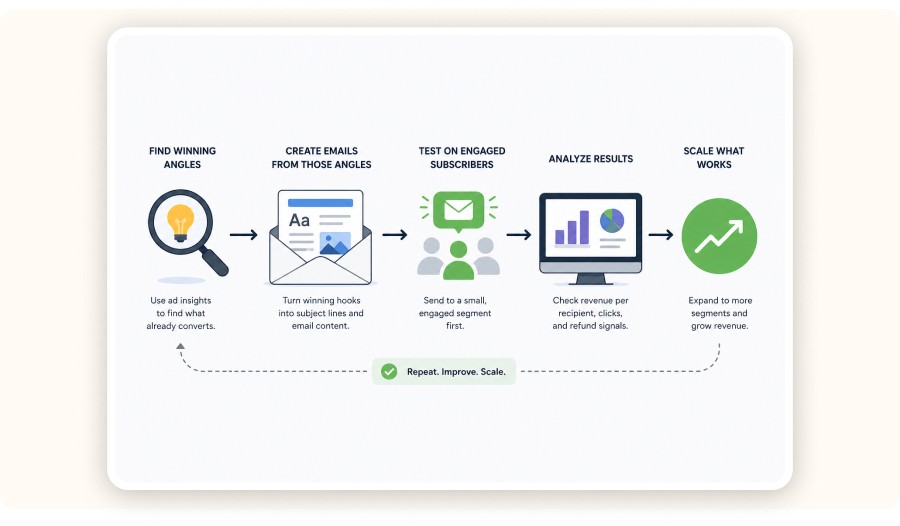
Campaign emails work when they reuse proven angles and match the right segment. Pull winning hooks from your ads, turn them into subject lines and hero sections, and test them on engaged subscribers before you blast everyone. That cuts the guesswork and helps you scale what already converts.
Estimated time: 60–90 minutes, then weekly maintenance
A simple weekly cadence most stores can sustain
One value email that educates or tells a product story
One promotional email that pushes an offer or a new arrival
The compounding move is angle discipline.
A practical workflow many sellers use
Use Minea to identify products and ad angles that are scaling
Pick 2–3 angles and translate them into email hooks
Send to engaged subscribers first
Watch revenue per recipient, click rate, and refund signals
Expand to broader segments only after the first test is clean
This is also how you keep your brand consistent. If your ads sell on a specific promise, your emails must reinforce that same promise.
Step 6: Track the metrics that keep dropshipping profitable and protect deliverability
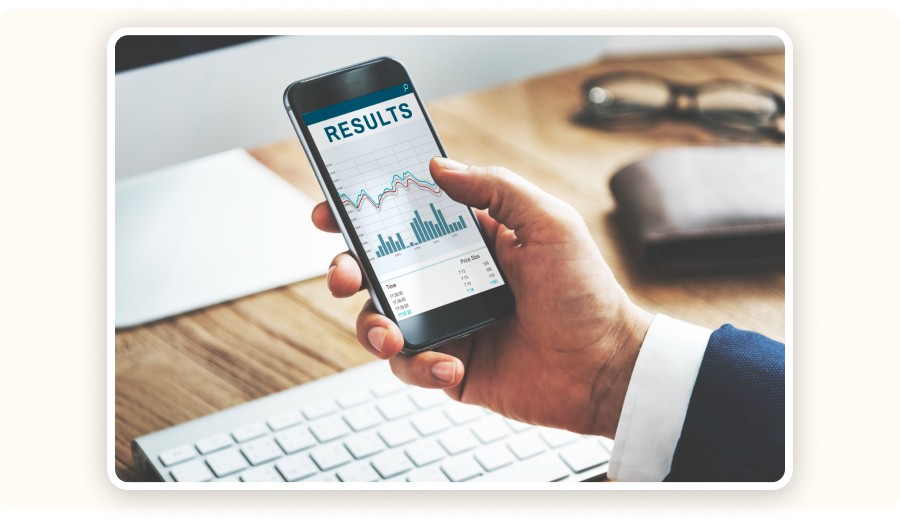
In dropshipping, email performance should be measured by revenue per recipient, automation share of revenue, repeat purchase behavior, and refund rate after promotions. Protect deliverability with domain authentication, list hygiene, and a steady sending volume so your emails actually land in inboxes.
Estimated time: 30 minutes to set up, then a weekly review
Mailchimp gives you a lot of dashboards. Focus on the few that map directly to profit.
Metrics that matter
Revenue per recipient (or revenue per email)
Flow revenue share (automation revenue vs. campaign revenue)
Repeat purchase rate for email-driven customers
Refund and chargeback rate after promotions
Deliverability rules that prevent silent failure
Authenticate your domain and keep it stable (SPF, DKIM, ideally DMARC)
Remove chronically unengaged contacts
Avoid sudden volume spikes
Keep subject lines honest and predictable
If deliverability drops, fix it before you increase sending frequency.
Step 7: Stay compliant with CAN-SPAM and GDPR rules
Compliance isn’t optional, it’s part of trust (and it protects your deliverability). Follow CAN-SPAM basics like a clear unsubscribe link, a valid physical address, and honest subject lines. If you sell into the EU or UK, respect GDPR principles around consent and data rights. A permission-based list reduces legal risk and keeps your emails out of spam.
Estimated time: 30–60 minutes
Minimum compliance checklist
A clear unsubscribe link in every email
Your business mailing address (physical address)
No deceptive subject lines
Email only people who explicitly opted in
If you ship into the EU/UK, make sure your signup forms and data handling are GDPR-aligned (consent, access/deletion requests, and clear privacy info). If you’re unsure, get legal advice. The cost of being wrong is higher than the cost of being cautious.
Mailchimp Alternatives for Shopify Dropshipping
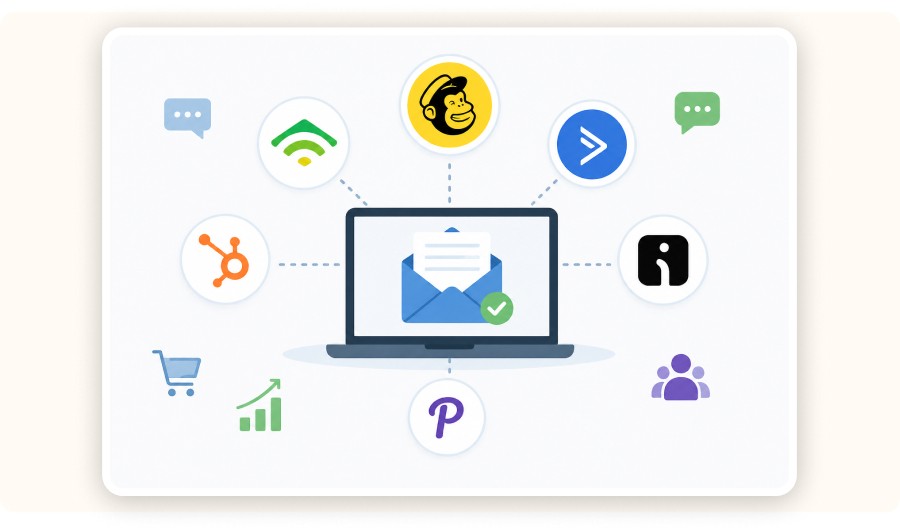
If you’re searching for the best email + SMS app for Shopify, Mailchimp isn’t your only option. The right tool depends on what you need most: ecommerce segmentation, SMS automation, CRM depth, or on-site list growth. Here are the top alternatives to consider:
Klaviyo : Best for Shopify-first email + SMS, advanced segmentation, revenue reporting, and powerful ecommerce automations.
ActiveCampaign : Great if you want deeper CRM + automation, lead scoring, and multi-step journeys (strong for hybrid ecommerce + services).
HubSpot Email Marketing : Ideal for brands that need an all-in-one CRM, sales pipeline, and marketing automation (often heavier than pure ecommerce tools).
Omnisend : Built for email + SMS + push, with fast setup and solid prebuilt flows for ecommerce teams that want speed.
Privy : Best for pop-ups, on-site conversion, and quick email campaigns; strong for capturing leads, lighter on advanced segmentation.
Pick based on your store’s margin, traffic source, and how complex your lifecycle flows need to be.
Top 10 Best Stores of the Day
Every day, new e-commerce sellers launch highly profitable products thanks to effective ads. Get inspired and be the next one 👇
Common mistakes that make Mailchimp fail for dropshipping
Most Mailchimp failures in dropshipping come down to three things: weak segmentation, automations built without purchase data, and incentives that destroy margin. Fix those first. Then align your email messaging with the same product angles that already work in paid ads.
Discounting too early and too often. Customers learn to wait.
Hiding shipping timelines and return rules. Short-term lift, long-term refunds.
Sending the same promo to everyone. Segments exist for a reason.
Building newsletters before automations. Automations pay first.
Changing product angles between ads and email. Consistency builds trust.
Analyst verdict
Mailchimp marketing for dropshipping businesses is worth it when you build it in the right order: integration, segmentation, then automations. That sequence improves conversion and repeat purchases without increasing ad spend. Once your core flows run reliably, campaigns become angle testing and list management not random promotions.
Mailchimp is worth doing when you treat it like infrastructure.
Integrate first, segment second, then build the three core flows. After that, plan campaigns around the angles that already win in ads. Minea makes angle selection faster because it shows what’s scaling not what you think will work.
FAQ mailchimp
Can I make $10,000 per month in dropshipping?
Yes. It usually requires a working offer with real margin and consistent traffic. Email helps by converting new subscribers, recovering abandoned carts, and driving repeat purchases so you’re not dependent on paid acquisition alone.
Is email marketing good for dropshipping?
Yes. It’s one of the best channels because it increases revenue from traffic you already paid for. Focus on automations first: Welcome, Abandoned Cart, and Post-Purchase.
How many dropshippers fail?
Many fail because they rely on one product, one channel, and never build a list. They also underestimate refunds and the support workload. Email doesn’t fix product quality, but it improves customer value and reduces wasted traffic.
What is the best marketing strategy for dropshipping?
The best strategy is a loop: test products and angles with ads, capture leads, convert subscribers with a welcome series, recover carts with automation, and use post-purchase sequences to reduce refunds and trigger a second order. The goal is higher lifetime value (LTV).
How can I integrate Mailchimp with my dropshipping store?
Connect Mailchimp to your ecommerce platform so it can sync customers, orders, and product data. Then verify that purchase events and revenue attribution appear correctly. Without that, segmentation and automation reporting won’t be reliable.
What are the best Mailchimp automation workflows for dropshipping?
Welcome series, abandoned cart, browse abandonment, post-purchase education + cross-sell, back-in-stock alerts, and win-back. If you only do three, start with Welcome, Abandoned Cart, and Post-Purchase.
How much does Mailchimp cost for a dropshipping business?
Mailchimp pricing depends on your list size and the features you use, such as automation and advanced segmentation. The practical way to evaluate cost is to compare the plan price to email-attributed revenue and the time saved by automation.
Can I use Mailchimp to track sales from my dropshipping campaigns?
Yes, if your store integration is set up correctly. You should be able to see campaign and automation revenue in reporting based on synced orders from your ecommerce platform.
Step 5: Plan campaigns from winning angles (not random promotions)
Campaign emails work when they reuse proven angles and match the right segment. Pull winning hooks from your ads, turn them into subject lines and hero sections, and test them on engaged subscribers before you blast everyone. That cuts the guesswork and helps you scale what already converts.
Estimated time: 60–90 minutes, then weekly maintenance
A simple weekly cadence most stores can sustain
One value email that educates or tells a product story
One promotional email that pushes an offer or a new arrival
The compounding move is angle discipline.
A practical workflow many sellers use
Use Minea to identify products and ad angles that are scaling
Pick 2–3 angles and translate them into email hooks
Send to engaged subscribers first
Watch revenue per recipient, click rate, and refund signals
Expand to broader segments only after the first test is clean
This is also how you keep your brand consistent. If your ads sell on a specific promise, your emails must reinforce that same promise.
Step 6: Track the metrics that keep dropshipping profitable and protect deliverability
In dropshipping, email performance should be measured by revenue per recipient, automation share of revenue, repeat purchase behavior, and refund rate after promotions. Protect deliverability with domain authentication, list hygiene, and a steady sending volume so your emails actually land in inboxes.
Estimated time: 30 minutes to set up, then a weekly review
Mailchimp gives you a lot of dashboards. Focus on the few that map directly to profit.
Metrics that matter
Revenue per recipient (or revenue per email)
Flow revenue share (automation revenue vs. campaign revenue)
Repeat purchase rate for email-driven customers
Refund and chargeback rate after promotions
Deliverability rules that prevent silent failure
Authenticate your domain and keep it stable (SPF, DKIM, ideally DMARC)
Remove chronically unengaged contacts
Avoid sudden volume spikes
Keep subject lines honest and predictable
If deliverability drops, fix it before you increase sending frequency.
Step 7: Stay compliant with CAN-SPAM and GDPR rules
Compliance isn’t optional, it’s part of trust (and it protects your deliverability). Follow CAN-SPAM basics like a clear unsubscribe link, a valid physical address, and honest subject lines. If you sell into the EU or UK, respect GDPR principles around consent and data rights. A permission-based list reduces legal risk and keeps your emails out of spam.
Estimated time: 30–60 minutes
Minimum compliance checklist
A clear unsubscribe link in every email
Your business mailing address (physical address)
No deceptive subject lines
Email only people who explicitly opted in
If you ship into the EU/UK, make sure your signup forms and data handling are GDPR-aligned (consent, access/deletion requests, and clear privacy info). If you’re unsure, get legal advice. The cost of being wrong is higher than the cost of being cautious.
Mailchimp Alternatives for Shopify Dropshipping
If you’re searching for the best email + SMS app for Shopify, Mailchimp isn’t your only option. The right tool depends on what you need most: ecommerce segmentation, SMS automation, CRM depth, or on-site list growth. Here are the top alternatives to consider:
Klaviyo : Best for Shopify-first email + SMS, advanced segmentation, revenue reporting, and powerful ecommerce automations.
ActiveCampaign : Great if you want deeper CRM + automation, lead scoring, and multi-step journeys (strong for hybrid ecommerce + services).
HubSpot Email Marketing : Ideal for brands that need an all-in-one CRM, sales pipeline, and marketing automation (often heavier than pure ecommerce tools).
Omnisend : Built for email + SMS + push, with fast setup and solid prebuilt flows for ecommerce teams that want speed.
Privy : Best for pop-ups, on-site conversion, and quick email campaigns; strong for capturing leads, lighter on advanced segmentation.
Pick based on your store’s margin, traffic source, and how complex your lifecycle flows need to be.
Minea
Top 10 Best Stores of the Day
Every day, new e-commerce sellers launch highly profitable products thanks to effective ads. Get inspired and be the next one 👇
Common mistakes that make Mailchimp fail for dropshipping
Most Mailchimp failures in dropshipping come down to three things: weak segmentation, automations built without purchase data, and incentives that destroy margin. Fix those first. Then align your email messaging with the same product angles that already work in paid ads.
Discounting too early and too often. Customers learn to wait.
Hiding shipping timelines and return rules. Short-term lift, long-term refunds.
Sending the same promo to everyone. Segments exist for a reason.
Building newsletters before automations. Automations pay first.
Changing product angles between ads and email. Consistency builds trust.
Analyst verdict
Mailchimp marketing for dropshipping businesses is worth it when you build it in the right order: integration, segmentation, then automations. That sequence improves conversion and repeat purchases without increasing ad spend. Once your core flows run reliably, campaigns become angle testing and list management not random promotions.
Mailchimp is worth doing when you treat it like infrastructure.
Integrate first, segment second, then build the three core flows. After that, plan campaigns around the angles that already win in ads. Minea makes angle selection faster because it shows what’s scaling not what you think will work.
FAQ mailchimp
Can I make $10,000 per month in dropshipping?
Yes. It usually requires a working offer with real margin and consistent traffic. Email helps by converting new subscribers, recovering abandoned carts, and driving repeat purchases so you’re not dependent on paid acquisition alone.
Is email marketing good for dropshipping?
Yes. It’s one of the best channels because it increases revenue from traffic you already paid for. Focus on automations first: Welcome, Abandoned Cart, and Post-Purchase.
How many dropshippers fail?
Many fail because they rely on one product, one channel, and never build a list. They also underestimate refunds and the support workload. Email doesn’t fix product quality, but it improves customer value and reduces wasted traffic.
What is the best marketing strategy for dropshipping?
The best strategy is a loop: test products and angles with ads, capture leads, convert subscribers with a welcome series, recover carts with automation, and use post-purchase sequences to reduce refunds and trigger a second order. The goal is higher lifetime value (LTV).
How can I integrate Mailchimp with my dropshipping store?
Connect Mailchimp to your ecommerce platform so it can sync customers, orders, and product data. Then verify that purchase events and revenue attribution appear correctly. Without that, segmentation and automation reporting won’t be reliable.
What are the best Mailchimp automation workflows for dropshipping?
Welcome series, abandoned cart, browse abandonment, post-purchase education + cross-sell, back-in-stock alerts, and win-back. If you only do three, start with Welcome, Abandoned Cart, and Post-Purchase.
How much does Mailchimp cost for a dropshipping business?
Mailchimp pricing depends on your list size and the features you use, such as automation and advanced segmentation. The practical way to evaluate cost is to compare the plan price to email-attributed revenue and the time saved by automation.
Can I use Mailchimp to track sales from my dropshipping campaigns?
Yes, if your store integration is set up correctly. You should be able to see campaign and automation revenue in reporting based on synced orders from your ecommerce platform.
Step 5: Plan campaigns from winning angles (not random promotions)
Campaign emails work when they reuse proven angles and match the right segment. Pull winning hooks from your ads, turn them into subject lines and hero sections, and test them on engaged subscribers before you blast everyone. That cuts the guesswork and helps you scale what already converts.
Estimated time: 60–90 minutes, then weekly maintenance
A simple weekly cadence most stores can sustain
One value email that educates or tells a product story
One promotional email that pushes an offer or a new arrival
The compounding move is angle discipline.
A practical workflow many sellers use
Use Minea to identify products and ad angles that are scaling
Pick 2–3 angles and translate them into email hooks
Send to engaged subscribers first
Watch revenue per recipient, click rate, and refund signals
Expand to broader segments only after the first test is clean
This is also how you keep your brand consistent. If your ads sell on a specific promise, your emails must reinforce that same promise.
Step 6: Track the metrics that keep dropshipping profitable and protect deliverability
In dropshipping, email performance should be measured by revenue per recipient, automation share of revenue, repeat purchase behavior, and refund rate after promotions. Protect deliverability with domain authentication, list hygiene, and a steady sending volume so your emails actually land in inboxes.
Estimated time: 30 minutes to set up, then a weekly review
Mailchimp gives you a lot of dashboards. Focus on the few that map directly to profit.
Metrics that matter
Revenue per recipient (or revenue per email)
Flow revenue share (automation revenue vs. campaign revenue)
Repeat purchase rate for email-driven customers
Refund and chargeback rate after promotions
Deliverability rules that prevent silent failure
Authenticate your domain and keep it stable (SPF, DKIM, ideally DMARC)
Remove chronically unengaged contacts
Avoid sudden volume spikes
Keep subject lines honest and predictable
If deliverability drops, fix it before you increase sending frequency.
Step 7: Stay compliant with CAN-SPAM and GDPR rules
Compliance isn’t optional, it’s part of trust (and it protects your deliverability). Follow CAN-SPAM basics like a clear unsubscribe link, a valid physical address, and honest subject lines. If you sell into the EU or UK, respect GDPR principles around consent and data rights. A permission-based list reduces legal risk and keeps your emails out of spam.
Estimated time: 30–60 minutes
Minimum compliance checklist
A clear unsubscribe link in every email
Your business mailing address (physical address)
No deceptive subject lines
Email only people who explicitly opted in
If you ship into the EU/UK, make sure your signup forms and data handling are GDPR-aligned (consent, access/deletion requests, and clear privacy info). If you’re unsure, get legal advice. The cost of being wrong is higher than the cost of being cautious.
Mailchimp Alternatives for Shopify Dropshipping
If you’re searching for the best email + SMS app for Shopify, Mailchimp isn’t your only option. The right tool depends on what you need most: ecommerce segmentation, SMS automation, CRM depth, or on-site list growth. Here are the top alternatives to consider:
Klaviyo : Best for Shopify-first email + SMS, advanced segmentation, revenue reporting, and powerful ecommerce automations.
ActiveCampaign : Great if you want deeper CRM + automation, lead scoring, and multi-step journeys (strong for hybrid ecommerce + services).
HubSpot Email Marketing : Ideal for brands that need an all-in-one CRM, sales pipeline, and marketing automation (often heavier than pure ecommerce tools).
Omnisend : Built for email + SMS + push, with fast setup and solid prebuilt flows for ecommerce teams that want speed.
Privy : Best for pop-ups, on-site conversion, and quick email campaigns; strong for capturing leads, lighter on advanced segmentation.
Pick based on your store’s margin, traffic source, and how complex your lifecycle flows need to be.
Top 10 Best Stores of the Day
Every day, new e-commerce sellers launch highly profitable products thanks to effective ads. Get inspired and be the next one 👇
Common mistakes that make Mailchimp fail for dropshipping
Most Mailchimp failures in dropshipping come down to three things: weak segmentation, automations built without purchase data, and incentives that destroy margin. Fix those first. Then align your email messaging with the same product angles that already work in paid ads.
Discounting too early and too often. Customers learn to wait.
Hiding shipping timelines and return rules. Short-term lift, long-term refunds.
Sending the same promo to everyone. Segments exist for a reason.
Building newsletters before automations. Automations pay first.
Changing product angles between ads and email. Consistency builds trust.
Analyst verdict
Mailchimp marketing for dropshipping businesses is worth it when you build it in the right order: integration, segmentation, then automations. That sequence improves conversion and repeat purchases without increasing ad spend. Once your core flows run reliably, campaigns become angle testing and list management not random promotions.
Mailchimp is worth doing when you treat it like infrastructure.
Integrate first, segment second, then build the three core flows. After that, plan campaigns around the angles that already win in ads. Minea makes angle selection faster because it shows what’s scaling not what you think will work.
FAQ mailchimp
Can I make $10,000 per month in dropshipping?
Yes. It usually requires a working offer with real margin and consistent traffic. Email helps by converting new subscribers, recovering abandoned carts, and driving repeat purchases so you’re not dependent on paid acquisition alone.
Is email marketing good for dropshipping?
Yes. It’s one of the best channels because it increases revenue from traffic you already paid for. Focus on automations first: Welcome, Abandoned Cart, and Post-Purchase.
How many dropshippers fail?
Many fail because they rely on one product, one channel, and never build a list. They also underestimate refunds and the support workload. Email doesn’t fix product quality, but it improves customer value and reduces wasted traffic.
What is the best marketing strategy for dropshipping?
The best strategy is a loop: test products and angles with ads, capture leads, convert subscribers with a welcome series, recover carts with automation, and use post-purchase sequences to reduce refunds and trigger a second order. The goal is higher lifetime value (LTV).
How can I integrate Mailchimp with my dropshipping store?
Connect Mailchimp to your ecommerce platform so it can sync customers, orders, and product data. Then verify that purchase events and revenue attribution appear correctly. Without that, segmentation and automation reporting won’t be reliable.
What are the best Mailchimp automation workflows for dropshipping?
Welcome series, abandoned cart, browse abandonment, post-purchase education + cross-sell, back-in-stock alerts, and win-back. If you only do three, start with Welcome, Abandoned Cart, and Post-Purchase.
How much does Mailchimp cost for a dropshipping business?
Mailchimp pricing depends on your list size and the features you use, such as automation and advanced segmentation. The practical way to evaluate cost is to compare the plan price to email-attributed revenue and the time saved by automation.
Can I use Mailchimp to track sales from my dropshipping campaigns?
Yes, if your store integration is set up correctly. You should be able to see campaign and automation revenue in reporting based on synced orders from your ecommerce platform.
Similar articles
Omnisend Email Marketing for a Dropshipping Business : Setup That Actually Sells
Best Email Marketing Tools
Omnisend Email Marketing for a Dropshipping Business : Setup That Actually Sells
Best Email Marketing Tools
Omnisend Email Marketing for a Dropshipping Business : Setup That Actually Sells
Best Email Marketing Tools
Omnisend Email Marketing for a Dropshipping Business : Setup That Actually Sells
Best Email Marketing Tools
How to Use Privy Email Marketing for a Dropshipping Store in 60 Minutes (2026)
Best Email Marketing Tools
How to Use Privy Email Marketing for a Dropshipping Store in 60 Minutes (2026)
Best Email Marketing Tools
How to Use Privy Email Marketing for a Dropshipping Store in 60 Minutes (2026)
Best Email Marketing Tools
How to Use Privy Email Marketing for a Dropshipping Store in 60 Minutes (2026)
Best Email Marketing Tools


Our Free Adspys

Find winning products on our Tiktok adspy today!
Find winning products on our Facebook adspy today!
Find winning products on our Tiktok adspy today!
Find winning products on our Facebook adspy today!
Find winning products on our Tiktok adspy today!
Find winning products on our Facebook adspy today!
Find winning products on our Tiktok adspy today!
Find winning products on our Facebook adspy today!
1 winning product everyday.
Follow us!





Find out more
Read more
Minea © 2026
Find out more
Read more
Minea © 2026
Find out more
Read more
Minea © 2026
Find out more
Read more
Minea © 2026
Find out more
Read more
Minea © 2026
Find out more
Read more
Minea © 2026