Klaviyo for Dropshipping Business: Shopify Setup That Prints Repeat Sales
Best Email Marketing Tools
Author: Elysa
Contents
If you’re running a Shopify dropshipping store, the hard part usually isn’t getting the first sale, it’s getting the second one without paying for another click.
That’s where email marketing quietly pays for itself and why tools like Klaviyo are often listed among the best email marketing tools for Shopify stores. In one November 2023 case study, a Shopify dropshipping store reported £20,932 in 30 days from automated Klaviyo flows (with $25,000+ shown as total attributed revenue in the dashboard). Another 2023 example claimed older automated flows were still delivering “800x ROI” long after setup, because once the automation is live, it keeps working without constant manual send-and-pray campaigns.
Key takeaways
Klaviyo is worth it for dropshipping when you treat it like a flow engine (welcome, abandoned cart, browse, win-back), not a newsletter tool.
Shopify + Klaviyo works best when you set tracking and events first, then build segmentation and flows from real behavior.
The 80/20 rule usually applies: a small set of key flows drives most of the revenue, focus there before doing anything fancy.
If you only build three things this week: welcome + abandoned cart + post-purchase flows.
Can you use Klaviyo with Shopify for a dropshipping store?
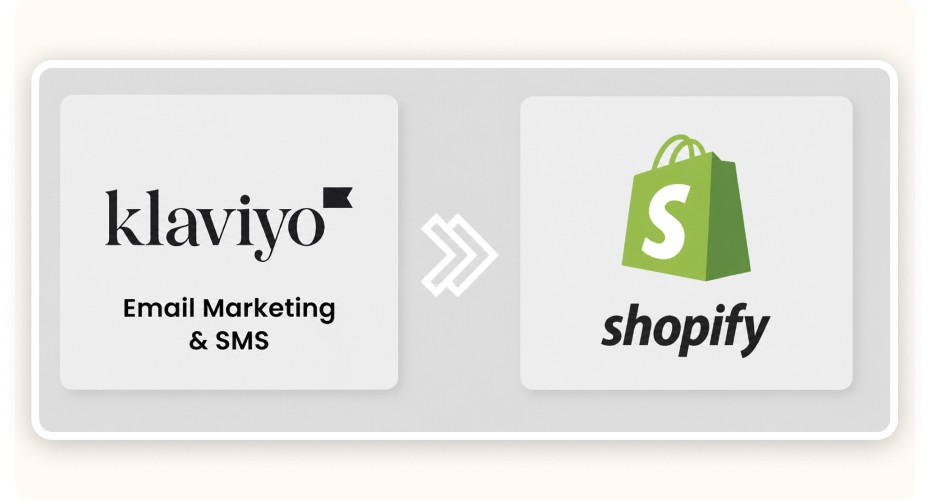
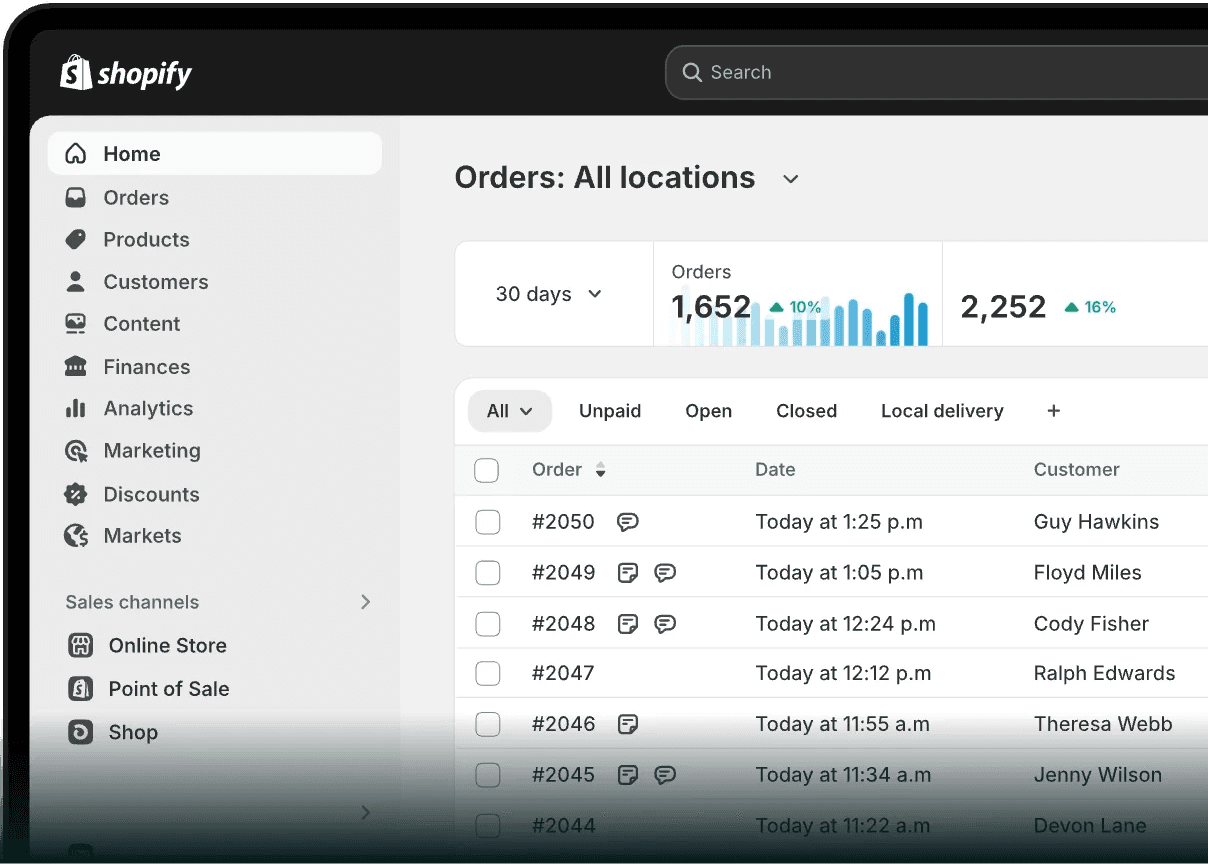
Yes. Klaviyo integrates with Shopify to sync customer profiles, product activity, and order data in near real time. That means you can trigger emails based on what shoppers actually do: view a product, add to cart, start checkout, buy, or request a refund.
For dropshipping, the real value isn’t “email marketing” in the generic sense, it’s behavior-based automation:
Someone views the same product twice → send a focused email that tackles the main objections (shipping time, quality, sizing, guarantees).
Someone adds to cart → recover the cart while the intent is still hot.
Someone buys → reduce refunds and increase LTV with tracking info, usage tips, and smart cross-sells.
In practice, it works because Shopify creates the signals (events) and Klaviyo turns them into flows + segmentation. One provides the data; the other turns it into automated revenue.
What you need before you touch any template
Your Shopify store is live (products, shipping rules, checkout fully configured).
A clear offer architecture: are you converting best with a discount, a bundle, free shipping, or a bonus?
At least one product with enough margin to support retention tactics (discounts, free shipping, incentives) without killing profitability.


Create and test your Shopify store for only $1 per day during 90 days
Step 0 (don’t skip): pick your dropshipping email strategy in 10 minutes
Estimated time: 10 minutes
Cost: Free
Most dropshipping email setups fail for one simple reason: the store never decides what email is supposed to do.
Choose one primary retention lever:
Margin protection: avoid heavy discounts; lean on education, social proof, and bundles.
Speed to cash: aggressive abandoned cart recovery + short win-back cycles.
Repeat purchase growth: post-purchase education + reorder reminders + product drops.
If you sell one-off impulse products (common in dropshipping), your email goals are usually:
Recover abandoned carts fast
Capture emails via forms without hurting conversion
Turn first-time buyers into a second order within 14–30 days
Step 1: connect Klaviyo to Shopify (the clean way)
Estimated time: 20–40 minutes
Cost: Free (until your list grows; plan varies)
Your goal is simple: make sure Shopify events are feeding Klaviyo correctly so flows trigger reliably.
Checklist:
In Klaviyo, connect the Shopify integration.
Confirm these core events exist in Klaviyo:
Viewed Product
Added to Cart
Started Checkout
Placed Order
If you use any subscription/bundling/upsell app, check whether it passes events properly.
Turn on site tracking so Klaviyo can identify returning visitors.
Why this matters for dropshipping: your traffic is often paid, sessions are short, and you’re fighting friction (shipping time, trust, a new store). If events are missing, your “automation” becomes guesswork.
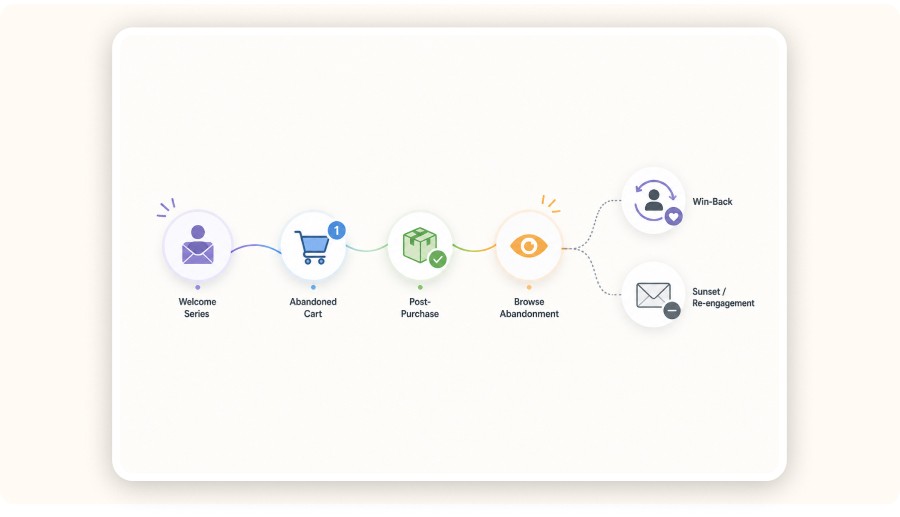
Step 2: build the 3 flows that drive most dropshipping revenue
Estimated time: 2–4 hours
Cost: Free–low (time is the real cost)
For dropshipping, you don’t need 20 flows on day one. You need the flows that cover the highest-intent moments.
Flow 1: Welcome series (list growth → first purchase)
A good welcome flow is your automated salesperson for new subscribers. It sets expectations and pushes the first conversion without discounting your entire margin.
Structure that works for most dropshipping stores:
Email 1 (immediate): deliver the lead magnet/offer + 1-line positioning
Email 2 (next day): best-seller proof (reviews, UGC, before/after)
Email 3 (day 3): objection killer (shipping time, returns, sizing, materials)
Simple segmentation idea (Customer Segmentation): Segment by “Clicked product link: Category A vs Category B” and send different proof.
Flow 2: Abandoned cart (recover the highest intent)
Cart abandonment is where dropshipping email pays for itself. You’re targeting people who already chose your product.
A common timing pattern used in dropshipping setups:
Email 1: ~1 hour after abandonment (short reminder + CTA)
Email 2: ~9 hours after (proof + FAQ + urgency)
Email 3: ~24 hours after (offer, or an alternative: bundle/free shipping)
Make each email do one job:
Email 1: “Finish checkout”
Email 2: “Here’s why you won’t regret it” (proof + answers)
Email 3: “Here’s the nudge” (only if you can afford it)
If your product has long delivery times, don’t hide it. Dropshippers get refunds when expectations aren’t set.
Flow 3: Post-purchase (reduce refunds, increase second order)
Post-purchase is where you turn a fragile first order into LTV.
What to include:
Order confirmation + “what happens next” (clear shipping timeline)
Usage guide (especially for problem-solution products)
Support + returns process (reduces angry chargebacks)
Cross-sell based on the bought item
If you’re selling fast-churn items (beauty gadgets, accessories), post-purchase education can noticeably reduce refund requests.
Flow 4: Browse abandonment (high intent without the cart)
Browse abandonment catches shoppers who looked serious but didn’t add to cart. For many dropshipping stores, this is the second-biggest automation after cart recovery.
A simple build:
Trigger: Viewed Product (2+ times) AND no Added to Cart
Delay: 2–4 hours
Email 1: the product again + 3-bullet proof (reviews, guarantee, shipping clarity)
Email 2 (next day): “Which one are you?” style email linking to your top 2 variants/categories
Add two “profit extender” flows once the basics are live
These aren’t mandatory on day one, but they usually become your next easiest wins.
Flow 5: Win-back (turn 1-time buyers into repeat buyers)
Win-back helps you handle rising ad costs: a second order lowers your blended CAC even if the first order barely broke even.
A practical trigger:
Segment: Placed Order once AND no second order in 30–45 days
Email 1: “Quick check-in” + usage tip + support link
Email 2: cross-sell based on what they bought (not a random best-seller)
Email 3: controlled offer (bundle or small discount) if margin allows
If you sell consumables or repeatable items, add a replenishment reminder based on your typical usage window.
Add a “sunset” flow to protect deliverability
If you keep emailing people who never open, inbox providers start treating all your emails as low quality.
Create a segment like “Unengaged 90 days” (no opens, no clicks), then:
Send a 2-email re-engagement sequence
Suppress the rest
It’s not exciting, but it works.
Minea
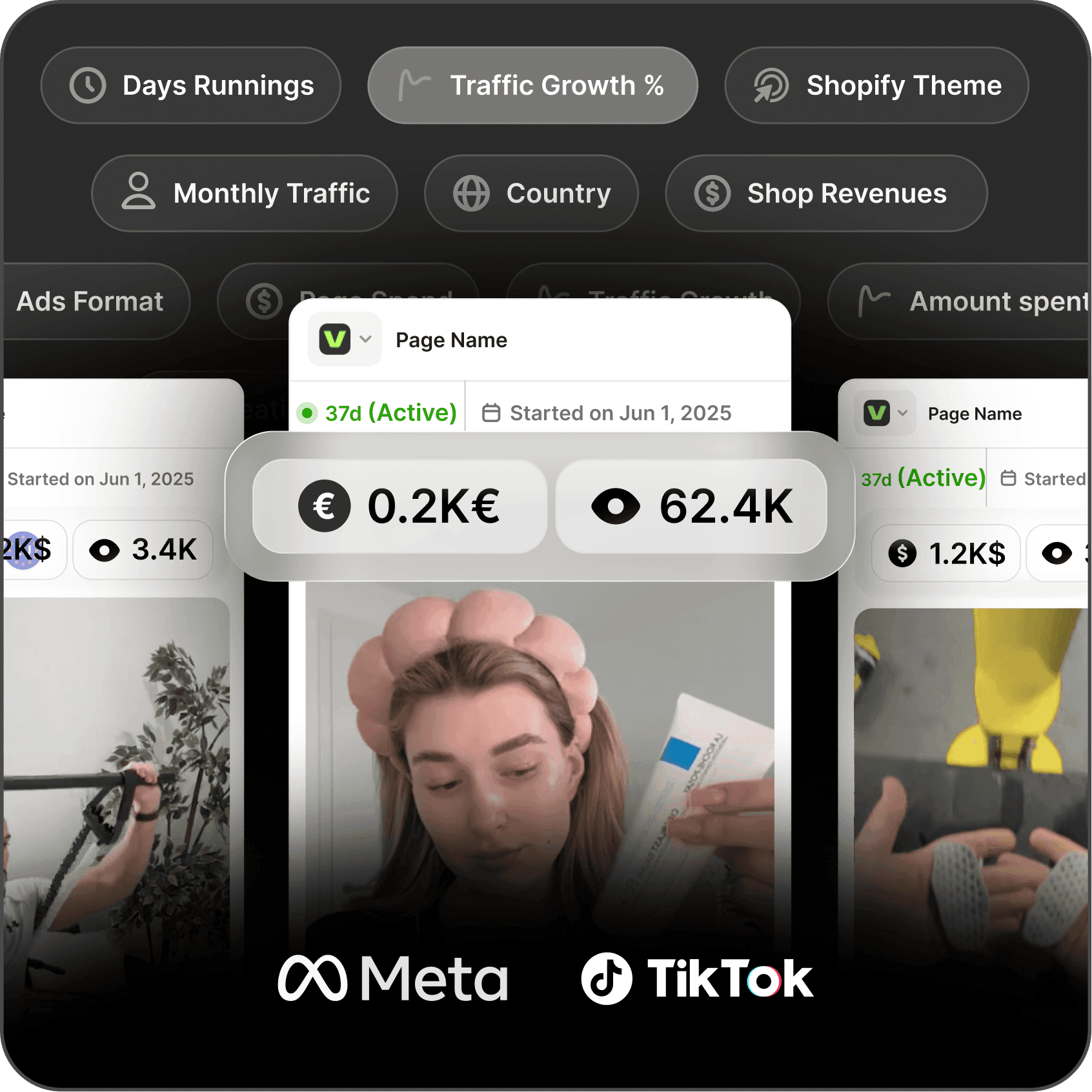
Minea takes care of everything for you
Access winning ads, products, and stores in real time, get inspired, learn, then get started.
Step 3: set up pop-ups and forms without killing conversion
Estimated time: 45–90 minutes
Cost: Free
Email list growth is the fuel. But a bad pop-up can cost you more in lost conversion than it earns.
A practical setup for e-commerce:
Mobile-first form (most dropshipping traffic is mobile)
Trigger after scroll depth (e.g., ~40%) or time on site (e.g., 7–12 seconds)
Offer: discount, bundle, free shipping, or “back-in-stock” alerts
Use Klaviyo’s dynamic blocks to personalize:
Show the product the shopper viewed
Recommend “often bought together” items
If you insist on a discount, cap and control it:
Only for new subscribers
Only once per email address
Expire the coupon
Step 4: basic segmentation that actually matters in dropshipping
Estimated time: 60–120 minutes
Cost: Free
Customer Segmentation is where Klaviyo gets powerful.
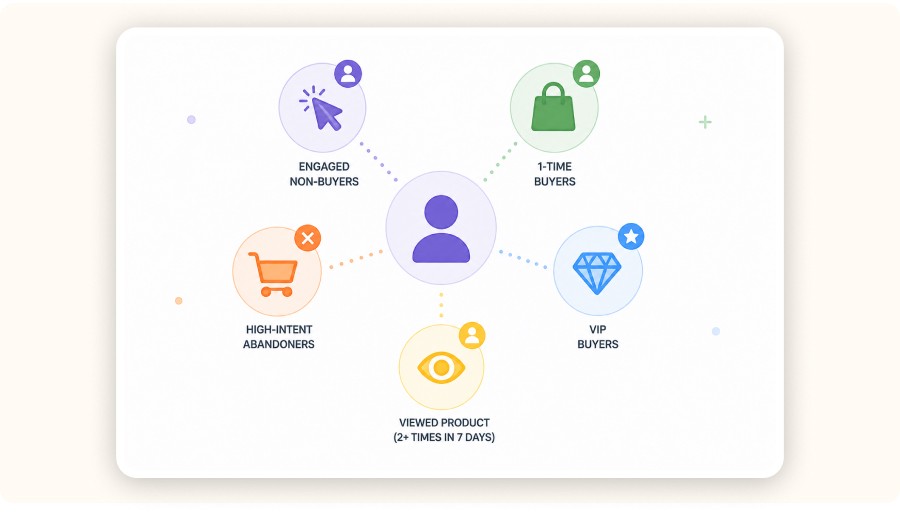
Start with segments that map to money:
Engaged non-buyers (last 30 days): clicked but didn’t buy
1-time buyers (last 60 days): target the second purchase
High-intent abandoners: started checkout but no purchase
VIP buyers: 2+ orders or top 10% by revenue
Then add one product-specific segment:
Viewed Product = your hero product (2+ times in 7 days)
This helps you stop sending the same message to everyone, a common mistake that makes email feel spammy and hurts deliverability.
If you’re running a Shopify dropshipping store, the hard part usually isn’t getting the first sale, it’s getting the second one without paying for another click.
That’s where email marketing quietly pays for itself and why tools like Klaviyo are often listed among the best email marketing tools for Shopify stores. In one November 2023 case study, a Shopify dropshipping store reported £20,932 in 30 days from automated Klaviyo flows (with $25,000+ shown as total attributed revenue in the dashboard). Another 2023 example claimed older automated flows were still delivering “800x ROI” long after setup, because once the automation is live, it keeps working without constant manual send-and-pray campaigns.
Key takeaways
Klaviyo is worth it for dropshipping when you treat it like a flow engine (welcome, abandoned cart, browse, win-back), not a newsletter tool.
Shopify + Klaviyo works best when you set tracking and events first, then build segmentation and flows from real behavior.
The 80/20 rule usually applies: a small set of key flows drives most of the revenue, focus there before doing anything fancy.
If you only build three things this week: welcome + abandoned cart + post-purchase flows.
Can you use Klaviyo with Shopify for a dropshipping store?
Yes. Klaviyo integrates with Shopify to sync customer profiles, product activity, and order data in near real time. That means you can trigger emails based on what shoppers actually do: view a product, add to cart, start checkout, buy, or request a refund.
For dropshipping, the real value isn’t “email marketing” in the generic sense, it’s behavior-based automation:
Someone views the same product twice → send a focused email that tackles the main objections (shipping time, quality, sizing, guarantees).
Someone adds to cart → recover the cart while the intent is still hot.
Someone buys → reduce refunds and increase LTV with tracking info, usage tips, and smart cross-sells.
In practice, it works because Shopify creates the signals (events) and Klaviyo turns them into flows + segmentation. One provides the data; the other turns it into automated revenue.
What you need before you touch any template
Your Shopify store is live (products, shipping rules, checkout fully configured).
A clear offer architecture: are you converting best with a discount, a bundle, free shipping, or a bonus?
At least one product with enough margin to support retention tactics (discounts, free shipping, incentives) without killing profitability.
Create and test your Shopify store for only $1 per day during 90 days
Step 0 (don’t skip): pick your dropshipping email strategy in 10 minutes
Estimated time: 10 minutes
Cost: Free
Most dropshipping email setups fail for one simple reason: the store never decides what email is supposed to do.
Choose one primary retention lever:
Margin protection: avoid heavy discounts; lean on education, social proof, and bundles.
Speed to cash: aggressive abandoned cart recovery + short win-back cycles.
Repeat purchase growth: post-purchase education + reorder reminders + product drops.
If you sell one-off impulse products (common in dropshipping), your email goals are usually:
Recover abandoned carts fast
Capture emails via forms without hurting conversion
Turn first-time buyers into a second order within 14–30 days
Step 1: connect Klaviyo to Shopify (the clean way)
Estimated time: 20–40 minutes
Cost: Free (until your list grows; plan varies)
Your goal is simple: make sure Shopify events are feeding Klaviyo correctly so flows trigger reliably.
Checklist:
In Klaviyo, connect the Shopify integration.
Confirm these core events exist in Klaviyo:
Viewed Product
Added to Cart
Started Checkout
Placed Order
If you use any subscription/bundling/upsell app, check whether it passes events properly.
Turn on site tracking so Klaviyo can identify returning visitors.
Why this matters for dropshipping: your traffic is often paid, sessions are short, and you’re fighting friction (shipping time, trust, a new store). If events are missing, your “automation” becomes guesswork.
Step 2: build the 3 flows that drive most dropshipping revenue
Estimated time: 2–4 hours
Cost: Free–low (time is the real cost)
For dropshipping, you don’t need 20 flows on day one. You need the flows that cover the highest-intent moments.
Flow 1: Welcome series (list growth → first purchase)
A good welcome flow is your automated salesperson for new subscribers. It sets expectations and pushes the first conversion without discounting your entire margin.
Structure that works for most dropshipping stores:
Email 1 (immediate): deliver the lead magnet/offer + 1-line positioning
Email 2 (next day): best-seller proof (reviews, UGC, before/after)
Email 3 (day 3): objection killer (shipping time, returns, sizing, materials)
Simple segmentation idea (Customer Segmentation): Segment by “Clicked product link: Category A vs Category B” and send different proof.
Flow 2: Abandoned cart (recover the highest intent)
Cart abandonment is where dropshipping email pays for itself. You’re targeting people who already chose your product.
A common timing pattern used in dropshipping setups:
Email 1: ~1 hour after abandonment (short reminder + CTA)
Email 2: ~9 hours after (proof + FAQ + urgency)
Email 3: ~24 hours after (offer, or an alternative: bundle/free shipping)
Make each email do one job:
Email 1: “Finish checkout”
Email 2: “Here’s why you won’t regret it” (proof + answers)
Email 3: “Here’s the nudge” (only if you can afford it)
If your product has long delivery times, don’t hide it. Dropshippers get refunds when expectations aren’t set.
Flow 3: Post-purchase (reduce refunds, increase second order)
Post-purchase is where you turn a fragile first order into LTV.
What to include:
Order confirmation + “what happens next” (clear shipping timeline)
Usage guide (especially for problem-solution products)
Support + returns process (reduces angry chargebacks)
Cross-sell based on the bought item
If you’re selling fast-churn items (beauty gadgets, accessories), post-purchase education can noticeably reduce refund requests.
Flow 4: Browse abandonment (high intent without the cart)
Browse abandonment catches shoppers who looked serious but didn’t add to cart. For many dropshipping stores, this is the second-biggest automation after cart recovery.
A simple build:
Trigger: Viewed Product (2+ times) AND no Added to Cart
Delay: 2–4 hours
Email 1: the product again + 3-bullet proof (reviews, guarantee, shipping clarity)
Email 2 (next day): “Which one are you?” style email linking to your top 2 variants/categories
Add two “profit extender” flows once the basics are live
These aren’t mandatory on day one, but they usually become your next easiest wins.
Flow 5: Win-back (turn 1-time buyers into repeat buyers)
Win-back helps you handle rising ad costs: a second order lowers your blended CAC even if the first order barely broke even.
A practical trigger:
Segment: Placed Order once AND no second order in 30–45 days
Email 1: “Quick check-in” + usage tip + support link
Email 2: cross-sell based on what they bought (not a random best-seller)
Email 3: controlled offer (bundle or small discount) if margin allows
If you sell consumables or repeatable items, add a replenishment reminder based on your typical usage window.
Add a “sunset” flow to protect deliverability
If you keep emailing people who never open, inbox providers start treating all your emails as low quality.
Create a segment like “Unengaged 90 days” (no opens, no clicks), then:
Send a 2-email re-engagement sequence
Suppress the rest
It’s not exciting, but it works.
Minea
Minea takes care of everything for you
Access winning ads, products, and stores in real time, get inspired, learn, then get started.
Step 3: set up pop-ups and forms without killing conversion
Estimated time: 45–90 minutes
Cost: Free
Email list growth is the fuel. But a bad pop-up can cost you more in lost conversion than it earns.
A practical setup for e-commerce:
Mobile-first form (most dropshipping traffic is mobile)
Trigger after scroll depth (e.g., ~40%) or time on site (e.g., 7–12 seconds)
Offer: discount, bundle, free shipping, or “back-in-stock” alerts
Use Klaviyo’s dynamic blocks to personalize:
Show the product the shopper viewed
Recommend “often bought together” items
If you insist on a discount, cap and control it:
Only for new subscribers
Only once per email address
Expire the coupon
Step 4: basic segmentation that actually matters in dropshipping
Estimated time: 60–120 minutes
Cost: Free
Customer Segmentation is where Klaviyo gets powerful.
Start with segments that map to money:
Engaged non-buyers (last 30 days): clicked but didn’t buy
1-time buyers (last 60 days): target the second purchase
High-intent abandoners: started checkout but no purchase
VIP buyers: 2+ orders or top 10% by revenue
Then add one product-specific segment:
Viewed Product = your hero product (2+ times in 7 days)
This helps you stop sending the same message to everyone, a common mistake that makes email feel spammy and hurts deliverability.
If you’re running a Shopify dropshipping store, the hard part usually isn’t getting the first sale, it’s getting the second one without paying for another click.
That’s where email marketing quietly pays for itself and why tools like Klaviyo are often listed among the best email marketing tools for Shopify stores. In one November 2023 case study, a Shopify dropshipping store reported £20,932 in 30 days from automated Klaviyo flows (with $25,000+ shown as total attributed revenue in the dashboard). Another 2023 example claimed older automated flows were still delivering “800x ROI” long after setup, because once the automation is live, it keeps working without constant manual send-and-pray campaigns.
Key takeaways
Klaviyo is worth it for dropshipping when you treat it like a flow engine (welcome, abandoned cart, browse, win-back), not a newsletter tool.
Shopify + Klaviyo works best when you set tracking and events first, then build segmentation and flows from real behavior.
The 80/20 rule usually applies: a small set of key flows drives most of the revenue, focus there before doing anything fancy.
If you only build three things this week: welcome + abandoned cart + post-purchase flows.
Can you use Klaviyo with Shopify for a dropshipping store?
Yes. Klaviyo integrates with Shopify to sync customer profiles, product activity, and order data in near real time. That means you can trigger emails based on what shoppers actually do: view a product, add to cart, start checkout, buy, or request a refund.
For dropshipping, the real value isn’t “email marketing” in the generic sense, it’s behavior-based automation:
Someone views the same product twice → send a focused email that tackles the main objections (shipping time, quality, sizing, guarantees).
Someone adds to cart → recover the cart while the intent is still hot.
Someone buys → reduce refunds and increase LTV with tracking info, usage tips, and smart cross-sells.
In practice, it works because Shopify creates the signals (events) and Klaviyo turns them into flows + segmentation. One provides the data; the other turns it into automated revenue.
What you need before you touch any template
Your Shopify store is live (products, shipping rules, checkout fully configured).
A clear offer architecture: are you converting best with a discount, a bundle, free shipping, or a bonus?
At least one product with enough margin to support retention tactics (discounts, free shipping, incentives) without killing profitability.
Create and test your Shopify store for only $1 per day during 90 days
Step 0 (don’t skip): pick your dropshipping email strategy in 10 minutes
Estimated time: 10 minutes
Cost: Free
Most dropshipping email setups fail for one simple reason: the store never decides what email is supposed to do.
Choose one primary retention lever:
Margin protection: avoid heavy discounts; lean on education, social proof, and bundles.
Speed to cash: aggressive abandoned cart recovery + short win-back cycles.
Repeat purchase growth: post-purchase education + reorder reminders + product drops.
If you sell one-off impulse products (common in dropshipping), your email goals are usually:
Recover abandoned carts fast
Capture emails via forms without hurting conversion
Turn first-time buyers into a second order within 14–30 days
Step 1: connect Klaviyo to Shopify (the clean way)
Estimated time: 20–40 minutes
Cost: Free (until your list grows; plan varies)
Your goal is simple: make sure Shopify events are feeding Klaviyo correctly so flows trigger reliably.
Checklist:
In Klaviyo, connect the Shopify integration.
Confirm these core events exist in Klaviyo:
Viewed Product
Added to Cart
Started Checkout
Placed Order
If you use any subscription/bundling/upsell app, check whether it passes events properly.
Turn on site tracking so Klaviyo can identify returning visitors.
Why this matters for dropshipping: your traffic is often paid, sessions are short, and you’re fighting friction (shipping time, trust, a new store). If events are missing, your “automation” becomes guesswork.
Step 2: build the 3 flows that drive most dropshipping revenue
Estimated time: 2–4 hours
Cost: Free–low (time is the real cost)
For dropshipping, you don’t need 20 flows on day one. You need the flows that cover the highest-intent moments.
Flow 1: Welcome series (list growth → first purchase)
A good welcome flow is your automated salesperson for new subscribers. It sets expectations and pushes the first conversion without discounting your entire margin.
Structure that works for most dropshipping stores:
Email 1 (immediate): deliver the lead magnet/offer + 1-line positioning
Email 2 (next day): best-seller proof (reviews, UGC, before/after)
Email 3 (day 3): objection killer (shipping time, returns, sizing, materials)
Simple segmentation idea (Customer Segmentation): Segment by “Clicked product link: Category A vs Category B” and send different proof.
Flow 2: Abandoned cart (recover the highest intent)
Cart abandonment is where dropshipping email pays for itself. You’re targeting people who already chose your product.
A common timing pattern used in dropshipping setups:
Email 1: ~1 hour after abandonment (short reminder + CTA)
Email 2: ~9 hours after (proof + FAQ + urgency)
Email 3: ~24 hours after (offer, or an alternative: bundle/free shipping)
Make each email do one job:
Email 1: “Finish checkout”
Email 2: “Here’s why you won’t regret it” (proof + answers)
Email 3: “Here’s the nudge” (only if you can afford it)
If your product has long delivery times, don’t hide it. Dropshippers get refunds when expectations aren’t set.
Flow 3: Post-purchase (reduce refunds, increase second order)
Post-purchase is where you turn a fragile first order into LTV.
What to include:
Order confirmation + “what happens next” (clear shipping timeline)
Usage guide (especially for problem-solution products)
Support + returns process (reduces angry chargebacks)
Cross-sell based on the bought item
If you’re selling fast-churn items (beauty gadgets, accessories), post-purchase education can noticeably reduce refund requests.
Flow 4: Browse abandonment (high intent without the cart)
Browse abandonment catches shoppers who looked serious but didn’t add to cart. For many dropshipping stores, this is the second-biggest automation after cart recovery.
A simple build:
Trigger: Viewed Product (2+ times) AND no Added to Cart
Delay: 2–4 hours
Email 1: the product again + 3-bullet proof (reviews, guarantee, shipping clarity)
Email 2 (next day): “Which one are you?” style email linking to your top 2 variants/categories
Add two “profit extender” flows once the basics are live
These aren’t mandatory on day one, but they usually become your next easiest wins.
Flow 5: Win-back (turn 1-time buyers into repeat buyers)
Win-back helps you handle rising ad costs: a second order lowers your blended CAC even if the first order barely broke even.
A practical trigger:
Segment: Placed Order once AND no second order in 30–45 days
Email 1: “Quick check-in” + usage tip + support link
Email 2: cross-sell based on what they bought (not a random best-seller)
Email 3: controlled offer (bundle or small discount) if margin allows
If you sell consumables or repeatable items, add a replenishment reminder based on your typical usage window.
Add a “sunset” flow to protect deliverability
If you keep emailing people who never open, inbox providers start treating all your emails as low quality.
Create a segment like “Unengaged 90 days” (no opens, no clicks), then:
Send a 2-email re-engagement sequence
Suppress the rest
It’s not exciting, but it works.
Minea
Minea takes care of everything for you
Access winning ads, products, and stores in real time, get inspired, learn, then get started.
Step 3: set up pop-ups and forms without killing conversion
Estimated time: 45–90 minutes
Cost: Free
Email list growth is the fuel. But a bad pop-up can cost you more in lost conversion than it earns.
A practical setup for e-commerce:
Mobile-first form (most dropshipping traffic is mobile)
Trigger after scroll depth (e.g., ~40%) or time on site (e.g., 7–12 seconds)
Offer: discount, bundle, free shipping, or “back-in-stock” alerts
Use Klaviyo’s dynamic blocks to personalize:
Show the product the shopper viewed
Recommend “often bought together” items
If you insist on a discount, cap and control it:
Only for new subscribers
Only once per email address
Expire the coupon
Step 4: basic segmentation that actually matters in dropshipping
Estimated time: 60–120 minutes
Cost: Free
Customer Segmentation is where Klaviyo gets powerful.
Start with segments that map to money:
Engaged non-buyers (last 30 days): clicked but didn’t buy
1-time buyers (last 60 days): target the second purchase
High-intent abandoners: started checkout but no purchase
VIP buyers: 2+ orders or top 10% by revenue
Then add one product-specific segment:
Viewed Product = your hero product (2+ times in 7 days)
This helps you stop sending the same message to everyone, a common mistake that makes email feel spammy and hurts deliverability.
Step 4.5: deliverability basics for dropshipping (so your flows hit inbox)
Estimated time: 30–60 minutes
Cost: Free
If your emails land in Promotions or Spam, nothing else matters.
Three practical rules:
Use a dedicated sending domain (not your main domain) and set up authentication (SPF / DKIM / DMARC) the way Klaviyo recommends.
Start with flows before campaigns (flows go to higher-intent people, usually better opens/clicks).
Suppress unengaged subscribers instead of “trying harder” with more sends.
For dropshipping specifically, avoid subject lines that look like coupon spam. You can still sell, just don’t train inbox providers to expect low-quality blasts.
Step 5: use the 80/20 rule in email marketing (what it actually means)
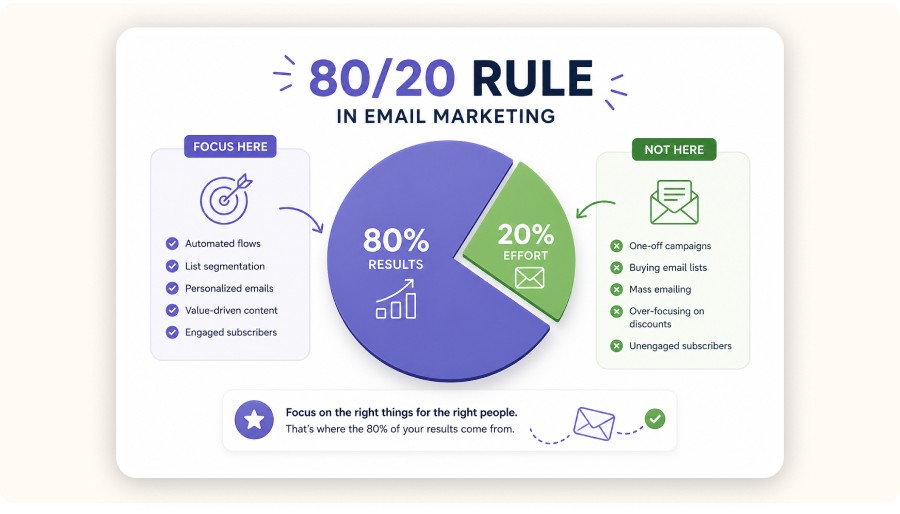
In e-commerce email marketing, the “80/20 rule” usually means a small set of automations (welcome, cart recovery, win-back, post-purchase) drives most of your email revenue.
Dropshippers often get distracted by newsletters, fancy design, and clever copy. Those matter later.
If you’re under pressure, your priority order is:
Event tracking is correct
Core flows are live
Segmentation is in place
Only then: newsletters, A/B testing, deeper personalization
Step 6: connect Klaviyo to your product research workflow (so emails match what’s selling)

Estimated time: 30–60 minutes
Cost: Free (tools vary)
Here’s a workflow that fits how dropshippers operate:
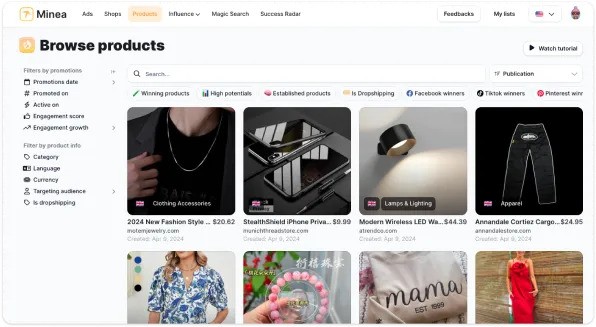
Use Minea’s ad spy feature to identify winning products and proven marketing angles.
Build your product page around the top objections you see in ads.
Mirror those objections in your Klaviyo flows (welcome, abandon cart, win-back).
Example using the Minea data you have right now:
Trending products include posture corrector belts (trend score 92), LED face masks (88), and portable blenders (85).
The average product price is around $29.99.
Common supplier countries include China, Turkey, and Vietnam.
How that changes your emails:
At ~$29.99, your discount budget is limited. Lean on proof and clarity.
If you source from China, set expectations in post-purchase to reduce refunds.
If you find a winning angle in Minea (hook + promise), reuse it in:
the subject line
the first 2 lines of your cart recovery email
a “why it works” email in your welcome series
This is where dropshipping email marketing becomes performance marketing: your emails aren’t generic, they match the angles that already win in ads.


Step 7: add a simple weekly campaign rhythm (without spamming)

Estimated time: 30 minutes per week
Cost: Free
Once flows are live, campaigns become your “controlled tests.” Keep it simple.
A realistic cadence for many dropshipping stores:
1 campaign/week to engaged subscribers (last 30 days)
1 campaign every 2 weeks to 1-time buyers (last 60 days)
What to send:
New product drop (only if you actually have something new)
Restock / urgency (only if real)
“Best seller proof” (UGC, reviews, before/after)
Bundle offer that protects margin better than a flat discount
If you want the highest ROI campaign type, it’s usually “best seller proof” to people who already clicked something in the last 30 days.
Optional: should you use Klaviyo SMS for dropshipping?
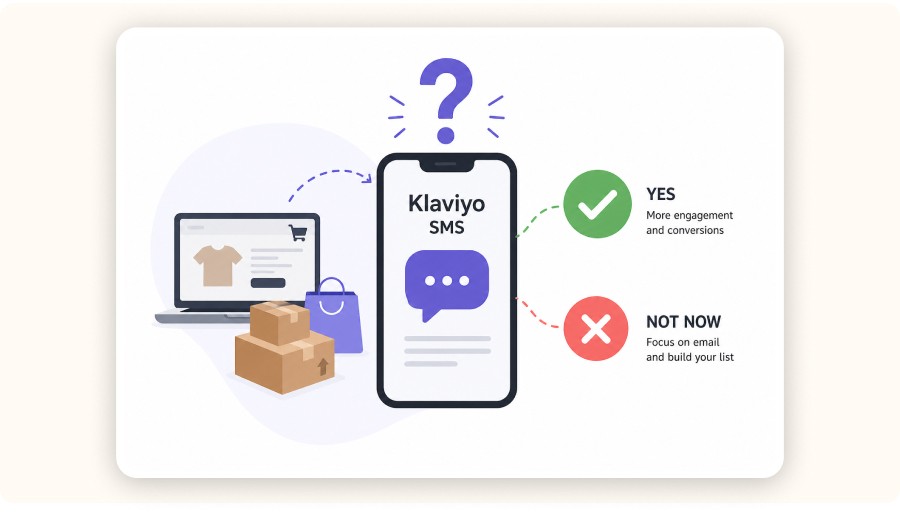
SMS can work for e-commerce, but it’s easy to overdo. If you don’t have clear consent (and restraint), you’ll burn trust fast. This applies whether you use Klaviyo or alternatives like Mailchimp, Omnisend, ActiveCampaign, HubSpot, or Privy (many Shopify merchants also compare these when looking for the best email/SMS app for Shopify).
A safe way to start:
Use SMS only for high-intent triggers (abandoned checkout, shipping updates, back-in-stock)
Keep frequency low
Make opt-out obvious
If you’re still building your offer and product quality, fix that first. SMS amplifies whatever experience you already deliver.
Common mistakes dropshippers make with Klaviyo (and how to fix them)
They start with newsletters instead of flows. They should launch welcome + cart + post-purchase first.
They discount too early and train customers to wait. They should use proof, bundles, and urgency before bigger discounts.
They ignore deliverability. They should avoid blasting cold lists, prune unengaged subscribers, and keep the copy tight.
They don’t align emails with shipping reality. They should tell customers what happens next, when tracking updates, and how support works.
They don’t segment, so every email is irrelevant to most people. They should start with 4 money segments (engaged non-buyers, 1-time buyers, abandoners, VIP).
Is email marketing good for dropshipping?
Yes, because dropshipping businesses often deal with high acquisition costs and thin margins, and email is one of the cheapest ways to increase customer lifetime value after the first purchase.
One important caveat: email can’t fix a broken offer. If your product page doesn’t convert, your cart recovery won’t magically convert either.
But once your store is “good enough,” email often becomes a compounding channel. Flows keep earning while you’re busy testing new products.
How to measure if Klaviyo is working (KPIs that matter)
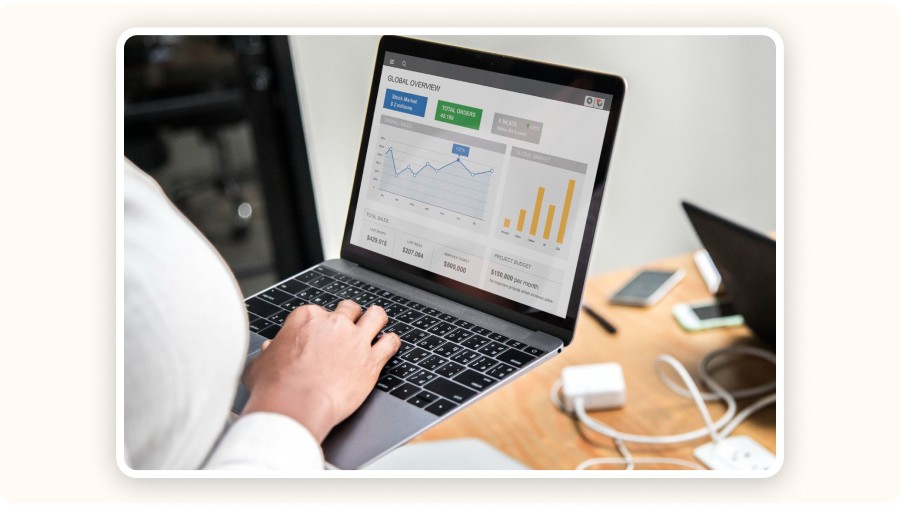
If you want a simple scorecard:
Flow revenue share: Are flows contributing meaningful revenue?
Abandoned cart recovery: Are you getting “found money” back?
Revenue per recipient: Are emails generating more than they cost you in discounts + time?
Refund rate (post-purchase impact): Do your education emails reduce support tickets?
If you’re seeing revenue attributed to flows and repeat purchases increasing, you’re on the right track.
Minea
Reach $1,000 per day or get your money back

Verdict final
Yes, email marketing is absolutely worth it for dropshipping, and for most stores it’s one of the few channels that can improve margins after the first sale instead of eating them.
But it only works when you treat it like behavior-based automation, not “weekly newsletters.” If your Shopify tracking is clean and your core flows are live (welcome, abandoned cart, post-purchase, then browse + win-back), Klaviyo becomes a revenue layer that keeps paying you back while you keep testing products.
Just remember the limit: email won’t rescue a weak offer. If the product page doesn’t convert, flows won’t either. Fix the fundamentals first, then let flows compound.
And if you want your flows to convert faster, start by feeding them the right angles. Use Minea to spot winning products + hooks your competitors already validate in ads, then reuse those same objections/proofs inside your welcome and cart recovery emails. That’s the quickest way to make your emails feel “made for the shopper” instead of generic.
FAQ
Is Klaviyo good for dropshipping?
Yes, if you build behavior-based flows and segmentation. Dropshipping stores usually win on speed of testing and product churn, and Klaviyo automations keep monetizing traffic after the first visit.
How do I integrate Klaviyo with my dropshipping store?
Connect Klaviyo’s Shopify integration, confirm key events (Viewed Product, Added to Cart, Started Checkout, Placed Order), then build flows that trigger off those events. Don’t start with newsletters.
What are the best Klaviyo flows for dropshipping?
Start with a Welcome series, Abandoned cart flow, and Post-purchase education flow. After that, add Browse abandonment and Win-back (for 1-time buyers who haven’t reordered).
How much does Klaviyo cost for a dropshipping business?
It depends on your list size and whether you add SMS. The better way to think about cost is “cost per recovered order.” Build flows first so you can see attributed revenue before you scale complexity.
Is Klaviyo like Shopify?
No. Shopify is your e-commerce platform (storefront, checkout, orders). Klaviyo is your Email Marketing and SMS platform that uses Shopify data to automate retention and segmentation.
Step 4.5: deliverability basics for dropshipping (so your flows hit inbox)
Estimated time: 30–60 minutes
Cost: Free
If your emails land in Promotions or Spam, nothing else matters.
Three practical rules:
Use a dedicated sending domain (not your main domain) and set up authentication (SPF / DKIM / DMARC) the way Klaviyo recommends.
Start with flows before campaigns (flows go to higher-intent people, usually better opens/clicks).
Suppress unengaged subscribers instead of “trying harder” with more sends.
For dropshipping specifically, avoid subject lines that look like coupon spam. You can still sell, just don’t train inbox providers to expect low-quality blasts.
Step 5: use the 80/20 rule in email marketing (what it actually means)
In e-commerce email marketing, the “80/20 rule” usually means a small set of automations (welcome, cart recovery, win-back, post-purchase) drives most of your email revenue.
Dropshippers often get distracted by newsletters, fancy design, and clever copy. Those matter later.
If you’re under pressure, your priority order is:
Event tracking is correct
Core flows are live
Segmentation is in place
Only then: newsletters, A/B testing, deeper personalization
Step 6: connect Klaviyo to your product research workflow (so emails match what’s selling)
Estimated time: 30–60 minutes
Cost: Free (tools vary)
Here’s a workflow that fits how dropshippers operate:
Use Minea’s ad spy feature to identify winning products and proven marketing angles.
Build your product page around the top objections you see in ads.
Mirror those objections in your Klaviyo flows (welcome, abandon cart, win-back).
Example using the Minea data you have right now:
Trending products include posture corrector belts (trend score 92), LED face masks (88), and portable blenders (85).
The average product price is around $29.99.
Common supplier countries include China, Turkey, and Vietnam.
How that changes your emails:
At ~$29.99, your discount budget is limited. Lean on proof and clarity.
If you source from China, set expectations in post-purchase to reduce refunds.
If you find a winning angle in Minea (hook + promise), reuse it in:
the subject line
the first 2 lines of your cart recovery email
a “why it works” email in your welcome series
This is where dropshipping email marketing becomes performance marketing: your emails aren’t generic, they match the angles that already win in ads.
Step 7: add a simple weekly campaign rhythm (without spamming)
Estimated time: 30 minutes per week
Cost: Free
Once flows are live, campaigns become your “controlled tests.” Keep it simple.
A realistic cadence for many dropshipping stores:
1 campaign/week to engaged subscribers (last 30 days)
1 campaign every 2 weeks to 1-time buyers (last 60 days)
What to send:
New product drop (only if you actually have something new)
Restock / urgency (only if real)
“Best seller proof” (UGC, reviews, before/after)
Bundle offer that protects margin better than a flat discount
If you want the highest ROI campaign type, it’s usually “best seller proof” to people who already clicked something in the last 30 days.
Optional: should you use Klaviyo SMS for dropshipping?
SMS can work for e-commerce, but it’s easy to overdo. If you don’t have clear consent (and restraint), you’ll burn trust fast. This applies whether you use Klaviyo or alternatives like Mailchimp, Omnisend, ActiveCampaign, HubSpot, or Privy (many Shopify merchants also compare these when looking for the best email/SMS app for Shopify).
A safe way to start:
Use SMS only for high-intent triggers (abandoned checkout, shipping updates, back-in-stock)
Keep frequency low
Make opt-out obvious
If you’re still building your offer and product quality, fix that first. SMS amplifies whatever experience you already deliver.
Common mistakes dropshippers make with Klaviyo (and how to fix them)
They start with newsletters instead of flows. They should launch welcome + cart + post-purchase first.
They discount too early and train customers to wait. They should use proof, bundles, and urgency before bigger discounts.
They ignore deliverability. They should avoid blasting cold lists, prune unengaged subscribers, and keep the copy tight.
They don’t align emails with shipping reality. They should tell customers what happens next, when tracking updates, and how support works.
They don’t segment, so every email is irrelevant to most people. They should start with 4 money segments (engaged non-buyers, 1-time buyers, abandoners, VIP).
Is email marketing good for dropshipping?
Yes, because dropshipping businesses often deal with high acquisition costs and thin margins, and email is one of the cheapest ways to increase customer lifetime value after the first purchase.
One important caveat: email can’t fix a broken offer. If your product page doesn’t convert, your cart recovery won’t magically convert either.
But once your store is “good enough,” email often becomes a compounding channel. Flows keep earning while you’re busy testing new products.
How to measure if Klaviyo is working (KPIs that matter)
If you want a simple scorecard:
Flow revenue share: Are flows contributing meaningful revenue?
Abandoned cart recovery: Are you getting “found money” back?
Revenue per recipient: Are emails generating more than they cost you in discounts + time?
Refund rate (post-purchase impact): Do your education emails reduce support tickets?
If you’re seeing revenue attributed to flows and repeat purchases increasing, you’re on the right track.
Minea
Reach $1,000 per day or get your money back
Verdict final
Yes, email marketing is absolutely worth it for dropshipping, and for most stores it’s one of the few channels that can improve margins after the first sale instead of eating them.
But it only works when you treat it like behavior-based automation, not “weekly newsletters.” If your Shopify tracking is clean and your core flows are live (welcome, abandoned cart, post-purchase, then browse + win-back), Klaviyo becomes a revenue layer that keeps paying you back while you keep testing products.
Just remember the limit: email won’t rescue a weak offer. If the product page doesn’t convert, flows won’t either. Fix the fundamentals first, then let flows compound.
And if you want your flows to convert faster, start by feeding them the right angles. Use Minea to spot winning products + hooks your competitors already validate in ads, then reuse those same objections/proofs inside your welcome and cart recovery emails. That’s the quickest way to make your emails feel “made for the shopper” instead of generic.
FAQ
Is Klaviyo good for dropshipping?
Yes, if you build behavior-based flows and segmentation. Dropshipping stores usually win on speed of testing and product churn, and Klaviyo automations keep monetizing traffic after the first visit.
How do I integrate Klaviyo with my dropshipping store?
Connect Klaviyo’s Shopify integration, confirm key events (Viewed Product, Added to Cart, Started Checkout, Placed Order), then build flows that trigger off those events. Don’t start with newsletters.
What are the best Klaviyo flows for dropshipping?
Start with a Welcome series, Abandoned cart flow, and Post-purchase education flow. After that, add Browse abandonment and Win-back (for 1-time buyers who haven’t reordered).
How much does Klaviyo cost for a dropshipping business?
It depends on your list size and whether you add SMS. The better way to think about cost is “cost per recovered order.” Build flows first so you can see attributed revenue before you scale complexity.
Is Klaviyo like Shopify?
No. Shopify is your e-commerce platform (storefront, checkout, orders). Klaviyo is your Email Marketing and SMS platform that uses Shopify data to automate retention and segmentation.
Step 4.5: deliverability basics for dropshipping (so your flows hit inbox)
Estimated time: 30–60 minutes
Cost: Free
If your emails land in Promotions or Spam, nothing else matters.
Three practical rules:
Use a dedicated sending domain (not your main domain) and set up authentication (SPF / DKIM / DMARC) the way Klaviyo recommends.
Start with flows before campaigns (flows go to higher-intent people, usually better opens/clicks).
Suppress unengaged subscribers instead of “trying harder” with more sends.
For dropshipping specifically, avoid subject lines that look like coupon spam. You can still sell, just don’t train inbox providers to expect low-quality blasts.
Step 5: use the 80/20 rule in email marketing (what it actually means)
In e-commerce email marketing, the “80/20 rule” usually means a small set of automations (welcome, cart recovery, win-back, post-purchase) drives most of your email revenue.
Dropshippers often get distracted by newsletters, fancy design, and clever copy. Those matter later.
If you’re under pressure, your priority order is:
Event tracking is correct
Core flows are live
Segmentation is in place
Only then: newsletters, A/B testing, deeper personalization
Step 6: connect Klaviyo to your product research workflow (so emails match what’s selling)
Estimated time: 30–60 minutes
Cost: Free (tools vary)
Here’s a workflow that fits how dropshippers operate:
Use Minea’s ad spy feature to identify winning products and proven marketing angles.
Build your product page around the top objections you see in ads.
Mirror those objections in your Klaviyo flows (welcome, abandon cart, win-back).
Example using the Minea data you have right now:
Trending products include posture corrector belts (trend score 92), LED face masks (88), and portable blenders (85).
The average product price is around $29.99.
Common supplier countries include China, Turkey, and Vietnam.
How that changes your emails:
At ~$29.99, your discount budget is limited. Lean on proof and clarity.
If you source from China, set expectations in post-purchase to reduce refunds.
If you find a winning angle in Minea (hook + promise), reuse it in:
the subject line
the first 2 lines of your cart recovery email
a “why it works” email in your welcome series
This is where dropshipping email marketing becomes performance marketing: your emails aren’t generic, they match the angles that already win in ads.
Step 7: add a simple weekly campaign rhythm (without spamming)
Estimated time: 30 minutes per week
Cost: Free
Once flows are live, campaigns become your “controlled tests.” Keep it simple.
A realistic cadence for many dropshipping stores:
1 campaign/week to engaged subscribers (last 30 days)
1 campaign every 2 weeks to 1-time buyers (last 60 days)
What to send:
New product drop (only if you actually have something new)
Restock / urgency (only if real)
“Best seller proof” (UGC, reviews, before/after)
Bundle offer that protects margin better than a flat discount
If you want the highest ROI campaign type, it’s usually “best seller proof” to people who already clicked something in the last 30 days.
Optional: should you use Klaviyo SMS for dropshipping?
SMS can work for e-commerce, but it’s easy to overdo. If you don’t have clear consent (and restraint), you’ll burn trust fast. This applies whether you use Klaviyo or alternatives like Mailchimp, Omnisend, ActiveCampaign, HubSpot, or Privy (many Shopify merchants also compare these when looking for the best email/SMS app for Shopify).
A safe way to start:
Use SMS only for high-intent triggers (abandoned checkout, shipping updates, back-in-stock)
Keep frequency low
Make opt-out obvious
If you’re still building your offer and product quality, fix that first. SMS amplifies whatever experience you already deliver.
Common mistakes dropshippers make with Klaviyo (and how to fix them)
They start with newsletters instead of flows. They should launch welcome + cart + post-purchase first.
They discount too early and train customers to wait. They should use proof, bundles, and urgency before bigger discounts.
They ignore deliverability. They should avoid blasting cold lists, prune unengaged subscribers, and keep the copy tight.
They don’t align emails with shipping reality. They should tell customers what happens next, when tracking updates, and how support works.
They don’t segment, so every email is irrelevant to most people. They should start with 4 money segments (engaged non-buyers, 1-time buyers, abandoners, VIP).
Is email marketing good for dropshipping?
Yes, because dropshipping businesses often deal with high acquisition costs and thin margins, and email is one of the cheapest ways to increase customer lifetime value after the first purchase.
One important caveat: email can’t fix a broken offer. If your product page doesn’t convert, your cart recovery won’t magically convert either.
But once your store is “good enough,” email often becomes a compounding channel. Flows keep earning while you’re busy testing new products.
How to measure if Klaviyo is working (KPIs that matter)
If you want a simple scorecard:
Flow revenue share: Are flows contributing meaningful revenue?
Abandoned cart recovery: Are you getting “found money” back?
Revenue per recipient: Are emails generating more than they cost you in discounts + time?
Refund rate (post-purchase impact): Do your education emails reduce support tickets?
If you’re seeing revenue attributed to flows and repeat purchases increasing, you’re on the right track.
Minea
Reach $1,000 per day or get your money back
Verdict final
Yes, email marketing is absolutely worth it for dropshipping, and for most stores it’s one of the few channels that can improve margins after the first sale instead of eating them.
But it only works when you treat it like behavior-based automation, not “weekly newsletters.” If your Shopify tracking is clean and your core flows are live (welcome, abandoned cart, post-purchase, then browse + win-back), Klaviyo becomes a revenue layer that keeps paying you back while you keep testing products.
Just remember the limit: email won’t rescue a weak offer. If the product page doesn’t convert, flows won’t either. Fix the fundamentals first, then let flows compound.
And if you want your flows to convert faster, start by feeding them the right angles. Use Minea to spot winning products + hooks your competitors already validate in ads, then reuse those same objections/proofs inside your welcome and cart recovery emails. That’s the quickest way to make your emails feel “made for the shopper” instead of generic.
FAQ
Is Klaviyo good for dropshipping?
Yes, if you build behavior-based flows and segmentation. Dropshipping stores usually win on speed of testing and product churn, and Klaviyo automations keep monetizing traffic after the first visit.
How do I integrate Klaviyo with my dropshipping store?
Connect Klaviyo’s Shopify integration, confirm key events (Viewed Product, Added to Cart, Started Checkout, Placed Order), then build flows that trigger off those events. Don’t start with newsletters.
What are the best Klaviyo flows for dropshipping?
Start with a Welcome series, Abandoned cart flow, and Post-purchase education flow. After that, add Browse abandonment and Win-back (for 1-time buyers who haven’t reordered).
How much does Klaviyo cost for a dropshipping business?
It depends on your list size and whether you add SMS. The better way to think about cost is “cost per recovered order.” Build flows first so you can see attributed revenue before you scale complexity.
Is Klaviyo like Shopify?
No. Shopify is your e-commerce platform (storefront, checkout, orders). Klaviyo is your Email Marketing and SMS platform that uses Shopify data to automate retention and segmentation.
Similar articles
Omnisend Email Marketing for a Dropshipping Business : Setup That Actually Sells
Best Email Marketing Tools
Omnisend Email Marketing for a Dropshipping Business : Setup That Actually Sells
Best Email Marketing Tools
Omnisend Email Marketing for a Dropshipping Business : Setup That Actually Sells
Best Email Marketing Tools
Omnisend Email Marketing for a Dropshipping Business : Setup That Actually Sells
Best Email Marketing Tools
How to Use Privy Email Marketing for a Dropshipping Store in 60 Minutes (2026)
Best Email Marketing Tools
How to Use Privy Email Marketing for a Dropshipping Store in 60 Minutes (2026)
Best Email Marketing Tools
How to Use Privy Email Marketing for a Dropshipping Store in 60 Minutes (2026)
Best Email Marketing Tools
How to Use Privy Email Marketing for a Dropshipping Store in 60 Minutes (2026)
Best Email Marketing Tools


Our Free Adspys

Find winning products on our Tiktok adspy today!
Find winning products on our Facebook adspy today!
Find winning products on our Tiktok adspy today!
Find winning products on our Facebook adspy today!
Find winning products on our Tiktok adspy today!
Find winning products on our Facebook adspy today!
Find winning products on our Tiktok adspy today!
Find winning products on our Facebook adspy today!
1 winning product everyday.
Follow us!





Find out more
Read more
Minea © 2026
Find out more
Read more
Minea © 2026
Find out more
Read more
Minea © 2026
Find out more
Read more
Minea © 2026
Find out more
Read more
Minea © 2026
Find out more
Read more
Minea © 2026