Deliverr Fulfillment Review 2026 for Dropshipping: The Flexport Reality
Best Ecommerce Fulfillment Center
Author: Baptiste
Contents
If you’re a US dropshipper trying to cut delivery times without building your own warehouse stack, Deliverr Fulfillment is usually on your shortlist for a reason as one of the best e-commerce fulfillment solutions.
Here’s the honest take: Deliverr can be a strong fit when you need fast, distributed fulfillment and you’re ready to operate like a real inventory-based business (not a pure supplier-to-customer dropshipping model).
Quick verdict: Deliverr is worth testing if you can hold inventory in the US and your margins can support 2-day delivery costs. Skip it if you’re still relying on overseas suppliers for most orders, or if you’re not comfortable with contractual limits around loss, damage, and liability.
Key takeaways
Deliverr went from an independent fulfillment network to Shopify Logistics, then into Flexport after Shopify sold most logistics assets in 2023.
How does Deliverr work? The core mechanism is inventory placement across multiple fulfillment centers, so more customers qualify for fast shipping.
The hidden risk isn’t speed, it’s operational complexity and the fine print (including lien rights and limited liability frameworks).
For most sellers, the deciding factor isn’t features. It’s whether your AOV and margin can absorb Deliverr fulfillment fees and still leave room to profit.
What Deliverr Actually Does Under Flexport
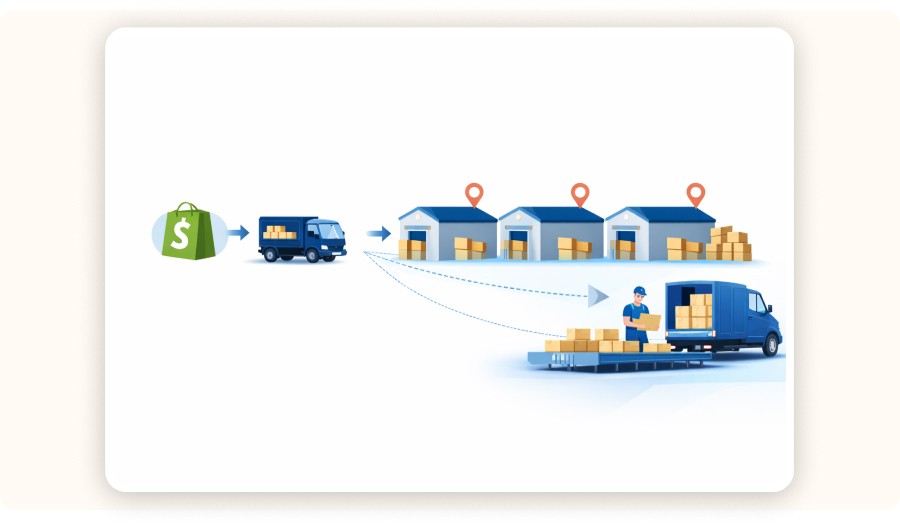
Deliverr Fulfillment is an e-commerce fulfillment service that routes your inventory into a distributed network of warehouses (i.e., Deliverr fulfillment centers), then picks, packs, and ships orders for your Shopify store and marketplaces. In plain English: what does Deliverr do? It handles storage + fulfillment + Deliverr shipping so you can offer faster delivery without running your own warehouse.
What is Deliverr, exactly?
At its core, Deliverr fulfillment is about inventory placement and order routing. You’re not buying a single warehouse, you’re buying a system that places stock across multiple locations so more customers qualify for fast delivery.
Who owns Deliverr?
Here’s the clean ownership timeline:
Founded in 2017 as a network-first fulfillment player.
Raised $170M in 2021 to fund growth.
Shopify announced the acquisition in May 2022 and completed it in July 2022 (valued at ~$2.1B).
In May 2023, Flexport acquired Shopify Logistics assets including Deliverr.
What this means for your store (practical view)
Deliverr works best when you accept two realities:
You need inventory on US soil.
That usually means buying stock in advance, then running a replenishment loop (forecast → inbound → receive → sell → restock).Fulfillment is an operations system, not a plug-and-play app.
It has failure modes that hit cash flow, refunds, and chargebacks (stockouts, mis-shipments, delays, inventory accuracy).
If you want the pure dropshipping loop where a supplier ships each order directly to your customer, Deliverr is the wrong tool. It’s built for sellers who want to behave like a brand with inventory, not a “supplier-to-customer only” model.
Optional (but smart) move before you commit to inventory: validate demand by checking what’s already scaling in ads (angles, creatives, offers) so you don’t warehouse a product that won’t convert.
Minea
Turn an opportunity into a store that sells
Choose a proven winning product and generate a ready-to-sell store in one click with Minea.
Deliverr Fulfillment Process: How Orders Actually Get Shipped
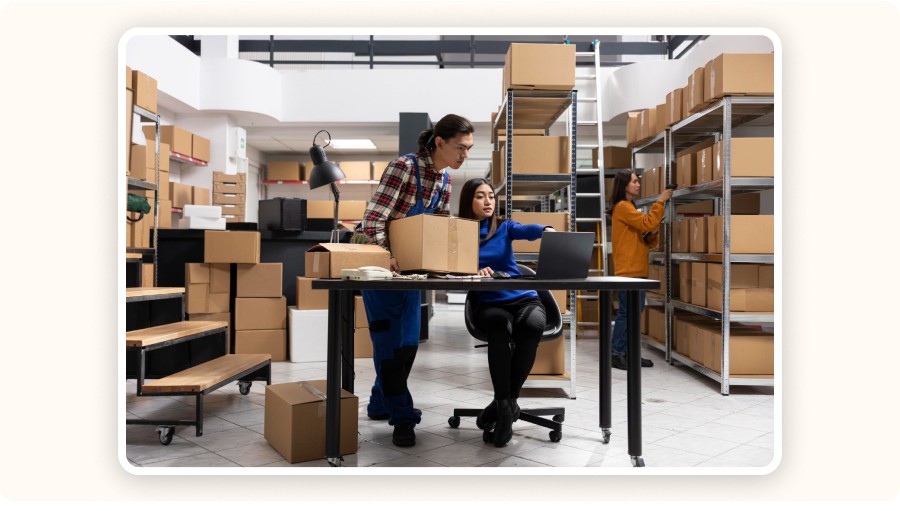
How does Deliverr work day-to-day? Deliverr Fulfillment is basically a repeatable sequence: you send inventory into the network, it gets received and stored, your store routes orders to Deliverr, and a warehouse ships with service levels designed to hit fast delivery targets (often including Deliverr 2 day shipping coverage for more buyers).
The performance you get depends on inventory placement, SKU velocity, and how clean your SKU data + routing rules are.
The process
1) Connect your channels
Link Shopify (and any marketplaces) so orders + tracking sync automatically. This is the foundation of Deliverr Shopify fulfillment.
2) Set up your catalog
Map SKUs, weights, dimensions, and packaging assumptions. This is where many sellers accidentally create future Deliverr fulfillment fees (bad dims/weights = surprise charges later).
3) Inbound inventory
Ship stock into the network. Inbound matters as much as outbound: if inbound is late, your ads keep spending while orders slip.
4) Receiving and storage
Inventory becomes available only after receiving, count, and put-away.
5) Order routing and picking
Orders come in, the system selects a fulfillment node, then pick & pack happens.
6) Deliverr shipping, tracking, and exceptions
Customers see tracking. You handle exceptions like address issues, lost parcels, or damage.
Practical warning for dropshippers transitioning to inventory
If your “winning product” changes every month, you can rack up stranded inventory and storage costs fast.
That’s why a Minea-style product research workflow helps before you commit stock: validate that the product isn’t just a one-week spike (creative goes viral, then dies).
Here’s a tight workflow that keeps risk under control:
Use Minea to validate demand signals and creative angles on your candidate product.
Order a small validation batch and sell through with a controlled ad budget.
Scale inventory only after you see stable conversion and refund rates.
That one discipline protects you from the most common inventory-based failure: buying too deep into a product that stops converting.
Delivery Speed and Coverage: The Real Advantage
Deliverr’s core promise is fast delivery coverage across the US by positioning inventory closer to where buyers actually are. That’s how more orders qualify for Deliverr 2 day shipping (or “2 days or less”). You don’t get speed from a magic shipping label, you get it from inventory placement plus a network that can route orders intelligently.
The signal to take seriously isn’t the slogan. It’s the delivery target.
Your real outcome depends on whether your inventory is actually positioned near demand (and stays there as sales patterns shift).
Why speed matters
For dropshipping sellers, faster Deliverr shipping only matters if it improves the math:
It can lift conversion rate (buyers trust faster delivery).
It can reduce support load (“Where’s my order?” messages).
It can also raise cost per order, sometimes enough to wipe out the benefit.
In your brief, you noted an average product price of $29.99. At that AOV, every extra dollar of fulfillment cost hurts. If your pricing is in that same range, do the margin math before you chase speed.
A simple rule that keeps you honest
If you can’t afford to reship a lost order without losing money, you can’t afford premium fulfillment at scale.
Other Advantages: What You Get Beyond Speed

Beyond delivery promises, Deliverr Fulfillment can bring a few practical advantages that matter once you’re operating with real inventory.
Less single-warehouse risk: A distributed network can reduce your exposure to one location going “down” (capacity issues, delays, local disruptions). You’re not betting everything on one building.
Better peak-season resilience: When volume spikes (Q4, promos, viral moments), network-style fulfillment can help you scale without rebuilding your ops every time.
More control than marketplace-led fulfillment: Compared with Amazon-led options, you typically keep more flexibility around branding, packaging inserts, and the post-purchase experience that feels like your store.
Cleaner operations visibility: Inventory-based fulfillment forces better discipline around SKU accuracy, carton dimensions, and replenishment. That’s a pain at first, but it often leads to fewer “mystery issues” later (mis-picks, missing items, reconciliation headaches).
A more complete logistics path (under Flexport): If you’re importing inventory, there’s a potential upside in tighter alignment between inbound freight and fulfillment, fewer handoffs, clearer timelines, and more predictable planning.
Bottom line: if you’re already ready to run inventory, these “second-order” benefits can be just as valuable as shipping speed.
Pricing Breakdown: What You Should Expect to Pay
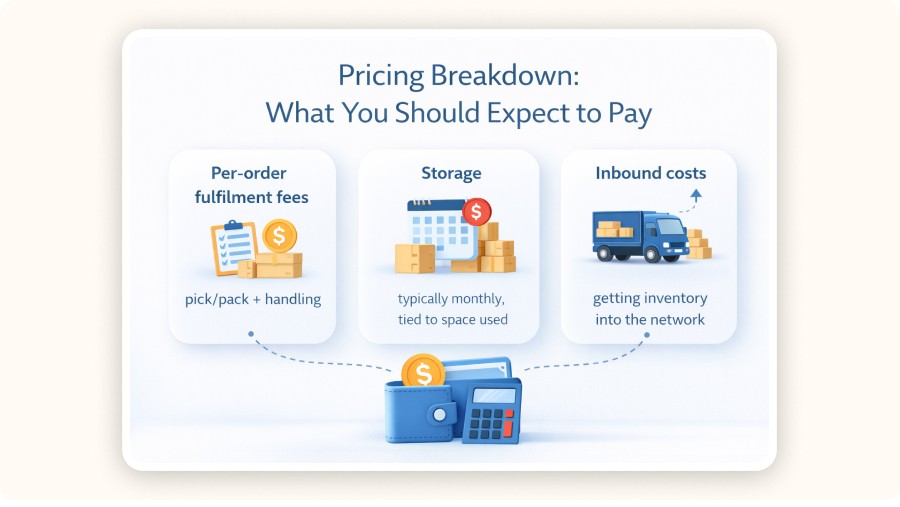
Deliverr fulfillment fees are usually a mix of:
Per-order fulfillment fees (pick/pack + handling)
Storage (typically monthly, tied to space used)
Inbound costs (getting inventory into the network)
Pricing can vary by item size, weight, pick complexity, and zone, and it can change based on contracts and service scope under Flexport. So the most responsible approach is a cost model, not guesswork.
Use this all-in cost model (per shipped order)
Pick & pack fee
Packaging/inserts (if charged)
Shipping label cost or included shipping allocation
Returns processing cost
Customer support time cost (yes, it adds up)
Storage cost allocated per unit per month
Inbound freight cost allocated per unit
Then map it against your store economics
Product COGS
Refund rate and damage rate
Payment processing fees
Ad spend per conversion
A cost-per-unit-of-value framing that works for dropshippers is cost per successful delivery. Successful delivery cost equals total fulfillment cost plus the fraction of refunds and reships you pay for.
If you sell impulse products in the $25 to $35 range, this one number will tell you if the model holds.
Marketplaces and Integrations: Where Deliverr Fits
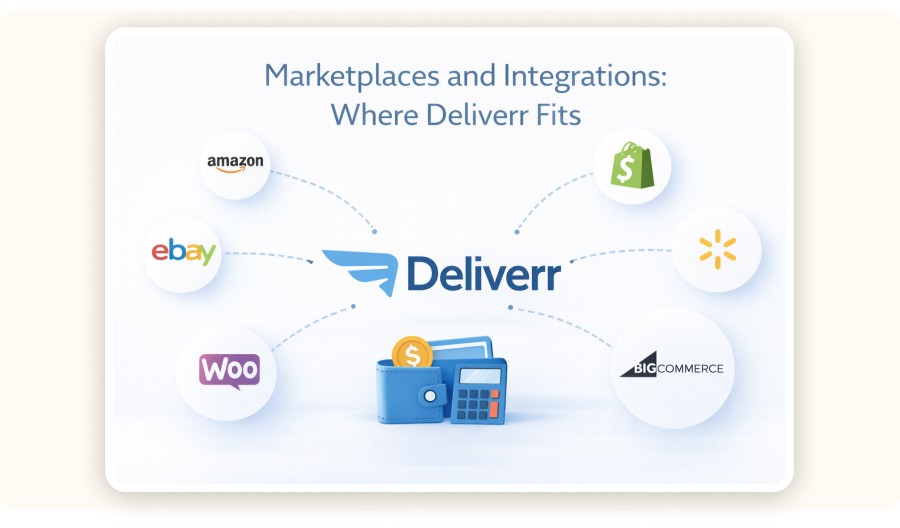
Deliverr fulfillment is designed to fulfill orders from Shopify stores and major marketplaces by syncing product data, inventory availability, and order flow. The operational win is centralized inventory management across channels, so you reduce overselling and improve buyer delivery estimates.
If you sell on multiple channels, Deliverr-style fulfillment can solve a real headache. Overselling and mis-synced inventory crush seller metrics.
For a dropshipping seller, the integration question is less about the connector and more about operational readiness:
Are your SKUs clean and consistent across channels?
Can your customer support handle partial shipments and split fulfillment?
Do you have a clear policy for delivery promises on each marketplace?
When you get this right, you can use faster delivery as a conversion lever.
For Shopify, it reduces pre-purchase anxiety (especially around delivery time).
For marketplaces, it can improve eligibility for fast-shipping badges.
Minea
Reach $1,000 per day or get your money back

If you’re a US dropshipper trying to cut delivery times without building your own warehouse stack, Deliverr Fulfillment is usually on your shortlist for a reason as one of the best e-commerce fulfillment solutions.
Here’s the honest take: Deliverr can be a strong fit when you need fast, distributed fulfillment and you’re ready to operate like a real inventory-based business (not a pure supplier-to-customer dropshipping model).
Quick verdict: Deliverr is worth testing if you can hold inventory in the US and your margins can support 2-day delivery costs. Skip it if you’re still relying on overseas suppliers for most orders, or if you’re not comfortable with contractual limits around loss, damage, and liability.
Key takeaways
Deliverr went from an independent fulfillment network to Shopify Logistics, then into Flexport after Shopify sold most logistics assets in 2023.
How does Deliverr work? The core mechanism is inventory placement across multiple fulfillment centers, so more customers qualify for fast shipping.
The hidden risk isn’t speed, it’s operational complexity and the fine print (including lien rights and limited liability frameworks).
For most sellers, the deciding factor isn’t features. It’s whether your AOV and margin can absorb Deliverr fulfillment fees and still leave room to profit.
What Deliverr Actually Does Under Flexport
Deliverr Fulfillment is an e-commerce fulfillment service that routes your inventory into a distributed network of warehouses (i.e., Deliverr fulfillment centers), then picks, packs, and ships orders for your Shopify store and marketplaces. In plain English: what does Deliverr do? It handles storage + fulfillment + Deliverr shipping so you can offer faster delivery without running your own warehouse.
What is Deliverr, exactly?
At its core, Deliverr fulfillment is about inventory placement and order routing. You’re not buying a single warehouse, you’re buying a system that places stock across multiple locations so more customers qualify for fast delivery.
Who owns Deliverr?
Here’s the clean ownership timeline:
Founded in 2017 as a network-first fulfillment player.
Raised $170M in 2021 to fund growth.
Shopify announced the acquisition in May 2022 and completed it in July 2022 (valued at ~$2.1B).
In May 2023, Flexport acquired Shopify Logistics assets including Deliverr.
What this means for your store (practical view)
Deliverr works best when you accept two realities:
You need inventory on US soil.
That usually means buying stock in advance, then running a replenishment loop (forecast → inbound → receive → sell → restock).Fulfillment is an operations system, not a plug-and-play app.
It has failure modes that hit cash flow, refunds, and chargebacks (stockouts, mis-shipments, delays, inventory accuracy).
If you want the pure dropshipping loop where a supplier ships each order directly to your customer, Deliverr is the wrong tool. It’s built for sellers who want to behave like a brand with inventory, not a “supplier-to-customer only” model.
Optional (but smart) move before you commit to inventory: validate demand by checking what’s already scaling in ads (angles, creatives, offers) so you don’t warehouse a product that won’t convert.
Minea
Turn an opportunity into a store that sells
Choose a proven winning product and generate a ready-to-sell store in one click with Minea.
Deliverr Fulfillment Process: How Orders Actually Get Shipped
How does Deliverr work day-to-day? Deliverr Fulfillment is basically a repeatable sequence: you send inventory into the network, it gets received and stored, your store routes orders to Deliverr, and a warehouse ships with service levels designed to hit fast delivery targets (often including Deliverr 2 day shipping coverage for more buyers).
The performance you get depends on inventory placement, SKU velocity, and how clean your SKU data + routing rules are.
The process
1) Connect your channels
Link Shopify (and any marketplaces) so orders + tracking sync automatically. This is the foundation of Deliverr Shopify fulfillment.
2) Set up your catalog
Map SKUs, weights, dimensions, and packaging assumptions. This is where many sellers accidentally create future Deliverr fulfillment fees (bad dims/weights = surprise charges later).
3) Inbound inventory
Ship stock into the network. Inbound matters as much as outbound: if inbound is late, your ads keep spending while orders slip.
4) Receiving and storage
Inventory becomes available only after receiving, count, and put-away.
5) Order routing and picking
Orders come in, the system selects a fulfillment node, then pick & pack happens.
6) Deliverr shipping, tracking, and exceptions
Customers see tracking. You handle exceptions like address issues, lost parcels, or damage.
Practical warning for dropshippers transitioning to inventory
If your “winning product” changes every month, you can rack up stranded inventory and storage costs fast.
That’s why a Minea-style product research workflow helps before you commit stock: validate that the product isn’t just a one-week spike (creative goes viral, then dies).
Here’s a tight workflow that keeps risk under control:
Use Minea to validate demand signals and creative angles on your candidate product.
Order a small validation batch and sell through with a controlled ad budget.
Scale inventory only after you see stable conversion and refund rates.
That one discipline protects you from the most common inventory-based failure: buying too deep into a product that stops converting.
Delivery Speed and Coverage: The Real Advantage
Deliverr’s core promise is fast delivery coverage across the US by positioning inventory closer to where buyers actually are. That’s how more orders qualify for Deliverr 2 day shipping (or “2 days or less”). You don’t get speed from a magic shipping label, you get it from inventory placement plus a network that can route orders intelligently.
The signal to take seriously isn’t the slogan. It’s the delivery target.
Your real outcome depends on whether your inventory is actually positioned near demand (and stays there as sales patterns shift).
Why speed matters
For dropshipping sellers, faster Deliverr shipping only matters if it improves the math:
It can lift conversion rate (buyers trust faster delivery).
It can reduce support load (“Where’s my order?” messages).
It can also raise cost per order, sometimes enough to wipe out the benefit.
In your brief, you noted an average product price of $29.99. At that AOV, every extra dollar of fulfillment cost hurts. If your pricing is in that same range, do the margin math before you chase speed.
A simple rule that keeps you honest
If you can’t afford to reship a lost order without losing money, you can’t afford premium fulfillment at scale.
Other Advantages: What You Get Beyond Speed
Beyond delivery promises, Deliverr Fulfillment can bring a few practical advantages that matter once you’re operating with real inventory.
Less single-warehouse risk: A distributed network can reduce your exposure to one location going “down” (capacity issues, delays, local disruptions). You’re not betting everything on one building.
Better peak-season resilience: When volume spikes (Q4, promos, viral moments), network-style fulfillment can help you scale without rebuilding your ops every time.
More control than marketplace-led fulfillment: Compared with Amazon-led options, you typically keep more flexibility around branding, packaging inserts, and the post-purchase experience that feels like your store.
Cleaner operations visibility: Inventory-based fulfillment forces better discipline around SKU accuracy, carton dimensions, and replenishment. That’s a pain at first, but it often leads to fewer “mystery issues” later (mis-picks, missing items, reconciliation headaches).
A more complete logistics path (under Flexport): If you’re importing inventory, there’s a potential upside in tighter alignment between inbound freight and fulfillment, fewer handoffs, clearer timelines, and more predictable planning.
Bottom line: if you’re already ready to run inventory, these “second-order” benefits can be just as valuable as shipping speed.
Pricing Breakdown: What You Should Expect to Pay
Deliverr fulfillment fees are usually a mix of:
Per-order fulfillment fees (pick/pack + handling)
Storage (typically monthly, tied to space used)
Inbound costs (getting inventory into the network)
Pricing can vary by item size, weight, pick complexity, and zone, and it can change based on contracts and service scope under Flexport. So the most responsible approach is a cost model, not guesswork.
Use this all-in cost model (per shipped order)
Pick & pack fee
Packaging/inserts (if charged)
Shipping label cost or included shipping allocation
Returns processing cost
Customer support time cost (yes, it adds up)
Storage cost allocated per unit per month
Inbound freight cost allocated per unit
Then map it against your store economics
Product COGS
Refund rate and damage rate
Payment processing fees
Ad spend per conversion
A cost-per-unit-of-value framing that works for dropshippers is cost per successful delivery. Successful delivery cost equals total fulfillment cost plus the fraction of refunds and reships you pay for.
If you sell impulse products in the $25 to $35 range, this one number will tell you if the model holds.
Marketplaces and Integrations: Where Deliverr Fits
Deliverr fulfillment is designed to fulfill orders from Shopify stores and major marketplaces by syncing product data, inventory availability, and order flow. The operational win is centralized inventory management across channels, so you reduce overselling and improve buyer delivery estimates.
If you sell on multiple channels, Deliverr-style fulfillment can solve a real headache. Overselling and mis-synced inventory crush seller metrics.
For a dropshipping seller, the integration question is less about the connector and more about operational readiness:
Are your SKUs clean and consistent across channels?
Can your customer support handle partial shipments and split fulfillment?
Do you have a clear policy for delivery promises on each marketplace?
When you get this right, you can use faster delivery as a conversion lever.
For Shopify, it reduces pre-purchase anxiety (especially around delivery time).
For marketplaces, it can improve eligibility for fast-shipping badges.
Minea
Reach $1,000 per day or get your money back
If you’re a US dropshipper trying to cut delivery times without building your own warehouse stack, Deliverr Fulfillment is usually on your shortlist for a reason as one of the best e-commerce fulfillment solutions.
Here’s the honest take: Deliverr can be a strong fit when you need fast, distributed fulfillment and you’re ready to operate like a real inventory-based business (not a pure supplier-to-customer dropshipping model).
Quick verdict: Deliverr is worth testing if you can hold inventory in the US and your margins can support 2-day delivery costs. Skip it if you’re still relying on overseas suppliers for most orders, or if you’re not comfortable with contractual limits around loss, damage, and liability.
Key takeaways
Deliverr went from an independent fulfillment network to Shopify Logistics, then into Flexport after Shopify sold most logistics assets in 2023.
How does Deliverr work? The core mechanism is inventory placement across multiple fulfillment centers, so more customers qualify for fast shipping.
The hidden risk isn’t speed, it’s operational complexity and the fine print (including lien rights and limited liability frameworks).
For most sellers, the deciding factor isn’t features. It’s whether your AOV and margin can absorb Deliverr fulfillment fees and still leave room to profit.
What Deliverr Actually Does Under Flexport
Deliverr Fulfillment is an e-commerce fulfillment service that routes your inventory into a distributed network of warehouses (i.e., Deliverr fulfillment centers), then picks, packs, and ships orders for your Shopify store and marketplaces. In plain English: what does Deliverr do? It handles storage + fulfillment + Deliverr shipping so you can offer faster delivery without running your own warehouse.
What is Deliverr, exactly?
At its core, Deliverr fulfillment is about inventory placement and order routing. You’re not buying a single warehouse, you’re buying a system that places stock across multiple locations so more customers qualify for fast delivery.
Who owns Deliverr?
Here’s the clean ownership timeline:
Founded in 2017 as a network-first fulfillment player.
Raised $170M in 2021 to fund growth.
Shopify announced the acquisition in May 2022 and completed it in July 2022 (valued at ~$2.1B).
In May 2023, Flexport acquired Shopify Logistics assets including Deliverr.
What this means for your store (practical view)
Deliverr works best when you accept two realities:
You need inventory on US soil.
That usually means buying stock in advance, then running a replenishment loop (forecast → inbound → receive → sell → restock).Fulfillment is an operations system, not a plug-and-play app.
It has failure modes that hit cash flow, refunds, and chargebacks (stockouts, mis-shipments, delays, inventory accuracy).
If you want the pure dropshipping loop where a supplier ships each order directly to your customer, Deliverr is the wrong tool. It’s built for sellers who want to behave like a brand with inventory, not a “supplier-to-customer only” model.
Optional (but smart) move before you commit to inventory: validate demand by checking what’s already scaling in ads (angles, creatives, offers) so you don’t warehouse a product that won’t convert.
Minea
Turn an opportunity into a store that sells
Choose a proven winning product and generate a ready-to-sell store in one click with Minea.
Deliverr Fulfillment Process: How Orders Actually Get Shipped
How does Deliverr work day-to-day? Deliverr Fulfillment is basically a repeatable sequence: you send inventory into the network, it gets received and stored, your store routes orders to Deliverr, and a warehouse ships with service levels designed to hit fast delivery targets (often including Deliverr 2 day shipping coverage for more buyers).
The performance you get depends on inventory placement, SKU velocity, and how clean your SKU data + routing rules are.
The process
1) Connect your channels
Link Shopify (and any marketplaces) so orders + tracking sync automatically. This is the foundation of Deliverr Shopify fulfillment.
2) Set up your catalog
Map SKUs, weights, dimensions, and packaging assumptions. This is where many sellers accidentally create future Deliverr fulfillment fees (bad dims/weights = surprise charges later).
3) Inbound inventory
Ship stock into the network. Inbound matters as much as outbound: if inbound is late, your ads keep spending while orders slip.
4) Receiving and storage
Inventory becomes available only after receiving, count, and put-away.
5) Order routing and picking
Orders come in, the system selects a fulfillment node, then pick & pack happens.
6) Deliverr shipping, tracking, and exceptions
Customers see tracking. You handle exceptions like address issues, lost parcels, or damage.
Practical warning for dropshippers transitioning to inventory
If your “winning product” changes every month, you can rack up stranded inventory and storage costs fast.
That’s why a Minea-style product research workflow helps before you commit stock: validate that the product isn’t just a one-week spike (creative goes viral, then dies).
Here’s a tight workflow that keeps risk under control:
Use Minea to validate demand signals and creative angles on your candidate product.
Order a small validation batch and sell through with a controlled ad budget.
Scale inventory only after you see stable conversion and refund rates.
That one discipline protects you from the most common inventory-based failure: buying too deep into a product that stops converting.
Delivery Speed and Coverage: The Real Advantage
Deliverr’s core promise is fast delivery coverage across the US by positioning inventory closer to where buyers actually are. That’s how more orders qualify for Deliverr 2 day shipping (or “2 days or less”). You don’t get speed from a magic shipping label, you get it from inventory placement plus a network that can route orders intelligently.
The signal to take seriously isn’t the slogan. It’s the delivery target.
Your real outcome depends on whether your inventory is actually positioned near demand (and stays there as sales patterns shift).
Why speed matters
For dropshipping sellers, faster Deliverr shipping only matters if it improves the math:
It can lift conversion rate (buyers trust faster delivery).
It can reduce support load (“Where’s my order?” messages).
It can also raise cost per order, sometimes enough to wipe out the benefit.
In your brief, you noted an average product price of $29.99. At that AOV, every extra dollar of fulfillment cost hurts. If your pricing is in that same range, do the margin math before you chase speed.
A simple rule that keeps you honest
If you can’t afford to reship a lost order without losing money, you can’t afford premium fulfillment at scale.
Other Advantages: What You Get Beyond Speed
Beyond delivery promises, Deliverr Fulfillment can bring a few practical advantages that matter once you’re operating with real inventory.
Less single-warehouse risk: A distributed network can reduce your exposure to one location going “down” (capacity issues, delays, local disruptions). You’re not betting everything on one building.
Better peak-season resilience: When volume spikes (Q4, promos, viral moments), network-style fulfillment can help you scale without rebuilding your ops every time.
More control than marketplace-led fulfillment: Compared with Amazon-led options, you typically keep more flexibility around branding, packaging inserts, and the post-purchase experience that feels like your store.
Cleaner operations visibility: Inventory-based fulfillment forces better discipline around SKU accuracy, carton dimensions, and replenishment. That’s a pain at first, but it often leads to fewer “mystery issues” later (mis-picks, missing items, reconciliation headaches).
A more complete logistics path (under Flexport): If you’re importing inventory, there’s a potential upside in tighter alignment between inbound freight and fulfillment, fewer handoffs, clearer timelines, and more predictable planning.
Bottom line: if you’re already ready to run inventory, these “second-order” benefits can be just as valuable as shipping speed.
Pricing Breakdown: What You Should Expect to Pay
Deliverr fulfillment fees are usually a mix of:
Per-order fulfillment fees (pick/pack + handling)
Storage (typically monthly, tied to space used)
Inbound costs (getting inventory into the network)
Pricing can vary by item size, weight, pick complexity, and zone, and it can change based on contracts and service scope under Flexport. So the most responsible approach is a cost model, not guesswork.
Use this all-in cost model (per shipped order)
Pick & pack fee
Packaging/inserts (if charged)
Shipping label cost or included shipping allocation
Returns processing cost
Customer support time cost (yes, it adds up)
Storage cost allocated per unit per month
Inbound freight cost allocated per unit
Then map it against your store economics
Product COGS
Refund rate and damage rate
Payment processing fees
Ad spend per conversion
A cost-per-unit-of-value framing that works for dropshippers is cost per successful delivery. Successful delivery cost equals total fulfillment cost plus the fraction of refunds and reships you pay for.
If you sell impulse products in the $25 to $35 range, this one number will tell you if the model holds.
Marketplaces and Integrations: Where Deliverr Fits
Deliverr fulfillment is designed to fulfill orders from Shopify stores and major marketplaces by syncing product data, inventory availability, and order flow. The operational win is centralized inventory management across channels, so you reduce overselling and improve buyer delivery estimates.
If you sell on multiple channels, Deliverr-style fulfillment can solve a real headache. Overselling and mis-synced inventory crush seller metrics.
For a dropshipping seller, the integration question is less about the connector and more about operational readiness:
Are your SKUs clean and consistent across channels?
Can your customer support handle partial shipments and split fulfillment?
Do you have a clear policy for delivery promises on each marketplace?
When you get this right, you can use faster delivery as a conversion lever.
For Shopify, it reduces pre-purchase anxiety (especially around delivery time).
For marketplaces, it can improve eligibility for fast-shipping badges.
Minea
Reach $1,000 per day or get your money back
The Catches: What Deliverr Gets Wrong for Dropshipping Sellers

The main risks with Deliverr are not marketing risks. They are operational and contractual risks, including inventory lock-in, storage cost exposure, and contract terms that can limit recovery for lost or damaged goods. If you are moving from supplier-shipped dropshipping to inventory fulfillment, these risks can matter more than speed.
You need at least three real negatives before you can trust a review. Here are the ones that show up most often for sellers using network fulfillment.
1) You lose the simplicity of supplier-direct dropshipping
If you are used to ordering from China, Turkey, or Vietnam and having a supplier handle the last mile, domestic fulfillment is a different game. The brief supplier country list is a reminder of how many dropshippers run their supply chain.
When you shift to Deliverr, you have to manage inbound freight, inventory forecasts, and replenishment.
2) Contract terms can be strict
The brief includes a key legal signal. Under Flexport, terms can include lien rights on goods for unpaid fees and a limit on liability for lost or damaged products that can be as low as 40% of retail value (or less) depending on the situation and terms. If you run thin margins, that can be the difference between a bad week and a cash-flow crisis.
3) Inventory placement errors get expensive
If demand concentrates in one region and your stock is placed elsewhere, you can still ship fast sometimes. But you can also pay more for shipping zones or miss delivery targets.
4) The hidden cost is operational time
Sellers underestimate how many hours per week fulfillment exceptions consume. Address changes, lost parcels, return approvals, and re-shipments all take time.
Here is the friction narrative you should take seriously.
One store owner moved a fast-testing catalog into domestic fulfillment too early. Two SKUs stopped converting after a creative fatigue cycle, and the store sat on slow-moving inventory while storage fees kept running. The store did not fail because the fulfillment partner shipped late. It failed because the buying discipline was weak.
Deliverr vs ShipBob vs Amazon MCF: Better Alternatives for Some Stores
Deliverr can be a good fit for fast delivery coverage, but it is not the default best choice for every dropshipping seller. ShipBob often wins for simpler 3PL operations and onboarding. Amazon Multi-Channel Fulfillment (MCF) can win on speed and reliability, but you trade off some brand control because Amazon is doing the fulfillment touchpoint.
If you are evaluating Deliverr Fulfillment, you are usually comparing it to at least two options.
Criteria | Deliverr under Flexport | ShipBob | Amazon MCF |
|---|---|---|---|
Best for | Sellers who want network-style fast coverage | Sellers who want a more classic 3PL feel | Sellers who want Amazon-grade delivery speed |
Core mechanism | Distributed inventory and routing | Warehousing plus standardized fulfillment ops | Fulfillment through Amazon’s network |
Biggest upside | Fast delivery coverage when inventory is well placed | Operational simplicity and predictable processes | Speed, reliability, peak-season muscle |
Biggest downside | More complexity and contract nuance | Not always the fastest everywhere | Less brand control, customer experience trade-offs |
Pick the tool that matches your business model.
If you run a narrow SKU catalog and scale on one hero product, Deliverr Fulfillment can work well.
If you run a broad catalog with frequent SKU churn, ShipBob-style operations can be easier.
If you need extreme reliability and you can live with Amazon being part of your stack, Amazon MCF is hard to beat.
What Real Users Tend to Say About Deliverr

Sellers typically praise Deliverr for faster delivery coverage when inventory is positioned well, and they criticize it when onboarding, inventory syncing, or exception handling creates extra work. Without verified Reddit or Trustpilot data in this brief, treat any anecdote you hear as a signal to ask better questions, not as proof.
Because the brief does not provide verified Reddit quotes or Trustpilot metrics, this Deliverr fulfillment reviews section stays conservative.
What you should do instead of chasing anecdotes is run an operational diligence checklist:
Ask for a clear breakdown of fulfillment, storage, and returns fees for your top 5 SKUs.
Ask how inventory placement decisions are made, and how fast stock can be rebalanced.
Ask what happens when an order is lost or damaged, and how claims are handled.
Read the parts of the terms that cover liens, liability limits, and dispute timelines.
If you want a reality check that is actually useful, pull your last 200 orders and calculate what your support team spent time on: late deliveries, address changes, refunds, reships, and chargebacks. That is the workload Deliverr will either reduce, or shift.
Who Should Use Deliverr Fulfillment for Ecommerce and Dropshipping
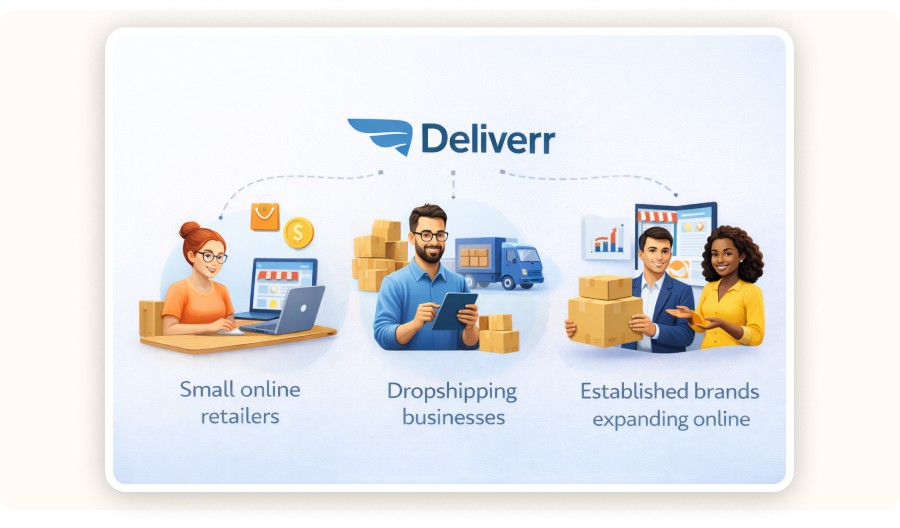
Deliverr is a better fit for ecommerce sellers who have validated demand, can hold inventory domestically (US), and want fast delivery as a conversion lever. It is a poor fit for early-stage dropshippers who are still testing products weekly and do not have reliable forecasting and replenishment workflows.
Buy if you look like this:
You are a dropshipping seller transitioning into holding US inventory because you found a winner.
Your product margin can absorb higher fulfillment costs, and you still profit after refunds.
You want a network approach to delivery speed instead of a single warehouse dependency.
Skip if you look like this:
You still depend on supplier-direct shipping for most orders.
Your AOV is low and you can’t afford reships or damage events.
You do not have stable weekly demand forecasting.
This is where Minea fits naturally.
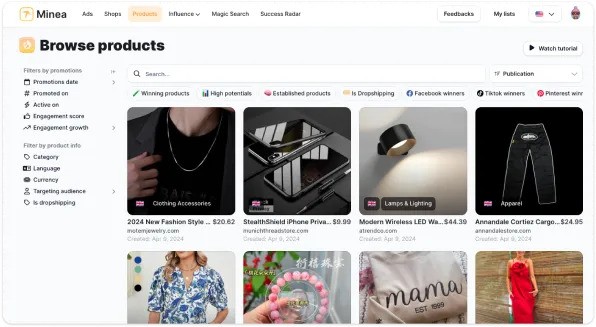
Deliverr helps after you have a product with real demand. Minea helps before that by reducing false positives in product selection. Use Minea to validate the product and the angles that actually sell, then use Deliverr to deliver that product faster.


Verdict: Deliverr in 2026 for Dropshipping Sellers
Deliverr is worth it in 2026 when fast delivery can lift conversion enough to pay for the added fulfillment and inventory complexity. For dropshipping sellers, the right timing is after product validation, not during your early testing phase.
Deliverr fulfillment is not a magic fix for a weak offer. It is an operations accelerator for a product that already converts.
If you only test one approach this week, do this :
Validate demand and creative angles first.
Run a small inventory test with a controlled inbound shipment.
Track all-in cost per successful delivery for 30 days.
If the margin math works, you will feel it immediately in fewer support tickets and higher conversion.
If the math does not work, do not force it. Use a lighter 3PL approach until your AOV and stability justify a network fulfillment partner.
If you want to avoid scaling the wrong product, start with Minea before you commit inventory. You can quickly see which product angles are actually winning and avoid buying deep into a trend that is already peaking.
FAQ
What is Deliverr’s fulfillment process?
Deliverr connects your store to a distributed warehouse network so you can store inventory closer to customers. Orders route automatically to a warehouse that has stock, then pick, pack, and ship happens with tracking sent back to your store. Your outcomes depend on clean SKU data and good inventory placement.
Is Deliverr now Flexport?
Deliverr is part of Flexport after Flexport acquired Shopify Logistics assets in 2023, which included Deliverr. The fulfillment product remains focused on ecommerce warehousing and shipping, with the potential upside of deeper integration into end-to-end logistics.
Why did Shopify sell Deliverr?
Shopify acquired Deliverr in 2022 to expand fulfillment capabilities, then later sold logistics assets to Flexport in 2023. The practical takeaway is that Deliverr shifted owners and strategy, so sellers should re-check current service scope and terms before committing inventory.
What does Deliverr do for ecommerce sellers?
Deliverr stores your inventory, ships orders, and aims to increase fast-delivery coverage by positioning stock across multiple fulfillment locations. For ecommerce sellers, the benefit is faster delivery promises and fewer delivery exceptions when inventory planning is solid.
How does Deliverr handle returns and customer service?
Returns are usually a mix of return label creation, inbound receiving, inspection, and restocking or disposal depending on your rules. Your customer support still owns the customer relationship, so you should budget time for exceptions like damage claims, address issues, and delivery disputes.
How much does Deliverr charge for fulfillment services?
Deliverr pricing typically depends on item size and weight, order volume, and service levels, and it can include storage and returns fees. The best way to evaluate it is to model all-in cost per successful delivery and compare it to your gross margin after ads and refunds.
The Catches: What Deliverr Gets Wrong for Dropshipping Sellers
The main risks with Deliverr are not marketing risks. They are operational and contractual risks, including inventory lock-in, storage cost exposure, and contract terms that can limit recovery for lost or damaged goods. If you are moving from supplier-shipped dropshipping to inventory fulfillment, these risks can matter more than speed.
You need at least three real negatives before you can trust a review. Here are the ones that show up most often for sellers using network fulfillment.
1) You lose the simplicity of supplier-direct dropshipping
If you are used to ordering from China, Turkey, or Vietnam and having a supplier handle the last mile, domestic fulfillment is a different game. The brief supplier country list is a reminder of how many dropshippers run their supply chain.
When you shift to Deliverr, you have to manage inbound freight, inventory forecasts, and replenishment.
2) Contract terms can be strict
The brief includes a key legal signal. Under Flexport, terms can include lien rights on goods for unpaid fees and a limit on liability for lost or damaged products that can be as low as 40% of retail value (or less) depending on the situation and terms. If you run thin margins, that can be the difference between a bad week and a cash-flow crisis.
3) Inventory placement errors get expensive
If demand concentrates in one region and your stock is placed elsewhere, you can still ship fast sometimes. But you can also pay more for shipping zones or miss delivery targets.
4) The hidden cost is operational time
Sellers underestimate how many hours per week fulfillment exceptions consume. Address changes, lost parcels, return approvals, and re-shipments all take time.
Here is the friction narrative you should take seriously.
One store owner moved a fast-testing catalog into domestic fulfillment too early. Two SKUs stopped converting after a creative fatigue cycle, and the store sat on slow-moving inventory while storage fees kept running. The store did not fail because the fulfillment partner shipped late. It failed because the buying discipline was weak.
Deliverr vs ShipBob vs Amazon MCF: Better Alternatives for Some Stores
Deliverr can be a good fit for fast delivery coverage, but it is not the default best choice for every dropshipping seller. ShipBob often wins for simpler 3PL operations and onboarding. Amazon Multi-Channel Fulfillment (MCF) can win on speed and reliability, but you trade off some brand control because Amazon is doing the fulfillment touchpoint.
If you are evaluating Deliverr Fulfillment, you are usually comparing it to at least two options.
Criteria | Deliverr under Flexport | ShipBob | Amazon MCF |
|---|---|---|---|
Best for | Sellers who want network-style fast coverage | Sellers who want a more classic 3PL feel | Sellers who want Amazon-grade delivery speed |
Core mechanism | Distributed inventory and routing | Warehousing plus standardized fulfillment ops | Fulfillment through Amazon’s network |
Biggest upside | Fast delivery coverage when inventory is well placed | Operational simplicity and predictable processes | Speed, reliability, peak-season muscle |
Biggest downside | More complexity and contract nuance | Not always the fastest everywhere | Less brand control, customer experience trade-offs |
Pick the tool that matches your business model.
If you run a narrow SKU catalog and scale on one hero product, Deliverr Fulfillment can work well.
If you run a broad catalog with frequent SKU churn, ShipBob-style operations can be easier.
If you need extreme reliability and you can live with Amazon being part of your stack, Amazon MCF is hard to beat.
What Real Users Tend to Say About Deliverr
Sellers typically praise Deliverr for faster delivery coverage when inventory is positioned well, and they criticize it when onboarding, inventory syncing, or exception handling creates extra work. Without verified Reddit or Trustpilot data in this brief, treat any anecdote you hear as a signal to ask better questions, not as proof.
Because the brief does not provide verified Reddit quotes or Trustpilot metrics, this Deliverr fulfillment reviews section stays conservative.
What you should do instead of chasing anecdotes is run an operational diligence checklist:
Ask for a clear breakdown of fulfillment, storage, and returns fees for your top 5 SKUs.
Ask how inventory placement decisions are made, and how fast stock can be rebalanced.
Ask what happens when an order is lost or damaged, and how claims are handled.
Read the parts of the terms that cover liens, liability limits, and dispute timelines.
If you want a reality check that is actually useful, pull your last 200 orders and calculate what your support team spent time on: late deliveries, address changes, refunds, reships, and chargebacks. That is the workload Deliverr will either reduce, or shift.
Who Should Use Deliverr Fulfillment for Ecommerce and Dropshipping
Deliverr is a better fit for ecommerce sellers who have validated demand, can hold inventory domestically (US), and want fast delivery as a conversion lever. It is a poor fit for early-stage dropshippers who are still testing products weekly and do not have reliable forecasting and replenishment workflows.
Buy if you look like this:
You are a dropshipping seller transitioning into holding US inventory because you found a winner.
Your product margin can absorb higher fulfillment costs, and you still profit after refunds.
You want a network approach to delivery speed instead of a single warehouse dependency.
Skip if you look like this:
You still depend on supplier-direct shipping for most orders.
Your AOV is low and you can’t afford reships or damage events.
You do not have stable weekly demand forecasting.
This is where Minea fits naturally.
Deliverr helps after you have a product with real demand. Minea helps before that by reducing false positives in product selection. Use Minea to validate the product and the angles that actually sell, then use Deliverr to deliver that product faster.
Verdict: Deliverr in 2026 for Dropshipping Sellers
Deliverr is worth it in 2026 when fast delivery can lift conversion enough to pay for the added fulfillment and inventory complexity. For dropshipping sellers, the right timing is after product validation, not during your early testing phase.
Deliverr fulfillment is not a magic fix for a weak offer. It is an operations accelerator for a product that already converts.
If you only test one approach this week, do this :
Validate demand and creative angles first.
Run a small inventory test with a controlled inbound shipment.
Track all-in cost per successful delivery for 30 days.
If the margin math works, you will feel it immediately in fewer support tickets and higher conversion.
If the math does not work, do not force it. Use a lighter 3PL approach until your AOV and stability justify a network fulfillment partner.
If you want to avoid scaling the wrong product, start with Minea before you commit inventory. You can quickly see which product angles are actually winning and avoid buying deep into a trend that is already peaking.
FAQ
What is Deliverr’s fulfillment process?
Deliverr connects your store to a distributed warehouse network so you can store inventory closer to customers. Orders route automatically to a warehouse that has stock, then pick, pack, and ship happens with tracking sent back to your store. Your outcomes depend on clean SKU data and good inventory placement.
Is Deliverr now Flexport?
Deliverr is part of Flexport after Flexport acquired Shopify Logistics assets in 2023, which included Deliverr. The fulfillment product remains focused on ecommerce warehousing and shipping, with the potential upside of deeper integration into end-to-end logistics.
Why did Shopify sell Deliverr?
Shopify acquired Deliverr in 2022 to expand fulfillment capabilities, then later sold logistics assets to Flexport in 2023. The practical takeaway is that Deliverr shifted owners and strategy, so sellers should re-check current service scope and terms before committing inventory.
What does Deliverr do for ecommerce sellers?
Deliverr stores your inventory, ships orders, and aims to increase fast-delivery coverage by positioning stock across multiple fulfillment locations. For ecommerce sellers, the benefit is faster delivery promises and fewer delivery exceptions when inventory planning is solid.
How does Deliverr handle returns and customer service?
Returns are usually a mix of return label creation, inbound receiving, inspection, and restocking or disposal depending on your rules. Your customer support still owns the customer relationship, so you should budget time for exceptions like damage claims, address issues, and delivery disputes.
How much does Deliverr charge for fulfillment services?
Deliverr pricing typically depends on item size and weight, order volume, and service levels, and it can include storage and returns fees. The best way to evaluate it is to model all-in cost per successful delivery and compare it to your gross margin after ads and refunds.
The Catches: What Deliverr Gets Wrong for Dropshipping Sellers
The main risks with Deliverr are not marketing risks. They are operational and contractual risks, including inventory lock-in, storage cost exposure, and contract terms that can limit recovery for lost or damaged goods. If you are moving from supplier-shipped dropshipping to inventory fulfillment, these risks can matter more than speed.
You need at least three real negatives before you can trust a review. Here are the ones that show up most often for sellers using network fulfillment.
1) You lose the simplicity of supplier-direct dropshipping
If you are used to ordering from China, Turkey, or Vietnam and having a supplier handle the last mile, domestic fulfillment is a different game. The brief supplier country list is a reminder of how many dropshippers run their supply chain.
When you shift to Deliverr, you have to manage inbound freight, inventory forecasts, and replenishment.
2) Contract terms can be strict
The brief includes a key legal signal. Under Flexport, terms can include lien rights on goods for unpaid fees and a limit on liability for lost or damaged products that can be as low as 40% of retail value (or less) depending on the situation and terms. If you run thin margins, that can be the difference between a bad week and a cash-flow crisis.
3) Inventory placement errors get expensive
If demand concentrates in one region and your stock is placed elsewhere, you can still ship fast sometimes. But you can also pay more for shipping zones or miss delivery targets.
4) The hidden cost is operational time
Sellers underestimate how many hours per week fulfillment exceptions consume. Address changes, lost parcels, return approvals, and re-shipments all take time.
Here is the friction narrative you should take seriously.
One store owner moved a fast-testing catalog into domestic fulfillment too early. Two SKUs stopped converting after a creative fatigue cycle, and the store sat on slow-moving inventory while storage fees kept running. The store did not fail because the fulfillment partner shipped late. It failed because the buying discipline was weak.
Deliverr vs ShipBob vs Amazon MCF: Better Alternatives for Some Stores
Deliverr can be a good fit for fast delivery coverage, but it is not the default best choice for every dropshipping seller. ShipBob often wins for simpler 3PL operations and onboarding. Amazon Multi-Channel Fulfillment (MCF) can win on speed and reliability, but you trade off some brand control because Amazon is doing the fulfillment touchpoint.
If you are evaluating Deliverr Fulfillment, you are usually comparing it to at least two options.
Criteria | Deliverr under Flexport | ShipBob | Amazon MCF |
|---|---|---|---|
Best for | Sellers who want network-style fast coverage | Sellers who want a more classic 3PL feel | Sellers who want Amazon-grade delivery speed |
Core mechanism | Distributed inventory and routing | Warehousing plus standardized fulfillment ops | Fulfillment through Amazon’s network |
Biggest upside | Fast delivery coverage when inventory is well placed | Operational simplicity and predictable processes | Speed, reliability, peak-season muscle |
Biggest downside | More complexity and contract nuance | Not always the fastest everywhere | Less brand control, customer experience trade-offs |
Pick the tool that matches your business model.
If you run a narrow SKU catalog and scale on one hero product, Deliverr Fulfillment can work well.
If you run a broad catalog with frequent SKU churn, ShipBob-style operations can be easier.
If you need extreme reliability and you can live with Amazon being part of your stack, Amazon MCF is hard to beat.
What Real Users Tend to Say About Deliverr
Sellers typically praise Deliverr for faster delivery coverage when inventory is positioned well, and they criticize it when onboarding, inventory syncing, or exception handling creates extra work. Without verified Reddit or Trustpilot data in this brief, treat any anecdote you hear as a signal to ask better questions, not as proof.
Because the brief does not provide verified Reddit quotes or Trustpilot metrics, this Deliverr fulfillment reviews section stays conservative.
What you should do instead of chasing anecdotes is run an operational diligence checklist:
Ask for a clear breakdown of fulfillment, storage, and returns fees for your top 5 SKUs.
Ask how inventory placement decisions are made, and how fast stock can be rebalanced.
Ask what happens when an order is lost or damaged, and how claims are handled.
Read the parts of the terms that cover liens, liability limits, and dispute timelines.
If you want a reality check that is actually useful, pull your last 200 orders and calculate what your support team spent time on: late deliveries, address changes, refunds, reships, and chargebacks. That is the workload Deliverr will either reduce, or shift.
Who Should Use Deliverr Fulfillment for Ecommerce and Dropshipping
Deliverr is a better fit for ecommerce sellers who have validated demand, can hold inventory domestically (US), and want fast delivery as a conversion lever. It is a poor fit for early-stage dropshippers who are still testing products weekly and do not have reliable forecasting and replenishment workflows.
Buy if you look like this:
You are a dropshipping seller transitioning into holding US inventory because you found a winner.
Your product margin can absorb higher fulfillment costs, and you still profit after refunds.
You want a network approach to delivery speed instead of a single warehouse dependency.
Skip if you look like this:
You still depend on supplier-direct shipping for most orders.
Your AOV is low and you can’t afford reships or damage events.
You do not have stable weekly demand forecasting.
This is where Minea fits naturally.
Deliverr helps after you have a product with real demand. Minea helps before that by reducing false positives in product selection. Use Minea to validate the product and the angles that actually sell, then use Deliverr to deliver that product faster.
Verdict: Deliverr in 2026 for Dropshipping Sellers
Deliverr is worth it in 2026 when fast delivery can lift conversion enough to pay for the added fulfillment and inventory complexity. For dropshipping sellers, the right timing is after product validation, not during your early testing phase.
Deliverr fulfillment is not a magic fix for a weak offer. It is an operations accelerator for a product that already converts.
If you only test one approach this week, do this :
Validate demand and creative angles first.
Run a small inventory test with a controlled inbound shipment.
Track all-in cost per successful delivery for 30 days.
If the margin math works, you will feel it immediately in fewer support tickets and higher conversion.
If the math does not work, do not force it. Use a lighter 3PL approach until your AOV and stability justify a network fulfillment partner.
If you want to avoid scaling the wrong product, start with Minea before you commit inventory. You can quickly see which product angles are actually winning and avoid buying deep into a trend that is already peaking.
FAQ
What is Deliverr’s fulfillment process?
Deliverr connects your store to a distributed warehouse network so you can store inventory closer to customers. Orders route automatically to a warehouse that has stock, then pick, pack, and ship happens with tracking sent back to your store. Your outcomes depend on clean SKU data and good inventory placement.
Is Deliverr now Flexport?
Deliverr is part of Flexport after Flexport acquired Shopify Logistics assets in 2023, which included Deliverr. The fulfillment product remains focused on ecommerce warehousing and shipping, with the potential upside of deeper integration into end-to-end logistics.
Why did Shopify sell Deliverr?
Shopify acquired Deliverr in 2022 to expand fulfillment capabilities, then later sold logistics assets to Flexport in 2023. The practical takeaway is that Deliverr shifted owners and strategy, so sellers should re-check current service scope and terms before committing inventory.
What does Deliverr do for ecommerce sellers?
Deliverr stores your inventory, ships orders, and aims to increase fast-delivery coverage by positioning stock across multiple fulfillment locations. For ecommerce sellers, the benefit is faster delivery promises and fewer delivery exceptions when inventory planning is solid.
How does Deliverr handle returns and customer service?
Returns are usually a mix of return label creation, inbound receiving, inspection, and restocking or disposal depending on your rules. Your customer support still owns the customer relationship, so you should budget time for exceptions like damage claims, address issues, and delivery disputes.
How much does Deliverr charge for fulfillment services?
Deliverr pricing typically depends on item size and weight, order volume, and service levels, and it can include storage and returns fees. The best way to evaluate it is to model all-in cost per successful delivery and compare it to your gross margin after ads and refunds.
Similar articles
Easyship Fulfillment Review 2026: A Practical Ecommerce Pick for Dropshipping
Best Ecommerce Fulfillment Center
Easyship Fulfillment Review 2026: A Practical Ecommerce Pick for Dropshipping
Best Ecommerce Fulfillment Center
Easyship Fulfillment Review 2026: A Practical Ecommerce Pick for Dropshipping
Best Ecommerce Fulfillment Center
Easyship Fulfillment Review 2026: A Practical Ecommerce Pick for Dropshipping
Best Ecommerce Fulfillment Center
Amazon Fulfillment (FBA) in 2026: How It Works, Real Costs, Fulfillment Centers & TikTok Shop
Best Ecommerce Fulfillment Center
Amazon Fulfillment (FBA) in 2026: How It Works, Real Costs, Fulfillment Centers & TikTok Shop
Best Ecommerce Fulfillment Center
Amazon Fulfillment (FBA) in 2026: How It Works, Real Costs, Fulfillment Centers & TikTok Shop
Best Ecommerce Fulfillment Center
Amazon Fulfillment (FBA) in 2026: How It Works, Real Costs, Fulfillment Centers & TikTok Shop
Best Ecommerce Fulfillment Center
Fulfillman Dropshipping Services Review (2026): Speed, Costs, and Fit
Best Ecommerce Fulfillment Center
Fulfillman Dropshipping Services Review (2026): Speed, Costs, and Fit
Best Ecommerce Fulfillment Center
Fulfillman Dropshipping Services Review (2026): Speed, Costs, and Fit
Best Ecommerce Fulfillment Center
Fulfillman Dropshipping Services Review (2026): Speed, Costs, and Fit
Best Ecommerce Fulfillment Center


Our Free Adspys

Find winning products on our Tiktok adspy today!
Find winning products on our Facebook adspy today!
Find winning products on our Tiktok adspy today!
Find winning products on our Facebook adspy today!
Find winning products on our Tiktok adspy today!
Find winning products on our Facebook adspy today!
Find winning products on our Tiktok adspy today!
Find winning products on our Facebook adspy today!
1 winning product everyday.
Follow us!






Find out more
Read more
Minea © 2026
Find out more
Read more
Minea © 2026
Find out more
Read more
Minea © 2026
Find out more
Read more
Minea © 2026
Find out more
Read more
Minea © 2026
Find out more
Read more
Minea © 2026