AliDropship Reviews 2026 for Dropshipping: Worth It or a Trap?
Best Dropshipping plugins
Author: Elysa
Contents
If you’re a dropshipper trying to launch a store without paying platform fees forever, AliDropship is tempting: a one-time license that turns WordPress into an AliExpress-powered dropshipping store.
My take after reviewing the pricing model, the workflow, and recurring review themes: AliDropship is the best dropshipping Plugin if you want WordPress control and you’re okay operating inside the AliExpress ecosystem. It’s a bad choice if you need faster shipping, cleaner operations, or the simplest “just works” path.
Quick verdict : Buy AliDropship if you’re committed to WordPress and want a one-time fee setup for an AliExpress-based store. Skip it if you want the lowest-friction ecommerce stack or you plan to diversify suppliers beyond AliExpress.
What AliDropship Actually Does and Doesn’t ?
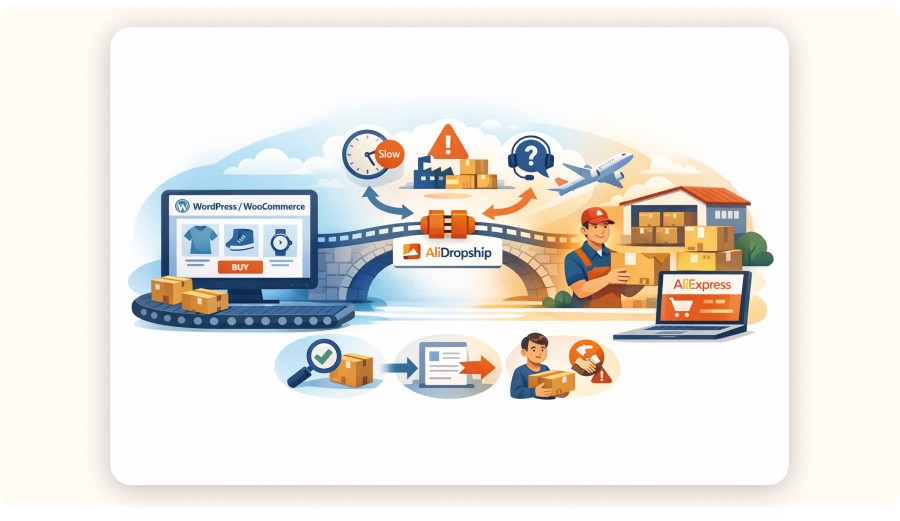
AliDropship is a set of WordPress plugins built to run an AliExpress dropshipping store, usually via WooCommerce. It imports products, syncs basic data like pricing and availability, and helps you process orders through AliExpress.
It does not fix shipping times.
It does not make AliExpress suppliers reliable.
It does not replace a real customer support process.
At its core, AliDropship is a “bridge” between your storefront and AliExpress listings.
A practical way to think about it:
Your ecommerce site runs on WordPress and WooCommerce
You pull products from AliExpress into your catalog
When a customer orders, you use AliDropship’s flow to push that order to AliExpress
What it does well is reduce the time between “I found a product” and “I have a functional store listing.” If you’re already comfortable with WordPress, that matters.
What it does not solve is the hard part of dropshipping:
Product selection still wins or loses the business
Shipping speed still drives refunds and chargebacks
Support still determines whether disputes sink you
If you want to build a long-term ecommerce brand, treat AliDropship as plumbing, not strategy.
Minea
Reach $1,000 per day or get your money back

What Features Does AliDropship Actually Include?
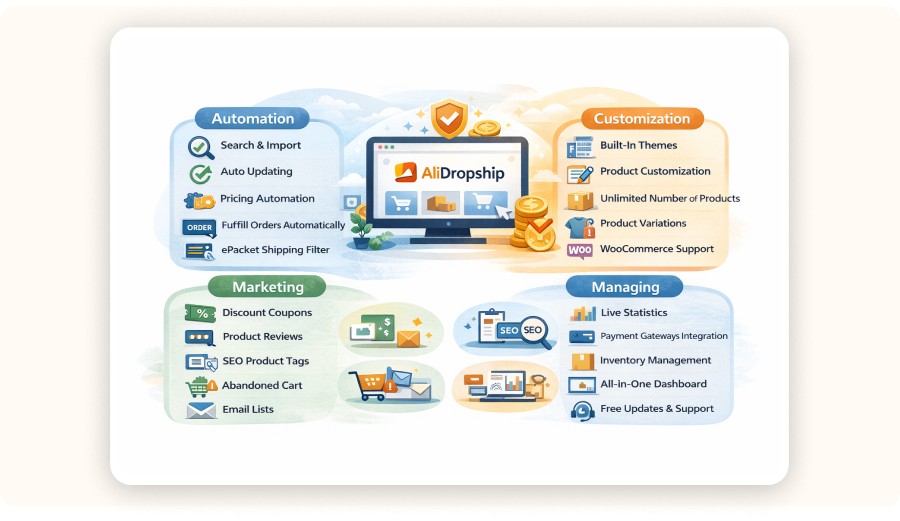
AliDropship isn’t about flashy extras. It’s about cutting manual work between AliExpress and your WordPress store. Here’s the full feature set, listed plainly so you can see what you actually get.
Automation
AliDropship is built to cut repetitive work between AliExpress and your store.
Search & Import: find products with built-in filters and add them to your site.
Auto Updating: keeps product info consistent with current data (price/availability).
Pricing Automation: apply markup rules in bulk (no manual price edits).
Fulfill Orders Automatically: click “Order,” confirm, and move on (less post-sale friction).
ePacket Shipping Filter: helps you spot products with ePacket (still verify real delivery times).
Auto Order Tracking: checks tracking updates and sends email notifications automatically.
Customization
This is where you control the look of the store and clean up product pages.
Built-in Themes: ready themes you can set up, swap, and customize.
Product Customization: edit titles, descriptions, images, prices, and variations (and add your own items).
Unlimited Number of Products: no stated cap on listings (even if “more” isn’t always better).
Product Variations: sizes, colors, materials, and more.
WooCommerce Support: choose the Woo version to use Woo themes/extensions.
Built-In Image Editor: edit images before import and directly inside WordPress.
Marketing
These features help pages convert and help you recover sales you’d otherwise lose.
Discount Coupons: dollars off, percentage off, free shipping, etc.
Product Reviews: import reviews to add quick social proof.
SEO Product Tags: set product-level meta tags, titles, descriptions, and keywords.
Abandoned Cart: captures emails; a free add-on can send follow-ups automatically.
Email Lists: collects emails from buyers + visitors who leave contact details without purchasing.
Managing
This is the “run the store without chaos” layer.
Live Statistics: connect Google Analytics to see visitor and traffic-source data.
Payment Gateways Integration: supports common processors (PayPal, 2CO, Stripe, PayU, etc.).
Inventory Management: track stock counts and stop selling when items run out.
All-in-One Dashboard: monitor sales, orders, traffic, and key store activity in one place.
Cash-Back System: mentions up to 8% commission as a bonus perk.
Free Updates & Support: ongoing updates + after-sales support included.
Pricing Breakdown: What You Actually Pay

AliDropship’s biggest draw is the cost model: you pay once for the license, then you only cover hosting and your usual WordPress expenses. In most cases, that ends up cheaper than paying a monthly ecommerce platform fee year after year.
The downside is simple: you own the maintenance. Updates, speed issues, backups, and the occasional plugin conflict are on you.
You don’t need an over-engineered pricing table because AliDropship costs can shift with promos, add-ons, and bundles. What matters is the basic math and what it looks like over 12 months.
Here’s a typical comparison:
Stack | What you pay | What that means in practice | Cost-per-year reality |
|---|---|---|---|
AliDropship + hosting | About $189 all-in | One-time license plus hosting and basics | Around $189 in year 1, then hosting renewals |
Shopify Basic + DSers | $39 per month for Shopify | Predictable monthly fee, simpler ops | About $351 per year for Shopify alone |
The savings are straightforward. If you compare a year of Shopify Basic at about $351 to an AliDropship + hosting setup at about $189, you’re looking at roughly $123 in yearly savings.
That number is real, but it hides the bigger cost: your time. If you spend 6 extra hours troubleshooting a WordPress plugin conflict, and your time is worth even $25/hour, you just “spent” $150.
For most dropshipping sellers, the decision is less about license fees and more about how much operational complexity you can tolerate.
The Real Setup Workflow for a Dropshipping Store

AliDropship is fastest when you already have:
a clear niche
a shortlist of products
your positioning decided
If you expect the plugin to help you “find a winning product,” you’ll stall. The fastest path is: validate demand first, then build the store, then import products.
Here is a workflow that fits how real dropshippers operate in 2026.
Validate demand before you build anything
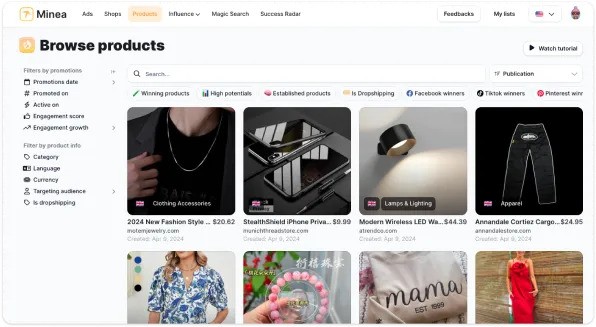
Open Minea and scan active Meta Ads and TikTok Ads for your niche.
Minea tracks 100M+ ads and ties many creatives to Shopify stores with revenue estimates.
You are looking for proof that multiple stores are spending money right now.
This is where ad spy beats guessing. If there are no active creatives, you are building blind.
Pick a product angle that matches what is already converting
The point is not “find a product.” The point is “find a product plus an angle.”
This is where most AliExpress stores fail. They copy the listing and wonder why it doesn’t convert.
Build a lean WordPress store
Install WordPress, WooCommerce, and the AliDropship plugin.
Keep the theme simple and speed-focused.
Configure payments, taxes, and the basic pages that reduce disputes.
Import products with intent
Import fewer products than you think.
Rewrite titles and descriptions to match the angle you saw working.
Use real shipping expectations, not the supplier’s best-case promise.
Launch ads, then fix the store based on real behavior
Put your first budget into testing creatives, not into polishing the site.
Use the store data you get in week one to decide what to expand.
A concrete example from recent Minea trend data: posture corrector belts show a trend score of 92 and LED face masks show a trend score of 88. If you build an AliDropship store around those products, your success still depends on the creative angle and the shipping promise you make, not the plugin.


Product Import and Sync : Where AliDropship Helps
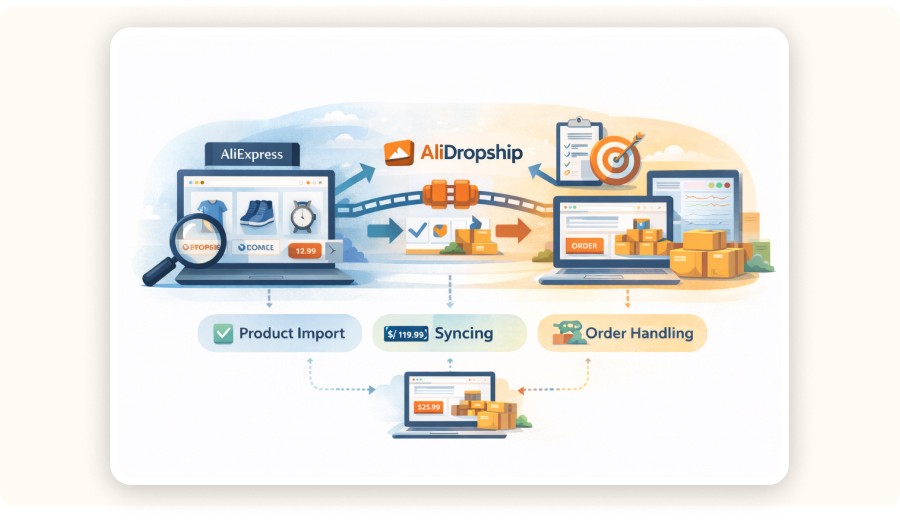
AliDropship’s value is operational speed. It shortens the loop from “found on AliExpress” to “published in your store,” and it supports basic order processing. That makes it useful for dropshippers who test a lot of products and iterate quickly.
The main productivity gains come from the same mechanism.
Product import reduces manual listing creation.
Basic syncing reduces the risk of selling an item that changed price.
Order handling reduces the number of steps between a Shopify-style order and an AliExpress checkout.
This is the good version of AliDropship.
You run a dropshipping store like a testing lab.
You import 10 products, test 3 creative angles, and kill losers fast.
You keep your catalog lean.
AliDropship is less helpful in the “catalog store” model where you import hundreds of products and expect sales to happen. That model is weak in 2026 because ads are expensive and customer expectations are higher.
The Catches: The Problems You’ll Actually Feel

The biggest problems with AliDropship are not “features missing.” They are constraints of the ecosystem: AliExpress-only sourcing, shipping times, supplier volatility, and the operational burden of WordPress. These problems show up as refunds, chargebacks, and support tickets.
Here are the main catches you should plan for.
1) You are stuck with AliExpress as a supplier base
AliDropship is designed around AliExpress. That’s the point and it’s the limitation.
If your plan is to source from multiple supplier networks, AliDropship becomes a partial solution and you start bolting other systems onto it. Complexity snowballs.
2) Shipping time becomes your brand
This is the part most ecommerce sellers underestimate. When shipping is slow, customers don’t just complain. They distrust your store. That pushes up support load and increases dispute risk.
In dropshipping, a tool that makes importing easier does not fix the damage caused by late delivery.
3) WordPress is powerful, and it’s also fragile
If you’ve run WordPress before, you already know the trade. Plugins conflict. Updates break things. Page speed can get ugly fast.
If you are the kind of dropshipper who works with 50 browser tabs open during research sessions, a slow admin panel becomes a daily tax.
4) The learning curve is real
Users consistently describe a learning curve early on, then smoother operations once the initial setup clicks. If you want a system that feels simple from day one, you will prefer a more guided SaaS stack.
If you’re a dropshipper trying to launch a store without paying platform fees forever, AliDropship is tempting: a one-time license that turns WordPress into an AliExpress-powered dropshipping store.
My take after reviewing the pricing model, the workflow, and recurring review themes: AliDropship is the best dropshipping Plugin if you want WordPress control and you’re okay operating inside the AliExpress ecosystem. It’s a bad choice if you need faster shipping, cleaner operations, or the simplest “just works” path.
Quick verdict : Buy AliDropship if you’re committed to WordPress and want a one-time fee setup for an AliExpress-based store. Skip it if you want the lowest-friction ecommerce stack or you plan to diversify suppliers beyond AliExpress.
What AliDropship Actually Does and Doesn’t ?
AliDropship is a set of WordPress plugins built to run an AliExpress dropshipping store, usually via WooCommerce. It imports products, syncs basic data like pricing and availability, and helps you process orders through AliExpress.
It does not fix shipping times.
It does not make AliExpress suppliers reliable.
It does not replace a real customer support process.
At its core, AliDropship is a “bridge” between your storefront and AliExpress listings.
A practical way to think about it:
Your ecommerce site runs on WordPress and WooCommerce
You pull products from AliExpress into your catalog
When a customer orders, you use AliDropship’s flow to push that order to AliExpress
What it does well is reduce the time between “I found a product” and “I have a functional store listing.” If you’re already comfortable with WordPress, that matters.
What it does not solve is the hard part of dropshipping:
Product selection still wins or loses the business
Shipping speed still drives refunds and chargebacks
Support still determines whether disputes sink you
If you want to build a long-term ecommerce brand, treat AliDropship as plumbing, not strategy.
Minea
Reach $1,000 per day or get your money back
What Features Does AliDropship Actually Include?
AliDropship isn’t about flashy extras. It’s about cutting manual work between AliExpress and your WordPress store. Here’s the full feature set, listed plainly so you can see what you actually get.
Automation
AliDropship is built to cut repetitive work between AliExpress and your store.
Search & Import: find products with built-in filters and add them to your site.
Auto Updating: keeps product info consistent with current data (price/availability).
Pricing Automation: apply markup rules in bulk (no manual price edits).
Fulfill Orders Automatically: click “Order,” confirm, and move on (less post-sale friction).
ePacket Shipping Filter: helps you spot products with ePacket (still verify real delivery times).
Auto Order Tracking: checks tracking updates and sends email notifications automatically.
Customization
This is where you control the look of the store and clean up product pages.
Built-in Themes: ready themes you can set up, swap, and customize.
Product Customization: edit titles, descriptions, images, prices, and variations (and add your own items).
Unlimited Number of Products: no stated cap on listings (even if “more” isn’t always better).
Product Variations: sizes, colors, materials, and more.
WooCommerce Support: choose the Woo version to use Woo themes/extensions.
Built-In Image Editor: edit images before import and directly inside WordPress.
Marketing
These features help pages convert and help you recover sales you’d otherwise lose.
Discount Coupons: dollars off, percentage off, free shipping, etc.
Product Reviews: import reviews to add quick social proof.
SEO Product Tags: set product-level meta tags, titles, descriptions, and keywords.
Abandoned Cart: captures emails; a free add-on can send follow-ups automatically.
Email Lists: collects emails from buyers + visitors who leave contact details without purchasing.
Managing
This is the “run the store without chaos” layer.
Live Statistics: connect Google Analytics to see visitor and traffic-source data.
Payment Gateways Integration: supports common processors (PayPal, 2CO, Stripe, PayU, etc.).
Inventory Management: track stock counts and stop selling when items run out.
All-in-One Dashboard: monitor sales, orders, traffic, and key store activity in one place.
Cash-Back System: mentions up to 8% commission as a bonus perk.
Free Updates & Support: ongoing updates + after-sales support included.
Pricing Breakdown: What You Actually Pay
AliDropship’s biggest draw is the cost model: you pay once for the license, then you only cover hosting and your usual WordPress expenses. In most cases, that ends up cheaper than paying a monthly ecommerce platform fee year after year.
The downside is simple: you own the maintenance. Updates, speed issues, backups, and the occasional plugin conflict are on you.
You don’t need an over-engineered pricing table because AliDropship costs can shift with promos, add-ons, and bundles. What matters is the basic math and what it looks like over 12 months.
Here’s a typical comparison:
Stack | What you pay | What that means in practice | Cost-per-year reality |
|---|---|---|---|
AliDropship + hosting | About $189 all-in | One-time license plus hosting and basics | Around $189 in year 1, then hosting renewals |
Shopify Basic + DSers | $39 per month for Shopify | Predictable monthly fee, simpler ops | About $351 per year for Shopify alone |
The savings are straightforward. If you compare a year of Shopify Basic at about $351 to an AliDropship + hosting setup at about $189, you’re looking at roughly $123 in yearly savings.
That number is real, but it hides the bigger cost: your time. If you spend 6 extra hours troubleshooting a WordPress plugin conflict, and your time is worth even $25/hour, you just “spent” $150.
For most dropshipping sellers, the decision is less about license fees and more about how much operational complexity you can tolerate.
The Real Setup Workflow for a Dropshipping Store
AliDropship is fastest when you already have:
a clear niche
a shortlist of products
your positioning decided
If you expect the plugin to help you “find a winning product,” you’ll stall. The fastest path is: validate demand first, then build the store, then import products.
Here is a workflow that fits how real dropshippers operate in 2026.
Validate demand before you build anything
Open Minea and scan active Meta Ads and TikTok Ads for your niche.
Minea tracks 100M+ ads and ties many creatives to Shopify stores with revenue estimates.
You are looking for proof that multiple stores are spending money right now.
This is where ad spy beats guessing. If there are no active creatives, you are building blind.
Pick a product angle that matches what is already converting
The point is not “find a product.” The point is “find a product plus an angle.”
This is where most AliExpress stores fail. They copy the listing and wonder why it doesn’t convert.
Build a lean WordPress store
Install WordPress, WooCommerce, and the AliDropship plugin.
Keep the theme simple and speed-focused.
Configure payments, taxes, and the basic pages that reduce disputes.
Import products with intent
Import fewer products than you think.
Rewrite titles and descriptions to match the angle you saw working.
Use real shipping expectations, not the supplier’s best-case promise.
Launch ads, then fix the store based on real behavior
Put your first budget into testing creatives, not into polishing the site.
Use the store data you get in week one to decide what to expand.
A concrete example from recent Minea trend data: posture corrector belts show a trend score of 92 and LED face masks show a trend score of 88. If you build an AliDropship store around those products, your success still depends on the creative angle and the shipping promise you make, not the plugin.
Product Import and Sync : Where AliDropship Helps
AliDropship’s value is operational speed. It shortens the loop from “found on AliExpress” to “published in your store,” and it supports basic order processing. That makes it useful for dropshippers who test a lot of products and iterate quickly.
The main productivity gains come from the same mechanism.
Product import reduces manual listing creation.
Basic syncing reduces the risk of selling an item that changed price.
Order handling reduces the number of steps between a Shopify-style order and an AliExpress checkout.
This is the good version of AliDropship.
You run a dropshipping store like a testing lab.
You import 10 products, test 3 creative angles, and kill losers fast.
You keep your catalog lean.
AliDropship is less helpful in the “catalog store” model where you import hundreds of products and expect sales to happen. That model is weak in 2026 because ads are expensive and customer expectations are higher.
The Catches: The Problems You’ll Actually Feel
The biggest problems with AliDropship are not “features missing.” They are constraints of the ecosystem: AliExpress-only sourcing, shipping times, supplier volatility, and the operational burden of WordPress. These problems show up as refunds, chargebacks, and support tickets.
Here are the main catches you should plan for.
1) You are stuck with AliExpress as a supplier base
AliDropship is designed around AliExpress. That’s the point and it’s the limitation.
If your plan is to source from multiple supplier networks, AliDropship becomes a partial solution and you start bolting other systems onto it. Complexity snowballs.
2) Shipping time becomes your brand
This is the part most ecommerce sellers underestimate. When shipping is slow, customers don’t just complain. They distrust your store. That pushes up support load and increases dispute risk.
In dropshipping, a tool that makes importing easier does not fix the damage caused by late delivery.
3) WordPress is powerful, and it’s also fragile
If you’ve run WordPress before, you already know the trade. Plugins conflict. Updates break things. Page speed can get ugly fast.
If you are the kind of dropshipper who works with 50 browser tabs open during research sessions, a slow admin panel becomes a daily tax.
4) The learning curve is real
Users consistently describe a learning curve early on, then smoother operations once the initial setup clicks. If you want a system that feels simple from day one, you will prefer a more guided SaaS stack.
If you’re a dropshipper trying to launch a store without paying platform fees forever, AliDropship is tempting: a one-time license that turns WordPress into an AliExpress-powered dropshipping store.
My take after reviewing the pricing model, the workflow, and recurring review themes: AliDropship is the best dropshipping Plugin if you want WordPress control and you’re okay operating inside the AliExpress ecosystem. It’s a bad choice if you need faster shipping, cleaner operations, or the simplest “just works” path.
Quick verdict : Buy AliDropship if you’re committed to WordPress and want a one-time fee setup for an AliExpress-based store. Skip it if you want the lowest-friction ecommerce stack or you plan to diversify suppliers beyond AliExpress.
What AliDropship Actually Does and Doesn’t ?
AliDropship is a set of WordPress plugins built to run an AliExpress dropshipping store, usually via WooCommerce. It imports products, syncs basic data like pricing and availability, and helps you process orders through AliExpress.
It does not fix shipping times.
It does not make AliExpress suppliers reliable.
It does not replace a real customer support process.
At its core, AliDropship is a “bridge” between your storefront and AliExpress listings.
A practical way to think about it:
Your ecommerce site runs on WordPress and WooCommerce
You pull products from AliExpress into your catalog
When a customer orders, you use AliDropship’s flow to push that order to AliExpress
What it does well is reduce the time between “I found a product” and “I have a functional store listing.” If you’re already comfortable with WordPress, that matters.
What it does not solve is the hard part of dropshipping:
Product selection still wins or loses the business
Shipping speed still drives refunds and chargebacks
Support still determines whether disputes sink you
If you want to build a long-term ecommerce brand, treat AliDropship as plumbing, not strategy.
Minea
Reach $1,000 per day or get your money back
What Features Does AliDropship Actually Include?
AliDropship isn’t about flashy extras. It’s about cutting manual work between AliExpress and your WordPress store. Here’s the full feature set, listed plainly so you can see what you actually get.
Automation
AliDropship is built to cut repetitive work between AliExpress and your store.
Search & Import: find products with built-in filters and add them to your site.
Auto Updating: keeps product info consistent with current data (price/availability).
Pricing Automation: apply markup rules in bulk (no manual price edits).
Fulfill Orders Automatically: click “Order,” confirm, and move on (less post-sale friction).
ePacket Shipping Filter: helps you spot products with ePacket (still verify real delivery times).
Auto Order Tracking: checks tracking updates and sends email notifications automatically.
Customization
This is where you control the look of the store and clean up product pages.
Built-in Themes: ready themes you can set up, swap, and customize.
Product Customization: edit titles, descriptions, images, prices, and variations (and add your own items).
Unlimited Number of Products: no stated cap on listings (even if “more” isn’t always better).
Product Variations: sizes, colors, materials, and more.
WooCommerce Support: choose the Woo version to use Woo themes/extensions.
Built-In Image Editor: edit images before import and directly inside WordPress.
Marketing
These features help pages convert and help you recover sales you’d otherwise lose.
Discount Coupons: dollars off, percentage off, free shipping, etc.
Product Reviews: import reviews to add quick social proof.
SEO Product Tags: set product-level meta tags, titles, descriptions, and keywords.
Abandoned Cart: captures emails; a free add-on can send follow-ups automatically.
Email Lists: collects emails from buyers + visitors who leave contact details without purchasing.
Managing
This is the “run the store without chaos” layer.
Live Statistics: connect Google Analytics to see visitor and traffic-source data.
Payment Gateways Integration: supports common processors (PayPal, 2CO, Stripe, PayU, etc.).
Inventory Management: track stock counts and stop selling when items run out.
All-in-One Dashboard: monitor sales, orders, traffic, and key store activity in one place.
Cash-Back System: mentions up to 8% commission as a bonus perk.
Free Updates & Support: ongoing updates + after-sales support included.
Pricing Breakdown: What You Actually Pay
AliDropship’s biggest draw is the cost model: you pay once for the license, then you only cover hosting and your usual WordPress expenses. In most cases, that ends up cheaper than paying a monthly ecommerce platform fee year after year.
The downside is simple: you own the maintenance. Updates, speed issues, backups, and the occasional plugin conflict are on you.
You don’t need an over-engineered pricing table because AliDropship costs can shift with promos, add-ons, and bundles. What matters is the basic math and what it looks like over 12 months.
Here’s a typical comparison:
Stack | What you pay | What that means in practice | Cost-per-year reality |
|---|---|---|---|
AliDropship + hosting | About $189 all-in | One-time license plus hosting and basics | Around $189 in year 1, then hosting renewals |
Shopify Basic + DSers | $39 per month for Shopify | Predictable monthly fee, simpler ops | About $351 per year for Shopify alone |
The savings are straightforward. If you compare a year of Shopify Basic at about $351 to an AliDropship + hosting setup at about $189, you’re looking at roughly $123 in yearly savings.
That number is real, but it hides the bigger cost: your time. If you spend 6 extra hours troubleshooting a WordPress plugin conflict, and your time is worth even $25/hour, you just “spent” $150.
For most dropshipping sellers, the decision is less about license fees and more about how much operational complexity you can tolerate.
The Real Setup Workflow for a Dropshipping Store
AliDropship is fastest when you already have:
a clear niche
a shortlist of products
your positioning decided
If you expect the plugin to help you “find a winning product,” you’ll stall. The fastest path is: validate demand first, then build the store, then import products.
Here is a workflow that fits how real dropshippers operate in 2026.
Validate demand before you build anything
Open Minea and scan active Meta Ads and TikTok Ads for your niche.
Minea tracks 100M+ ads and ties many creatives to Shopify stores with revenue estimates.
You are looking for proof that multiple stores are spending money right now.
This is where ad spy beats guessing. If there are no active creatives, you are building blind.
Pick a product angle that matches what is already converting
The point is not “find a product.” The point is “find a product plus an angle.”
This is where most AliExpress stores fail. They copy the listing and wonder why it doesn’t convert.
Build a lean WordPress store
Install WordPress, WooCommerce, and the AliDropship plugin.
Keep the theme simple and speed-focused.
Configure payments, taxes, and the basic pages that reduce disputes.
Import products with intent
Import fewer products than you think.
Rewrite titles and descriptions to match the angle you saw working.
Use real shipping expectations, not the supplier’s best-case promise.
Launch ads, then fix the store based on real behavior
Put your first budget into testing creatives, not into polishing the site.
Use the store data you get in week one to decide what to expand.
A concrete example from recent Minea trend data: posture corrector belts show a trend score of 92 and LED face masks show a trend score of 88. If you build an AliDropship store around those products, your success still depends on the creative angle and the shipping promise you make, not the plugin.
Product Import and Sync : Where AliDropship Helps
AliDropship’s value is operational speed. It shortens the loop from “found on AliExpress” to “published in your store,” and it supports basic order processing. That makes it useful for dropshippers who test a lot of products and iterate quickly.
The main productivity gains come from the same mechanism.
Product import reduces manual listing creation.
Basic syncing reduces the risk of selling an item that changed price.
Order handling reduces the number of steps between a Shopify-style order and an AliExpress checkout.
This is the good version of AliDropship.
You run a dropshipping store like a testing lab.
You import 10 products, test 3 creative angles, and kill losers fast.
You keep your catalog lean.
AliDropship is less helpful in the “catalog store” model where you import hundreds of products and expect sales to happen. That model is weak in 2026 because ads are expensive and customer expectations are higher.
The Catches: The Problems You’ll Actually Feel
The biggest problems with AliDropship are not “features missing.” They are constraints of the ecosystem: AliExpress-only sourcing, shipping times, supplier volatility, and the operational burden of WordPress. These problems show up as refunds, chargebacks, and support tickets.
Here are the main catches you should plan for.
1) You are stuck with AliExpress as a supplier base
AliDropship is designed around AliExpress. That’s the point and it’s the limitation.
If your plan is to source from multiple supplier networks, AliDropship becomes a partial solution and you start bolting other systems onto it. Complexity snowballs.
2) Shipping time becomes your brand
This is the part most ecommerce sellers underestimate. When shipping is slow, customers don’t just complain. They distrust your store. That pushes up support load and increases dispute risk.
In dropshipping, a tool that makes importing easier does not fix the damage caused by late delivery.
3) WordPress is powerful, and it’s also fragile
If you’ve run WordPress before, you already know the trade. Plugins conflict. Updates break things. Page speed can get ugly fast.
If you are the kind of dropshipper who works with 50 browser tabs open during research sessions, a slow admin panel becomes a daily tax.
4) The learning curve is real
Users consistently describe a learning curve early on, then smoother operations once the initial setup clicks. If you want a system that feels simple from day one, you will prefer a more guided SaaS stack.
What Real Users Say Across Review Sites

Across review platforms, the common pattern is consistent: people like the one-time fee and the WordPress freedom, and they also report occasional malfunctions and an initial learning curve. Satisfaction rises when support is responsive and when sellers keep their store lean.
Recent user feedback points to the same themes:
Reviews highlight the one-time fee structure and the AliExpress integration as positives.
Multiple reviews mention strong support responsiveness.
A recurring negative is occasional software glitches.
The right way to use this feedback is not to hunt for a perfect tool. It is to plan around predictable friction.
If you build a dropshipping store with AliDropship, assume you will spend time on:
setup details that Shopify abstracts away,
small maintenance tasks that never show up in pricing comparisons,
support and customer expectation management when shipping is slow.
AliDropship vs Shopify for Dropshipping
Shopify is usually the lowest-friction option for a new dropshipping seller because the hosting, security, and performance basics are handled for you. AliDropship can be cheaper on paper because it avoids monthly platform fees, but you pay with maintenance time and supplier constraints.
Use this comparison as a decision filter.
Decision factor | AliDropship | Shopify |
|---|---|---|
Cost structure | One-time license plus hosting | Monthly subscription |
Setup difficulty | Higher, especially if new to WordPress | Lower, guided workflows |
Supplier flexibility | Primarily AliExpress | Depends on apps and suppliers |
Store maintenance | You handle updates and conflicts | Shopify handles core maintenance |
Best fit | Sellers who want WordPress control | Sellers who want speed and simplicity |
There is also a strategic difference.
Shopify is the default ecommerce operating system for a reason. For a lot of dropshippers, the biggest cost is not $39 per month. It is the weeks lost to tooling friction.
If you are cost-sensitive and comfortable with WordPress, AliDropship can be a smart play. If you want a stack you can delegate easily, Shopify wins.


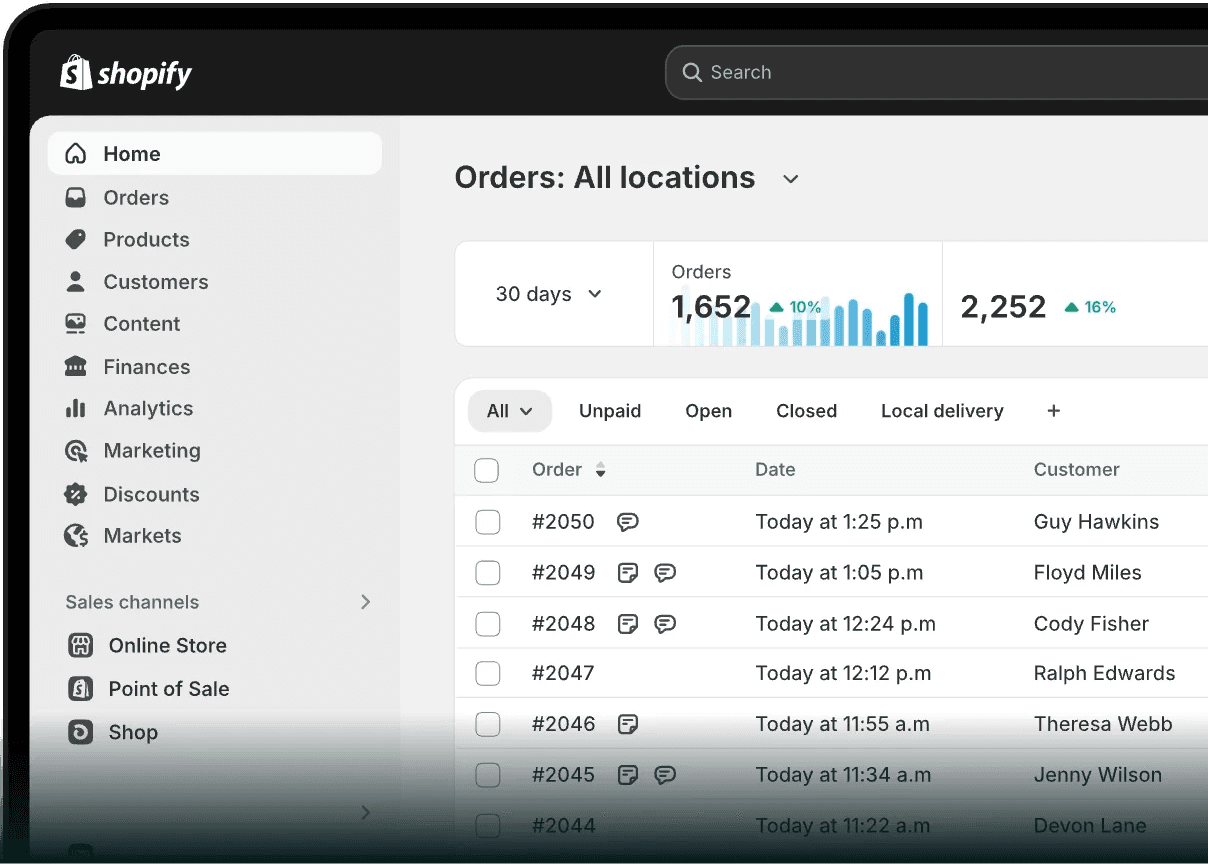
Create and test your Shopify store for only $1 per day during 90 days
Who Should Use AliDropship and Who Should Skip It

AliDropship works best for a certain kind of seller: people who want to own their WordPress setup, don’t mind doing maintenance, and are fine running an AliExpress-based store. It’s a tough match if you need fast shipping, want supplier options beyond AliExpress, or you’re trying to keep support workload as low as possible.
Buy AliDropship if :
You already run WordPress sites and want a dropshipping stack you control.
You’re fine sourcing mainly from AliExpress.
You’re disciplined about testing a small set of products instead of importing a huge catalog.
Skip AliDropship if :
You need non-AliExpress supplier options quickly.
You want the simplest setup so you can focus on ads and creatives.
You’re scaling where customer experience is your main advantage.
Here’s the blunt filter that saves people money : if your average order value is around $30, slow shipping and refunds will wipe out your margin faster than any platform fee ever will. In that case, pick speed and reliability over “license math.”
Alternatives to AliDropship
If AliDropship feels too limiting, don’t switch blindly—pick an alternative that solves your actual bottleneck (setup friction vs. AliExpress automation).
Ali2Woo (AliNext) : WooCommerce AliExpress Plugin
If you want the same job (AliExpress → WooCommerce) without AliDropship, Ali2Woo/AliNext is the cleanest like-for-like alternative. It focuses on:
importing AliExpress products and reviews
setting pricing rules
automating order fulfillment inside WooCommerce.
ALD : Dropshipping & Fulfillment for AliExpress (WooCommerce)
ALD is another WordPress/WooCommerce plugin built specifically for AliExpress dropshipping. The core promise is simple : import AliExpress products into WooCommerce and handle fulfillment from there. If you want a plugin-first option that stays inside WordPress, it fits the same “bridge” role as AliDropship.
WooDropship : WooCommerce Plugin + AliExpress Fulfillment Helper
WooDropship is also in the “AliExpress to WooCommerce” category. It’s built around importing products and making fulfillment less annoying (including a workflow that helps you fulfill orders on AliExpress without constant back-and-forth). Good if you’re staying on WordPress and care about the practical fulfillment steps.
AutoDS : All-in-One AliExpress Dropshipping Automation
If you don’t want a WordPress plugin at all and you want a single dashboard to automate the repetitive parts (imports, price/stock updates, order fulfillment), AutoDS is the closest “all-in-one” replacement built for automation. It’s not a WooCommerce plugin clone. It’s a platform approach, but the goal is the same : less manual work between your store and AliExpress suppliers.
Final Verdict : Is AliDropship Legit in 2026?

AliDropship is legit software that does its job : it helps you run an AliExpress-based dropshipping store on WordPress.
The value is the one-time license and control. The downside is you inherit the weakest parts of the model : AliExpress shipping and WordPress maintenance.
If you only care about getting to “store live” with the least complexity, Shopify is usually the better default.
If you care about owning your platform and keeping recurring costs lower, AliDropship can make sense.
The strategy I see work most often is simple.
Use Minea to validate demand and find angles before you touch your store build.
Use AliDropship to execute fast once you know what you want to sell.
Use your first 2 weeks of ad data to decide whether to double down or move on.
If you do it in that order, AliDropship becomes a useful execution tool instead of a distraction.
AliDropship : Quick recap
Key point | AliDropship recap |
|---|---|
What it is | WordPress plugins (often with WooCommerce) to run an AliExpress dropshipping store |
Best for | Sellers comfortable with WordPress who want control + lower recurring costs |
Not ideal if | You need fast shipping, non-AliExpress suppliers, or a “just works” setup |
Main strength | Execution speed: import → publish → handle orders faster |
Real limitations | AliExpress dependency, slow shipping, supplier volatility, WordPress maintenance |
Core features | Import + basic sync, pricing automation, order flow, tracking, themes, SEO tags, coupons, abandoned cart, dashboard |
Pricing logic | One-time license + hosting (your example: ~$189 year 1) vs Shopify Basic (~$351/year) |
Hidden cost | Your time (updates, plugin conflicts, performance issues) |
Closest alternatives | Ali2Woo / ALD / WooDropship (WP AliExpress plugins); AutoDS (automation platform) |
FAQ AliDropship Reviews
Can you make money on AliDropship?
Yes, but the tool is not the profit lever. Profit comes from product selection, creative angles, and customer experience. AliDropship can help you launch and iterate faster, which improves your odds if you test aggressively and keep your store lean.
What are the cons of using AliDropship?
The biggest cons are AliExpress dependency, shipping time risk, and the operational burden of WordPress maintenance. Sellers also report an early learning curve and occasional software issues that require support.
Is AliDropship any good for beginners?
It can work for beginners who already know WordPress, but it is not the easiest first ecommerce stack. If you want a guided setup and fewer maintenance tasks, a hosted platform is usually a better start.
Which is better, AliDropship vs Shopify?
Shopify is usually better for simplicity, speed, and fewer technical issues. AliDropship is better if you want WordPress control and you value a one-time license model over ongoing subscription fees.
Is AliDropship a legitimate business?
AliDropship is widely used in the dropshipping ecosystem and is commonly discussed across third-party review platforms. You should still validate any tool purchase the same way you validate a supplier: test support responsiveness and run a small pilot store before you commit to scaling.
How much does AliDropship cost?
AliDropship is typically sold as a one-time license, with optional add-ons available. Your total cost also includes hosting, a WordPress setup, and any premium plugins or themes you choose to use.
What Real Users Say Across Review Sites
Across review platforms, the common pattern is consistent: people like the one-time fee and the WordPress freedom, and they also report occasional malfunctions and an initial learning curve. Satisfaction rises when support is responsive and when sellers keep their store lean.
Recent user feedback points to the same themes:
Reviews highlight the one-time fee structure and the AliExpress integration as positives.
Multiple reviews mention strong support responsiveness.
A recurring negative is occasional software glitches.
The right way to use this feedback is not to hunt for a perfect tool. It is to plan around predictable friction.
If you build a dropshipping store with AliDropship, assume you will spend time on:
setup details that Shopify abstracts away,
small maintenance tasks that never show up in pricing comparisons,
support and customer expectation management when shipping is slow.
AliDropship vs Shopify for Dropshipping
Shopify is usually the lowest-friction option for a new dropshipping seller because the hosting, security, and performance basics are handled for you. AliDropship can be cheaper on paper because it avoids monthly platform fees, but you pay with maintenance time and supplier constraints.
Use this comparison as a decision filter.
Decision factor | AliDropship | Shopify |
|---|---|---|
Cost structure | One-time license plus hosting | Monthly subscription |
Setup difficulty | Higher, especially if new to WordPress | Lower, guided workflows |
Supplier flexibility | Primarily AliExpress | Depends on apps and suppliers |
Store maintenance | You handle updates and conflicts | Shopify handles core maintenance |
Best fit | Sellers who want WordPress control | Sellers who want speed and simplicity |
There is also a strategic difference.
Shopify is the default ecommerce operating system for a reason. For a lot of dropshippers, the biggest cost is not $39 per month. It is the weeks lost to tooling friction.
If you are cost-sensitive and comfortable with WordPress, AliDropship can be a smart play. If you want a stack you can delegate easily, Shopify wins.
Create and test your Shopify store for only $1 per day during 90 days
Who Should Use AliDropship and Who Should Skip It
AliDropship works best for a certain kind of seller: people who want to own their WordPress setup, don’t mind doing maintenance, and are fine running an AliExpress-based store. It’s a tough match if you need fast shipping, want supplier options beyond AliExpress, or you’re trying to keep support workload as low as possible.
Buy AliDropship if :
You already run WordPress sites and want a dropshipping stack you control.
You’re fine sourcing mainly from AliExpress.
You’re disciplined about testing a small set of products instead of importing a huge catalog.
Skip AliDropship if :
You need non-AliExpress supplier options quickly.
You want the simplest setup so you can focus on ads and creatives.
You’re scaling where customer experience is your main advantage.
Here’s the blunt filter that saves people money : if your average order value is around $30, slow shipping and refunds will wipe out your margin faster than any platform fee ever will. In that case, pick speed and reliability over “license math.”
Alternatives to AliDropship
If AliDropship feels too limiting, don’t switch blindly—pick an alternative that solves your actual bottleneck (setup friction vs. AliExpress automation).
Ali2Woo (AliNext) : WooCommerce AliExpress Plugin
If you want the same job (AliExpress → WooCommerce) without AliDropship, Ali2Woo/AliNext is the cleanest like-for-like alternative. It focuses on:
importing AliExpress products and reviews
setting pricing rules
automating order fulfillment inside WooCommerce.
ALD : Dropshipping & Fulfillment for AliExpress (WooCommerce)
ALD is another WordPress/WooCommerce plugin built specifically for AliExpress dropshipping. The core promise is simple : import AliExpress products into WooCommerce and handle fulfillment from there. If you want a plugin-first option that stays inside WordPress, it fits the same “bridge” role as AliDropship.
WooDropship : WooCommerce Plugin + AliExpress Fulfillment Helper
WooDropship is also in the “AliExpress to WooCommerce” category. It’s built around importing products and making fulfillment less annoying (including a workflow that helps you fulfill orders on AliExpress without constant back-and-forth). Good if you’re staying on WordPress and care about the practical fulfillment steps.
AutoDS : All-in-One AliExpress Dropshipping Automation
If you don’t want a WordPress plugin at all and you want a single dashboard to automate the repetitive parts (imports, price/stock updates, order fulfillment), AutoDS is the closest “all-in-one” replacement built for automation. It’s not a WooCommerce plugin clone. It’s a platform approach, but the goal is the same : less manual work between your store and AliExpress suppliers.
Final Verdict : Is AliDropship Legit in 2026?
AliDropship is legit software that does its job : it helps you run an AliExpress-based dropshipping store on WordPress.
The value is the one-time license and control. The downside is you inherit the weakest parts of the model : AliExpress shipping and WordPress maintenance.
If you only care about getting to “store live” with the least complexity, Shopify is usually the better default.
If you care about owning your platform and keeping recurring costs lower, AliDropship can make sense.
The strategy I see work most often is simple.
Use Minea to validate demand and find angles before you touch your store build.
Use AliDropship to execute fast once you know what you want to sell.
Use your first 2 weeks of ad data to decide whether to double down or move on.
If you do it in that order, AliDropship becomes a useful execution tool instead of a distraction.
AliDropship : Quick recap
Key point | AliDropship recap |
|---|---|
What it is | WordPress plugins (often with WooCommerce) to run an AliExpress dropshipping store |
Best for | Sellers comfortable with WordPress who want control + lower recurring costs |
Not ideal if | You need fast shipping, non-AliExpress suppliers, or a “just works” setup |
Main strength | Execution speed: import → publish → handle orders faster |
Real limitations | AliExpress dependency, slow shipping, supplier volatility, WordPress maintenance |
Core features | Import + basic sync, pricing automation, order flow, tracking, themes, SEO tags, coupons, abandoned cart, dashboard |
Pricing logic | One-time license + hosting (your example: ~$189 year 1) vs Shopify Basic (~$351/year) |
Hidden cost | Your time (updates, plugin conflicts, performance issues) |
Closest alternatives | Ali2Woo / ALD / WooDropship (WP AliExpress plugins); AutoDS (automation platform) |
FAQ AliDropship Reviews
Can you make money on AliDropship?
Yes, but the tool is not the profit lever. Profit comes from product selection, creative angles, and customer experience. AliDropship can help you launch and iterate faster, which improves your odds if you test aggressively and keep your store lean.
What are the cons of using AliDropship?
The biggest cons are AliExpress dependency, shipping time risk, and the operational burden of WordPress maintenance. Sellers also report an early learning curve and occasional software issues that require support.
Is AliDropship any good for beginners?
It can work for beginners who already know WordPress, but it is not the easiest first ecommerce stack. If you want a guided setup and fewer maintenance tasks, a hosted platform is usually a better start.
Which is better, AliDropship vs Shopify?
Shopify is usually better for simplicity, speed, and fewer technical issues. AliDropship is better if you want WordPress control and you value a one-time license model over ongoing subscription fees.
Is AliDropship a legitimate business?
AliDropship is widely used in the dropshipping ecosystem and is commonly discussed across third-party review platforms. You should still validate any tool purchase the same way you validate a supplier: test support responsiveness and run a small pilot store before you commit to scaling.
How much does AliDropship cost?
AliDropship is typically sold as a one-time license, with optional add-ons available. Your total cost also includes hosting, a WordPress setup, and any premium plugins or themes you choose to use.
What Real Users Say Across Review Sites
Across review platforms, the common pattern is consistent: people like the one-time fee and the WordPress freedom, and they also report occasional malfunctions and an initial learning curve. Satisfaction rises when support is responsive and when sellers keep their store lean.
Recent user feedback points to the same themes:
Reviews highlight the one-time fee structure and the AliExpress integration as positives.
Multiple reviews mention strong support responsiveness.
A recurring negative is occasional software glitches.
The right way to use this feedback is not to hunt for a perfect tool. It is to plan around predictable friction.
If you build a dropshipping store with AliDropship, assume you will spend time on:
setup details that Shopify abstracts away,
small maintenance tasks that never show up in pricing comparisons,
support and customer expectation management when shipping is slow.
AliDropship vs Shopify for Dropshipping
Shopify is usually the lowest-friction option for a new dropshipping seller because the hosting, security, and performance basics are handled for you. AliDropship can be cheaper on paper because it avoids monthly platform fees, but you pay with maintenance time and supplier constraints.
Use this comparison as a decision filter.
Decision factor | AliDropship | Shopify |
|---|---|---|
Cost structure | One-time license plus hosting | Monthly subscription |
Setup difficulty | Higher, especially if new to WordPress | Lower, guided workflows |
Supplier flexibility | Primarily AliExpress | Depends on apps and suppliers |
Store maintenance | You handle updates and conflicts | Shopify handles core maintenance |
Best fit | Sellers who want WordPress control | Sellers who want speed and simplicity |
There is also a strategic difference.
Shopify is the default ecommerce operating system for a reason. For a lot of dropshippers, the biggest cost is not $39 per month. It is the weeks lost to tooling friction.
If you are cost-sensitive and comfortable with WordPress, AliDropship can be a smart play. If you want a stack you can delegate easily, Shopify wins.
Create and test your Shopify store for only $1 per day during 90 days
Who Should Use AliDropship and Who Should Skip It
AliDropship works best for a certain kind of seller: people who want to own their WordPress setup, don’t mind doing maintenance, and are fine running an AliExpress-based store. It’s a tough match if you need fast shipping, want supplier options beyond AliExpress, or you’re trying to keep support workload as low as possible.
Buy AliDropship if :
You already run WordPress sites and want a dropshipping stack you control.
You’re fine sourcing mainly from AliExpress.
You’re disciplined about testing a small set of products instead of importing a huge catalog.
Skip AliDropship if :
You need non-AliExpress supplier options quickly.
You want the simplest setup so you can focus on ads and creatives.
You’re scaling where customer experience is your main advantage.
Here’s the blunt filter that saves people money : if your average order value is around $30, slow shipping and refunds will wipe out your margin faster than any platform fee ever will. In that case, pick speed and reliability over “license math.”
Alternatives to AliDropship
If AliDropship feels too limiting, don’t switch blindly—pick an alternative that solves your actual bottleneck (setup friction vs. AliExpress automation).
Ali2Woo (AliNext) : WooCommerce AliExpress Plugin
If you want the same job (AliExpress → WooCommerce) without AliDropship, Ali2Woo/AliNext is the cleanest like-for-like alternative. It focuses on:
importing AliExpress products and reviews
setting pricing rules
automating order fulfillment inside WooCommerce.
ALD : Dropshipping & Fulfillment for AliExpress (WooCommerce)
ALD is another WordPress/WooCommerce plugin built specifically for AliExpress dropshipping. The core promise is simple : import AliExpress products into WooCommerce and handle fulfillment from there. If you want a plugin-first option that stays inside WordPress, it fits the same “bridge” role as AliDropship.
WooDropship : WooCommerce Plugin + AliExpress Fulfillment Helper
WooDropship is also in the “AliExpress to WooCommerce” category. It’s built around importing products and making fulfillment less annoying (including a workflow that helps you fulfill orders on AliExpress without constant back-and-forth). Good if you’re staying on WordPress and care about the practical fulfillment steps.
AutoDS : All-in-One AliExpress Dropshipping Automation
If you don’t want a WordPress plugin at all and you want a single dashboard to automate the repetitive parts (imports, price/stock updates, order fulfillment), AutoDS is the closest “all-in-one” replacement built for automation. It’s not a WooCommerce plugin clone. It’s a platform approach, but the goal is the same : less manual work between your store and AliExpress suppliers.
Final Verdict : Is AliDropship Legit in 2026?
AliDropship is legit software that does its job : it helps you run an AliExpress-based dropshipping store on WordPress.
The value is the one-time license and control. The downside is you inherit the weakest parts of the model : AliExpress shipping and WordPress maintenance.
If you only care about getting to “store live” with the least complexity, Shopify is usually the better default.
If you care about owning your platform and keeping recurring costs lower, AliDropship can make sense.
The strategy I see work most often is simple.
Use Minea to validate demand and find angles before you touch your store build.
Use AliDropship to execute fast once you know what you want to sell.
Use your first 2 weeks of ad data to decide whether to double down or move on.
If you do it in that order, AliDropship becomes a useful execution tool instead of a distraction.
AliDropship : Quick recap
Key point | AliDropship recap |
|---|---|
What it is | WordPress plugins (often with WooCommerce) to run an AliExpress dropshipping store |
Best for | Sellers comfortable with WordPress who want control + lower recurring costs |
Not ideal if | You need fast shipping, non-AliExpress suppliers, or a “just works” setup |
Main strength | Execution speed: import → publish → handle orders faster |
Real limitations | AliExpress dependency, slow shipping, supplier volatility, WordPress maintenance |
Core features | Import + basic sync, pricing automation, order flow, tracking, themes, SEO tags, coupons, abandoned cart, dashboard |
Pricing logic | One-time license + hosting (your example: ~$189 year 1) vs Shopify Basic (~$351/year) |
Hidden cost | Your time (updates, plugin conflicts, performance issues) |
Closest alternatives | Ali2Woo / ALD / WooDropship (WP AliExpress plugins); AutoDS (automation platform) |
FAQ AliDropship Reviews
Can you make money on AliDropship?
Yes, but the tool is not the profit lever. Profit comes from product selection, creative angles, and customer experience. AliDropship can help you launch and iterate faster, which improves your odds if you test aggressively and keep your store lean.
What are the cons of using AliDropship?
The biggest cons are AliExpress dependency, shipping time risk, and the operational burden of WordPress maintenance. Sellers also report an early learning curve and occasional software issues that require support.
Is AliDropship any good for beginners?
It can work for beginners who already know WordPress, but it is not the easiest first ecommerce stack. If you want a guided setup and fewer maintenance tasks, a hosted platform is usually a better start.
Which is better, AliDropship vs Shopify?
Shopify is usually better for simplicity, speed, and fewer technical issues. AliDropship is better if you want WordPress control and you value a one-time license model over ongoing subscription fees.
Is AliDropship a legitimate business?
AliDropship is widely used in the dropshipping ecosystem and is commonly discussed across third-party review platforms. You should still validate any tool purchase the same way you validate a supplier: test support responsiveness and run a small pilot store before you commit to scaling.
How much does AliDropship cost?
AliDropship is typically sold as a one-time license, with optional add-ons available. Your total cost also includes hosting, a WordPress setup, and any premium plugins or themes you choose to use.
Similar articles



Our Free Adspys

Find winning products on our Tiktok adspy today!
Find winning products on our Facebook adspy today!
Find winning products on our Tiktok adspy today!
Find winning products on our Facebook adspy today!
Find winning products on our Tiktok adspy today!
Find winning products on our Facebook adspy today!
Find winning products on our Tiktok adspy today!
Find winning products on our Facebook adspy today!
1 winning product everyday.
Follow us!






Find out more
Read more
Minea © 2026
Find out more
Read more
Minea © 2026
Find out more
Read more
Minea © 2026
Find out more
Read more
Minea © 2026
Find out more
Read more
Minea © 2026
Find out more
Read more
Minea © 2026